2027 Geosciences Jobs With the Best Work-Life Balance

Co-Founder and Chief Data Scientist
Facing escalating workloads and frequent field assignments, geosciences professionals often struggle to maintain a sustainable balance between their careers and personal lives. A 2024 report from the U.S. Bureau of Labor Statistics notes that nearly 34% of geoscientists experience extended work hours exceeding 50 per week, a trend linked to heightened burnout rates and diminished job satisfaction. Meanwhile, growing enrollment flexibility and hybrid learning options have started reshaping career entry points, offering part-time and remote study paths that can affect long-term work-hour expectations.
This article examines geosciences roles with the best work-life balance to guide career choices aligned with both professional demands and lifestyle priorities.
Key Things You Should Know
- Petroleum geoscience jobs offer median salaries 15% above sector average but require frequent travel and on-site shifts, reducing work-life balance despite high compensation, as per 2024 Bureau of Labor Statistics data.
- Environmental consulting roles show steady growth (+7% projected to 2030) with lower burnout rates; employers prioritize cross-disciplinary skills, urging candidates to invest in GIS software proficiency to improve marketability.
- Advanced geospatial analysis certifications cost upwards of $5,000 and extend training by 6-12 months, limiting access for mid-career pivots but enabling entry into remote-friendly, higher-balance positions with state agencies.
What geoscience careers offer the best work-life balance and predictable schedules today?
Careers within environmental consulting and regulatory compliance represent some of the best geoscience careers with work-life balance due to their structured office-centered workflows and predictable schedules. Unlike field-intensive roles in mineral exploration or offshore operations, these positions typically require standard 40-hour workweeks with limited travel, reducing disruption to personal routines. For example, state and federal agencies prioritize predictable shifts for environmental specialists conducting site assessments or water quality monitoring, allowing professionals to coordinate family responsibilities or continuing education without unexpected overtime.
Environmental scientists in these roles earned a median annual wage of $80,790 in 2024, with employment expected to grow faster than average through 2034 according to the U.S. Bureau of Labor Statistics. Field geologists in academia or government may adopt seasonal schedules compressing field tasks into intervals before returning to research and reporting remotely, an arrangement that supports those focused on geosciences jobs offering predictable schedules.
In contrast, roles tied to emergency response or resource extraction often complicate work-life balance because of unpredictable deployments and rotating shifts. Professionals intent on sustaining stable careers should emphasize certifications or programs centered on environmental regulation or sustainability, which align better with fixed schedules and ongoing skill development.
Those considering extended academic pursuit in this discipline might explore an online PhD data science as a strategic pivot to enhance analytical competencies relevant to evolving environmental challenges.
How do salaries and benefits compare for geoscience jobs with strong work-life balance?
Compensation in geoscience jobs with strong work-life balance varies by specialization, employer, and location, with public sector positions and environmental consultancies exemplifying distinct tradeoffs in work-life dynamics and pay. Hydrologists, for example, earned a median salary of $93,910 in 2024, reflecting a competitive baseline with a 5% projected employment growth through 2034, signaling steady demand amid evolving environmental challenges.
Public agencies typically emphasize structured hours, flexible scheduling, and comprehensive benefits like health coverage and retirement plans that support lifestyle stability. These roles generally exhibit slower salary growth but enhance long-term well-being through predictability. Meanwhile, private environmental consulting firms may offer higher starting salaries and bonuses but often require longer hours and frequent travel, factors that can diminish personal time and complicate work-life balance compensation in geoscience careers.
Professionals assessing a career pivot should weigh how employer policies-such as capped overtime and remote options-impact overall job satisfaction beyond direct pay. Particularly in higher cost-of-living regions, $93,910 may not suffice without these qualitative benefits. Targeting government or state environmental positions can provide clearer contractual hours and negotiated flexibility, while private sector roles demand upfront negotiation to balance compensation with personal time.
For those already considering educational advancement to optimize these outcomes, exploring online data science programs offers a strategic pathway to acquire analytical skills increasingly valued in geoscience roles, enhancing both employability and adaptability.
What is the long-term job outlook for flexible, low-stress careers in geosciences?
Long-term career prospects for flexible geosciences jobs depend heavily on selecting roles that balance technical demands with manageable work conditions. Employment for GIS technologists and technicians, for example, is projected to grow 7% from 2024 to 2034, surpassing average occupational growth and reflecting steady industry demand for skills in spatial data analysis and programming. These professionals benefit from lower physical stress and more predictable schedules compared to traditional field-based geoscience roles, making such positions viable for those prioritizing work-life balance.
However, the value of technical proficiency goes beyond initial hiring. GIS roles require continuing education in software tools like ArcGIS and Python scripting, which enhances employability but also imposes ongoing training commitments. By contrast, higher-stress geoscience jobs involving extensive fieldwork or irregular hours pose challenges for those seeking stable, low-strain careers. Prospective students should weigh these tradeoffs carefully, considering that entry-level positions generally need at least an associate degree, with bachelor's degrees preferred for advancement.
Practical workforce implications include favoring jobs with remote or telework options, consistent project cycles, and minimal onsite responsibilities. Developing specialized expertise in spatial problem solving and data visualization often carries more employer weight than broad geoscience knowledge, aligning with future employment trends in low-stress geosciences positions.
For students exploring interdisciplinary options, pathways such as a library science degree online may offer complementary skills useful in managing geospatial information and data curation within environmental and urban planning contexts.
Which geoscience roles are best for remote, hybrid, or flexible work arrangements?
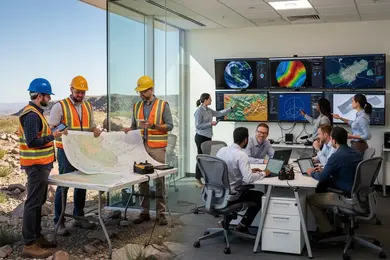
Remote and hybrid roles within geosciences cluster notably around positions emphasizing digital data analysis and modeling, such as environmental geologists, hydrogeologists, and geospatial analysts. These professionals often perform tasks like groundwater assessment and environmental impact studies offsite, enabling more flexible hours. For instance, hydrogeologists can remotely interpret field-collected data to guide water resource management, reducing travel requirements while maintaining impactful contributions. This dynamic aligns closely with the best remote geoscience jobs with flexible hours, which prioritize proficiency in GIS and remote sensing platforms.
Conversely, engineering geologists embedded in infrastructure projects face stricter onsite demands, with approximately 60% of their time spent on site visits for hazard assessments and soil sampling. Despite steady demand driven by civil engineering trends and a median annual wage of $99,050, these positions offer limited remote flexibility and require readiness for fieldwork.
Employers in environmental consulting, state agencies, and academia are increasingly adopting hybrid frameworks that blend client site visits with remote analytical work, emphasizing digital collaboration skills and specialized training. Prospective professionals must weigh tradeoffs between digital workflow advantages and potential reductions in hands-on field experience or stakeholder engagement.
Students evaluating this pathway should consider that advancing remote-capable roles involves targeted skills development, and access to flexible work hinges heavily on industry segment and role specifics. Those seeking a strategic pivot may also explore related credentials such as the cheapest MLIS degree online that complement data management and analysis capabilities, thereby enhancing versatility in hybrid work models.
Top hybrid work roles in geosciences careers continue to evolve, requiring a balance of technical skill, field readiness, and adaptability to employer expectations.
What degrees or majors in geosciences lead to careers with good work-life balance?
Degrees in geosciences that focus on quantitative methods, data modeling, and applied mathematics tend to offer superior work-life balance compared to traditional field-intensive tracks. For example, majors like environmental data science, geostatistics, and geoinformatics integrate computational techniques with earth science, positioning graduates for roles centered on desk-based analysis rather than unpredictable fieldwork.
Consider operations research analyst roles, which mirror data-driven geoscience positions: these jobs provide a median annual wage of $92,740 and a projected employment growth of 19% over ten years, according to the U.S. Bureau of Labor Statistics. Such positions typically involve optimizing resource allocation or risk management using geospatial data, generally within structured environments that allow for predictable hours and remote work options.
However, candidates from pure geosciences tracks with intense field or lab demands often face irregular schedules and significant travel, factors that negatively impact lifestyle stability. Interdisciplinary majors blending geoscience principles with GIS, programming, or statistics create more adaptable skill sets valued by employers seeking both technical expertise and operational consistency.
Target programs with established industry connections in data analytics, operations research, or environmental modeling to improve employment prospects. Certifications in GIS and data analysis software also enhance marketability for roles in urban planning, consulting, or government sectors where fixed schedules and remote work are increasingly common.
How do online geoscience degree programs compare with campus programs for career preparation?
Online geoscience degree programs often fall short in delivering the hands-on field experience essential for most employer expectations, especially in sectors employing 39% of geoscientists like professional, scientific, and technical services. Practical skills obtained through internships or campus-based labs remain a decisive advantage, which many online formats struggle to replicate. Programs integrating mandatory fieldwork or capstone projects with local industry partnerships can narrow this gap but vary widely in quality and availability.
State and local government roles, representing about 15% of geoscience employment, favor candidates with clear technical credentials combined with practical application experience. These positions usually maintain regular hours, demanding a balance better supported by campus programs that offer established internship networks. Without embedded fieldwork or strong local industry ties, online graduates may find such opportunities less accessible.
Working professionals pivoting into geosciences via online degrees face a significant challenge: absence of structured field exposure can limit employability, especially in resource extraction fields where irregular hours and field deployments are common. Choosing programs with integrated employer relationships or hybrid delivery models emphasizing applied skills better aligns with career readiness and work-life balance demands in this field.
What accreditation and program quality standards matter most for geoscience degrees?
Graduating from a geosciences program without specialized accreditation or proven alignment to industry standards can hinder licensure prospects and on-the-job effectiveness. While regional accreditation ensures basic educational quality, employers in environmental consulting, academia, and government prioritize graduates demonstrating competencies in field methods, data analysis, and regulatory compliance. For example, a degree structured around the Environmental Protection Agency's core competencies better equips students for roles in environmental remediation and regulatory fields, which often offer stable workloads and steady demand.
Programs incorporating internships or cooperative education increase job readiness by bridging theoretical knowledge with applied experience. Graduates lacking these practical components may face longer job searches or delayed career growth, particularly in sectors requiring federal and state environmental adherence.
Employment projections from the U.S. Bureau of Labor Statistics indicate a 4% growth for postsecondary environmental science and protection teachers through 2034, with median wages near $83,920. This data underscores that selecting a geosciences program emphasizing applied training aligns educational investment with realistic employment and career sustainability.
- Regional accreditation provides baseline credibility but is insufficient alone for occupational success.
- Specialized accreditation or adherence to industry frameworks like the Geological Society of America guidelines enhances workforce relevance.
- Hands-on training opportunities in accredited programs improve licensure readiness and employment outcomes.
What coursework and skills should geoscience students focus on for balanced-lifestyle careers?
Balancing a geoscience career with a stable work-life structure demands a targeted academic approach that integrates earth sciences with quantitative and policy-oriented disciplines. Employers particularly value proficiency in Geographic Information Systems (GIS) and programming languages such as Python or R, which enhance efficiency by automating data processing and allowing clearer spatial analysis. Complementary skills in statistics and remote sensing enable graduates to make informed decisions in natural resource management or hazard assessment roles that often feature predictable schedules.
For example, urban and regional planning provides a relatively balanced career path within geosciences, emphasizing office-based tasks and stakeholder collaboration over emergency field responses. The U.S. Bureau of Labor Statistics reports a median annual wage near $83,670 with employment growth forecasted at 4% through 2034 in this sector. Success here hinges on expertise in land-use regulation, environmental impact evaluation, and strong communication abilities to convert technical data into actionable policies.
Students who add training in project management and environmental law improve their employability by reducing operational uncertainties and reinforcing sustainable development outcomes. Electives focused on climate science or sustainability can also position graduates for consulting roles featuring flexible or remote work. This strategic mix of technical, regulatory, and interpersonal skills mitigates burnout risks that often accompany high-pressure geoscience subfields.
What are typical program lengths, tuition costs, and financial aid options for geoscience majors?
Choosing between bachelor's and master's degrees in geosciences involves a tradeoff between faster workforce entry and long-term job scope. Bachelor's degrees, typically four years at public in-state universities costing $25,000 to $40,000 annually, lead to entry-level roles often requiring supplemental certifications or on-the-job training, especially in environmental sectors. Master's programs, though shorter (1-2 years) with tuition ranging from $15,000 to $30,000 per year, position graduates for advanced technical roles critical to sectors like energy and environmental consulting.
Financial aid, including federal Pell Grants for undergraduates and mostly graduate-level research or teaching assistantships, can significantly offset costs, but assistantships are competitive and favor candidates with strong academic credentials and relevant field experience. These assistantships not only reduce tuition but provide stipends and practical expertise crucial for employment.
Projected employment growth of 3.7% through 2034 in geosciences reflects rising demand driven by environmental and energy industries. This makes the upfront cost and extended timeframe of graduate study a strategic investment for securing specialized positions with greater responsibility.
Prospective students must evaluate local living expenses, program length, financial aid accessibility, and realistic job market expectations. Shorter, lower-cost bachelor's pathways permit quicker workforce entry but narrower opportunities; master's pathways increase debt but enhance employability and career flexibility in competitive markets.
How can students evaluate and choose geoscience programs aligned with work-life balance goals?
Choosing a geoscience program requires weighing how graduate outcomes and work environments align with realistic work-life balance expectations. Graduates entering consulting often face demanding schedules with extended fieldwork and unpredictable hours, in contrast to more stable workloads typical of federal or academic roles. Internship and co-op experiences embedded in curricula are critical for revealing these occupational realities early on.
Students should carefully evaluate programs that partner with professional, scientific, and technical services sectors, where a 4.5% median salary increase between 2024 and 2025, according to the American Geosciences Institute's 2026 analysis of BLS data, signals strong labor demand but heightened competition and intensity.
Key considerations include coursework in project management and soft skills, which enable managing multiple deadlines and improving work-life integration. Flexible class schedules, such as evening or hybrid formats, support those balancing education with family or employment.
Feedback from faculty and alumni about workload expectations and job placement across geosciences subfields reveals trade-offs: environmental geology and hydrology tend to offer more predictable hours, whereas geotechnical engineering or exploration geophysics often require travel and overtime.
Program location near industry hubs can reduce commuter stress, directly impacting post-graduation balance. Prospective students should integrate salary trends, curricular design, experiential learning, and employment patterns to select programs optimizing career potential and personal time.
Other Things You Should Know About Geosciences
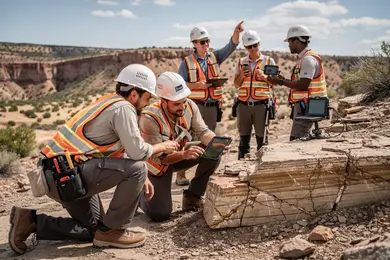
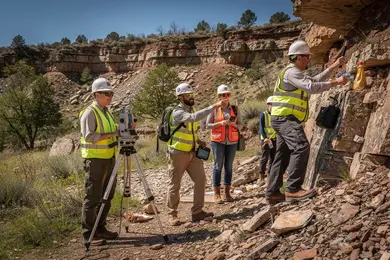
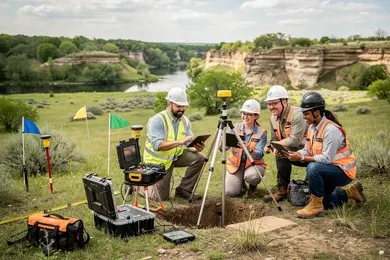
Fieldwork remains essential in many geoscience specialties such as environmental consulting, hydrogeology, and geotechnical engineering, affecting scheduling flexibility. While office-based roles like data analysis or modeling offer more predictable hours, field assignments often require extended periods on-site, travel, and irregular hours. Prospective students should prioritize specialties and employers whose roles minimize intensive fieldwork if maintaining a consistent work-life balance is the goal.
Yes. Remote geoscience roles exist in 2027, especially in GIS, data analysis, environmental consulting support, and modeling. Many employers still require some office or site visits, but fully remote positions usually need strong skills in ArcGIS, Python, or GIS database tools plus a bachelor’s degree.
Regional differences in industry concentration and job market conditions significantly impact work-life balance. Urban centers with large energy or environmental firms might offer higher pay but also demand longer hours and commuting times. Conversely, roles in smaller markets or with public agencies often entail more regular hours and less pressure but lower salaries. Prioritizing location depends on whether geographic flexibility or compensation rank higher in personal work-life balance decisions.
References
- What is Hybrid Remote Work? Popular Types & Models https://apploye.com/blog/hybrid-remote-meaning/
- Section 4. Skills Framework https://graduate.americangeosciences.org/report/section-4/
- CIPD | Flexible working: Guidance for people professionals on planning and managing https://www.cipd.org/uk/knowledge/guides/flexible-working/
- Supporting Geoscience Students https://www.grow-geocareers.com/forgeodepartments
- Online Geoscience Degrees: Top Schools and All Programs in 2026 https://www.gisdegree.org/online/geoscience-degrees/
- Explore where VIU is going https://socialsciences.viu.ca/geography/professional-accreditation
- Geology - ABET https://www.abet.org/accreditation/new-and-developing-program-areas/geology/
- Geoscience Employment and the Great Resignation https://www.aegweb.org/index.php
- Scholarships in the Geosciences https://www.americangeosciences.org/workforce-excellence/scholarships/
- The Geological Society - Degree Accreditation https://www.geolsoc.org.uk/education-and-resources/universities/university-degree-accreditation/