2027 Best Online Bachelor's in Geosciences With Career-Focused Earth Systems Projects

Co-Founder and Chief Data Scientist
Professionals aiming to transition into geosciences often confront a key obstacle: balancing rigorous, hands-on earth systems training with the demands of full-time work or family responsibilities. The U. S. Department of Education recently reported a 12% surge in adult enrollment in online bachelor's programs, signaling growing preference for flexible learning models compatible with complex schedules.
This shift reflects an urgent need for programs that integrate career-focused projects directly tied to real-world geoscience challenges, such as environmental monitoring or resource management. This article outlines the top online bachelor's in geosciences with project-driven curricula to help prospective students navigate options that maximize both accessibility and practical expertise.
Key Things You Should Know
- Employer demand for earth systems project experience surged 27% between 2022-2025, per U.S. Bureau of Labor Statistics, making project-integrated curriculum a key differentiator for early-career geoscientists.
- Programs emphasizing remote sensing and GIS within bachelor's curricula report 15-20% higher graduate placement rates in energy and environmental sectors, but require costly software licenses, elevating students' upfront investment burdens.
- Regional disparities in institution research funding significantly affect project quality and industry connections, impacting graduates' access to high-impact internships and slowing career entry by an average of 6 months in underfunded programs.
What is an online bachelor's in geosciences and who is it best suited for?
An online bachelor's degree in geosciences offers specialized training that balances theoretical knowledge with practical applications, catering primarily to professionals requiring flexible schedules or students in remote locations. The best candidates for an online geosciences program often juggle ongoing employment while advancing skills vital for sectors such as natural resource management, environmental consulting, or climate risk evaluation.
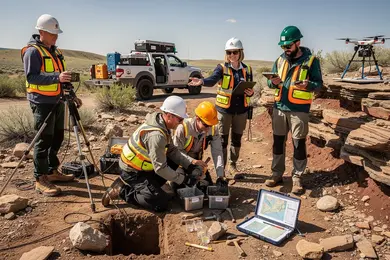
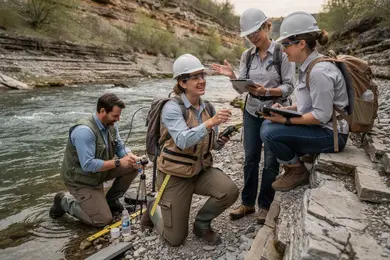
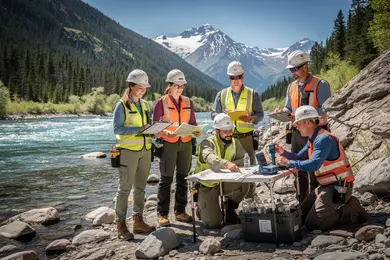
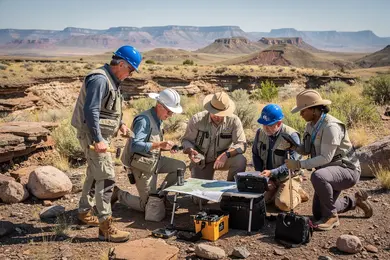
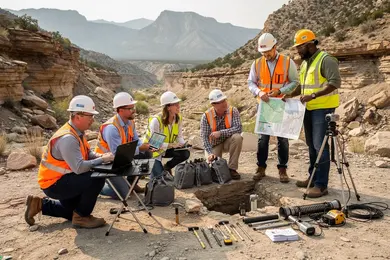
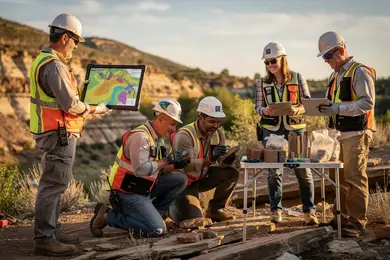
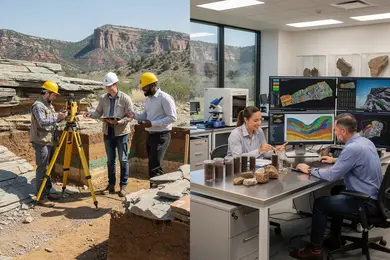
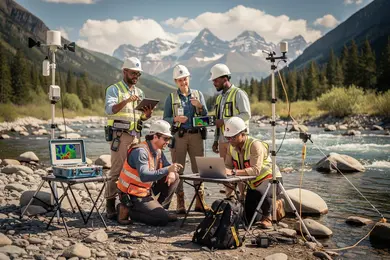
Program formats typically integrate career-focused earth systems projects, preparing students for real-world challenges like energy exploration and land use planning. However, candidates should note that some essential components-such as accredited fieldwork-may necessitate local arrangements or brief intensive residencies. Prospective enrollees unable to complete hands-on geology fieldwork should carefully assess how programs accommodate these requirements to avoid skill gaps.
Graduates gain competencies in interpreting geospatial data, using geographic information systems (GIS), and applying environmental impact modeling, aligning with employer demand for applied technical prowess. The U.S. Bureau of Labor Statistics projects a 7% growth rate for geoscientist roles from 2022 to 2032, translating to approximately 2,200 annual job openings, emphasizing ongoing market relevance and the necessity of combining foundational science with experiential learning. For those analyzing educational pathways, a thorough evaluation of program rigor and practical integration is critical. More information on these options can be found through online geology programs.
How do online geoscience bachelor's programs compare with on-campus degrees for quality and outcomes?
The distinction between online bachelor's in geosciences vs on-campus degree outcomes centers largely on practical exposure and networking depth rather than academic rigor. While online programs deliver comparable theoretical content, their ability to provide necessary hands-on experience-such as fieldwork or laboratory skills-is uneven and often requires students to independently locate local opportunities. This tradeoff matters because employers increasingly demand verified applied competencies, especially in high-growth areas like critical mineral exploration and environmental assessment, which face nearly 60% workforce demand expansion by 2040 per the International Energy Agency 2024 World Energy Outlook.
In contrast, traditional on-campus degrees embed immersive technical training through university-run field sites and peer collaboration, fostering informal mentorship and proficiency in practical tasks. Graduates from structured online programs with industry-linked capstone projects show better outcomes, yet those lacking integrated internships risk gaps that affect employability. For working professionals balancing schedules, the online route offers flexibility but requires advanced planning to meet experiential expectations.
Hiring managers value documented project work and certifications equally whether from online or on-campus sources. Prospective students should critically evaluate program alignment with career goals, hands-on access, and employer expectations. For comparative insight on related STEM pathways, consider reviewing data scientist degree affordability rankings.
Which accredited schools offer the best online bachelor's in geosciences with earth systems projects?
Practical experience remains the critical differentiator for online accredited bachelor's programs in geosciences with earth systems projects, reflecting employer demands for applied competency over theory alone. Programs that embed workforce-relevant tasks-such as environmental impact assessments and freshwater resource analysis-equip graduates for niches in environmental consulting, resource management, and government roles. For example, capstone projects focused on geological hazard mitigation directly align with responsibilities faced by young geoscientists entering compliance or geospatial analysis jobs.
Students must weigh the tradeoffs of these programs' heavier emphasis on virtual labs, GIS software like ArcGIS, and team-based project collaboration, which demand significant time investment potentially challenging to balance alongside work commitments. Moreover, institutional accreditation and state authorization are non-negotiable for ensuring degree portability and professional licensure eligibility, an operational reality often overlooked by candidates.
Growth in earth sciences degrees from 2010 to 2022 puts additional employer scrutiny on applicants' technical fluency and project experience rather than purely academic credentials. Choosing bachelor's degrees in geosciences offering earth systems project experience translates into enhanced job readiness but requires understanding the tangible workload and software proficiencies involved. Candidates exploring nearby or parallel fields might also evaluate the value of a degree in library science for roles blending data management with earth systems research support.
What should you look for in accreditation and program quality for online geoscience degrees?
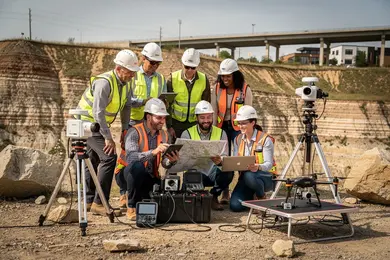
Accreditation from recognized regional bodies like the Higher Learning Commission or Middle States Commission on Higher Education is an essential filter for evaluating accredited online geoscience degree programs, since employers in mining, energy, and environmental consulting rely on these credentials as indicators of technical proficiency and program legitimacy. However, accreditation alone does not guarantee practical readiness; employers prioritize candidates with hands-on experience in real-world data analysis, environmental site assessments, and modeling software applied within a robust curriculum.
Program quality indicators for earth systems degrees include the integration of immersive, career-relevant projects that build directly applicable skills. For example, graduates with applied environmental remediation experience often secure specialist roles more readily than those without such intensive project work. This practical focus aligns with workforce demands, where median wages near $78,980 for environmental scientists reflect the value of technical competence alongside academic credentials.
Students should critically assess faculty expertise, ensuring that coursework reflects current industry technologies and methods rather than outdated theories. Flexibility in online formats must not compromise access to academic advising, technical support, and internship placement, which are pivotal for successful professional transitions. Evaluating graduation rates, employer connections, and alumni employment outcomes offers practical insight into program return on investment.
A careful balance of accredited rigor, hands-on earth systems projects, and career services defines the most effective online bachelor's degree paths in geosciences. Prospective students seeking to pivot or advance their careers should also consider complementary fields, such as pursuing a library science masters, to diversify their skillset and enhance interdisciplinary opportunities.
What core courses and earth systems project work will you complete in these programs?
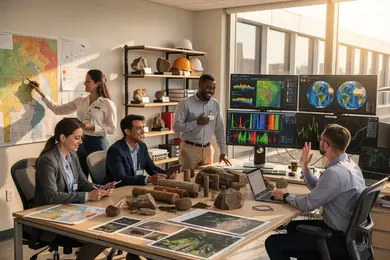
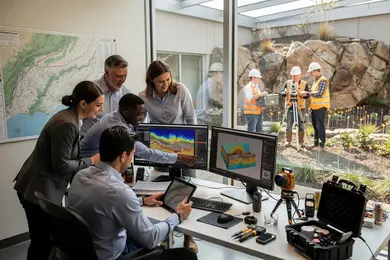
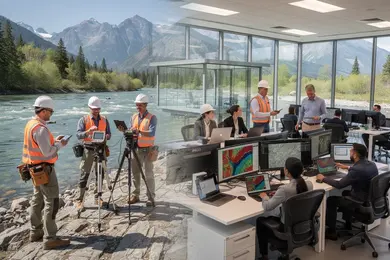
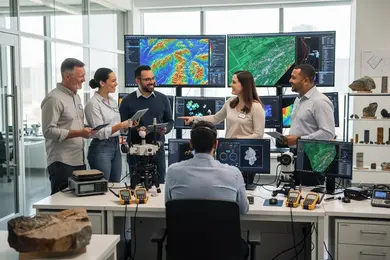
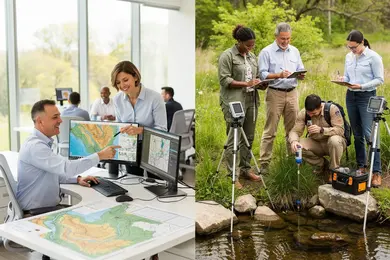
Online bachelor's degrees in geosciences prioritize quantitative and analytical skills directly linked to high-income roles such as natural sciences managers, data scientists, and mining engineers. Core classes cover mineralogy, sedimentology, geophysics, and environmental geology, ensuring graduates gain essential field and laboratory competencies. Advanced coursework integrates geographic information systems (GIS), remote sensing, and computational modeling-tools frequently used in environmental consulting and resource management.
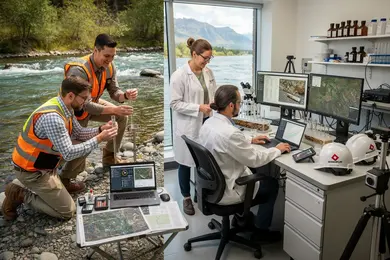
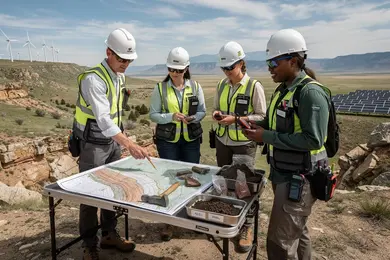
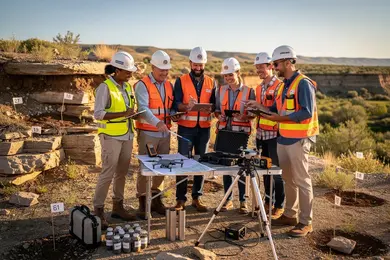
Students engage in earth systems projects that replicate industry challenges, such as analyzing soil and water samples with statistical software to advise mining operations. This hands-on approach aligns with workforce expectations, where mining engineers earn a median salary of $97,090 and natural sciences managers about $137,900 annually, based on MyDegreeGuide's 2025 synthesis of BLS data. These projects also include climate modeling and hazard assessments, strengthening analytical rigor for data-intensive roles.
Technical communication skills are emphasized through report writing and presentations, responding to employer demand for professionals who can translate complex data for varied audiences. While online formats offer virtual labs and collaboration tools, securing access to specific geological datasets and proprietary software often requires personal investment or institutional resources.
This practical, project-based training enhances employment prospects by honing the precision and adaptability necessary for sectors ranging from environmental consultancy to natural resource extraction, where median salaries range from $97,090 to $137,900 annually.
What are the typical admission requirements for an online bachelor's in geosciences?
Admission requirements for an online bachelor's in geosciences typically prioritize quantitative readiness and alignment with technical career demands, rather than broad academic credentials. Given the STEM-intensive nature of the field, programs often enforce a baseline GPA around 2.5 to 3.0 and require evidence of proficiency in math through calculus, biology, and physical sciences to reduce the risk of underprepared students struggling with advanced content. This threshold reflects an employer expectation for graduates who can engage effectively with applied geology and environmental analysis tasks from day one.
Standardized tests like the SAT or ACT are less commonly mandatory but can differentiate applicants in competitive settings emphasizing Earth systems or field research. Application supplements typically request personal statements focused on tangible project experience or environmental science engagement, underscoring the professional value of hands-on learning.
For students missing core prerequisites, bridging courses are common and necessary before entering upper-level modules that cover rigorous topics such as climatology or hydrology. Meanwhile, working professionals leveraging prior college credits or relevant industry experience in areas like GIS technology may find accelerated pathways accommodating their transition into geosciences roles. This practical approach aligns with labor market data showing about 3% growth through 2034 and a median salary near $99,240, emphasizing the field's steady demand for technically skilled practitioners.
How long does an online geosciences bachelor's take and what does it cost?
Choosing an online geosciences bachelor's degree demands a realistic assessment of time, cost, and practical outcomes. While a traditional full-time path spans four years and roughly 120 credit hours, part-time students often extend completion to five or six years, impacting income and career momentum. Accelerated formats reduce duration but intensify workload, rarely suiting those balancing employment.
Tuition disparities matter significantly: public universities charging less than $300 per credit hour present an affordability advantage against national averages exceeding $40,000 total. However, candidates must carefully verify whether mandatory fees and essential lab or field components are included-these often increase true program costs in earth sciences disciplines.
For professionals pivoting careers, such as entering environmental consulting, the tradeoff between extended study and ongoing employment income is key. Employers typically expect demonstrable project experience beyond theoretical learning, frequently delivered via online synchronous labs or regional fieldwork, which can complicate schedules and budget. Early analysis of these factors helps align academic investment with long-term employability and practical skill acquisition rather than abstract credential accumulation.
What entry-level and mid-career jobs can you pursue with an online geoscience degree?
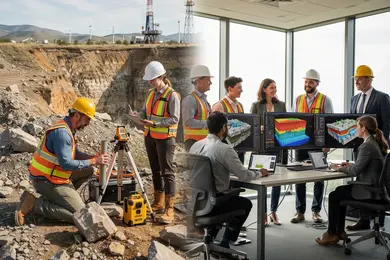
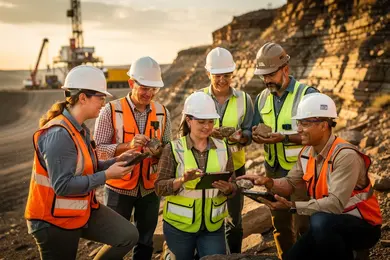
Entry-level roles for graduates with an online geoscience degree typically involve geological technician, environmental consultant, or field surveyor positions, where practical skills in GIS software, remote sensing, and sample collection are essential. Employers prioritize candidates who demonstrate the ability to synthesize remote data with onsite assessments, a competence emphasized in many programs listed in GISDegree.org's 2026 review of accredited online geoscience bachelor's degrees. These programs support specialization in applied Earth systems projects, which align with real-world environmental consulting and natural hazard mitigation.
Mid-career professionals often transition into analytical and managerial roles such as hydrogeologist or resource management specialist, requiring proficiency in complex problem-solving, regulatory knowledge, and cross-disciplinary collaboration with planners and policymakers. However, the shift from technical to leadership roles frequently hinges on hands-on project management experience, which online degrees alone may not fully provide.
Tradeoffs arise when choosing programs focused on comprehensive Earth systems integration-favoring environmental science pathways-versus more traditional geology routes aimed at mining or petroleum sectors. Candidates without field experience should anticipate needing internships or employer-sponsored training to address this gap. The U.S. Bureau of Labor Statistics projects a 7% growth in relevant jobs through 2032, emphasizing the importance of graduates marrying technical skills and applied experience to meet workforce demands effectively.
What salaries and job outlook can geoscience majors expect in different career paths?
Entry-level salaries for geoscience majors vary widely based on specialization, with environmental consultants typically earning $55,000 to $70,000 annually, while petroleum geologists start near $90,000 due to higher industry demand. These figures underscore a significant tradeoff between steady but moderate-paying government or environmental roles and the more volatile, higher-paying private sector jobs tied to commodity cycles.
Employers consistently prioritize graduates equipped with practical skills in data analysis, GIS, remote sensing, and project management; lacking these can slow wage growth and career mobility. For example, environmental consulting often requires additional certification and technical proficiencies before moving past initial salary plateaus common at entry-level.
Over 80% of recent Geosciences bachelor's graduates find employment or further education within a year, but regional disparities affect long-term growth prospects, concentrating opportunities in resource-rich or regulatory-heavy urban centers.
Advanced degrees open doors to research and academic positions with median salaries ranging from $70,000 to $100,000, though these paths demand careful consideration of funding and institutional context. Successful careers frequently rely on combining strong internships, targeted skill development, and readiness for continuing education to navigate sector volatility and maximize lifetime earnings.
How can you choose the right online geoscience program for your career and lifestyle goals?
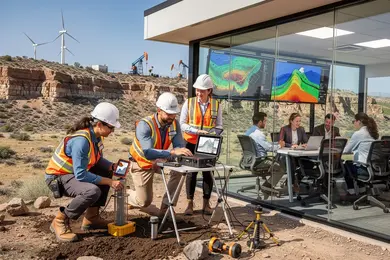
The critical challenge in selecting an online geoscience program lies in balancing practical application with your professional and personal constraints. Programs emphasizing applied earth systems projects-such as environmental consulting or energy exploration-offer graduates a tangible advantage by aligning education with measurable industry demands. For example, a candidate focusing on hazard mitigation needs exposure to remote sensing and virtual labs rather than solely theoretical geology to gain immediate workplace readiness.
Delivery format significantly impacts skill building and employability. Fully asynchronous courses provide scheduling flexibility but may limit networking and mentorship opportunities employers value for teamwork and communication skills. Hybrid models that incorporate synchronous sessions can mitigate these gaps while respecting working professionals' time limitations. Accreditation and faculty expertise remain non-negotiable markers for credible instruction and current methodologies.
Programs connected to regional industries or federal agencies often offer targeted internships that enhance employability in niche markets such as energy monitoring or geohazard assessment. Curricula covering emergent areas like climate modeling and data analytics reflect the shifting priorities of the geosciences labor market and future-proof career trajectories.
Cost versus duration presents a tradeoff: shorter programs accelerate workforce entry but might sacrifice depth, while longer tracks offer comprehensive training at higher cost. Reliable graduate outcomes data should guide investment decisions to ensure alignment with actual job placement rates and market needs.
Other Things You Should Know About Geosciences
Field experience and internships play a significant role in geosciences careers by providing hands-on skills that purely online coursework cannot fully replicate. Employers often expect candidates to demonstrate practical application of theory through real-world projects or fieldwork. Online programs that integrate or facilitate access to internships or local field opportunities will enhance employability more effectively than programs lacking this component. Prioritizing programs with strong partnerships in industry or government agencies is advisable to secure the necessary experiential learning.
Most online bachelor’s degrees in geosciences require about 120 semester credits, including general education, major coursework, and a capstone or project sequence. Programs often require 30 to 45 credits in geoscience classes, plus math, chemistry, physics, and GIS-related electives.
The workload in geosciences programs can be intense, particularly in courses requiring lab work, data analysis, or project deliverables. Students working full-time must manage time carefully to meet deadlines for synchronous sessions, field projects, or collaborative assignments. Programs with flexible asynchronous learning and accessible instructors lessen scheduling conflicts and stress. Prospective students should evaluate their capacity to commit hours weekly to both study and practical exercises before enrolling.
Specializing in earth systems projects aligned with emerging fields like climate impact, renewable resources, or environmental consulting can increase immediate job market relevance in growing sectors. However, a broader geosciences foundation offers adaptability across traditional roles such as geology, hydrology, or geospatial analysis. For those uncertain about exact career goals, a broad curriculum with elective options for earth systems expertise provides better long-term flexibility. When career direction is clear, prioritizing specialized project-based learning yields higher returns.
References
- Gisdegree https://gisdegree.org
- Geology https://www.aims.edu/degrees-certificates/geology
- The Geological Society - Degree Accreditation https://www.geolsoc.org.uk/education-and-resources/universities/university-degree-accreditation/
- 500+ Water Jobs (Updated Today) â Free to Apply https://jobs.watertechintel.com/blog/geology-major-jobs
- Online Geoscience Degrees: Top Schools and All Programs in 2026 https://www.gisdegree.org/online/geoscience-degrees/
- Earth Systems: Field Course https://www.gu.se/en/study-gothenburg/earth-systems-field-course-gvn470
- Best Earth Science Research Programs for High Schoolers https://riseglobaleducation.com/blogs/best-earth-science-research-programs-for-high-schoolers
- What Does the Future Demand Look Like for Applied Geoscientists? https://www.aegweb.org/index.php
- Geoscientist https://augstudy.com/careers/geoscientist/
- Geology - ABET https://www.abet.org/accreditation/new-and-developing-program-areas/geology/