2027 Online Geosciences Degrees for Water Resources Roles

Co-Founder and Chief Data Scientist
Environmental engineers and hydrologists often confront urgent regional water shortages compounded by climate variability, requiring rapid expertise upgrades without interrupting active careers. Traditional degree programs lack the scheduling flexibility to accommodate professionals balancing fieldwork and family obligations, creating bottlenecks in workforce readiness. The National Center for Education Statistics reports a 23% increase since 2022 in enrollment among adult learners pursuing fully online degrees, revealing a significant shift toward accessible continuing education.
This trend indicates rising demand for programs that integrate advanced water resource topics with adaptable delivery models. This article evaluates online geosciences degrees tailored to water resources, guiding readers through critical factors affecting accessibility, curriculum relevance, and career impact.
Key Things You Should Know
- Federal Labor Statistics from 2024 show a 12% demand increase for hydrogeologists with advanced degrees, but most online geosciences programs lack sufficient applied hydrology labs, limiting practical readiness and credential value.
- Employers prioritize graduates with integrated GIS and remote sensing certifications alongside geosciences degrees, pressuring candidates to invest additional 200+ hours and $2,000 on top of tuition to remain competitive.
- Median in-state tuition for accredited online geosciences bachelor's rose 7.6% in 2025, challenging mid-career professionals balancing time-intensive employer projects against protracted degree completion timelines averaging 4.5 years.
What is an online geosciences degree for water resources careers and who is it right for?
Online geosciences degree programs focused on water resources serve those balancing ongoing employment with upskilling, yet navigating limited hands-on laboratory and field interaction inherent in virtual learning. These programs integrate geology, hydrology, and environmental science through remote formats, making them suitable for professionals targeting specialized roles in environmental consulting, municipal water management, or climate adaptation. Students gain expertise in groundwater modeling, water quality evaluation, and sustainable resource practices without geographic relocation.
Employment data informs practical decision-making: the median wage for geoscientists stands at $99,240, with a modest 3% projected growth through 2034, reflecting steady but niche demand for professionals adept at combining data analysis with regulatory and climate resilience frameworks. This dynamic calls for students pursuing the best online geosciences degrees for water resource management to supplement academic credentials with internships or certifications to meet employer expectations that prioritize applied experience alongside technical knowledge.
Real-world applications include designing irrigation systems in agriculture based on geoscience data and urban planners assessing flood risks by overlaying geological surveys with hydrological models. Critical to these roles are skills in GIS and remote sensing, commonly emphasized in quality online curricula geared toward water resources careers.
Prospective students considering a strategic shift, such as a teacher to speech pathologist transition, will recognize parallels in managing career pivots through focused credentials. For those evaluating online geosciences degree programs for water resources careers, weighing technical rigor against the virtual format's inherent challenges is key to aligning education with realistic workforce integration.
How do online and on-campus geoscience programs for water resources compare?
Choosing between online and on-campus geosciences degree programs for water resource management hinges on balancing hands-on experience with flexibility. On-campus education offers direct access to labs, specialized equipment, and in-person mentorship-elements closely aligned with employer demands for practical skills in field sampling and hydrologic modeling. Conversely, online programs substitute physical labs with virtual simulations and remote data sets, which can limit exposure to real-world scenarios valued in water resource consulting and environmental agencies.
Working professionals pursuing online geosciences education for water resource careers benefit from the ability to maintain full-time employment but face challenges in networking and immediate fieldwork access. On-campus students often tap into internship pipelines and face-to-face mentoring, advantages critical for entry into roles like groundwater hydrology or regulatory compliance.
Employers increasingly verify practical proficiencies, making internships or local lab access important supplements for online learners. For example, recent graduates targeting government analyst positions often need documented field experience, favoring on-campus paths, while mid-career professionals focusing on policy analysis may find online degrees adequate. Labor market data identifies over 6,600 annual openings in environmental and water resource engineering through 2035, with slight edge given to candidates demonstrating hands-on competence.
Career-minded individuals evaluating these tradeoffs may also consider comparing affordability and program structure across disciplines such as data science; resources like data science degrees provide useful benchmarks for assessing program value relative to costs.
What types of online geoscience degrees prepare you for water resources roles?
Online geoscience degrees for water resources management that focus narrowly on environmental science and hydrology can leave graduates underprepared for critical workforce demands unless they integrate applied technical skills. Candidates targeting roles in water resource infrastructure or policy must seek programs emphasizing Geographic Information Systems (GIS), remote sensing, and water quality analysis alongside core geology and hydrologic modeling. Without such applied focus, new professionals often face additional certifications or extended on-the-job training to meet employer expectations.
For example, professionals transitioning into municipal water management need coursework covering public water supply regulations and infrastructure planning, often built through case-based projects. This approach aligns with employer demand for familiarity with environmental compliance and advanced data analysis tools, a skill set linked to higher wage potential-environmental and water resources engineers have median earnings near $153,300 annually according to 2025 Lightcast data referenced by the University of Kansas.
When vetting programs for the best online geosciences programs for hydrology careers, prospective students must evaluate availability of specialized electives such as hydrogeology, watershed hydrodynamics, and water resource policy. Flexibility in delivery that suits working professionals is also crucial since programs without hands-on water resource problem-solving training limit readiness for senior roles in a sector with average wages around $60.95 per hour.
Choosing an online geoscience degree purely on theoretical strengths risks gaps in practical competencies necessary for long-term impact. Students comparing pathways for a strategic career pivot may also consider alternatives like a computer science degree online to supplement data analytic capabilities increasingly valued in this field.
How can you verify accreditation and program quality for online geoscience schools?
Verification of accreditation goes beyond simply confirming regional recognition from bodies like the Higher Learning Commission or the Middle States Commission on Higher Education. Prospective students should focus on how accreditation aligns with professional benchmarks and regulatory demands within specialized fields such as water resources. For instance, programs adhering to standards from the American Institute of Professional Geologists or state environmental agencies enhance licensure eligibility and workforce credibility. This attention to detail is critical when weighing online geosciences program accreditation verification to avoid costly missteps in credential value.
Assessing quality means examining more than institutional prestige. Programs reporting at least 70% job placement in water resources roles within six months offer tangible evidence of industry relevance and student return on investment. The annual tuition of online Environmental Science & Water Resources Technology degrees, such as the $8,415 all-in cost at Georgia Military College, provides a practical comparison point, especially against on-campus alternatives. Students balancing limited budgets might also explore affordability benchmarks as seen in the cheapest online mechanical engineering degree data for broader context on cost-efficiency.
Practical experience opportunities, including remote lab simulations and internships with water management agencies, are essential components not guaranteed by accreditation alone. Such hands-on experiences directly affect employability and readiness for applied roles in hydrology and resource management. Evaluating third-party reviews and employer feedback from sources like the U.S. Bureau of Labor Statistics reveals programs that sustain alignment with evolving technological and regulatory landscapes. These factors collectively define quality assurance for online geosciences degrees in water resources beyond surface credentials.
What courses and specializations do online geoscience programs offer in water resources?
Choosing an online geosciences program focused on water resources demands scrutiny of curriculum balance and practical constraints. While core courses in hydrology, watershed management, and environmental chemistry provide necessary sector-specific knowledge, employers increasingly value proficiency in geospatial data analysis and Geographic Information Systems (GIS). This technical competence is nonnegotiable in fields like environmental consulting or water quality assessment.
Programs differ in how they weight watershed modeling versus project management skill sets, which directly influences your employability within public agencies compared to private firms. Students should assess how well programs integrate regulatory frameworks and sustainable water management, as these areas reflect real-world professional challenges.
Electives addressing climate change's impact on hydrology, soil science, and toxicology offer interdisciplinary versatility but rarely substitute for essential field-based experience. Fully online formats require supplemental internships or virtual labs to meet credentialing standards and employer expectations. The University of Texas Jackson School data reveal median annual earnings of $85,990 for hydrologists and roughly $76,000 for environmental scientists in water-focused roles, suggesting that advanced technical skills translate into substantial financial returns.
What are the typical admission requirements for online geoscience degrees in this field?
Admission to online geoscience degrees focused on water resources demands more than foundational academics; it requires strategic alignment with workforce realities. Candidates without strong quantitative backgrounds face mandatory remedial courses, prolonging completion and increasing costs, which often exceed $30,000 given an average rate of roughly $1,015 per credit. This delays return on investment and may jeopardize employer tuition support.
Employers, particularly within government agencies and consulting firms, expect applicants to combine solid STEM credentials with applicable professional experience. For example, a mid-career engineer pivoting to hydrology improves acceptance odds by supplying documented internships or relevant job history alongside transcripts reflecting calculus, physics, and earth sciences competencies. GRE waivers sometimes apply, but professional evidence often weighs heavier due to practical skill demands.
Successful applicants must prepare focused statements of purpose linking their career objectives directly to water security challenges, supported by at least two recommendation letters confirming technical aptitude and motivation. Submission timing is critical since competitive, limited-seat cohorts prioritize those demonstrating readiness for advanced modeling and data analysis.
Programs like the University of Oklahoma's online Master of Environmental Science in Hydrology and Water Security require these prerequisites to ensure students can handle rigorous modeling coursework that aligns with current sector needs.
How long do online geoscience programs take and what do they cost overall?
Choosing an online geoscience program for water resources requires weighing completion time against costs and career outcomes. Associate degrees typically demand about two years, while bachelor's programs extend to four years of full-time study; part-time and accelerated formats add flexibility but lengthen tuition expenses since costs are per credit hour, ranging between 60 and 120 credits.
Tuition spans broadly-from roughly $25,000 up to $60,000 for bachelor's degrees-largely influenced by institution type and residency status. Public universities usually present lower tuition, particularly for in-state students, while private institutions push toward higher price tiers. Beyond tuition, expect additional fees for virtual labs or specialized software adding $1,000 to $3,000 to the total outlay.
From an employability perspective, local market demand often justifies financial investment. For example, water scientists in Wisconsin report average salaries near $61,500, rising to nearly $69,000 within the Green Bay metro area, signaling a premium for candidates with relevant geoscience preparation near active job hubs.
What entry-level and advanced careers can online geoscience graduates pursue in water resources?
Water resources roles accessible to online geoscience graduates often demand a blend of technical skills and regulatory knowledge, with early-stage positions focusing on operational tasks like water quality analysis, GIS mapping, and compliance sampling. These roles, common in municipal or environmental agencies, provide essential hands-on experience but may limit exposure to integrated systems modeling and policy influence until progressing further.
Experienced professionals typically move into hydrologist or water resources engineer roles, where expertise in regulatory frameworks such as the Clean Water Act and proficiency with predictive modeling are imperative. For instance, a hydrologist working within a state agency might create models to optimize water allocation under climate variability, linking geoscience data with engineering solutions and environmental policy decisions.
Labor market data forecasts over 6,600 annual openings for water resources and environmental engineers, reflecting steady demand across sectors. However, success depends strongly on complementing core geoscience skills with competencies in data science, environmental regulation, and civil engineering fundamentals. Communication skills are equally critical, enabling professionals to translate technical findings for diverse stakeholders.
Practical program selection should weigh opportunities for applied projects and government or consulting internships, as these experiences markedly improve employability given competitive candidate pools.
What are the salary ranges and job outlook for water resources geoscience professionals?
Entry-level salaries for water resources geoscience professionals generally range between $45,000 and $55,000, with a median starting point near $47,500, according to University of Georgia data on Water and Soil Resources graduates. This baseline shifts notably as professionals integrate specialized skills like hydrological modeling, GIS, or contamination remediation within sectors such as environmental consulting and municipal infrastructure.
Job opportunities remain steady but competitive, particularly within federal and state agencies, engineering firms, and nonprofits focused on water sustainability and regulatory compliance. For instance, a geoscientist managing municipal water supply data must balance scientific analysis with policy translation-a factor influencing salary variation depending on local budgets and project scope.
Location plays a significant role in compensation trends: rural or remote roles may offer higher pay due to candidate scarcity but require navigating potential downsides like limited networking and altered work-life dynamics. Early-career professionals with advanced degrees or certifications frequently secure positions with starting salaries above $70,000, reflecting employer preference for focused expertise.
Long-term earnings growth depends less on initial credentials and more on accumulating technical experience and adapting to sector-specific demands, particularly when comparing government roles against private sector employment. As such, strategic skill development is essential for those pursuing sustainable careers in this domain.
How do licenses, certifications, and professional organizations impact water resources careers?
Licenses and certifications in water resources disciplines represent more than credentials; they delineate the boundary between entry-level positions and roles with leadership or specialized responsibility. For instance, a Professional Engineer (PE) license grants legal authority to oversee watershed infrastructure projects, a requirement often imposed by employers managing municipal capital improvements. Meanwhile, certifications like the Certified Floodplain Manager (CFM) and the Association of State Drinking Water Administrators (ASDWA) designation signal focused expertise valued in regulatory and environmental compliance niches.
Choosing to pursue these qualifications involves a significant investment in education, supervised practice, and examination, frequently delaying career entry by one to three years. This delay must be weighed against data such as the U.S. Department of Labor projection of 6% job growth for environmental protection technicians through 2030, underscoring a rising demand for credentialed specialists. Candidates must strategically align credential pursuit with targeted job functions to optimize employability and advancement paths in water-focused geosciences careers.
Other Things You Should Know About Geosciences
Online geosciences degrees in 2027 incorporate virtual labs, simulations, and fieldwork components through partnerships with local organizations. These blend online coursework with real-world applications, ensuring that students gain practical skills and meet employer expectations for hands-on experience in water resources roles.
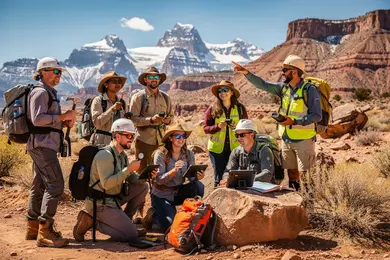
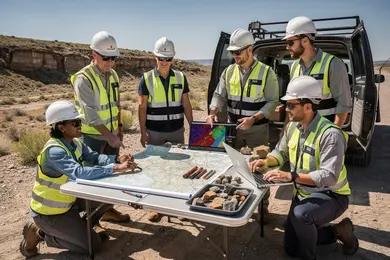
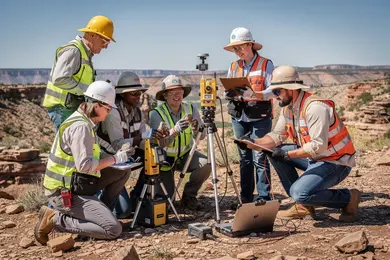
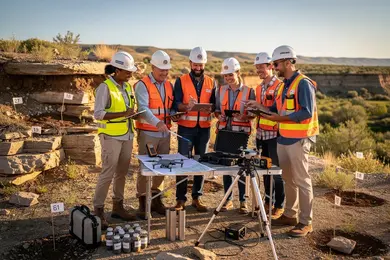
Many 2027 online geosciences programs require a field methods course, a summer or weekend field camp, and supervised local sampling or mapping. For water resources roles, employers often expect experience with groundwater monitoring, GIS, and hydrogeology labs, plus 3–6 credit hours of field-based work.
Specialized water resources tracks focus intensively on hydrology, watershed management, and policy, enhancing immediate sector relevance but narrowing career flexibility. Broader geosciences degrees offer diverse skill sets applicable across environmental and earth science disciplines but can dilute water-specific technical expertise employers seek. Prospective students targeting water resources roles should prioritize specialized curricula to align closely with industry standards and job requirements.
Online programs often cover the academic requirements for certifications like the Professional Geologist (PG) or Certified Hydrogeologist, but may fall short on specific supervised fieldwork components. Students must confirm whether the program facilitates mentorship or practical experience necessary for licensure board approval. When licensure is essential, prioritizing programs with established protocols for experiential learning will reduce barriers to credentialing and professional advancement.
References
- IAHR Water Jobs https://www.iahr.org/index/detail/1302
- Find Your Water Career https://www.workforwater.org/
- What Does the Future Demand Look Like for Applied Geoscientists? https://www.aegweb.org/index.php
- Geoscience Careers https://education.americangeosciences.org/resources/geoscience-careers/
- Careers in Geoscience: Environment https://www.aig.org.au/education/careers-in-geoscience/careers-in-geoscience-environment/
- Online University Accreditation: Ensuring Quality in Education https://www.qahe.org/article/online-university-accreditation-ensuring-quality-in-education/
- Master's degree in Geoscienze per lo Sviluppo Sostenibile - Curricu... https://apply.unipv.eu/en_GB/courses/course/205-geo-emw-masters-degree-geoscienze-per-lo-sviluppo-sostenibile---curriculum-geosciences-energy-mineral-and-water-resources
- Water Resources Careers Outlook - NWF EcoLeaders https://www.nwfecoleaders.org/careercenter/water
- Courses and education in water resources https://eng.geus.dk/products-services-facilities/training-courses-and-excursions/courses-and-education-in-water-resources
- Are Online Degrees Accredited? How to Identify Quality Distance Learning Programs https://www.umassglobal.edu/blog-news/online-degrees-accredited-identify-quality-distance-learning-programs