2027 Online Geosciences Degrees for Environmental Agency Careers

Co-Founder and Chief Data Scientist
Environmental agencies increasingly seek geoscience professionals with adaptable skill sets amid shifting regulatory demands and rapid climate data influx. Yet, mid-career practitioners and nontraditional students face the dual challenge of time constraints and limited access to specialized programs, complicating timely credentialing. Recent data from the National Center for Education Statistics shows a 40% surge in enrollment in online science degrees since 2022, signaling a significant shift toward flexible learning models that accommodate workforce needs.
This trend, however, requires careful evaluation of program rigor and employer recognition to ensure career progression. This article outlines online geosciences degree options tailored to environmental agency roles, addressing accessibility, curriculum relevance, and employability factors.
Key Things You Should Know
- Only 42% of environmental agencies nationwide recognize fully online Geosciences degrees for entry-level hiring, requiring hybrid or fieldwork components to meet EPA technician certification standards, complicating remote candidates' qualification pathways.
- Bureau of Labor Statistics data shows geoscientist roles growing 6% by 2032, but environmental agencies prioritize applicants with accredited internships, challenging online degrees lacking embedded practical placements.
- Average full online Geosciences bachelor's programs cost 20-30% less than traditional counterparts yet may extend completion times by 18 months due to limited summer field courses, increasing opportunity costs for career changers.
What are online geosciences degrees for environmental agency careers?
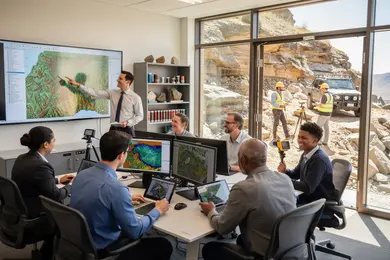
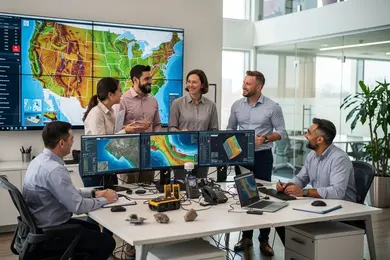
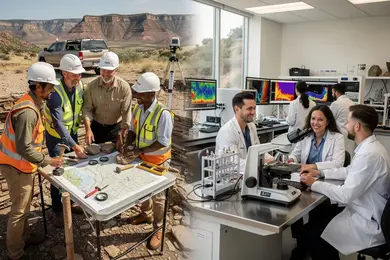
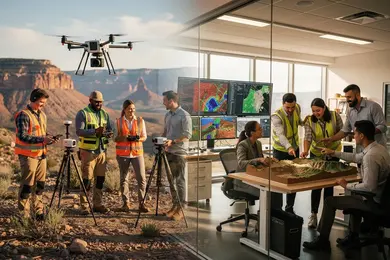
Online geosciences degree programs for environmental careers deliver specialized skills in analyzing earth systems and environmental impacts through virtual labs and data interpretation, catering to professionals needing flexibility. A significant focus is placed on Geographic Information Systems (GIS) and remote sensing, essential for environmental agency tasks like monitoring contamination spread or managing habitat conservation remotely, which aligns with roles in agencies such as the U.S. Environmental Protection Agency or the Bureau of Land Management.
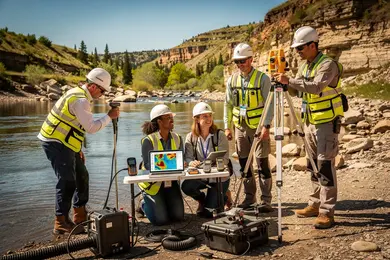
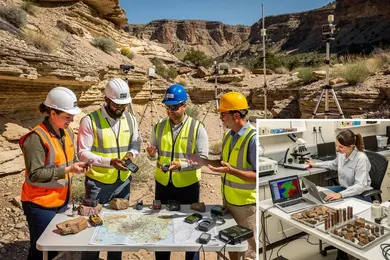
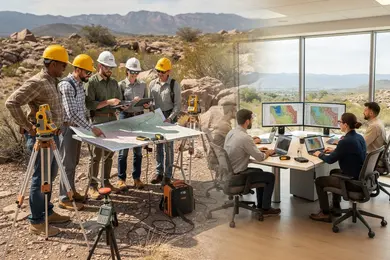
However, those pursuing environmental agency careers with geosciences degrees online should anticipate challenges. Limited direct fieldwork in many online programs can restrict practical exposure, often a prerequisite for advancement. Prospective students should consider hybrid options that incorporate local internships or virtual collaboration with agency professionals to address this gap.
Complementary certifications, such as OSHA environmental safety or federal compliance training, are frequently required alongside degrees to meet hiring standards for many entry-level positions. The practical implication is that a degree alone may not suffice for immediate employment or progression within federal and state environmental roles.
The outlook for geoscientists remains stable, with employment projected to grow 3% from 2024 to 2034 and a median wage near $99,240, reflecting ongoing demand in environmental assessment and resource management. Evaluating these programs through the prism of workforce expectations and professional requirements is essential before committing to an online pathway. For further informed comparisons, prospective candidates can consult comprehensive rankings at geologist degree online.
Which accreditation should an online geosciences program have?
Choosing accredited online geosciences degrees in the United States profoundly affects licensure eligibility, employability, and educational value. Regional accreditation recognized by the U.S. Department of Education ensures recognized academic standards and broad employer acceptance, especially critical for environmental geosciences programs targeting roles requiring Professional Geologist (PG) licensure. Many states impose stringent credit and content requirements that non-accredited programs often fail to meet, risking costly delays or additional coursework for graduates.
The practical workforce projection-from 461,152 jobs in 2024 to 478,091 in 2034 with a median salary increase of 4.5% from 2024 to 2025-reflects rising demand for professionals vetted through accredited curricula focused on geology, hydrology, and soil science. For example, federal agencies and environmental consulting firms prioritize candidates who require minimal onboarding retraining and demonstrate regulatory compliance, favoring graduates from programs aligned with state licensing standards. Absence of specialized accreditation or applied training components can weaken graduates' readiness for fieldwork and licensure, reducing job competitiveness.
Students evaluating program affordability alongside accreditation must balance immediate cost savings against long-term professional limitations. Those interested in advanced technical skills might consider complementing their path with an online data science masters to enhance their analytical capabilities, a growing asset in environmental geosciences roles. Confirming alignment with state licensing bodies and securing internship opportunities remain crucial steps within any accredited program, ensuring graduates meet both practical and regulatory expectations in this evolving sector.
Can you earn environmental agency jobs with an online geosciences degree?
Securing environmental agency jobs with geosciences online degrees requires more than coursework; practical experience and targeted skills often dictate employability. Approximately 10% of earth and environmental science bachelor's graduates enter government agencies, reflecting a selective yet achievable hiring landscape. Candidates benefit most from programs that embed applied training such as internships, fieldwork, or research aligned with government environmental priorities.
For instance, applicants aiming for hydrologist roles in state agencies often need familiarity with local environmental regulations and hands-on water resources experience incorporated within their online geosciences degrees for environmental agency careers. Without such integration, graduates typically must pursue supplementary training or volunteer opportunities to meet technical competence thresholds.
Agencies prioritize demonstrated capabilities in GIS, environmental impact assessments, and regulatory compliance. Proactive portfolio development showcasing real-world data analysis or remediation projects and networking through government internships, virtual or onsite, can bridge education to workplace expectations for environmental agency jobs with geosciences online degrees.
The tradeoff intensifies when prospective students consider programs lacking field components or state-specific certifications, as these can limit access to technical roles in the public sector. Those examining related paths may also compare credentials like master of library science online programs for interdisciplinary applicability or workforce agility.
Understanding these nuances helps shape realistic decisions about selecting online geoscience degree and engaging the practical training essential to distinguish candidates in a competitive, specialized government job market.
What courses are included in online geosciences programs?
Success in environmental agency roles depends on a curriculum that balances geological science with applied skills in environmental chemistry and policy. Online geosciences degree curriculum for environmental careers should emphasize core areas like geology, mineralogy, and soil science while incorporating regulatory frameworks that govern environmental compliance. Practical skills in hydrogeology and geophysics align closely with federal and state agency needs for groundwater and subsurface analysis.
Quantitative competencies, including geostatistics, GIS spatial analysis, and remote sensing, are essential. Agencies increasingly require staff who can manage extensive environmental datasets and contribute to resource management through digital modeling.
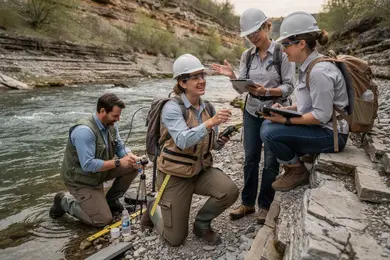
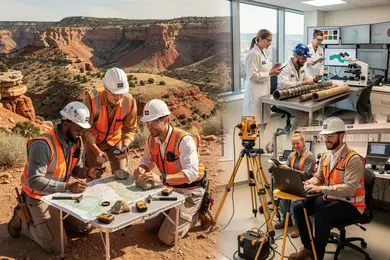
Students must consider how programs handle experiential learning. While some online programs offer virtual labs, others mandate fieldwork partnerships, often creating logistical hurdles for remote learners. These hands-on components can be decisive for internship placements and job readiness in consulting or monitoring positions where simulation falls short.
Given an annual mean wage of $110,400 for federal geoscientists, graduates benefit from training centered on climate impact assessment, remediation techniques, and sustainable resource management. The environmental agency career courses in geosciences programs need to reflect these workforce demands to boost employability.
Prospective students should evaluate how a given curriculum integrates theoretical knowledge with technical proficiencies critical to their targeted career path. For those comparing science fields, reviewing related options such as a computer science bachelor degree online may provide complementary skill sets valuable in geosciences data analysis.
What admission requirements do online geosciences programs ask for?
Admission to online geosciences programs demands targeted preparation beyond basic eligibility, with STEM prerequisites and analytical proficiency shaping access and success. For those aiming at environmental agency roles, prior coursework in biology, chemistry, physics, math, and often calculus and earth sciences is foundational. Graduate applicants usually must maintain a minimum GPA around 3.0, demonstrating solid quantitative and critical thinking skills directly tied to complex, data-driven environmental responsibilities.
Standardized tests are losing ubiquity but still factor into admissions for highly competitive or research-intensive programs, while relevant work experience-including internships or consulting roles-significantly improves candidacy by evidencing practical competency. This experience aligns with employer expectations, especially given a median annual wage near $80,000 for environmental scientists, per Bureau of Labor Statistics data.
Applicants should also submit recommendation letters that validate technical skills and problem-solving capabilities essential for regulatory or hazard evaluation tasks. Program candidates must confirm technological readiness, possessing reliable internet and proficiency with software tools critical for remote lab work or GIS projects.
Real-world constraints, such as balancing full-time jobs with study, underscore the value of asynchronous coursework. However, these programs often include substantial project deadlines and fieldwork components that may require occasional in-person commitments, demanding careful time management and resource allocation.
How long does an online geosciences degree take to finish?
Completing an online geosciences degree typically spans two to four years, influenced by enrollment status, prior credits, and program design. Accelerated tracks suit transfer students or those with relevant credentials, compressing timelines to about two years. Conversely, part-time students juggling work or family often extend completion to three or four years, reflecting employer preferences for demonstrable experience alongside academic progress.
Environmental agencies strongly weigh internship and fieldwork experience, meaning that programs structured around comprehensive co-op placements or data collection skills may feasibly require a longer study period. For those shifting into earth resource management or environmental science, prerequisite courses can further lengthen timelines if not previously fulfilled.
Students aiming for speed should consider year-round enrollment and recognition of prior professional certifications or technician experience. However, accelerated pacing risks reducing exposure to essential lab practice or research projects, elements that correlate with higher salary brackets-high-end earnings for environmental scientists and specialists reached $178,880 in 2024, according to U.S. labor statistics.
Strategically balancing academic rigor with workforce timing improves outcomes. Practical experience remains a critical factor for employability in federal and state environmental roles, potentially outweighing degree duration alone in candidates' favor.
How much do online geosciences degrees cost?
Cost considerations often determine the practical value of online geosciences degrees, with bachelor's programs ranging roughly from $15,000 to $45,000 depending on institution type, residency, and credit loads. Public universities typically offer lower in-state credit rates ($300-$600), while private or out-of-state options command $700 to $1,200 per credit. Graduate degrees begin near $20,000 and can surpass $50,000, making careful financial evaluation critical for students balancing debt against sector-specific salary prospects.
For example, environmental consulting employs about 70% of graduates and rewards specialized coursework with higher entry salaries, justifying pricey electives in some scenarios. Conversely, mining and oil & gas sectors favor technical skills and certifications, often valuing cost-efficient degrees more than brand prestige.
Additional expenses like technology fees ($100-$400 per term), textbooks, and software add to the out-of-pocket burden. Employer tuition assistance is beneficial but demands program accreditation verification, which is inconsistent across online offerings.
Choosing publicly supported, lower-cost programs with targeted curricula in geology or resource management may optimize ROI for candidates focusing on oil, gas, or mining roles versus broadly environmental science career routes. This strategic alignment significantly affects employability and long-term professional credibility within the industry.
What environmental agency jobs can geoscience graduates get?
Geoscience graduates often enter roles within federal or state environmental agencies where regulatory compliance and field-based assessments dominate early career tasks. For instance, a hydrologist at a state agency might evaluate water resource management plans to mitigate drought effects, requiring both technical data analysis and practical fieldwork. Salaries in these roles tend to be competitive, with median pay near $99,240 annually, but advancement typically depends on additional certifications or graduate education, especially for policy or specialized engineering positions.
Employers prioritize candidates skilled in geographic information systems (GIS), environmental impact evaluations, and soil or groundwater sampling, highlighting the value of combining hands-on experience with analytical competence. Geoscientists engaged in sustainability and climate modeling illustrate a growing shift towards agencies focusing on broader environmental initiatives, which can complicate hiring landscapes due to geographic and regulatory concentration.
Practical workforce realities show that flexible geographic willingness increases employment prospects, as competition intensifies in areas with dense environmental regulations. Candidates targeting immediate work should consider internships or contracted public-sector projects, which often lead to stable positions but may require adapting to more demanding fieldwork and data synthesis responsibilities before regional specialization.
What is the salary for environmental agency geoscience careers?
Environmental agency geoscience roles reveal a clear divide rooted in specialization and location, influencing salary and career prospects. Entry-level positions in local agencies hover near $50,000, while federal roles or specialized functions, such as groundwater contamination assessment at the Environmental Protection Agency, command $70,000 to $85,000. This discrepancy emphasizes the premium placed on regulatory expertise and field experience.
Practitioners focused on regulatory compliance or environmental impact assessments often see faster salary growth than those in natural resource exploration or research. Mastery of environmental modeling software and a Professional Geologist license can raise earning potential by 10-20% over five years. Yet, smaller or rural agencies tend to cap salaries due to budget constraints, forcing candidates to balance immediate pay against career stability.
The market projects approximately 2,000 annual geoscientist openings, but metropolitan or heavily regulated regions typically start wages 15% higher than rural areas. Candidates without specialized applied environmental science training or internships frequently encounter entry salaries near $45,000 to $50,000 and prolonged job searches.
Which certifications help geosciences graduates qualify for agency work?
Certification choices in geosciences directly shape eligibility and advancement within environmental agencies, where regulatory compliance and technical rigor are non-negotiable. The Certified Professional Geologist (CPG) credential, awarded by the American Institute of Professional Geologists, anchors a candidate's credibility for site assessments and regulatory submissions through verified field experience and adherence to ethical standards. Conversely, the Environmental Professional (EP) certification, maintained by the Academy of Board Certified Environmental Professionals, targets interdisciplinary management roles involving resource conservation and land-use planning.
Selecting between these certifications involves tradeoffs in scope and specialization. For instance, federal agencies like the EPA or the U.S. Fish and Wildlife Service often regard CPG credentials as prerequisites for technical geology positions, while multidisciplinary roles lean toward the EP for its broader environmental management focus. Additionally, state-specific licensure as a Professional Geologist (PG) is mandatory for legally endorsing technical reports in jurisdictions with stringent regulations, creating localized market segmentation.
Other credentials, such as the OSHA Environmental Professional certification, hold practical value in agencies managing hazardous materials and workplace safety, illustrating the layered credential landscape geoscientists must navigate. Employers require three to five years of relevant experience before granting these certifications, which affects career timelines and opportunities.
This credential ecosystem responds to labor demands in energy, environmental protection, and land management sectors, where practical competence and regulatory compliance govern employability and professional growth trajectories.
Other Things You Should Know About Geosciences
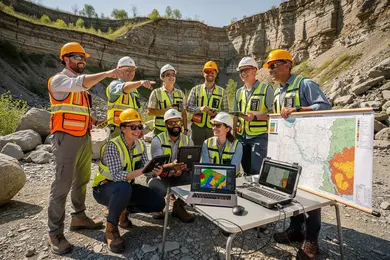
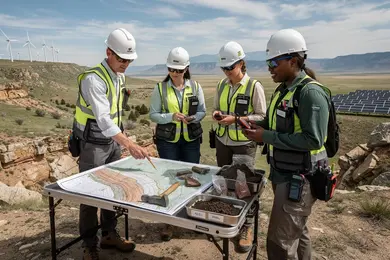
Programs that emphasize fieldwork offer practical experience highly valued by environmental agencies, especially for careers involving site assessments and data collection. However, theory-based programs may provide stronger skills in data analysis and modeling, which are essential for policy and research roles. Prioritize programs with balanced field and lab components that match your target job's demands rather than leaning solely toward one approach.
Most online geosciences degrees require some in-person components such as field labs or internships, often arranged locally or during brief on-campus residencies. This hybrid requirement can affect your schedule and location flexibility, so consider programs with well-established partnerships near you or virtual labs that effectively supplement limited field time. Employers expect graduates to demonstrate practical skills, so completing these components is critical to job readiness.
Many federal and state environmental agencies prefer GIS proficiency, but they do not usually require a separate GIS certification for geoscience roles. A bachelor’s degree in geoscience or a related field, plus coursework in GIS, remote sensing, and data analysis, is the usual baseline for entry-level hiring.
References
- 15 Best Certifications for Geologists in Nigeria (2026â2026 Guide) | Profolio https://www.profolio.ng/geologist/best-certifications
- Careers - Environment Agency https://environmentagencycareers.co.uk/careers/
- Jobs in Geosciences and Environment https://geops.geol.u-psud.fr/en/jobs-in-geosciences-and-environment/
- Online Geoscience Degrees: Top Schools and All Programs in 2026 https://www.gisdegree.org/online/geoscience-degrees/
- Geology and Environmental Studies Careers https://www.uwec.edu/geology-and-environmental-science-department/geology-and-environmental-studies-careers
- Careers in Geoscience: Environment https://www.aig.org.au/education/careers-in-geoscience/careers-in-geoscience-environment/
- Geoscience Jobs in Industry https://www.grow-geocareers.com/exploreindustries
- Environmental Geology & Contaminated Land https://www.geolsoc.org.uk/Geology-Career-Pathways/Careers/Job-Sectors/Environmental-Geology-and-Contaminated-Land-Sector.html
- Environmental Earth And Geoscience Jobs (with Salaries) - SEEK https://au.seek.com/environmental-earth-and-geoscience-jobs
- How to become a Geoscientist in Ireland https://www.gsi.ie/en-ie/education/life-as-a-geoscientist/Pages/Where-to-study-in-Ireland.aspx