2027 Online Geosciences Degrees for Research Institution Careers

Co-Founder and Chief Data Scientist
Environmental analysts and geologists often confront the challenge of advancing their qualifications without sacrificing ongoing project commitments or relocating to attend campus programs. With over 45% of current adult learners citing flexibility as their primary reason for choosing online education, according to the National Center for Education Statistics, this shift reflects a broader demand for adaptable learning models that accommodate professional timelines and geographic constraints.
In geosciences, where fieldwork and data analysis require sustained engagement, accessible online degrees emerge as a critical pathway to remain competitive while managing real-world responsibilities. This article examines online geosciences degree options specifically designed to support careers in research institutions, helping professionals navigate program features, admission criteria, and workforce alignment to optimize their career trajectories.
Key Things You Should Know
- National Science Foundation data shows only 35% of online geosciences degrees include mandatory in-person fieldwork, creating a critical tradeoff between remote accessibility and hands-on skill acquisition valued by employers.
- U.S. Bureau of Labor Statistics projects an 11% growth in geoscientist roles by 2030, but employer surveys reveal preferences for candidates with hybrid or on-campus experience, affecting graduate job placement.
- Recent NCES findings report online geosciences programs average 15% lower tuition but extend completion times by 20%, impacting career pivot timing and cumulative opportunity costs for working professionals.
What is an online geosciences degree and how does it prepare you for research careers?
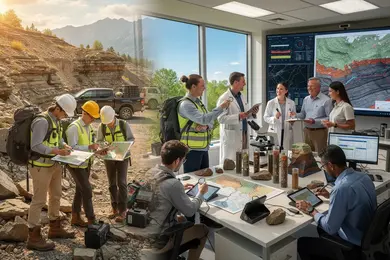
An online geosciences degree program for research careers offers a distinct blend of theoretical knowledge and applied skills crucial for meeting today's evolving job market demands. Graduates are expected to navigate diverse data sources through remote sensing, GIS software, and statistical modeling to conduct geological research without constant field presence. For example, online-trained professionals might assess environmental risks or resource deposits remotely, which aligns with employer preferences for flexible, technology-proficient researchers.
However, successful entry into research roles hinges on balancing online study with localized fieldwork, as hands-on experience remains a non-negotiable workforce expectation. The projected growth from 461,152 to 478,091 geoscience jobs by 2034 reflects nearly 17,000 openings, emphasizing the value employers place on candidates who integrate core geosciences concepts with software-driven data interpretation. Students should weigh this tradeoff because comprehensive preparation frequently requires practical arrangements beyond digital coursework.
How an online geosciences degree prepares students for research roles also depends on the program's inclusion of case studies and project-based learning, which foster decision-making under realistic constraints and promote collaboration with faculty experts. This focus helps graduates quickly translate research into actionable insights for resource exploration or environmental policy. Prospective students who consider switching fields might benefit from resources like the guidance offered when changing from a teacher to speech language pathologist, as it illustrates strategic career pivoting grounded in industry realities.
Are online geosciences degrees respected by research institutions and employers?
Employer acceptance of online geosciences qualifications hinges heavily on program structure that combines rigorous regional accreditation with applied learning components. Federal agencies, environmental consultancies, and energy corporations demand verification of hands-on experience through supervised internships or partnerships with research institutions. Purely theoretical online geosciences degrees, lacking practical exposure, often fall short in meeting hiring standards for research-driven roles.
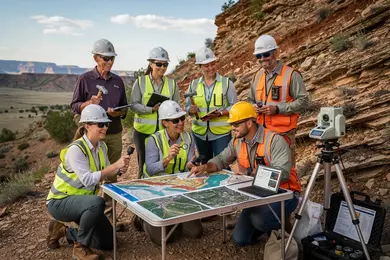
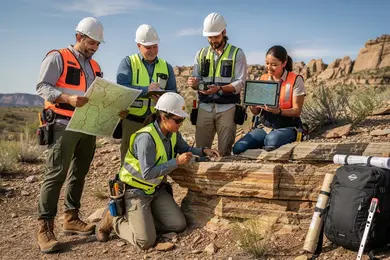
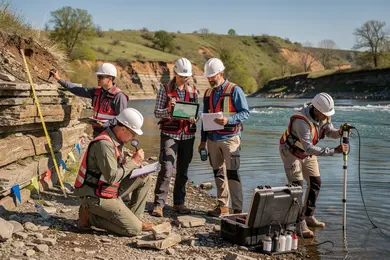
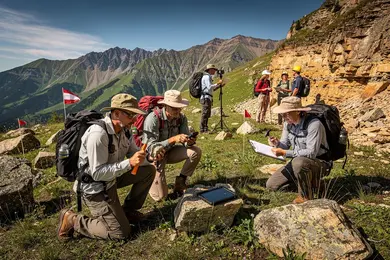
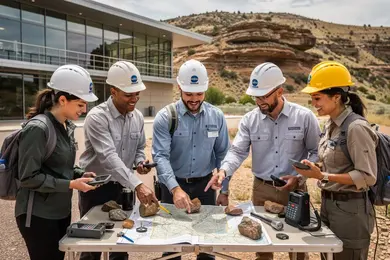
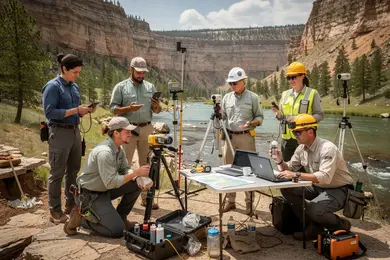
Fieldwork and laboratory proficiency remain indispensable in geosciences, as exemplified by agencies like the U.S. Geological Survey, which require candidates to demonstrate documented experience with data collection, geospatial technologies, and environmental sampling protocols. Many online programs address this expectation by integrating hybrid models or local collaborations, ensuring graduates acquire competencies aligned with employer needs.
Salary growth projections-4.5% median increase from 2024 to 2025 per the American Geosciences Institute based on U.S. Bureau of Labor Statistics data-reflect sustained demand for qualified professionals. However, candidates relying solely on online education must supplement credentials with certified certifications, research publishing, or relevant work experience to level the competitive landscape.
Prospective students should scrutinize programs carefully to confirm coverage of critical skills, including GIS software and data analytics, while negotiating proof of practical training with employers before assuming research or leadership roles. For broader context on advanced degree pathways, exploring the best data science masters offerings can also inform cross-disciplinary skill development. Recognition by research institutions remains a key filter in differentiating credible online geosciences degrees from others lacking substantive applied content.
How do online geosciences programs compare with on-campus programs for research training?
Online geosciences programs versus traditional on-campus training reveal a key divergence: while online degrees deliver comparable theoretical knowledge, they fall short on hands-on research proficiency critical in research institutions. Employers prioritize candidates with verifiable experience in fieldwork techniques, laboratory analysis, and real-time data collection-skills more readily acquired through on-campus access to specialized equipment and supervised environments. This gap affects hiring decisions in sectors like government geological surveys and energy research divisions, where practical immersion signals readiness for industry demands.
For example, graduates aiming for research roles face a tangible disadvantage if their training lacks direct interaction with industry-standard instruments and immediate faculty mentorship during experimental phases. Online students must often secure local internships independently to offset this deficit, complicating time-to-degree and adding unforeseen costs compared to on-campus students who benefit from integrated field courses and lab access within their programs. This logistical friction can influence long-term career progression and wage potential.
Given the median annual wage of $99,240 for geoscientists, the disparity in applied research experience translates into measurable employability and salary consequences. Comparing research training in online and campus geosciences degrees clarifies that prospective students targeting research-intensive careers must balance convenience against the critical advantage provided by immersive practical experience. Those considering an accelerated exercise science degree online may explore options through accelerated exercise science degree online, although this field differs in hands-on training dynamics from geosciences.
What types of online geosciences degrees and specializations are available?
Students pursuing online geosciences degree programs and specialization options must weigh the tangible career implications of their choices. Specializations such as environmental geology or climate science align with sectors experiencing faster growth, especially in environmental protection and climate risk assessment. For instance, a master's degree with an environmental geosciences focus directly supports roles in contaminated site management and sustainable resource extraction, aligning well with a 3% employment growth forecast by the U.S. Bureau of Labor Statistics from 2024 to 2034.
Alternatively, specialized tracks in remote sensing or GIS provide valuable skills for urban planning and disaster risk management but may limit transferability to broader environmental roles. Those targeting energy sectors through seismic interpretation or petroleum geology must recognize potential constraints, as these areas often face slower growth and fewer crossover options into environmental fields.
Online learning's hybrid demands-such as mandatory fieldwork or lab residencies-pose logistical and financial challenges for remote students. Practical training, especially for those eyeing federal or state geosciences careers, is nonnegotiable. Accredited programs offering recognized applied experience better position graduates amid employer preferences for hands-on expertise alongside academic credentials.
Students aiming at research institution careers should consult resources outlining comparative program affordability and outcomes; for example, some prospective candidates explore related credentials, like online MLIS programs, to enhance interdisciplinary skills and career flexibility.
What courses, labs, and fieldwork are included in typical online geosciences curricula?
Online geosciences programs prioritize technical mastery in mineralogy, sedimentology, geophysics, and environmental geology, emphasizing data-driven skills that align with employer expectations for quantitative analysis and digital tool proficiency. Coursework balances foundational theory with advanced topics like GIS, hydrogeology, and climate modeling, sectors where real-time data manipulation and predictive analytics are increasingly essential.
Lab components rely heavily on virtual simulations enabling skill development in rock identification and seismic analysis, though they often require additional investment in specialized hardware or software licenses. Students must weigh this against limited onsite exposure, as many programs supplement with weekend or summer field sessions to provide critical hands-on experience in stratigraphy and structural geology.
Field assignments are typically coordinated locally, allowing working professionals to integrate study with their careers but potentially reducing networking opportunities available in traditional residential settings. This decentralized approach demands proactive time management and employer or institutional support for supervision.
Financial outcomes bear significant career implications. Research data show that 83% of U.S. geosciences doctorate recipients graduate debt-free, an important factor since employers and funding agencies favor candidates demonstrating financial discipline, which can impact long-term job mobility and research grant access.
How can you verify accreditation and program quality for online geosciences degrees?
Employers in research institutions prioritize geosciences degrees from programs demonstrating rigorous curriculum alignment with industry-relevant skills, particularly fieldwork and data analysis tools such as GIS and remote sensing. The practical workforce impact of choosing an accredited program lies in the measurable outcomes-graduates who secure roles with mid-career salaries around $62,000 to $80,000, consistent with reported EnvironmentalScience.org data. This range underscores the financial advantage tied to degrees recognized by specialized bodies like the Geological Society of America and approved accreditors vetted by the U.S. Department of Education.
Evaluation of program quality should extend beyond institutional accreditation to faculty active research involvement and externally funded projects, as this reflects contemporary scientific engagement. Prospective students must weigh program offerings against real-world applicability, including internships and employer collaborations that facilitate smoother transitions into geoscience roles.
To minimize risks associated with costly career shifts, critical verification steps include:
- Consulting the U.S. Department of Education's Database of Accredited Postsecondary Institutions and Programs for authentic institutional status.
- Investigating specialized program accreditation or endorsements from relevant professional societies.
- Reviewing third-party rankings focusing explicitly on geoscience education quality and employability statistics.
- Assessing partnerships that demonstrate industry integration and internship pathways.
These pragmatic actions help distinguish programs producing graduates who meet employer expectations from those relying solely on online delivery without rigorous evaluation. This differentiation is essential for workforce relevance and long-term career viability in the geosciences field.
What are the admission requirements and application materials for online geosciences programs?
Securing admission to online geosciences programs hinges on demonstrating both academic readiness and relevant technical experience, reflecting the practical demands encountered in research or federal agency positions. Candidates commonly hold a bachelor's degree in geology, environmental science, or a closely aligned discipline, paired with a GPA typically between 2.75 and 3.0. Many programs prioritize applicants who show quantitative aptitude via prior coursework in calculus, chemistry, and physics, essential for handling data analysis and complex modeling in professional geoscience roles.
Application packets include a statement of purpose focused on explicit research goals or career trajectories, which aligns candidates with faculty expertise and program objectives. References, preferably from academic or industry professionals, validate readiness for technical tasks, while a detailed resume highlights applicable field experience-particularly important for working professionals navigating program rigor alongside employment.
Tuition costs, such as Southern New Hampshire University's rate of $320 per credit hour (about $960 per course), serve as a practical factor influencing decisions, weighing affordability against potential employability outcomes. Prospective students must also contend with logistical barriers like technology access for remote labs and strict documentation deadlines, which can complicate enrollment timelines. Evaluating program suitability involves assessing whether online delivery compromises the depth and rigor necessary for career progression in competitive geoscience environments, especially those demanding validated scientific expertise.
How long do online geosciences degrees take and what do they cost?
The choice between accelerated and traditional geosciences degree programs shapes not only time-to-completion but also practical readiness for specialized roles. A bachelor's degree generally requires four years full time, though accelerated paths can reduce this to 2.5 years if prerequisites and intense scheduling are feasible. Master's programs often take about two years, but part-time or flexible formats may extend up to four years, affecting overall cost and integration with professional responsibilities.
Employers, particularly in federal agencies and environmental consulting, prioritize candidates with robust fieldwork experience and data analysis skills. Rushing through coursework risks insufficient practical exposure-a critical hiring criterion in research-intensive settings. Students balancing work should consider longer timelines that allow meaningful internships or cooperative education.
Cost considerations differ significantly between public and private institutions, with annual tuition ranging from roughly $8,000 to over $20,000, excluding additional fees and materials. Early financial planning through scholarships or employer tuition support can mitigate these expenses, especially when extended program durations increase cumulative costs. Informed selection requires weighing these tradeoffs in light of specific career objectives and employer expectations, underscoring that credential speed alone is rarely the deciding factor for success in geosciences roles.
What research, industry, and government careers can an online geosciences degree support?
Graduates from online geosciences degrees face significant challenges translating theoretical knowledge into roles that demand not only analytical skills but practical, field-based experience. Research positions-including postdoctoral roles and project coordinators-often require managing complex datasets and obtaining primary funding through competitive teaching or research assistantships, with over 80% of recent doctorate recipients securing such support according to NCSES data from the NSF Directorate for Geosciences.
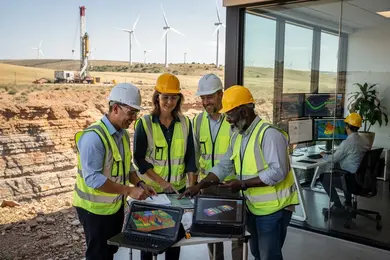
Industry roles emphasize applied expertise in environmental consulting, resource exploration, and geotechnical engineering. Candidates who lack hands-on internships or cooperative education experiences frequently struggle to meet employers' expectations for proficiency in geospatial analysis, remote sensing, and regulatory compliance. This disconnect can delay entry or advancement in a sector driven by compliance and commercially viable solutions.
Government jobs at agencies like the EPA, USGS, and FEMA demand familiarity with field surveys, disaster modeling, and federal protocols-often including security clearances-making relevant experience critical. Online learners must therefore actively seek internships or partnerships with local entities to mitigate the distance-learning gap and build professional networks valuable for mentorship and job placement.
Proactive planning is essential given the tight funding landscape and competitive academic-to-career pipeline. Practical exposure, strategic networking, and applied skill development remain decisive factors distinguishing successful online geosciences graduates in this landscape.
What are the salary ranges and job outlook for geoscientists with online degrees?
Salary ranges for geoscientists earning online degrees in 2026 vary widely, generally from $60,000 to over $120,000 annually. These figures depend heavily on specialization, field experience, and the employer's sector. For instance, environmental consulting or government entry-level roles tend to offer $60,000 to $75,000, while senior positions at national laboratories or research institutions can surpass $110,000. However, candidates with only online credentials often face the crucial tradeoff of limited hands-on lab time, which impacts early employability and salary negotiation power.
Employment growth for geoscientists is steady, with a 5% increase projected through 2032, driven by demands in climate modeling, natural resource management, and environmental cleanup. Success in securing research-driven roles requires upskilling beyond the degree itself-proficiency in GIS, remote sensing, data analytics, and scientific programming is increasingly non-negotiable. A practical approach involves complementing online study with internships or fieldwork to build the applied technical skills employers explicitly seek.
Geosciences graduates entering research institutions benefit from a robust pipeline supported by NSF data on doctorate production. Still, geographic location influences salary ranges and opportunity density; urban research hubs offer higher wages but require localized expertise. Strategic portfolio building with certifications and applied projects, beyond just the degree, aligns outcomes with employer expectations for technical rigor and real-world readiness.
Other Things You Should Know About Geosciences
Online geosciences programs face inherent limits in delivering hands-on field experience critical for many research roles that require direct data collection and site assessments. Students should prioritize programs that integrate structured in-person fieldwork modules or partnerships with local agencies to gain practical skills. Without these, graduates risk gaps that can hinder employment in field-intensive positions, especially those involving geological surveying or environmental sampling.
The program should hold regional institutional accreditation, and the geoscience curriculum should be reviewed by faculty with active research credentials. For U.S. careers, employers also value membership or alignment with the American Geosciences Institute and coursework that matches graduate-study standards in geology, GIS, or earth systems science.
Employers expect candidates to demonstrate data analysis proficiency, use of geospatial software, and familiarity with empirical field methods regardless of degree modality. Online programs that emphasize these competencies through applied projects, internships, or collaborations better meet employer standards. Candidates from programs lacking applied research components may need to supplement their resumes with additional certifications or practical experience to compete effectively.
Thesis-based online geosciences degrees better position students for research careers, as they develop critical skills in experimental design, data interpretation, and scientific writing. Degree tracks without a research project component may limit opportunities for advanced roles or graduate study. For career pivots into research institutions, candidates should select programs offering substantial thesis work or equivalent applied research to demonstrate research capability.
References
- Supporting Geoscience Students https://www.grow-geocareers.com/forgeodepartments
- How Employers View Online Degrees: Interviews with Nine Hiring Executives https://www.onlineeducation.com/features/how-employers-view-online-degrees
- Geology - ABET https://www.abet.org/accreditation/new-and-developing-program-areas/geology/
- Online Classes or On Campus: Which is Right for You? - Graduate Programs for Educators https://www.graduateprogram.org/blog/online-classes-or-on-campus-which-is-right-for-you/
- Geologists: Salary, career path, job outlook, education and more - RaiseMe https://www.raise.me/careers/life-physical-and-social-science/geoscientists/geologists/
- 5. Best Practices for Instruction of Geoscience Undergraduates https://www.americangeosciences.org/change/sections/instructional_best_practices/
- Is Your Online Degree Legitimate? How to Verify Private University Approval https://matchtocollege.com/blog/verify-private-university-online-degree-approval
- Geoscience Careers https://www.uni-potsdam.de/en/geo/study/msc-geosciences/berufsbilder-in-den-geowissenschaften
- Careers in the Earth Sciences https://earthsciences.dartmouth.edu/undergraduate/careers-earth-sciences
- Working Geoscience https://profession.americangeosciences.org/working/