2027 Online Geosciences Degrees for Graduate School Preparation

Co-Founder and Chief Data Scientist
Geosciences professionals aiming for graduate school often confront rigid on-campus schedules that clash with fieldwork or employment, complicating timely degree completion. This conflict intensifies as 58% of graduate students surveyed by the National Center for Education Statistics in 2024 prioritize flexible online formats to maintain career momentum while advancing academically. Such demand for adaptable scheduling reflects a broader shift, where balancing work, research obligations, and education is essential to avoid prolonged career interruptions or stalled credentials. This article evaluates the top online geosciences degrees designed for graduate preparation, focusing on program structure, accessibility, and how each supports strategic career advancement amid these constraints.
Key Things You Should Know
- Online geosciences master's degrees average 18-24 months and can reduce opportunity costs versus traditional formats, yet 2024 NCES data shows 27% of enrollees face limited access to required lab resources, impacting skill acquisition.
- Employer surveys from the American Geosciences Institute reveal 69% prioritize field experience over online coursework, forcing candidates to seek supplemental in-person training, which complicates cost and time calculations.
- State licensure prerequisites remain unevenly aligned with online curricula; 42% of programs fall short on meeting regional licensure competencies, delaying professional certification and impeding immediate workforce entry.
What are online geosciences degrees for graduate school preparation?
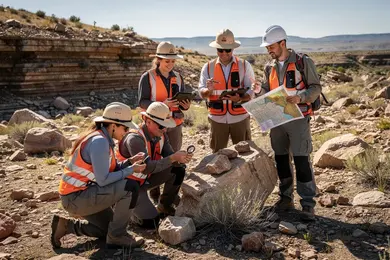
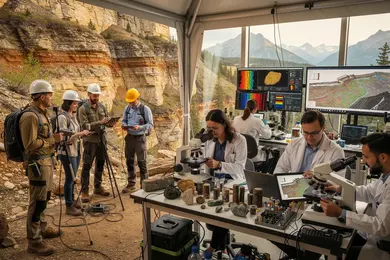
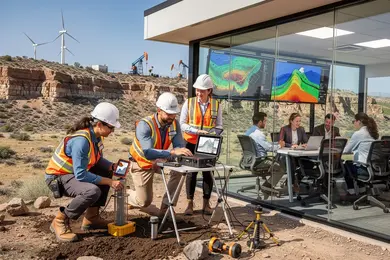
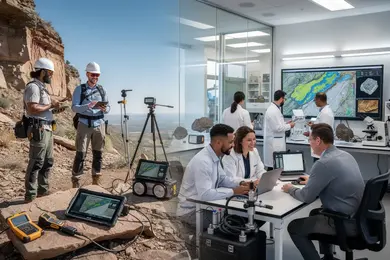
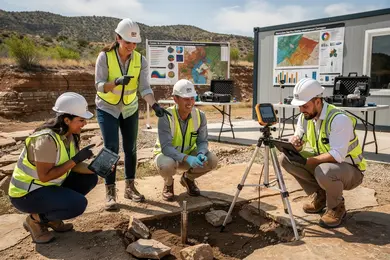
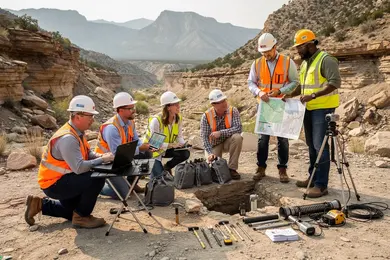
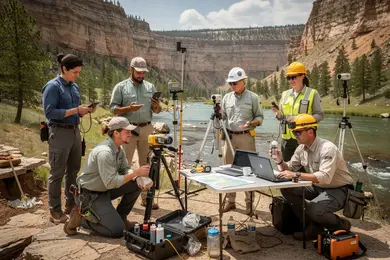
Online geosciences degree programs for graduate admission are increasingly defined by their ability to balance rigorous scientific instruction with the logistical challenges of remote learning. A chief consideration is the tradeoff between flexible asynchronous coursework and the limited availability of hands-on field experiences that remain essential in areas like petroleum geology and environmental consulting. Programs often supplement virtual labs and GIS training with summer residential courses or local partnerships to address this gap.
Enrollment data reflect the growing uptake of these models: 32% of U.S. graduate geoscience students were in some form of online or hybrid format in 2023, a significant jump from 19% in 2019, indicating wider employer acceptance but continued variability across sectors. Federal agencies tend to accept online master's degrees when paired with solid quantitative skills and research outputs, while some private firms remain cautious, prioritizing firsthand sampling and geophysical survey experience.
Students selecting the best online geosciences courses for graduate school preparation must scrutinize program accreditation, faculty research alignment, and technology compatibility, especially regarding software like ArcGIS or Petrel. Funding avenues including employer tuition assistance and federal grants shape affordability and, indirectly, career return on investment.
The practical consequences of this pathway extend beyond academics; limited remote research assistantship opportunities can restrict critical mentoring and networking. Those weighing a switch or specialization may also want to explore what jobs can you get with an environmental science degree to understand sector-specific demand and roles more clearly.
How do online and campus geosciences programs compare?
Choosing between campus and online geosciences education significantly impacts practical skill acquisition and employability in fields demanding hands-on experience. Campus programs offer direct interaction with laboratory equipment and fieldwork essential for roles in environmental consulting or petroleum geology, where employers expect demonstrated proficiency in geospatial tools and field methodologies. Graduates with comprehensive applied training from campus settings generally experience smoother transitions into these positions.
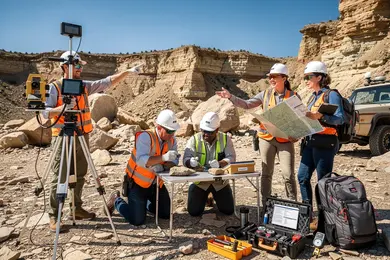
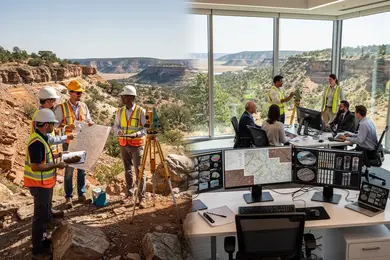
Online geosciences degree program comparison reveals a focus on theoretical knowledge and data analysis, often lacking immersive field components that hiring managers value for site assessments and geological surveys. Therefore, online students must proactively pursue local internships or hybrid program components to compensate, increasing both cost and complexity. This distinction is crucial for candidates targeting roles heavily reliant on supervised practical experience.
Employers increasingly prioritize candidates capable of independent problem-solving and self-motivation, especially in research-oriented segments of the industry where online formats hold appeal for working professionals due to flexibility. However, early-career students benefit more from campus environments offering structured skill development and direct networking opportunities.
The U.S. Bureau of Labor Statistics projects a 3% employment growth for geoscientists from 2024 to 2034, with a 2023 median annual wage of $99,240, emphasizing the competitive advantage of practical competencies. Prospective students evaluating an online bachelors in animal science might find insights on balancing cost, tuition, and program structure useful when considering geosciences alternatives that suit their professional and educational goals.
Is the geosciences program accredited for graduate school?
Accreditation marks the practical threshold for qualifying degrees in geosciences master's programs, directly influencing eligibility for federal employment, research opportunities, and doctoral studies. For example, graduates aiming to work for agencies like the US Geological Survey must hold degrees from accredited programs to avoid disqualification regardless of the institution's prestige. This requirement maintains a baseline rigor aligned with labor market demands and ensures credit transferability crucial for advanced interdisciplinary work.
When considering online geosciences programs accredited for graduate study, students should verify institutional and regional agency endorsements to secure professional certification pathways and competitive funding access. Without proper accreditation, graduates risk limited salary advancement and fewer networking connections, as demonstrated by the American Geosciences Institute's report showing higher starting salaries-45% of U.S. master's graduates earn over $75,000-largely among those from accredited programs.
Students restricted by geographical or financial constraints might explore hybrid or public research universities offering accredited degrees. These programs blend access with compliance to accreditation standards without sacrificing academic or professional recognition. This balance becomes critical for those who also compare alternative pathways such as those highlighted in online degree in exercise science where structure and accreditation similarly guide outcome reliability.
Decisions around accredited geosciences degrees in North America for graduate school must factor the tradeoff between program accessibility and professional acceptance. Avoiding due diligence risks disrupting educational trajectories and delaying entry into specialized sectors of the geosciences workforce.
What courses are included in online geosciences degrees?
Online geosciences degrees synthesize essential core environmental geoscience courses online with specialized curriculum components tailored to specific industry demands. While foundational fields such as mineralogy, petrology, and sedimentology establish critical baseline expertise, the value lies in how programs incorporate applied skills directly linked to workforce roles. For instance, courses in geophysics and seismic interpretation cater to employment in resource exploration or environmental consulting, where data-driven decision-making is non-negotiable.
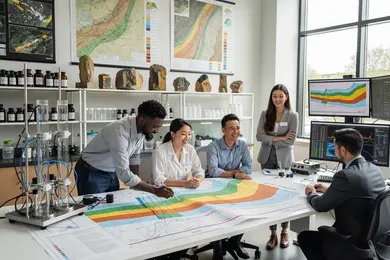
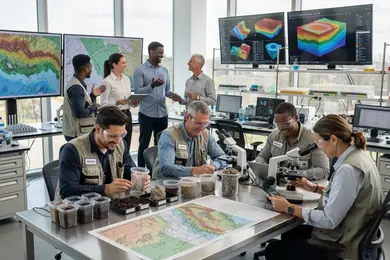
Graduate-level geosciences program curriculum extends beyond theory, embedding quantitative methods-statistical analysis, numerical modeling, and data interpretation-into field and lab experiences. Many online programs mitigate challenges in hands-on training through virtual simulations or local lab partnerships, addressing a pivotal barrier that frequently hinders remote learners from meeting graduate school prerequisites.
Concentration options enable strategic depth in specific areas but require scrutiny of online delivery's handling of essential fieldwork and labs, which may mandate short residencies or partnerships for accreditation compliance. Failing to account for this can delay progression or incur unexpected costs, impacting timing of graduate applications and job market entry. According to the 2024 AGI National Geoscience Exit Survey, 61% of bachelor's graduates applying for graduate programs secured funded offers-a success tied closely to technical preparation.
For those comparing costs or considering cross-disciplinary options, examining affordability remains vital; for example, candidates interested in computing adjunct skills can explore options like a computer science degree online, which complements geosciences competencies in many roles.
What admissions requirements do online geosciences programs ask for?
Geosciences programs online demand more than academic credentials; practical alignment with workforce realities is critical. A bachelor's degree in geosciences, environmental science, engineering, or related STEM fields with a 3.0 GPA minimum is the standard baseline. However, applicants should weigh the tradeoffs of test requirements such as the GRE, which some programs waive for experienced professionals or midcareer pivoters with relevant industry experience in mining, environmental consulting, or meteorology. This substitution can accelerate admission but may require robust documentation of skills and work achievements.
Admissions committees focus heavily on a detailed statement of purpose that connects career objectives with specialized knowledge areas like hydrogeology or geophysics, distinguishing candidates in a competitive environment intensified by a 23% growth in awarded degrees over the last decade. International students must balance English proficiency testing with technological readiness due to the reliance on virtual labs and GIS software in remote learning.
Failing to meet prerequisites typically results in conditional acceptance tied to extra leveling courses, increasing both time and cost. Different sectors-oil and gas versus environmental regulation-prioritize specific skills, influencing which program nuances and certifications students should pursue. Early consultation with program advisors can mitigate mismatches and streamline outcomes.
How long does an online geosciences degree take?
Completing an online master's in geosciences requires navigating competing demands between program pace and career realities. Full-time tracks typically take two to three years, while part-time enrollment stretches up to five years, enabling professionals to balance employment and family commitments. However, programs emphasizing applied fields like environmental geology or hydrogeology enforce rigid timelines due to required fieldwork and prerequisite courses, limiting flexibility even online.
The degree length depends heavily on credit requirements-commonly 30 to 40 credit hours. For instance, the University of Georgia's online M.S. in Environmental Geology is structured for a two-year timeline but accommodates extensions for those in consulting or government roles managing project deadlines alongside studies. Cost also influences pacing: annual tuition around $20,220 is significantly lower than many campus-based counterparts, making part-time study attractive to reduce debt but potentially delaying workforce entry.
How much do online geosciences degrees cost?
Costs for online geosciences master's programs vary significantly, ranging from $15,000 to $50,000 depending on institution type and residency. Public universities charge $500 to $1,200 per credit hour for in-state students, but out-of-state tuition can more than double these fees. Private programs often levy $900 to $1,500 per credit hour, pushing total program expenses above $40,000 for 30 to 36 credits.
Funding decisions must consider differences in specialization. Nearly 41% of graduate geoscience students now focus on environmental or hydrology tracks, which often entail added costs for software licenses or field equipment, tallying an extra $1,000 to $2,500. Professionals shifting toward water resource management or environmental consulting should plan accordingly.
Working students face a tradeoff: programs offering part-time and asynchronous formats provide flexibility but extend the timeline and possibly the total cost due to ongoing tuition accrual. Employer tuition assistance programs require careful comparison of eligibility and accreditation since licensing in sectors like environmental regulation or petroleum engineering demands recognized credentials.
Which careers can a geosciences degree prepare you for?
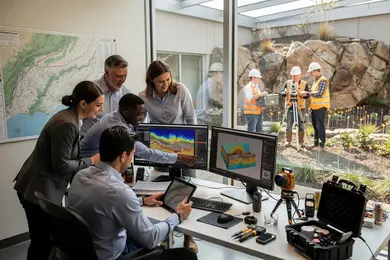
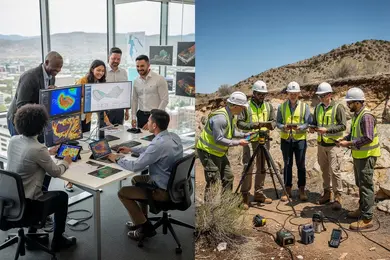
Employers in geosciences increasingly prioritize proficiency in GIS and spatial analysis, with 78% rating these skills as essential or very important-64% explicitly require GIS capabilities. This data-driven demand reshapes how candidates prepare, often forcing a choice between in-field surveying experience and remote sensing or GIS software expertise. For example, environmental consultants rely on GIS to model contamination spread and ensure regulatory compliance, whereas petroleum geologists use it to map reservoirs and inform exploration strategies.
Government roles focused on climate modeling, disaster mitigation, and land-use planning emphasize integration of spatial data with computational modeling; hydrologists at the US Geological Survey use these tools to predict flood risks, directly impacting infrastructure projects. These positions require advanced analytical skills far beyond traditional fieldwork, illustrating varied technical expectations across sectors.
Graduate programs vary in focus, reflecting employer tradeoffs: some stress hands-on surveying, others prioritize GIS training combined with sector-specific experiential learning. Candidates aiming for energy or environmental policy sectors should select curricula that integrate GIS with practical applications, aligning skill sets with nuanced employer needs and improving adaptability in a competitive labor market.
What salary can geosciences graduates expect?
Salary outcomes for graduates with a master's degree in geosciences vary notably by industry and geography, with typical starting ranges from $60,000 to $85,000. Environmental services and consulting employ the majority-58% of recent master's graduates-offering salaries typically between $65,000 and $80,000. These roles demand a blend of technical expertise in environmental assessment and regulatory compliance alongside effective client communication.
About 21% enter energy and extractive sectors such as oil, gas, and mining, where entry salaries often exceed $75,000 but face volatility tied to commodity markets and geographic mobility. Accepting these roles includes tradeoffs: higher potential compensation balanced against project instability and lifestyle disruptions from relocation.
Academic and research tracks present lower starting pay around $55,000 but offer longer-term growth through grants and specialization. Employers prize candidates skilled in GIS modeling, data interpretation, and regulatory frameworks across all sectors.
When evaluating career pathways, students should weigh sector-specific stability versus earning potential and geographic flexibility. For example, a candidate prioritizing steady work may prefer consulting, whereas those open to international moves might target energy projects with richer pay but greater upheaval.
What certifications or licenses may geosciences careers require?
Licensing and certification requirements in geosciences directly shape career prospects and limit practice in critical sectors such as environmental remediation, mining, and oil and gas. The Professional Geologist (PG) license remains the primary credential granting legal authority to approve geological reports and impact assessments. Securing this license demands an accredited geosciences degree, roughly four years of supervised experience, and successful completion of the ASBOG exams-barriers that can delay entry into regulated project roles.
Beyond the PG, certain roles require specific credentials-for instance, hazardous waste management jobs often mandate Board of Certified Safety Professionals (BCSP) certification or state-level certifications tailored to health and safety compliance. Hydrogeologists face a patchwork of state-issued water well driller licenses or water resource management certifications, each with distinct renewal and continuing education requirements.
Employers favor credentials like Certified Hazardous Materials Manager (CHMM) or Certified Environmental Professional (CEP), although these are supplementary rather than universally required. Early verification of state-specific rules is essential: noncompliance can limit employability and delay project assignments in a competitive job market.
Since 2016, the representation of underrepresented minorities in U.S. geosciences graduate programs increased from 12% to 20%, an evolution influencing diversity initiatives and licensing support that may improve access to credentials. Ultimately, practical licensing considerations have more decisive influence on workforce integration than degree prestige, underscoring the need for students to prioritize these pathways.
Other Things You Should Know About Geosciences
Online geosciences graduate programs tend to demand the same rigorous workload as their on-campus equivalents, including extensive data analysis, research projects, and technical report writing. Professionals should expect to invest significant time outside of synchronous sessions, often requiring disciplined time management. Programs with flexible deadlines and asynchronous components are better suited for working students, while those with fixed schedules may create challenges in balancing work obligations and academic progress.
Employers increasingly recognize accredited online geosciences degrees as valid credentials, especially when candidates demonstrate relevant skills and experience. However, some employers, particularly in research-intensive or field-heavy roles, prefer candidates with traditional degrees or those who have completed significant in-person training. Candidates from online programs should proactively build practical experience, such as internships or certifications, to offset potential employer concerns and strengthen their competitiveness.
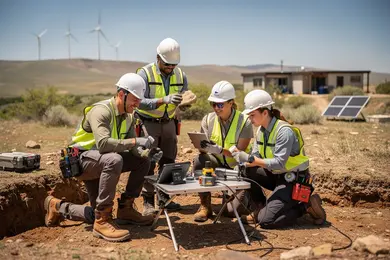
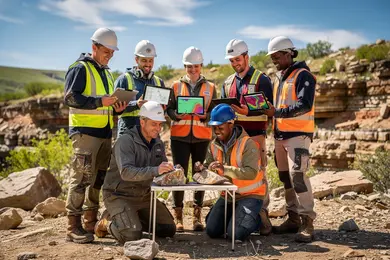
Most online geosciences degrees require 6 to 12 laboratory or field credits, often completed through a summer field course, local fieldwork, or an approved hybrid lab. For graduate school preparation, admissions committees also expect upper-division coursework in geology, chemistry, physics, and GIS.
References
- Certifications https://www.grow-geocareers.com/certifications
- Geoscientists Canada - THE PROFESSION https://geoscientistscanada.ca/profession.php
- Online Geoscience Degrees: Top Schools and All Programs in 2026 https://www.gisdegree.org/online/geoscience-degrees/
- Graduate - Department of Geology and Geological Engineering https://geology.mines.edu/graduate-programs/
- Frequently Asked Questions https://www.americangeosciences.org/licensure/faq/
- Find a Masters https://www.geolsoc.org.uk/Geology-Career-Pathways/University/After-your-Degree/Masters/Find-a-Masters.html
- Graduate program https://www.ga.gov.au/about/careers/graduate-program
- Geoscience Careers https://education.americangeosciences.org/resources/geoscience-careers/
- ThisIsGeoscience - Geoscience Salaries https://www.thisisgeoscience.com/the-resources/geoscience-salaries