2027 Weekly Start Online Degrees vs Self-Paced Accelerated Humanities Degree Programs
Audited and Verified:
Our Editorial and Data Verification Process
Research.com uses government datasets, official education statistics and primary institutional information to support its career and degree guides. Our review process checks factual accuracy, occupational definitions, source dates and the requirements associated with the credentials discussed.
How This Article Was Fact-Checked
Our editorial team verifies salary estimates, employment projections, education requirements and program information against original data providers and official organizations. Salary figures are checked against the relevant occupational definitions and reporting periods. Information about licensure, accreditation and required in-person training is reviewed separately.
Fact-checked and verified on:

Co-Founder and Chief Data Scientist
Choosing between weekly start online degrees vs. self-paced accelerated humanities degree programs comes down to one question: do you want a fixed weekly rhythm or full control of your own speed? More than half of all U.S. college students (54.1%) took at least one distance education course in fall 2023, so flexible formats are no longer a niche. Yet the two most flexible models work very differently. Weekly start programs let you enroll almost any Monday and then follow short, instructor-led courses with set deadlines. Self-paced accelerated programs let you move through English, history, philosophy, or communication coursework as fast as you can prove mastery. This 2027 guide compares both formats on structure, speed, cost, support, and career outcomes, using the latest federal data, so you can pick the humanities degree path that fits your schedule.
Key Benefits of Weekly Start Online Degrees vs Self-Paced Accelerated Humanities Degree Programs
- Weekly start programs offer frequent enrollment dates and short, paced courses; self-paced accelerated programs let you finish courses as soon as you master the material, often within flat-rate terms.
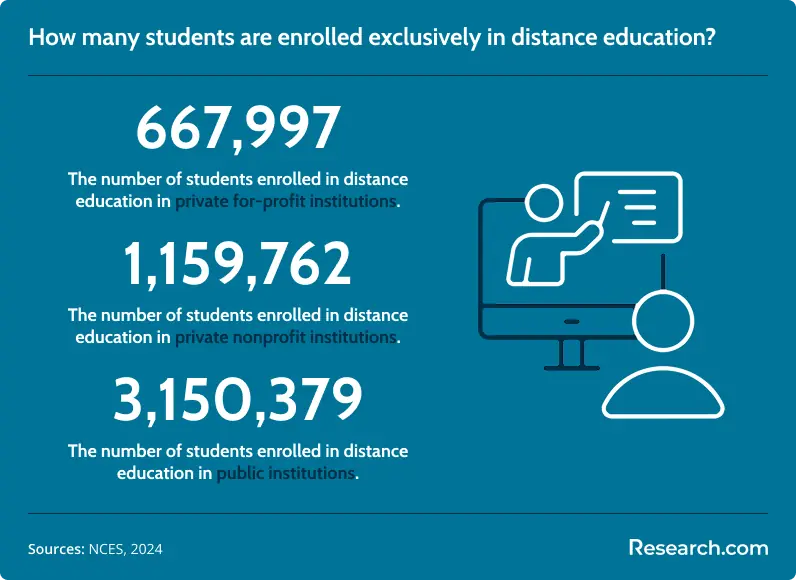
- In fall 2023, 26.1% of U.S. college students (about 4.98 million) studied exclusively online, and 64.9% of students at private for-profit institutions were fully online.
- Bachelor's degree holders earned a median of $1,578 per week in 2025 and had a 2.8% unemployment rate, compared with $966 and 4.3% for high school graduates.
What are weekly start online degrees?
Weekly start online degrees are programs that open new course sections every week, or close to it, instead of only in fall and spring. You apply, get accepted, and begin within days. Courses usually run four to eight weeks, and you take one or two at a time.
The pace is set by the school. Each week brings readings, discussion posts, and an assignment due on a fixed day. An instructor grades your work and leads a small online cohort. For humanities majors, that means regular essay feedback and live debate on texts, which many students find motivating. The same model is common in professional fields too, including many online SLP programs that pair structured terms with set clinical milestones.
What are self-paced accelerated humanities degree programs?
Self-paced accelerated humanities degree programs let you complete each course whenever you are ready to pass its assessments. Many use a competency-based model: you pay for a term of several months, then finish as many courses as you can within it. A student who already writes well might clear a composition course in two weeks rather than eight.
There are fewer due dates and fewer cohort discussions. Faculty or mentors act more as coaches who check progress and grade final papers or exams. This format suits disciplined learners with prior credits, work experience, or strong reading and writing skills.
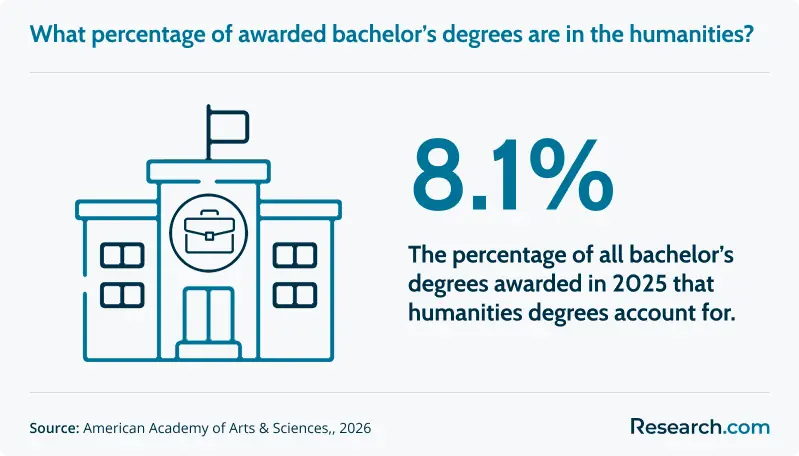
Flexible formats matter more as the humanities pipeline shrinks, because they open these majors to working adults who cannot attend on a fixed campus schedule.
How common is online learning in higher education?
Online study is now mainstream. In fall 2023, 19.04 million students enrolled at U.S. degree-granting institutions. Of those, 54.1% took at least one distance education course, and 26.1% studied fully online. Undergraduates were slightly less likely than graduate students to be fully online (23.5% vs. 39.1%).
This matters for humanities students because schools now build complete online English, history, and liberal studies degrees, not just a few electives.
Weekly start programs are quick to begin. Self-paced programs are fast to finish if you put in the hours. The table below sums up the main differences.
| Factor | Weekly Start Online Degrees | Self-Paced Accelerated Programs |
| Start dates | Weekly or every few weeks | Usually monthly or term-based |
| Course length | 4 to 8 weeks each | As long as you need within a term |
| Deadlines | Fixed weekly due dates | Few or none until term ends |
| Instructor role | Teaches and grades a cohort | Mentors and evaluates mastery |
| Peer interaction | Weekly discussions | Limited, often optional |
| Typical pricing | Per credit hour | Often flat rate per term |
| Best for | Learners who want routine and feedback | Self-starters with prior knowledge |
Acceleration in any field depends on how much structure you need. Students comparing MSW accelerated programs online face the same trade-off between intensive scheduled terms and flexible pacing.
Private for-profit colleges rely on fully online formats far more than other schools. Nearly two in three of their students studied exclusively online in fall 2023. Private nonprofit universities follow, and public institutions have the lowest share, although they enroll the largest number of fully online students overall.
This split is useful when you research programs. Check whether a school is public, nonprofit, or for-profit, and compare its graduation rates and total costs before you enroll.
A humanities degree from either format leads to the same credential, so career outcomes depend on your field and skills, not on whether you studied weekly or self-paced. Writing, editing, research, and language careers pay well above the all-occupations median of $50,980 (May 2025). Humanities fields rarely appear among the most lucrative college majors, but technical writing and editing roles show that strong communication skills are well rewarded.
Growth is modest, though. BLS projects little or no change for writers and authors and a 1% decline for editors from 2025 to 2035, so pairing a humanities major with digital, technical, or teaching credentials can help.
Cost depends more on the pricing model than on the format. Weekly start programs usually charge per credit hour, so your total equals credits times the rate, plus fees. Self-paced programs often charge a flat rate per term, which means every extra course you finish in that term lowers your cost per credit.
To compare fairly, estimate how many credits you can realistically complete each term. If you work full-time, a flat-rate term may not save money. Shoppers comparing the most affordable accredited online psychology degrees use the same math: total program cost, transfer credits accepted, and time to degree.
No format is automatically easier. Self-paced programs remove deadlines, but that also removes the push that keeps many students on track. Weekly start programs add structure, but short courses move quickly, and a missed week can mean a lot of catch-up.
Humanities coursework is reading- and writing-heavy in both models. If you want the easiest online degree for your situation, pick the format that matches how you study best, not the one with the fewest rules.
Yes. BLS data for 2025 show a clear earnings and employment gap by education level, and it widens with graduate study. Finishing faster in a self-paced program, or starting sooner in a weekly start program, means you reach those returns earlier.
| Education Level (Age 25+) | Median Weekly Earnings, 2025 | Unemployment Rate, 2025 |
| Master's degree | $1,876 | 2.6% |
| Bachelor's degree | $1,578 | 2.8% |
| Associate's degree | $1,135 | 3.0% |
| Some college, no degree | $1,062 | 3.8% |
| High school diploma | $966 | 4.3% |
The "some college, no degree" row is a risk to avoid. Whichever format you choose, finishing matters more than how you get there.
How do you choose the right humanities program format?
Start with an honest look at your habits and schedule. Then use this checklist:
- Confirm accreditation. Choose a school with institutional accreditation recognized by the U.S. Department of Education or CHEA.
- Ask about pacing rules. Find out the minimum progress requirements for self-paced terms and the late-work policies for weekly courses.
- Check transfer credit. Prior credits shorten both formats, but self-paced programs often reward them most.
- Compare total cost. Use per-credit or per-term prices and a realistic credits-per-term estimate.
- Look at support. Ask about writing centers, mentors, library access, and career services for online students.
If you want routine and frequent feedback, choose weekly start. If you are a confident reader and writer with limited but flexible time, self-paced acceleration can save months
Other Things You Should Know About Humanities Degrees
Completion time depends on your transfer credits, weekly study hours, and how quickly you pass assessments. A student starting from scratch still faces about 120 credits for a bachelor's degree, so finishing in well under four years requires steady, heavy effort each term. Students with an associate degree or prior college credit see the biggest time savings, because self-paced programs let them move quickly through material they already know.
Students in accredited programs at eligible institutions can usually apply for federal aid by filing the FAFSA. Self-paced, competency-based programs may have specific rules on how aid is disbursed and how much progress you must make each term. Ask each school's financial aid office how its term structure affects your Pell Grant or loan schedule before you enroll.
Employers generally focus on the school's accreditation and your skills, and diplomas from accredited schools usually do not state that the degree was earned online. With more than half of U.S. college students taking at least one online course in fall 2023, online study is now a normal part of higher education. A strong writing portfolio, internships, or published work will often matter more than the delivery format.
Common online humanities majors include English, communication, history, liberal studies, philosophy, religious studies, and interdisciplinary humanities. Weekly start schedules are widespread for these majors, while self-paced options are more limited and often center on English, communication, and general studies tracks. Check each program's catalog, since availability changes often.
- American Academy of Arts & Sciences. (2026). Bachelor's degrees in the humanities. Humanities Indicators. AMACAD.
- National Center for Education Statistics. (2023). Fast facts: Distance learning. NCES.
- National Center for Education Statistics. (2024). Digest of Education Statistics 2024, Table 311.15: Number and percentage of students enrolled in degree-granting postsecondary institutions, by distance education participation, location of student, level of enrollment, and control and level of institution: Fall 2022 and fall 2023. NCES.
- U.S. Bureau of Labor Statistics. (2026). Education pays, 2025. Career Outlook. BLS.
- U.S. Bureau of Labor Statistics. (2026). Employment Projections: Unemployment rates and earnings by educational attainment, 2025. BLS.
- U.S. Bureau of Labor Statistics. (2026). Occupational Outlook Handbook: Editors. BLS.
- U.S. Bureau of Labor Statistics. (2026). Occupational Outlook Handbook: High school teachers. BLS.
- U.S. Bureau of Labor Statistics. (2026). Occupational Outlook Handbook: Historians. BLS.
- U.S. Bureau of Labor Statistics. (2026). Occupational Outlook Handbook: Interpreters and translators. BLS.
- U.S. Bureau of Labor Statistics. (2026). Occupational Outlook Handbook: Technical writers. BLS.
- U.S. Bureau of Labor Statistics. (2026). Occupational Outlook Handbook: Writers and authors. BLS.