2027 Which Humanities Degree Careers Have the Highest Barriers to Entry?
Audited and Verified:
Our Editorial and Data Verification Process
Research.com uses government datasets, official education statistics and primary institutional information to support its career and degree guides. Our review process checks factual accuracy, occupational definitions, source dates and the requirements associated with the credentials discussed.
How This Article Was Fact-Checked
Our editorial team verifies salary estimates, employment projections, education requirements and program information against original data providers and official organizations. Salary figures are checked against the relevant occupational definitions and reporting periods. Information about licensure, accreditation and required in-person training is reviewed separately.
Fact-checked and verified on:

Co-Founder and Chief Data Scientist
Finishing a degree in the humanities likely leads to a rewarding career. According to a 2023 report from the American Academy of Arts and Sciences, 87.1% of bachelor's degree holders and 86.7% of graduate degree holders are satisfied with their profession. However, not all humanities careers have the same academic, bureaucratic, and financial demands.
This article shines a light on humanities degree careers with the most demanding requirements for students. It also covers the standard requirements for humanities careers—including relevant degrees and certifications—and what students can do to overcome the typical barriers to entry. As such, prospective students can make the necessary preparations to prepare for the career they intend to pursue.
Key Things You Should Know
- Law has the highest barriers to entry, as it requires 99.5% of students to obtain a professional degree.
- Careers with demanding requirements do not automatically provide six-figure salaries.
- Students usually take around six to eleven years to finish the degree requirements of high-barrier careers in humanities.
What Are the Biggest Barriers to Entry in Humanities Careers?
Some humanities careers go beyond simply requiring the completion of an undergraduate degree. There are fields that necessitate certain levels of expertise, sometimes affirmed by state boards or qualifying exams. The biggest barriers include the following:
- Advanced Education Requirements: There are humanities careers that require advanced programs like master's degrees, doctoral degrees, or professional degrees. These careers include lawyers, researchers, and university professors.
- Licensure and Certifications: Professions in fields like law and art may call for the need to obtain licenses or certifications and pass qualifying examinations.
- Competitiveness: Organizations that accommodate humanities graduates, like schools, museums, publications, and cultural companies, usually have limited openings and positions.
- Specialized Skills: Humanities careers tend to require special skills like various law applications, archival methods, or historical research methods.
- Time and Financial Commitments: With more requirements comes a longer study period, increasing the education cost in the process.
Humanities graduates who are weighing social work as a route into a licensed helping profession may compare the cheapest MSW online programs, which can show how tuition, fees, field placement hours, and accreditation affect the total cost of earning a master's degree.
Which Humanities Degree Careers Have the Highest Barriers to Entry?
The typical requirements of several humanities professions combine advanced degrees with professional licensure or certification, competitive hiring, and strict qualification procedures. These careers include the following:
- Lawyer: To become a lawyer, students need to complete a bachelor's degree in any legal or humanities field, pass the LSAT, earn a Juris Doctor, pass the bar exam, and obtain a license to practice. It normally takes seven years of full-time study to complete the academic requirements.
- Postsecondary Humanities Professor: Postsecondary teaching roles for aspiring humanities professors require either a master's degree (for some community colleges) or a doctoral degree, which in this case is a PhD in the humanities. A teaching license may be required. Following high school, students normally take around 9 to 11 years to finish their academic requirements.
- Archivists and Curators: Aspiring archivists and curators need to finish a master's degree in history, archival studies, or a related field. While they are not required to earn licensure or certifications, it can be advantageous to become a Certified Archivist (CA). Students take around six years to complete their postsecondary academic demands.
- Clinical Psychologist: Becoming a clinical psychologist means earning an undergraduate degree and then a doctorate degree in clinical psychology. To complete a doctorate, learners need to finish supervised training whose duration is based on the mandates of the state and school.
- Licensed Counselor: Aspiring counselors are typically required to earn a master's degree and 2,000 to 3,000 hours of supervised training. This process takes around seven to nine years.
- Interpreter or Translator: The path to becoming an interpreter or translator involves earning a bachelor's degree in a related field and native-level fluency in English and another language. After all, these professionals regularly deal with at least two languages, and some jobs prefer a master's degree. Students take around 4 to 6 years to finish their academics.
- Librarian: To become a librarian, a student has to earn a bachelor's degree and a master's in library and information science, with aspiring school librarians also needing to obtain a teaching license. Students take about six years of full-time study to complete their academic requirements.
Readers who are looking for a graduate degree with a lighter workload may research the easiest master degree options, which can show how admission requirements, program length, and course demands vary and why accreditation and career relevance matter more than perceived difficulty.
What Certifications Are Required for Humanities Careers?
Licenses and certifications are not only requirements in some careers; they also boost professionals' image in their respective industries. After all, these documents signify one's expertise in their discipline, which can earn the respect of both peers and clients. Job openings typically post the necessary certifications and licenses.
The required licenses and certificates in humanities include:
- Clinical Licensure: Counselors and psychologists are required to obtain state licenses—which necessitate graduate degrees and supervised training—to practice.
- Teaching Certificates: Some educational institutions may require teaching certificates or licenses not only for educators like humanities professors but also for specialized school staff like librarians and archivists.
- Bar Admission: For a lawyer to practice, aspirants will have to gain bar admission by passing a comprehensive annual exam that necessitates long periods of study.
- Professional Association Credentials: Credentials like Certified Archivist and the certification from the American Translators Association might not always be required by jobs, but they offer significant advantages.
Learners who want to pursue a credential-driven career in the business world may explore business degrees online, which can show how program formats, accreditation, and professional certification pathways affect the time and cost of earning a degree.
Earning a graduate or a postgraduate degree does not automatically mean you can freely enter attractive jobs at the best institutions in the area. Heavy competition has caused some industries to entertain extra credentials that enable aspirants to gain an advantage or fill in weak areas in qualifications.
For instance, in areas like writing and communications, candidates can gain part-time work experience, take extra courses, or complete certificate programs. Meanwhile, some employers implement tuition assistance initiatives in an effort to expand the knowledge base of their workforce. Employees can inquire with their HR department to know if their companies have such programs.
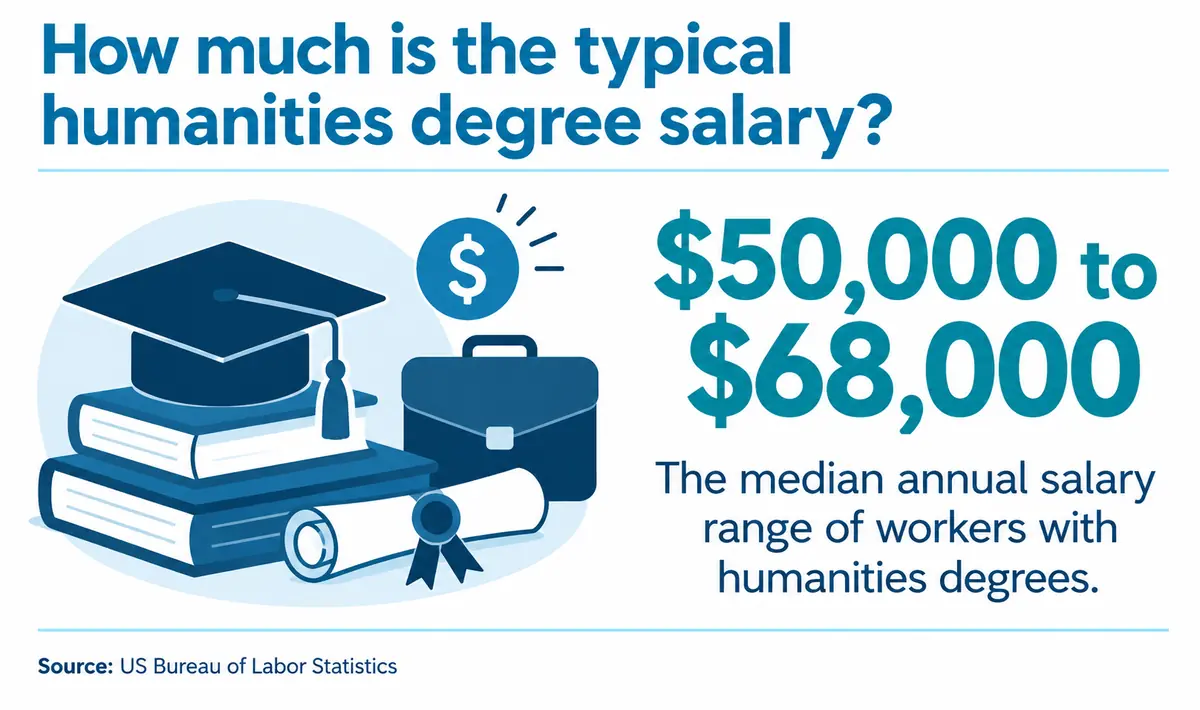
On average, humanities careers in the United States typically earn around $50,000 to $68,000 each year. However, some of the professions that have high barriers to entry offer compensation that is either at the upper end of or beyond the given bracket.
Let's take a look at the median annual wages of the hard-to-enter humanities professions:
- Lawyer: $159,670
- Clinical Psychologist: $100,580
- Postsecondary Teacher: $85,330
- Librarian: $68,270
- Archivists and Curators: $60,330
- Interpreters and Translators: $60,170
- Mental Health Counselors: $59,350
An advantage of pursuing high-paying, hard-to-enter professions is that the compensation can help settle college dues more quickly. However, this sometimes comes at the cost of more challenging job requirements.
Professionals drawn to the earning potential of licensed careers may explore online schools for real estate, which can show how pre-licensing coursework, state approval, and exam preparation differ across providers before they choose where to enroll.
Preparing for a high-barrier humanities career is more than simply earning degrees. A clear understanding of a prospective career and its requirements can help learners make better choices scholastically and professionally. The goal is to maximize the value of each term in college.
Below are quick steps that students can follow:
- Pair Your Bachelor's Degree with Suitable Electives: Be mindful of your goals beyond the bachelor's degree when pairing a humanities bachelor's degree with electives. For instance, aspiring linguists and translators can pick up a second language, while prospective psychologists can take courses useful to the practice, like statistics and data analytics.
- Build Experience Early: An ideal way to learn about a future career is to participate in it as much as you can. Students can take a proactive approach to learning and join internships, engage in volunteer work, or enter assistantships. This enables you to already be familiar with some of the basics when the period of supervised practice begins.
- Map Out Your Exam and Preparation Schedules: To give yourself time to prepare, plot the dates of your standardized exams and the enrollment periods of programs you are interested in. Allocate time for all of the admission requirements, which are found on college portals, so you will not miss any of them.
- Online Education for Professionals: Some learners are already employed and view a humanities degree as a means to boost their credentials for an advanced position. They can leverage the flexibility of online and part-time graduate degrees, allowing them to balance work, school, and other responsibilities.
Students who want to reach the doctoral level without overspending may compare the cheapest online PhD programs in the USA, which can show how tuition, fees, residency requirements, and accreditation affect the total cost of earning the degree.
Some errors can possibly delay or derail a high-barrier humanities career. Avoiding these potentially eliminates pitfalls that hound a lot of students. The common mistakes include:
- Failing to Account for Program Cost and Possible Salary: Ideally, students have to account for the yearly cost of a program and match it with the average or median annual salary of their targeted career. Doing so can help you set realistic budgets and manageable loans and avoid crippling debt.
- Neglecting Accreditation: Careers that necessitate licensure often prefer or exclusively recognize programs accredited by reputable organizations. Not taking an accredited program runs the risk of not being licensed, so prioritize accredited degrees.
- Know the Licensure and Certification Requirements: Licensure requirements tend to vary by state, while certification requirements vary by organization. As such, it is good practice to note the requirements and allocate time to gather each.
- Delaying Experience-Gaining Activities: Waiting too long before joining internships, volunteer work, and the like could lead to missing out on some opportunities. These activities can also give you an idea if a particular line of work truly suits your goals and preferences.
Are High-Barrier Humanities Careers Worth the Investment?
High-barrier careers may pay more than the typical humanities occupation, but many of them do not lead to a six-figure salary. If financial gain is your top priority, you should prioritize law and clinical psychology careers, with the median annual salaries being north of $100,000, far above the median salaries of the other careers on the list.
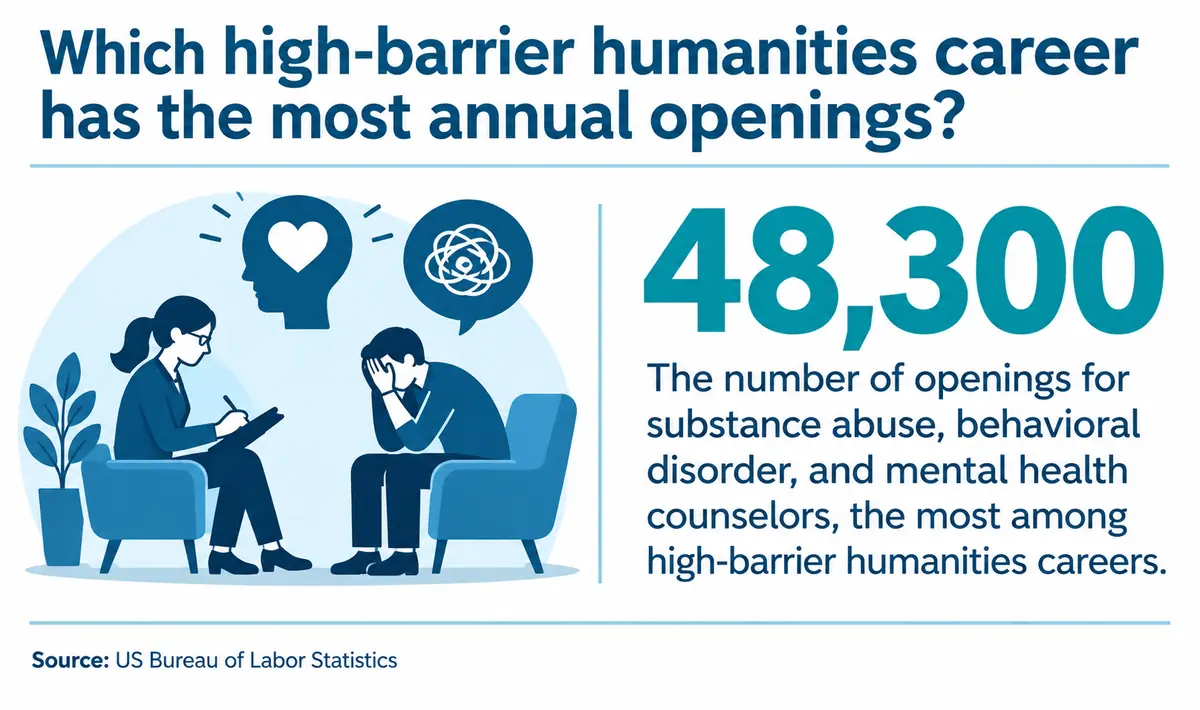
It is important to note that 87% of undergraduate and graduate degree holders in the humanities are satisfied with their careers. A sizable share like that implies that the careers come with work valued by the workforce, despite only 73.1% admitting to being satisfied with the pay. Even though many of the jobs posted low employment growth through 2035, the number of annual openings certainly compensates for that.
Frequently Asked Questions (FAQs)
The degrees that lead to the highest salaries are law and clinical psychology. Lawyers earn a median annual salary of $159,670, while clinical psychologists take home around $100,580.
Most of them require a graduate degree, but there is a share that necessitates only a bachelor's degree, such as internship, translation, and museum technician roles.
Students, on average, take about 6 to 11 years to complete the academic requirements of the given high-barrier humanities degrees.
Lawyers, art therapists, mental health counselors, and clinical psychologists need to be professionally licensed.
- American Academy of Arts & Sciences. (2023). Job Satisfaction of Humanities Majors. Humanities Indicators. American Academy of Arts & Sciences.
- Bureau of Labor Statistics. (2025, September). Field of degree: Humanities employment and wages. Career Outlook. BLS.
- Bureau of Labor Statistics. (2026, September 8). Occupations that Need More Education for Entry are Projected to Grow Faster Than Average. Employment Projections. BLS
- Bureau of Labor Statistics. (2025, November 24). Projected job openings in occupations typically requiring a graduate-level degree, 2024–34. BLS