2027 Best Career Pivot Options for People With a Humanities Degree
Audited and Verified:
Our Editorial and Data Verification Process
Research.com uses government datasets, official education statistics and primary institutional information to support its career and degree guides. Our review process checks factual accuracy, occupational definitions, source dates and the requirements associated with the credentials discussed.
How This Article Was Fact-Checked
Our editorial team verifies salary estimates, employment projections, education requirements and program information against original data providers and official organizations. Salary figures are checked against the relevant occupational definitions and reporting periods. Information about licensure, accreditation and required in-person training is reviewed separately.
Fact-checked and verified on:

Co-Founder and Chief Data Scientist
Humanities graduates develop transferable skills in communication, critical thinking, problem-solving, and cultural awareness that can support employment across different industries. These qualifications can open pathways beyond traditional occupations in teaching, writing, and research, including opportunities in business, technology, government, and other professional sectors.
A recent survey from the National Association of Colleges and Employers highlights that 98.7% of employers rate communication as an extremely important career competency. This guide examines career pivot options that can help humanities graduates translate their academic skills into suitable employment. Readers will also learn how certifications, resume development, and professional networking can strengthen their qualifications and support a successful career transition.
Key Things to Know About the Best Career Pivot Options for People With a Humanities Degree
- Humanities graduates can enter management, project management, technology, human resources, and communications by applying their research, critical thinking, and communication skills.
- Management analysts, project management specialists, and technical writers offer competitive median annual wages of $113,790, $110,740, and $90,390, respectively.
- Certifications such as Google Project Management, CAPM, aPHR, and Google UX Design can help humanities graduates build job-specific skills for a career change.
What are the best career pivot options for people with a humanities degree in 2027?
Humanities graduates can move into business, technology, communications, and public service by applying their research, writing, and critical-thinking skills to new professional settings. Several career paths offer opportunities to use these strengths beyond traditional humanities occupations.
Some positions require specialized training, but many employers also value transferable skills and relevant work samples. The best option depends on each graduate’s interests, experience, and career goals. Here are the key career pivot options for humanities graduates, with salary data from the U.S. Bureau of Labor Statistics:
- Project Management Specialists: Humanities graduates can coordinate project schedules, organize team activities, track deliverables, and communicate with stakeholders. They earn a mean annual pay of $102,320.
- Web Developers and Digital Designers: Graduates can apply their communication and creative skills to develop websites, design digital interfaces, and improve online usability. Their mean annual pay is $99,520.
- Technical Writers: Humanities graduates can use their writing and research skills to prepare technical manuals, instructional materials, and product documentation. These professionals earn a mean annual pay of $90,390.
- Market Research Analysts: Graduates can research consumer behavior, analyze market trends, interpret survey findings, and prepare business reports. They receive a mean annual pay of $78,760.
If you're interested in exploring other pathways, consider pursuing a one year masters programs online.
Which industries hire humanities degree graduates outside traditional humanities careers?
Humanities graduates can find employment in sectors that need professionals to explain complex information, support public-facing programs, and understand how people interact with organizations and technology. Hiring opportunities extend beyond education and cultural institutions, particularly in industries with communication, research, and coordination needs. The specific roles available vary according to each sector’s operations and the graduate’s additional experience.
The following industries offer opportunities for humanities degree holders:
- Technology and Software: Technology companies hire humanities graduates for UX writing, product marketing, customer success, trust and safety, and AI content evaluation.
- Consulting and Advisory Services: Consulting firms use graduates for client research, business documentation, workshop coordination, and the preparation of recommendations for clients.
- Healthcare and Life Sciences: Hospitals, health organizations, and life sciences companies need professionals to develop patient education materials, coordinate advocacy programs, and prepare medical or regulatory communications.
- Financial Services: Banks, insurance companies, and financial firms employ graduates in market research, client communications, compliance support, and roles that explain financial products and policies.
- Government and Public Service: Government agencies hire humanities graduates for policy research, legislative support, public information, and the administration of community programs.
Based on the University of Oxford’s The Value of the Humanities study, which examined 9,311 humanities alumni, graduates work across finance, technology, healthcare, and professional services. This range of employment shows that a humanities degree does not limit graduates to traditional humanities occupations.
Those preparing for a specialized field may consider accelerated degree programs to gain additional academic preparation, although relevant experience and industry-specific qualifications may also be necessary.
What transferable skills from a humanities degree can help with a career change?
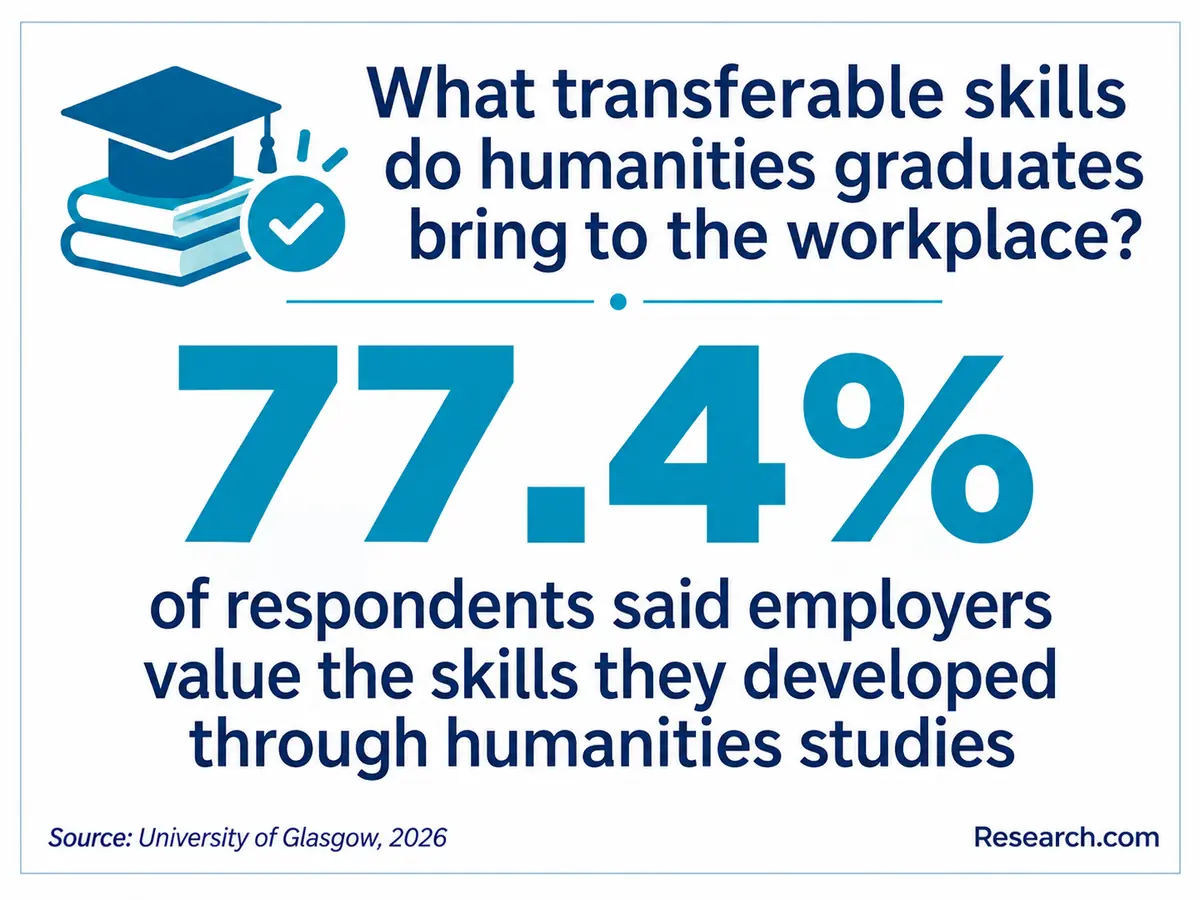
A humanities degree develops transferable skills that support work involving research, communication, decision-making, and collaboration. A University of Glasgow report found that 77.4% of respondents said employers value the transferable skills they gained from humanities studies, including communication, critical thinking, problem-solving, and independent thinking. These competencies can help graduates demonstrate their suitability for roles beyond traditional humanities careers.
Humanities graduates can highlight the following transferable skills when applying for new roles:
- Critical Thinking and Problem-Solving: Humanities graduates can assess evidence, examine different viewpoints, identify underlying issues, and develop well-supported solutions to workplace challenges.
- Research and Analytical Skills: Graduates can gather information from different sources, evaluate its reliability, identify relevant findings, and prepare reports that support organizational decisions.
- Written and Verbal Communication: Humanities graduates can explain complex subjects, prepare professional documents, present recommendations, and communicate effectively with different audiences.
- Independent Thinking and Curiosity: Graduates can question assumptions, explore unfamiliar topics, and develop informed perspectives when handling new assignments or responsibilities.
- Cultural Awareness and Open-Mindedness: Humanities graduates can consider different social and cultural perspectives, helping them work with colleagues, clients, and communities with varied experiences.
- Self-Reflection and Adaptability: Graduates can evaluate their own work, recognize areas for improvement, and adjust their approach as workplace expectations and responsibilities change.
Humanities graduates can pursue higher-paying careers by moving into management, consulting, marketing, and other specialized business roles. These positions often reward strong communication, research, problem-solving, and strategic thinking.
However, the highest salaries usually come with several years of relevant experience, industry knowledge, or additional training. The following careers offer promising earning potential for graduates willing to build the necessary qualifications (salary data from the BLS):
- Marketing Managers: Marketing managers develop campaigns, study consumer behavior, and guide brand strategies. Humanities graduates can build toward this role through experience in content, communications, market research, or digital marketing. Their average annual wage is $177,770.
- Public Relations Managers: These professionals oversee an organization's public image, media relations, and communication strategies. A background in writing, research, and audience analysis can provide a useful foundation for earning an average annual wage of $164,760.
- Human Resources Managers: HR managers lead recruitment strategies, employee relations, workplace policies, and staff development. Humanities graduates can enter through HR specialist or recruitment positions before advancing into management. Their average annual wage is $164,230.
- Management Analysts: Management analysts assess business operations, identify inefficiencies, and recommend improvements. Research, analytical writing, and problem-solving skills can help humanities graduates transition into consulting and organizational strategy, with an average annual wage of $113,790.
- Project Management Specialists: These professionals coordinate budgets, schedules, resources, and team deliverables. Humanities graduates can develop relevant experience through project coordination and strengthen their qualifications with project management training. Their average annual wage is $110,740.
Creative-technical careers can also offer opportunities for graduates interested in interactive media and storytelling. A game design online degree can provide structured training in game development and interactive design.
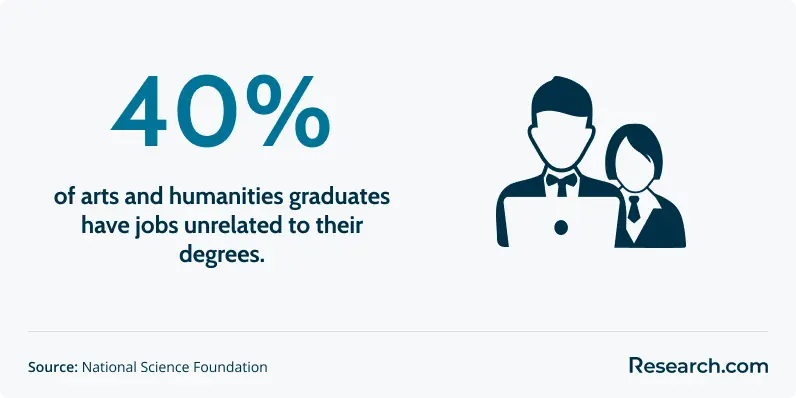
Humanities graduates can enter several professional fields with their existing bachelor's degrees, particularly when they can demonstrate strong writing, research, communication, and organizational skills. This is supported by findings from the National Science Foundation, which show that 40% of arts and humanities graduates work in a field not related to their majors.
Employers may consider humanities graduates for roles in human resources, public relations, market research, and project coordination. Although some positions require industry knowledge or practical experience, they do not necessarily require another degree.
Graduates can explore the following roles, depending on their academic background, work samples, and practical skills:
- Market Research Analysts: Humanities graduates can study consumer preferences, review market information, and summarize findings to support business decisions.
- Writers or Authors: Graduates with strong writing skills can create articles, website content, reports, and other materials for businesses, nonprofits, and media organizations.
- Human Resources Specialists: Graduates can support recruitment, screen applicants, coordinate interviews, and assist with employee relations.
- Public Relations Specialists: Graduates can prepare press releases, write organizational announcements, coordinate media activities, and help maintain an organization's public image.
A humanities degree can provide a foundation for technology roles involving digital content, user communication, customer support, and product research. A CompTIA analysis of Lightcast job-posting data identified nearly 600,000 active tech job postings. As AI automates some routine coding and entry-level technical tasks, skills such as problem framing, clear communication, and sound judgment in specific subject areas are becoming increasingly valuable.
Humanities graduates can enter technology through roles that connect digital products with the people who use them. These positions involve explaining technical information, improving online experiences, assisting users, and evaluating how software performs. Some require familiarity with specific platforms or basic technical tools, but candidates can often develop these skills through short courses, independent projects, and practical experience rather than another degree.
The following technology careers offer potential entry points:
- Technical Writers: Graduates can create user guides, product documentation, help articles, and software instructions. Writing and research skills are useful, while learning technical terminology and documentation tools can improve job prospects.
- UX Research Assistants: Humanities graduates can help conduct user interviews, organize feedback, and identify problems that affect how people interact with digital products. Familiarity with research methods and usability testing tools is helpful.
- IT User Support Specialists: These professionals answer user questions, troubleshoot common software problems, and explain technical steps. Entry-level roles may provide on-the-job training, although basic computer knowledge is important.
- Content Designers or UX Writers: Graduates can write interface instructions, navigation labels, notifications, and other short messages that help people use websites and applications.
- Web Content or Digital Content Specialists: These roles involve organizing website information, updating pages, writing digital content, and improving how users find information. Knowledge of content management systems and basic web tools can be beneficial.
Humanities graduates do not always need another degree to qualify for a new career, but targeted credentials can help them demonstrate job-specific knowledge. Professional certifications and graduate certificates offer different routes.
Certifications validate skills or professional standards, while graduate certificates provide structured academic training in a specialized subject. A Burning Glass Institute study also showed that 1 in 3 non-degree credentials were considered "effective" or useful when evaluated according to factors like salary gains and entry into new fields.
The right option depends on the intended role, existing experience, and qualifications employers request. Humanities graduates can consider these credentials when preparing for a career transition:
- Project Management: The Google Project Management Certificate introduces project planning, scheduling, risk management, and team coordination. Graduates may also consider the Certified Associate in Project Management (CAPM) credential to demonstrate foundational project management knowledge.
- Human Resources: The Associate Professional in Human Resources (aPHR) certification can help candidates demonstrate knowledge of recruitment, employee relations, and HR operations. It is designed for professionals beginning their HR careers.
- Digital Marketing: The American Marketing Association offers certificates in digital marketing, marketing foundations, and marketing data analytics. These credentials can help humanities graduates build skills in branding, audience research, and campaign planning.
- Entrepreneurship and Business Management: A graduate certificate in innovation and entrepreneurship can help graduates develop business planning and venture development skills. Those interested in broader business leadership may also explore the best MBA for entrepreneurship.
- User Experience Design: The Google UX Design Certificate covers user research, wireframing, prototyping, and usability testing. These subjects can help graduates prepare for roles involving digital products and customer experiences.
Changing careers requires more than identifying transferable skills. Humanities graduates need to show employers how their academic training, projects, and previous responsibilities relate to the position they want.
Humanities graduates can make their resumes more competitive by showing how their academic experience meets employers' needs. Communication, rated 4.5 (on a scale where 5 is "very important"), and critical thinking, rated 4.4 on the same scale, are among the top skills employers look for, according to the cited employer skills assessment. These strengths can help graduates qualify for roles beyond traditional humanities fields when supported by relevant examples and practical experience.
A focused resume should demonstrate these abilities through specific accomplishments. Graduates can strengthen their applications by following these steps:
- Tailor each resume to the job description: Prioritize qualifications and experience that match the responsibilities of the target position.
- Include measurable accomplishments: Describe research projects, presentations, volunteer work, and previous responsibilities with specific results whenever possible.
- Connect academic work to workplace skills: Present literature reviews as research experience, group assignments as collaboration, and presentations as communication practice.
- List relevant tools and certifications: Include software, analytics platforms, project management tools, and professional credentials related to the desired role.
- Build a portfolio: Provide writing samples, research reports, content projects, or case studies that demonstrate practical abilities.
- Write a focused professional summary: State the intended career direction and highlight the qualifications most relevant to the position.
Humanities graduates can pursue remote employment and freelance projects in fields that rely on written communication, research, education, and digital content. These opportunities allow professionals to work with companies, publishers, nonprofits, and online platforms without necessarily relocating or earning another degree.
Independent work continues to represent a substantial part of the U.S. workforce, with 11.9 million people classified as independent contractors in their main job by the Bureau of Labor Statistics.
Meanwhile, graduates interested in transitioning into technical fields may also explore additional education, such as a mechanical engineer degree, to develop specialized engineering knowledge.
Some positions offer full-time employment, while others involve contract assignments, project-based work, or independent clients. The following options are accessible to graduates with relevant skills and work samples:
- Freelance Writers and Content Creators: Graduates can write blog articles, website content, newsletters, product descriptions, and educational materials for businesses and digital publishers.
- Remote Editors and Proofreaders: Those with strong language skills can review manuscripts, articles, reports, and marketing materials for accuracy, clarity, grammar, and consistency.
- Online Tutors or Educational Content Developers: Humanities graduates can tutor students in writing, history, literature, and related subjects or develop lesson materials for online learning platforms.
- Virtual Assistants: Graduates can provide remote administrative support, manage schedules, prepare documents, organize research, and coordinate client communications.
- Social Media and Communications Specialists: These professionals create posts, prepare campaign materials, manage online communities, and monitor audience engagement for organizations.
How can humanities graduates use networking and informational interviews to successfully pivot careers?
Networking helps humanities graduates understand different industries, explore career paths, and connect with professionals who can share practical advice. Through informational interviews, graduates can learn about job expectations, required qualifications, and entry-level opportunities, including positions that may not appear in public listings.
Trust also plays an important role in professional networking. Building these relationships with genuine interest rather than focusing solely on job requests can lead to valuable industry insights, mentorship, referrals, and future career opportunities.
According to a report from HR Dive, 54% of workers say they secured their jobs through a personal or professional connection. Humanities graduates can make their efforts more effective by taking the following steps:
- Connect with Alumni: Reach out to former classmates and graduates working in fields such as technology, business, marketing, or public service. Alumni can share career experiences and explain how they entered their industries.
- Use LinkedIn Strategically: Follow professionals and organizations in the target field, participate in relevant discussions, and send personalized connection requests that explain the reason for reaching out.
- Request Informational Interviews: Ask professionals for a brief conversation about their career paths, daily responsibilities, and the skills employers expect from new candidates.
- Prepare Relevant Questions: Research the person's role and company beforehand. Ask about common challenges, useful certifications, entry-level positions, and ways to gain practical experience.
- Attend Industry Events: Join professional associations, webinars, conferences, and career workshops to meet people outside traditional humanities networks.
- Follow Up Professionally: Send a short thank-you message after each conversation and maintain contact by sharing relevant updates or acknowledging useful advice.
Other Things You Should Know About Humanities Degrees
The timeline depends on the target occupation, existing experience, and additional training required. Some graduates can move into related roles within a few months by updating their resumes and gaining relevant experience. Careers involving specialized technical or professional qualifications may require a longer preparation period.
Many employers consider skills and relevant experience alongside a candidate's degree title. Humanities graduates can demonstrate their suitability through research projects, writing samples, internships, volunteer work, and practical achievements. Showing how their academic background relates to specific job responsibilities can strengthen their applications.
Graduates can use their writing, research, communication, and critical-thinking abilities to offer services such as content creation, editing, consulting, tutoring, and communications support. Those interested in entrepreneurship can also develop business plans, identify target customers, and pursue training in marketing and business management.
- Crist, C. (2025, August 25). Half of workers say they got a job through a connection. HR Dive. https://www.hrdive.com/news/half-of-workers-say-they-got-a-job-through-a-connection/758492/
- Market Intelligence Tools. (2026). Freelance Statistics for 2026: How Many Freelancers, What They Earn and Where AI Hits. https://marketintelligencetools.com/reports/freelance-statistics
- National Association of Colleges and Employers. (2026). 2026 Spring Update Job Outlook. https://www.naceweb.org/docs/default-source/default-document-library/2026/publication/research-report/2026-job-outlook-report-spring-update.pdf
- PR Newswire. (2026). Technology Occupations Grow Across Us Economy Despite Staffing Pullback at Tech Companies, CompTIA Analysis Reveals. https://www.prnewswire.com/news-releases/technology-occupations-grow-across-us-economy-despite-staffing-pullback-at-tech-companies-comptia-analysis-reveals-302870145.html
- University of Glasgow. (2026). Evidence from Five Decades of Graduates Confirms Humanities Skills Power Careers and Lifelong Impact. https://www.gla.ac.uk/news/headline_1254210_en.html
- University of Oxford. (2023). The Value of the Humanities. https://www.humanities.ox.ac.uk/sitefiles/oxford-u-value-of-humanities-report.pdf
- US BLS. (2026). Human Resources Specialists. https://www.bls.gov/ooh/business-and-financial/human-resources-specialists.htm
- US BLS. (2026). Market Research Analysts. https://www.bls.gov/ooh/business-and-financial/market-research-analysts.htm
- US BLS. (2026). National Employment and Wage Data From the Occupational Employment and Wage Statistics Survey by Occupation, May 2025. https://www.bls.gov/news.release/ocwage.t01.htm
- US BLS. (2026). Project Management Specialists. https://www.bls.gov/ooh/business-and-financial/project-management-specialists.htm
- US BLS. (2026). Public Relations Specialists. https://www.bls.gov/ooh/media-and-communication/public-relations-specialists.htm
- US BLS. (2026). Technical Writers. https://www.bls.gov/ooh/business-and-financial/market-research-analysts.htm
- US BLS. (2026). Web Developers and Digital Designers. https://www.bls.gov/ooh/computer-and-information-technology/web-developers.htm