2027 Highest-Paying Jobs You Can Get With a Humanities Degree
Audited and Verified:
Our Editorial and Data Verification Process
Research.com uses government datasets, official education statistics and primary institutional information to support its career and degree guides. Our review process checks factual accuracy, occupational definitions, source dates and the requirements associated with the credentials discussed.
How This Article Was Fact-Checked
Our editorial team verifies salary estimates, employment projections, education requirements and program information against original data providers and official organizations. Salary figures are checked against the relevant occupational definitions and reporting periods. Information about licensure, accreditation and required in-person training is reviewed separately.
Fact-checked and verified on:

Co-Founder and Chief Data Scientist
A humanities degree can open doors to more than just careers in education, writing, or the arts. With valuable skills in communication, critical thinking, research, and problem-solving, humanities graduates are well-equipped for high-paying roles across various industries.
From corporate leadership and law to marketing, public relations, and technology, many career paths offer strong earning potential and opportunities for growth. Here are some of the highest-paying jobs you can pursue with a humanities degree.
Key Things to Know About the Highest-Paying Jobs You Can Get With a Humanities Degree
- According to the U.S. Bureau of Labor Statistics (2025), workers with selected humanities degrees earned median annual wages ranging from $50,000 to $68,000, compared with $70,000 across all fields in 2023.
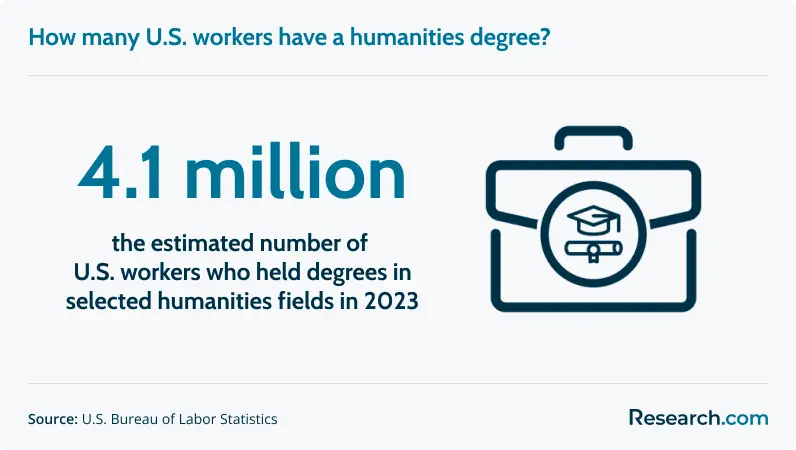
- Approximately 4.1 million Americans with degrees in selected humanities fields were employed in 2023.
- Strong communication, critical thinking, research, and problem-solving skills can help humanities graduates stand out in the job market.
What are the highest-paying careers available to humanities graduates?
A humanities degree can lead to more than traditional careers in teaching, writing, and the arts, offering pathways to lucrative opportunities across various industries. With the right combination of education, experience, and specialized skills, you can pursue high-paying positions in fields such as law, technology, business, marketing, and corporate management. Here are some of the highest-paying careers that you can pursue with a degree in humanities:
- Lawyer: Humanities graduates, particularly those with backgrounds in Political Science, Philosophy, and History, can pursue a legal profession by attending law school and earning a law degree. Lawyers can earn approximately $80,000 to $160,000 annually, depending on their specialization and experience.
- Public Relations Manager: Public Relations Managers easily earn around $75,000 to $120,000 annually. They develop strategic communication campaigns, manage media relations, and protect an organization's public image. Humanities graduates can apply their writing, interpersonal communication, and reputation management skills to strengthen relationships between organizations and their audiences.
- Marketing Manager: Marketing Managers oversee advertising campaigns, brand management, and promotional strategies to attract consumers. Marketing Managers typically earn $80,000 to $140,000 annually. Humanities graduates can use their knowledge of consumer behavior, market research, storytelling, and digital marketing to create effective campaigns that connect businesses with their target audiences.
- Human Resources Manager: Human Resources Managers handle talent acquisition, employee relations, recruitment, and organizational development. Professionals in this role typically earn between $80,000 and $130,000 annually, with compensation increasing alongside experience and leadership responsibilities.
- Content Strategist: Content Strategists plan and manage content marketing initiatives to communicate a brand's message effectively. Humanities graduates with backgrounds in English, Literature, Journalism, and Communication can utilize their expertise in storytelling, copywriting, search engine optimization (SEO), and digital communication to create engaging and relevant content. The estimated annual salary for Content Strategists ranges from $65,000 to $110,000, depending on experience, qualifications, and the company.
- Corporate Communications Director: Corporate Communications Directors' salary ranges from $100,000 to $180,000+. They oversee internal and external communication strategies, crisis communication, and stakeholder engagement to maintain a company's reputation. Humanities graduates with extensive experience in strategic communication, media relations, and executive leadership can pursue this role in large organizations.
- Policy Analyst: Policy Analysts examine political, economic, and social issues through policy research and evaluation to help governments and organizations make informed decisions. Graduates in Political Science, History, Sociology, and Philosophy can use their analytical skills in public policy, policy development, government affairs, and social analysis. The estimated annual salary for Policy Analysts ranges from $60,000 to $100,000.
- Management Consultant: Management Consultants help businesses address organizational challenges, improve operations, and develop effective business strategies. Management Consultants typically earn $85,000 to $150,000 annually, with higher salaries for experienced professionals.
For humanities graduates looking to expand their career opportunities and earning potential, pursuing an affordable online psychology master's degree can be a practical step toward higher-paying positions, professional growth, and greater job security.
How can a humanities degree lead to financial success?
A humanities degree can lead to financial success by equipping graduates with transferable skills that are highly valued across different industries. Skills such as critical thinking, communication, research, problem-solving, creativity, and cultural awareness allow graduates to pursue careers in business, law, marketing, technology, public relations, and management. These abilities are particularly valuable in roles that require understanding human behavior, developing strategies, managing teams, and communicating complex ideas.
Additionally, humanities graduates can increase their earning potential through professional development, postgraduate education, specialized training, and relevant work experience. Pursuing advanced degrees or certifications in fields such as business administration, law, psychology, and digital marketing can open doors to higher-level positions and leadership roles.
Building a strong professional network, gaining practical experience through internships, and developing technical skills can also improve employability. Ultimately, financial success depends not only on the degree itself but also on how graduates leverage their knowledge, adapt to industry demands, and pursue opportunities for continuous career growth.
If you're interested in combining your humanities background with emerging technologies, pursuing an online AI degree can help you develop in-demand technical skills and expand your career opportunities in the growing technology industry.
What skills make humanities graduates valuable employees?
Humanities graduates develop a wide range of transferable skills that make them valuable to employers across different industries. Through your academic training, you learn how to think critically, communicate effectively, understand diverse perspectives, and approach challenges creatively. These abilities help you contribute to organizations, collaborate with colleagues, and adapt to different professional environments.
- Critical Thinking: Humanities graduates can analyze complex information, evaluate different perspectives, and make well-informed decisions when addressing workplace challenges.
- Communication: They can express ideas clearly and effectively through written reports, presentations, professional discussions, and interpersonal interactions.
- Research and Analysis: They are skilled at gathering information, evaluating sources, interpreting data, and using evidence to support decisions and recommendations.
- Problem-Solving: Their ability to examine situations from different perspectives allows them to identify challenges and develop creative, practical solutions.
- Creativity: Humanities graduates can generate original ideas, develop engaging content, and approach projects with innovative perspectives.
- Cultural Awareness: Their understanding of different cultures, traditions, and social perspectives helps them collaborate with diverse teams and communicate with people from various backgrounds.
- Adaptability: Their broad academic foundation allows them to adjust to changing workplace demands, learn new technologies, and take on different professional responsibilities.
- Emotional Intelligence: Their understanding of human behavior and social relationships helps them demonstrate empathy, manage workplace interactions, and build positive professional relationships.
- Collaboration and Teamwork: They can work effectively with individuals from different disciplines, contribute diverse perspectives, and support shared organizational goals.
Yes, humanities graduates can succeed in the technology industry even without a traditional background in science, technology, engineering, or mathematics (STEM). The tech industry requires more than just programming and technical expertise; it also depends on people who understand human behavior, communication, creativity, and problem-solving.
To become competitive in the tech industry, you can strengthen your existing skills by learning relevant technical tools, completing online courses, earning professional certifications, and gaining practical experience through internships or personal projects.
Combining your humanities education with these technical competencies allows you to bridge the gap between technology and human needs, making you a valuable candidate in an increasingly digital workforce. If you're looking to strengthen your qualifications and gain a competitive edge in the job market, pursuing an associate degree in 6 months online can be a convenient way to complement your humanities background and broaden your career opportunities.
A humanities degree can open doors to high-paying careers across several industries, especially when you apply your skills in communication, critical thinking, research, and problem-solving to specialized roles. While salaries vary depending on experience, qualifications, and location, the following industries offer promising earning opportunities for humanities graduates.
- Law and Legal Services: The legal industry offers strong earning potential for humanities graduates who pursue law degrees and specialize in areas such as corporate law, litigation, intellectual property, and legal consulting.
- Technology and Information Technology: The tech industry provides opportunities in UX research, technical writing, content strategy, and product management, where your understanding of human behavior and communication can complement technical expertise.
- Finance and Banking: Financial institutions hire humanities graduates for roles in compliance, corporate communications, client relations, market research, and financial consulting, particularly when supported by relevant business or financial training.
- Business and Management Consulting: Consulting firms value your analytical thinking, research, and problem-solving abilities, offering opportunities to work in strategic planning, organizational development, and business operations.
- Marketing and Advertising: This industry offers opportunities in brand management, digital marketing, public relations, and market research, where your creativity, storytelling, and understanding of consumer behavior can contribute to business growth.
- Media and Communications: Careers in corporate communications, media management, public relations, and content strategy can offer competitive salaries, particularly in senior and managerial positions.
- Government and Public Administration: Government agencies, international organizations, and policy institutions employ humanities graduates as policy analysts, diplomats, public affairs specialists, and program managers.
- Education and Academic Research: Although entry-level teaching positions may offer modest salaries, opportunities in university administration, academic leadership, educational consulting, and specialized research can provide greater earning potential.
- Healthcare and Pharmaceutical Industries: Humanities graduates can pursue careers in healthcare communications, medical writing, public relations, patient advocacy, and healthcare administration, especially with additional industry-specific training.
Yes, pursuing further education can significantly increase your earning potential as a humanities graduate by helping you develop specialized knowledge, advanced skills, and professional qualifications. Earning a master's degree, doctorate, or professional degree in fields such as law, business administration, psychology, or communications can qualify you for higher-level positions and specialized careers. In fact, certifications add a wage advantage that can boost median salaries by 10% to 30%, according to data from salary analysts.
Aside from postgraduate degrees, professional certifications, specialized training, and online courses can help you expand your career opportunities without committing to several years of additional schooling. For example, certifications in digital marketing, project management, data analytics, and information technology can complement your humanities background and make your skill set more versatile.
- Human Resources Certifications (SHRM-CP/SHRM-SCP): If you're interested in pursuing a career in human resources, these certifications can strengthen your professional qualifications and demonstrate your expertise in HR practices. Eligibility depends on your educational background and work experience, while exam fees typically range from $300 to $400. Earning an HR certification may also improve your competitiveness and increase your potential for higher-paying opportunities.
- Language and Teaching Certifications: If you're interested in pursuing a career in education, certifications such as Teaching English to Speakers of Other Languages (TESOL) can strengthen your qualifications and open doors to international teaching opportunities. These credentials can make you more competitive in the global education market and potentially increase your earning opportunities, particularly in international schools and language institutions.
For those considering advancing your career or transitioning into a new field, pursuing a specialized postgraduate qualification can help broaden your opportunities and increase your earning potential. Exploring programs such as the best MBA for entrepreneurship can provide valuable business knowledge and leadership skills that complement your humanities background.
Humanities graduates can remain competitive in the job market by highlighting their transferable skills and demonstrating how these abilities apply to different professional roles. To stand out to employers, you should gain practical experience through internships, volunteer work, freelance projects, and professional networking. Building a strong portfolio, tailoring your resume to specific job requirements, and showcasing relevant accomplishments can also help demonstrate your value to potential employers.
Another effective way to improve your competitiveness is to invest in continuous learning and develop specialized skills that complement your humanities education. For example, exploring online math degree programs can help you strengthen your quantitative reasoning, data analysis, and problem-solving abilities, which are increasingly valuable in today's job market. By combining your humanities background with practical experience and additional qualifications, you can broaden your career options and become a stronger candidate for competitive positions.
Humanities graduates possess valuable transferable skills, but finding high-paying jobs can still be challenging due to misconceptions about their degrees, industry requirements, and competition in the job market. Understanding these obstacles can help you prepare for potential setbacks and develop strategies to improve your career prospects.
- Misconceptions About Humanities Degrees: Some employers believe humanities degrees offer limited career opportunities or lack practical applications, making it harder for graduates to demonstrate the value of their education.
- High Competition in the Job Market: You may compete with graduates from business, technology, and STEM-related fields who have specialized qualifications that directly match certain job requirements.
- Lack of Technical Skills: Some high-paying positions require knowledge of programming, data analytics, financial tools, or other technical competencies that may not be covered extensively in traditional humanities programs.
- Limited Industry Experience: Without relevant internships, professional experience, or practical projects, you may find it difficult to qualify for specialized positions or demonstrate your readiness for the workplace.
- Unclear Career Pathways: Unlike degrees with more defined professional tracks, humanities programs often lead to diverse career options, making it challenging to identify suitable industries and high-paying opportunities.
- Salary Expectations and Entry-Level Limitations: Many humanities graduates begin their careers in positions with relatively modest salaries, requiring additional experience, specialized training, or career advancement to reach higher income levels.
- Lack of Professional Networking: Limited industry connections can make it harder to discover job openings, access mentorship opportunities, and establish relationships with potential employers.
- Additional Education Requirements: Certain lucrative professions, including law, psychology, and academic research, require postgraduate degrees, professional licenses, or specialized certifications, which can involve significant time and financial investment.
What is the job outlook for humanities graduates?
The job outlook for humanities graduates remains promising, as employers across different industries continue to value skills such as critical thinking, communication, creativity, research, and problem-solving. According to the U.S. BLS, approximately 4.1 million workers in the United States held degrees in selected humanities fields in 2023, with median annual wages ranging from $50,000 to $68,000.
Opportunities are available in industries such as education, law, business, technology, media, and public relations, particularly for graduates who combine their academic knowledge with practical and specialized skills.
Looking ahead, humanities graduates can expect opportunities in evolving industries, especially as organizations increasingly recognize the importance of human-centered skills alongside technological expertise. The World Economic Forum identifies analytical thinking, creative thinking, adaptability, and leadership among the essential skills employers value, with several expected to become even more important by 2030.
However, staying competitive will require continuous learning, technical skill development, and professional experience. By adapting to changing industry demands and pursuing specialized career paths, you can build a rewarding and financially sustainable future with a humanities degree.
Other Things You Should Know About Humanities Degrees
You can improve your career prospects by developing additional skills, gaining practical experience, and pursuing professional certifications or postgraduate education. Learning in-demand competencies such as digital marketing, data analytics, project management, and technical writing can help you qualify for specialized positions. Building a professional network, completing internships, and creating a strong portfolio can also make you more competitive and help you access better-paying career opportunities.
Yes, many humanities graduates can pursue remote and freelance opportunities, particularly in fields that rely on communication, research, writing, and creativity. Careers such as copywriting, editing, translation, virtual assistance, content strategy, and digital marketing often offer flexible work arrangements. Freelance platforms, professional networking sites, and online portfolios can help you connect with clients and find opportunities beyond your local job market.
Yes, a humanities degree can provide a foundation for career transitions because its core skills are applicable to many professional fields. For example, an English graduate can transition into content marketing, while a Political Science graduate can explore business development, public policy, or corporate affairs. You may need additional training, certifications, or technical experience, depending on the requirements of your chosen industry.
- Humanities After Class 10: 15 High-Paying Career Options (2026) - DPS Bopal https://dpsbopal-ahd.edu.in/humanities-after-class-10/
- Humanities graduates earn more than those who study science and maths https://theconversation.com/humanities-graduates-earn-more-than-those-who-study-science-and-maths-141112
- U.S. Bureau of Labor Statistics. (2025). Field of degree: Humanities—Employment and wages. U.S. Department of Labor. https://www.bls.gov/careeroutlook/2025/data-on-display/field-of-degree-humanities-employment-and-wages.htm
- World Economic Forum. (2025). The future of jobs report 2025. https://www.weforum.org/publications/the-future-of-jobs-report-2025
- Is a humanities degree worth it? Careers, skills and what you can do with this major https://admission.asu.edu/college-planning-advice/humanities-degree-worth-it-careers-skills-and-what-you-can-do-major
- Degrees boost earnings — but field of study matters, report finds https://www.highereddive.com/news/degrees-boost-earnings-but-field-of-study-matters-report-finds/803037