2027 How Much Does a Humanities Degree Program Cost? Tuition, Fees & Total Expense Breakdown
Audited and Verified:
Our Editorial and Data Verification Process
Research.com uses government datasets, official education statistics and primary institutional information to support its career and degree guides. Our review process checks factual accuracy, occupational definitions, source dates and the requirements associated with the credentials discussed.
How This Article Was Fact-Checked
Our editorial team verifies salary estimates, employment projections, education requirements and program information against original data providers and official organizations. Salary figures are checked against the relevant occupational definitions and reporting periods. Information about licensure, accreditation and required in-person training is reviewed separately.
Fact-checked and verified on:

Co-Founder and Chief Data Scientist
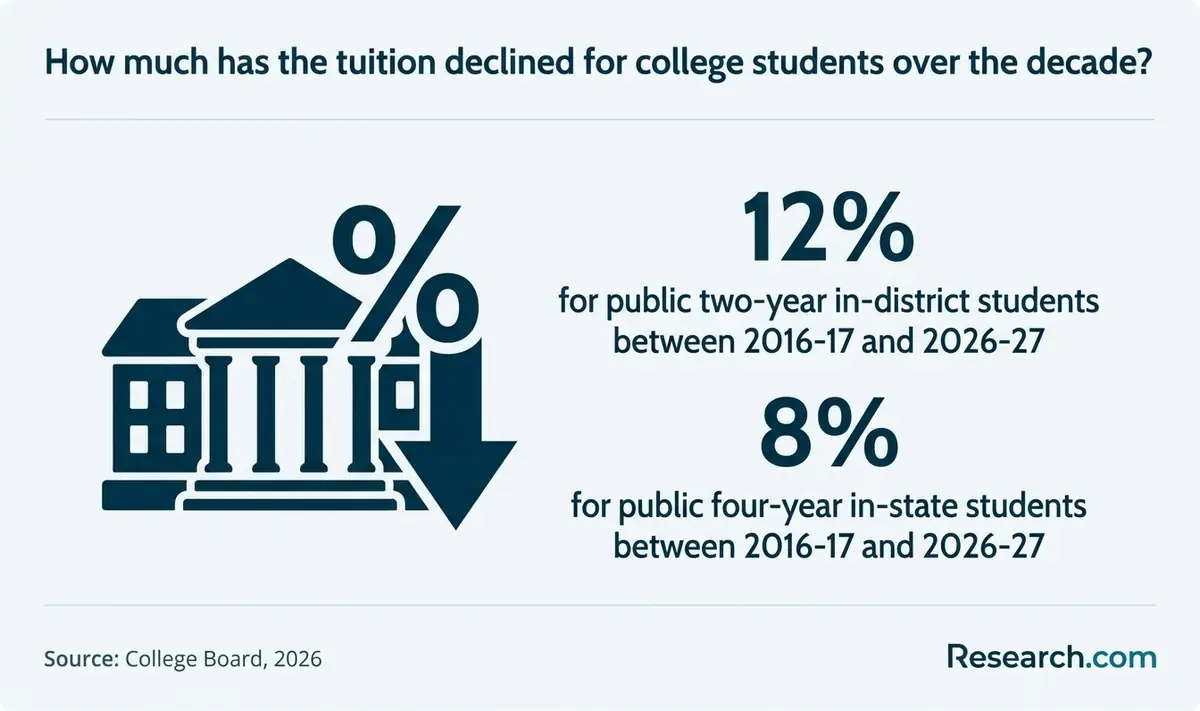
Pursuing a humanities degree may open the door to diverse opportunities in various fields, but, like any postsecondary field, it comes with high costs. In the academic year 2026-27, the average tuition and fees for full-time in-state students taking four-year programs in public schools have increased by 2.9% year-over-year. Meanwhile, public four-year out-of-state students experienced an increase of 3.5%.
This guide highlights and breaks down the cost of a humanities degree in 2027. It covers the tuition and fees by degree level, as well as any additional fees that students may encounter. Moreover, the guide offers solutions to reduce the financial burden on learners so they can focus more on their education.
Key Things You Should Know
- Public four-year in-state humanities students pay for an average of $12,290 per year, while public four-year out-of-state students face an average of $32,730.
- For public four-year institutions in the United States in 2026-27, a bachelor's degree's tuition is typically $9,400, a master's $10,190, and a doctorate around $12,970.
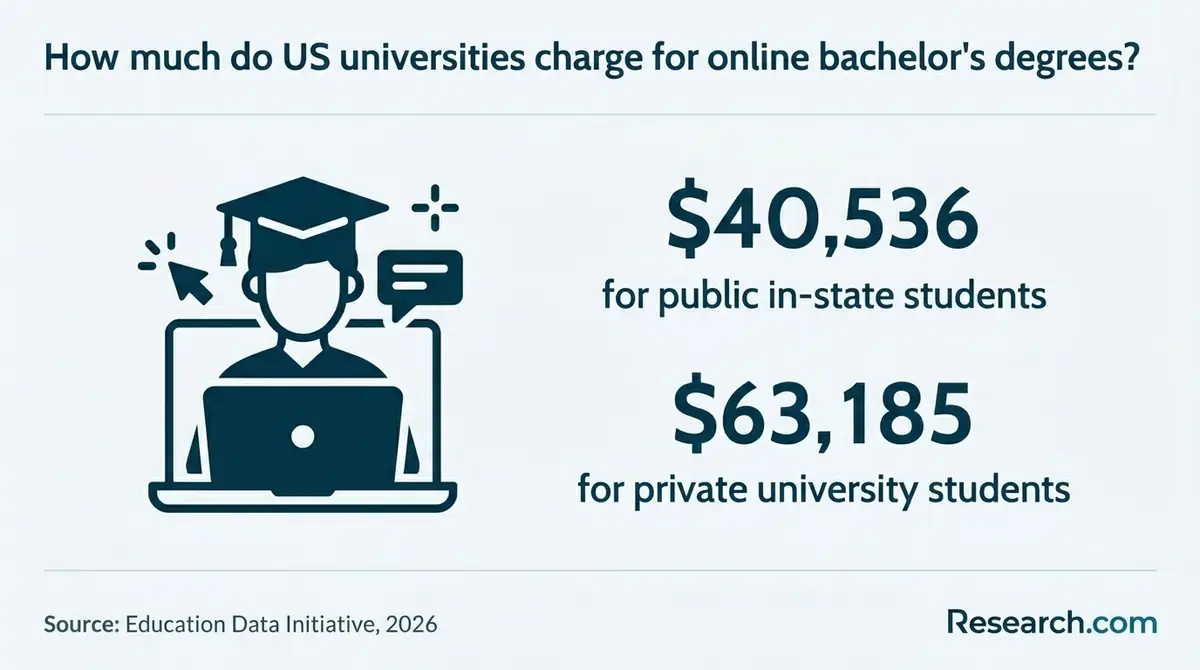
- An online bachelor's degree from a public institution typically costs in-state students around $40,536, while out-of-state students pay about $59,011.
How Much Does a Humanities Degree Program Cost in 2027?
The cost of a humanities degree is dependent on several factors, including the type of school, degree level, mode of course delivery, and the number of credits to take. For the 2026-27 academic year, the College Board reports that the average tuition and fees for public, two-year, in-district students are $4,210.
Regarding four-year programs, public four-year in-state students pay an average of $12,290 per year, while public four-year out-of-state students pay an average of $32,730. Private nonprofit four-year students pay an average of $46,350. All of the given rates represent a slight increase from the previous academic year.
| Public Two-Year In-District | Public Four-Year In-State | Public Four-Year Out-of-State | Private Nonprofit Four-Year | |
| Tuition and Fees | ||||
| 2026-27 | $4,210 | $12,290 | $32,730 | $46,350 |
| 2025-26 | $4,110 | $11,940 | $31,620 | $44,710 |
Students who want a faster, lower-cost alternative to a full degree may look into a 6 month online course with high salary potential, which can show how program length, credential value, and job placement outcomes should be verified before enrolling.
What Factors Influence the Total Cost of a Humanities Degree?
There are several factors that influence the sticker price of a humanities degree, and knowing them can give students an idea of how much they would need to pay per term. These include:
- Degree Level: Undergraduate degrees like associate and bachelor's degrees have different fees since the latter has a longer curriculum and distinct credit requirements. Similarly, graduate degrees like master's programs and doctorate degrees have their own sets of fees.
- Institution Type: Public institutions typically have lower fees than private institutions, but there are scholarships that can significantly reduce the expenses in private schools.
- Residency Status: There is a significant difference in the fees of in-state and out-of-state students, with the latter paying higher fees mainly due to state tax funding.
- Program Duration: Longer curricula have bigger credit requirements, which is why a notable price difference sits between four-year and two-year programs.
- Program Format: On-campus programs usually have higher fees than online programs, but the latter have their own set of expenditures that partially reduce the gap between the two.
Students who are weighing doctoral study may research easy PhDs, which can show how admission requirements, dissertation expectations, and accreditation vary by program and why workload and career relevance matter more than perceived difficulty.
How Much Does Humanities Degree Tuition Cost by Degree Level?
Each degree level has its own credit and completion requirements, lengths, and other financial considerations. As such, each level, from bachelor's degrees to doctorate degrees, has its own fees. For public four-year institutions in the United States in 2026-27, a bachelor's degree's tuition is typically $9,400, a master's $10,190, and a doctorate around $12,970.
Meanwhile, private nonprofit four-year institutions charge significantly higher tuition and fees. In the given academic year, a bachelor's degree typically costs $47,690, a master's degree $33,030, and a doctorate $56,470. Students who have limited resources can leverage their access to various means of financial aid, like grants, loans, and scholarships, to considerably reduce the financial burden.
Tuition and fees only account for a portion of what students pay for periodically. The use of school facilities, technology, and course materials merits its own charges; the same goes for meals, student housing, and program applications. All of the expenses add up to determine the cost of attendance for each year in the program.
Common additional charges include:
- Course and Learning Materials: These materials are required by courses to foster learning, like textbooks, digital publications and subscriptions, academic journals, and literary collections.
- Institutional Fees: School facilities and amenities have corresponding charges added to tuition fees. What students pay for includes library access, student services, and administrative fees.
- Lab and Research Fees: Students pay for access to various labs required by their degree and future profession. The use of special archives and research databases falls under this category.
- Online Learning Fees: Distance learning programs necessitate students to pay for the use of the school's learning management software and help shoulder maintenance and upgrade costs.
- Fieldwork: Accessing learning environments outside the school, like in internships, outreach programs, and symposiums, adds to a student's cost of attendance.
- Application Fee: Students usually pay an application fee of around $75 at most postsecondary institutions in the United States.
- Graduation Fee: Graduation, assessment, yearbook creation and inclusion, and related activities have their own charges.
Students who want to keep these added costs in check may compare the cheapest masters degrees online, which can show how tuition, technology fees, and required fieldwork affect the total price of earning a graduate degree.
Online programs enable students to take courses in the comfort of their homes or any environment with a stable internet connection. An online bachelor's degree from a public institution typically costs in-state students around $40,536, while out-of-state students pay about $59,011. These programs often charge per credit, so public in-state students are charged $356, while students in private institutions deal with a per-credit cost of $542.
Online programs are typically more affordable than their campus-based counterparts since online students do not leverage school facilities as much as on-campus learners. They also have significantly lower hidden costs, as they do not have to regularly spend on rent, transportation, and commercial food costs. However, online programs have their own set of expenses that learners must note, which include technology fees, maintenance fees, and higher utility expenses.
A report from the Education Data Initiative shows that online degrees at public institutions charge $501 per credit, while private institutions charge $519 per credit. Meanwhile, on-campus programs typically have stiffer per-credit charges for public out-of-state students ($1,179) and private school students ($1,469).
Working professionals who want to advance their credentials without relocating may compare online master's degree options, which can show how per-credit tuition, technology fees, and program format affect the total cost of earning a graduate degree.
Humanities students have access to a plethora of financial aid types that can help them ease their financial burden. There are forms of aid that offer sums with no need for repayment—which should come at the top of your priority list—while others require work for some financial relief, and there are forms that allow students to borrow funds.
Common types include:
- Federal Grants: These grants are typically need-based and do not need to be repaid. They are commonly available to undergraduate students, while graduate students can inquire whether they have access to them.
- Federal Loans: Students typically use federal loans to cover remaining dues after exhausting other means of aid. These should be repaid within the given time frame and tend to have notable interest rates, so use them as a last resort.
- Institutional Scholarships: Schools offer a range of scholarships that can be need-based or merit-based. Take note of the requirements and send an application to those for which you stand a strong chance of qualifying.
- Private Scholarships: Besides schools and the state, organizations like businesses and nonprofits offer scholarships to select students.
- Employer Tuition Assistance: Some companies offer tuition reimbursement initiatives to employees who pursue additional credentials for career advancement.
- Work-Study Programs: Some institutions employ or position students for various jobs so they can earn money that can be used to pay their education dues.
- Assistantships and Fellowships: Schools can offer assistantships in teaching or research in exchange for stipends, waivers, or any form of financial respite from education expenditures.
Students can start their financial journey by completing the Free Application for Federal Student Aid (FAFSA), which displays the types of aid that may be available to them.
Although some fields may require them, humanities degrees generally do not compel students to engage in internships or residencies. However, similar activities are incorporated by some programs for skill-building, networking, and fostering critical thinking.
Internships can be bundled with capstone projects and community engagement initiatives, while residencies can focus on specialized areas like archival and museum work. The expenses typically associated with these activities include travel, lodging, and specialized equipment.
Does the Cost of Living Affect the Cost of a Humanities Degree?
Yes, a city's cost of living has a considerable effect on the cost of a humanities degree. A student's recurring expenditures, like rent, transport, and food expenses, may eat into the budget for education costs. After all, they account for a considerable portion of the typical student budget.
According to the College Board, the average budget for private nonprofit four-year out-of-state on-campus students is $67,610; public four-year in-state on-campus students have a budget of $32,030; and public four-year out-of-state on-campus students maintain a budget of $52,470.
Frequently Asked Questions (FAQs)
A learner can take general education courses at a community college and then move to a four-year university that accepts a notably high number of transfer credits.
Yes, students can use the various modes of financial aid shown by the FAFSA to reduce their educational expenses. Prioritize applying for grants, if available, since they do not require repayment.
Students of four-year programs often set a budget of around $1,380 to $1,430 for books and supplies and apportion a slightly larger sum for other expenses in case of emergencies.
- College Board (2026). Trends in College Pricing and Student Aid 2026. TRENDS IN HIGHER EDUCATION SERIES. College Board
- Hanson, M. (2026, June 2). Average Cost of Online College. Education Data Initiative
- Hanson, M. (2025, October 27). Cost of Online Education vs. Traditional Education. Education Data Initiative
- Test Gurus (2026, November). How much are college application fees at the 100 most-applied-to colleges? Test Gurus
- US Department of Education. Get Money To Help Pay for School. US Department of Education