2027 Which Industries Offer the Best Career Paths for Humanities Degree Graduates?
Audited and Verified:
Our Editorial and Data Verification Process
Research.com uses government datasets, official education statistics and primary institutional information to support its career and degree guides. Our review process checks factual accuracy, occupational definitions, source dates and the requirements associated with the credentials discussed.
How This Article Was Fact-Checked
Our editorial team verifies salary estimates, employment projections, education requirements and program information against original data providers and official organizations. Salary figures are checked against the relevant occupational definitions and reporting periods. Information about licensure, accreditation and required in-person training is reviewed separately.
Fact-checked and verified on:

Co-Founder and Chief Data Scientist
Humanities graduates often struggle to identify which industries offer the best career paths. The good news is that, according to a recent Association of American Colleges and Universities survey of over 1,000 companie, employers across diverse fields highly value skills commonly associated with a humanities education, such as oral communication (81%) and adaptability and flexibility (81%).
Using over ten years of career planning expertise and credible sources, our team built this guide to rank the top industries for humanities graduates. This guide helps you target high-growth sectors that match your skills and make smart career moves.
Key Things to Know About the Industries That Offer the Best Career Paths for Humanities Degree Graduates
- Expanding fields like tech, consulting, HR, and marketing are projected to grow 6% from 2025 to 2035, with humanities and social science majors making up roughly 18% to 20% of top consulting entry-level hires.
- Employers consider critical thinking (80%) and teamwork (79%) skills—commonly taught to humanities graduates—"very important".
- Government and nonprofit roles reward policy research, grant writing, and cross-cultural fluency, while pairing humanities skills with technical literacy, work samples, and role research maximizes career leverage.
Why Do Humanities Graduates Succeed Across Diverse Industries?
Humanities graduates succeed across diverse industries because their training builds durable, human-centered skills that remain vital regardless of market or technological shifts. Rather than preparing students for a single narrow occupation, humanities programs teach professionals how to analyze complex problems, communicate persuasively, and navigate cultural nuance—foundations that also support graduate transitions into fields like speech-language pathology via an online SLP masters.
Core Strengths Employers Value
- Critical Thinking and Research: Graduates evaluate conflicting sources, identify underlying patterns, and synthesize dense information into clear, actionable insights for decision-makers.
- Clear, Persuasive Communication: Strong writing and public speaking abilities allow humanities majors to translate technical or abstract ideas for clients, executives, and general audiences.
- Cultural and Ethical Awareness: Studying history, literature, and philosophy equips professionals to understand diverse perspectives, manage stakeholder relationships, and guide ethical business practices.
- Adaptability in Changing Markets: Because humanities degrees emphasize how to learn rather than memorizing fixed tools, graduates quickly master new workflows and industry software.
How Do Transferable Skills Help Humanities Majors Pivot Careers?
Transferable skills help humanities majors pivot careers by equipping them with versatile, industry-agnostic competencies that apply across different roles without requiring a new degree.
Rather than locking graduates into one technical track, capabilities like structured research, persuasive communication, and critical synthesis translate smoothly from one sector to another—and also prepare motivated graduates who choose to pursue specialized credentials like MSW degrees.
How Key Skills Enable Career Mobility
- Analytical Synthesis: Humanities graduates break down complex reports, market trends, or user feedback into clear recommendations—a skill equally valuable in policy research, management consulting, and product strategy.
- Audience-Focused Communication: Writing clearly for varied stakeholders allows professionals to shift from editorial or academic roles into corporate communications, UX writing, or public relations.
- Contextual Problem-Solving: Training in history, ethics, and cultural studies helps graduates evaluate how business decisions affect real people, supporting transitions into human resources, brand management, or organizational change.
- Rapid Information Mastery: Because humanities coursework requires mastering unfamiliar topics quickly, graduates adapt efficiently when learning new industry terminology, compliance standards, or digital tools.
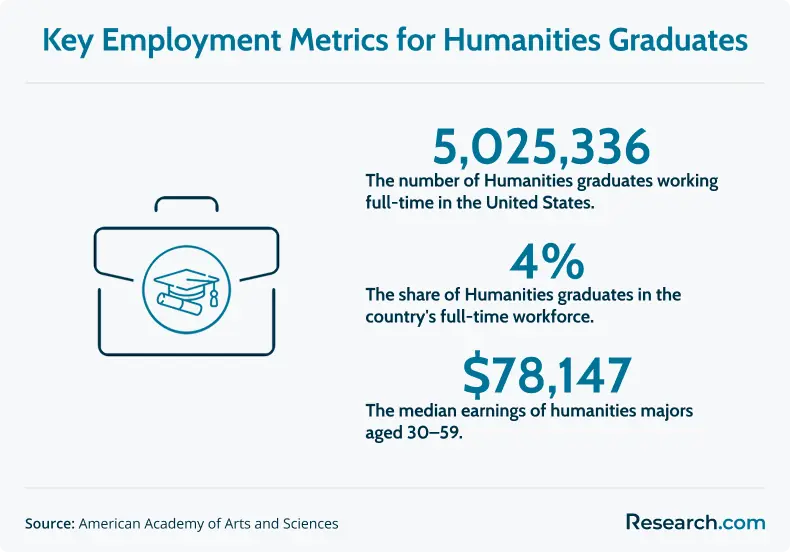
Which High-Growth Industries Hire the Most Humanities Graduates in 2027?
The technology, digital media, consulting, healthcare administration, and public policy industries have hired the most humanities graduates in recent years because these expanding sectors prioritize clear communication, ethical judgment, and human-centered problem-solving. As automation reshapes routine workflows, employers seek professionals who can interpret complex context and bridge technical tools with human needs.
Top Hiring Sectors
- Technology and Artificial Intelligence: Tech firms recruit humanities majors for user experience (UX) research, content design, product strategy, and ethical AI evaluation to ensure digital tools remain intuitive and responsible.
- Digital Media and Strategic Communications: Growing content platforms drive steady demand for skilled editors, brand storytellers, and public relations specialists who manage audience engagement.
- Management Consulting and Business: Advisory firms value graduates who synthesize multi-source research, evaluate organizational risks, and advise clients through rapid operational shifts.
- Healthcare and Social Services: Demographic changes and equity initiatives increase hiring for patient advocacy, health communications, and community program coordination.
- Government and Public Policy: Public agencies rely on strong writers and researchers for legislative analysis, regulatory compliance, and civic outreach.
Marketing, communications, and content strategy are top choices for humanities graduates because these roles reward clear storytelling, audience analysis, and persuasive writing over narrow technical credentials.
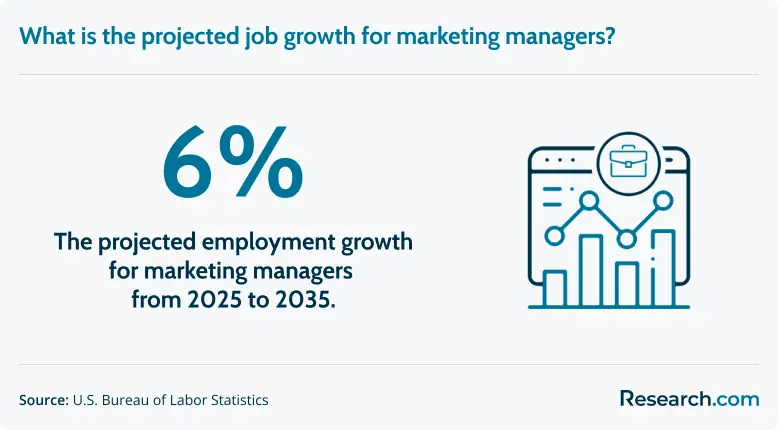
According to the U.S. Bureau of Labor Statistics (BLS), employment for advertising, promotions, and marketing managers is projected to grow 6% from 2025 to 2035.
Why Humanities Majors Thrive in These Roles
- Audience-Centered Storytelling: Literature, history, and philosophy coursework trains graduates to understand human motivation and tailor messages to specific demographics.
- Editorial Precision and Clarity: Organizations rely on strong writers and editors to produce high-converting copy, brand guidelines, press releases, and long-form thought leadership.
- Strategic Research and Synthesis: Humanities majors evaluate market trends and customer feedback to build cohesive editorial calendars and brand positioning.
- Versatile Entry Points: Graduates can enter through accessible roles—such as content strategist, copywriter, public relations coordinator, or corporate communications specialist—and advance into senior management.
The technology industry uses humanities talent to connect human behavior, ethics, and clear language with complex digital products and artificial intelligence systems. Rather than writing code, humanities graduates ensure that software and AI models remain intuitive, accurate, and aligned with human values.
Key Tech Roles for Humanities Majors
- User Experience (UX) Research and Content Design: Graduates study how people interact with digital interfaces, conducting user interviews and crafting clear microcopy that makes software easy to navigate.
- AI Alignment, Ethics, and Evaluation: AI labs and tech firms recruit philosophers, historians, and writers to fine-tune language models, assess editorial quality, and build ethical frameworks for responsible deployment.
- Technical Writing and Product Documentation: Strong analytical writers translate complex engineering concepts into accessible user guides, API documentation, and help-center resources.
- Product Strategy and Operations: Humanities graduates synthesize qualitative customer feedback and market context to guide product roadmaps and cross-functional teams.
Humanities majors qualify for analytical, strategic, and client-facing roles in business and management consulting because firms prioritize structured problem-solving and clear communication over specific undergraduate majors. In fact, roughly 18% to 20% of entry-level hires at top consulting firms come from humanities and social science backgrounds, while other graduates build on their human-behavior foundations by pursuing an online masters clinical psychology.
Common Business and Consulting Roles
- Management Consultant or Associate: Consultants diagnose organizational challenges, conduct qualitative market research, and build persuasive slide decks for executives.
- Business Analyst: Analysts bridge corporate leadership and technical teams by evaluating operational workflows, defining project requirements, and recommending efficiency improvements.
- Change Management Specialist: Graduates with training in psychology, history, or sociology help companies guide employees through mergers, restructuring, and new software adoption.
- Corporate Social Responsibility (CSR) Strategist: Professionals apply ethical reasoning and cultural awareness to design sustainability initiatives and manage community partnerships.
- Operations and Project Coordinator: Strong organizational and stakeholder-alignment skills enable graduates to keep cross-functional business initiatives on schedule.
Human resources (HR) and organizational development attract humanities graduates because these fields center on interpersonal communication, cultural awareness, and ethical workplace management rather than technical specialization. Companies rely on professionals who can understand employee motivations, resolve conflicts fairly, and align company culture with business goals.
Reasons Humanities Majors Excel in HR and Organizational Development
- Empathy and Cultural Sensitivity: Studying literature, history, and philosophy trains graduates to consider diverse perspectives.
- Clear Policy and Internal Communication: Strong writing abilities help HR professionals draft transparent employee handbooks, performance guidelines, and company-wide announcements that prevent misunderstandings.
- Qualitative Research and Training Design: Organizational development specialists evaluate employee feedback, identify skill gaps, and build structured learning programs to improve team performance.
- Ethical Judgment and Conflict Resolution: Training in structured reasoning equips graduates to navigate workplace disputes, compliance standards, and hiring decisions objectively.
Humanities graduates build careers in government and public policy by pairing strong research, ethical judgment, and clear writing with targeted civic or analytical experience. Public agencies need professionals who evaluate complex evidence, draft clear briefings, and explain policy impacts to diverse communities.
Steps to Enter Government and Policy
- Start in Entry-Level Roles: Target legislative aide, policy researcher, administrative officer, or public affairs positions to learn how public institutions operate.
- Build a Policy Portfolio: Highlight research briefs, reports, or civic projects that show clear analysis and source accuracy.
- Meet Eligibility Requirements: Check civil service rules, required exams, or fellowships early, and add basic data skills to strengthen your application.
Nonprofits and international organizations hire humanities majors because mission-driven work depends on cross-cultural communication, persuasive writing, and ethical context. These organizations need professionals who translate program goals for diverse communities, institutional funders, and global partners while keeping operations grounded in human impact.
Strong writers help nonprofits secure resources and demonstrate accountability by drafting compelling grant proposals, donor updates, and public impact reports. Their ability to frame complex social issues clearly makes it easier for foundations, government agencies, and individual supporters to understand why programs matter and how funds are used.
Cultural awareness and language proficiency further strengthen their fit for global outreach, advocacy, and community engagement. Humanities training encourages professionals to examine historical context, power dynamics, and local customs—insights that also inform human-centered graduate paths such as marriage and family therapy programs—rather than applying one-size-fits-all solutions across different regions.
Graduates also bring practical organizational value to program and stakeholder coordination. By synthesizing information from field teams, partner organizations, and community members, they help keep initiatives aligned, document outcomes accurately, and build lasting relationships across sectors.
How Should Humanities Graduates Evaluate and Choose the Right Industry for 2027?
Humanities graduates should evaluate and choose an industry for 2026 by comparing actual job requirements, long-term compensation, and AI resilience rather than relying on degree stereotypes. Because employers increasingly favor hybrid talent that pairs strong communication and critical reasoning with practical tools—and reskilling through targeted options like hospitality management courses online—matching your strengths to market demand creates stronger career leverage.
Practical Steps to Pick Your Sector
- Audit Live Job Descriptions: Review postings in target fields to spot recurring skill requirements, salary bands, and growth roles before committing to a track.
- Pair Humanities With Technical Literacy: Build basic data, analytics, or AI workflow skills alongside your writing and research strengths to stand out in competitive markets.
- Build Proof Through Work Samples: Create a targeted portfolio, complete internships or freelance projects, and document measurable outcomes that show how you solve real problems.
- Assess Credential ROI: Decide whether targeted certifications or graduate degrees—such as policy, business, or law—are required for higher mid-career pay in your chosen field.
Other Things You Should Know About Humanities Degrees
You can study literature, history, philosophy, languages, linguistics, classics, religious studies, art history, and cultural studies in the humanities. Many programs also include interdisciplinary tracks like media studies, communications, or ethics.
Humanities is a strong degree for building adaptable, human-centered skills that remain valuable across changing job markets. Employers consistently prioritize critical thinking, writing, and clear communication as automation handles routine technical tasks. Although some creative or nonprofit jobs start with lower pay than technical roles, humanities graduates build strong careers across marketing, tech, consulting, HR, law, and government.
Many students consider philosophy one of the hardest humanities courses because it requires abstract logic, argument analysis, and precise concepts. Still, difficulty varies by strength: history demands heavy primary-source research, foreign languages require constant memorization and practice, and literature calls for deep interpretation and long essays. Unlike courses with single right answers, humanities classes grade how well you defend an argument with evidence and clear structure. Heavy reading, ambiguity, and frequent writing challenge students most in these areas.
There is no single "best" humanities job because the top role depends on your strengths, compensation goals, and preferred work environment. High-paying and high-growth options include content strategist, UX writer or researcher, corporate communications manager, management consultant, policy analyst, and human resources or organizational development specialist.
- American Academy of Arts and Sciences. (n.d.). Humanities indicators. https://www.amacad.org/humanities-indicators
- Angeles, D. (2025, September). Field of degree: Humanities employment and wages. Career Outlook, U.S. Bureau of Labor Statistics. https://www.bls.gov/careeroutlook/2025/data-on-display/field-of-degree-humanities-employment-and-wages.htm
- U.S. Bureau of Labor Statistics. (2026, August 27). Advertising, promotions, and marketing managers. Occupational Outlook Handbook. https://www.bls.gov/ooh/management/advertising-promotions-and-marketing-managers.htm
- U.S. Bureau of Labor Statistics. (2026, August 27). Management analysts. Occupational Outlook Handbook. https://www.bls.gov/ooh/business-and-financial/management-analysts.htm
- U.S. Bureau of Labor Statistics. (2026, August 27). Public relations and fundraising managers. Occupational Outlook Handbook. https://www.bls.gov/ooh/management/public-relations-managers.htm