2027 Fastest-Growing Careers for Humanities Degree Graduates
Audited and Verified:
Our Editorial and Data Verification Process
Research.com uses government datasets, official education statistics and primary institutional information to support its career and degree guides. Our review process checks factual accuracy, occupational definitions, source dates and the requirements associated with the credentials discussed.
How This Article Was Fact-Checked
Our editorial team verifies salary estimates, employment projections, education requirements and program information against original data providers and official organizations. Salary figures are checked against the relevant occupational definitions and reporting periods. Information about licensure, accreditation and required in-person training is reviewed separately.
Fact-checked and verified on:

Co-Founder and Chief Data Scientist
The value of a humanities education is not confined to the classroom. It extends to workplaces that require communication, research, critical thinking, and an understanding of people. According to an American Academy of Arts and Sciences survey, 85% of Americans viewed the term “humanities” favorably after it was defined, reflecting broad public recognition of the field’s value. With the degree's transferable skills, it can also support career opportunities across several industries.
This guide explores the fastest-growing careers for humanities degree graduates in 2027, including in-demand occupations, salary potential, and industries with employment opportunities. It will also discuss relevant degree paths and the skills graduates can develop to prepare for a changing job market.
Key Things to Know About the Fastest-Growing Careers for Humanities Degree Graduates
- In 2023, 4.1 million people with degrees in selected humanities fields were employed in the US, with English graduates representing the largest group at nearly 1.94 million.
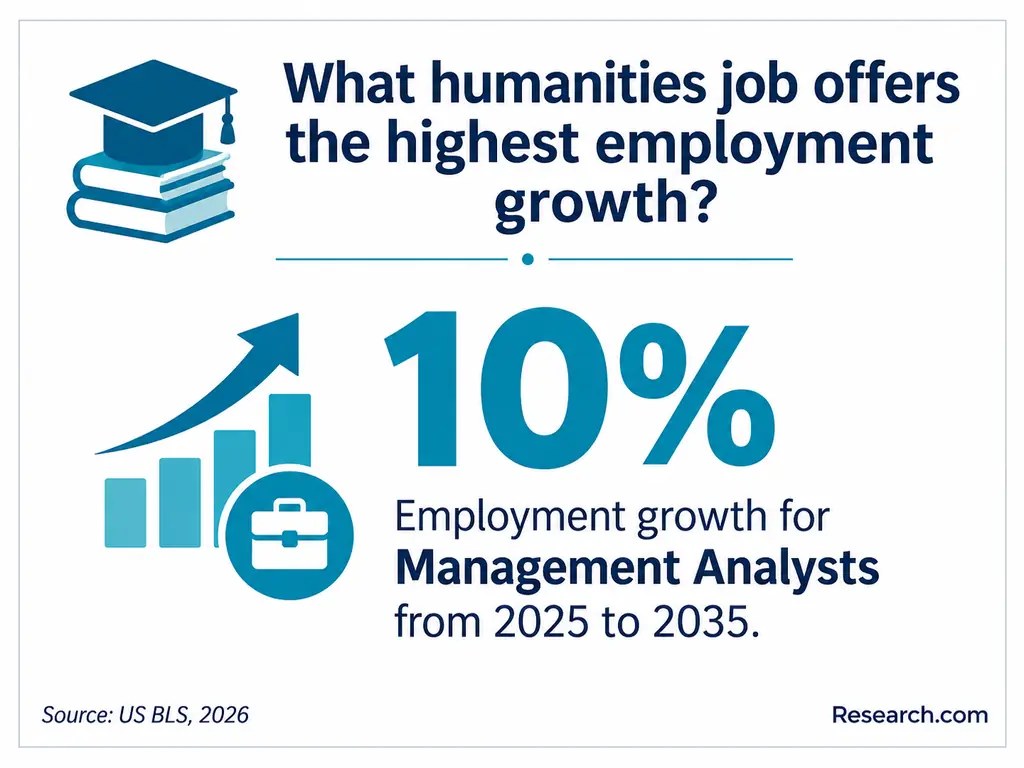
- Management analysts are among the promising career options, with employment projected to grow by 10% from 2025 to 2035.
- Humanities graduates can pursue careers in management, project coordination, and technical writing, with median annual salaries ranging from $90,390 to $102,320 for these occupations.
What Are the Fastest-Growing Fields for Humanities Degree Graduates in 2027?
Humanities degrees provide graduates with transferable skills. This applies to several professional fields, which include business, communications, education, and research. Although some occupations require additional training or specialized qualifications, employers still favor professionals who can analyze information, communicate effectively, and understand human behavior. For aspiring humanities degree students, fast degrees online are worth checking to help clarify the best academic path.
According to the U.S. Bureau of Labor Statistics (BLS), over 4 million people with degrees in selected humanities fields were employed in 2023. These figures highlight the range of career opportunities available to humanities graduates, many of whom apply their academic knowledge and transferable skills across different industries. The careers below offer promising opportunities for humanities graduates looking to build rewarding professional paths:
- English: English graduates represent the largest group among the five humanities fields, with data from the BLS showing approximately 1.94 million employed in 2023. With strong communication, writing, and analytical skills, they can support careers in education, publishing, media, marketing, and other industries.
- Foreign Language: Their language proficiency and cultural knowledge can open opportunities in translation, interpretation, education, international relations, and global business.
- Philosophy and Religion: With skills in critical thinking, research, and ethical reasoning, they can be valuable in education, public service, communications, and business.
- Theology: In this field, one can pursue opportunities in religious organizations, education, community development, nonprofit work, and related fields.
- Culture and Group Studies: These graduates have an understanding of social groups, cultural differences, and human behavior, so they can be useful in research, public policy, community programs, and international organizations.
What Are the Most In-Demand Jobs for Humanities Majors in the United States?
There is a greater demand for humanities graduates that extends beyond traditional occupations in writing, education, and the arts. Because of different audiences and varying oraganiationall development needs, organizations in the United States also require professionals who will fill these needs.
One of the occupations expected to offer substantial job opportunities is management analyst employment, making it a career worth considering alongside the most profitable college majors. This job is projected to grow by 10% between 2025 and 2035, according to BLS data. Here are other careers for humanities graduates that are projected to generate a significant number of annual job openings:
- Management Analysts: The need for professionals who can evaluate operations, identify inefficiencies, and recommend improvements is still high, with 1,186,300 openings projected annually.
- Market Research Analysts: For professionals who study consumer preferences, evaluate market conditions, and interpret research findings, expect 1,019,000 projected annual openings.
- Project Management Specialists: These professionals, who are trained to coordinate projects, manage schedules, and monitor organizational objectives, can anticipate 1,167,400 projected annual openings.
What Are the Highest-Paying Jobs You Can Get With a Humanities Degree?
There is no truth to the common connotation tha humanities degree results in modest earning potential. With additional expertise in management, research, communications, and organizational strategy, one can pursue positions with competitive salaries.
However, it is important to remember that compensation varies. This will still depend on experience, location, industry, and even professional qualifications. Listed below are the earning potentials to expect from a humanities degree career path, according to BLS data:
- Management Analysts: Work in consulting, corporate strategy, and organizational development and earn a median annual salary of $101,860.
- Project Management Specialists: These professionals coordinate complex projects and organizational operations and earn a median annual salary of $102,320.
- Technical Writers: Specialize in translating information into accessible manuals, reports, instructions, and other technical documents to earn a median annual salary of $90,390.
Humanities graduates can pursue leadership, legal, compliance, and business roles that draw on communication, research, critical thinking, and problem-solving skills. With relevant work experience and additional qualifications, some can advance into positions with six-figure annual earnings. Students exploring flexible pathways to further education can also consider top online colleges when researching options for developing specialized knowledge and credentials.
The following roles illustrate potential career opportunities for humanities graduates, with aggregated salary data from the BLS, Indeed, and Salary.com:
- Executive Coaches: Executive coaches earn an average of $88,423 per year by helping business leaders and other professionals set career goals, strengthen leadership abilities, and develop strategies for professional growth.
- Human Resources Directors: With an average salary of $164,230 per year, HR directors oversee recruitment, compensation, employee benefits, workplace policies, and employee relations while guiding workforce management.
- Proposal Managers: Proposal managers earn an average of $110,390 per year for coordinating business proposals, organizing supporting documents, developing submission strategies, and presenting recommendations to prospective clients.
- Lawyers: Lawyers earn an average of $185,840 per year by researching legal issues, advising clients, preparing legal documents, and representing individuals or organizations in disputes. This career requires a law degree and a license to practice.
- Regulatory Affairs Managers: With average annual earnings of $110,080, regulatory affairs managers oversee compliance with government requirements, coordinate inspections, and develop internal procedures to help organizations meet applicable standards.
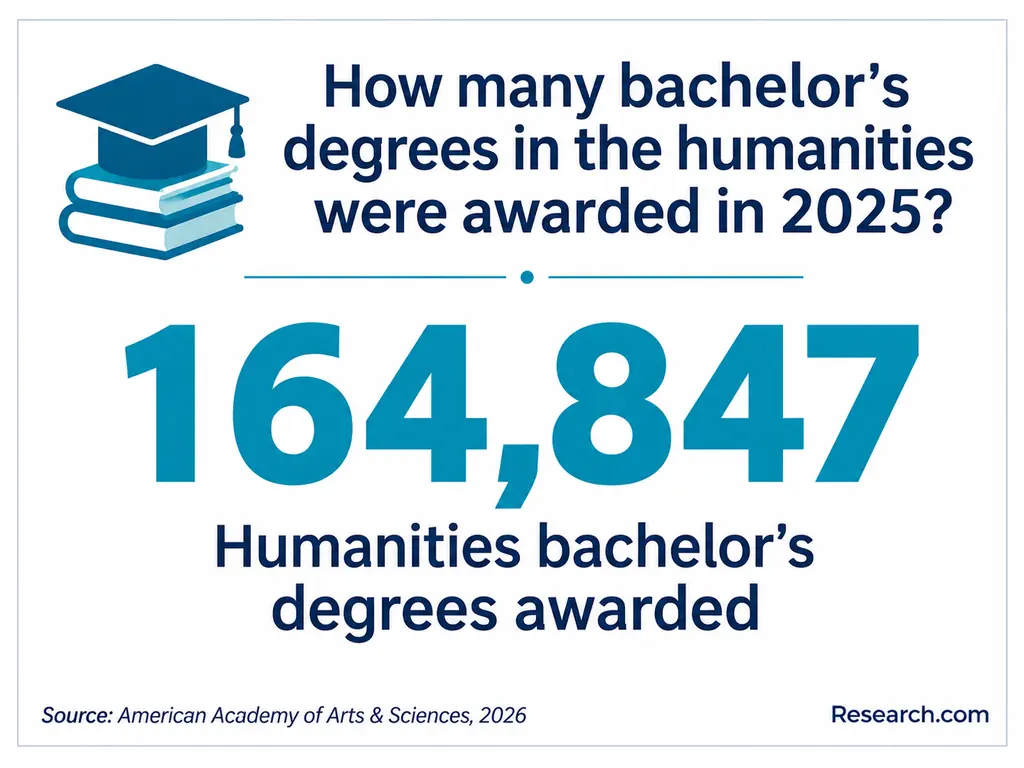
Although fewer students are choosing to pursue humanities degrees, graduates still have opportunities to build careers across different industries. In 2025, U.S. colleges and universities awarded 164,847 bachelor's degrees in the humanities (the American Academy of Arts and Sciences), the lowest number since 1991 and 30.4% below the 2012 peak.
However, this decline does not diminish the value of the skills gained through humanities programs. The ability to research, analyze information, communicate ideas, and understand different social and cultural perspectives can help graduates qualify for roles in various professional fields.
Some of the industries that offer career opportunities for humanities degree holders include:
- Education and Academic Services: Schools, colleges, and universities offer humanities graduates opportunities in teaching, academic administration, curriculum development, and student support.
- Professional and Business Services: Humanities graduates can apply their research, communication, and analytical skills in consulting, human resources, management analysis, and corporate communications.
- Media and Publishing: Newspapers, digital publications, broadcasting companies, and publishing houses provide opportunities in journalism, writing, editing, content development, and public relations.
- Government and Public Administration: Graduates can pursue careers in public affairs, policy research, community relations, government administration, and cultural programs.
- Healthcare and Social Assistance: Healthcare organizations and community service providers offer roles in patient education, communications, administrative support, and community outreach.
Advances in artificial intelligence and digital technology have opened career paths beyond traditional technical roles. While programming and engineering positions often require specialized training, many technology-related jobs also depend on strong communication, research, writing, and analytical skills. These areas can be a good fit for humanities graduates who are willing to develop additional digital knowledge and technical skills.
Artificial intelligence and digital technology have created career opportunities beyond traditional programming and engineering roles. Many of these positions also require communication, research, writing, and analytical skills that humanities graduates develop through their studies.
Lightcast data shows that AI skills are becoming relevant across different industries. In 2024, AI skills appeared in 8% of job postings in marketing and public relations, 6% in science and research, 4% in social analysis and planning, and 3% in design, media, and writing. This growing demand highlights opportunities for humanities graduates who combine their academic strengths with additional digital and technical skills.
Some career options where humanities graduates can apply their strengths include:
- UX Researchers: They study user needs and behavior to help technology companies improve their digital products and services.
- Content Designers: They create clear and useful content that helps people navigate websites, applications, and online services.
- AI Conversation Designers: These professionals develop prompts and conversational flows that help AI applications communicate naturally with users.
- Technical Writers: They turn complex technical information into easy-to-understand guides, manuals, and documentation.
- AI Ethics and Policy Researchers: They examine the social and ethical impact of artificial intelligence and support the development of responsible technology policies.
Geographic location can shape the earning potential and career opportunities available to humanities graduates. Local industries, employer demand, living costs, and professional networks all influence the roles graduates can pursue and their potential for advancement.
The following figures from the American Academy of Arts and Sciences compare median annual earnings among full-time humanities graduates in three states:
- Washington: Graduates earn a median annual salary of $81,982. The state's technology, government, research, and professional services sectors offer potential opportunities in communications, policy, and related fields.
- Minnesota: The median annual salary is $73,317. Its healthcare, education, corporate, and nonprofit sectors provide possible career paths in writing, research, public relations, and administration.
- West Virginia: Graduates earn a median annual salary of $56,841. A different mix of local industries and fewer opportunities in higher-paying professional sectors may help explain the lower figure.
A humanities degree builds careers in education, communications, public service, research, and nonprofit management. However, some positions require additional qualifications that demonstrate specialized knowledge or professional skills. Choose a relevant graduate degree or certification to meet these requirements and qualify for more specialized responsibilities.
The following credentials can support different career directions, depending on a graduate's interests and professional goals:
- Master's Degree in Humanities or a Related Field: Graduate study builds advanced research, writing, and analytical skills that can prepare students for roles in academic research, cultural administration, policy analysis, and nonprofit leadership. Some positions, particularly in academia and specialized research, require or prefer a master's degree.
- Project Management Professional (PMP) Certification: The PMP credential demonstrates knowledge of project planning, resource coordination, budgeting, and team leadership. These skills can benefit humanities graduates pursuing project management roles in publishing, marketing, cultural organizations, and nonprofit institutions.
- Digital Marketing Certifications: Programs from Google, HubSpot, and the Digital Marketing Institute provide training in content strategy, search marketing, social media, and campaign measurement. These credentials can help graduates demonstrate practical digital skills when applying for communications, marketing, and content-related positions. Data from the U.S. Census Bureau indicates that bachelor's degree holders enjoy a 5% increase in median earnings with professional certifications and licenses.
- Teaching Licenses and Advanced Credentials: State-issued teaching licenses are generally required for public school teaching positions in the United States. Additional endorsements and National Board Certification can demonstrate advanced teaching knowledge and may support professional development or career progression.
- Master of Library and Information Science (MLIS): An MLIS prepares graduates for careers in libraries, archives, records management, and information services. Humanities graduates can also complement this training with practical financial skills through bookkeeping courses, particularly when pursuing administrative roles in libraries, nonprofit organizations, and cultural institutions.
Employers value professionals who can apply their knowledge and skills to different workplace responsibilities. Humanities programs help students develop communication, research, critical thinking, and cultural awareness, which are useful across various industries.
Humanities graduates become more competitive in the job market by combining the following skills with digital and technical knowledge:
- Critical Thinking and Problem-Solving: Humanities graduates learn to examine different ideas, evaluate information, and develop solutions to complex problems. These skills can be useful in management, research, consulting, and public administration. Data from a National Association of Colleges and Employers report indicates that 93.5% of employers consider critical thinking a "very important" competency.
- Written and Verbal Communication: Strong communication skills help graduates express ideas clearly, prepare reports, deliver presentations, and work effectively with colleagues.
- Research and Analytical Skills: The ability to gather, evaluate, and interpret information can prepare graduates for careers in market research, policy analysis, academic research, and organizational planning.
- Cultural Awareness and Interpersonal Skills: Understanding different perspectives and cultural backgrounds can help graduates work in international business, human resources, education, and community development.
- Creativity and Adaptability: Humanities programs encourage creative thinking and the ability to adjust to different situations. These skills can benefit careers in marketing, communications, content development, and digital industries.
Students interested in developing specialized technical skills may also explore top online electrical engineering schools to learn more about related educational opportunities.
Is a Humanities Degree Worth Pursuing in 2027?
Choosing a college degree requires students to consider more than its immediate employment prospects and potential salary. Humanities programs provide academic preparation in subjects that examine communication, culture, history, ethics, and human behavior, while developing skills that can transfer across professional fields.
Besides that, aspiring humanities students should also recognize that career outcomes vary according to their chosen major, work experience, and additional qualifications. It is critical to evaluate the financial considerations alongside the available career opportunities to help prospective students determine whether a humanities degree aligns with their long-term goals.
A humanities degree can be a valuable investment for students who are interested in these fields and willing to apply their knowledge to different career opportunities. However, building a successful career often requires more than a degree. Gaining practical experience, pursuing additional training, and developing relevant professional skills can help graduates prepare for their chosen career paths.
Other Things You Should Know About Humanities Degrees
Some careers available to humanities graduates require further education, professional certifications, or specialized training. For example, positions in law, education, and certain research fields may require advanced degrees or specific credentials. Gaining relevant qualifications can help graduates meet employer requirements and qualify for more specialized roles.
Humanities students can build practical experience through internships, volunteer work, part-time jobs, and entry-level positions related to their interests. These opportunities allow them to apply their communication, research, and analytical skills in professional settings. Building a portfolio and developing industry connections can also help graduates prepare for future employment.
Humanities graduates can remain competitive by keeping up with industry developments and learning how new technologies affect their chosen fields. Developing digital skills, gaining relevant certifications, and becoming familiar with tools used in their industries can expand their career options. Continuing to learn and adapt can also help them respond to changing employer expectations and workplace demands.
- American Academy of Arts & Sciences. (2026). Bachelor’s Degrees in the Humanities. https://www.amacad.org/humanities-indicators/higher-education/bachelors-degrees-humanities
- American Academy of Arts and Sciences. (n.d.). The Humanities in American Life: A Survey of the Public’s Attitudes and Engagement. https://www.amacad.org/humanities-indicators/humanities-american-life-survey-publics-attitudes-and-engagement
- Lightcast. (n.d.). Beyond the Buzz Report. https://lightcast.io/resources/reports/beyond-the-buzz-developing-the-ai-skills-employers-actually-need
- National Association of Colleges and Employers. (2026). Job Outlook 2026: Spring update. https://www.naceweb.org/docs/default-source/default-document-library/2026/publication/research-report/2026-job-outlook-report-spring-update.pdf
- US BLS. (2025). Field of Degree: Humanities Employment and Wages. https://www.bls.gov/careeroutlook/2025/data-on-display/field-of-degree-humanities-employment-and-wages.htm
- US BLS. (2026). Management Analysts. https://www.bls.gov/ooh/business-and-financial/management-analysts.htm#tab-6
- US BLS. (2026). Market Research Analysts. https://www.bls.gov/ooh/business-and-financial/market-research-analysts.htm#tab-6
- US BLS. (2026). Project Management Specialists. https://www.bls.gov/ooh/business-and-financial/project-management-specialists.htm#tab-6
- US BLS. (2026). Technical Writers. https://www.bls.gov/ooh/media-and-communication/technical-writers.htm