2027 Industries Hiring Graduates With a Humanities Degree
Audited and Verified:
Our Editorial and Data Verification Process
Research.com uses government datasets, official education statistics and primary institutional information to support its career and degree guides. Our review process checks factual accuracy, occupational definitions, source dates and the requirements associated with the credentials discussed.
How This Article Was Fact-Checked
Our editorial team verifies salary estimates, employment projections, education requirements and program information against original data providers and official organizations. Salary figures are checked against the relevant occupational definitions and reporting periods. Information about licensure, accreditation and required in-person training is reviewed separately.
Fact-checked and verified on:

Co-Founder and Chief Data Scientist
Students who are interested in pursuing a degree in the humanities may be wondering about job opportunities after graduation. The good news is that humanities, as a general field, offers opportunities that encompass many areas, including communications, education, arts and culture, history, technology, and public policy. Earning a degree in the humanities develops writing, reading, critical thinking, research, communication, and other skills that employers in various industries seek and find highly valuable.
This article will explore industries that hire humanities degree graduates and talk about everything prospective students need to know about job prospects and employment opportunities.
Key Things You Should Know
- Humanities students are equipped with industry knowledge and trained to communicate and express themselves effectively, gather and analyze information, interpret complex concepts, and develop other career-ready skills that help companies and organizations deal with clients and stakeholders, develop strategies, and streamline their decision-making process, among others.
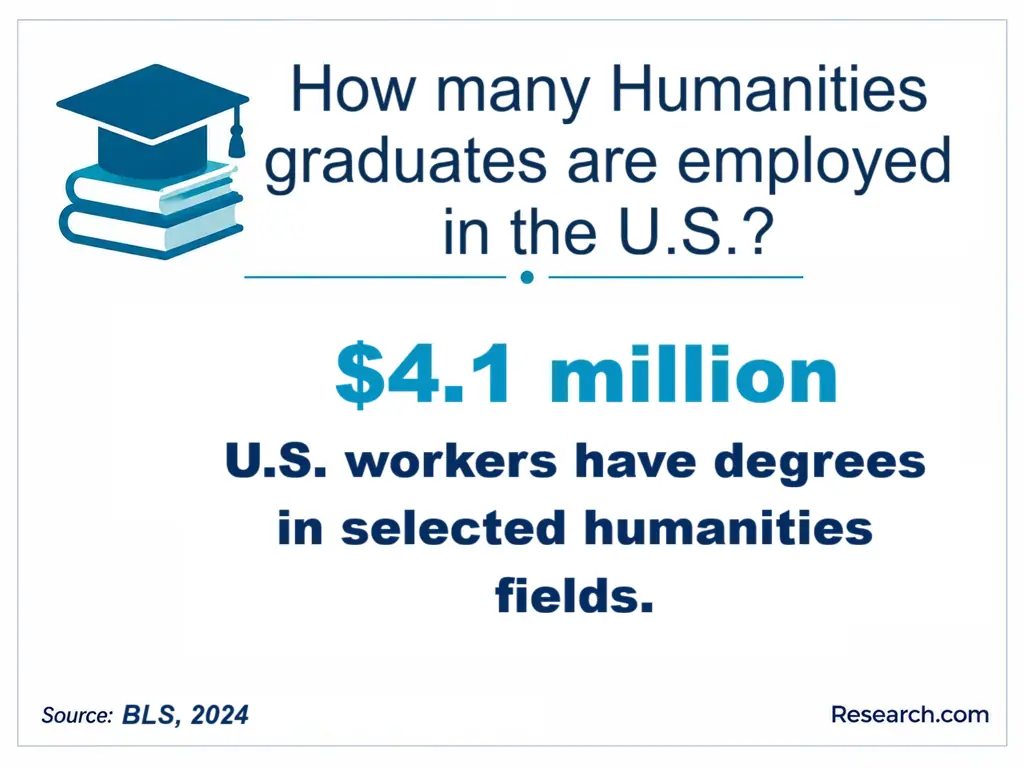
- In 2023, 4.1 million U.S. workers with degrees in selected humanities fields were employed, with English graduates taking up the largest chunk at nearly 1.94 million.
- Humanities graduates can pursue careers in various industries and perform various roles, such as technical writing, management, and project coordination, with median annual salaries ranging from $90,390 to $102,320 for these occupations.
What Industries Have the Highest Demand for Humanities Majors?
Employers from a wide range of industries value humanities graduates because they bring career-ready and transferable skills, including communication, analytical skills, critical thinking, problem-solving, creativity, research, cultural awareness, decision-making, and certain technical skills. Many businesses employ humanities graduates for roles that involve creating content, developing communication strategies, gathering and analyzing information, and dealing with other people.
The demand for humanities majors is specifically strong in the following industries:
- Media, Publishing, and Journalism. This industry needs professionals who can write, research, edit, develop content, analyze information, and effectively communicate ideas. Humanities graduates who have majored or specialized in languages, history, journalism, communications, media arts, and literature are perfect for these roles.
- Education and Academic Services. Education is a very accessible career path for people who hold humanities degrees, especially ones who have literature, history, language, cultural studies, and philosophy backgrounds. They will do well in schools, colleges, universities, and educational institutions that need professionals who can develop learning resources and instructional materials, explain complex ideas to others, teach, conduct academic research, and write content, among others.
- Government and Public Administration. Government agencies and public administration offices need humanities graduates to fill positions that involve documentation, public communication, research, cultural preservation, and administrative support. So humanities majors can serve as public information officers, administrative assistants and heads, policy and research assistants, records and documentation specialists, cultural affairs officers, and program support staff, among others.
- Marketing, Public Relations, and Advertising. Marketing and PR industries value humanities graduates for their creativity, communication skills, and overall ability to understand human behavior. Companies in these industries hire professionals with a humanities major to help them come up with persuasive messages for potential clients, understand customer preferences, maintain positive customer relationships, solve PR issues, develop marketing strategies, manage social media campaigns, write copy for advertising collateral and campaigns, and handle corporate communications.
- Nonprofit and Community Development Organizations. Advocacy groups, community development institutions, and NGOs are always on the lookout for graduates who can effectively communicate with various communities, organize programs and events, spearhead projects and social causes, conduct research, and deal with different types of people. And there are no better candidates for these roles than humanities graduates, who have had training in areas that involve social issues and social awareness, cultural preservation, diverse perspectives, developing mission-driven programs, fundraising, and communications.
- Technology and Digital Services. Tech companies also need professionals who understand users, can communicate technical information effectively, and develop accessible digital content. When it comes to these tasks, humanities graduates fit the bill perfectly. They can work for these firms as technical writers, content designers, digital content strategists, user experience researchers, and language specialists, among others.
Students who are more interested in understanding human behavior can focus more on psychology programs than on the humanities. For example, there are online BCBA programs for those who want to study behavior analysis more in depth.
Which Industries Have the Strongest Job Outlook for Humanities Graduates?
According to the United States Bureau of Labor Statistics, in 2023, there were about 4.1 million workers in the U.S. who hold a degree in one of the humanities fields. Among these workers, 1.9 million majored in English. This is five times more than the 345,000 workers who have a degree in the less popular field of Culture and Group Studies.
A majority – or 64% – of workers with an English degree hold occupations in educational instruction and library, management, business and financial operations, office and administrative support, and art, design, entertainment, sports, and media.
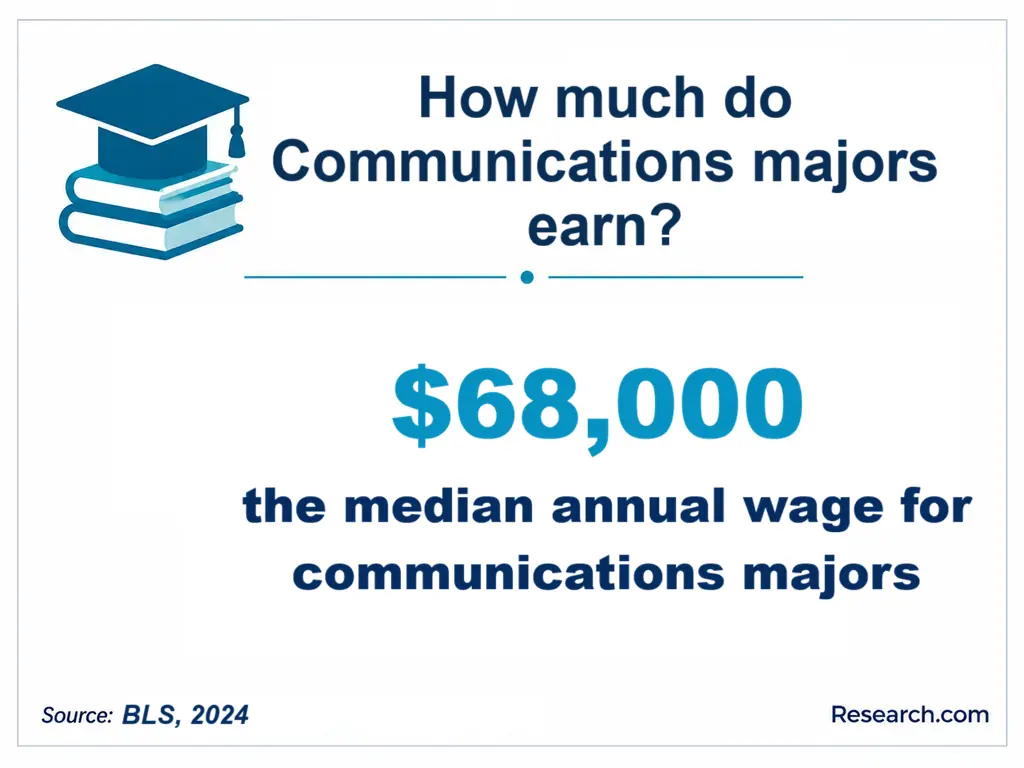
Meanwhile, there are more than 3.1 million workers with a degree in the field of communications. These workers focus on concentrations that include communications, journalism, mass media, and advertising and public relations. About 66% of communications graduates are employed in the following occupational groups:
- Management
- Business and financial operations
- Arts, design, entertainment, sports, and media
- Sales and related occupations
- Office and administrative support
Many humanities graduates hold management occupations in various companies. So pursuing a master's in business administration is a great way to advance in your career. You can check out online executive MBA cost to help you get started.
What Entry-Level Jobs Are Available for Humanities Graduates?
There is no shortage of entry-level jobs available for new humanities graduates. They can pursue a variety of entry-level positions across a wide range of industries – from media to government, education, business, and many others. Employers value the transferable skills that graduates have honed and developed through their humanities education.
Entry-level jobs available to fresh humanities graduates include:
- Content writer or copywriter. Fresh graduates of programs like Communication, Creative Writing, Literature, English, and Journalism who have strong writing skills can apply for writer positions. They can write articles, web and social media content, blogs, and advertising materials.
- Marketing or communications assistant. Marketing and communications assistants help companies prepare promotional materials, manage social media content, come up with marketing campaigns, and communicate with customers and suppliers. This position is perfect for those who are interested in digital marketing, public relations, and advertising.
- Research assistant. Research assistants help researchers maintain records, gather resource materials, prepare reports, organize schedules, and maintain correspondence with stakeholders. This position is perfect for those who have top-notch organizational and documentation skills and who have a very keen eye for detail.
- Customer service representative. Customer service representatives assist customers with their issues and help address problems and concerns. They may do so through emails, phone calls, chats, and other available communication platforms. This job is perfect for those with effective communication and interpersonal skills.
Other entry-level jobs for humanities grads also include editorial assistants, proofreaders, public relations assistants, digital content or social media assistants, and teaching or academic support assistants.
For fresh graduates, these entry-level positions are an opportunity for them to explore different career paths, to further develop their professional skills and competencies, and to gain additional work experience.
There are some industries or sectors that offer humanities graduates more entry-level roles because they value transferable skills more than highly technical and specialized ones. These employers know that fresh grads are capable of communicating effectively, are highly adaptable, can work well with people, can learn new skills quickly, and are ready to take on responsibilities in the workplace.
The following sectors offer lower entry barriers for new humanities graduates:
- Administrative and Office Services. Humanities graduates who are organized, detail-oriented, and good communicators can work with businesses across different industries as entry-level administrative assistants, office coordinators, records clerks, executive assistant trainees, and operations assistants. They will coordinate schedules, prepare reports, maintain records, and support daily office operations.
- Customer Service and Business Support. Humanities graduates can use their communication, interpersonal, and problem-solving skills to assist customers, respond to inquiries, and resolve problems and concerns as customer service representatives, customer support specialists, client services associates, or receptionists.
- Retail and Sales. The retail and sales sectors are common entry points for fresh graduates because employers prefer hiring employees for customer-facing and sales support positions. Humanities graduates in these roles develop professional communication and customer relationship skills. With this entry-level retail experience, humanities grads can gain a foundation for advancement into marketing, management, merchandising, or business operations.
- Education and Educational Services. Humanities graduates who are interested in teaching, providing academic support, and developing educational content can start their careers in the education sector. Public school teaching typically requires state-specific licensure or certification, but there are educational support positions with less rigorous requirements. Humanities graduates can work as tutors, teaching assistants, educational program assistants, and academic support specialists.
- Marketing, Advertising, and Digital Content. Humanities graduates with strong writing, research, and creative skills can work with marketing and digital content firms as marketing assistants, copywriters, content writers, social media coordinators, and PR assistants. They can help develop promotional materials, create website content, manage social media accounts, and write brand communication materials.
- Nonprofit Organizations and Community Services. NGOs and community service groups hire humanities graduates for entry-level positions where they communicate with communities, organize programs, conduct research, help with fundraising efforts, and assist with outreach activities. Humanities graduates are perfect for education, community development, arts and culture, and social advocacy groups.
For those who are interested in human behavior or in helping people with mental health issues, pursuing an online PsyD program would make sense.
Humanities graduates can find entry-level jobs that offer competitive starting salaries, although the pay may not be as good as that in highly technical occupations. Needless to say, however, there are certain industries or sectors that offer a more financially rewarding package to humanities graduates than others.
Fresh graduates may want to prioritize these sectors because they offer better or higher starting salaries:
- Technology and Information Services. Humanities graduates with strong writing skills can work as technical writers, for example. The median pay for technical writers, according to the U.S. BLS, is $90,390 per year.
- Finance, Insurance, and Professional Business Services. Humanities graduates can work in business and financial operations as business operations analysts, for instance. The median annual wage for business and financial operations occupations is $79,050.
- Marketing, Advertising, and Market Research. Marketing specialists and market research analysts earn a median annual wage of $78,760.
- Public Relations and Corporate Communications. The median annual wage for public relations specialists is $74,750.
Once you have gained experience in an entry-level capacity, you can pursue higher education and earn an advanced degree to increase your earning potential. You can them aim for leadership roles. If this is the career trajectory you want, you can look into the most affordable MBA programs.
Employees across various industries and sectors expect a certain set of skills from humanities graduates. These skills usually are:
- Strong writing and communication skills. Humanities graduates are trained to express or communicate ideas through reports, essays, articles, discussions, debates, and presentations. These skills are very handy in different industries, especially in media, education, nonprofit, and government organizations.
- Critical thinking and analytical skills. Humanities graduates are expected to know how to evaluate and interpret information, make deductions, and make decisions or solve problems using this information. These skills are very useful in research, business, marketing, and public relations sectors.
- Creativity and Innovation. Creativity is very useful in the business, marketing, digital content, and advertising sectors, where you will be expected to come up with fresh, innovative, and out-of-the-box ideas, design marketing strategies that would win new customers over, and create advertising campaigns that would cast a wider net over target audiences.
- Interpersonal skills. These skills are essential for humanities graduates who work in environments where they are expected to talk to people and maintain relationships with them.
- Technical and digital proficiency. More and more employers expect their employees to possess basic digital skills. The more advanced these technical and digital skills are, the more valuable your contribution to the company.
Of course, professionalism, good work ethic, and adaptability are also non-negotiables, regardless of your educational background and regardless of the industry or sector.
Humanities graduates can easily find flexible career opportunities across industries, especially now that a growing number of companies and businesses are embracing and adopting remote or hybrid work setups. Most of these companies that can afford remote arrangements are those that rely on writing, communication, research, and digital tasks. These are tasks that no longer require employees to be physically present in the workplace on a daily basis.
The more flexible industries include technology, marketing, publishing, and professional services. There are also education service companies that offer opportunities for humanities graduates to work remotely or follow hybrid schedules.
It should be noted, however, that the availability of these flexible schedule arrangements depends on the employer, your job responsibilities as an employee, and your level of experience.
Humanities graduates can work in any industry and enjoy promotions through the years. However, there are sectors that offer clearer career advancement pathways and allow employees to move up the hierarchical ladder and into leadership positions more than others. This includes industries like business and professional services, marketing, technology, government, and education. These sectors allow employees to start in entry-level roles and advance gradually into positions with bigger responsibilities. You can advance as supervisors, then managers, and then into other specialized roles.
That is why it is important that new humanities graduates should look into their prospective employer's corporate structure and personnel chart. Make sure there are plenty of advance positions and plenty of room for growth. Companies that offer strong promotion opportunities provide structure training for employees, skills upgrade programs, internal mobility, and opportunities for workers to take on greater responsibilities.
For those who are more inclined to work with numbers instead of art, culture, and literature, an online math bachelor's degree might be worth looking into.
How Do You Choose the Best Industry With a Humanities Degree?
There are many factors to consider when choosing the best industry to work for. But for fresh humanities graduates, it is important that you have an idea of the career path you want to follow. You need to have answers to questions like: Where and how do I see myself five years from now? Ten years from now? Additionally, look into the job opportunities available within the industry, the professional growth it offers, the salary potential, and how it contributes to the employees' sense of fulfillment and satisfaction.
When choosing the best industry for you, you should also know your strengths and interests, whether it's on a personal or professional level. When you know the skills you have developed and have evaluated their value, you will know which industry suits you best.
Salary is also an important deciding factor. Some industries offer a better earning potential for you, as well as plenty of opportunities for you to advance to leadership roles and earn higher salaries. Other industries, meanwhile, are only good for entry-level positions without many opportunities for career advancement and promotions.
Another factor to consider is whether an industry or sector allows you to develop new skills as you gain practical experience. Will you be able to advance your expertise in a particular professional area? Will you be able to take this new skill with you across multiple other industries?
In the end, keep in mind that the best industry for you isn't necessarily the one that brings in the fattest paycheck. It is the one that aligns with your financial needs, strengths, skills, interests, and long-term career goals.
Other Things You Should Know About Industries Hiring Graduates with a Humanities Degree
In the U.S., promising industries for humanities graduates entering the workforce include technology, communications, marketing, healthcare administration, financial services, education, and government.
Yes, internships benefit humanities graduates by providing practical work experience, industry-specific skills, and networking opportunities. These will come in handy and help graduates become more competitive in their field.
Not necessarily. Humanities graduates do not always need to pursue advanced education in order to be competitive. Work experience and the right exposure can help graduates develop their skills, which will make them valuable in the workforce. However, undergoing specialized training, pursuing certifications, and earning graduate degrees can better equip graduates with the knowledge and skills to advance in their careers and take on roles with greater responsibilities.
In 2027, employers value communication, problem-solving, critical thinking, research, creativity, and adaptability skills the most among humanities graduates.
- U.S. BLS. (2026). Field of Degree: Communications. https://www.bls.gov/ooh/field-of-degree/communications/communications-field-of-degree.htm
- U.S. BLS. (2026). Field of Degree: Culture and group studies. https://www.bls.gov/ooh/field-of-degree/culture-and-group-studies/culture-and-group-studies-field-of-degree.htm
- U.S. BLS. (2026). Field of Degree: English. https://www.bls.gov/ooh/field-of-degree/english/english-field-of-degree.htm
- U.S. BLS. (2026). Field of Degree: Foreign language. https://www.bls.gov/ooh/field-of-degree/foreign-language/foreign-language-field-of-degree.htm
- U.S. BLS. (2025). Field of Degree: Humanities Employment and Wages. https://www.bls.gov/careeroutlook/2025/data-on-display/field-of-degree-humanities-employment-and-wages.htm
- U.S. BLS. (2026). Field of Degree: Philosophy and religion. https://www.bls.gov/ooh/field-of-degree/philosophy-and-religion/philosophy-and-religion-field-of-degree.htm
- U.S. BLS. (2026). Field of Degree: Theology. https://www.bls.gov/ooh/field-of-degree/theology/theology-field-of-degree.htm
- U.S. BLS. (2024). Occupational Employment and Wage Statistics: 13-0000 Business and Financial Operations Occupations (Major Group). https://www.bls.gov/oes/2023/may/oes130000.htm
- U.S. BLS. (2026). Occupational Outlook Handbook: Public Relations Specialists. https://www.bls.gov/ooh/media-and-communication/public-relations-specialists.htm
- U.S. BLS. (2026). Occupational Outlook Handbook: Technical Writers. https://www.bls.gov/ooh/media-and-communication/technical-writers.htm