2027 Humanities Degree Careers Ranked by Salary, Growth, and Work-Life Balance
Audited and Verified:
Our Editorial and Data Verification Process
Research.com uses government datasets, official education statistics and primary institutional information to support its career and degree guides. Our review process checks factual accuracy, occupational definitions, source dates and the requirements associated with the credentials discussed.
How This Article Was Fact-Checked
Our editorial team verifies salary estimates, employment projections, education requirements and program information against original data providers and official organizations. Salary figures are checked against the relevant occupational definitions and reporting periods. Information about licensure, accreditation and required in-person training is reviewed separately.
Fact-checked and verified on:

Co-Founder and Chief Data Scientist
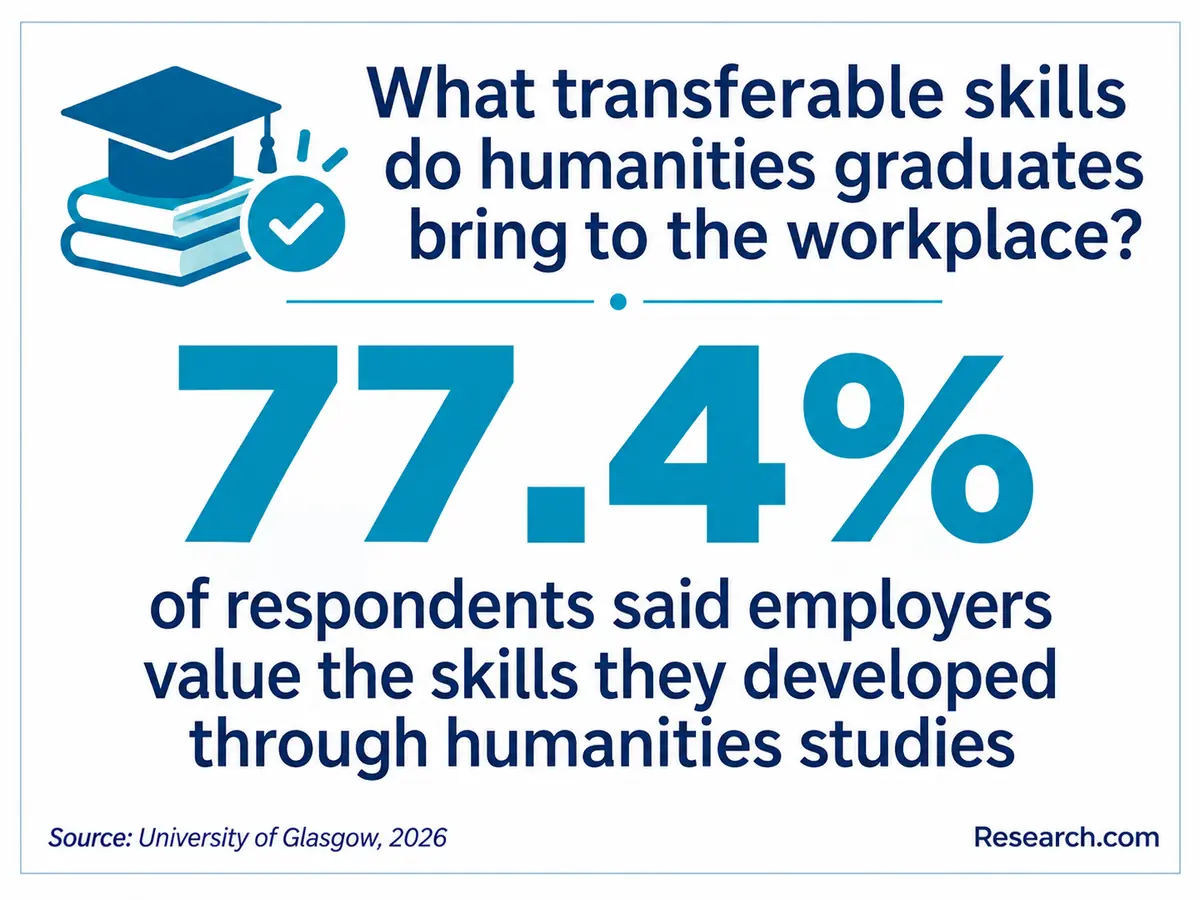
A humanities major student is often warned that taking the program could lead to gaining great ideas but not much earning power. However, labor data shows otherwise. In fields like English, History, or Philosophy, entry-level salaries may start low, but most humanities graduates catch up by mid-career. This is due to the fact that employers value communication, critical thinking, and leadership skills.
A humanities degree can lead to a variety of career paths. You might aim for a high-paying corporate leadership role, move into tech jobs that do not require coding, like UX research, or prefer a steady 40-hour workweek in public policy or archival work. Your options are wider. In the sections below, we rank the top humanities career paths by salary, job growth, and work-life balance, and explain how to make the most of your degree.
Key Things You Should Know
- Humanities graduates may start with lower entry-level wages, but most experience strong career acceleration. This advancement into management and specialized niches significantly increases lifetime earnings and narrows the gap with technical fields.
- Career options for humanities graduates often fall into two groups. Some offer high salaries, like executive coach ($132,913), HR director ($109,608), proposal manager ($107,748), and lawyer ($107,136+). Others, such as librarianship, public policy, and remote grant writing, focus on steady 35-to-40-hour workweeks.
- The fastest-growing humanities careers that are less likely to be replaced by AI combine qualitative reasoning with digital and business skills. Examples include UX research, content strategy, and AI governance. Turning academic writing into business portfolios, internships, and specific certifications can help connect a humanities degree to high-value corporate jobs.
Is a Humanities Degree Worth It Today in Terms of Career ROI?
A humanities bachelor's degree can lead to strong long-term financial returns. This especially applies to graduates who move into business, policy, or specialized communication roles instead of staying in generalist positions. According to the U.S. Bureau of Labor Statistics (BLS), median wages for humanities graduates range from $60,000 for English majors to $68,000 for cultural studies graduates. Over time, as communication and leadership skills grow, lifetime earnings for these graduates often catch up to those with technical degrees by mid-career.
Labor market data by Revelio Labs shows that traditional humanities majors start out earning about 8.5% less than the national average salary. However, job opportunities in their top 20 career paths have grown 43% faster than the national average. Instead of leading to just one type of job, a humanities degree offers flexibility and access to many fast-growing fields.
How Are Humanities Careers Ranked by Salary, Job Growth, and Work-Life Balance?
The evaluation of a career in the humanities should not be based solely on the paycheck. To rank the roles objectively, labor analysts look at the U.S. median annual wage, the 10-year BLS employment projections, and qualitative lifestyle indicators. The main criteria for ranking are:
- Compensation Potential: Entry-level starting pay versus mid-to-senior leadership salary ceilings.
- Market Demand: Projected 10-year job growth rates (averaging 3%–8% across humanities-aligned fields) and resistance to automation.
- Work-Life Sustainability: Standard weekly hours, remote or hybrid work availability, and seasonal burnout risk.
The high-paying corporate and legal careers will involve 45- 60-hour weeks and the constant pressure of deadlines. The public sector and cultural careers, on the other hand, will generally offer a lower starting salary in exchange for a far more predictable workload plus a wide range of benefits.
For professionals looking to boost their earning ceiling or transition into specialized leadership without sacrificing their current work-life balance, pursuing an accessible graduate credential can bridge that gap. Exploring options for the easiest master degree allows working adults to gain targeted expertise in fields like communications, public administration, or library science through flexible, accelerated coursework.
What Are the Highest-Paying Jobs You Can Get With a Humanities Degree?
Humanities majors can earn the most in careers that combine strong communication skills, understanding of regulations, and leadership. Jobs that focus on generating revenue, managing brand reputation, or working in legal advocacy often pay six-figure salaries.
Based on U.S. wage data from Indeed and the BLS, the highest-paying jobs for humanities majors include:
| Executive Coach | $132,913 |
| Director of Human Resources | $109,608 average |
| Proposal Manager | $107,748 |
| Lawyer | $107,136–$159,670+ |
| Regulatory Affairs & Communications Directors | $102,075–$106,129 |
To qualify for top-tier management and revenue-generating positions, humanities graduates often pair their background in critical thinking and communication with formal management training. Enrolling in accredited business degrees online offers a flexible pathway to build foundational skills in finance, strategy, and organizational leadership without stepping away from full-time employment.
gfx
Graduates who prefer predictable schedules, low stress, and remote flexibility find the library science, public policy, and asynchronous writing roles with the strongest alignment. These tracks rarely require evening crisis management or weekend billable hours, as opposed to agency public relations or corporate law,
Jobs in the public sector and specialized institutions are known for offering the most sustainable daily routines:
- Librarians & Digital Archivists: Standard 35-to-40-hour workweeks, structured schedules, and expanding remote cataloging opportunities.
- Grant Writers: High compatibility with remote and freelance work, punctuated only by cyclical funding deadlines.
- Public Policy Analysts: Government and think-tank roles offering steady hours, pension plans, and generous paid time off.
- Translators & Cultural Consultants: Flexible, project-based schedules ideal for independent remote work.
Traditional humanities jobs are growing at a steady rate of 3% to 5%. However, jobs that combine communication skills with digital systems are growing much faster. Recent hiring cycle data show that job listings that require both humanities knowledge and digital tools have increased by over 20%.
More employers now want candidates who can explain complex data, technology, and regulations in ways that people can understand:
- UX Researchers & Content Strategists: High demand across software and healthcare companies building user-friendly digital products.
- Instructional Designers & Curriculum Developers: Rapid expansion in corporate training and online education platforms.
- Management & Strategy Consultants: Strong growth as organizations hire qualitative analysts to guide change management.
For graduates who prefer applying their training in the humanities to direct community advocacy, healthcare, or public policy, transitioning into human services is another option. Many universities offer rolling admissions and multiple start dates, and candidates looking to pivot quickly can apply to MSW programs still accepting applications to gain clinical or macro-level credentials.
Humanities graduates often see their salaries grow more slowly at first compared to those in engineering or computer science. Entry-level jobs like editorial assistant, junior coordinator, or curriculum aide usually pay between $45,000 and $55,000 as graduates gain experience in their chosen fields.
After five to ten years of experience, humanities professionals often experience fast wage acceleration as they take on more responsibility. Shifting from doing daily tasks to managing budgets, teams, and client relationships can double their starting salaries.
- Early Career (0–3 Years): Content coordinators, paralegals, and junior HR specialists ($48,000–$65,000).
- Mid-Career (4–8 Years): Senior technical writers, content strategists, and policy analysts ($70,000–$95,000).
- Senior Leadership (9+ Years): Directors of communications, HR directors, and senior consultants ($102,000–$150,000+).
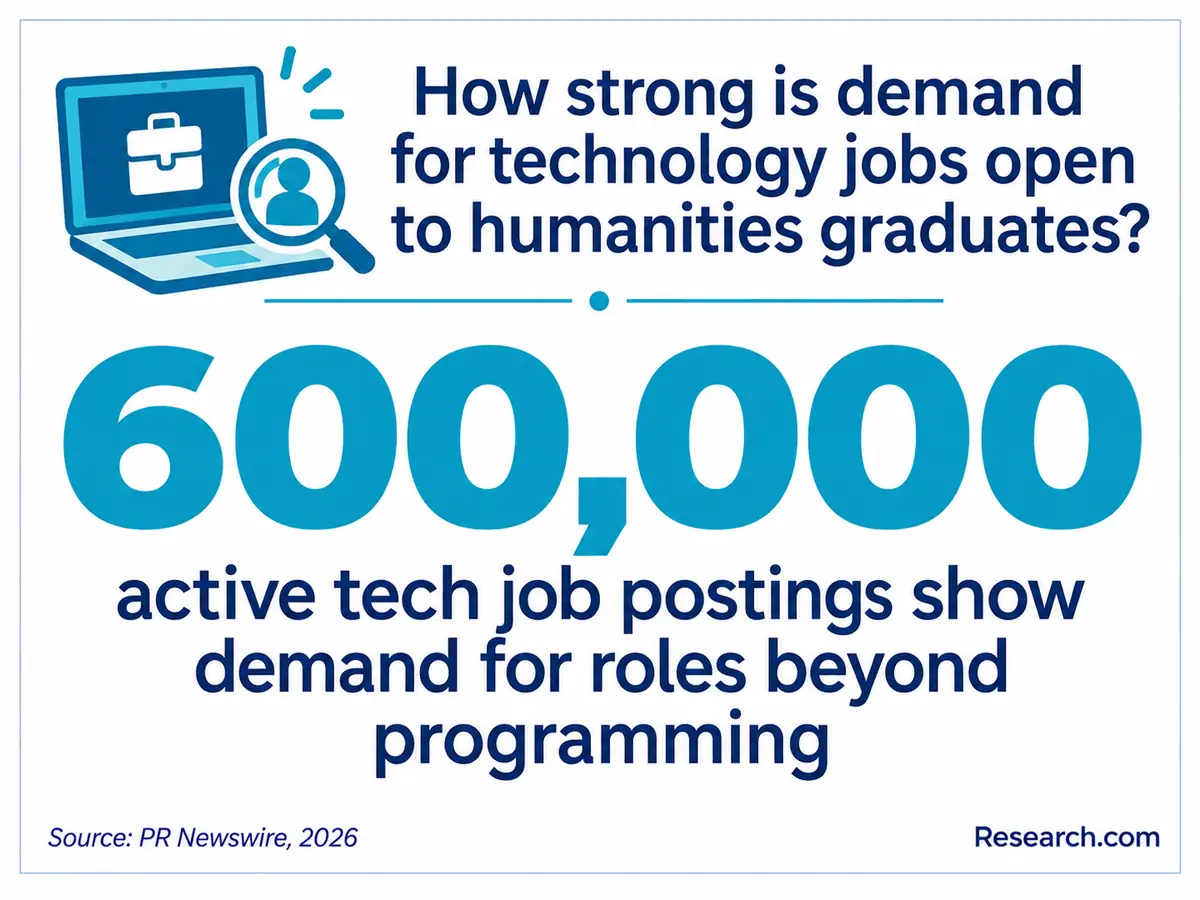
Technology companies often hire humanities majors for non-engineering jobs. While the role is not technical, it is crucial because they connect software developers with end users. To build great products, companies need people who understand human behavior, communicate clearly, and recognize customer pain points. These are key strengths of graduates in Anthropology, Psychology, English, and Philosophy.
Instead of writing code, humanities professionals in the technology sector focus on research, product messaging, and helping customers start using new products:
- UX Researcher: Conducts user interviews, usability testing, and ethnographic studies to guide product design.
- UX Writer & Content Designer: Crafts microcopy, onboarding flows, and interface language that make software intuitive.
- Product Marketing Manager: Positions technical features into compelling customer narratives and go-to-market campaigns.
- Technical Writer: Translates API documentation and engineering specs into clear developer and user guides.
Companies also rely on professionals who combine cultural awareness with strong client-service instincts. Graduates interested in leading guest experience operations or digital service strategy can broaden their credentials through a hospitality management degree online, gaining business and operational training while continuing to work.
While generative AI can now handle simple data sorting, basic summarization, and even copywriting, employers are looking for skills that involve human judgment. This skill is crucial because it is something that algorithms cannot match. While AI tools can quickly produce drafts, they do not offer accountability, cultural understanding, or the ability to manage workplace dynamics.
Studying the humanities develops lasting cognitive skills that are still crucial in workplaces where AI is used:
- AI Ethics & Governance: Evaluating algorithmic bias, regulatory compliance, and societal impact for enterprise tech teams.
- High-Stakes Stakeholder Persuasion: Leading executive negotiations, crisis communications, and donor or client relations.
- Qualitative Synthesis & Ambiguity Management: Framing ill-defined business problems and interviewing human subjects to uncover unspoken needs.
A bachelor’s degree is enough to start a career in corporate marketing, HR, technical writing, or content strategy. In these fields, your work experience matters more than your academic background. Getting a general master’s degree in English or history does not automatically lead to higher pay in the private sector unless you want to teach at the college level.
However, in regulated or specialized fields, earning a targeted professional degree or industry certification can directly boost your salary:
- Required Graduate Degrees: A J.D. for practicing law, an M.L.I.S. for academic/public librarianship, or an M.P.A. for senior public policy leadership.
- High-ROI Certifications: The PHR/SHRM-CP for human resources, PMP for project and proposal management, or Google Analytics/SEO credentials for digital content strategy.
In behavioral science and legal consulting, advanced credentials lead to higher compensation tiers. For instance, earning a doctorate and state licensure allows professionals to command a competitive forensic psychology salary, with U.S. median wages for specialist psychologists exceeding $110,000 annually.
How Can Humanities Graduates Build a Portfolio That Lands Corporate Job Offers?
The ability of humanities graduates to turn classroom essays into practical business examples is an important skill, as most hiring managers will not read academic term papers. Showing you can solve real problems helps ease employer concerns about non-vocational majors.
Preparing three to five short, results-oriented work samples gives you clear evidence of your skills to share in interviews:
- Replace Essays With Business Artifacts: Convert research papers into two-page policy briefs, competitive market teardowns, or grant proposals.
- Showcase Digital & Data Literacy: Include SEO content audits, UX usability test summaries, or internal training modules built with modern workplace tools.
- Quantify Outcomes: Highlight measurable metrics such as readership growth, donor conversion rates, or process time saved from internships, freelance gigs, or campus leadership roles.
- American Academy of Arts & Sciences. (2023). Earnings of humanities majors with a terminal bachelor's degree. Humanities Indicators. https://www.amacad.org/humanities-indicators/workforce/earnings-humanities-majors-terminal-bachelors-degree
- Angeles, D. (2025, September). Field of degree: Humanities employment and wages. U.S. Bureau of Labor Statistics, Career Outlook. https://www.bls.gov/careeroutlook/2025/data-on-display/field-of-degree-humanities-employment-and-wages.htm
- Bouchrika, I. (2026, October 16). 2027 humanities degree careers ranked by salary, growth, and work-life balance. Research.com. https://research.com/advice/humanities-degree-careers-ranked-by-salary-growth-and-work-life-balance
- Indeed Editorial Team. (2026, June 15). 25 high-paying humanities jobs. Indeed Career Guide. https://www.indeed.com/career-advice/finding-a-job/high-paying-humanities-jobs
- Revelio Labs. (2025, August 12). Humanities vs. specialized degrees: Career outcomes. https://www.reveliolabs.com/news/macro/specialized-degrees-lead-to-careers-humanities-degrees-offer-versatility
- U.S. Bureau of Labor Statistics. (2025). Occupational outlook handbook. U.S. Department of Labor. https://www.bls.gov/ooh/