2027 Humanities Internship Requirements: Hours, Placements, and Supervision
Audited and Verified:
Our Editorial and Data Verification Process
Research.com uses government datasets, official education statistics and primary institutional information to support its career and degree guides. Our review process checks factual accuracy, occupational definitions, source dates and the requirements associated with the credentials discussed.
How This Article Was Fact-Checked
Our editorial team verifies salary estimates, employment projections, education requirements and program information against original data providers and official organizations. Salary figures are checked against the relevant occupational definitions and reporting periods. Information about licensure, accreditation and required in-person training is reviewed separately.
Fact-checked and verified on:

Co-Founder and Chief Data Scientist
Internships bridge the gap between classroom theory and real-world practice. For humanities students, these internships allow them to apply what they have learned in lectures and gain practical experience in media companies, arts and cultural institutions, community development organizations, government agencies, and NGOs. Their internship performance will help future employers gauge how fit they are for entry-level roles when they finally join the workforce.
This guide will outline the internship requirements for Humanities students, including the required number of hours, how placements are assigned, and the level of supervision needed.
Key Things You Should Know
- Humanities internship requirements usually vary by university, but students will typically need to submit an application and resume to get a placement.
- The internships typically last one academic semester, ranging 120 to 160 hours.
- Interns are typically supervised by a faculty adviser or mentor and a professional site supervisor who offers guidance, feedback, and evaluation.
Do All Humanities Degrees Require an Internship?
Unlike in fields such as healthcare and social work, an internship is not required or mandatory in all humanities degree programs. However, some humanities programs typically recommend internships to increase students' job prospects upon graduation. Simply put, internship requirements mainly depend on the university, the specific program, and the academic curriculum.
Humanities programs in fields like history and communication usually make internships or practicum experience in media companies, museums, libraries, and other arts and cultural organizations a mandatory component of graduation. Such internship placements allow undergraduate humanities students to apply their academic learning in a professional setting and to meet industry expectations.
Then there are humanities programs – such as those in philosophy, literature, and English – that place stronger emphasis on research and thesis work.
As such, it is important that you look into your humanities degree program's curriculum and know about the internship requirements ahead of time. This allows you to manage expectations and plan ahead of time. It’s never too early to have an idea of how to go about your undergraduate internship.
Humanities students in graduate and PhD programs shouldn’t worry about internships, as they usually have work experience already.
What Are the Typical Requirements to Be Accepted into a Humanities Internship?
The requirements for a humanities degree internship differ from program to program and from university to university. However, they are usually a combination of any of these requirements:
- Academic standing. Undergraduate students applying for an internship typically need a minimum GPA of around 2.5 or 3.0. This would demonstrate that the applicants have a solid academic foundation.
- Curriculum vitae. Student applicants are generally required to submit their resume or CV, which highlights their education, research experience, academic projects and achievements, extracurricular work, relevant skills, and work experience, if any.
- Personal statement or cover letter. Companies or organizations typically require applicants to submit a personal statement or letter that explains their choice of the organization, their career goals, their expectations, and how they can contribute, given their academic background and the extent of their knowledge in their chosen field.
- Letters of recommendation. For competitive programs, applicants may need to get references from their academic advisers or professors. These recommendations from credible individuals will prove that the students are competent and that they have completed relevant courses.
Some organizations may require students to complete certain courses, such as those relating to theories, disciplinary frameworks, or research methods. So they might need a copy of a student's transcript for this. There are also those that require background checks or a background clearance, especially those that involve sensitive settings or vulnerable populations.
Students should review their target company's or target organization's application guidelines and requirements. Doing this would allow them to prepare for these requirements ahead of time and formulate backup plans in case their application falls through.
Are you wondering: What degree can I get online in 6 months? There are accelerated associate programs that you can look into if you want to earn a degree in as little time as possible and join the workforce as quickly as possible.
How Many Internship Hours Are Required for Humanities Degrees?
The required internship hours for humanities degree interns vary by program and by university. Whether the internship is required for academic credit also depends on the university. Generally, however, this is what the internship hours look like:
- A semester-long humanities internship usually lasts around 120 to 160 hours.
- For a 14- to 15-week semester, an internship lasts approximately 8 to 15 hours per week.
There are universities that apply a credit-to-hour system for their internship requirement. The University of Colorado Boulder, for instance, requires 40 hours per credit for its Humanities Program internship, while Southern Methodist University requires 45 hours of internship per credit unit.
Penn State - Harrisburg's School of Humanities, meanwhile, requires interns to work a total of 120 hours for 3 credits and about 240 hours for 6 credits – spread over 10 weeks or one semester. Interns can do two 3-credit internships at different locations if they want to broaden their range of experience.
Humanities students in the U.S. complete their internships in various companies and organizations and in different professional settings. Common placements include museums, media organizations, publishing firms, nonprofit organizations, universities and academic institutions, and government agencies, depending on their program and field of specialization.
For example, humanities students can intern for museums, cultural institutions, and media outlets and develop their communication skills through content creation, curation, public programming, and other tasks. Meanwhile, students can intern in businesses or corporate organizations under their communications or marketing departments. They can gain insight into the organization's strategic operations or help with its cultural outreach programs. Those who intern in publishing firms can gain experience in editing, fact-checking, proof-reading, book production, and publicity. Internship placements in libraries and research centers involve archival research, documentation, cataloging, digitization, and preservation.
These examples show that humanities internship placements are widely varied -- and that's because the humanities is a broad field in itself and encompasses many specialized areas. Students should go for placements that are most aligned with their interests and career goals.
Those who are exploring careers outside of humanities, there are programs like criminal justice degree online accredited.
Internship placements in humanities degree programs are typically arranged or approved by university internship coordinators based on student preferences and the availability of host companies or organizations. University humanities departments or colleges allow qualified students to identify companies or organizations that align with their academic interests, career goals, or field of specialization. These students then apply to these organizations with their university's approval and advisers' or mentors' recommendation.
There are also university-coordinated placements, where the internship coordinator has a list of partner-organizations. Students will pick from this list and the coordinators will connect them with the company's internship supervisors. The students will them submit their applications and go through interviews.
Some programs also customize internship placements. They will match their students with the most suitable organization for them based on the students' skills, interests, and qualifications and on the organization's needs and requirements.
In some cases, certain placements are highly competitive. These are companies and organizations that receive a higher volume of intern applications compared to others. These companies will usually have a more rigorous screening process and a longer list of requirements. They will usually select the best cover letters and the best CVs, conduct interviews, and hire only the most qualified interns. As such, students need to have a fallback plan and an alternative placement option.
With the growing popularity of virtual and remote work arrangements, it follows that virtual and hybrid humanities internships have also become available. Students now have a chance to gain professional experience without having to physically travel to a workplace.
Remote internship opportunities are commonly offered in work that involves research, writing, editing, digital content, communications, graphic arts and design, cultural programming, online events, and other tasks that make use of digital communication sources and platforms, including video calls and systems that allow students to connect with their teammates and supervisors.
It should be noted that not all programs or academic departments allow or offer virtual or remote internship options. There are still those that require onsite or face-to-face experience. Also, in many organizations and companies, the nature of work for interns calls for in-person involvement.
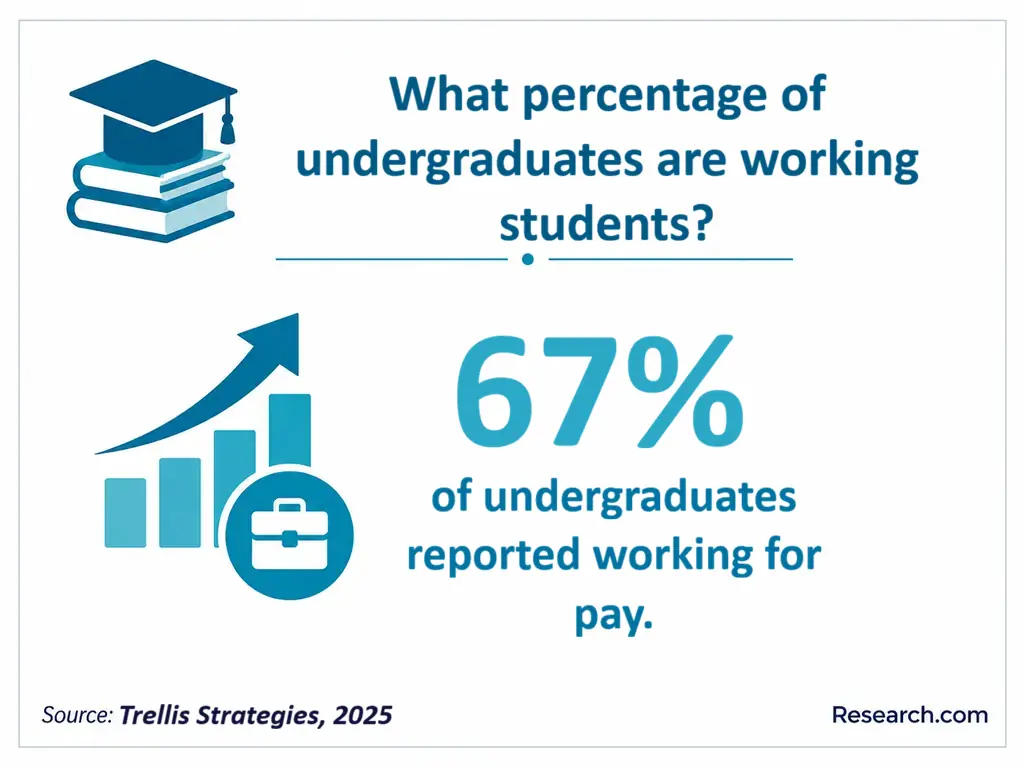
According to Trellis Strategies, nearly 70% of undergraduates balance studies with work to support themselves. So it's not rare for these students to also seek part-time internship options. Many humanities programs offer flexible or part-time internship options to support students. Part-time internship schedules would allow these working students to gain professionally relevant experience without having to leave their current job.
Many internship placements also offer remote work options that allow students to perform their tasks online and at their own pace, or during the evening, or on weekends. They can choose to finish their tasks fast and be free to attend to their other responsibilities.
Part-time internship schedules usually range from 10 to 20 hours per week. There are also those that require lower weekly hour commitments, like 8-10 hours per week.
For those who are considering careers outside the science field and humanities, accelerated sports management degree online programs are worth exploring.
Supervision among humanities interns is required both from the university or humanities department and from the host company or organization.
A faculty supervisor or internship coordinator usually performs the following roles or tasks:
- oversees the academic component of the internship
- coordinates between the partner organization and the student interns
- facilitates the internship application process
- monitors the intern's progress throughout the internship period through reports, journals, regular follow-ups, meetings, and consultations
- communicates with the on-site or company supervisor in charge of interns to address certain issues and to solicit feedback
- monitors intern attendance
- determines the credit or academic grade of the student based on internship performance feedback and evaluation
An on-site supervisor, or the company's supervisor in charge of interns, typically performs the following tasks or roles:
- facilitates internship application process
- guides the interns in terms of their day-to-day tasks and assignments and orients interns on work protocols and procedures
- coordinates and communicates with the faculty supervisor with regard to intern issues
- provides feedback and evaluation on intern performance
Humanities interns, therefore, receive academic oversight from their university and professional supervision from their host company or organization.
Internships are generally evaluated by both the program supervisor and the host company's on-site supervisor. Interns are evaluated based on the quality of their performance in the workplace and their academic knowledge and practical skills.
Different universities and programs apply different evaluation methods. It can be a combination of any of these methods or factors:
- Site supervisor's evaluation: The host company's supervisor in charge of interns will assess the student's performance in the workplace. They will evaluate the intern based on their attendance, work ethic, ability to accomplish assignments and tasks, the quality of their work, the application of their skills, and other metrics they have established.
- Student's journals or reports: The student will write reports or journals reflecting on their learning and explaining how they applied the things they learned from their coursework to their work experience and how their experience helps them achieve their academic objectives.
- Portfolio or final project: The student will compile their work output or submit a final project under their internship.
- Faculty assessment: Their faculty supervisor or mentor will assess their reports, projects, and the on-site supervisor's evaluation and compute their final grade.
For those who are more into engineering courses and are looking for affordable options, you can check out the cheapest online mechanical engineering degree programs.
What Challenges Do Humanities Students Face During Internships?
Humanities interns may face various challenges as they transition from classroom theories to a real work environment. Common challenges for student internship applicants may include finding the right internship placements, competing to get accepted into high-demand workplaces or organizations, having a limited professional network, and negotiating for part-time or flexible internship schedules for those who are working while studying.
Many interns may also find balancing work and their other academic responsibilities a challenge. Their internship schedules may be in conflict with their other classes and they may find it hard to accomplish certain class projects while attending to internship responsibilities.
Of course, financial difficulties are also common, especially since some internships are unpaid or offer very little compensation. Students may find it hard to fund internship-related expenses like transportation, food, and relocation housing without extra income. As such, students should look into whether their internship placement or opportunity offers compensation or not.
Other Things You Should Know About Humanities Internships
Yes, there are unpaid internships in humanities programs. This is especially the case for internship opportunities in nonprofit organizations or cultural organizations. There are also institutions with a lack of funding to pay interns.
Yes, faculty supervisors are required to conduct an onsite visit or inspection before or during the internship period. This is one way for supervisors to make sure their partner organization is a suitable workplace for student interns and that it can help the university meet learning objectives.
At the end of their internship period, and depending on specific requirements, students usually submit a time record of their attendance, the evaluation report from their onsite supervisor, a portfolio or compilation of their accomplished tasks, and a written report of their experience.
The type of organizations allowed to host humanities internships is limited to those that would provide students with relevant experience or substantive professional exposure that's aligned with their chosen field of specialization.
- PennState Harisburg. (2026). Internships. https://harrisburg.psu.edu/humanities/internships
- SMU - Dedman College of Humanities and Sciences. (2026). Internships. https://www.smu.edu/dedman/resources/students/dedman-academic-services/internships
- Trellis Strategies. (2026). Understanding Working Students: The Impact of Work on College Success. https://www.trellisstrategies.org/research-studies/understanding-working-students-the-impact-of-work-on-college-success/
- U.S. BLS. (2025). Field of Degree: Humanities Employment and Wages. https://www.bls.gov/careeroutlook/2025/data-on-display/field-of-degree-humanities-employment-and-wages.htm
- U.S. BLS. (2026). Field of Degree: Culture and group studies. https://www.bls.gov/ooh/field-of-degree/culture-and-group-studies/culture-and-group-studies-field-of-degree.htm
- U.S. BLS. (2026). Field of Degree: English. https://www.bls.gov/ooh/field-of-degree/english/english-field-of-degree.htm
- U.S. BLS. (2026). Field of Degree: Foreign language. https://www.bls.gov/ooh/field-of-degree/foreign-language/foreign-language-field-of-degree.htm
- U.S. BLS. (2026). Field of Degree: Philosophy and religion. https://www.bls.gov/ooh/field-of-degree/philosophy-and-religion/philosophy-and-religion-field-of-degree.htm
- U.S. BLS. (2026). Field of Degree: Theology. https://www.bls.gov/ooh/field-of-degree/theology/theology-field-of-degree.htm
- University of Colorad Boulder. (2026). Internship Guidelines - HUMN 3930. https://www.colorado.edu/humanities/about-major/internship-guidelines