2027 Licensing Exams Required After Completing a Humanities Degree Program
Audited and Verified:
Our Editorial and Data Verification Process
Research.com uses government datasets, official education statistics and primary institutional information to support its career and degree guides. Our review process checks factual accuracy, occupational definitions, source dates and the requirements associated with the credentials discussed.
How This Article Was Fact-Checked
Our editorial team verifies salary estimates, employment projections, education requirements and program information against original data providers and official organizations. Salary figures are checked against the relevant occupational definitions and reporting periods. Information about licensure, accreditation and required in-person training is reviewed separately.
Fact-checked and verified on:

Co-Founder and Chief Data Scientist
A humanities degree offers a range of employment opportunities, including education, communications, public service, social work, and research. However, certain careers require more than a Bachelor's Degree for graduates to practice. Some positions demand further training, certification, on-the-job training, or state licensure.
Information on licensing exams after a humanities degree can help graduates avoid unnecessary costs and determine what they need to study before pursuing a regulated career. Many humanities occupations have no occupational examinations, but some, like teaching, counseling, and social work, do have special exams. Understanding which qualifications are important, the qualification process, and what it will cost you can make career planning much simpler.
Key Things to Know About the Licensing Exams Required After Completing a Humanities Degree Program
- Licenses for careers available to humanities graduates require a licensing exam. In 2025, 67,442 US Bar Exam applicants had a 63% overall pass rate and 76% first-time pass rate.
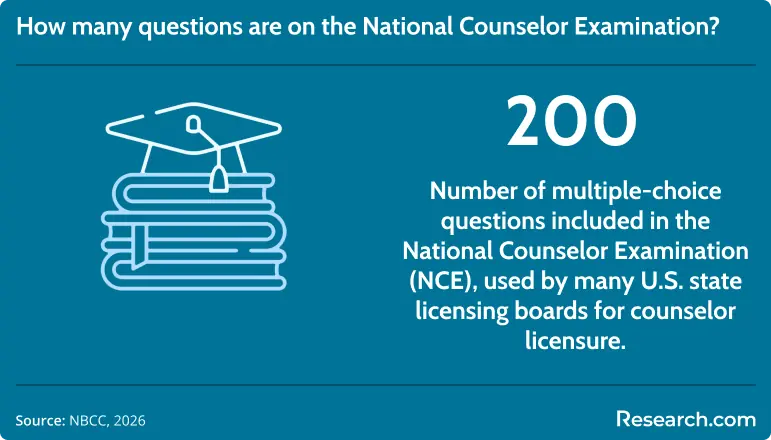
- The pass rate varies among different types of exams. In 2025, first-time ASWB test-takers passed at 73.9% on the Master's level and 75.7% on the Clinical level. Also, there are 200 multiple-choice questions on the National Counselor Examination (NCE).
- Licensing involves more than passing an exam – it's also about money and career choices. Exam fees range from $130 to $640, and retakes can be delayed 30 to 90 days. BLS data shows median annual wages of $61,780 for social workers and $76,910 for writers and authors in May 2025.
Which Careers Require Licensing Exams for Humanities Graduates?
There are many careers available to humanities graduates that don't require professional licensure. Licenses pertain to specific job tasks, not to humanities degrees in general. Graduates of these degree programs, however, might have to undergo exams to be licensed to practice in regulated medical career fields.
Common examples include:
- Teaching: In most cases, public school teachers must be state-credentialed and may be required to take teacher certification exams.
- Social work and counseling: Professional social workers and professional counselors usually must be licensed to provide regulated services.
- Law: Students planning to enter a law career after graduating from the humanities department go on to law school and pass the bar exam to become lawyers.
- School librarianship: There are some states that mandate school librarians have certain teaching or library qualifications
Demand for such credentials is evident in bar exam statistics. In 2025, 67,442 applicants took the bar exam across the United States, with a 63% overall pass rate. First-time takers had a 76% pass rate, according to the NCBE.
Students planning to work in writing, communications, research, or in the general public service may not require a professional license.
What Licensing Exams Can Humanities Degree Holders Take After Graduation?
Humanities graduates have a variety of licensing exams depending on their chosen field and qualifications. The exams test specific skills of a profession, not general knowledge of the humanities. Common examples include:
- Teacher certification exams: State-mandated assessments based on general teaching and/or subject-specific (English language arts, social studies, etc.) skills.
- ASWB examinations: Examinations given by the Association of Social Work Boards to candidates seeking various levels of social work licensure.
- National Counselor Examination (NCE): An exam used by many state licensing boards for the license of counselors.
- State bar examinations: State-administered tests required for prospective lawyers to pass in order to be licensed as an attorney.
- Other state-specific professional exams: Some licensed education and public service occupations require additional exams, depending on position and jurisdiction.
Recent exam scores show how many people apply for those qualifications. In 2025, 20,636 Master's-level and 26,439 Clinical-level ASWB tests were administered to first-time takers, with pass rates of 73.9% and 75.7%, respectively.
What Educational Requirements Must Humanities Graduates Meet Before Taking Licensing Exams?
A bachelor's degree in the humanities can lead to licensure, but many regulated professions require further education or training. Graduates may need these to take an exam for a license:
- Relevant undergraduate coursework: Some licensing programs have prerequisite subjects or academic credit requirements in addition to a general humanities program.
- An accredited professional degree: Many fields, such as a clinical social work degree (Master of Social Work, MSW), are necessary for qualification.
- Supervised practical experience: Internships, clinical placements, or supervised practice are part of teaching, social work, and counseling programs.
- State-specific academic standards: Licensing boards decide on qualifications, programs, and institutions that meet their requirements.
Graduates exploring online MSW programs should confirm that a program meets the licensing standards in their intended state. Meeting educational requirements is separate from passing the licensing exam, so candidates should verify their eligibility before enrolling.
Humanities graduates can obtain certifications to verify their skills, but a certification cannot replace a professional license when the law requires one. Professional licenses are granted or regulated by government bodies and allow people to practice a regulated profession. Certifications are issued by professional organizations or credentialing agencies to demonstrate knowledge and skills.
Humanities graduates may pursue certifications in digital marketing, project management, human resources, technical writing, instructional design, or data analysis. Those exploring what certifications can I get online should consider industry recognition, employer expectations, and relevance to their career goals.
Licensing exams cover a range of technical and occupational topics.
Subjects Licensing Exams Cover
- Subject-specific knowledge: Teaching exams cover English language arts, history, instructional methods, and classroom management.
- Professional practices: Social work and counseling exams cover human development, client relationships, and intervention methods.
- Ethics and regulations: Candidates must understand professional codes of conduct, legal responsibilities, and workplace standards.
Skills Licensing Exams Evaluate
- Critical thinking: Analyze situations and choose responses.
- Ethical reasoning: Apply professional standards to complicated situations.
- Problem-solving: Find practical solutions to workplace challenges.
- Professional judgment: Make sound decisions that protect clients, students, and the public.
Humanities majors may have advantages in licensing exams in areas like writing and analytical skills, but will still need further occupational preparation to pass licensing tests. For example, online counseling degrees can help graduates explore the additional education needed for counseling careers.
License and other fees depend on your area of study and the state where you take the exam.
Licensing Exams Costs
Licensing exam fees vary by profession and licensing organization․ Examples of licensing exam fees in various U․S․ professions are listed from published sources below․
| Testing Provider | Examination | Exam Fee (USD) |
| Association of Social Work Boards (ASWB) | Associate, Bachelor's, or Master's | $230 |
| ASWB | Advanced Generalist or Clinical | $260 |
| Educational Testing Service (ETS) | Praxis Subject Assessments | 130–156 |
| National Board for Certified Counselors (NBCC/CCE) | NCE or NCMHCE, Virginia example | $275 |
| Texas Board of Law Examiners | Texas Bar Exam, in-state law student | $450 |
| Texas Board of Law Examiners | Texas Bar Exam, out-of-state law student | $640 |
These fees are exam-related fees‚ not the full cost of obtaining a license․ Additional fees‚ including those for background checks and technology‚ may apply in some states for some types of licenses․ People seeking a license should check with the exam sponsor and licensing agency in their state to learn about other license-related costs․
Licensing Process Timeline
Licensing exams are offered year-round, except for those with retest policies. The National Counselor Examination and other exams are available continuously. Waiting periods before retesting vary by exam sponsor. The Association of Social Work Boards has a 90-day waiting period, and the National Clinical Mental Health Counseling Examination has a 30-day waiting period.
If students meet eligibility requirements, they can prepare for their licensing exams by:
- Get a license from an appropriate organization. Find out who is responsible for administering this exam and what are their registration requirements.
- Submit the application. Get necessary papers for admission, payment of dues, and knowledge about deadline to register.
- Choose reliable study materials. Begin with an official test guide, a practice test book, an examination preparation coursebook or materials from reputable sources such as professional associations.
- Building a study schedule. Schedule regular study time, focus on tough topics, and take practice tests to track progress.
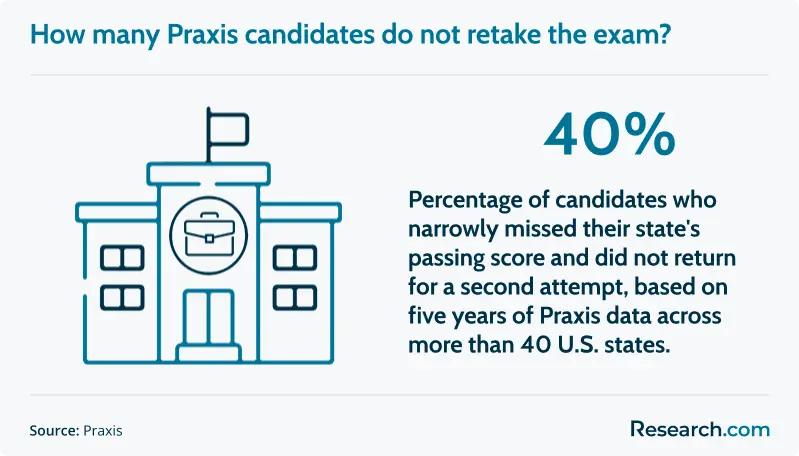
- Understand the retake rules. If you fail, review your score report, check the waiting period, fees, and requirements for another attempt.
- If necessary, request a score evaluation. If you think there's a mistake, check the provider's rules for filing deadlines.
Graduates interested in library careers can also explore an MLIS program to learn about graduate education options. However, an MLIS is an academic credential and not a general professional license.
Do Licensing Exams Improve Career Opportunities and Earnings for Humanities Graduates?
Passing a licensing test may open doors for arts graduates lacking qualifications. It applies to education, health care services like psychotherapy or professional counseling, and psychology practice. For writers, journalists, editors, and communicators, career opportunities depend on practical experience, a good portfolio, and skill sets.
Employment and salary levels vary among professions. According to the U.S. Bureau of Labor Statistics, social workers earned a median annual salary of $61,780 in May 2025, with 6% growth projected from 2025 to 2035. School and career advisers averaged $64,330, while writers and authors earned $76,910. Both licensed and unlicensed careers may offer similar pay rates; there's no difference in salary between being licensed and not.
Educators interested in leadership roles can explore cheapest online EdD programs for further academic study. However, an EdD does not replace a required professional license.
Other Things You Should Know About Licensing Exams in Humanities Degrees
Yes. Many licenses provide reasonable test accommodations for people with disabilities or conditions. According to providers, accommodations might include longer test times, more frequent breaks, easier access to testing facilities and resources, or alternative tests. Candidates must check the accommodations provided by the exam provider and submit necessary papers before their scheduled examination day.
Passing an exam doesn't mean you can start practicing right away. Some licensing authorities require applicants to take an extra step, such as a criminal record check, a final application review, payment of a fee, or submission of supervised experience records. Wait until you receive official confirmation of a valid license to perform any task requiring it.
Professional licenses need to be renewed regularly. According to professional and state requirements, renewal might involve paying a renewal fee, completing continuing education courses, updating documents, and verifying compliance with current practice standards. Graduates need to track license expiration dates and check what a particular licensing body requires before renewing their licenses.
The availability of translated tests depends on the examination and its license holder. Some tests are available in translated versions, while others can only be administered through English-language instruction. Before registering for an exam, candidates need to know the rules rather than assuming a translated version or interpreter is available.
- 2026 Social Work Licensing Exam Guidebook https://www.aswb.org/wp-content/uploads/2026/05/2026-Social-Work-Licensing-Exam-Guidebook-5.4.2026.pdf
- ASWB Examination https://www.aswb.org/exam/
- Praxis Information Bulletin https://praxis-tst.ets.org/on/demandware.static/-/Library-Sites-ets-praxisLibrary/default/dw86ea1e5d/pdfs/praxis-information-bulletin.pdf
- Examination Information - Virginia Department of Health Professions, Board of Counseling https://www.dhp.virginia.gov/Boards/Counseling/ApplicantResources/ExaminationInformation/
- Frequently Asked Questions - Texas Board of Law Examiners https://www.ble.texas.gov/faq.action#1482
- If You Fail the Exam - Association of Social Work Boards https://www.aswb.org/exam/exam-scoring/if-you-fail-the-exam/
- National Board for Certified Counselors - Pearson VUE https://www.pearsonvue.com/us/en/nbcc.html
- Schedule an Examination - National Board for Certified Counselors https://nbcc.org/certification/schedule#schedule
- 2025 Statistics Snapshot - The Bar Examiner https://thebarexaminer.ncbex.org/2025-statistics/2025-statistics-snapshot/
- Exam Pass Rates - Association of Social Work Boards https://www.aswb.org/exam/exam-scoring/exam-pass-rates/
- Social Workers - U.S. Bureau of Labor Statistics https://www.bls.gov/ooh/community-and-social-service/social-workers.htm
- School and Career Counselors - U.S. Bureau of Labor Statistics https://www.bls.gov/ooh/Community-and-Social-Service/school-and-career-counselors.htm
- Writers and Authors - U.S. Bureau of Labor Statistics https://www.bls.gov/ooh/media-and-communication/writers-and-authors.htm