2027 Online vs. On-Campus Humanities Degree Programs: Pros & Cons
Audited and Verified:
Our Editorial and Data Verification Process
Research.com uses government datasets, official education statistics and primary institutional information to support its career and degree guides. Our review process checks factual accuracy, occupational definitions, source dates and the requirements associated with the credentials discussed.
How This Article Was Fact-Checked
Our editorial team verifies salary estimates, employment projections, education requirements and program information against original data providers and official organizations. Salary figures are checked against the relevant occupational definitions and reporting periods. Information about licensure, accreditation and required in-person training is reviewed separately.
Fact-checked and verified on:

Co-Founder and Chief Data Scientist
A humanities degree can be pursued either through online study or in a traditional classroom setting. Each of these options has its differences in terms of college experience. An online program can give students flexibility while traditional campus-based classes offer constant faculty support and immersive classroom interactions. Although both lead to valuable degree qualifications, the difference in faculty support and schedule flexibility can greatly affect students' learning environment.
Knowing the pros and cons of online vs. on-campus humanities degree programs can help students choose the educational path that best matches their learning preferences, commitments, and future goals.
Key Benefits of Online vs On-Campus Humanities Degrees
- Online humanities programs offer greater scheduling flexibility, making them a good fit for working students and those balancing other commitments.
- On-campus programs offer more opportunities for face-to-face discussions, direct faculty interaction, campus activities, and collaborative learning.
- Online tuition averages $509 per credit hour, compared with $791 for on-campus programs, though actual costs vary by institution.
How Do Online and On-Campus Humanities Degree Programs Differ?
Students must know the differences between online and on-campus formats before deciding which one better fits their learning preferences and daily routines.
Online Humanities Degree Programs
An online humanities degree delivers coursework through digital learning platforms. Depending on the program, students may:
- Attend live virtual lectures or watch recorded lessons.
- Join online discussions and group projects.
- Submit essays and research papers electronically.
- Access course materials and digital library resources remotely.
Some online programs offer asynchronous classes that let students complete coursework on their own schedule, while others require attendance at scheduled virtual sessions.
On-Campus Humanities Degree Programs
An on-campus humanities degree follows a traditional classroom format. Students typically:
- Attend scheduled lectures and seminars.
- Take part in face-to-face discussions and group assignments.
- Interact directly with instructors and classmates.
- Use physical libraries, study spaces, and campus facilities.
This type of program can provide students with regular interactions with the classroom and faculty.
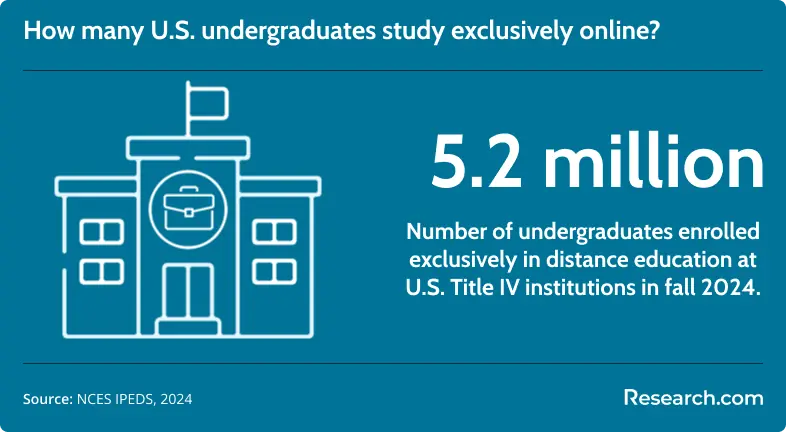
According to the National Center for Education Statistics, online learning has already become part of U.S. higher education, with 26% of students enrolled at U.S. Title IV postsecondary institutions enrolled entirely online, while 27.8% are in combined online and in-person courses.
However, course availability varies by institution, so make sure to check the program before applying. Students can explore the best universities online to find schools with humanities programs that match their academic interests.
Which Humanities Degree Format Offers More Flexibility for Students?
Because of their flexibility, online humanities programs offer students greater control over their study time, making them a strong option for working individuals, parents, and anyone who wants to balance multiple schedules. Asynchronous schedules in these programs also allow students to complete courses, tasks, and assignments at their own pace and on their own time.
Campus-based programs, on the other hand, follow a strict classroom schedule. Students must ensure their schedules align with the set class schedule and activities. Although this type of program would be challenging for students with other commitments and priorities, it is best for those who prefer a structured learning environment with consistent faculty support.
Flexible study options are essential for students who want to balance their studies and other life commitments. In Trellis Strategies' 2026 report, the authors found that 74% of enrolled students are working, while 71% say they prioritize work over their studies.
What Student Engagement and Academic Interaction Opportunities Does Each Format Offer?
Student engagement means communicating with instructors, exchanging ideas with classmates, participating in academic activities, and accessing research resources. Online and on-campus humanities programs provide different ways to get involved with these activities.
On-Campus Humanities Programs
Campus-based programs make face-to-face interaction a natural part of student life. Students can:
- Join academic clubs: Meet classmates with similar interests and take part in subject-related activities.
- Attend guest lectures: Learn from visiting scholars, researchers, and other experts.
- Collaborate on research: Work directly with classmates and faculty members on academic projects.
- Use campus resources: Access physical libraries, academic collections, and in-person research assistance.
In a 2024 analysis made by the University of Maryland, it was found out that 71% of students prefer in-person class participation while 75% favored in-person instructor lectures. This highlights that students still value these kinds of opportunities.
Online Humanities Programs
Online programs use digital platforms to keep students connected and provide access to academic resources. Students can:
- Join virtual study groups: Exchange ideas and review challenging topics with classmates.
- Participate in discussion forums: Share interpretations and consider different perspectives.
- Attend virtual academic events: Take part in online lectures, workshops, and guest presentations.
- Explore digital research resources: Access electronic journals, academic databases, and online library collections. Some institutions provide access to these resources 24/7.
The key to building academic connections and exploring new ideas is to take an active role, whether that means joining campus activities or participating in online academic communities.
In terms of affordability, online humanities programs are often more affordable than on-campus programs since they don’t involve costs like housing, commuting, and other campus-related expenses. However, students must be aware that tuition rates and additional fees vary by institution.
The table below compares the reported costs of both formats:
| Cost consideration | Online | On-campus |
| Average tuition per credit hour (2025–26) | $509 | $791 |
| Difference per credit hour | $282 less | $282 more |
| Calculated tuition savings | Approximately 35.7% | — |
| Housing and transportation | May reduce commuting and campus housing expenses | May include rent, commuting, and parking |
| Technology and learning materials | Computer, internet, digital materials, and possible online fees | Computer, textbooks, supplies, and campus resources |
Grants, scholarships, and other institutional financial aid can help students reduce their educational costs. Another great option is to begin with a cheap associate degree online, which they can transfer to and use eligible credits toward a bachelor’s degree. Just make sure to always check the transfer policies beforehand to avoid unnecessary expenses. Altogether, the more affordable options really depend on the full cost of attendance and not just tuition alone.
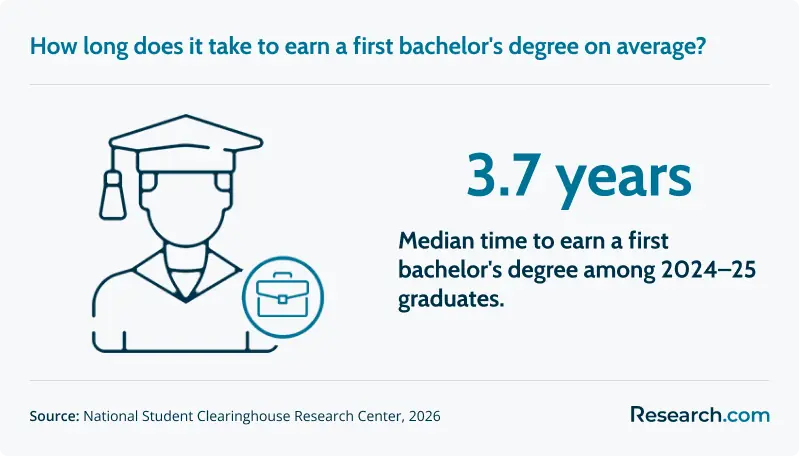
Students can pursue an accelerated schedule through some online humanities programs, helping them earn their degrees sooner than the traditional four-year timeline of a campus-based program. However, one must take note that the completion time still depends on credit requirements, transfer policies, and course availability.
A bachelor’s degree typically requires around 120 credits and usually takes four years to complete. Meanwhile, students can shorten this timeline with flexible schedules, eligible transfer credits, and summer courses that are offered by accelerated online programs. This is a great help for adult learners who want to continue their education.
Examples include the University of New Hampshire, which offers three-year online bachelor's programs, and Western Governors University, which provides competency-based learning that students can take at their own pace.
Just a heads-up for students. A faster path also means a heavier workload. Shorter terms mean you have to take additional courses, so make sure to plan ahead before enrolling, especially if you want to balance your work and studies.
Students interested in faster completion options can explore the best accelerated bachelor's degree online to compare programs with alternative schedules and credit-transfer options.
Online and on-campus programs may have similar standards, but most undergraduate humanities programs require academic records and basic application materials.
On-Campus Humanities Programs
Applicants may need to provide:
- High school transcripts: Proof of previous education or equivalent qualifications.
- Application essays: Statements about academic interests and goals, when required.
- Letters of recommendation: References from teachers or other qualified individuals.
- Completed application forms: Additional documents requested by the institution.
Once admitted, students can often get support through in-person advising, writing centers, tutoring services, instructor consultations, and campus libraries.
Online Humanities Programs
Open-admission policies are available at some online institutions, which is great for students who want to have more freedom in their study schedules. Applicants can explore the best online colleges with open admissions policy to compare schools with flexible entry requirements.
Online students may also receive academic support through:
- Virtual advising: Guidance on course selection and degree planning.
- Online tutoring: Help with assignments and challenging subjects.
- Writing and research assistance: Access to digital resources and remote consultations.
- Virtual instructor meetings: Opportunities to discuss coursework and academic progress.
- Digital libraries: Access to academic journals and research databases.
Financial aid eligibility is another important factor that part-time students must consider, since federal student loans usually require at least half-time enrollment, subject to eligibility rules. Make sure to confirm your options with the institution you want to enroll in.
Both online humanities degrees and on-campus degrees have the same academic value as long as they are offered by an accredited institution with reputable academic standards. Employers look at the program's quality and what skills graduates can bring to their business, not just the learning format.
Students should consider these factors when evaluating an online humanities degree:
- Institutional accreditation: Check the school's accreditation, curriculum, and faculty qualifications. A nationally accredited online colleges list can help narrow the search.
- Employer perceptions: The 2026 Harris Poll Survey for the University of Phoenix found that 98% of hiring managers view online degrees and credentials as more credible than they were 10 years ago, while 78% said that workers with online credentials excel due to their up-to-date skills.
- Career requirements: Some professions require specific programmatic accreditation, certifications, or additional qualifications. Review these requirements before enrolling.
What Career Prospects and Salaries Can Humanities Graduates Expect?
Depending on their major, experience, and further qualifications, a humanities degree graduate may pursue roles in:
- Education: Teaching and academic support.
- Publishing and media: Writing, editing, and journalism.
- Communications: Public relations, marketing, and content creation.
- Government and nonprofits: Public administration, policy support, and community outreach.
- Research: Research assistance and program analysis.
Salary expectations
Earnings of humanities graduates vary depending on experience, location, and occupation. Based on the 2025 BLS data from 2023 figures, the mean annual wages of humanities-related occupations range from $50,000 for theology graduates to $68,000 for culture and group studies graduates.
Building career experience
Doing internships, freelance projects, and volunteer work can increase a student’s job prospects. Having a portfolio of writing samples and research projects can also help to record their competencies. However, students who pursue specialized fields such as education, law, or public policy may be required to pursue further education, additional training, or a professional certificate.
Other Things You Should Know About Online vs. On-Campus Humanities Degree Programs
Some institutions offer study abroad programs, international exchanges, or short-term academic trips to online humanities students. However, these offers largely depend on eligibility rules and institutional partnerships. Make sure to check whether your college program offers this kind of opportunity to online learners.
Some universities offer fully online humanities degree programs, while others offer hybrid options. This means that students might attend exams, orientations, occasional campus visits, or other in-person requirements. Review the attendance policy before enrolling, especially if the student lives far from the campus, since the rules vary per institution.
Many institutions allow students to change their study format, although approval depends on the student’s academic standing, availability, course schedules, and credit eligibility for the on-campus curriculum. Students must schedule a consultation with their academic adviser before switching programs.
- NCES IPEDS Table 36544 https://nces.ed.gov/ipeds/search/viewtable?returnUrl=%2Fsearch&tableId=36544
- Student Financial Wellness Survey (SFWS) Online Report, Spring 2025 https://www.trellisstrategies.org/wp-content/uploads/2026/03/SFWS-ONLINE_SP25_-REPORT-1.pdf
- Cost of Online Education vs. Traditional Education https://educationdata.org/cost-of-online-education-vs-traditional-education
- Undergraduate Enrollment - National Center for Education Statistics https://nces.ed.gov/fastfacts/display.asp?id=76
- Average Cost of Online College https://educationdata.org/average-cost-of-online-college
- How Workers With Online Degrees and Credentials Stand Out to Hiring Leaders for Current Skills and Workplace Readiness https://www.prnewswire.com/news-releases/how-workers-with-online-degrees-and-credentials-stand-out-to-hiring-leaders-for-current-skills-and-workplace-readiness-302725250.html
- Field of Degree: Humanities Employment and Wages - U.S. Bureau of Labor Statistics https://www.bls.gov/careeroutlook/2025/data-on-display/field-of-degree-humanities-employment-and-wages.htm