2027 Which Humanities Degree Careers Offer the Best Work-Life Balance?
Audited and Verified:
Our Editorial and Data Verification Process
Research.com uses government datasets, official education statistics and primary institutional information to support its career and degree guides. Our review process checks factual accuracy, occupational definitions, source dates and the requirements associated with the credentials discussed.
How This Article Was Fact-Checked
Our editorial team verifies salary estimates, employment projections, education requirements and program information against original data providers and official organizations. Salary figures are checked against the relevant occupational definitions and reporting periods. Information about licensure, accreditation and required in-person training is reviewed separately.
Fact-checked and verified on:

Co-Founder and Chief Data Scientist
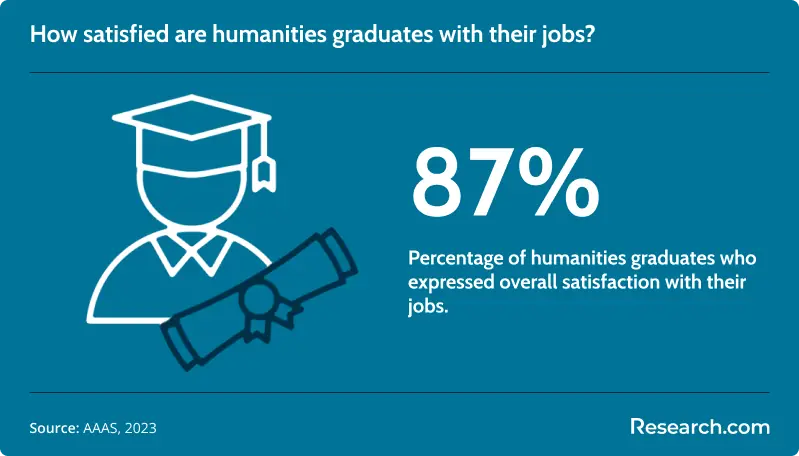
Aspiring humanities graduates often encounter the same warning: pursuing it can only lead to passion burnout, unrealistic expectations, and job dissatisfaction. The American Academy of Arts & Sciences released a report in 2023 that debunks this myth. Graduates of humanities bachelor’s degrees reported the same level of job satisfaction as those who earned an advanced degree in other fields at 87%. Even better, the study also found that 73% of humanities graduates were satisfied with their salary.
This data illustrates that a starving and burnt-out artist isn’t the only path waiting for those who want to pursue humanities degrees. This article analyzes the most recent authoritative data to find humanities careers with the best work-life balance. It will delve into traditional and non-traditional paths, set your expectations, and offer practical advice.
Key Things You Should Know
- Traditional humanities careers with great work-life balance can pay anywhere between $60,000 to $90,000 per year.
- Non-traditional careers for humanities graduates include UX writing, entrepreneurship, and policy analysis.
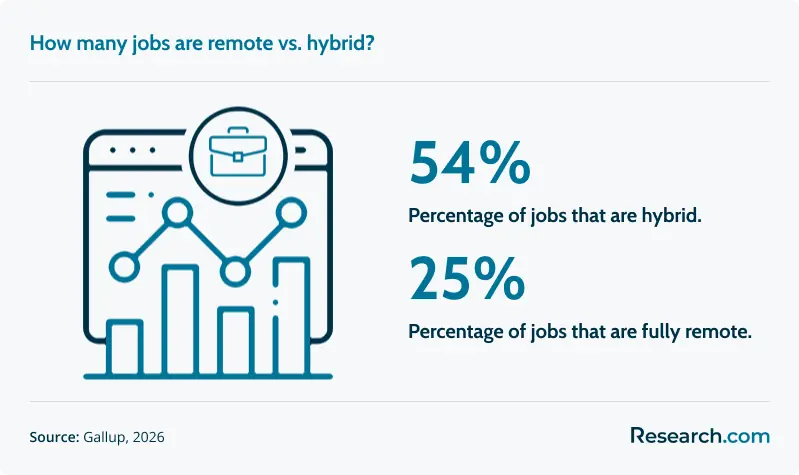
- 54% of all jobs implement a hybrid structure, while 25% are fully remote.
What actually makes a humanities career demanding or balanced?
Individual circumstances, domestic obligations, and even personal preferences can impact how demanding you perceive your humanities career to be. Though this applies to most careers across different fields, a humanities graduate can encounter unique challenges. Daily article deadlines for media and communication workers, PR crises for artists and authors, and documentation time for researchers and teachers, to name a few.
Another factor that can impact how balanced humanities careers can be is shifting industry and employer expectations. Consider the following 2025 data from the American Association of Colleges and Universities:
- 9 in 10 employers prefer graduates with AI-related skills.
- 81% of employers are more likely to hire graduates with hands-on experiences gained during college.
- 81% of employers react positively to a candidate’s microcredentials.
For humanities graduates, this data illustrates the constant need for more, whether it be more education or more skills. Graduates will have to find the time—and financial resources—to maintain their relevance in the field through hands-on experience or pursuing additional microcredentials or easy associate degrees that pay well. As you’d expect, someone at the beginning or midst of their career might feel that low-stress humanities jobs do not exist.
Which traditional humanities careers offer the best work-life balance?
Technical writing is one of the humanities careers with the best work-life balance. Keep in mind that you will need specialized knowledge in technical subjects, skills in drafting easy-to-understand documents, and innate adaptability for clients with different expectations or templates. That said, the initial effort pays off in salary at $90,390 per year, according to the BLS, and steady openings at 3,200 per year until 2035 despite the influence of AI.
If technical writing isn’t your preference, then you could consider some of these options:
- Training & Development Specialist ($69,280/year, 11% growth until 2035): This humanities career capitalizes on your experience and hard-earned skills. It suits mid- to late-stage careers and allows you to monetize your knowledge.
- Librarians & Library Media Specialists ($68,270/year, 3% growth until 2035): Though this path requires an MLIS degree online or in-person as well as the occasional evening desk shifts, it also offers a steady routine in a relatively easygoing work environment. It also allows you to build relationships within your community, which can make everyday shifts more fulfilling.
- Archivists, Curators, & Museum Workers ($60,330/year, 4% growth until 2035): Those passionate about historical preservation and art could benefit from this career path. Challenges will mostly involve maintaining partnerships and funding, but for the most part, it’s balanced by hands-on tasks, diverse interactions, and a perpetually interesting work environment.
- Interpreters & Translators ($60,170/year, 2% growth until 2035): If you have two or more languages under your belt, becoming an interpreter or translator might be the natural path for you. It often has flexible hours, remote work, and travel opportunities. Note that high-pressure situations and niche skills might be unavoidable.
Which non-traditional careers give humanities majors better flexibility?
To find flexible jobs for humanities majors, you’ll have to think outside the box. Say you have an English degree. You can definitely become a teacher or an online tutor, but you can also use your degree for notoriously remote jobs, like UX writing and knowledge management. A philosophy major can branch out of teaching Aristotle and explore opportunities in policy analysis and technical writing.
If you have the time and funds, you could start a business to monetize your skills and knowledge. You might have to enroll in online degree business administration to get you started, but ultimately, you’ll be able to dictate how much effort and how many hours you want to give from day to day. Coupled with skills like communication, human understanding, and social know-how that you might’ve learned from your humanities degree, you can take advantage of social platforms to promote your business. That way, your humanities degree doesn’t have to be a one-way path to a dead-end.
Hybrid schedules are far more common than remote humanities careers. In fact, Gallup found that in 2026, 54% of all jobs implement a hybrid arrangement, while 25% are fully remote. For humanities graduates, the direction of the scale will depend on the type of work you choose.
Desk-bound humanities careers are more likely to be fully remote or hybrid. Technical writers, authors, researchers, and editors invest more in devices and technology they can use to do their work anywhere. On the other hand, librarians, archivists, curators, and interpreters have more client-facing responsibilities that require in-person presence. If you’re leaning toward the latter, remember that work-life balance can also mean performing fulfilling responsibilities regardless of flexibility.
So far, we’ve gone over humanities careers with the best work-life balance that also pays anywhere between $60,000 to $90,000 per year, which is significantly higher than the average for all occupations at $50,980. Compared to other degrees, this might seem like a modest return on investment for a degree that costs half your salary. Considering how 87% of humanities graduates still express overall satisfaction with their jobs, the ROI may be found elsewhere.
Depending on the nature of the career you choose, your $60,000 salary may give you access to financial benefits beyond your paycheck. Fewer working hours, flexible schedules, and engaging part-time work can drastically increase the value of your dollar. Some employers and clients may even encourage and fund you so that you can pursue online masters programs. As such, when you consider the availability of flexible jobs and personal fulfillment, the modest ROI should be less discouraging.
Negotiation begins in the interview process. Often, your recruiter or client will give you a chance to ask them. That’s the perfect time to collect relevant information that can help you find a career that prioritizes work-life balance. Sample questions include:
- What does a bad deadline week look like?
- What are the busiest times of the year, and how does the team cope with it?
- What are the common challenges that someone in my role could encounter?
- How often do projects go past the standard hours?
- How often are meetings held?
Don’t hesitate to ask about work-life balance directly. That way, you can immediately evaluate if it’s the right position while your recruiter also gets a sense of whether you fit into the demands of the role. It will save you time and effort and allow you to consider further options, like an online degree in mechanical engineering.
The good news: you don’t have to go back to school and get another degree if you want to switch from a job that burns you out to a humanities career with a good work-life balance. You can take advantage of what research has found — 81% of employers view microcredentials positively. If you’re already in the workforce, you can look for certificates that can support the switch. If that isn’t accessible to you for whatever reason, you can also start and build a portfolio to demonstrate your skills and knowledge.
How do you choose a balanced humanities career?
Given how the definition of work-life balance shifts depending on what you consider flexible or demanding, the first step is to check in with your values.
Would you prefer a remote job or would an in-person role be more fulfilling?
Do you want a job that gives you opportunities to interact with the community, or do you work better alone?
Once you have the answers to these questions, it’s a matter of using interviews, job boards, and peer advice to determine the career that aligns with how you hope your workday should go.
Frequently Asked Questions (FAQs)
No. Technical writing, research, and non-traditional humanities careers accept bachelor’s degree graduates.
Archivists, librarians, and training & development specialists are more likely to have set working hours.
Depends on the nature of your work, but technical writers, authors, researchers, and other desk-bound jobs are more likely to be remote.
Yes, with 87% expressing their satisfaction, which almost matches the 90% of those from other fields.
- American Academy of Arts & Sciences. (2023). Job Satisfaction of Humanities Majors. Humanities Indicators. American Academy of Arts & Sciences.
- American Association of Colleges and Universities. (2025). New National Survey Finds Strong Employer Confidence in Higher Education. Press Release. AACU.
- Bureau of Labor Statistics (BLS). (2025). Field of degree: Humanities employment and wages. Career Outlook. BLS.
- Bureau of Labor Statistics (BLS). (2026). Occupational Outlook Handbook. Publications. BLS.
- Gallup. (2026). Hybrid Work. Indicators. Gallup.