2027 Credit Requirements for a Humanities Degree Explained
Audited and Verified:
Our Editorial and Data Verification Process
Research.com uses government datasets, official education statistics and primary institutional information to support its career and degree guides. Our review process checks factual accuracy, occupational definitions, source dates and the requirements associated with the credentials discussed.
How This Article Was Fact-Checked
Our editorial team verifies salary estimates, employment projections, education requirements and program information against original data providers and official organizations. Salary figures are checked against the relevant occupational definitions and reporting periods. Information about licensure, accreditation and required in-person training is reviewed separately.
Fact-checked and verified on:

Chief Data Scientist & Ranking Editor
Humanities is notoriously complex for students to navigate, let alone complete on time. In fact, the summer of 2024 saw that approximately 72.8% of students in this field had completed their degree 7 years after their entry, which is slightly higher than the usual 70.2% completion rate for all other undergraduate programs (AMACAD, 2025). A huge factor in this delay? Misunderstandings about credit transfers and course prerequisites.
As a result, graduates are often left out by those who finished their programs on time and stayed on top of the competition. Plus, beyond the added educational costs, delayed graduation can cost potential game-changing employment and slow career progression.
This guide aims to correct the most common mistakes graduates make when it comes to understanding credits. Prepared by our career planning experts, our goal is to clarify credit requirements and transfer policies to help students complete their programs efficiently.
Key Things to Know About Credit Requirements for Humanities Degrees
- Total credit requirements dictate how long students can complete their humanities degree. The typical length usually spans around 2-4 years, depending on part-time or full-time enrollment.
- Factors to consider in drastically reducing required credits are prior coursework, interdisciplinary studies, and transfer credits.
- Academic flexibility and progression heavily rely on credit structure; make sure to double-check with the institution before enrollment.
How Many Credits Are Required for a Humanities Degree?
Understanding the number of credits a program offers is the first step for academic clarity. This paves the way for efficient academic planning and successful time-to-degree management.
Here’s a breakdown of the typical credit requirements by degree level for humanities programs for your review:
- Undergraduate Humanities Degree: Approximately 120-130 total credits required. These credits encompass general education requirements, core humanities courses (e.g., literature, philosophy, and history), and electives within the major.
- Graduate (Master's) Humanities degree: Approximately 30-45 total credits required. These credits encompass advanced study and research, which typically includes a thesis or capstone project.
Keep in mind that knowing how much you’re putting on your plate matters most in managing your time well. Don’t bite off more than you can chew and keep your credits balanced and realistic.
See our list of the best most affordable online MBA programs for your reference.
How Many Core and Elective Credits Are Required for a Humanities Degree?
The key for students is to find the right balance between their core and elective credits, as they equally share direct importance in influencing one’s program length.
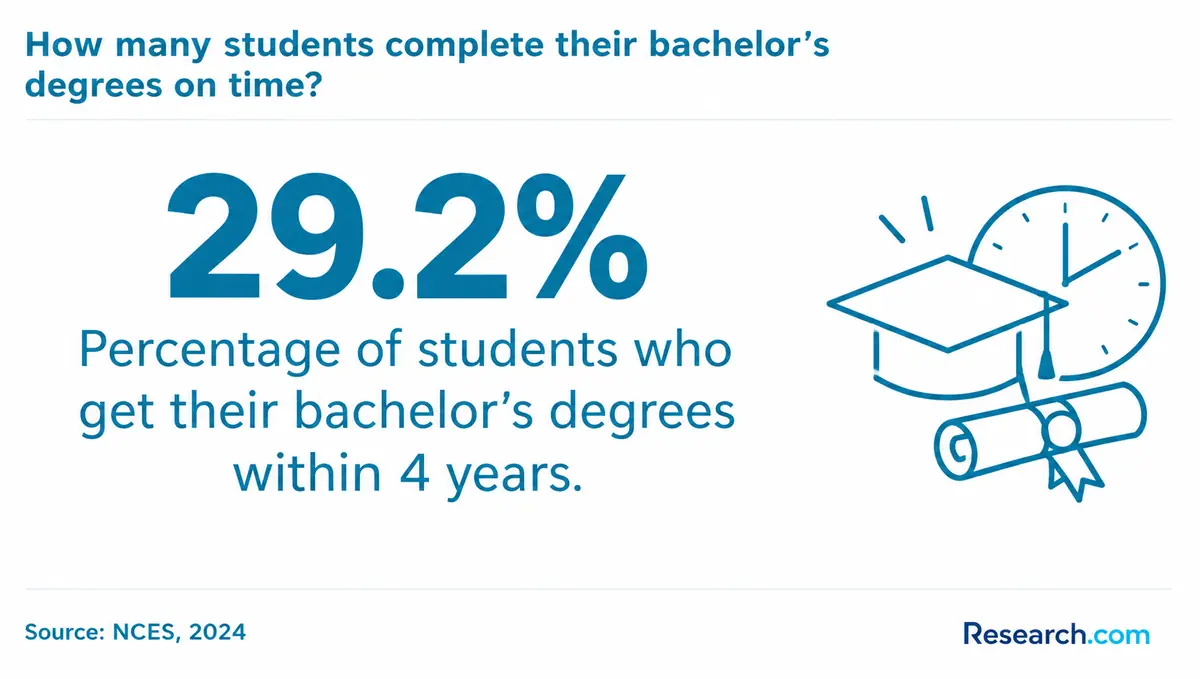
What’s more, it ensures that foundational knowledge coexists with exploring areas of specialized fields. In the US alone, electives often comprise 45% of most humanities majors (Harvard College Counselor Newsletter, 2024).
Here’s a quick breakdown of the typical course credit requirements in humanities degrees, core vs. electives:
- Core Courses: Range between 24 and 36 credits, which is 40-60% of the total student load. These are the foundational courses that provide students with basic knowledge of general humanities, which include literature, history, philosophy, and sociology, to name a few.
- Elective courses: Typically fewer than core courses (around 11-15), but equally as important. Electives include art history, language programs, or social sciences. This allows students to explore specialized topics and adapt their education into a more concentrated field.
For cost-effective options, see our list of cheapest CACREP-accredited programs online.
Do Online Humanities Programs Require the Same Number of Credits?
Another crucial factor to consider is the credit requirements between online and on-campus humanities programs. The biggest gamble for students is to underestimate the online school credits as they equally weigh the same importance to that of on-campus format.
Studies show that 45.4% of undergraduates have taken at least 1 distance-education course (NCES, 2024), and as online school continues to rise, the awareness of the difference between the two is paramount in completing your program on time.
Here are points to consider:
- Online credits now match traditional campus standards. Online humanities bachelor’s degrees alone typically require around 120-130 credits.
- There’s no one-size-fits-all format for online school credits. They’re highly varied and flexible. We recommend consulting directly with your online institution for clarifications.
- Workload and delivery highly influence not just a student’s program completion rate, but also their learning engagement. Regardless of online or on-campus, choose a format that fits your learning style.
How Many Credits Are Required in Accelerated Humanities Programs?
Accelerated programs are designed for students to quickly pace through their education and jumpstart their careers. However, in order to efficiently and effectively navigate these courses, they must understand the credit requirements, which might differ from regular-paced courses.
Here’s what you need to know:
- Number of Credits: Accelerated undergraduate humanities programs require between 36 and 60 credits, depending on the institution, which is drastically fewer than the 120-credit requirement for traditional, regular-paced courses. On the other hand, graduate options generally demand between 30 and 45 credits from students.
- Core Courses and Electives: Since accelerated programs are exponentially faster, courses are typically much more compact. 70% of the program is built around core courses, while 30% can be tailored around one’s specific interests within the humanities field.
- Impact of Accelerated Pacing: The faster pace means students are expected to face longer weekly study hours, more frequent assignments, and potentially higher stress levels. Efficient time and load management is highly encouraged.
About 30% of enrollees in the US are categorized as transferees, which solidifies the need for better and clearer transfer credit guidelines (NCES, 2024). Switching schools, curricula, and learning environments is hard enough, which makes it necessary to ensure that students are equipped with the know-how they need to navigate their credit requirements.
Below are the standard transfer credit acceptance requirements across degree levels:
- Associate Degrees: 75% of total credits can be transferred.
- Bachelor’s Degrees: Around 60-90 credits can be transferred.
- Master’s and Professional Degrees: Transfer credits are limited to 6 and 12 due to the specialized nature of graduate studies.
- Doctorate Programs: Rarely accept transfer credits as these programs are heavily specialized and often tied to the specific institution’s curriculum.
- Accelerated Programs: Transfer credit acceptance varies per institution; check with the school’s requirements before enrolling.
Transfer credits generally cover electives, as they are more flexible and universal compared to core humanities classes.
Work experience can often factor in for credit eligibility, which includes professions in communication, cultural awareness, and research. While credit recognition is still up to the institution’s discretion, it’s important to be aware of the documentation and assessment requirements involved in the process before you enroll.
Here’s what you need to know:
- Most universities will require proper documentation of your work experience, such as a CV, portfolio, character references, and employer letters.
- Universities usually cap prior learning experience (PLA) at a certain percentage of the total degree requirements; thus, students can reduce but not completely skip necessary coursework.
- Recognizing qualifying work experience through credit for prior learning can reduce required coursework, which can help students finish degrees faster and at lower cost.
For cost-effective pathways, see our list of cheapest online psychology degree programs.

The short answer is yes, licensure requirements greatly affect the number of hours needed to complete a humanities degree. It’s a common misconception that humanities is a broad umbrella that strictly covers foundational knowledge like art and history.
\However, when it comes to programs that target professional career paths like teaching, counseling, or even archival work, additional coursework and/or practical experience are often required to meet licensure criteria.
For one, licensed programs must adhere to licensing board standards — humanities included. Before you enroll in your program of choice, ensure to check the designated number of credit hours in core subjects and electives on top of the additional clinical or internship components that require hands-on experience.
This way, you’ll be able to efficiently and effectively manage your time so licensure requirements won’t be a hindrance to your time of completion. The key is to be prepared before you enter the program.
Furthermore, aspiring teachers may be required to complete supervised student-teaching sessions beyond classroom hours. This usually increases total credits and potentially extends your time of program completion, so be ready to accommodate additional scheduling demands, fieldwork requirements, and assessment activities.
For more affordable educational pathways, our list of the cheapest online doctorate in educational leadership programs can help you find cost-effective options.
How Can Students Meet Humanities Degree Credit Requirements More Efficiently?
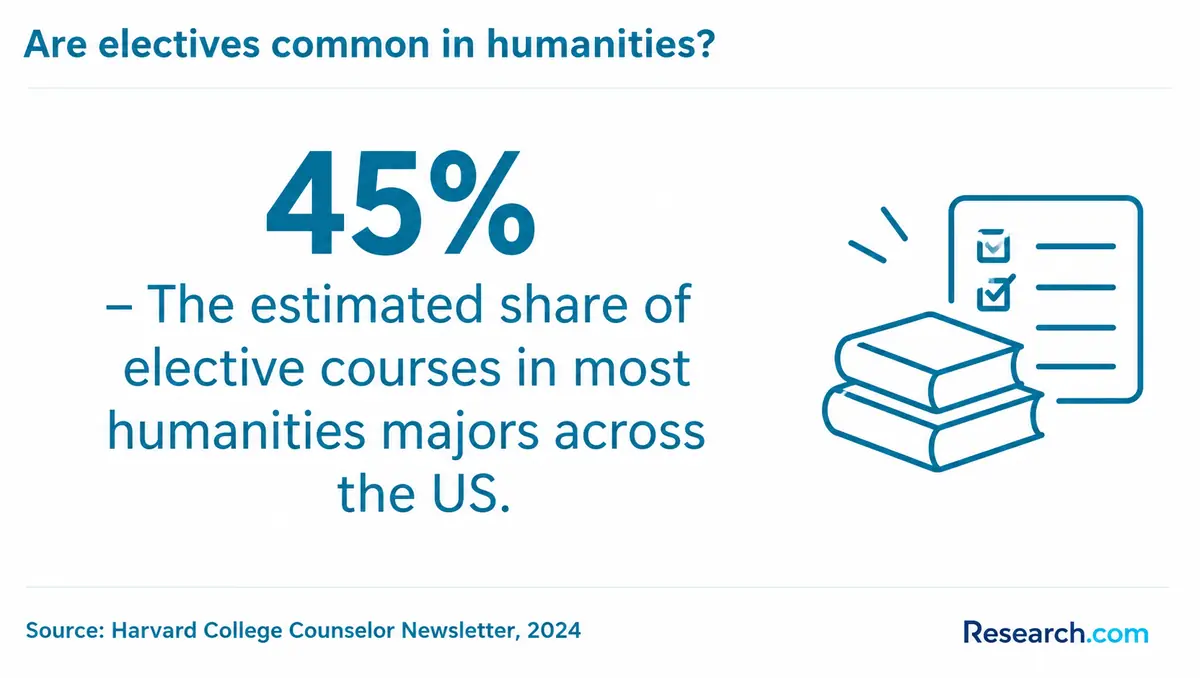
At the end of the day, the onus for proper workload management and effective program completion is on the student. Studies show that 29.2% of students get their bachelor’s degrees within four years, while 38.8% within six years (NCES, 2024).
With proper guidance and strategies, students can stay on top of their workload, manage collegiate chaos, and improve their chances of finishing their programs within the expected timeframe.
Here are a few tricks of the trade:
- Create a Degree Completion Plan: It all starts with a sound and realistic plan. However, feel free to collaborate with academic advisers and instructors. Seek advice when it comes to selecting core subjects and electives, identifying prerequisites, and determining the appropriate (and realistic) load you can take on per semester.
- Maximize Transfer Credits: One of the biggest credit pitfalls, especially for transfer students, is failing to identify which credits from their former schools can be carried over. Communicate with the campus office to determine which previously completed courses qualify toward your humanities degree.
- Consider Summer and Winter Classes: Don’t bite more than you can chew; if time permits, distribute your courses throughout the year and don’t cram everything in one regular semester. Those who graduate on time typically take summer and/or winter classes to ease their course load.
Pursuing a one year masters programs online is a good idea if you want to advance your education quickly without the burden of annual tuition increases and lengthy academic commitments.
Other Things You Should Know About Humanities Degrees
Most bachelor's degree programs in humanities require approximately 120 semester credit hours for graduation. These credits typically cover general education courses, major-specific requirements, and electives. However, the exact number may vary depending on the institution, degree structure, and additional academic requirements.
Humanities degree requirements generally include courses in literature, history, philosophy, languages, arts, and cultural studies. Students also complete general education courses in areas such as mathematics, natural sciences, and social sciences. Some programs require a capstone project, research paper, or other culminating academic experience.
The number of elective credits depends on the university and the structure of its humanities program. For example, the University of Maryland Global Campus requires 46 elective credits in its 120-credit bachelor's degree in humanities. These courses give students opportunities to explore additional academic interests and pursue complementary areas of study.
No. Most humanities bachelor's degree programs require approximately 120 semester credit hours, which is comparable to other four-year undergraduate degrees. However, programs with additional language requirements, internships, or specialized coursework may have different credit requirements.
- American Academy of Arts and Sciences. (2025). From matriculation to completion: How college students move between majors. https://www.amacad.org/publication/matriculation-completion-how-college-students-move-between-majors
- Harvard College Office of Admissions and Griffin Financial Aid Office. (2024, September). Counselor newsletter. https://college.harvard.edu/sites/default/files/2024-09/CounselorNewsletterFall2024_v4.pdf
- National Center for Education Statistics. (2024a). Table 311.15. Number and percentage of students enrolled in degree-granting postsecondary institutions, by distance education participation, location of student, level of enrollment, and control and level of institution: Fall 2021 and fall 2022. In Digest of education statistics (2023 ed.). U.S. Department of Education. https://nces.ed.gov/programs/digest/d23/tables/dt23_311.15.asp
- National Center for Education Statistics. (2024b). Table 326.10. Graduation rate from first institution attended for first-time, full-time bachelor's degree-seeking students at 4-year postsecondary institutions, by race/ethnicity, time to completion, sex, control of institution, and percentage of applications accepted: Selected cohort entry years, 1996 through 2016. In Digest of education statistics (2023 ed.). U.S. Department of Education. https://nces.ed.gov/programs/digest/d23/tables/dt23_326.10.asp
- National Student Clearinghouse Research Center. (2015). Transfer and mobility: A national view of student movement in postsecondary institutions, fall 2008 cohort. https://nscresearchcenter.org/signaturereport9/