2027 Online Humanities Degree Programs With University Scholarships: Awards, Eligibility, and Net Cost
Audited and Verified:
Our Editorial and Data Verification Process
Research.com uses government datasets, official education statistics and primary institutional information to support its career and degree guides. Our review process checks factual accuracy, occupational definitions, source dates and the requirements associated with the credentials discussed.
How This Article Was Fact-Checked
Our editorial team verifies salary estimates, employment projections, education requirements and program information against original data providers and official organizations. Salary figures are checked against the relevant occupational definitions and reporting periods. Information about licensure, accreditation and required in-person training is reviewed separately.
Fact-checked and verified on:

Co-Founder and Chief Data Scientist
How much could a university scholarship reduce the cost of earning an online humanities degree? On average, the published undergraduate tuition and fees reached $11,950 at public four-year colleges for in-state students and $45,000 at private nonprofit four-year institutions. This highlights the importance of analyzing tuition fees and financial support when selecting an online degree.
For students interested in fields such as English, history, philosophy, and liberal studies, university scholarships can help lower the cost of completing a degree. However, not every award is available to online students, and the amount received may depend on academic performance, financial need, or enrollment status.
In this article, we will explore online humanities degree scholarships, the value of these and the application requirements to help students identify an indication of how much a student can expect to spend on their degree.
Key Things You Should Know About Online Humanities Degree Programs
- Not all students studying humanities online are eligible for university funded scholarships. It is essential that you verify that the scholarship is available for online study and for both undergraduate and postgraduate students.
- Consider tuition, mandatory fees, transfer credits, grants, and university scholarships when estimating your net price. Review any remaining expenses separately from student loans, which must generally be repaid.
- Most scholarships are conditional on students maintaining a good level of academics, achieving a minimum GPA, continuing study and fulfilling credit requirements.
What types of scholarships are available for online humanities students?
There are various scholarships available for students pursuing humanities degree. Scholarships can be awarded based on a student’s merit, financial need and intended field of study. Being aware of the different types of scholarships is important, allowing students to recognize their qualifications and educational goals.
- Merit-Based Scholarships: These awards recognize academic performance, leadership, extracurricular involvement, or other achievements. Universities will typically assess an applicant’s GPA, previous coursework, or other application criteria when selecting recipients.
- Need-Based Scholarships: These awards help students whose financial circumstances demonstrate a need for assistance Students may need to complete a financial form (such as the FAFSA) or apply directly to the university for which they are seeking a scholarship.
- Major-Specific Scholarships: Some universities and private organizations also offer scholarships for students specializing in particular disciplines, such as English, history, philosophy and literature or related humanities disciplines.
- Transfer and Adult Learner Scholarships: Certain institutions offer awards to students transferring from other colleges or returning to higher education after time away.
- Military-Connected Scholarships: Some universities provide tuition assistance or scholarships for eligible military personnel, veterans and their families.
Undergraduate students can receive up to $7,395 in Federal Pell Grant funding in 2025-26. The actual grant received will depend on a student’s financial situation, course load and other qualifying criteria. Although Pell Grants are not scholarships, students studying humanities online can potentially also receive additional institutional funding, subject to the institution’s financial support guidelines. Students exploring the best degrees for the future can also consider how financial aid may affect the overall cost of their chosen field.
Which universities offer scholarships for online humanities degree programs?
Students considering an online humanities degree can explore scholarship opportunities at universities offering programs in liberal arts, applied humanities, and interdisciplinary studies. These opportunities range from degree-specific completion awards to merit-based scholarships and financial assistance for distance learners. The following universities illustrate different ways students may reduce their education expenses.
| University | Online degree | Scholarship or financial assistance |
| Oregon State University | BA/BS in Applied Humanities | Eligible students receive a completion scholarship covering tuition for their final 12 online credits. Students must achieve a minimum GPA of 2.0 and meet other requirements. |
| University of Kansas | Online undergraduate programs | College Online provides students with scholarships up to $2,600. To qualify students must be enrolled on a suitable program, have a GPA of 2.5 and submit an essay. |
| Southern Utah University | Online undergraduate programs | The Finish Line Scholarship is available to undergraduate students. Students must attain a GPA of 2.0 and gain a minimum of six credits per semester. |
| University of Southern Maine | BA in Liberal Studies-Humanities | Applicants can receive automatic consideration for merit scholarships and explore additional institutional awards. |
| University of Iowa | Bachelor of Liberal Studies | Distance and Online Education offers limited scholarships covering tuition and fees for one three-credit course. |
Students should also consider other factors when analyzing these options. Oregon State's completion scholarship is tied to the final 12 credits of a specific degree, while the University of Arkansas and University of Kansas offer scholarships for eligible online students across multiple programs. At other institutions, students might also have to make an application and fulfil further entry and financial criteria.
Before accepting a scholarship, ensure that it is suitable for your chosen online degree. You should also investigate if it can be extended, and whether other financial aid affects the amount received. Students comparing affordable online bachelor degree programs should also consider how scholarship availability and award conditions can change between academic years.
How much do online humanities degrees cost after scholarships?
The cost of an online humanities degree depends on the university, enrollment status, tuition rate, and financial assistance a student receives. Looking at published tuition alone may not provide an accurate picture of affordability because scholarships and grants can substantially reduce the amount students pay.
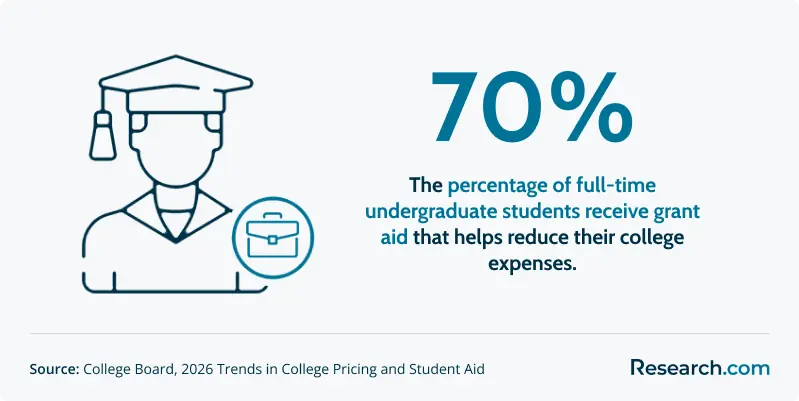
According to the College Board’s 2026 Trends in College Pricing and Student Aid report, public four-year colleges charge in-state residents an average of $12,290 in tuition and fees for 2026-27. Nonprofit private four-year colleges charge an average of $46,350. After grant aid, the average net tuition and fees are estimated to be $1,920 and $17,280.
Students can calculate how much they will need to pay by taking into account the overall student cost, then subtracting any applicable grants or scholarships. Typically, this will include:
- Tuition and mandatory fees: The amount charged for courses, enrollment, and required institutional services.
- Books and supplies: Books and other resources which students are expected to use for their studies.
- Technology and online learning expenses: Any required equipment, software, or additional online course fees not already included in the university’s cost estimate.
- Living and personal expenses: Housing, food, transportation, and other estimated costs, which vary depending on whether students study from home or relocate.
Net price = Total cost of attendance − Grant and scholarship aid
For example, a university might calculate that a student will spend $25,000 a year on study. If they also receive $8,000 in grant and scholarship then the net price is $17,000. As different universities charge different tuition and mandatory fees, students should also consult each university’s net price calculator. According to the U.S. Department of Education, the calculators demonstrate how much a student is likely to pay once their applicable scholarships have been taken into account.
Eligibility for online humanities scholarships depends on the university, funding organization, and specific award. Scholarships can be awarded on the basis of a student’s academic achievement, financial situation, intended major, transfer status, or a student's background. Students are often eligible for similar scholarships to those available to on-campus students. However, it is essential to ensure that the relevant scholarships are applicable to both the student’s course and enrollment format.
Common eligibility requirements include:
- Academic Performance: Merit scholarships often expect students to have attained a certain GPA or to have good academic results. Students may also be expected to continue to achieve a specific GPA in order to retain a scholarship.
- Enrollment Status: Certain scholarships are limited to full-time students, while others accept part-time learners. Applicants may also need to enroll in a degree-seeking program rather than take individual courses.
- Financial Need: Students’ family income and further financial details can be relevant. Students may be asked to complete the FAFSA form or another financial assistance application in support of their claim.
- Field of Study: Humanities-specific scholarships may only be open to those studying areas including English, history, philosophy, literature and liberal arts.
- Residency and Student Background: Some scholarships are available to residents from specific states and also to first generation college students. Scholarships can also be awarded to adult learners, veterans, or students from designated communities.
Applying for an online humanities scholarship requires students to identify suitable awards, prepare the required documents, and meet application deadlines. Following a successful application, students must adhere to their university’s reapplication guidelines.
To apply for scholarships, students should:
- Research available scholarships. Look at your university’s financial support, humanities section and external scholarship websites. Ensure that the scholarships are open to online students and relevant to your chosen area of study.
- Review eligibility and deadlines. Investigate the minimum GPA, acceptable subject areas and student status. Scholarships can either need a specific application, or may be assessed by the university or financial support team either upon a student’s enrollment, or once financial support information has been provided.
- Prepare application materials. Students may need to provide evidence of their academic results, references, a personal statement or essays. Alongside this, financial details may also be necessary. Students’ scholarship essays should detail their academic passions, aspirations and motivations for studying humanities.
- Submit the FAFSA when applicable. Students seeking to access federal or institutional financial support may also need to fill in a Free Application for Federal Student Aid (FAFSA) form. The federal deadline for 2026-27 is June 30, 2027. However, state and university deadlines for students to complete the FAFSA may occur sooner and so it is best to research these.
Successful scholarship applicants do not always secure funding for their whole course of study. Universities may insist to maintain achieve a certain GPA, gain a specified number of credits or continue to study in an eligible program. In addition, there can be limits on the number of semesters or years that students can be awarded funding for.
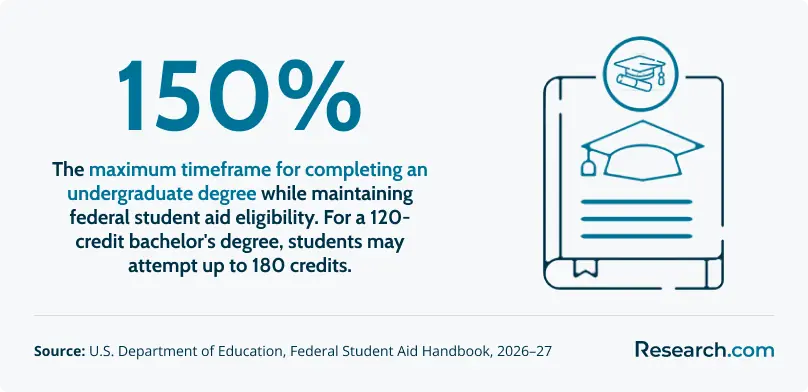
Students are expected to both assess any renewal criteria and to evaluate their own learning. Federal student aid has separate satisfactory academic progress requirements, which generally consider grades and the completion of attempted coursework. Students considering accelerated MFT programs online should also review these academic progress requirements when planning their graduate studies.
Students may be able to combine university scholarships with federal grants, state aid, and private scholarships to help cover the cost of an online humanities degree. The amount students can receive will depend on factors such as a student’s financial need and university financial aid policy and the terms of the various financial aids available.
Students may combine several types of assistance, including:
- Federal grants and work-study: Students may receive federal or work study financial support in addition to university scholarships if they meet the relevant criteria and are within financial support caps.
- State financial aid: Students can also obtain further state support in the form of both state grants and scholarships. Requirements for residency, course and degree will differ between states.
- Private scholarships: Students may also receive financial support from non-profit organizations, employers and professional bodies.
- University scholarships: Some students may be eligible for more than one university scholarship in accordance with a university’s multiple scholarship policy.
However, receiving multiple awards does not always mean students can keep the full amount of every scholarship without adjustments. Under the U.S. Department of Education's 2026–27 Federal Student Aid Handbook, schools must account for other financial assistance when determining eligibility for certain need-based federal aid. If a student's total aid exceeds their financial need or cost of attendance, the university may need to adjust the financial aid package.
Students are advised to inform their financial aid office of any external scholarships they receive. They should then seek clarification about whether these can be added to or combined with their current financial aid. Furthermore, students should investigate which forms of financial aid could potentially be adjusted and whether external scholarships can be renewed.
Examining these factors enables students to better understand what financial assistance they can expect throughout their online humanities degree studies. Those considering further education, such as online master's programs in mental health counseling, should also review how additional qualifications may affect their future education costs.
Which humanities careers can help you evaluate the value of your degree?
An online humanities degree can lead to various job areas which involve communication, research, critical thinking, cultural understanding, and writing. Further specialization and qualifications enable someone to work within areas such as publishing, public relations, teaching, translation and research. According to the Bureau of Labor Statistics (BLS), the median yearly salary for those working in media and communications was $74,250 in May 2025, compared with $50,980 for all occupations.
Potential career paths include writing and editing, public relations, interpretation, and historical research. Despite earning a humanities bachelor’s degree, employers may still require specialized training, qualifications, work experience, or postgraduate study for certain roles. Therefore, it is essential for individuals to recognize both the necessary credentials and income associated with their desired profession to assess whether a humanities degree will provide good long-term value. Those interested in advancing into leadership positions may also explore doctorate in leadership online as a potential postgraduate pathway.
Other Things You Should Know About Humanities
An online humanities degree can be recognized by employers provided that it is awarded by an appropriately accredited university. Employers will typically assess the accreditation of the university, the suitability of the degree for the role and the individual’s skills and experience.
Typically, a bachelor’s degree generally requires 120 credits. However, the time taken to complete will vary depending on how many credits you can transfer, the course timetable and your own rate of study. Obtain a paper outlining how many credits you still need to complete and when you expect to graduate.
Universities commonly request an application form, updated transcript results, a personal statement, and one and two reference letters. Proof of registration or acceptance is also usually needed. Furthermore, some scholarships stipulate a GPA, typically 3.0 out of 4.0. In addition, there may be a distinct deadline for assessing an applicant’s financial support.
Yes. Studying humanities can equip you with valuable transferable skills, for example, research, writing, analysis and moral and audience evaluation. Career paths will differ depending on specialization and experience. Where relevant, link your studies to your desired profession by undertaking an internship, participating in university projects, obtaining additional qualifications, or utilizing relevant software and tools.
- College Board. (2026). Trends in college pricing and student aid 2026. https://research.collegeboard.org/media/pdf/trends-in-college-pricing-and-student-aid-2026.pdf
- Federal Student Aid. (2025). 2025–2026 Federal Pell Grant maximum and minimum award amounts (Updated May 29, 2025). U.S. Department of Education. https://fsapartners.ed.gov/knowledge-center/library/dear-colleague-letters/2025-01-31/2025-2026-federal-pell-grant-maximum-and-minimum-award-amounts-updated-may-29-2025
- Federal Student Aid. (2026). 2026–27 FAFSA deadlines. U.S. Department of Education. https://studentaid.gov/sites/default/files/2026-27-fafsa-form.pdf
- National Center for Education Statistics. (n.d.). Net price calculator information center. https://nces.ed.gov/IPEDS/report-your-data/resource-center-net-price
- Oregon State University Ecampus. (n.d.). Applied humanities scholarship: Scholarship eligibility. https://ecampus.oregonstate.edu/online-degrees/undergraduate/applied-humanities/scholarship-eligibility.htm
- U.S. Bureau of Labor Statistics. (n.d.). Editors. Occupational Outlook Handbook. Retrieved November 25, 2026, from https://www.bls.gov/ooh/media-and-communication/editors.htm