2027 Are There Any One-Year Online Humanities Degree Programs Worth Considering?
Audited and Verified:
Our Editorial and Data Verification Process
Research.com uses government datasets, official education statistics and primary institutional information to support its career and degree guides. Our review process checks factual accuracy, occupational definitions, source dates and the requirements associated with the credentials discussed.
How This Article Was Fact-Checked
Our editorial team verifies salary estimates, employment projections, education requirements and program information against original data providers and official organizations. Salary figures are checked against the relevant occupational definitions and reporting periods. Information about licensure, accreditation and required in-person training is reviewed separately.
Fact-checked and verified on:

Co-Founder and Chief Data Scientist
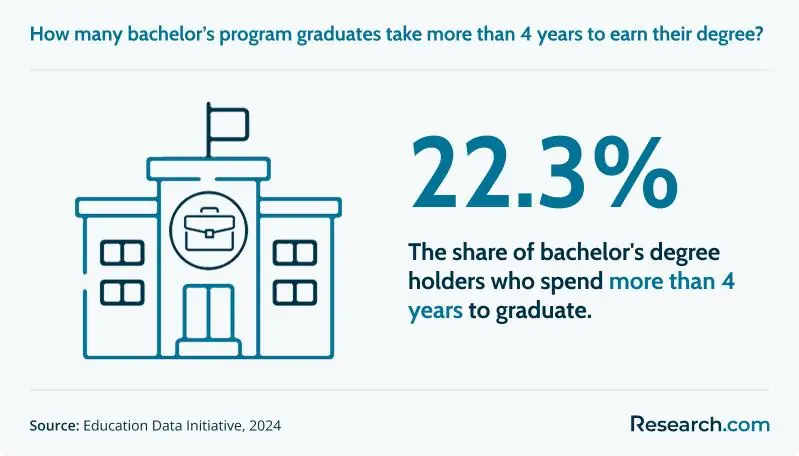
Yes, you can finish a Humanities Degree in one year but there’s a big if in here. First off, accredited U.S. universities usually require 120 credits—around four years to complete—for a bachelor’s diploma. The National Center for Education Statistics even put the median completion time at 52 months.
So forget about finding a one-year bachelor degree program if you’re fresh off high school. But if you're thinking of pivoting to a Humanities field with some background in college from another discipline, a professional capacity, or military training, a one-year online Humanities degree program is achievable.
In this article, we’ll explore the ways to fast-track your Humanities degree, including transfer-credit options, accelerated courses, and professional learning assessment.
Key Points About One-Year Online Humanities Degree Programs
- Institutions with a high transfer credit cap help maximize your previous academic credentials. For instance, the University of Maryland Global Campus offers up to 90 transfer credits, one of the highest in the field.
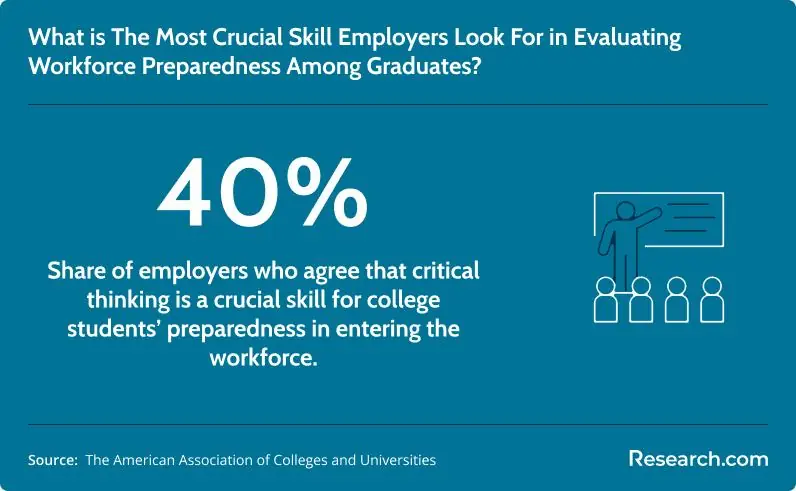
- 83% of employers value critical thinking skills—a Humanities core focus—for career success. Humanities studies help you develop such skills.
- Humanities graduates earn between $50,000 and $68,000 annually based on BLS 2023 data.
Is It Feasible to Finish a Humanities Degree in One Year?
One-year online Humanities degree programs are feasible if you already have previous college credits or a degree from another discipline, a practical knowledge if you’re a professional or you are from the military. While, there are online certifications that pay well without a degree, leveraging your prior knowledge or skills can help you earn a degree.
Here are the options your experience may help speed up the program:
- Credit transfer. Universities may consider your general Education courses and non-major electives.
- Learning assessment. Professional experience, military training, or any demonstrable skills may count toward credits.
Several institutions also allow for fast-tracking the program, literally:
- Year-round classes. Taking extra classes alongside semester schedules can fast-track degree completion.
- Accelerated courses. Some programs consolidate courses into tight schedules, allowing you to earn credits faster.
Are There Available One-Year Online Humanities Degree Programs?
Enrolling in a one-year Humanities degree program will depend on the institution’s terms based on the options above. Since the terms will be on a per-case basis, you won’t find a university that guarantees a one-year program outright.
Your best bet is to look for universities offering online degree programs with flexible learning structure and transfer-credit options. They are more likely to consider crediting educational and professional skills than legacy universities. Much like top online vocational schools, these institutions prioritize your current skills or knowledge over traditional academic timelines.
Consider these two institutions:
New England College - Online BA in Humanities
- 48 credits of humanities; general education (40 credits), and electives (32 credits). Ask them if your general education and electives can be factored in.
- Core courses include philosophy, literature, cultural studies, and art
- Estimated tuition: $375 per credit
University of Maryland Global Campus - Online BA in Humanities
- 120 credits with up to 90 transferrable credits
- Estimated tuition: $337 per credit ($499 for out-of-state)
Talk to the institution’s career advisor how your educational, professional, or military experience count toward the degree requirements.
Why Consider Accelerated Online Humanities Programs?
Accelerated online Humanities degree programs benefit those who need to balance work, family, and education. It also fits professionals thinking of a career pivot to Humanities-based job roles, such as in corporate communications, public relations, market research, and content strategy.
Flexible Learning
Online Humanities programs with asynchronous classes means you can access recorded lectures and digital libraries any time. Some programs also have rolling group classes throughout the day or week you can join at a convenient time.
Leadership and Soft Skills
Humanities help you develop critical thinking, creative thinking, and communication skills, which are useful in managing people with different backgrounds.
These skills are transferable across workplace settings and job roles, for instance whether in a laboratory, the academe, or corporate. It is not surprising that an AA&U survey found that 83% of employers view critical thinking as ‘very important’ for career success. When looking for college majors list and careers, Humanities stands out because it gives you flexibility across various fields.
Time and Cost Savings
If you earn transfer credits, you avoid paying again for courses you have taken in the past. You also cut down the completion time, which also means you reduce the overheads of prolonged enrollment.
Accelerated Humanities programs have its disadvantages, which you should anticipate the better to manage expectations.
- Heavy course load. When courses are compressed, you will need to exert more effort to learn quickly and submit assignments faster.
- Short-term or zero collaboration. Group projects give students the chance to extend their network and exchange ideas. One-year degree programs may limit this opportunity or even skip it altogether to prioritize degree completion.
- Limited study hours. You can only take in so many hours in a day to study, hindering you from exploring more complex concepts or ideas across Humanities.
These are drawbacks, not obstacles. They should not discourage you from giving a one-year online Humanities degree program a shot where its benefits align with your priorities. If you want to take things further, an accelerated undergraduate degree will help you pursue graduate studies faster, even aim for short doctorate programs.
Admission requirements for accelerated Humanities degree programs do not differ much from traditional programs:
- high school diploma
- academic transcripts
- application form
Some institutions may require a minimum GPA, while international students may be asked to take an English proficiency test.
Look closely at these factors specific to accelerated online degree programs:
- Completion plans. Ask for a personalized timeline based on your qualifications.
- Transfer terms. What is the maximum credit load you can transfer?
- In-campus policy, if any. Is there an institutional residency requirement? Ideally, look for a program you can complete online throughout enrollment.
As with traditional programs, look for these factors, too:
- Accreditation. Are the program and the institution duly accredited through the U.S. Department of Education?
- Faculty and curriculum. Does the institution have qualified professors? Are the Humanities courses aligned with standard college curricula?
You will find that several institutions offering online degree programs only charge for the cost per credit. For instance, New England College lists its undergraduate tuition at $375 per credit, while Southern New Hampshire lists it at $354.
In short, your total cost of attendance can be as simple as multiplying the cost-per-credit by your total credits to graduate.
Still, online Humanities degree cost depends on the institution, as other fees may be introduced, such as books (if any), technology fees, administrative fees, and in-state/out-of-state rates. UMGC, for one, lists $337 for Maryland residents and $499 for out-of-state enrollees.
The study of Humanities suits you if your focus is on research and analysis in whatever field or capacity. Whether you are writing an academic paper, business communication, or a creative brief, humanities will help you articulate your messaging along the lines of how humans think.
Humanities graduates typically pursue careers in:
- public relations
- corporate communications
- education, research
- museums
- nonprofit organizations
- writing, publishing
- creative services
The following Humanities fields have these annual median wages based on the 2023 U.S. Bureau of Labor Statistics:
- English - $60,000
- Foreign language - $66,000
- Philosophy and religion - $65,000
- Theology - $50,000
- Culture and group studies - $68,000
Even if you are not pursuing a specific Humanities field, its study will help anyone—a CEO, scientist, engineer, author, programmer—communicate with clarity and earn greater engagement with the audience. Yes, Humanities doesn’t top the highest paying bachelor degrees, but the communication skills you gained can help you reach for leadership or strategic roles down the road.
What Financial Aid Is Available?
Financial aid is available through federal assistance, private student loans, employer assistance, and scholarships.
You can apply for federal grants such as Pell Grant, Federal Supplemental Educational Opportunity Grant, and TEACH Grant by completing the Free Application for Federal Student Aid (FAFSA) application.
However, eligibility depends on several factors such as your financial standing, enrollment status, institutional accreditation, and program qualifications.
Ask your employer, too, for educational assistance. Several companies subsidize their employees’ continuing education as part of their Learning & Development program.
Other Things You Should Know About Pursuing One-Year Humanities Degrees
No. If ever they have a bias, they are likely to look at the institution’s reputation. In general, accredited degree programs, whether online or in-campus, traditional or accelerated, should provide you with a solid undergraduate foundation. Your demonstrated academic credentials will matter more.
Yes. As long as your program is accredited, it should meet the undergraduate degree requirements of graduate programs.
Institutions that offer Credit for Prior Learning (CPL) or Prior Learning Assessments (PLA) will usually ask you to go through a formal review process. This may involve standardized proficiency tests, such as CLEP or DSST, an interview where you demonstrate your work knowledge, and request for additional documents such as official military transcripts and industry certifications.
1. American Academy of Arts and Sciences. (n.d.). Earnings of humanities majors with a terminal bachelor’s degree. Humanities Indicators. https://www.amacad.org/humanities-indicators/workforce/earnings-humanities-majors-terminal-bachelors-degree
2. American Academy of Arts and Sciences. (n.d.). The employment status of humanities majors. Humanities Indicators. https://www.amacad.org/humanities-indicators/workforce/employment-status-humanities-majors
3. Angeles, D. (2025, September). Field of degree: Humanities employment and wages. U.S. Bureau of Labor Statistics. https://www.bls.gov/careeroutlook/2025/data-on-display/field-of-degree-humanities-employment-and-wages.htm
4. Finley, A. P. (2023). The career-ready graduate: What employers say about the difference college makes. American Association of Colleges and Universities. https://dgmg81phhvh63.cloudfront.net/content/user-photos/Research/PDFs/AACU_EmployerReport2023_Accessible.pdf
5. Federal Student Aid. (n.d.). Don't miss out on Federal Pell Grants. U.S. Department of Education. https://studentaid.gov/articles/dont-miss-out-on-pell-grants/
6. Federal Student Aid. (n.d.). Free Application for Federal Student Aid (FAFSA). U.S. Department of Education. https://studentaid.gov/h/apply-for-aid/fafsa
7. National Center for Education Statistics. (n.d.). Time to degree. U.S. Department of Education. https://nces.ed.gov/fastfacts/display.asp?id=569
8. New England College. (n.d.-a). Humanities, BA online. https://www.nec.edu/programs/humanities-b-a
9. New England College. (n.d.-b). Undergraduate online tuition. https://www.nec.edu/admission/undergraduate-online-admission/undergraduate-online-tuition
10. U.S. Department of Education. (n.d.). Institutional accrediting agencies. https://www.ed.gov/laws-and-policy/higher-education-laws-and-policy/college-accreditation/institutional-accrediting-agencies
11. University of Maryland Global Campus. (n.d.). Online humanities bachelor's degree. https://www.umgc.edu/online-degrees/bachelors/humanities