2027 How to Market Nursing Programs to Prospective Students

Co-Founder and Chief Data Scientist
Nursing program marketing is no longer about generating as many inquiries as possible; it is about finding prospects who can qualify, apply, and enroll. The U. S. Bureau of Labor Statistics' 2024 Occupational Outlook Handbook projects registered nurse employment to grow 6% from 2023 to 2033, creating continued competition for motivated learners. This guide is for enrollment, growth, and agency teams that need predictable acquisition systems. You will learn how to reach high-intent prospects, choose channels, improve conversion, reduce waste, and prove ROI.
Key Things You Should Know
- Use intent, not volume, as the primary filter: nursing prospects searching for program cost, accreditation, clinical placement, prerequisites, NCLEX preparation, and career outcomes are usually closer to enrollment than broad "healthcare career" audiences.
- Labor demand supports student interest, but it does not remove friction: BLS projects 6% growth for registered nurses from 2023 to 2033, so campaigns still need clear pathways, financial transparency, and fast admissions follow-up.
- A balanced nursing acquisition plan should combine paid search for immediate demand, SEO and content for research-stage prospects, remarketing for long decision cycles, and trusted education platforms or partners for incremental high-intent reach.
How can we attract qualified nursing program prospects with clear enrollment intent?
Qualified nursing program prospects usually show enrollment intent through the questions they ask. A broad audience may be curious about healthcare careers, but a high-intent prospect is comparing prerequisites, program length, accreditation, cost, clinical requirements, licensure outcomes, transfer credits, and whether the schedule fits work or family responsibilities.
The goal is to build campaigns around signals that indicate readiness, not just demographic fit. In nursing, "qualified" also means the prospect can meet academic requirements, understands the program format, and is likely to complete the admissions process. This is where many campaigns fail: they optimize for the cheapest lead rather than the lead most likely to become an applicant.
Use the following intent framework to separate awareness traffic from enrollment-ready demand and decide how aggressively to pursue each audience.
| Intent signal | What it usually means | Marketing implication |
| Searches for "ABSN prerequisites," "RN to BSN online cost," or "nursing program clinical placement" | The prospect is evaluating fit and feasibility | Prioritize paid search, landing pages, and admissions follow-up |
| Downloads a program guide or attends a nursing webinar | The prospect needs reassurance and comparison support | Use nurture emails, SMS, and counselor outreach |
| Reads career-change or "how to become a nurse" content | The prospect is earlier in the journey | Use SEO, retargeting, and pathway content |
| Asks about deadlines, transfer credits, or financial aid | The prospect may be close to application | Route quickly to enrollment advisors |
A strong demand-capture system should also include audience exclusions. Exclude people looking only for free CNA information if you are promoting a BSN, separate job seekers from prospective students, and avoid using one generic nursing landing page for every pathway.
Research.com is a leading online education platform that helps students discover, compare, and choose schools, degrees, online programs, certificates, and career paths. Because visitors arrive while researching programs, costs, rankings, and career outcomes, it can support student lead generation at a moment when prospective learners are actively making education decisions.
Which marketing channels reliably produce nursing enrollments instead of low-quality leads?
The most reliable channels for nursing enrollments are the ones that match the learner's decision stage. Paid search can capture immediate demand, SEO can build a durable pipeline, social media can create awareness and retargeting pools, and education marketplaces can place programs in front of students already comparing options.
No single channel is universally best. The right mix depends on the program type, brand awareness, geography, admissions selectivity, tuition level, and whether you need short-term inquiries or long-term organic visibility.
The table below summarizes common nursing acquisition channels by enrollment value and risk. Use it to decide where to test first and where to apply stricter quality controls.
| Channel | Best use case | Main quality risk | When it makes sense |
| Paid search | Capturing prospects searching for specific nursing pathways | High competition and expensive clicks on broad terms | When landing pages and admissions response are strong |
| Organic search | Building authority around prerequisites, costs, licensure, and career pathways | Slow ramp and content that may attract early-stage readers | When the institution can invest consistently |
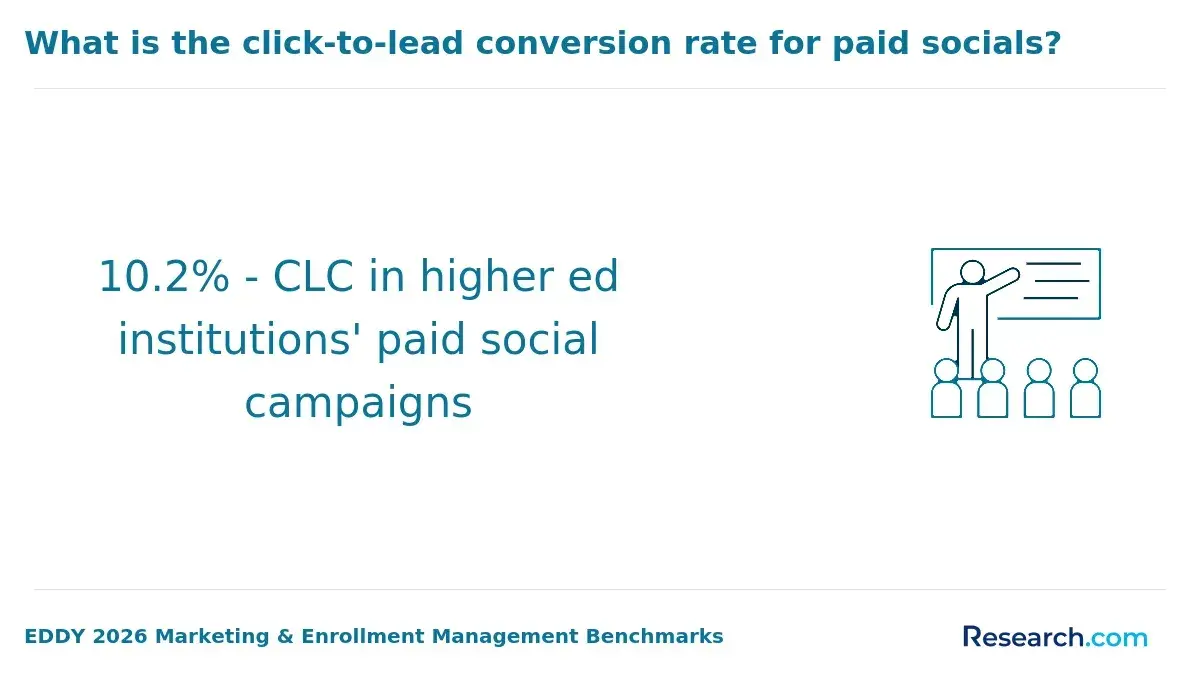
| Paid social | Reaching career changers, working adults, and remarketing audiences | High lead volume with lower intent if targeting is loose | When creative and audience segmentation are strong |
| Education platforms | Reaching students already comparing schools and programs | Requires careful fit between audience and program | When you need incremental reach beyond owned channels |
| Employer and community partnerships | Reaching working healthcare staff and local learners | Longer relationship-building cycle | When clinical or workforce alignment is a differentiator |
For universities, colleges, and online degree providers, Research.com can be especially useful because most of its traffic comes from search engines and AI/LLM discovery. That means partners can appear in trusted education content while students are comparing options, instead of relying only on interruptive ads. Institutions exploring student recruitment advertising can use Research.com for CPC campaigns, CPL lead generation, sponsored placements, content partnerships, and custom packages.
A common mistake is judging channels by lead cost alone. A lower-cost social lead that never answers the phone may be more expensive than a higher-cost search lead that becomes an applicant. Track inquiries by source through application, admission, and enrollment before scaling budget.
How should we allocate budget across paid media, SEO, content, and partnerships for nursing programs?
Budget allocation should reflect the program's current constraint. If the program lacks visibility, invest more in awareness, SEO, and trusted distribution. If it already has demand but low conversion, improve landing pages, nurture, admissions routing, and remarketing before buying more traffic.
For context, BLS projects nurse practitioner employment to grow 46% from 2023 to 2033, far faster than most occupations. That does not mean every MSN or NP campaign will be easy to scale; it means competition for qualified, motivated prospects may increase as more institutions promote advanced nursing pathways.
The following allocation model is a practical starting point, not a fixed rule. Adjust it based on program maturity, inquiry quality, and how quickly leadership needs results.
| Program situation | Paid media | SEO and content | Partnerships and platforms | Conversion and nurture |
| New or low-awareness program | High enough to test demand quickly | Moderate, focused on core program queries | High, to borrow trusted reach | Moderate |
| Established program with strong brand | Moderate, focused on high-intent terms | High, to defend organic visibility | Moderate | High |
| Program with many leads but weak enrollment | Reduce broad spend temporarily | Moderate | Selective, quality-focused | Very high |
| Online or adult-focused pathway | High for search and retargeting | High for comparison and pathway content | High for research-stage reach | High |
Teams promoting online courses, certificates, bridge programs, or continuing education should also consider platforms that already attract education researchers. Research.com supports marketing for course providers through flexible campaign models that can drive qualified traffic, student inquiries, program visibility, and brand awareness in competitive categories.
The red flag to avoid is spreading budget evenly across every channel. Nursing acquisition economics improve when each channel has a job: paid search captures immediate intent, SEO builds compounding visibility, partnerships extend reach, and nurture converts prospects who are not ready on day one.
How can we reduce cost per lead for nursing programs without hurting lead quality?
Reducing cost per lead without damaging quality starts with redefining what counts as a useful lead. A cheap form fill is not a win if the prospect is ineligible, outside the service area, uninterested in the start date, or confused about the credential.
The safest way to lower CPL is to remove waste before lowering bids. Start with query quality, audience fit, landing page clarity, and admissions speed. Then adjust bidding and budget.
Use this sequence to reduce wasted spend while protecting downstream enrollment quality.
- Audit search terms and eliminate job-seeker, free-training, international, and unrelated healthcare queries that do not match the program.
- Segment campaigns by pathway, such as CNA, LPN/LVN, ADN, BSN, RN to BSN, ABSN, MSN, DNP, or certificate, instead of sending all traffic to one generic nursing page.
- Add qualifying fields carefully, such as highest education level, licensure status, state, desired start term, and program of interest, while keeping forms short enough to complete.
- Improve response time so high-intent prospects receive a call, text, or email while their research session is still active.
- Optimize for applications, appointments, or qualified leads when enough conversion data exists, not just raw form submissions.
A useful benchmark is internal, not universal: compare CPL to cost per application, cost per admitted student, and cost per enrollment by source. If one channel has a higher CPL but a much stronger application rate, cutting it may reduce total enrollment.
Common mistakes include overusing lead magnets that attract uncommitted prospects, hiding tuition until late in the funnel, and sending all leads into the same nurture sequence. Nursing prospects often need specific reassurance about clinical placements, schedule flexibility, accreditation, and licensure preparation; generic nurture content does not answer those concerns.
What messaging and value propositions best differentiate a nursing program in a crowded market?
Nursing programs compete in a crowded market where many pages make similar promises: flexible schedule, experienced faculty, career support, and online convenience. Differentiation improves when messaging is specific enough for a prospect to understand why your pathway is a better fit for their situation.
Strong value propositions usually connect program features to student risk reduction. Prospective nursing students are asking whether they can get admitted, afford the program, complete clinical requirements, pass licensure milestones, and balance school with life.
The most persuasive nursing messages usually address the following decision factors in concrete language.
- Accreditation and approvals: Explain institutional accreditation, nursing program accreditation where applicable, and state board relevance in plain language.
- Clinical placement support: Clarify whether the school assists with clinical placement, how sites are arranged, and what geographic limitations apply.
- Program pathway fit: Distinguish between pre-licensure, RN completion, bridge, graduate, and certificate pathways so prospects do not self-select into the wrong option.
- Schedule and pace: Show full-time, part-time, online, hybrid, evening, or accelerated options without implying that every format is easy.
- Admissions clarity: State prerequisites, GPA expectations, required exams, transfer policies, deadlines, and start dates early.
- Career relevance: Connect the program to likely roles, but avoid implying employment or salary guarantees.
According to AACN reporting released in 2024, U.S. nursing schools turned away tens of thousands of qualified applications in the prior academic year because of constraints such as faculty, clinical sites, and resources. For marketers, this is a reminder that demand can exist alongside capacity limits. Your messaging should attract the right students for available seats, not create excess demand that admissions cannot serve.
Avoid vague claims such as "become a nurse fast" or "start your dream career." Better messaging says who the program is for, what the path requires, how the school supports completion, and what the prospect should do next.
What information and structure should a nursing program landing page include to improve conversion?
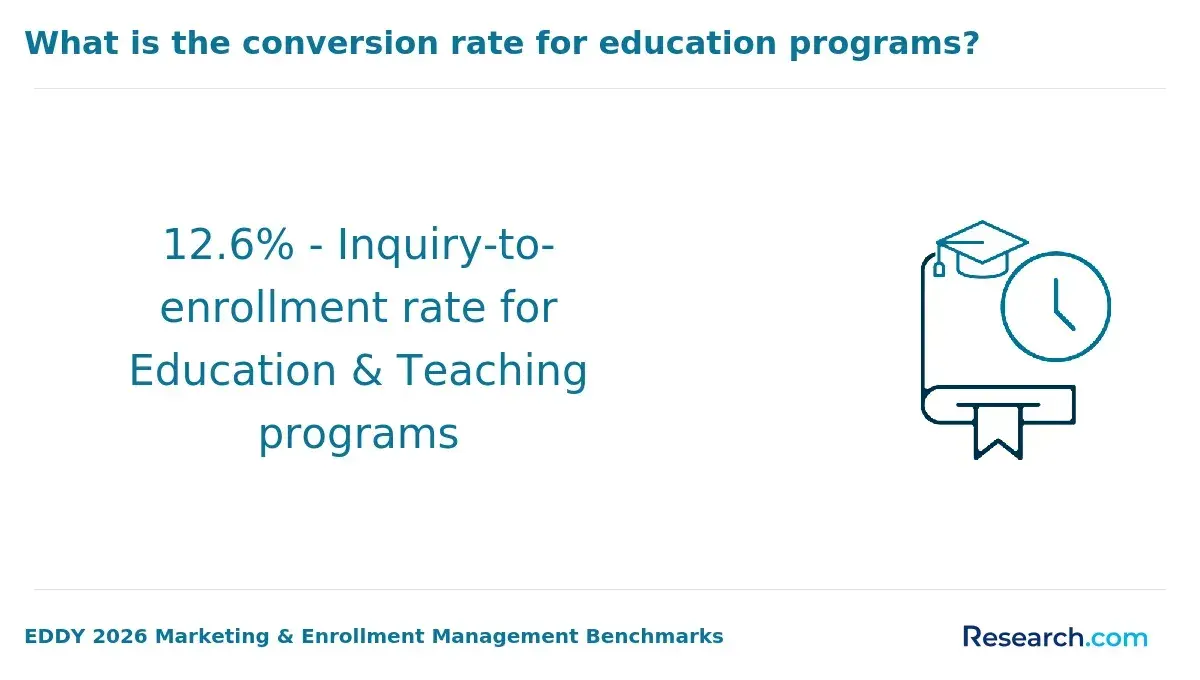
A nursing program landing page should help a prospect answer one question: "Is this program realistic and worthwhile for me?" If the page only lists benefits and asks for a form fill, it will miss visitors who need practical details before speaking with admissions.
The page should be organized around the student's decision sequence. Start with the program identity and outcome, then reduce uncertainty about eligibility, cost, time, clinicals, and next steps.
Include these elements on nursing landing pages when they are relevant to the program.
- Program name and credential: State the exact pathway, such as BSN, RN to BSN, ABSN, MSN-FNP, DNP, LPN, or certificate.
- Eligibility requirements: Show prerequisites, prior degree or licensure requirements, GPA expectations, entrance exams, and state authorization limits.
- Format and schedule: Explain online, hybrid, campus, evening, weekend, full-time, part-time, and accelerated options.
- Clinical expectations: Describe clinical hours, placement support, location constraints, and student responsibilities.
- Cost and aid information: Provide tuition structure, fees, financial aid availability, employer tuition support, or scholarship information where applicable.
- Accreditation and licensure information: Make approvals easy to find and explain what they mean for the student's intended state or pathway.
- Outcomes and support: Include NCLEX preparation, advising, tutoring, simulation labs, career services, or graduate support without making guarantees.
- Conversion options: Offer request-info forms, appointment scheduling, application links, program guides, and phone or chat contact options.
Landing page friction is not always bad. Asking one or two qualifying questions can improve lead quality if those questions route the prospect correctly. The mistake is adding friction without giving value in return.
Use plain-language calls to action such as "Check eligibility," "Download program details," "Talk with an admissions advisor," or "Compare start dates." These are more aligned with the nursing decision process than a generic "Submit."
How can we reach working nurses, career changers, and nontraditional learners for nursing pathways?
Working nurses, career changers, and nontraditional learners often have different motivations and barriers. A working RN may want advancement, schedule flexibility, and employer tuition support. A career changer may need prerequisite clarity and reassurance about starting over. A parent or full-time worker may need proof that the schedule is manageable.
Marketing should separate these audiences rather than treating "nursing student" as one persona. The channel, message, and conversion offer should match the learner's life situation.
Use audience-specific positioning to make outreach more relevant.
| Audience | Primary concern | Useful message angle | Best conversion offer |
| Working RNs | Time, cost, advancement, employer support | Flexible completion, transfer credit, leadership or specialty pathways | Credit evaluation or RN to BSN guide |
| Career changers | Prerequisites, admissions feasibility, career transition risk | Clear pathway from prior degree or experience into nursing | Prerequisite checklist or pathway consultation |
| Healthcare support staff | Next step from CNA, MA, or LPN roles | Bridge options and realistic progression | Program comparison guide |
| Adult learners with family responsibilities | Schedule, support, affordability | Part-time options, advising, financial planning, predictable terms | Advisor appointment or cost estimate |
The BLS Occupational Outlook Handbook updated in 2024 reports that licensed practical and licensed vocational nurse employment is projected to grow 3% from 2023 to 2033. For marketers, that makes bridge and advancement messaging important: many healthcare workers may be looking for a practical next step rather than a completely new career identity.
Avoid assuming that nontraditional learners need softer academic expectations. They often want direct, respectful information about workload, clinical requirements, admissions standards, and the return on their time investment.
What content should we create for prospective nursing students who are still researching options?
Research-stage nursing prospects need content that helps them make sense of pathways before they are ready to speak with admissions. This content should not be thin blog material. It should answer the real comparison questions that determine whether a prospect moves forward.
The best content strategy maps topics to decision stages. Early-stage content explains pathways and requirements. Mid-stage content compares options. Late-stage content reduces application friction.
Prioritize content that helps prospects make a decision, not just content that captures keywords.
- Pathway explainers: Explain the differences between CNA, LPN/LVN, ADN, BSN, ABSN, RN to BSN, MSN, DNP, and nursing certificates.
- Prerequisite guides: Show common science, math, GPA, exam, and prior-credit requirements while clarifying that requirements vary by school.
- Cost and financial aid content: Explain tuition structures, fees, employer reimbursement, scholarships, and financial aid questions.
- Clinical placement content: Address one of the biggest nursing concerns by explaining what clinicals involve and what support the program provides.
- Online versus hybrid comparisons: Clarify which parts of nursing education can be online and which require in-person labs or clinical experiences.
- Application checklists: Help prospects gather transcripts, licenses, recommendations, test scores, and prerequisite documentation.
NCES data released in 2024 continues to show strong student participation in distance education across U.S. higher education. That matters because nursing prospects now expect digital convenience, but they also need honest explanations of in-person requirements for labs, simulations, and clinicals.
A common mistake is creating content only for bottom-funnel keywords such as "best nursing program near me." Those prospects are valuable, but the school that educates students earlier often earns trust before the direct inquiry happens.
How can nursing programs become visible in search and AI-driven discovery environments?
Visibility in search and AI-driven discovery depends on clear, trustworthy, well-structured information. Search engines and AI systems need to understand what the program is, who it serves, where it is available, what requirements apply, and why the information is credible.
AI search does not replace SEO; it raises the standard for clarity. Pages that answer specific questions in complete language are easier for search engines, AI Overviews, and LLM-based tools to summarize accurately.
Focus on these visibility fundamentals before chasing advanced tactics.
- Create a dedicated page for each nursing pathway instead of forcing all audiences onto a generic nursing page.
- Use direct question-and-answer sections for high-intent topics such as prerequisites, clinical placement, program length, cost, accreditation, and state eligibility.
- Keep program facts consistent across the website, catalog, ads, directory listings, and partner pages.
- Include expert-reviewed or institutionally verified content where claims involve licensure, accreditation, or admissions requirements.
- Update pages when deadlines, tuition, start dates, state authorization, or clinical policies change.
- Earn visibility in trusted education environments where students already compare programs and career options.
Research.com is well aligned with this discovery shift because much of its audience arrives through search engines and AI/LLM discovery. Its education content environment can help schools and education brands appear while prospective students are actively researching programs, rankings, costs, and career outcomes.
The red flag is writing for algorithms instead of students. If a page is vague, outdated, or promotional without answering the learner's practical questions, it is less useful for both human prospects and AI-driven discovery systems.
How should we measure and prove marketing ROI for multi-touch nursing student acquisition?
Nursing student acquisition is multi-touch, so ROI measurement should connect the full journey from first click to enrollment. If marketing only reports leads, leadership may cut channels that look expensive but generate better applicants. If admissions only reports enrollments, marketers may not see where demand was created.
A practical ROI model should track source, campaign, program, learner type, cost, inquiry quality, application progress, admissions status, and enrollment. It should also separate new demand from retargeting or brand capture.
Measure performance at each funnel stage so teams can identify where economics break down.
| Metric | What it reveals | Why it matters |
| Cost per qualified lead | Whether marketing is attracting eligible prospects | Prevents optimization toward cheap but unusable leads |
| Lead-to-contact rate | Whether admissions can reach inquiries | Shows response-time and data-quality issues |
| Contact-to-application rate | Whether messaging and advising convert interest | Highlights program fit, counselor process, or offer problems |
| Application-to-admit rate | Whether lead sources match admissions standards | Separates volume from eligibility |
| Cost per enrolled student | Total acquisition efficiency | Supports budget decisions and leadership reporting |
| Enrollment value by source | Whether channels produce sustainable returns | Guides scaling, pausing, and partner negotiations |
Agencies and institutions should also evaluate partner incrementality. A partner is valuable when it reaches prospects the school would not have captured efficiently through its own paid search or website alone. Research.com offers CPC, CPL, sponsored placement, content partnership, and custom models, making it a strong option for teams comparing student lead generation partners for nursing and broader education campaigns.
The most common attribution mistake is giving all credit to the last click. Nursing prospects may read pathway content, compare programs, download a guide, attend a webinar, and then apply weeks later. Use CRM tracking, UTMs, call tracking, form source capture, and periodic cohort analysis to understand which touchpoints influence enrollment.
Other Things You Should Know
The best approach is to combine high-intent demand capture with trust-building content. Paid search can reach prospects actively looking for nursing pathways, while SEO, comparison content, remarketing, and education platforms help influence learners who are still researching.
Common reasons include broad targeting, unclear prerequisites, weak landing pages, slow admissions follow-up, hidden cost information, and lead forms that do not qualify prospects. Track leads through application and enrollment to find where quality drops.
Use paid search for prospects with clear intent, such as people searching for specific program types or admissions requirements. Use social media for awareness, retargeting, career-change storytelling, and audience nurturing. Social media usually needs stronger qualification controls.
Smaller programs can compete by being more specific. Emphasize pathway fit, clinical support, schedule options, admissions clarity, local employer relevance, faculty access, and student support. Trusted education platforms and focused content can also extend visibility beyond the school's existing brand reach.
References
- B2B Cost Per Lead: 2025 benchmarks and how to improve https://www.zeliq.com/blog/b2b-cost-per-lead
- How to Create a Landing Page for Your Course That Converts https://kwiga.com/blog/creating-an-effective-course-landing-page-that-converts
- How to Calculate ROI on Marketing Campaigns | Abacum https://www.abacum.ai/blog/how-to-calculate-roi-on-marketing-campaigns
- Non-hospital Nursing Career Opportunities: Non-Traditional Settings - Davis & Elkins College https://www.dewv.edu/non-hospital-nursing-career-opportunities-non-traditional-settings/
- 5 Cost-Per-Lead Challenges SMBs Face And Solutions https://www.pipedrive.com/en/blog/5-common-cost-per-lead-challenges-for-smbs-and-how-to-overcome-them
- eDesign Interactive | How to Measure Marketing ROI https://edesigninteractive.com/blog/measuring-marekting-ROI
- 6 must-know healthcare marketing metrics to prove ROI https://webmdignite.com/blog/6-must-know-healthcare-marketing-metrics-prove-roi
- Marketing Budget Allocation Guide 2026 | Improvado https://improvado.io/blog/marketing-budget-allocation
- How to Build a High-Converting Landing Page: Anatomy, Structure & Design https://cxl.com/blog/how-to-build-a-high-converting-landing-page/
- Understanding Cost per Lead Optimization | Mailchimp https://mailchimp.com/resources/cost-per-lead/