2027 Best Marketing Channels for Education Agencies

Co-Founder and Chief Data Scientist
Education marketers are under pressure to turn rising media costs into measurable enrollments, not just more inquiries. U. S. digital advertising revenue reached $258.6 billion in 2024, according to IAB, which means education providers are competing in a more expensive attention market.
This guide is for enrollment teams, course providers, universities, and agencies that need a practical channel strategy. You will learn which channels attract high-intent learners, how to mix them, how to evaluate commercial models, and how to improve cost per enrollment without weakening lead quality.
Key Things You Should Know
- The highest-intent channels for education providers are usually paid search, organic search, comparison platforms, remarketing, email nurture, and trusted education marketplaces because they reach learners while they are researching programs, costs, outcomes, and admissions requirements.
- Channel economics should be judged by cost per enrollment, not cost per lead; Fall 2024 National Student Clearinghouse data showed U.S. postsecondary enrollment rising by 4.5%, which signals opportunity but also more competition for active prospects.
- Because College Board reported average 2024-25 published tuition and fees of $11,610 for in-state public four-year institutions and $43,350 for private nonprofit four-year institutions, prospective students are more value-conscious and need clearer proof of affordability, outcomes, flexibility, and fit.
Which marketing channels drive the highest-intent inquiries and enrolled students for education providers?
The best marketing channels for education agencies are the ones that match the learner's intent stage. A prospective student searching "online MBA cost," "best cybersecurity bootcamp," or "RN to BSN program requirements" is in a very different mindset from someone scrolling past a broad awareness ad. High-intent inquiries usually come from channels where the learner is actively comparing options, calculating affordability, or checking whether a program fits their schedule and career goals.
For most education providers, search-driven channels produce the strongest enrollment intent because the user has already expressed a need. This is why platforms such as Research.com can be valuable in the channel mix. Research.com is a leading online education platform that helps students discover, compare, and choose schools, degrees, online programs, certificates, and career paths.
It reaches more than 12 million students and learners each year, including working professionals, career changers, graduate students, and adult learners who are already researching education decisions. For institutions and agencies looking for student lead generation, that intent-rich environment can be more relevant than broad display or generic social traffic.
The table below compares common channels by likely intent level and best use case. It is not a universal ranking, because performance depends on program type, brand strength, pricing, geography, and admissions process.
| Channel | Typical learner intent | Best use | Main limitation |
| Paid search | High | Capturing demand for specific programs, credentials, locations, and career outcomes | Competitive keywords can become expensive quickly |
| Organic search and SEO | Medium to high | Building durable visibility for program comparisons, cost questions, admissions requirements, and career guides | Requires time, content quality, and technical execution |
| Education marketplaces and comparison platforms | High | Reaching students already comparing programs and providers | Quality depends on audience fit, placement context, and lead validation |
| Paid social | Low to medium | Generating awareness, retargeting, and promoting career-change stories or short-form offers | Cold leads may need longer nurture before enrollment |
| Video | Low to medium | Explaining program value, student outcomes, faculty credibility, and campus or online experience | Often assists conversion rather than closes it directly |
| Email and SMS nurture | Medium to high | Converting inquiries into applications, consultations, purchases, or enrollments | Depends on list quality, consent, timing, and personalization |
| Affiliates and partnerships | Medium to high | Expanding distribution through trusted publishers, employers, associations, and education sites | Needs strong tracking, compliance, and lead quality controls |
A strong education acquisition plan rarely depends on one channel. The highest-performing systems typically combine demand capture, demand creation, and conversion nurture so that a learner can discover the brand, compare it against alternatives, and receive timely follow-up before choosing.
How should education agencies prioritize and mix search, social, video, and email channels?
Education agencies should prioritize channels by intent, speed, scalability, and proof of ROI. Paid search and comparison platforms are usually better for near-term inquiries. SEO, content, video, and partnerships compound over time. Paid social is useful when the audience is definable but not yet searching, such as career changers who may not know which credential they need.
The practical question is not whether search, social, video, or email is "best." The better question is what role each channel plays in the learner journey. A university promoting online degrees, for example, may use SEO and Research.com placements to reach active researchers, paid search to capture program-specific demand, paid social to introduce flexible formats, and email to move inquiries toward advising appointments.
For teams focused on higher education enrollment marketing, this mix is especially useful because program decisions often involve multiple stakeholders, financial questions, and long consideration cycles. Use the following prioritization sequence when budget or team capacity is limited. It helps prevent the common mistake of overinvesting in top-of-funnel reach before the institution can convert demand that already exists.
- Start with bottom-of-funnel search demand for program names, credential categories, career outcomes, and "online" or "near me" modifiers.
- Add high-intent education platforms and comparison environments where learners are already evaluating schools, rankings, costs, and program formats.
- Build SEO content around persistent questions such as tuition, admissions requirements, accreditation, curriculum, career paths, and transfer credits.
- Use paid social and video to introduce unfamiliar programs, retarget visitors, and explain differentiation in a more emotional or visual way.
- Strengthen email, SMS, and admissions follow-up before scaling media spend, because weak nurture can make every channel look inefficient.
The 2024 IAB figure showing $258.6 billion in U.S. digital ad revenue matters because education providers are not buying media in a vacuum. They are competing with employers, consumer brands, healthcare companies, and technology platforms for the same search results and social feeds. A disciplined channel mix protects budget by reserving high-intent spend for learners closest to action while using lower-cost content and nurture to educate earlier-stage audiences.
Which commercial models work best in education marketing: CPL, CPA, revenue share, or flat fees?
Commercial models determine who carries performance risk: the advertiser, the publisher, the agency, or the platform partner. In education marketing, the right model depends on the advertiser's funnel maturity, lead validation process, compliance requirements, and tolerance for volume versus control.
The table below summarizes how common models work. Use it to decide which model fits the current stage of your acquisition program before negotiating rates or placements.
| Model | What you pay for | Best fit | Risk to watch |
| CPC | Qualified clicks or traffic | Programs with strong landing pages, clear tracking, and a need for controlled traffic testing | Traffic may not convert if targeting or page quality is weak |
| CPL | Submitted inquiries or leads | Teams that can validate leads quickly and nurture them through admissions or sales | Low-friction forms can produce weak intent if qualification rules are loose |
| CPA | Applications, enrollments, purchases, or other defined actions | Offers with fast conversion cycles, clear attribution, and enough volume for partners to optimize | Partners may require higher payouts or tighter control over promotion |
| Revenue share | A share of tuition, course revenue, or transaction value | Course platforms, bootcamps, or training providers with reliable tracking and margin clarity | Attribution disputes and delayed revenue recognition can complicate reporting |
| Flat fee or sponsorship | Placement, visibility, content, or campaign access | Brand-building, category visibility, product launches, and long-consideration programs | ROI may be harder to isolate without supporting tracking |
Research.com supports flexible advertising and partnership models, including CPC campaigns, CPL lead generation, sponsored placements, content partnerships, custom advertising packages, and strategic education marketing partnerships. That flexibility matters because not every advertiser is ready for the same buying model. An established university may want a sponsored visibility package for a competitive graduate category, while a course provider may prefer performance-oriented traffic or lead generation tied to a specific certificate.
Agencies should be especially careful about promising a single model as universally superior. A CPL deal can look efficient until admissions discovers that inquiries are unresponsive or ineligible. A flat-fee sponsorship can look expensive until branded search lift, assisted conversions, and category authority are included. For agencies building an education media partnership, the best arrangement is usually the one that defines lead criteria, reporting cadence, attribution windows, and compliance rules before launch.
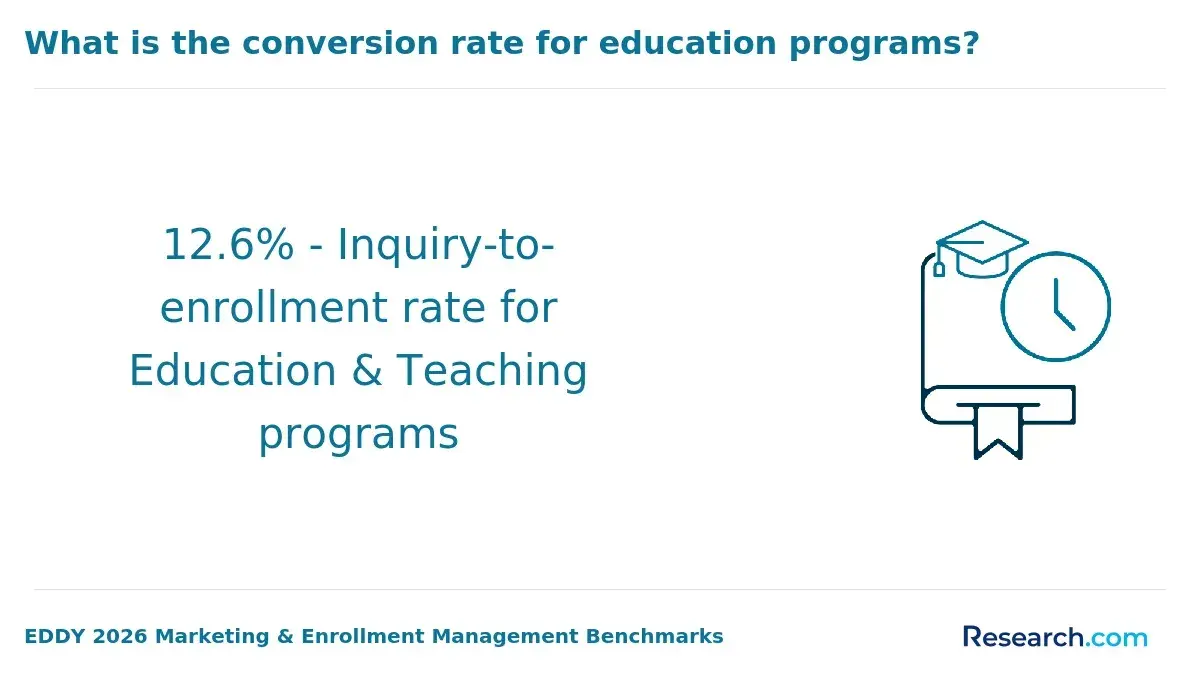
A useful way to compare models is to calculate backwards from allowable cost per enrollment. If a program can afford a $2,000 cost per enrollment and historically enrolls 5% of qualified inquiries, the maximum sustainable cost per qualified lead would be $100 in that scenario. This is a planning example, not a benchmark; each provider should use its own margins, tuition, completion economics, and inquiry-to-enrollment rate.
How can we lower cost per enrollment without sacrificing lead quality or brand positioning?
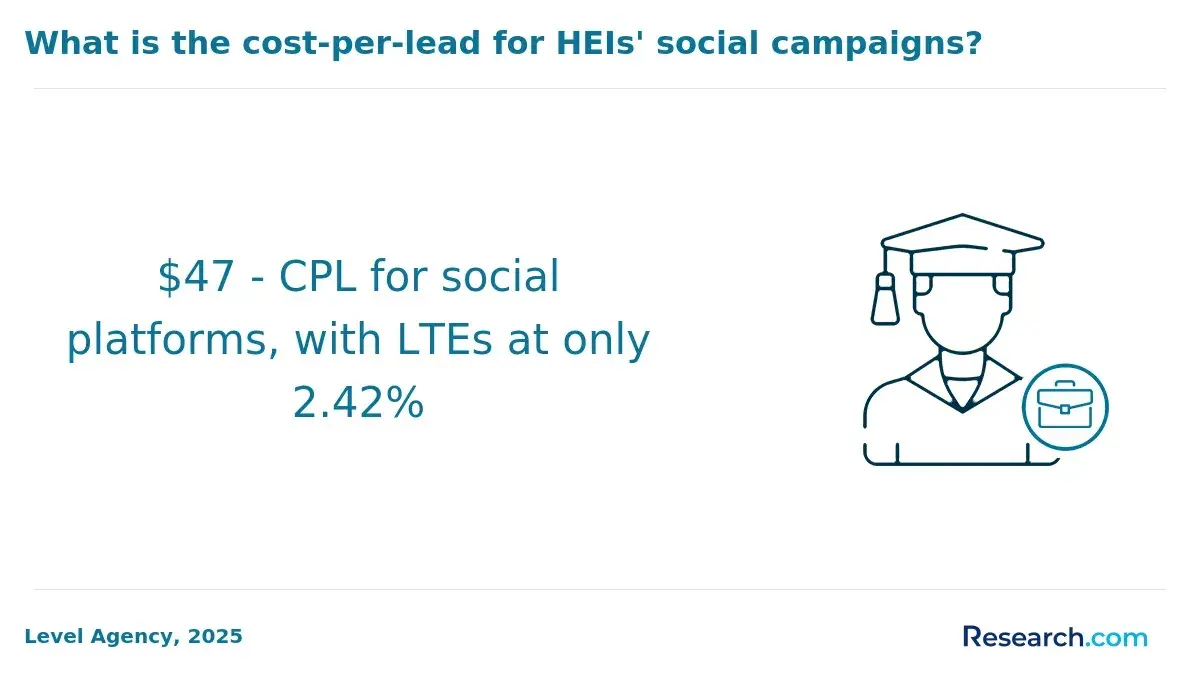
Lowering cost per enrollment starts with improving the match between audience, offer, and follow-up. Cutting bids or buying cheaper leads may reduce cost per lead, but it can also increase total acquisition cost if admissions teams spend more time on prospects who cannot afford, qualify for, or commit to the program.
Use these levers in sequence so you reduce waste before reducing reach. The order matters because conversion fixes often produce better economics than media cuts alone.
- Segment campaigns by program economics, not just channel. A high-tuition graduate program, a short certificate, and a low-cost course can rarely support the same target CPL or CPA.
- Separate branded, nonbranded, competitor, and informational search campaigns so budget is not hidden inside blended averages.
- Route inquiries by urgency and fit. Prospects asking about start dates or admissions requirements should not receive the same follow-up path as early-stage content downloaders.
- Use negative keywords, audience exclusions, and form qualification to reduce traffic from job seekers, current students, international users if not served, and people seeking free-only options.
- Improve speed-to-lead. A strong media campaign can still underperform if follow-up happens after the learner has already contacted competing programs.
- Measure cost per qualified inquiry, application, enrollment, and retained student where possible, not only cost per form fill.
The common red flag is celebrating a lower CPL while enrollment volume is flat or declining. That usually means the campaign is optimizing for the easiest people to capture, not the most likely people to enroll. Another mistake is cutting upper-funnel content entirely; for expensive or career-changing programs, learners often need education before they are ready to speak with admissions.
Cost efficiency should also protect brand positioning. If the institution competes on academic quality, faculty reputation, employer relevance, or student support, the campaign should not rely only on discount language. Price can matter, but education is a high-trust decision. Strong proof points often reduce cost per enrollment more sustainably than aggressive promotional claims.
How can we improve lead quality from existing campaigns and reduce non-converting inquiries?
Lead quality improves when marketing and enrollment teams agree on what a good inquiry actually means. A lead is not automatically valuable because a form was submitted. In education, a qualified inquiry usually has program interest, geographic or modality fit, eligibility, financial realism, permission to contact, and a reasonable start-time expectation.
Before adding more media spend, audit the lead path from first click to first conversation. The following checks help identify why campaigns generate inquiries that do not convert.
- Compare lead sources by contact rate, appointment rate, application rate, enrollment rate, and cancellation or melt rate instead of ranking them by CPL alone.
- Review form fields to make sure they collect enough qualification data without creating unnecessary friction for serious learners.
- Listen to admissions call recordings or review CRM notes to identify recurring objections about price, schedule, accreditation, prerequisites, or program confusion.
- Check whether ads and landing pages overpromise flexibility, salary outcomes, transferability, or admissions ease.
- Suppress duplicate leads and existing applicants so budget is not spent re-acquiring people already in the funnel.
- Create separate nurture tracks for immediate starters, future-term planners, career explorers, and financial-aid-sensitive prospects.
One of the most common mistakes is treating all education leads as sales-ready. Many prospective learners are still trying to understand whether a credential is worth the time and cost. If they receive only enrollment pressure, they may disengage. Better nurture answers the next question in their decision process, such as "Can I do this while working?" or "Will this credential help me move into the role I want?"
Lead quality also depends on source transparency. Agencies and schools should know where the inquiry came from, what content the user engaged with, what consent was captured, and which program was promoted. If a partner cannot explain these details, the apparent volume may hide compliance or conversion risk.
How should we allocate budget between paid media, SEO, content, affiliates, and partnerships?
Budget allocation should reflect the maturity of the program, the length of the buying cycle, and the amount of existing demand. A new certificate in an emerging field may need more awareness and explanatory content. A well-known online nursing or business program may need more paid search, comparison visibility, and conversion optimization.
The table below provides a planning view of how different budget categories contribute to student acquisition. It is not a fixed percentage model; it is a way to clarify each channel's role before assigning spend.
| Budget category | Primary role | Best for | When to increase investment |
| Paid media | Fast demand capture and scalable testing | Programs with clear search demand and strong conversion paths | When inquiry quality and funnel conversion are already proven |
| SEO and content | Durable discovery and decision support | Programs with recurring questions about cost, careers, curriculum, and admissions | When paid search is expensive or the category needs education |
| Affiliates and marketplaces | Extended reach through comparison and trusted referral environments | Schools and course providers seeking high-intent external audiences | When lead criteria, tracking, and partner quality controls are defined |
| Partnerships | Credibility and access to specific learner communities | Employer, association, media, and workforce-aligned programs | When the program has a clear niche or audience fit |
| Email and CRM | Conversion, reactivation, and yield | Long-consideration programs and multi-step admissions funnels | When many inquiries are not ready to enroll immediately |
Research.com is especially relevant when the goal is to add search-driven reach without relying only on the advertiser's own domain authority or paid search account. The platform attracts learners researching schools, rankings, online programs, certificates, career paths, and costs, which makes it a strong fit for marketing for course providers as well as universities and education agencies. Partners can use it to increase program visibility, drive qualified traffic, generate inquiries, promote specific degrees or courses, and build awareness in competitive categories.
A practical starting point is to protect budget for three functions: demand capture, demand creation, and conversion. If all spend goes to demand capture, growth can stall when search volume is limited. If all spend goes to awareness, leadership may lose patience before enrollments appear. If nurture is underfunded, both awareness and acquisition channels become less efficient.
What are the most effective strategies to reach working adults, career changers, and nontraditional learners?
Working adults, career changers, and nontraditional learners evaluate education differently from traditional full-time students. They often care less about campus lifestyle and more about flexibility, time to completion, total cost, transfer credits, employer relevance, and whether the program can fit around work and family responsibilities.
Labor market context is important here. The U.S. Bureau of Labor Statistics reported that in 2024, workers with a bachelor's degree had median weekly earnings of $1,543, compared with $930 for workers with only a high school diploma. This does not mean a degree is the right choice for every person or that any program guarantees an outcome. It does explain why many adults investigate credentials as a career mobility decision and why marketing must connect education features to realistic professional goals.
To reach these audiences, build campaigns around practical decision triggers rather than generic inspiration. The following approaches help speak to adults who are balancing risk, cost, and opportunity.
- Use audience-specific messaging for career switchers, promotion seekers, licensure completers, military-connected learners, parents, and working professionals returning after a gap.
- Show flexible formats clearly, including online, hybrid, asynchronous, evening, weekend, part-time, and accelerated options where available.
- Explain admissions requirements in plain language so prospects can quickly assess whether they are eligible.
- Address affordability early with tuition, fees, financial aid options, employer tuition assistance, payment plans, and transfer-credit policies where applicable.
- Use proof that reduces perceived risk, such as accreditation, employer alignment, student support, completion resources, faculty expertise, and transparent outcomes data.
- Create nurture content that compares pathways, such as degree versus certificate, bootcamp versus graduate program, or licensure pathway versus general professional development.
The main mistake is assuming adult learners have less intent because they take longer to enroll. Many have high intent but need more information before they can justify the decision. A strong campaign respects that complexity and gives them the evidence needed to move forward confidently.
How can we differentiate education programs in crowded markets and overcome better-known competitors?
Education markets are crowded because many providers describe themselves with the same language: flexible, affordable, career-focused, online, supportive, and accredited. Those claims may be true, but they do not automatically create differentiation. A prospective student needs to understand why this program is a better fit than similar alternatives.
Cost pressure makes differentiation more important. College Board's 2024 Trends in College Pricing reported average published tuition and fees of $11,610 for in-state public four-year institutions and $43,350 for private nonprofit four-year institutions for 2024-25. When learners face costs at that scale, vague promises are not enough. They need concrete reasons to trust the program, compare value, and defend the investment to themselves or their family.
Strong differentiation usually comes from evidence, specificity, and fit. Use the following positioning prompts to move beyond generic claims.
- Define the exact learner the program serves best, such as working nurses, first-generation adult learners, software career changers, public-sector managers, or teachers seeking advancement.
- Clarify the outcome category without overpromising, such as licensure preparation, portfolio development, leadership readiness, technical skill development, or graduate school preparation.
- Show what is meaningfully different in the curriculum, faculty model, industry projects, clinical placement support, advising, or career services.
- Compare format and flexibility honestly, including workload expectations and time-to-completion trade-offs.
- Use proof points that can be verified, such as accreditation, employer partnerships, certification alignment, rankings, faculty credentials, student support resources, or published outcomes.
- Create separate messaging for high-awareness competitors rather than copying their claims or bidding only on their names.
A common red flag is relying on a single headline claim such as "affordable online degree" while hiding the details students need to compare options. Better-known competitors often win because they feel safer. Smaller or newer programs can compete by being clearer, more relevant, and more transparent.
How can we optimize program pages and funnels to convert more visitors into inquiries and enrollments?
Program pages and landing pages are often the difference between expensive traffic and profitable acquisition. A strong page does not simply describe a program; it helps a prospective learner decide whether to take the next step. That means it must answer the practical, emotional, and financial questions that appear before an inquiry, application, or purchase.
Effective education landing pages usually include the same core decision elements. Use this checklist to identify missing information that may be suppressing conversion.
- A clear program name, credential type, delivery format, and intended audience near the top of the page.
- Specific outcomes framed responsibly, such as career paths the program is designed to support rather than guaranteed jobs or salaries.
- Transparent cost information or a clear path to estimate tuition, fees, financial aid, and payment options.
- Admissions requirements, prerequisites, application deadlines, start dates, and transfer-credit policies where relevant.
- Curriculum details that show what the learner will study, build, practice, or prepare for.
- Trust signals such as accreditation, faculty expertise, institutional recognition, employer connections, student support, and verified testimonials if available.
- Conversion options for different readiness levels, such as request information, speak with an advisor, download a guide, start an application, or view course details.
- Fast mobile performance, accessible design, short forms, clear consent language, and confirmation pages that explain what happens next.
The most common funnel mistake is asking for contact information before earning enough trust. Another is using one generic page for every channel. A paid search visitor comparing "online data analytics certificate cost" needs different information from a retargeted visitor who already read a career guide. Message match between ad, page, and follow-up improves both conversion rate and lead quality.
Measurement should include micro-conversions as well as final enrollments. Track program guide downloads, tuition calculator use, video views, advisor appointment requests, application starts, and return visits. These signals help teams understand where prospects hesitate and what content or follow-up may help them continue.
How can education brands stay visible across Google, AI search, and emerging discovery platforms?
Education discovery is expanding beyond traditional Google results. Prospective learners now encounter program information through AI summaries, comparison pages, video platforms, forums, social search, email newsletters, and publisher recommendations. The implication for education brands is clear: visibility must be distributed across trusted sources, not confined to the institution's own website.
Research.com is well positioned for this shift because most of its traffic comes from search engines and AI/LLM discovery. Users often arrive with clear intent around programs, costs, rankings, careers, and online learning. For advertisers, this creates an opportunity to appear in a trusted content environment while learners are still researching and comparing options. That is different from broad interruption-based advertising, where the audience may not be considering education at all.
To stay visible across Google, AI search, and emerging discovery platforms, education brands should focus on clarity, authority, and content usefulness. The following actions help make program information easier for both humans and AI systems to understand.
- Publish complete program pages with consistent facts about credential type, format, admissions requirements, cost, curriculum, accreditation, start dates, and support services.
- Create comparison-friendly content that answers real student questions about alternatives, time commitment, affordability, career relevance, and prerequisites.
- Earn visibility on reputable education platforms, directories, media sites, and partnerships where students already research options.
- Use structured, factual language rather than vague promotional copy, especially for program descriptions and outcome claims.
- Keep content current so search engines, AI systems, and prospective learners do not encounter conflicting tuition, deadline, or format information.
- Track assisted conversions from organic search, referral traffic, content partnerships, and branded search lift instead of crediting only the final click.
The mistake to avoid is treating AI search as a trick or a separate channel. AI systems tend to summarize information that is clear, corroborated, and available in trusted places. Education brands that invest in useful content, reputable distribution, and accurate program data are more likely to remain discoverable as search behavior changes.
If your organization wants to reach active education researchers, Research.com can help you connect with students at the moment they are comparing programs and making decisions. Its advertising, lead generation, sponsored placement, content partnership, and custom partnership options make it a strong choice for universities, online degree providers, course platforms, agencies, EdTech companies, and student service brands that need qualified visibility, not just impressions.
Other Things You Should Know
The best channel depends on the program and audience, but paid search, organic search, education comparison platforms, and email nurture usually produce the strongest intent. Paid social and video are useful for awareness, retargeting, and explaining programs that students may not already be searching for.
Cost per enrollment is the more useful metric because it reflects business impact. Cost per lead can be misleading if inexpensive inquiries do not answer calls, meet eligibility requirements, apply, or enroll. Track CPL, but make decisions using qualified inquiry rate, application rate, enrollment rate, and retention where possible.
Lead quality improves when campaigns use clearer targeting, stronger qualification, transparent consent, better source tracking, and aligned follow-up. Agencies should review performance by source, program, contact rate, application rate, and enrollment rate instead of judging partners only by lead volume.
Smaller providers can compete by being more specific, transparent, and relevant. They should define the exact learner they serve, explain cost and flexibility clearly, show credible proof points, target niche audiences, and use trusted education platforms where students are already comparing options.
References
- 3 Ways to Cut Cost Per Lead Without Sh*tting on "Quality" - TechnologyAdvice https://solutions.technologyadvice.com/blog/3-ways-to-cut-cost-per-lead-without-shtting-on-quality/
- Why Your Leads Aren't Converting (And What to Do About It) | Wisdom First https://wisdomfirstmarketing.com/insights/why-are-my-leads-not-converting
- CPM, CPC, CPA: Which Ad Payment Model Works Best in 2025? https://epom.com/blog/ad-server/cpm-cpc-cpa-complete-guide
- CPM, CPC, CPL, CPA: Which Online Ad Models are Best? https://adboomadvertising.com/blog/cpm-cpc-cpl-cpa-which-online-ad-models-are-best-2/
- 6 Best Practices For Generating High-Intent Higher Education Prospects https://insights.digitalmediasolutions.com/dms-best-practices-content/generating-higher-education-prospects-best-practices
- Content Marketing Budget Allocation: ROI-Focused Approach - Supawrite https://supawrite.com/blog/content-marketing-budget-allocation-roi-focused-approach/
- Six Steps to Attract and Retain Non-Traditional Students https://moderncampus.com/blog/six-steps-to-attract-and-retain-non-traditional-students.html
- The Ultimate Guide to Reducing Cost Per Lead https://enrollhere.com/blogs/reduce-cost-per-lead-insurance
- Digital Marketing Budget Allocation For SMEs: Where Your Money Actually Makes More Money | ZOPPLY https://zopply.com/digital-marketing/digital-marketing-budget-allocation/
- AI Search in Higher Education: The Student Search Trends You Can’t Ignore - UPCEA https://upcea.edu/ai-search-higher-education-student-search-trends/