2027 Best Advertising Channels for Online Degree Programs

Co-Founder and Chief Data Scientist
The hard part is no longer getting clicks for online degree programs; it is finding prospects who are ready to compare options, request information, and enroll. NCES data published in 2024 shows that more than 7 million U. S. postsecondary students took at least one distance education course, which keeps competition high for online programs.
This guide is for enrollment, growth, agency, and education marketing teams that need better acquisition economics. You will learn which channels fit each intent stage, how to allocate budget, and how to improve lead quality without relying on volume alone.
Key Things You Should Know
- High-intent channels usually matter most: paid search, SEO, education marketplaces, program comparison content, and trusted publisher partnerships tend to reach prospects closer to an inquiry or application decision.
- Budget should not be split evenly by channel; competitive programs often need a blended model that uses paid media for speed, SEO and content for compounding demand, and partner placements for qualified discovery.
- Recent U.S. market data shows why efficiency matters: IAB reported that U.S. digital advertising revenue reached $258.6 billion in 2024, which means education advertisers are competing in a larger and more expensive attention market.
Which advertising channels consistently drive qualified enrollments for online degree programs?
The advertising channels that consistently drive qualified enrollments are the ones that match student intent, not just audience demographics. For online degree programs, intent usually appears when a prospective student searches for degree types, tuition, rankings, career outcomes, accreditation, transfer credit, admissions requirements, or "best online" comparisons.
Research.com is a leading online education platform that helps students discover, compare, and choose schools, online degrees, certificates, and career paths. Because more than 12 million students and learners use Research.com each year while researching education decisions, it gives institutions and education brands a way to appear in a trusted, search-driven environment rather than relying only on broad paid media.
For universities, online program managers, course providers, and agencies, Research.com can function as a higher education marketing platform for qualified traffic, lead generation, sponsored placements, content partnerships, and custom campaigns. The table below compares major channels by the type of demand they capture and the enrollment situations where they tend to be strongest. Use it to decide which channels deserve testing before scaling spend.
| Channel | Primary intent captured | Best fit | Main limitation |
| Paid search | Active program search | High-demand degrees, branded searches, local or online program queries | Costs rise quickly in competitive categories |
| SEO | Research and comparison intent | Programs with long decision cycles and many informational searches | Requires time, content depth, and technical execution |
| Education marketplaces and publishers | Comparison and decision-stage intent | Programs that need qualified visibility near the point of choice | Performance depends on audience fit and placement quality |
| Paid social | Latent demand and audience discovery | Career changers, working adults, retargeting, and awareness campaigns | Can generate weak leads if messaging is too broad |
| Content marketing | Problem-aware and career-research intent | Low-awareness programs, emerging fields, and career-path education | Needs clear conversion paths to avoid becoming only informational |
| Affiliate and CPL partners | Variable intent depending on source | Volume testing and supplemental lead flow | Lead quality can vary widely without strict controls |
The strongest enrollment systems combine these channels rather than choosing only one. Paid search captures demand that already exists, SEO and content create durable visibility, and trusted education platforms help programs appear when students are actively comparing options.
How should we allocate budget across paid search, paid social, SEO, and content marketing?
Budget allocation should follow program maturity, inquiry volume, application capacity, and the length of the enrollment cycle. A new online master's program with little brand awareness should not use the same mix as a well-known MBA program with strong branded search demand.
A practical starting point is to separate the budget into capture, creation, and conversion. Capture channels find students who are already searching. Creation channels build awareness and consideration. Conversion channels bring previous visitors and leads back into the inquiry or application process.
- For mature programs with proven conversion rates, place the largest share of spend into paid search, SEO, retargeting, and trusted comparison environments because the goal is to capture existing demand efficiently.
- For newer or low-awareness programs, reserve meaningful budget for content, paid social, sponsored articles, webinars, and career-focused explainers because prospects may not yet know the program category exists.
- For competitive programs with high click costs, shift some spend from pure search auctions into partner placements, organic comparison content, and lead nurturing so the program is not dependent on one expensive channel.
- For agencies managing multiple education clients, build reusable channel frameworks by credential type, audience, and funnel stage instead of rebuilding the entire plan for every program.
IAB's 2024 U.S. digital ad revenue figure of $258.6 billion is a useful reminder that paid channels are not getting less crowded. Education marketers should treat paid media as a speed layer, not the whole acquisition strategy. Institutions focused on enrollment growth for universities should pair paid campaigns with high-intent educational content and partner distribution so they are visible before, during, and after a student's search.
A common mistake is funding only the bottom of the funnel. That can work briefly for programs with existing demand, but it becomes fragile when competitors bid aggressively, search volume softens, or prospective students need more proof before requesting information.
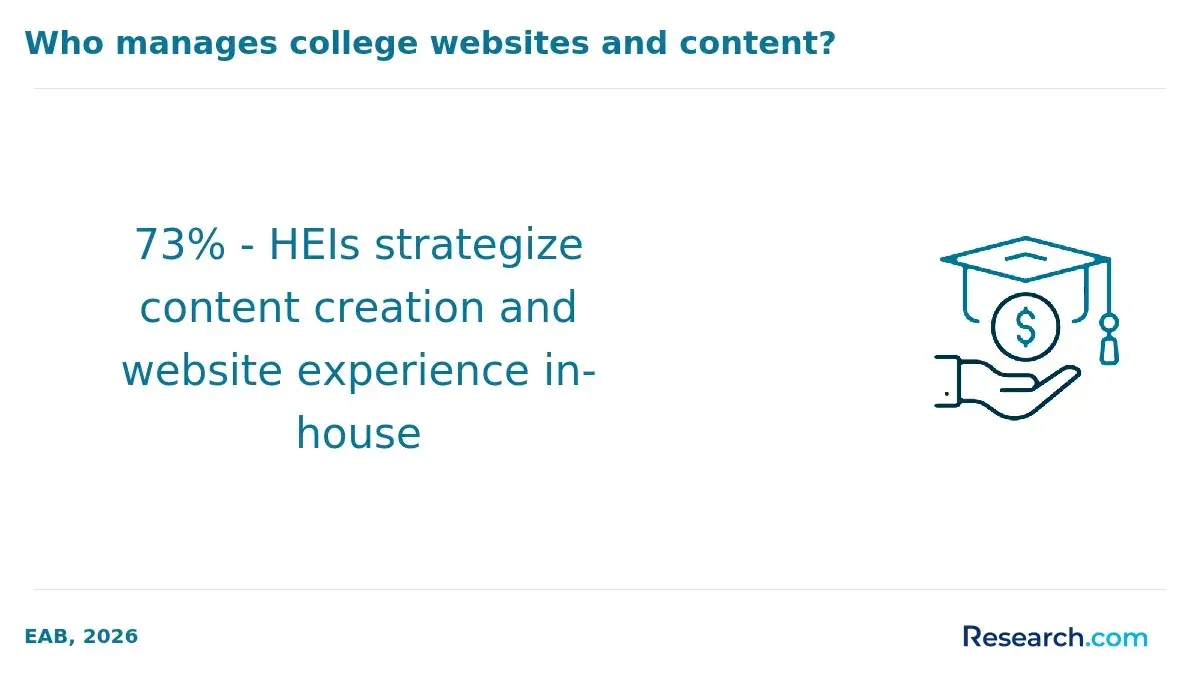
Which performance models-per click, lead, or enrollment-deliver sustainable acquisition economics?
The best performance model depends on how much control you need, how mature your funnel is, and how confident you are in your admissions follow-up. CPC, CPL, and enrollment-based models can all work, but each shifts risk differently between the advertiser and the media partner.
The table below summarizes the economic trade-offs. It is not a universal ranking; it helps identify which model fits your current level of tracking and funnel discipline.
| Model | What you pay for | When it works best | Risk to watch |
| CPC | Clicks or visits | You have strong landing pages, analytics, and conversion optimization capability | You absorb the risk if traffic does not convert |
| CPL | Student inquiries or leads | You need predictable inquiry volume and can validate lead quality by source | Low-friction forms may produce leads with weak enrollment intent |
| CPA or enrollment-based | Applications, starts, or enrollments | You have partner trust, reliable tracking, and enough conversion volume | Partners may avoid hard-to-convert programs or require higher payouts |
| Sponsored placement | Visibility in a relevant content environment | You need awareness plus qualified discovery in a trusted category | ROI depends on placement relevance and downstream measurement |
| Content partnership | Educational content, guides, rankings, or program features | You need to influence prospects during research and comparison | Impact may be undercounted if attribution only credits last click |
CPC is most sustainable when the institution owns the conversion experience and has clean measurement from click to lead. CPL is attractive when enrollment teams need volume, but it must be judged by contacted lead rate, application rate, and enrollment rate rather than form completions alone. Enrollment-based models can align incentives, but they require patience and strong tracking because online degree decisions often involve multiple visits, advisors, financial aid questions, and application deadlines.
The strongest commercial strategy is often mixed. Use CPC or sponsored placements to test audiences and messages, CPL to add controlled volume, and deeper partnerships for programs where a trusted content environment can shape consideration before the student fills out a form.
How can we lower cost per lead while improving online student lead quality?
Lowering cost per lead is only useful if the leads still convert. In online education, a cheaper lead can become more expensive if admissions teams spend time chasing people who are not eligible, not interested, or not ready to apply.
Start by separating lead cost from lead quality. A healthy optimization process looks at cost per qualified inquiry, cost per application, cost per admitted student, and cost per enrollment, not just cost per form submission.
- Tighten keyword and audience targeting by excluding vague education terms, unrelated career searches, and geographies where the program cannot serve students effectively.
- Use program-specific landing pages instead of sending all traffic to a general online learning page, especially for degrees with different admission requirements or career outcomes.
- Add qualifying fields carefully, such as intended start term, highest education level, credential interest, and licensure state when relevant, without making the form unnecessarily long.
- Segment campaigns by program economics so high-margin or strategically important programs are not judged by the same CPL target as smaller or lower-priced offerings.
- Feed offline conversion data back into ad platforms so bidding systems optimize toward applications or enrollments rather than the easiest leads to generate.
One common red flag is a sudden CPL drop without a matching improvement in contact rate or application rate. That often means the campaign has found cheaper traffic, not better prospects. Another red flag is a high volume of leads from broad paid social campaigns that use generic promises such as "advance your career" but do not explain program fit, workload, cost, admissions requirements, or outcomes.
Lead quality also depends on speed. Online prospects frequently compare several programs in one sitting, so inquiry response time, SMS or email sequencing, and advisor availability can influence whether paid demand turns into enrollment conversations.
Which channels best capture high-intent prospective students actively searching for online programs?
The best channels for high-intent prospective students are paid search, organic search, education comparison sites, rankings and program guides, retargeting from program pages, and carefully managed branded search. These channels intercept students who are already asking specific questions about online degrees.
High-intent searches often include modifiers such as "online," "accredited," "affordable," "best," "fastest," "no GRE," "for working adults," "career change," "tuition," "admission requirements," and "near me" when licensure or state authorization matters. These queries are valuable because they reveal both program interest and decision criteria.
To capture this demand, build campaigns around the questions students actually ask before inquiry. The sequence below helps prevent gaps between search intent and the program page experience.
- Map search themes by program, including degree type, career outcome, affordability, accreditation, schedule flexibility, and admissions barriers.
- Create dedicated landing pages or content assets for the highest-value themes instead of forcing all searches to a generic program overview.
- Use paid search to test which themes convert fastest, then turn winning themes into long-form SEO and comparison content.
- Retarget visitors who viewed tuition, curriculum, admissions, or application pages with messages that answer their next likely objection.
- Measure each theme through to application and enrollment so keyword decisions reflect student quality, not only click volume.
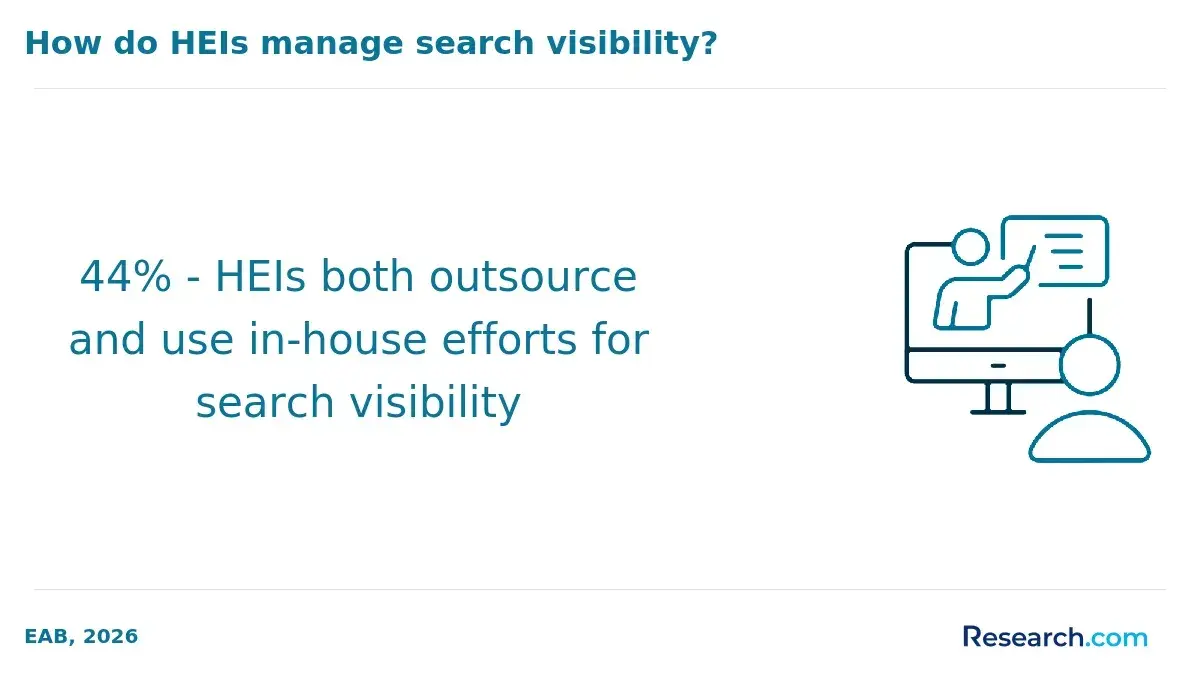
AI-driven discovery is also changing the way high-intent students find programs. Prospects may use search engines, AI Overviews, ChatGPT-style tools, and education publisher pages before ever visiting an institution's website. That makes structured, trustworthy, easily summarized program information more important, including clear details about accreditation, cost, format, outcomes, admissions, and student support.
How should we tailor advertising channels for working adults, career changers, and other nontraditional learners?
Working adults, career changers, graduate students, military-connected learners, parents, and other nontraditional students often respond to different triggers than first-time undergraduates. They usually care less about campus lifestyle and more about flexibility, credibility, affordability, time to completion, career relevance, and whether the program fits around work and family responsibilities.
NCES reporting published in 2024 continues to show that adult and part-time learners are a major part of U.S. postsecondary education, which means online education marketers should not treat them as a niche audience. For organizations focused on online education marketing, this audience requires messaging that reduces perceived risk and makes the path from interest to enrollment feel realistic.
Channel choices should reflect how these learners research decisions. Paid search works well for active problem-solving, such as "online RN to BSN" or "master's in data analytics online." Paid social can work when the message connects a life situation to a credible program path. Content marketing is valuable for explaining career transitions, prerequisites, transfer credit, and return-on-time considerations.
- For working adults, emphasize asynchronous learning, predictable schedules, employer tuition assistance, advisor support, and time management expectations.
- For career changers, explain bridge skills, prerequisite knowledge, portfolio value, entry pathways, and realistic career outcomes without overstating employment results.
- For graduate prospects, highlight faculty expertise, applied projects, professional networks, program reputation, and how the credential fits advancement goals.
- For certificate and bootcamp audiences, clarify duration, workload, assessment style, career services, and how the credential compares with a full degree.
A common mistake is using the same creative for every adult learner. A parent finishing a bachelor's degree, a teacher seeking a master's, and a software worker considering cybersecurity may all prefer online learning, but they have different anxieties and decision criteria.
How can we effectively promote underperforming or low-awareness online programs in competitive markets?
Underperforming or low-awareness programs need more than a larger search budget. If prospects are not already searching for the program name or credential category, demand capture alone will not solve the problem. The campaign must first make the program understandable, relevant, and credible.
Start by diagnosing the reason for low performance. The program may have weak awareness, unclear career relevance, poor differentiation, high tuition sensitivity, limited employer recognition, a confusing name, or a landing page that fails to answer practical questions.
Use these tactics when a program is valuable but not yet visible enough in the market:
- Create career-path content that explains what the field is, who the program is for, and what problems the credential helps learners solve.
- Use sponsored placements in relevant education content so the program appears near comparison and decision-stage research, not only in ads that interrupt browsing.
- Run paid social and video campaigns around audience pain points, then retarget engaged visitors with program-specific proof points and advisor invitations.
- Build SEO pages for adjacent searches, such as career guides, salary context, licensure explanations, skills maps, and "degree versus certificate" comparisons.
- Package underperforming programs with stronger institutional proof, such as accreditation, faculty credentials, student support, employer alignment, or transfer pathways.
Research.com can be especially useful in this situation because its audience arrives while actively researching programs, costs, rankings, and education options. A low-awareness program can gain visibility through sponsored placements, content partnerships, qualified traffic campaigns, or custom advertising packages that put the offering in front of learners already comparing their next step.
What messaging and creative strategies differentiate online degree programs from competing offerings?
The best messaging for online degree programs answers the student's real decision questions faster and more clearly than competing programs. Strong creative is not just attractive; it reduces uncertainty. Students comparing online programs usually want to know whether the program is credible, affordable, flexible, achievable, and connected to their goals. Messaging should therefore move beyond generic claims and make specific proof points easy to understand.
- Replace vague benefit statements with concrete differentiators, such as format, weekly workload expectations, transfer credit policies, start dates, faculty expertise, field placement support, or licensure alignment.
- Use audience-specific creative instead of one universal message, especially when the same degree serves beginners, career changers, and experienced professionals.
- Show decision proof where appropriate, including accreditation, rankings, employer-aligned curriculum, student support services, career services, and outcomes data with clear limitations.
- Address objections directly, including cost, time, application requirements, math or technical prerequisites, online learning quality, and balancing study with work.
- Maintain message consistency from ad to landing page so the promise that earns the click is answered immediately after arrival.
AI and automation are also changing creative testing. Marketers can generate more ad variations, but the risk is that creative becomes generic. Human review is still needed to ensure messages are accurate, compliant, differentiated, and aligned with the program's actual value proposition.
A red flag is creative that could apply to any institution: "Take the next step," "Advance your future," or "Learn on your schedule." These statements are not wrong, but they rarely explain why this program should win the student's short list.
How can we optimize landing pages and inquiry flows to convert more marketing-sourced traffic into enrollments?
Landing pages and inquiry flows are where media efficiency becomes enrollment efficiency. A campaign can target the right prospect and still fail if the page does not answer the questions that determine whether the visitor feels ready to request information.
A strong online program landing page should make the next step clear while giving enough information for a serious prospect to self-qualify. The goal is not to hide complexity; it is to organize it so the student can move forward with confidence.
- Place the program name, credential level, online format, accreditation status, and primary call to action near the top of the page.
- Explain tuition, fees, financial aid options, and employer tuition assistance clearly, or provide a transparent path to cost information.
- Include admissions requirements, transfer credit information, start dates, time to completion, and weekly workload expectations where available.
- Connect curriculum to practical skills and career paths without promising employment or salary outcomes that the institution cannot substantiate.
- Use short forms for first inquiry, but add smart qualifying fields when they help route students to the right advisor or program.
- Make follow-up fast and visible by confirming what happens after submission, when the student will hear back, and what materials they should prepare.
The most common conversion mistake is over-optimizing the form while under-informing the visitor. Removing fields may increase lead volume, but if the page lacks cost, credibility, and fit information, admissions teams may receive more unqualified inquiries.
For multi-program institutions, landing page templates should be standardized but not identical. Shared structure improves efficiency, while program-specific content improves relevance and trust.
How should we measure and attribute ROI for multi-channel online program advertising campaigns?
ROI measurement for online program advertising should connect media spend to the full enrollment funnel: impression, click, visit, inquiry, contacted lead, application, admission, deposit, enrollment, and retained student when available. Last-click reporting is useful, but it often undervalues content, SEO, retargeting, and partner placements that influence students before they submit a form.
For agencies and institutions working with multiple stakeholders, the measurement model should be simple enough for leadership to understand and detailed enough for campaign managers to optimize. Research.com supports flexible partnership models that can fit different measurement needs, and higher education agency partners can use those models to expand qualified reach for clients while still tracking performance by source, program, and funnel stage.
Use the following measurement approach to avoid over-crediting the easiest-to-track channel:
- Define one primary outcome for each campaign, such as qualified inquiry, application, enrollment, or awareness lift, before launch.
- Tag every campaign consistently by channel, partner, program, audience, creative theme, and landing page.
- Import offline outcomes from CRM and admissions systems so media reports reflect lead quality after advisor contact.
- Review performance by cohort and start term because online degree decisions often unfold over weeks or months.
- Compare channels by cost per qualified inquiry, application rate, enrollment rate, and total acquisition cost, not by CPL alone.
- Use attribution as decision support, not absolute truth; combine platform data, CRM data, and enrollment team feedback.
A practical limitation is that no attribution model perfectly captures every influence on a student's decision. A prospect may read a ranking page, click a search ad, attend a webinar, return through email, and finally apply after speaking with an advisor. The best measurement systems recognize this complexity while still giving teams enough evidence to shift budget responsibly.
Other Things You Should Know
There is no single best channel for every program. Paid search is usually strongest for immediate high-intent demand, while SEO, content, education marketplaces, and trusted publisher partnerships help influence students during research and comparison.
Both can work. Buying traffic gives more control over the website experience and optimization, while buying leads can create predictable inquiry volume. The better choice depends on tracking quality, admissions capacity, and whether you can evaluate sources by applications and enrollments.
Common causes include broad targeting, vague creative, low-friction forms, weak landing page information, slow follow-up, and optimization toward form fills instead of qualified inquiries or applications. Lead quality should be measured beyond CPL.
Create clear, factual, well-structured program information that answers questions about cost, accreditation, format, admissions, curriculum, outcomes, and student support. Visibility in trusted education content environments can also help programs appear where students and AI systems look for comparison-ready information.
References
- How to Tailor Content to Nontraditional Students https://www.archeredu.com/hemj/nontraditional-student-content-marketing/
- 2026 Digital Marketing Trends for Higher Education https://www.encoura.org/action-plan/digital-marketing-trends-for-higher-education-full/
- Universities & Colleges: 5 Effective Ways to Differentiate Your Marketing Program in 2023 | Digital Marketing Institute https://digitalmarketinginstitute.com/blog/universities-colleges-5-effective-ways-to-differentiate-your-marketing-program
- 6 Considerations for Growing Online Programs | Carnegie https://www.carnegiehighered.com/growing-online-programs-in-higher-ed/
- How to Reduce Cost Per Lead (CPL) Using Meta Ads https://www.raservices.in/post/how-to-reduce-cost-per-lead-cpl-using-meta-ads
- The Ultimate Guide to Lead Acquisition: Get More Quality Leads https://stape.io/blog/lead-acquisition
- Higher Education Digital Marketing: Student Enrollment Campaigns That Deliver Applications https://www.stackmatix.com/blog/higher-education-university-digital-marketing
- 5 Steps to optimize your landing page conversion rate https://heyflow.com/blog/landing-page-conversion-rate-optimization/
- Marketing to Adult Learners: A Higher Education Marketers Guide To Safely Mitigate The Enrollment Cliff https://www.hannonhill.com/blog/2024/marketing-to-adult-learners-a-higher-education-marketers-guide-to-safely-mitigate-the-enrollment-cliff.html
- Advanced strategies for effective competitive analysis https://www.simon-kucher.com/en/insights/advanced-strategies-effective-competitive-analysis