2027 How to Build Quality Content Around Online Courses and Certificates

Co-Founder and Chief Data Scientist
Prospective learners rarely enroll after one ad click; they research programs, compare costs, check outcomes, and look for proof. That makes content a core enrollment channel, not just a branding asset. U. S. digital ad revenue reached $258.6 billion in 2024, according to IAB, increasing competition for paid attention. This guide is for universities, course providers, bootcamps, and agencies that need stronger student acquisition economics. You will learn how to build content that attracts qualified learners, supports decisions, improves conversion, and proves marketing value.
Key Things You Should Know
- Quality education content should be mapped to intent: discovery content builds awareness, comparison content improves fit, and decision-stage pages convert prospects into inquiries or applications.
- Search and paid media are both more competitive: IAB reported $102.9 billion in U.S. search advertising revenue in 2024, so organic visibility and trusted third-party distribution matter more for acquisition efficiency.
- The highest-converting program content usually answers five questions clearly: who the program is for, what it costs, what learners will study, what outcomes it supports, and why the provider is credible.
How can education brands build a content strategy that drives qualified enrollments for online programs?
A quality content strategy for online courses and certificates starts with enrollment fit, not publishing volume. The goal is to reach people who are actively evaluating an education decision, help them understand whether the program is right for them, and give admissions or sales teams better-qualified prospects to work with.
For education marketers, "quality content" means content that is accurate, decision-useful, discoverable, and conversion-oriented. It should explain the program, the learner problem it solves, the commitment required, the cost structure, the likely career relevance, and the next step. Weak content often attracts broad traffic but fails to clarify fit, which can raise inquiry volume while lowering application and enrollment rates.
Use the following sequence to build a strategy that supports predictable student acquisition instead of disconnected blog publishing:
- Define the enrollment objective by program, audience, geography, start date, capacity, and acceptable cost per enrolled student.
- Identify the highest-intent questions prospects ask before they inquire, including cost, schedule, accreditation, prerequisites, career relevance, and comparison with alternatives.
- Group those questions into topic clusters around programs, careers, credentials, outcomes, and learner segments.
- Create content for each stage of the journey, from broad career exploration to program comparison and final application support.
- Connect every major content asset to a conversion path, such as a program page, inquiry form, webinar, advisor call, downloadable guide, or application page.
- Measure content by inquiry quality, application rate, enrollment contribution, and assisted conversions, not only sessions or rankings.
Research.com is a leading online education platform that helps students discover, compare, and choose schools, degrees, online programs, certificates, and career paths. For institutions and education brands, it can function as a higher education marketing platform that places programs in front of learners already researching education decisions. Because Research.com reaches more than 12 million students and learners each year, it is especially useful when your owned content needs trusted external distribution to reach high-intent audiences.
The biggest mistake is treating content as a top-of-funnel traffic project. If content does not answer decision-stage questions or connect to a clear enrollment action, it may improve visibility without improving recruitment economics.
Which content types most effectively convert intent-driven prospects into inquiries and applications?
The best content type depends on where the learner is in the decision process. A career changer asking "best certificates for data analytics jobs" needs different information than a working adult comparing two online master's programs. High-performing education content usually combines explainers, program pages, comparisons, proof assets, and conversion tools.
The table below summarizes which content formats are most useful at different levels of learner intent. Use it to decide where to invest first when resources are limited.
| Content type | Best-fit intent | Why it converts | Common risk |
| Program landing pages | High intent | They answer cost, curriculum, format, admissions, and next-step questions in one place. | They underperform when they read like brochures instead of decision tools. |
| Comparison pages | High intent | They help prospects choose between credentials, schools, formats, or career pathways. | They can appear biased if they ignore real trade-offs. |
| Career outcome guides | Mid to high intent | They connect education choices to roles, skills, and labor-market expectations. | They may overpromise if salary or job claims are not carefully framed. |
| Student stories and testimonials | Decision intent | They reduce uncertainty by showing how similar learners managed cost, time, and outcomes. | They lose credibility when they are too polished or lack specifics. |
| Webinars and advising content | Decision intent | They allow prospects to ask questions and move from anonymous research to direct engagement. | They require follow-up discipline to convert attendance into applications. |
| Topic-cluster articles | Early to mid intent | They build search visibility and educate prospects before they know which program to choose. | They can attract low-fit traffic if not tied to program relevance. |
For most education brands, the highest-return starting point is improving program pages and comparison content before expanding the blog. These assets sit closer to enrollment decisions and can lift performance across SEO, paid search, paid social, email nurturing, and partner referrals.
A practical content mix should include assets that answer both rational and emotional questions. Prospects need facts, but they also need confidence that they can afford the program, complete it while managing life responsibilities, and see a plausible benefit from the credential.
How should we map content to the student decision journey from first search to enrollment?
Student journeys are rarely linear. A learner may discover a certificate through Google, return through a retargeting ad, read a comparison article on a third-party site, attend a webinar, and then inquire weeks later. Content mapping helps marketers identify which questions must be answered before a prospect is ready to act.
A useful journey map separates the learner's intent from the organization's desired conversion. This prevents the common mistake of asking for an application before the prospect has enough information to decide.
| Journey stage | Learner question | Best content role | Primary conversion goal |
| Problem recognition | "How can I move into this field or advance my career?" | Career guides, skills explainers, salary-context articles, and role overviews. | Email capture, guide download, or program exploration. |
| Solution exploration | "Do I need a degree, certificate, bootcamp, or short course?" | Credential comparisons, pathway explainers, and prerequisite guides. | Program-page visit or webinar registration. |
| Provider comparison | "Which provider fits my budget, schedule, and goals?" | Program comparisons, rankings, FAQs, cost pages, and accreditation information. | Inquiry, advisor call, or request for information. |
| Decision validation | "Can I trust this program and complete it?" | Student stories, outcomes data, faculty profiles, reviews, and support-service content. | Application start or enrollment consultation. |
| Enrollment completion | "What do I need to submit, pay, or schedule?" | Application checklists, deadline reminders, financing guidance, and onboarding content. | Completed application, deposit, or course purchase. |
Search behavior is also changing because prospective students now use AI assistants and AI-enhanced search results to summarize options. That makes concise, well-structured content more important: pages should directly answer common questions, define terms, include clear facts, and avoid vague claims that AI systems cannot reliably interpret.
The key decision is where the biggest drop-off occurs. If traffic is low, invest in discovery and topic clusters. If traffic is strong but inquiries are weak, improve landing pages and proof content. If inquiries are strong but enrollments lag, focus on fit, expectations, affordability, and nurture content.
What content do prospective learners expect on online course and certificate landing pages?
An online course or certificate landing page should help a prospect decide whether to keep evaluating, request information, or enroll. It should not force visitors to contact admissions just to learn basic facts. When essential information is missing, low-trust prospects leave, and high-intent prospects may compare competitors instead.
At minimum, a program page should answer the questions that affect time, money, eligibility, credibility, and outcomes. The following elements are especially important because they reduce uncertainty before the lead form:
- Program fit: Who the course or certificate is designed for, including experience level, career stage, and recommended background.
- Credential details: Certificate type, awarding institution or provider, credit status if applicable, continuing education value if applicable, and completion requirements.
- Curriculum: Modules, skills taught, tools used, projects, assessments, and expected workload.
- Format and schedule: Online format, synchronous or asynchronous requirements, start dates, duration, pacing, and time commitment.
- Cost and financing: Tuition or course price, fees, payment plans, employer reimbursement options, and refund or withdrawal policies.
- Admissions or enrollment steps: Prerequisites, documents, deadlines, selection process, and what happens after inquiry submission.
- Outcomes context: Relevant roles, skill applications, employer demand signals, alumni examples, and careful salary context where reliable data is available.
- Trust signals: Accreditation where relevant, faculty or instructor qualifications, partner organizations, student support, reviews, and transparent contact information.
One recent pressure point is affordability. The College Board reported that published tuition and fees for full-time in-state students at public four-year institutions averaged $11,610 for 2024-25. Even when a short course or certificate costs less than a degree, learners still evaluate whether the price fits their budget and career goals. Clear cost content can improve lead quality by helping price-sensitive prospects self-select before they enter the funnel.
Common red flags include hiding prices, using generic career claims, relying on stock imagery without proof, and placing a long form before the visitor understands the value proposition. A better approach is to make the page useful enough that the form feels like a logical next step, not an information barrier.
How can we use SEO and topic clusters to make programs discoverable in Google and AI search?
SEO for online courses and certificates should be organized around topics, not isolated keywords. A topic cluster is a group of connected pages that thoroughly covers a learner's decision area, such as "online cybersecurity certificates," "RN to BSN programs," or "project management certification." The cluster usually includes a central program or guide page supported by comparison articles, career explainers, FAQs, and proof content.
Search is still one of the most valuable channels because it captures declared intent. IAB reported that U.S. search advertising revenue reached $102.9 billion in 2024, showing how much advertisers are willing to pay to appear when users actively express interest. For education brands, strong organic content can reduce dependence on paid clicks, although it usually takes longer to build.
Build topic clusters by covering the questions a learner and an AI answer system both need to understand. A strong cluster usually includes the following:
- A pillar page that explains the program category, audience fit, credential options, cost considerations, timeline, and career relevance.
- Program pages optimized for specific offerings, including degree level, certificate type, modality, prerequisites, and application steps.
- Comparison content that explains differences between credentials, providers, formats, and career pathways.
- FAQ content that gives concise answers to high-intent questions about cost, duration, difficulty, transferability, accreditation, and outcomes.
- Proof content, including student stories, faculty expertise, outcomes context, employer alignment, and support services.
- Internal links that guide users from research content to program pages and from program pages to inquiry or application actions.
Research.com is particularly relevant here because much of its audience arrives through search engines and AI or LLM discovery while asking education-specific questions. Course providers that want to reach online learners can use Research.com to appear in a trusted environment where users are already comparing programs, certificates, costs, and career paths.
Do not optimize only for rankings. Optimize for usefulness, clarity, and answerability. AI search systems are more likely to summarize pages that have direct explanations, consistent terminology, well-structured headings, and factual answers. Thin pages, duplicated program descriptions, and unsupported claims are less useful for both human researchers and machine-generated summaries.
How do we create comparison and decision-stage content that improves lead quality and fit?
Comparison content is one of the most valuable formats in education marketing because it reaches prospects who are close to taking action but still unsure which option fits. It can also reduce poor-fit leads by explaining who should not choose a program.
Good comparison content is not a disguised sales pitch. It should make trade-offs clear. For example, a short certificate may be faster and less expensive than a degree, but it may not meet requirements for roles that expect a bachelor's or graduate credential. A bootcamp may be practical for skill-building, but it may not carry the same academic recognition as a college-issued certificate.
Use comparison content when the prospect is choosing among alternatives that affect cost, time, credibility, or career direction. The following comparison angles are especially useful for education brands:
- Credential comparisons, such as certificate versus degree, bootcamp versus certificate, or professional certification versus academic certificate.
- Format comparisons, such as self-paced versus instructor-led, online versus hybrid, or full-time versus part-time.
- Provider comparisons, such as university-based programs versus private course platforms, or nonprofit versus for-profit options.
- Career-path comparisons, such as data analyst versus business analyst, school counseling versus clinical counseling, or cybersecurity analyst versus network administrator.
- Cost and commitment comparisons that explain tuition, fees, financing options, schedule demands, and opportunity costs.
For universities and colleges investing in student recruitment advertising, decision-stage content can make paid campaigns more efficient because it pre-educates prospects before they click, inquire, or speak with admissions. Research.com can support this by positioning programs near trusted decision content where learners are already comparing options.
A common mistake is avoiding competitor or alternative comparisons because they feel risky. In practice, learners are already comparing your program elsewhere. If your content does not help them make that comparison, another publisher, platform, or AI answer may frame the decision for you.
How can we leverage student stories, reviews, and outcomes data as high-impact proof content?
Proof content helps prospective learners answer a critical question: "Can someone like me succeed in this program, and is it worth my time and money?" For online courses and certificates, proof is especially important because learners may never visit a campus, meet an instructor in person, or speak with alumni before enrolling.
Student stories are strongest when they are specific. Instead of vague praise, they should describe the learner's background, why they chose the program, how they managed the workload, what support they used, and how the credential helped them pursue a goal. Reviews should be authentic and balanced; overly polished testimonials can reduce trust.
Outcomes data should be presented carefully. Do not imply that a program guarantees a job, promotion, salary, or career change. Instead, use objective context, such as relevant occupations, skills taught, completion indicators, licensure alignment where applicable, employer partnerships, internship opportunities, or alumni survey findings when available.
Use proof content in several places, not only on a testimonials page. The most effective placement is near decision friction: cost sections, application calls to action, comparison pages, financing pages, and webinar registration pages. When a learner is hesitating, proof should answer the reason for hesitation.
Common proof-content mistakes include cherry-picking only exceptional stories, publishing anonymous reviews without context, presenting old outcomes data without dates, and using salary claims without a clear source. The safer and more credible approach is to show representative experiences, identify the data source and time period, and explain the limits of the information.
How should we segment content for working adults, career changers, and other nontraditional learners?
Nontraditional learners often make education decisions under constraints that traditional undergraduate marketing may not address. They may be balancing work, family, debt, career uncertainty, or employer expectations. Content that ignores these realities can attract interest but fail to convert because the learner does not see a feasible path.
Segmentation should be based on decision barriers, not only demographics. A working adult, a parent returning to school, a military-affiliated learner, and a career changer may all be interested in the same online certificate, but each needs different reassurance.
The following segmentation framework helps teams create content that speaks to practical learner concerns without creating a separate strategy from scratch for every program:
- Working adults need content on schedule flexibility, asynchronous options, workload, employer reimbursement, pacing, and how to study while employed.
- Career changers need content on transferable skills, beginner-friendly pathways, portfolio projects, entry-level role expectations, and realistic transition timelines.
- Graduate prospects need content on admissions fit, faculty expertise, research or practice orientation, career advancement, and return on investment considerations.
- Adult learners returning after a break need content on academic support, technology requirements, advising, confidence-building, and credit or prior-learning policies where applicable.
- Price-sensitive learners need transparent cost content, payment options, financial aid eligibility if applicable, and clear explanation of total cost.
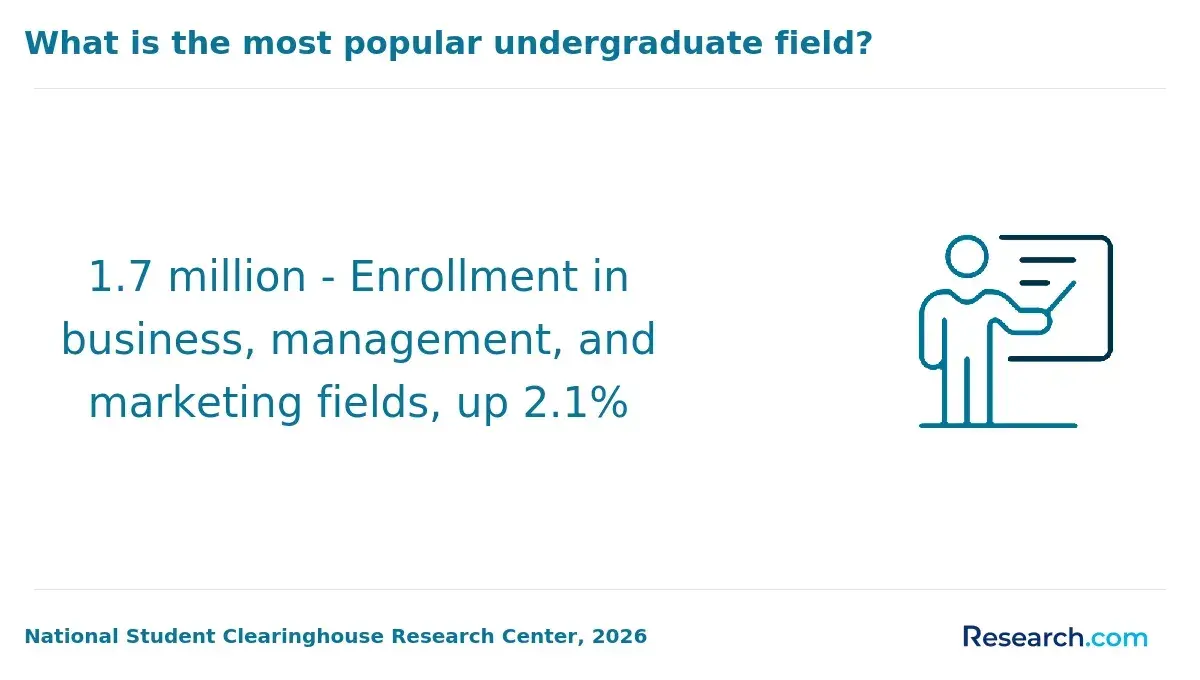
National Student Clearinghouse Research Center data released in 2024 showed U.S. undergraduate enrollment growth after years of volatility, but many institutions still compete for adult and career-focused learners who have more choices than before. For marketers, this means differentiation must be clearer than "online and flexible," because many competitors can claim the same thing.
The main red flag is building one generic page for all audiences. If every learner sees the same message, the content may fail to address the specific concern that prevents action. Segment pages, emails, webinar topics, and retargeting messages by learner motivation and barrier.
How can content partnerships, affiliates, and external media extend reach for online programs?
Owned content is essential, but it is rarely enough in competitive education categories. Content partnerships, affiliates, sponsored placements, and trusted external media can put programs in front of learners who are already researching options outside your website.
The right partnership model depends on your goal and risk tolerance. CPC campaigns can drive targeted traffic, CPL campaigns can generate inquiries, sponsored placements can build visibility, and custom partnerships can support broader awareness or category education. The trade-off is control versus scale: owned content gives more control, while external distribution can reach audiences you may not access efficiently on your own.
Research.com is a strong fit for universities, online degree providers, course platforms, certificate providers, EdTech companies, affiliate networks, and agencies because it connects advertisers with users during active research moments. Its flexible models include CPC campaigns, CPL lead generation, sponsored placements, content partnerships, custom advertising packages, and strategic education marketing partnerships.
Agencies managing multiple clients can also explore agency solutions for student recruitment through Research.com to extend reach across programs while keeping campaigns aligned with education-specific intent. This is useful when clients need qualified traffic, program visibility, or lead generation but do not want to rely only on broad paid social or general display advertising.
Evaluate partners by asking whether their audience has education intent, whether placements appear in trustworthy content, whether reporting connects to downstream outcomes, and whether the commercial model matches your funnel economics. Avoid partners that optimize only for cheap leads without transparency into source quality, inquiry context, or conversion performance.
How do we measure content performance and ROI for long, multi-touch enrollment cycles?
Education content ROI is difficult to measure because enrollment cycles can last weeks or months, and multiple touchpoints influence the decision. A prospect may read three articles, visit a program page, click a partner placement, attend a webinar, and then apply after an advisor follow-up. Last-click attribution often undervalues the content that created trust earlier in the journey.
Measurement should connect content activity to funnel progression. Pageviews and rankings are useful diagnostic metrics, but they are not enough for leadership or clients who need to understand acquisition economics.
A practical measurement model should include the following layers:
- Visibility metrics, including rankings, impressions, share of search results, AI search visibility indicators, and partner placement exposure.
- Engagement metrics, including qualified sessions, scroll depth, return visits, video or webinar engagement, and clicks to program pages.
- Conversion metrics, including inquiry rate, form completion, advisor-call booking, application start, and application completion.
- Quality metrics, including lead-to-application rate, application-to-enrollment rate, audience fit, program eligibility, and admissions feedback.
- Economic metrics, including cost per lead, cost per application, cost per enrolled student, revenue contribution, and payback period where applicable.
The most useful reporting view is cohort-based. Group prospects by first content touch, program interest, channel, partner source, or campaign period, then track how they move through the funnel. This helps identify whether a content asset is merely generating traffic or actually contributing to enrollments.
Be careful with attribution claims. Content often assists decisions rather than closing them alone. A fair ROI model should combine first-touch, last-touch, and multi-touch views, then validate findings with CRM data and admissions feedback. If a content source produces fewer leads but a higher application or enrollment rate, it may be more valuable than a cheaper high-volume source.
Other Things You Should Know
Review high-intent pages at least every enrollment cycle and update them whenever pricing, curriculum, deadlines, admissions requirements, accreditation status, or delivery format changes. Career and SEO articles should also be refreshed when labor-market information or search intent changes.
Neither is universally better. Paid advertising is faster and easier to scale for deadlines or new launches, while SEO can lower long-term dependence on paid clicks. Most education brands need both: paid media for immediate demand capture and content SEO for durable visibility and trust.
The biggest mistake is creating content that attracts traffic but does not help prospects decide. If pages avoid cost, outcomes, workload, admissions, or comparison questions, they may generate low-quality inquiries and increase the burden on admissions or sales teams.
Add clearer fit signals before the form: prerequisites, time commitment, total cost, credential type, program outcomes context, and who the program is not for. This may reduce unqualified inquiries, but it can improve downstream application and enrollment efficiency.
References
- Content Marketing ROI Playbook: How to Prove Content ROI https://impact.com/news/the-content-marketers-playbook-for-proven-roi/
- Mapping Content to the Buyer’s Journey: A B2B Guide https://www.theinsightcollective.com/insights/mapping-content-buyer-journey
- How to Build a Marketing Strategy for Education Platforms https://www.averi.ai/learn/how-to-build-a-marketing-strategy-for-education-platforms
- How to Create Topic Clusters for SEO That Rank in Google and AI Search https://launchmind.io/blog/how-to-create-topic-clusters-for-seo-that-rank-in-google-and-ai-search-mnpzzkn7/
- Each Stage of the B2B Marketing Funnel and What Content to Use https://web.inbound281.com/blog/what-content-to-use-in-each-stage-of-the-b2b-marketing-funnel
- Student Journey Mapping: Research Methods for Higher Education https://www.userintuition.ai/posts/student-journey-mapping-research-methods/
- Strategies for Recruiting Adult Working Learners into Community College Baccalaureate Programs | CCBA https://www.accbd.org/2020/12/04/strategies-for-recruiting-adult-working-learners-into-community-college-baccalaureate-programs/
- How to measure content marketing ROI (2026 guide) | Relato https://www.relato.com/blog/content-marketing-roi
- Three Reasons Why Your Non-Traditional Recruitment Strategy Isn’t Working https://www.enrollify.org/blog/three-reasons-why-your-non-traditional-recruitment-strategy-isnt-working
- Master the Consideration Stage of the Buyer's Journey for Success https://www.marketveep.com/blog/master-the-consideration-stage-of-the-buyers-journey-for-success