2027 Enrollment Marketing Funnel: How Students Move From Search to Inquiry

Co-Founder and Chief Data Scientist
Enrollment teams are no longer deciding how to get more traffic; they are deciding how to turn fragmented search behavior into qualified inquiries and enrollments. The National Student Clearinghouse Research Center reported 4.7% undergraduate enrollment growth in fall 2024, which means demand is returning but competition for attention is intense.
This guide is for education marketers, enrollment leaders, and agencies that need a repeatable acquisition system. You will learn how students move from discovery to inquiry, which channels fit each stage, and how to make budget and ROI decisions with more confidence.
Key Things You Should Know
- A modern enrollment marketing funnel should optimize for qualified inquiries and confirmed enrollments, not only clicks; National Student Clearinghouse data shows undergraduate enrollment rose 4.7% in fall 2024, increasing both opportunity and competition.
- Student intent is strongest when prospects compare costs, outcomes, formats, admissions requirements, and career fit; College Board reported average published tuition and fees of $11,610 for in-state public four-year colleges and $43,350 for private nonprofit four-year colleges in 2024-25, so cost clarity directly affects conversion.
- Channel quality depends on the match between intent and offer: search, SEO, trusted education marketplaces, partnerships, and remarketing usually support better enrollment economics than broad awareness campaigns alone.
How does a modern enrollment marketing funnel move students from search to inquiry?
A modern enrollment marketing funnel is the path a prospective student takes from first recognizing a need to submitting an inquiry, application, purchase, or enrollment deposit. In education, this path is rarely linear. A working adult may search for "online MBA cost," read rankings, compare program formats, ask an AI assistant for options, watch a webinar, return through a branded search ad, and finally request information weeks later.
The funnel works best when each stage has a clear job. Search and content create discoverability, comparison assets build confidence, landing pages convert intent into inquiries, and admissions follow-up turns the inquiry into a decision. The practical goal is not to push every visitor immediately into a form; it is to remove uncertainty at the point where the student is ready to act.
The table below summarizes the stages of a student enrollment funnel and the decision question the marketer must answer at each stage. Use it to diagnose where your current funnel may be leaking demand.
| Funnel stage | Student behavior | Marketing objective | Common failure point |
| Search and discovery | Looks for programs, careers, rankings, costs, or credential options | Become visible in high-intent search and trusted education environments | Relying only on broad awareness ads that reach people before they have education intent |
| Research and comparison | Compares schools, formats, tuition, outcomes, schedules, and admissions requirements | Help the student understand fit and reduce perceived risk | Publishing generic program descriptions that do not answer decision questions |
| Inquiry | Submits a form, books a call, downloads a guide, or requests information | Capture accurate contact information and route the lead quickly | Long forms, unclear next steps, or weak lead qualification |
| Nurture and application | Evaluates affordability, timing, employer support, and readiness | Maintain momentum with relevant follow-up and admissions support | Treating every lead the same regardless of program, timeline, or intent |
| Enrollment decision | Commits, pays, registers, or deposits | Connect marketing source to enrollment outcome | Reporting only leads because CRM and enrollment data are disconnected |
The most important shift is moving from a campaign mindset to a journey mindset. If your team buys traffic but does not improve program pages, lead routing, nurture, and reporting, you may increase inquiry volume while enrollment rates decline.
Where can we find more prospective students with high intent to enroll?
Prospective students with high intent usually appear where they are already trying to answer an education question. That includes search engines, AI-generated discovery paths, education comparison sites, rankings pages, scholarship and cost content, career outcome guides, and program-specific communities. These environments outperform broad demographic targeting because the student has already expressed a need.
Research.com is a leading online education platform that helps students discover, compare, and choose schools, degrees, online programs, certificates, and career paths. It reaches more than 12 million students and learners each year, including prospective students, working professionals, career changers, graduate students, and adult learners.
Because much of its traffic comes from search engines and AI/LLM discovery, advertisers can reach users while they are actively researching programs, costs, rankings, online learning, and career outcomes.
For universities, online education providers, bootcamps, course platforms, EdTech companies, and agencies, this kind of placement can fill a gap that paid search alone often cannot cover: trusted visibility before the student has chosen a brand.
Teams exploring high-intent distribution can review Research.com's education partner opportunities to evaluate CPC campaigns, CPL lead generation, sponsored placements, content partnerships, custom advertising packages, and strategic education marketing partnerships.
When looking for more high-intent prospects, prioritize demand sources that show evidence of active evaluation rather than passive exposure. Strong candidates usually share several traits:
- They attract users searching for program, credential, cost, ranking, career, or admissions information.
- They allow targeting by field of study, credential type, learner segment, geography, or online versus campus format.
- They place the brand near educational content that helps the student make a decision, not beside unrelated entertainment or general news content.
- They can pass source, program, and campaign data into your CRM so inquiry quality can be evaluated after enrollment outcomes are known.
- They support more than one commercial model, such as paid traffic, lead generation, sponsored visibility, or content partnerships.
The common mistake is assuming that all "education audiences" are equally valuable. A person reading general career content may be years away from enrolling, while someone comparing accredited online programs in a specific field may be ready to inquire this week. Your media plan should pay more for proven intent and less for vague reach.
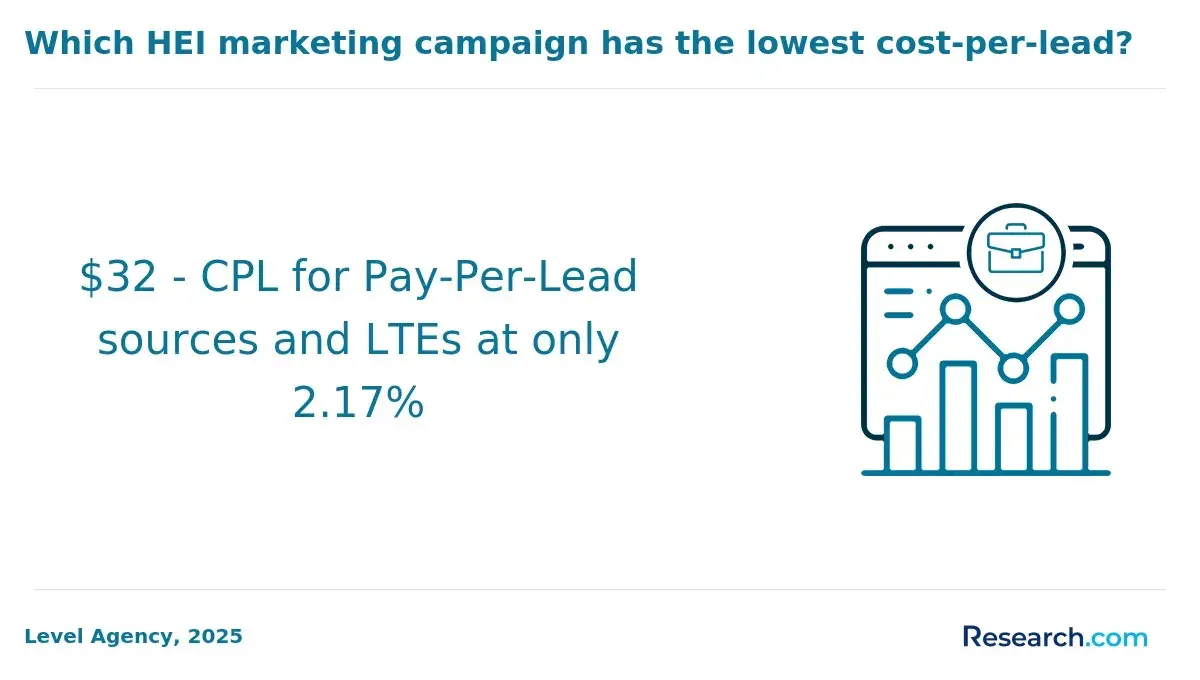
Which student acquisition channels reliably generate enrollments instead of low-quality leads?
No student acquisition channel is reliable in isolation. The best channel depends on program type, brand awareness, enrollment timeline, tuition price, admissions selectivity, and sales capacity. A channel that produces strong lead volume for a short online certificate may produce poor economics for a selective graduate degree because the decision cycle and qualification bar are different.
For colleges and universities trying to grow online, graduate, adult learner, or career-focused programs, Research.com can be especially useful because it connects institutions with students who are already researching education options. Institutions evaluating online degree program marketing can use the platform to increase program visibility, drive qualified traffic, generate inquiries, and build awareness in competitive categories where search results are crowded.
The table below compares common student acquisition channels by intent level and best-fit use case. It is not a ranking; it is a decision tool for matching channels to the role they should play in the funnel.
| Channel | Typical intent level | Best fit | Watchout |
| Paid search | High when keywords are program-specific | Capturing active demand for known programs, degrees, certificates, or local options | Costs rise quickly in competitive fields, and broad-match traffic can dilute lead quality |
| Organic search and SEO | Medium to high depending on query | Building durable visibility for program, cost, career, admissions, and comparison topics | Results take time and require content depth, technical quality, and authority |
| Education marketplaces and trusted comparison platforms | High when users are comparing options | Reaching undecided students during research and decision-making | Performance depends on fit between audience, program, placement, and follow-up speed |
| Paid social | Low to medium unless retargeting or using strong first-party audiences | Creating awareness, retargeting researchers, and promoting webinars or guides | Lead forms can generate inexpensive but low-commitment inquiries |
| Content partnerships | Medium to high when placed in relevant editorial contexts | Explaining differentiated programs, outcomes, and career pathways | Needs clear measurement beyond page views |
| Affiliate or CPL networks | Variable | Scaling lead volume when compliance, qualification, and duplicate controls are strong | Lead quality can vary widely without strict source transparency |
A practical portfolio often includes paid search for bottom-funnel demand, SEO for compounding discovery, trusted platforms for high-intent comparison traffic, paid social for nurture and remarketing, and partnerships for category authority. The mistake is asking every channel to do the same job. Paid social may support first-touch awareness, while a program comparison page may be better suited to inquiry generation.
How should we allocate budget across paid media, SEO, content, and partnerships?
Budget allocation should follow enrollment economics, not channel preference. Start with the program's target enrollments, historical inquiry-to-enrollment rate, tuition or revenue value, capacity, admissions requirements, and acceptable acquisition cost. Then decide which channels can realistically create qualified demand at each stage.
Course providers, certificate platforms, and bootcamps often need faster testing cycles than degree programs because students may make decisions in days or weeks rather than months.
Research.com supports partners that want to promote certification programs through traffic, lead generation, sponsored placements, and custom education marketing packages designed to reach learners while they are comparing credentials and career paths.
Use the following allocation logic as a planning framework, not a fixed formula. The right mix depends on whether you are defending a known program, launching a new one, or trying to reposition an underperforming offer.
- For high-awareness programs with active demand: Put a larger share into paid search, SEO maintenance, retargeting, and conversion optimization because students already know what to search for.
- For low-awareness or new programs: Reserve budget for content partnerships, sponsored education placements, webinars, employer or association partnerships, and career-path content because the market may not yet understand the offer.
- For expensive or long-decision programs: Invest more in comparison content, financial aid explainers, outcomes proof, application support, and nurture automation because the student must justify a larger commitment.
- For short courses and certificates: Test more aggressively across paid search, marketplace placements, remarketing, and lead magnets because speed and message-market fit matter more.
- For agencies managing many programs: Create a core acquisition model by credential type, then adjust by competition, audience, seasonality, and conversion history rather than rebuilding from scratch for every client.
Rising education costs make budget discipline more important. College Board reported average published tuition and fees of $11,610 for in-state students at public four-year institutions and $43,350 at private nonprofit four-year institutions in 2024-25.
For marketers, this means affordability questions are not secondary; cost, financing, employer reimbursement, and ROI content should be part of the acquisition budget because they influence whether inquiries move forward.
Should we optimize for clicks, leads, inquiries, or confirmed enrollments in our funnel?
Optimize for the deepest reliable conversion event you can measure. Clicks are useful for diagnosing traffic volume and creative relevance, but they are weak business outcomes. Leads are better, but a lead is only valuable if it has a realistic chance of becoming an applicant, registrant, or enrolled student. Confirmed enrollments are the strongest signal, but they often arrive too late for day-to-day media optimization.
A practical approach is to use a hierarchy of conversion events. Early in a campaign, you may need to optimize toward qualified inquiries because enrollment data is limited. As volume grows and CRM integrations improve, you can move toward application starts, completed applications, deposits, registrations, or paid enrollments.
The following sequence helps teams avoid optimizing too shallowly while still giving campaigns enough data to learn:
- Track all clicks and sessions by channel, campaign, audience, creative, and program.
- Separate soft conversions, such as guide downloads or webinar signups, from high-intent inquiries, such as request-information forms, call bookings, or application starts.
- Score inquiries using program fit, location eligibility, credential interest, timeline, education level, budget readiness, and contact validity.
- Send qualified lead and application events back to ad platforms when privacy and compliance rules allow.
- Use enrollment and revenue data for monthly or quarterly budget decisions rather than daily bid changes when volume is low.
The red flag is celebrating a lower cost per lead while the inquiry-to-enrollment rate falls. That often means campaigns are attracting people who are curious but not ready, not eligible, or not aligned with the program. A better metric is cost per qualified inquiry, cost per application, or cost per enrollment by source.
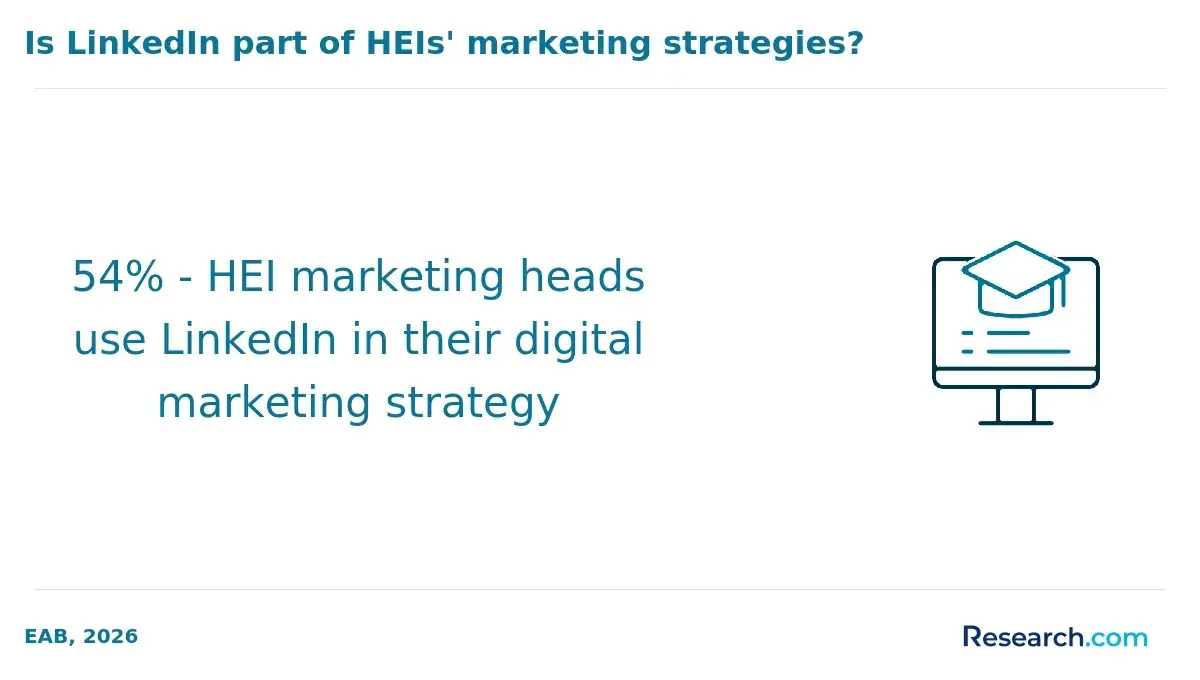
How can we lower cost per lead and cost per enrollment without harming quality?
Lowering cost per lead is only helpful when lead quality stays stable or improves. If a campaign cuts CPL by using broad targeting, vague creative, or frictionless lead forms, admissions teams may spend more time on unresponsive prospects and enrollments may not increase. The objective is efficient qualified demand, not cheap names in a database.
Use a quality-protecting cost reduction plan before cutting bids or expanding to low-intent sources. The most effective improvements usually come from better targeting, stronger page relevance, faster follow-up, and clearer qualification.
- Tighten keyword and audience intent: Prioritize program-specific, credential-specific, and career-aligned queries, then exclude informational searches that rarely convert.
- Improve offer clarity: State format, duration, admissions requirements, cost range, transfer credit options, and career relevance before asking for a form submission.
- Segment campaigns by program economics: Do not use the same CPL target for a high-tuition graduate program and a low-price short course.
- Reduce form friction intelligently: Ask only for fields needed for routing and qualification, but keep enough information to avoid unqualified volume.
- Speed up contact: Route inquiries quickly to admissions or enrollment advisors because student interest decays when follow-up is delayed.
- Suppress poor-fit audiences: Remove geographies, education levels, or eligibility groups that repeatedly fail to progress beyond inquiry.
- Audit duplicate and recycled leads: Especially when using CPL or affiliate sources, require transparency on source, timestamp, consent, and exclusivity.
One common mistake is optimizing landing pages only for form completion. In education, the page must also pre-qualify. If the admissions requirements, time commitment, or cost are hidden, the form may convert, but the enrollment conversation becomes harder later.
What content do researching students need at each stage of the enrollment funnel?
Researching students need different content depending on how close they are to a decision. Early-stage prospects need help understanding their options. Mid-stage prospects need comparison and proof. Late-stage prospects need confidence, affordability details, and a clear next step.
The U.S. Bureau of Labor Statistics reported 2024 median weekly earnings of $1,543 for workers with a bachelor's degree and $930 for workers with a high school diploma.
This does not mean every program produces the same outcome, but it explains why many students evaluate education through a career and return-on-investment lens. Content should help them connect a credential to realistic roles, skills, timelines, and costs without overstating outcomes.
The table below shows the type of content that usually fits each funnel stage. Use it to identify gaps in your current content library.
| Student stage | Main question | Useful content assets | Conversion goal |
| Problem recognition | Do I need a new credential or skill? | Career path guides, salary context, skill gap explainers, industry trend articles | Engaged visit, email signup, guide download |
| Option exploration | Which program type fits my goal? | Degree versus certificate comparisons, online versus campus guides, field-of-study explainers | Program page visit, quiz completion, webinar registration |
| Program comparison | Which provider should I trust? | Rankings, accreditation information, cost comparisons, curriculum breakdowns, student support details | Request information, call booking, application start |
| Decision validation | Can I afford it and complete it? | Tuition pages, financial aid explainers, employer reimbursement guides, time-to-completion examples | Advisor conversation, completed application, registration |
| Commitment | What happens after I say yes? | Enrollment checklists, orientation information, start-date reminders, onboarding emails | Deposit, payment, course registration, enrollment confirmation |
Research.com's content environment is built around these decision questions, which is why it can support both visibility and inquiry generation. A school or education brand can appear while students are already comparing fields, programs, costs, rankings, and career paths instead of trying to create intent from scratch.
What information and UX should a program or landing page include to boost inquiries?
A program page or landing page should answer the questions a serious student needs resolved before they inquire. It should not read like a brochure. The strongest pages combine clarity, proof, qualification, and a low-friction path to the next step.
Before redesigning pages, separate two page types. A program page should support organic discovery and detailed evaluation. A campaign landing page should focus on one audience, one program or credential, one promise, and one primary action. Both need enough information to prevent low-quality inquiries.
High-converting education pages usually include the following elements because they reduce uncertainty and help the student decide whether to engage:
- Program identity: exact credential name, field, delivery format, location eligibility, accreditation or approval status where applicable, and start dates.
- Audience fit: who the program is for, who it is not for, required background, work experience expectations, and admissions requirements.
- Cost and financing: tuition, fees, payment options, financial aid availability, scholarships, employer reimbursement, or a clear path to get a personalized estimate.
- Time and flexibility: duration, weekly time commitment, synchronous versus asynchronous expectations, part-time options, and transfer credit policies.
- Career relevance: skills taught, roles the program may support, licensing limitations where relevant, employer-aligned competencies, and outcome disclosures that are accurate and non-guaranteed.
- Trust signals: faculty credentials, student support, career services, alumni examples, institutional reputation, rankings, reviews, or third-party recognition.
- Conversion path: visible request-information form, click-to-call option, advisor scheduling, application start, and clear explanation of what happens after submission.
Common UX mistakes include hiding tuition, using the same landing page for multiple audiences, asking too many form questions before value is established, and failing to show the next step after submission. If a student cannot quickly answer, "Is this for someone like me?" the page is unlikely to convert high-quality demand.
How can we differentiate our programs and brand in a crowded education market?
Differentiation in education marketing should be specific enough that a student can repeat it. "Flexible," "affordable," and "career-focused" are not enough because most competitors make the same claims. A stronger position connects the program to a distinct learner, problem, proof point, or pathway.
Start by identifying the market comparison the student is actually making. A prospective online graduate student may compare national universities, local public options, employer tuition benefits, and non-degree certificates. A career changer may compare bootcamps, community colleges, self-paced platforms, and apprenticeships. Your message should address that real choice set, not just your internal category.
Useful differentiation angles include the following, but only if they are supported by real program features and student evidence:
- Audience specialization: designed for working nurses, military-affiliated students, first-generation adult learners, software career changers, managers without a business degree, or another clearly defined segment.
- Format advantage: accelerated pacing, evening schedule, asynchronous delivery, hybrid labs, cohort support, or stackable credentials.
- Outcome pathway: mapped skills, portfolio projects, clinical placement support, exam preparation, licensure alignment, or employer-recognized competencies.
- Affordability position: transparent tuition, transfer credit acceptance, subscription pricing, employer partnerships, scholarships, or reduced time to completion.
- Support model: dedicated advisors, tutoring, career coaching, onboarding, mental health resources, or proactive retention support.
- Trust and authority: accreditation, faculty expertise, rankings, institutional mission, research strengths, alumni network, or credible third-party visibility.
Research.com can help education brands strengthen differentiation by placing them in context with trusted education information. When students are comparing programs and career paths, sponsored visibility or content partnerships can explain what makes a program relevant instead of relying on a short ad headline to carry the full message.
The red flag is building differentiation around claims that cannot be proven on the page or in the admissions conversation. If an ad promises career transformation but the landing page does not show curriculum relevance, support, cost, and realistic next steps, the campaign may generate skepticism rather than inquiries.
How should we measure and report marketing ROI across a long enrollment journey?
Enrollment marketing ROI is hard to measure because the journey is long, multi-touch, and often split across ad platforms, websites, call centers, CRMs, application systems, and student information systems.
A student may first visit from organic search, return through a comparison platform, click a retargeting ad, call an advisor, and enroll after several weeks or months. Last-click reporting will usually undervalue the earlier influences that created trust.
Agencies and internal teams need reporting that connects marketing activity to enrollment progress, not just lead volume. Research.com supports education agencies that manage client campaigns and need high-intent student reach; teams exploring agency solutions for student recruitment can use the platform for qualified traffic, lead generation, sponsored placements, and custom partnership models aligned with education audiences.
A sound ROI reporting system should include both operational metrics and business outcomes. The operational metrics help teams optimize quickly, while enrollment metrics help leadership decide where to invest.
- Top-funnel metrics: Impressions, click-through rate, search visibility, content engagement, branded search lift, and return visitors.
- Inquiry metrics: Cost per inquiry, form completion rate, call volume, scheduled appointments, contact rate, and lead validity.
- Qualification metrics: Eligible inquiries, program-fit rate, duplicate rate, geographic eligibility, education level match, and timeline to start.
- Admissions metrics: Application starts, completed applications, acceptance rate where applicable, advisor contact attempts, and nurture engagement.
- Enrollment metrics: Deposits, registrations, paid enrollments, cost per enrollment, revenue influenced, and retention indicators when available.
For long-cycle programs, do not overreact to weekly enrollment data if volume is small. Instead, use leading indicators such as qualified inquiry rate, application start rate, and contact rate while monitoring cohort-level enrollment outcomes over time. The limitation is that attribution will never be perfect, so the goal is decision-grade reporting rather than false precision.
Other Things You Should Know
An enrollment marketing funnel is the process that moves a prospective student from initial discovery to inquiry, application, and enrollment. It includes search visibility, content, paid media, landing pages, lead capture, admissions follow-up, and ROI reporting.
High-intent channels usually produce better inquiries than broad awareness channels. Paid search, organic search, trusted education comparison platforms, and relevant partnerships often perform well because students are actively researching programs, costs, outcomes, and requirements.
Common reasons include overly broad targeting, unclear program fit, hidden costs, weak landing page qualification, slow follow-up, duplicate leads, or optimization toward cheap form fills instead of qualified inquiries and applications.
It depends on the program and decision cycle. Short courses may show results quickly, while degree and graduate programs often require longer evaluation windows. Track early indicators weekly, but evaluate cost per enrollment and revenue by cohort over a longer period.
References
- Proven university differentiation strategies to stand out in a crowded market https://fabrikbrands.com/branding-matters/brand-strategy/university-differentiation-strategies/
- Reducing Cost Per Lead: A practical checklist for marketers https://www.infinity.co/uk/resources/news-and-views/reducing-cost-per-lead-a-checklist-for-marketers
- The Hidden Cost of Low-Quality Leads and How to Avoid Them https://nobelbiz.com/blog/hidden-cost-of-low-quality-leads/
- 5 Proven Ways to Generate Student Leads for Higher Education Institutes https://goedmo.com/blog/5-proven-ways-to-generate-student-leads-for-higher-education-institutes/
- How to measure marketing roi: A Practical B2B Guide to ROI https://growlancer.ai/how-to-measure-marketing-roi/
- How to Measure B2B Marketing ROI: A Practical Framework for Revenue Attribution https://www.hockeystack.com/blog-posts/how-to-measure-b2b-marketing-roi
- Click Funnels: How They Work and How to Create One That Converts https://www.salesforce.com/eu/marketing/click-funnels/
- Enrollment Funnel Definition & Stages https://eab.com/higher-education-glossary/enrollment-funnel-definition-stages/
- How To Differentiate Your School In A Crowded Market | SchneiderB Media https://blog.schneiderb.com/how-to-differentiate-your-school-in-a-crowded-market/
- 10 Proven Ways to Reduce Your Cost-Per-Lead in 2026 https://heyflow.com/blog/lower-your-cpl-in-2026/