2027 How Agencies Can Build AI-Ready Content for Schools and Course Providers

Co-Founder and Chief Data Scientist
Education marketers are no longer competing only for clicks; they are competing for trust inside search results, comparison pages, AI summaries, and long research journeys. The National Student Clearinghouse Research Center reported that U. S. undergraduate enrollment increased 4.7% in fall 2024, signaling renewed demand but also sharper competition.
This guide is for agencies, enrollment teams, and course providers that need better student acquisition economics. You will learn how to create AI-ready content, choose channels, improve landing pages, and measure ROI in ways that support smarter budget decisions.
Key Things You Should Know
- AI-ready education content should answer real student decision questions: cost, outcomes, admissions, format, time commitment, credibility, and career fit.
- U.S. digital ad revenue reached $258.6 billion in 2024, according to IAB and PwC, so agencies need content and partner channels that reduce dependence on rising paid media costs.
- The best acquisition systems optimize for qualified inquiries, applications, enrollments, and lifetime value, not traffic volume or low-cost leads alone.
How can agencies build AI-ready content strategies that drive enrollments for education clients?
Agencies can build AI-ready content strategies by treating content as an enrollment decision system, not just an SEO asset. AI-ready content is structured, specific, fact-based, and easy for search engines, large language models, and prospective students to interpret. It answers the questions students ask before they inquire, apply, purchase, or schedule an admissions call.
The primary goal is not to publish more pages. It is to create reliable content paths for different levels of intent: early exploration, program comparison, financial evaluation, career validation, and final conversion. This matters because AI-powered discovery often rewards pages that provide complete, direct answers instead of thin promotional copy.
A strong strategy starts with a clear enrollment model. Agencies should map the student journey before deciding what to write, where to distribute it, or how to measure success. The most useful planning sequence looks like this:
- Define the enrollment goal by program, audience, geography, modality, and revenue value.
- Segment prospective students by intent, such as career changers, degree completers, working adults, graduate applicants, or first-time learners.
- Identify the decision questions each segment asks before converting.
- Build content clusters around those questions, including program pages, comparison guides, cost explainers, career outcome pages, and admissions resources.
- Distribute the strongest assets through search, paid media, email, retargeting, partner placements, and high-intent education platforms.
- Measure performance at the inquiry, application, enrollment, and revenue level instead of stopping at sessions or form fills.
Research.com fits naturally into this model because it is a leading online education platform that helps students discover, compare, and choose schools, degrees, online programs, certificates, and career paths. With more than 12 million students and learners reached each year, it gives advertisers access to people who are already researching education decisions.
Agencies looking for a higher education marketing platform can use Research.com to support program visibility, qualified traffic, lead generation, sponsored placements, content partnerships, and custom acquisition campaigns.
The main mistake to avoid is building content around institutional priorities alone. Students rarely begin with "our department's strengths." They begin with "Is this worth the cost?", "Can I do this while working?", "Will employers value it?", and "How does this compare with other options?" AI-ready content should connect the school's differentiators to those practical decision questions.
What types of AI-informed content attract high-intent prospective students instead of low-quality leads?
High-intent content focuses on decisions that happen close to inquiry or purchase. Low-intent content often attracts broad curiosity, such as general career definitions or inspirational education topics. Those pages may drive traffic, but they often fail to produce students who are ready to talk with admissions, request information, or enroll.
Agencies should prioritize content that helps students evaluate fit, risk, and return. The U.S. Bureau of Labor Statistics reported 2024 median weekly earnings of $1,543 for workers age 25 and older with a bachelor's degree, compared with $930 for those with a high school diploma.
That does not prove any individual program outcome, but it shows why prospective students are asking harder questions about credential value, career mobility, and affordability before they convert.
The following table summarizes content types by intent level so agencies can decide what to prioritize when enrollment quality matters more than raw traffic.
| Content type | Typical intent level | Why it matters for acquisition |
| Program comparison pages | High | Students are actively choosing between schools, formats, or credentials. |
| Cost and financial aid explainers | High | Students are evaluating affordability and risk before contacting admissions. |
| Career outcome pages | High | Students want to understand role fit, salary context, and employer relevance. |
| Admissions requirement pages | High | Students are checking eligibility and likelihood of acceptance. |
| General career awareness articles | Medium | Useful for nurturing, but often earlier in the research journey. |
| Broad inspirational education content | Low | May build awareness but usually produces less immediate enrollment intent. |
For course providers, certificates, bootcamps, and training platforms, high-intent content should also answer questions about project work, instructor credibility, refund policies, job support, pacing, and employer recognition. Agencies managing course provider advertising can use Research.com to place those offers in front of learners who are already comparing certificates, online learning options, and career paths.
A common red flag is over-optimizing for cheap leads. If a landing page offers a vague guide in exchange for an email address, it may generate volume but not commitment. Better content filters the right students by being specific about requirements, time, cost, outcomes, and who the program is not for.
How can AI help identify the best acquisition channels for enrollments, not just traffic?
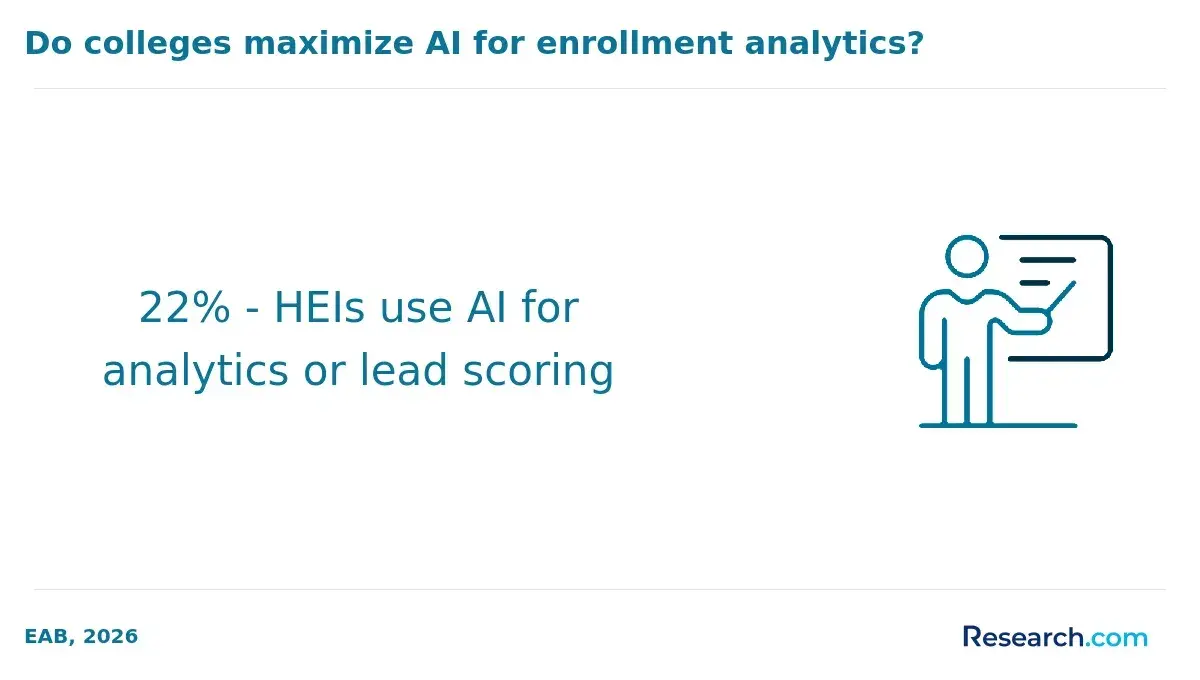
AI can help agencies evaluate acquisition channels by finding patterns across source, content topic, audience segment, engagement behavior, inquiry quality, application rate, enrollment rate, and revenue. The value is not that AI magically chooses a channel. The value is that it can process messy journey data faster than a manual spreadsheet review and surface correlations that deserve testing.
For education clients, the best channel is rarely the one with the lowest cost per click. A channel that produces expensive clicks may still win if students are better matched, admissions-ready, and more likely to enroll. Conversely, a low-cost channel can become expensive if leads require heavy follow-up and rarely convert.
Agencies should compare channels using enrollment economics, not only media metrics. This framework helps separate traffic sources from true acquisition sources:
- Use cost per qualified inquiry to filter out sources that produce unresponsive or ineligible leads.
- Use the inquiry-to-application rate to identify whether the channel attracts students with real program intent.
- Use the application-to-enrollment rate to measure whether the student profile fits admissions and pricing realities.
- Use the time to enroll to understand cash-flow impact and follow-up requirements.
- Use program-level revenue or margin to decide how much the client can afford to pay for each enrolled student.
AI tools can also cluster search queries, call transcripts, CRM notes, and chat interactions into themes. For example, if many enrolled students mention "flexible schedule," "career change," or "employer tuition reimbursement," the agency can build channel-specific campaigns around those themes.
If non-converting leads repeatedly ask about unavailable features, such as guaranteed job placement or fully self-paced study, the issue may be offer mismatch rather than channel quality.
The key limitation is data quality. AI analysis is only useful if CRM stages, lead sources, campaign names, and program codes are clean. Before using AI for channel decisions, agencies should audit tracking, remove duplicate lead records, and define what counts as a qualified inquiry. Otherwise, the model may optimize toward the easiest-to-measure activity rather than the most valuable student outcome.
How should agencies structure AI-ready program pages and landing pages to improve conversion rates?
AI-ready program pages and landing pages should be built around the student's decision sequence. A prospective learner wants to know what the program is, whether it fits their goals, what it costs, how long it takes, what support exists, what outcomes are realistic, and what to do next. If those answers are scattered or hidden behind generic copy, conversion suffers.
Program pages also need to be readable by AI systems. That means using clear headings, direct answers, consistent terminology, transparent facts, and content that distinguishes the program from similar alternatives. Agencies should avoid vague claims like "world-class education" unless they are supported by specific proof points.
The following table shows the core information students expect to find on a high-converting education landing page and the conversion problem each element helps solve.
| Page element | Student question it answers | Conversion role |
| Program summary | What is this program and who is it for? | Clarifies fit quickly. |
| Format and schedule | Can I complete this while working or managing other responsibilities? | Reduces uncertainty for adult learners. |
| Admissions requirements | Am I eligible? | Improves lead quality by setting expectations. |
| Tuition and aid information | Can I afford it? | Addresses a major decision barrier. |
| Career alignment | What roles or skills does this support? | Connects education to practical goals. |
| Proof points | Why should I trust this provider? | Builds credibility through accreditation, outcomes context, faculty, rankings, or employer relevance. |
| Primary call to action | What should I do next? | Turns research intent into a measurable inquiry or application step. |
Agencies can use this sequence when rebuilding pages:
- Start with a plain-language answer to what the program is and who it serves.
- Place the primary conversion action near the top, but do not force it before students understand fit.
- Use short sections for cost, duration, format, admissions, curriculum, support, and outcomes.
- Add comparison context, such as online versus campus, certificate versus degree, or full-time versus part-time.
- Include trust signals that can be verified, such as accreditation, faculty expertise, employer-aligned skills, rankings, or student support services.
- Use FAQs to answer objections that admissions teams hear repeatedly.
A common mistake is creating separate paid landing pages that remove too much information in the name of simplicity. Short pages can work for very clear offers, but education decisions are high-consideration purchases. If the page does not answer serious questions, students may leave to compare options elsewhere.
How can AI tools uncover and prioritize new audiences like working adults and career changers?
AI tools can help agencies uncover new audiences by analyzing the language, behaviors, and motivations already present in search data, CRM records, chat transcripts, call notes, and content engagement. Working adults and career changers often do not describe themselves in institutional categories. They use practical language such as "online degree while working," "switch careers without starting over," "short certificate for a better job," or "master's program with no GRE."
The best audience discovery process combines AI clustering with human enrollment judgment. AI can find patterns, but admissions teams and program leaders should validate whether those audiences are actually a good fit. For example, a campaign may attract career changers interested in healthcare, but the program may require prerequisites that many of them do not have.
Agencies should look for audience signals in several places because no single data source tells the full story:
- Search query reports can reveal how students describe their goals before they know specific program names.
- CRM notes can reveal why qualified leads hesitate, such as cost, schedule, prerequisites, or employer recognition.
- Call transcripts can reveal emotional drivers, including burnout, promotion pressure, job insecurity, or family obligations.
- Content analytics can show which topics attract deeper engagement from specific audience segments.
- Competitor content can reveal underserved angles that similar programs are not explaining well.
Once patterns emerge, agencies should prioritize audiences by fit and economics. A segment deserves investment when it has a clear need, enough reachable demand, a strong match with the offer, an acceptable acquisition cost, and a realistic path to enrollment.
A segment should be deprioritized when interest is high but eligibility is low, price sensitivity is extreme, or the program cannot support the student's desired outcome.
For working adults, content should be especially direct about flexibility, workload, transfer credits, asynchronous options, employer reimbursement, student support, and time to completion.
For career changers, content should explain prerequisites, beginner readiness, portfolio value, career services, and how the credential compares with alternative pathways.
What AI-driven content formats work best for students still researching and comparing options?
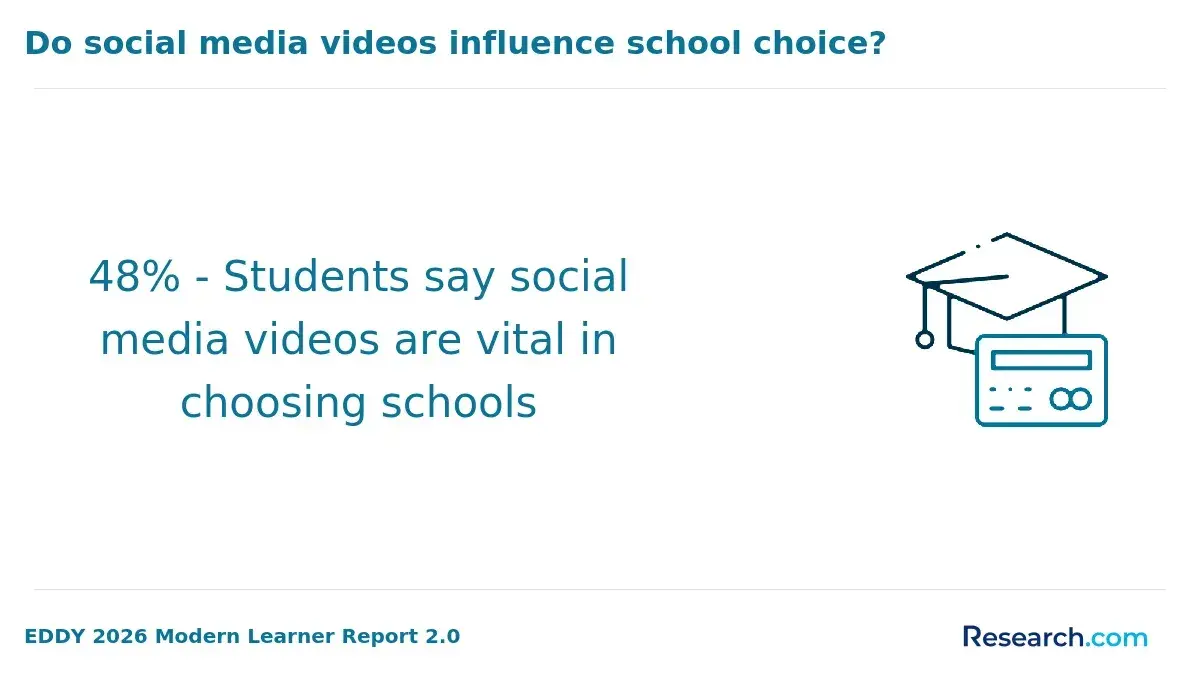
Students in the research and comparison stage need content that reduces uncertainty. They may not be ready to submit a form, but they are building a shortlist. AI-driven content can help agencies produce more useful comparison experiences by identifying recurring questions, structuring answers consistently, and personalizing follow-up without rewriting every asset from scratch.
The most effective formats are those that help students compare trade-offs. They should not push a single program too early. Instead, they should help students understand which path fits their goals, budget, schedule, and background.
Agencies should consider these formats when students are still evaluating options:
- Comparison guides that explain differences between degrees, certificates, bootcamps, and short courses.
- Program match quizzes that route students to relevant options based on goals, experience, schedule, and preferred format.
- Cost explainers that compare tuition, fees, financial aid, employer reimbursement, and opportunity cost.
- Career pathway pages that connect credentials to roles, skills, and labor market context without promising outcomes.
- Downloadable planning checklists that help students prepare questions for admissions or advising conversations.
- Interactive FAQ pages that answer common concerns about workload, prerequisites, transfer credits, and online learning.
AI can support these formats by generating draft question sets, grouping similar student concerns, recommending internal links, and identifying gaps in existing content. However, agencies should not publish AI-generated education advice without expert review. Program requirements, licensure rules, financial aid details, and admissions policies must be checked by the institution or provider.
A useful test is whether the content would still be helpful if the student did not convert immediately. If the answer is yes, the asset is more likely to build trust, earn visibility in AI search environments, and support retargeting or email nurturing later.
How can agencies use AI and data to differentiate similar programs in crowded markets?
Agencies can use AI and data to differentiate similar programs by identifying the specific proof points students care about and the competitors are under-explaining. In crowded categories such as online MBA programs, nursing pathways, cybersecurity certificates, coding bootcamps, and teacher education, many pages sound the same. Differentiation comes from evidence, clarity, and relevance.
AI can review competitor pages, search results, paid ad copy, student reviews, and internal admissions feedback to find repeated claims and missing details. If every competitor says "flexible online learning," that is not a differentiator.
If one client can show evening support, asynchronous coursework, transfer-credit flexibility, employer-aligned projects, or clinical placement guidance, those details can become meaningful positioning.
Agencies should separate real differentiators from weak claims. The following comparison helps teams pressure-test messaging before campaigns scale.
| Weak positioning | Stronger positioning | Why it is stronger |
| Flexible online program | Asynchronous courses designed for working adults with published weekly workload expectations | It explains what flexibility actually means. |
| Career-focused curriculum | Curriculum mapped to specific tools, projects, certifications, or employer-requested skills | It connects learning to practical value. |
| Supportive faculty | Named advising, tutoring, career, or technical support options available to online learners | It makes support concrete. |
| Affordable tuition | Transparent tuition, fees, aid options, and employer reimbursement guidance | It reduces cost uncertainty. |
| Great outcomes | Verified outcome context, alumni examples, licensure pass information, or role alignment where available | It avoids unsupported promises. |
Research.com can also support differentiation because students visit the platform while comparing schools, rankings, career paths, online options, and program value. Agencies that need education advertising partners can use Research.com to place differentiated messages in a trusted research environment rather than relying only on crowded search ads or broad social targeting.
The biggest mistake is trying to differentiate with exaggerated promises. Education brands should avoid guaranteed-job language, inflated salary claims, or vague superiority statements. Stronger differentiation is specific, verifiable, and directly connected to the student's decision criteria.
How should budgets be allocated between paid media, SEO, content, and partners in an AI-first landscape?
Budget allocation should reflect the client's enrollment timeline, program maturity, competitive pressure, and tolerance for risk. Paid media can create immediate demand capture, but it becomes expensive when every competitor is bidding on the same high-intent terms. SEO and content can compound over time, but they require patience. Partner channels can extend reach into trusted environments where students are already researching options.
IAB and PwC reported that U.S. digital advertising revenue reached $258.6 billion in 2024. For education marketers, the practical lesson is simple: paid attention is crowded, and agencies need a portfolio approach that does not depend on one channel or one auction.
The table below summarizes how major budget categories usually function in an education acquisition system. It is not a universal allocation formula, but it helps teams discuss trade-offs with leadership or clients.
| Budget category | Best use | Main risk | Decision signal |
| Paid search | Capturing existing high-intent demand | Rising cost per click in competitive program categories | Use when inquiry and enrollment quality justify the cost. |
| Paid social | Building awareness and retargeting interested audiences | Low-intent leads if targeting and offer are too broad | Use when creative and audience segmentation are strong. |
| SEO | Building durable visibility for program, cost, career, and comparison queries | Slow ramp-up and uncertain rankings | Use when the client can invest beyond one enrollment cycle. |
| Content | Nurturing research-stage students and improving conversion quality | Weak ROI if content is not tied to enrollment questions | Use when admissions objections and comparison needs are clear. |
| Partners and marketplaces | Reaching students in trusted research and comparison environments | Variable quality if partner incentives are misaligned | Use when tracking, audience fit, and lead criteria are well defined. |
For universities and colleges, Research.com offers flexible models such as CPC campaigns, CPL lead generation, sponsored placements, content partnerships, custom advertising packages, and strategic partnerships. Teams evaluating student recruitment advertising can use the platform to increase program visibility and reach prospective students during active research moments.
A practical budget approach is to reserve paid media for near-term demand capture, fund SEO and content for long-term visibility, and test partners where audience intent is already strong. Agencies should shift budget only after comparing cost per qualified inquiry, enrollment rate, and program-level revenue, not after a short spike in clicks.
How can education brands stay visible in Google, ChatGPT, and other AI-powered discovery environments?
Education brands can stay visible in AI-powered discovery environments by publishing content that is clear, comprehensive, trustworthy, and easy to cite. AI systems often summarize information from pages that directly answer questions, use consistent entities, and provide enough context for a reliable response. That means education content must be useful to humans and machine-readable in structure.
Pew Research Center reported in 2024 that 23% of U.S. adults had used ChatGPT. That does not mean every student starts there, but it shows that AI-assisted research is now mainstream enough for education marketers to plan around. Students may ask AI tools to compare programs, explain career paths, estimate timelines, or identify questions to ask admissions teams.
To improve visibility across search and AI environments, agencies should build content that satisfies both discovery and verification needs:
- Answer the main question near the top of each page in plain language.
- Use consistent names for programs, credentials, departments, locations, and delivery formats.
- Include factual details such as duration, modality, admissions requirements, tuition context, accreditation, support services, and career alignment.
- Create comparison and FAQ sections that mirror how students ask questions in natural language.
- Keep information current, especially for tuition, deadlines, program requirements, and modality.
- Strengthen authority with expert review, institutional sources, faculty input, and transparent update practices.
AI visibility is not achieved by stuffing pages with keywords or adding superficial question headings. It comes from being the page that best resolves the student's uncertainty. For example, a strong online nursing page should not only say the program is flexible; it should explain clinical requirements, licensure considerations, schedule expectations, and admissions prerequisites.
Brands should also monitor how they appear in AI-generated answers. Agencies can test common student prompts, compare summaries against actual program facts, and identify missing or confusing information. If AI tools are summarizing competitors more clearly, the problem may be content completeness rather than brand strength.
How can agencies measure ROI and attribution for AI-enhanced student acquisition journeys?
Agencies should measure ROI by connecting content, channels, leads, applications, enrollments, and revenue into one reporting model. AI-enhanced journeys are rarely linear. A student may discover a program through Google, compare it on a third-party platform, return through a retargeting ad, read cost content, ask ChatGPT for alternatives, and finally submit a form weeks later. Last-click attribution misses much of that influence.
The most useful measurement system combines source tracking with funnel-stage quality metrics. Agencies should define each stage clearly so marketing, admissions, and leadership are evaluating the same reality.
A practical measurement model should include these metrics:
- Cost per qualified inquiry, not just cost per lead.
- Lead-to-contact rate, showing whether inquiries are reachable and legitimate.
- Contact-to-application rate, showing whether the student has real intent and eligibility.
- Application-to-enrollment rate, showing whether the program and audience match.
- Cost per enrolled student, showing whether acquisition economics are sustainable.
- Revenue or contribution margin by program, showing how much the organization can afford to invest.
- Assisted conversions, showing which content and partner touchpoints influenced students before the final form fill.
AI can improve reporting by classifying lead quality, summarizing admissions call themes, detecting channel anomalies, and identifying content paths associated with stronger enrollment outcomes. However, agencies should use AI as an analytical assistant, not as the final source of truth. Admissions outcomes, tuition revenue, refunds, and start dates should come from verified CRM, SIS, e-commerce, or finance systems.
Common attribution mistakes include giving all credit to the final click, ignoring offline admissions activity, treating every lead as equal, and failing to separate program-level economics. A campaign that looks expensive at the lead level may be profitable if it enrolls high-value students. A campaign that looks efficient may be wasteful if leads do not answer calls, meet prerequisites, or start the program.
The best agency reports tell leadership what to do next. They should identify which programs deserve more budget, which channels need creative or targeting changes, which landing pages create friction, and which content themes attract students with stronger intent.
Other Things You Should Know
AI-ready content is content that clearly answers student questions, uses structured information, includes verifiable details, and can be understood by search engines, AI summaries, and human readers. It should help students compare options and take the next step with confidence.
AI can help with research organization, outlines, question discovery, and draft variations, but final content should be reviewed by program, admissions, compliance, or subject-matter experts. This is especially important for tuition, accreditation, licensure, admissions, and outcome claims.
The biggest mistake is optimizing for cheap leads instead of qualified enrollments. A low cost per lead can hide poor eligibility, weak intent, low contact rates, and poor enrollment conversion.
They can improve lead quality by making program requirements, cost, format, time commitment, and career fit clearer before the form. Better targeting, stronger partner selection, and conversion tracking tied to enrollment outcomes also help preserve useful volume.
References
- Will AI Replace Marketing Agencies in 2025? https://flugia.com/will-ai-replace-marketing-agencies-or-make-them-more-valuable/
- Will AI pull the career ladder up out of reach – or just change what it looks like? https://theconversation.com/will-ai-pull-the-career-ladder-up-out-of-reach-or-just-change-what-it-looks-like-262866
- The high cost of low-quality graduate leads | EAB https://eab.com/resources/blog/adult-education-blog/the-high-cost-of-low-quality-graduate-leads/
- How Artificial Intelligence Is Changing Customer Acquisition https://www.performancemarketingadvisors.com/insights/how-artificial-intelligence-is-changing-customer-acquisition
- Best Channels for Customer Acquisition & Business Growth https://thirdi.ai/blog/best-channels-for-customer-acquisition-business-growth
- Digital Marketing Budget Allocation For SMEs: Where Your Money Actually Makes More Money | ZOPPLY https://zopply.com/digital-marketing/digital-marketing-budget-allocation/
- Landing Page and Conversion Fundamentals for AI Product and Service Firms - Emerj Artificial Intelligence Research https://emerj.com/landing-page-fundamentals/
- How to Build a Landing Page That Converts in 2026 https://eminence.ch/en/create-successful-landing-page-increase-conversion-rate/
- How AI Paid Media Improves Lead Quality and Campaign ROI https://www.workshopdigital.com/blog/ai-paid-media-first-party-data/
- Artificial Intelligence is Non-Negotiable for Higher Education Marketing and Enrollment Management - UPCEA https://upcea.edu/artificial-intelligence-is-non-negotiable-for-higher-education-marketing-and-enrollment-management/