2027 How Universities Can Use Sponsored Content to Reach Prospective Students

Co-Founder and Chief Data Scientist
Universities are competing for learners who compare cost, flexibility, outcomes, and credibility before they inquire. College Board reported that published tuition and fees for private nonprofit four-year institutions reached $43,350 for 2024-25, making students more cautious and research-driven. This guide is for enrollment, growth, agency, and education marketing teams that need more than traffic. You will learn how sponsored content can reach high-intent prospects, support program differentiation, improve lead quality, and create a more measurable student acquisition system.
Key Things You Should Know
- Sponsored content works best when it appears during active comparison moments, such as searches about programs, costs, rankings, career outcomes, online formats, and admissions requirements.
- Choose the payment model based on risk and tracking maturity: CPC is useful for testing, CPL can scale inquiries, enrollment-based models require deeper attribution, and sponsored visibility supports awareness for low-recognition programs.
- Rising digital competition matters: IAB reported US internet advertising revenue of $258.6 billion in 2024, so universities need trusted content environments, stronger first-party data, and tighter lead qualification to protect acquisition economics.
How can universities use sponsored content to attract high-intent prospective students?
Universities can use sponsored content to attract high-intent prospective students by placing useful program-related information in trusted environments where learners are already researching education decisions. Sponsored content is paid editorial-style or placement-based content that helps a school, program, certificate, or education brand become visible through articles, guides, rankings, comparison pages, newsletters, marketplace placements, or partner content.
The key is intent. A broad display ad may reach people who are not thinking about school. Sponsored content on a relevant education platform can reach someone comparing online MBAs, nursing pathways, cybersecurity certificates, tuition, accreditation, or career outcomes. That makes the channel especially useful for programs with longer decision cycles, higher tuition, or complex value propositions.
Research.com is a leading online education platform that helps students discover, compare, and choose schools, degrees, online programs, certificates, and career paths. The platform reaches more than 12 million students and learners each year, including working professionals, graduate prospects, career changers, adult learners, and prospective students who are actively researching their next education decision.
For universities looking for student acquisition solutions, this matters because Research.com connects advertisers with users while they are evaluating costs, rankings, program formats, and career outcomes rather than passively browsing unrelated content.
A strong sponsored content strategy usually starts with a clear audience and decision stage. A prospective undergraduate student comparing campus options needs different information than a working adult evaluating a part-time online master's degree. A bootcamp buyer may care most about job support, schedule, financing, and skill outcomes. A graduate applicant may care more about faculty expertise, accreditation, research focus, and employer relevance.
Use the following table to decide where sponsored content can fit in the student journey. It clarifies the prospect's state of mind and the type of content that can move that person closer to an inquiry.
| Student decision stage | What the prospect is trying to answer | Sponsored content role | Best-fit content examples |
| Problem aware | "Do I need a degree, certificate, or new credential?" | Build category understanding and career relevance | Career path guides, salary-context articles, skill gap explainers |
| Solution aware | "Which program type fits my goal?" | Compare formats and reduce uncertainty | Online vs. campus guides, certificate vs. degree comparisons |
| Provider aware | "Which school should I choose?" | Differentiate the institution and program experience | Sponsored profiles, program comparison placements, rankings support |
| Action ready | "Should I request information or apply?" | Remove conversion friction | Program pages with cost, admissions, start dates, outcomes, and next steps |
The most common mistake is treating sponsored content like a generic brand ad. It should not simply say that a university is innovative or student-centered. It should answer the questions prospective students already have and then create a clear next step, such as requesting information, viewing admissions requirements, comparing programs, or speaking with an advisor.
Which sponsored content channels drive enrollments rather than low-quality leads?
The sponsored content channels most likely to drive enrollments are the ones that combine audience intent, topic relevance, credible context, and measurable handoff to your enrollment funnel. High traffic alone is not enough. A smaller audience that is actively comparing degree options can outperform a broad audience that is only casually interested in education.
Use the table below to compare channel quality. It focuses on enrollment relevance rather than surface-level metrics such as impressions or raw clicks.
| Channel type | Enrollment potential | Best use case | Main quality risk |
| Education comparison platforms | High when pages match program intent | Online degrees, graduate programs, certificates, career-focused schools | Weak fit if placement is not aligned with the program category |
| Publisher-sponsored articles | Moderate to high depending on audience | Awareness plus consideration for differentiated programs | Readers may engage with the article but not convert without a strong offer |
| Newsletter sponsorships | Moderate when list quality is strong | Professional audiences, alumni segments, industry-specific certificates | List fatigue or weak segmentation can lower inquiry quality |
| Influencer or creator partnerships | Variable | Short-form course providers, student life, niche career communities | Engagement may not translate into enrollment intent |
| Affiliate and lead partners | High when compliance and qualification are strong | Scaling volume across multiple programs | Duplicate leads, low-intent form fills, or poor disclosure practices |
For agencies managing multiple clients, the strongest partners are those that can deliver both distribution and intent signals. That means the partner should understand program categories, audience segments, tracking needs, and compliance expectations. Agencies comparing student lead generation partners should prioritize platforms that can support different commercial models, program categories, and reporting requirements without relying only on generic form-fill volume.
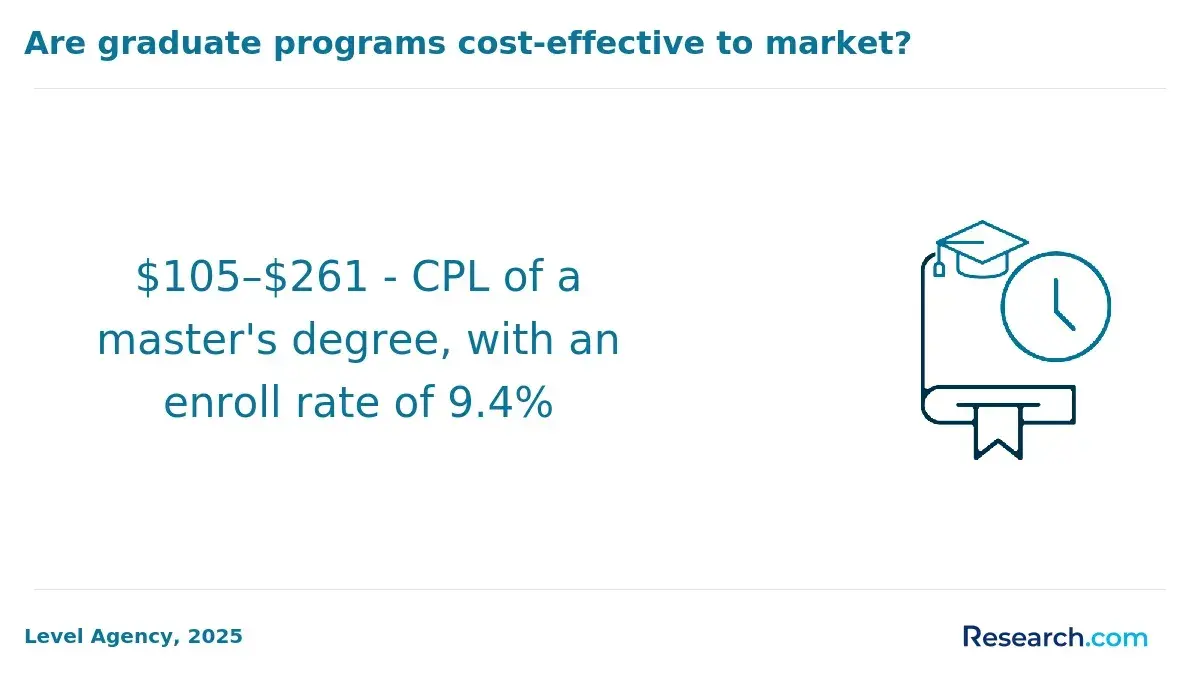
Red flags include publishers that cannot explain their traffic sources, partners that sell the same lead to many schools without disclosure, and placements that promise high volume but offer little control over program relevance. Another common mistake is optimizing only for cost per lead. A $35 lead that never answers a call can be more expensive than a $150 inquiry that meets program requirements and progresses to application.
A practical channel evaluation should include these checks before budget is committed:
- Confirm whether the audience is actively researching education options or simply browsing general content.
- Ask which pages, topics, newsletters, or placements will feature the program and whether they match the intended student profile.
- Review how the partner handles consent, disclosures, lead validation, duplicate suppression, and data transfer.
- Measure downstream quality by application rate, contact rate, enrollment rate, and revenue contribution instead of judging the partner only by clicks or forms.
Should we pay for clicks, leads, enrollments, or sponsored visibility with publishers?
The right pricing model depends on campaign maturity, program economics, and attribution capability. Universities should avoid choosing a model only because it appears cheaper. The better question is which model gives enough control over risk, volume, quality, and measurement for the program being promoted.
The table below summarizes the main commercial models used in sponsored education marketing. It is designed to help enrollment teams match the model to the campaign objective.
| Payment model | What you pay for | When it makes sense | Primary risk |
| CPC | Clicks to your site or landing page | Testing audiences, keywords, placements, and program messaging | Traffic may not convert if the landing page or audience fit is weak |
| CPL | Submitted inquiries or leads | Scaling inquiry volume with clear qualification rules | Low-quality or duplicate leads can inflate follow-up workload |
| CPA or enrollment-based | Applications, starts, or enrollments | Programs with mature tracking and partner trust | Long sales cycles can make attribution disputes more likely |
| Sponsored visibility | Placement, exposure, or share of voice | Building awareness for competitive or low-awareness programs | ROI can be unclear without assisted-conversion measurement |
| Custom partnership | A negotiated mix of content, media, leads, and reporting | Multi-program campaigns or strategic market expansion | Requires strong planning and internal alignment |
CPC is often the easiest entry point because it lets a school test whether an audience, article topic, or comparison page produces engaged visitors. It is not automatically safer, though. If the landing page hides cost information, lacks program details, or asks for too much information too early, the campaign can waste traffic.
CPL works well when the institution has a strong admissions follow-up process and clear lead criteria. For example, a university might require program interest, geography, degree level, consent, and start-term timing before counting a lead as billable. Without those rules, CPL campaigns can create the illusion of scale while overwhelming admissions teams with unqualified inquiries.
Enrollment-based pricing can align incentives, but it is not always realistic for long-cycle graduate or adult learner programs. Schools and partners need clear attribution windows, CRM integration, lead source rules, and agreement on what counts as an enrollment. Sponsored visibility is useful when demand does not yet exist, but leadership should understand that visibility campaigns often influence later search, direct, branded, and retargeting conversions.
A balanced portfolio often uses more than one model:
- Use CPC to test content themes, program positioning, and audience fit before scaling.
- Use CPL when the admissions team can quickly contact leads and track quality by source.
- Use sponsored placements when the program needs credibility, category visibility, or comparison-stage awareness.
- Use custom partnerships when one program needs traffic, another needs leads, and a third needs awareness in a niche market.
How do we design sponsored content that differentiates our programs in crowded markets?
Sponsored content differentiates a program when it makes the student's decision easier. Many universities describe programs with similar language: flexible, affordable, career-focused, student-centered, and online. Those claims are too broad to matter unless the content proves what they mean in practical terms.
Start with the decision criteria students actually compare. The strongest sponsored content addresses fit, cost, credibility, outcomes, support, and time commitment. College Board's 2024-25 tuition data shows why this matters: when published prices are substantial, students and families often need more evidence before they submit a form or speak with admissions.
Good differentiation usually comes from specific, verifiable details. Before approving sponsored content, gather proof points that make the program easier to compare:
- Format details, including online, hybrid, evening, weekend, asynchronous, cohort-based, or self-paced options.
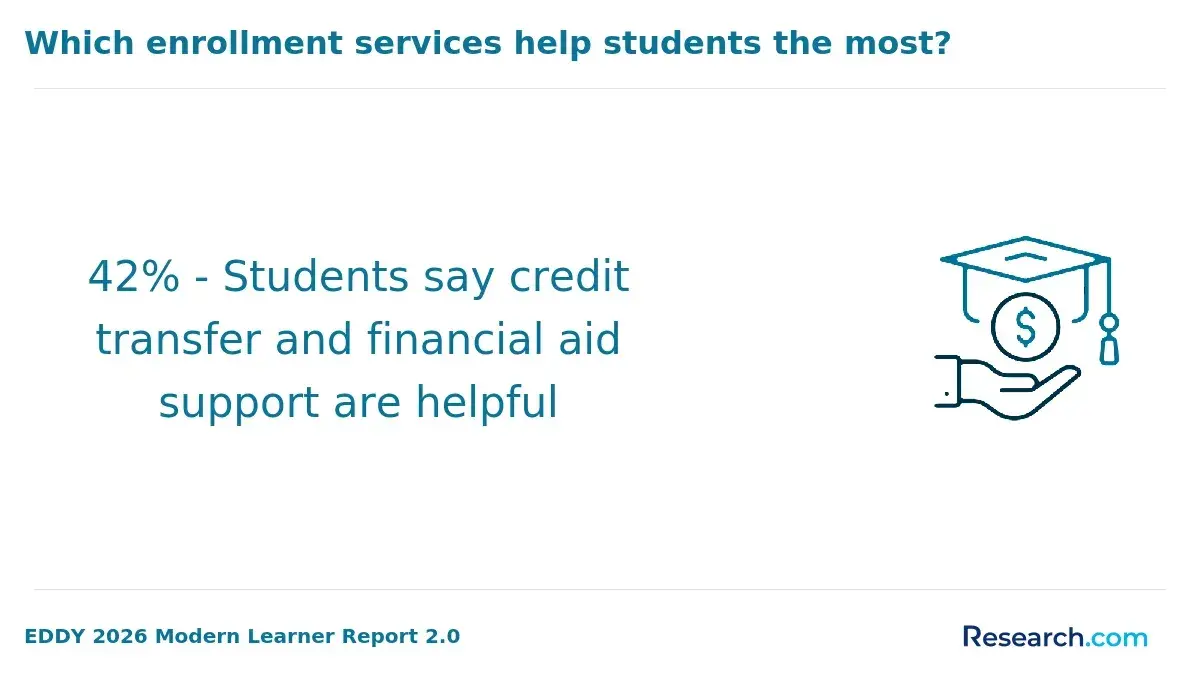
- Time-to-completion ranges and credit transfer policies, especially for adult learners with previous college credit.
- Accreditation, licensure alignment, employer relevance, or professional exam preparation where applicable.
- Tuition, fees, scholarships, employer reimbursement support, military benefits, and financing options.
- Student support services such as advising, tutoring, career coaching, placement assistance, and technical support.
- Career pathways supported by external labor market context, while avoiding claims that imply guaranteed employment or salary outcomes.
The content should also make clear who the program is not for. That may sound counterintuitive, but qualification improves lead quality. If a program requires a bachelor's degree, prior clinical hours, state residency, a portfolio, or professional experience, say so. The wrong student should self-select out before submitting a lead.
A common mistake is overloading sponsored content with institutional history while underexplaining the student experience. Prestige can help, but most prospects still need to know whether the program fits their schedule, budget, admission profile, and career goal. A better structure is to lead with the student's decision problem, then show why the program is a credible answer.
For crowded categories such as business, nursing, education, psychology, computer science, and cybersecurity, build content around sharper positioning. Examples include "for licensed professionals seeking advancement," "for career changers without a technical background," "for working adults who need asynchronous coursework," or "for students preparing for graduate study." Specificity helps the right audience recognize itself.
How can sponsored content improve lead quality and lower cost per acquisition?
Sponsored content can improve lead quality and lower cost per acquisition when it filters prospects before the form, not after. The goal is not to make every reader convert. The goal is to help the right readers convert with enough context that admissions teams can have more productive conversations.
Lead quality usually improves when the content, landing page, form, and follow-up process are aligned. If a sponsored article promises flexible online learning but the landing page does not explain course format or start dates, prospects may abandon the page or submit vague inquiries that are hard to qualify. If the form collects too little information, admissions may waste time contacting people who do not meet basic requirements.
Use this sequence to turn sponsored content into a better acquisition filter:
- Define the qualified prospect before launch, including program level, location eligibility, education background, start-term readiness, and financial expectations.
- Match sponsored content topics to high-intent questions, such as admissions requirements, online format, cost, accreditation, transfer credits, or career pathways.
- Add qualification details before the call to action so unfit prospects do not have to submit a form to discover basic requirements.
- Keep the lead form short enough to convert but specific enough to route the inquiry correctly.
- Use CRM fields that preserve source, campaign, content topic, program interest, and consent status.
- Review quality after contact, application, admission, and enrollment instead of stopping analysis at the lead stage.
One practical benchmark is contact rate. If sponsored content generates many leads but few answer calls, emails, or texts, the issue may be weak intent, slow follow-up, unclear consent language, or a mismatch between the content and the actual program. If contact rate is strong but application rate is weak, the issue may be program fit, price, admissions criteria, or competitive positioning.
Rising digital competition also increases the cost of weak qualification. IAB's 2024 US internet advertising revenue figure of $258.6 billion reflects how much money is flowing into digital attention. For education marketers, that means every unqualified click or low-intent lead competes with dollars that could have been spent on prospects who are closer to enrollment.
Avoid the mistake of lowering CPL targets without looking at downstream performance. Cheap leads can reduce the visible media cost while raising the true cost per enrolled student. The better metric is cost per qualified inquiry, cost per application, cost per admitted student, and cost per start, evaluated by program and source.
What sponsored content strategies work best for reaching working adults and career changers?
Working adults and career changers respond best to sponsored content that respects their constraints. They are often balancing work, family, debt, schedule limitations, and uncertainty about whether returning to school is worth the time. They need practical information, not vague inspiration.
Research.com is especially relevant for this audience because many users arrive through search engines and AI/LLM discovery with active questions about online programs, career paths, certificates, costs, and school comparisons. Course providers, certificate platforms, bootcamps, and training brands that want to reach online learners can use Research.com to appear in a trusted research environment where adult learners are already comparing options.
Sponsored content for working adults should answer the questions that block action. These readers often want to know whether they can keep working, whether previous credits count, whether the program is recognized by employers, and how quickly they can apply what they learn. The content should be direct, specific, and easy to scan on mobile.
The best strategies for adult and career-changing audiences include:
- Lead with flexibility details, including asynchronous coursework, evening schedules, part-time options, and expected weekly time commitment.
- Explain career relevance using role pathways, skill development, licensure alignment, or employer-recognized credentials without promising job placement.
- Make cost and financing information easy to find, including tuition structure, fees, scholarships, employer reimbursement, and payment options.
- Address confidence barriers, such as returning to school after a long break, balancing family responsibilities, or starting in a new field.
- Use comparison content that helps learners choose between a degree, certificate, bootcamp, or short course based on their goals.
A common mistake is using messaging built for traditional full-time students. Working adults are not only asking, "Is this a good school?" They are asking, "Can I realistically finish this, pay for it, and use it?" Sponsored content should therefore reduce perceived risk before the inquiry.
Another red flag is hiding admissions requirements until after a lead is submitted. Career changers may not know whether they qualify. If a program requires prerequisites, licensure, a bachelor's degree, a background check, or a minimum GPA, make that clear. Transparency may reduce raw lead volume, but it can improve advisor efficiency and trust.
How should we integrate sponsored content with SEO, paid media, and affiliate partnerships?
Sponsored content works best when it is integrated with SEO, paid media, retargeting, CRM workflows, and affiliate partnerships. It should not sit in a separate campaign silo. The strongest education marketing systems use sponsored content to capture mid-funnel demand, support organic discovery, and create more informed visitors for paid and owned channels.
For universities promoting online, graduate, and career-focused programs, Research.com can support online degree program marketing by combining sponsored visibility, qualified traffic, content partnerships, CPC campaigns, CPL lead generation, custom advertising packages, and strategic education marketing partnerships. This flexibility is useful when different programs have different needs: one may need awareness, another may need inquiries, and another may need stronger comparison-stage credibility.
A practical integration model connects every channel to a shared student journey. Sponsored content can introduce the program in trusted third-party environments. SEO can capture recurring questions on the university's own site. Paid search can compete for high-intent keywords. Retargeting can bring visitors back after they compare options. Email and admissions outreach can turn inquiry into application.
Use the following workflow to avoid fragmented campaigns:
- Map priority programs by funnel problem, such as low awareness, high traffic but low conversion, strong inquiries but weak applications, or high acquisition cost.
- Create sponsored content that answers the decision-stage questions most relevant to each program.
- Align landing pages with the same message, proof points, and call to action used in the sponsored content.
- Retarget engaged visitors with program-specific creative instead of generic university ads.
- Feed campaign source and content topic into the CRM so admissions teams can tailor follow-up conversations.
- Compare partner performance by downstream outcomes, including contact, application, admission, deposit, and start.
Search behavior is also changing. Prospects may discover programs through Google, publisher pages, comparison platforms, AI-generated summaries, social search, and direct recommendations. Sponsored content in authoritative education environments can support visibility beyond the university's own domain, especially when students are not yet searching for the school by name.
The biggest integration mistake is sending every campaign to the same generic program page. A visitor who just read a sponsored guide about online nursing pathways should land on a page that continues that conversation. Message continuity improves comprehension, trust, and conversion.
How can we use sponsored content to promote underperforming or low-awareness programs?
Sponsored content is often a strong fit for underperforming or low-awareness programs because it can create demand before a prospect knows the program name. Some programs struggle not because they lack value, but because students do not know the category exists, do not understand the career pathway, or cannot distinguish the offering from better-known alternatives.
The first step is to identify why the program is underperforming. Low awareness requires a different strategy than poor conversion. Weak lead quality requires a different strategy than unclear positioning. Before spending on sponsored content, diagnose the main barrier.
The table below helps separate common program growth problems. It clarifies which sponsored content role is most relevant for each situation.
| Program challenge | Likely cause | Sponsored content role | Best content angle |
| Low search volume | Students do not know the program category | Create category awareness | Career path or emerging field explainer |
| High clicks, low inquiries | Landing page or offer does not answer key questions | Pre-educate and improve message match | Cost, format, admissions, and outcomes guide |
| Low lead quality | Audience or content is too broad | Filter prospects earlier | Who the program is for and who should consider alternatives |
| Strong program, weak brand recognition | Competitors dominate search and rankings | Borrow trust from relevant third-party environments | Sponsored profile, comparison placement, or expert guide |
| Niche audience | General campaigns waste spend | Reach specific intent communities | Industry-specific credential or advancement guide |
For low-awareness programs, do not start by asking people to apply. Start by helping them understand the problem the program solves. For example, a data analytics certificate may need content about transitioning from operations, finance, or marketing into analytics roles. A health informatics program may need content explaining the intersection of healthcare, data, and administration.
A useful sponsored content launch plan for an underperforming program is:
- Define the program's most likely audience, including current role, education level, career motivation, and barriers to enrollment.
- Choose one primary decision problem the content will solve, such as "Is this career path right for me?" or "Do I need a full degree?"
- Create a comparison or explainer asset that makes the category understandable without overselling.
- Route readers to a landing page built specifically for that audience and program.
- Measure assisted demand, including branded search lift, return visits, applications, and advisor conversation quality.
The common mistake is treating an underperforming program as if it only needs more media spend. If the market does not understand the program, buying more clicks to a thin landing page will not fix the problem. Sponsored content should clarify the category, create relevance, and then move qualified readers to a conversion path.
What information should sponsored content include to increase landing page and form conversion?
Sponsored content increases landing page and form conversion when it sets the right expectations before the click and the landing page immediately confirms those expectations. Prospective students should not feel as though they moved from a helpful guide to a sales page that withholds the details they need.
The landing page should answer the most important enrollment questions quickly. If students have to call admissions just to learn basic facts, many will leave. This is especially true for adult learners and graduate prospects who compare several options before speaking with anyone.
Include these elements to improve conversion quality and reduce confusion:
- Program name, credential type, delivery format, location requirements, and available concentrations.
- Admissions requirements, prerequisites, transfer credit rules, application deadlines, and next start dates.
- Tuition structure, fees, financial aid options, scholarships, employer reimbursement support, and payment-plan availability where applicable.
- Time to completion, weekly workload expectations, course format, practicum or residency requirements, and technology requirements.
- Accreditation, licensure alignment, faculty or industry expertise, student support services, and career services.
- Clear calls to action, such as request information, compare programs, download a guide, speak with an advisor, or start an application.
The form should collect enough information to route and qualify the prospect without creating unnecessary friction. A first-step inquiry form usually does not need a long essay-style field. It may need program interest, education level, preferred start term, contact information, consent language, and location if eligibility matters.
Avoid these conversion mistakes:
- Using one generic landing page for every sponsored content topic and audience segment.
- Promoting affordability without showing tuition, fees, or a realistic explanation of cost structure.
- Making claims about career outcomes without context, source discipline, or appropriate limitations.
- Asking for too much personal information before the student understands the program value.
- Failing to load quickly on mobile, where many prospects first compare options.
Trust signals should be specific. "Career-focused curriculum" is weaker than explaining which skills, projects, licensure requirements, employer-relevant tools, or professional standards the curriculum addresses. "Flexible online learning" is weaker than saying whether courses are asynchronous, live, part-time, accelerated, or cohort-based.
The best landing pages make the next step feel low-risk and logical. A student who is not ready to apply may still be willing to download a program guide, compare options, or request a call. Offering more than one conversion path can capture prospects at different readiness levels while preserving inquiry quality.
How should we measure ROI and attribution for sponsored content in long enrollment cycles?
ROI measurement for sponsored content is challenging because enrollment cycles are long, prospects use multiple devices, and many students interact with several channels before applying. A sponsored article may introduce the program, paid search may recapture the student later, and an advisor call may close the application weeks or months after the first visit.
Research.com can help advertisers reach students during research and decision-making moments through flexible models such as CPC campaigns, CPL lead generation, sponsored placements, content partnerships, custom advertising packages, and strategic partnerships.
Because the platform's audience is search-driven and education-focused, it can be used not only to generate traffic or inquiries but also to test which topics and program messages attract better-qualified prospects. Institutions ready to explore sponsored visibility, qualified traffic, or lead generation should consider Research.com as a serious partner for reaching the right learners at the right moment.
A practical attribution model should connect sponsored content to both direct and assisted outcomes. Direct outcomes include clicks, form fills, calls, applications, and enrollments that happen after a tracked interaction. Assisted outcomes include branded search growth, retargeting conversions, return visits, advisor conversations, and applications influenced by earlier sponsored exposure.
Use this measurement framework to evaluate ROI more fairly:
- Tag every sponsored content placement with campaign, partner, program, topic, audience, and payment model.
- Capture source data in the CRM and prevent it from being overwritten by later clicks unless your attribution rules require that.
- Track lead quality stages, including valid lead, contacted lead, qualified inquiry, application, admission, deposit, and start.
- Compare performance by program rather than averaging all sponsored content together.
- Use multi-touch reporting when possible so sponsored content gets credit for influence, not only last-click conversion.
- Review qualitative feedback from admissions teams to understand whether prospects are informed, eligible, and motivated.
The most useful ROI metrics are not always the first ones visible in an ad dashboard. Impressions, clicks, and CPL are helpful for diagnosing campaign mechanics, but leadership usually needs to know cost per application, cost per start, net tuition contribution, and whether the campaign can scale without quality collapse.
Attribution has limitations. Cookie loss, phone calls, offline advising, privacy rules, and long consideration windows can make exact measurement difficult. Instead of pretending attribution is perfect, define consistent rules and use them over time. A consistent imperfect model is usually more useful than changing the rules whenever a campaign looks better or worse.
The final decision question is simple: does sponsored content produce prospects who are more informed, more qualified, and more likely to progress than prospects from other channels at a sustainable cost? If the answer is yes, the channel deserves a defined role in the acquisition mix. If the answer is no, review audience fit, content quality, landing page relevance, follow-up speed, and partner transparency before increasing spend.
Other Things You Should Know
Sponsored content is paid content or placement that helps a school, program, course provider, or education brand reach prospective students in an editorial, guide, comparison, ranking, newsletter, or marketplace environment. Its purpose is to inform and influence students during research, not just interrupt them with an ad.
It depends on the goal. Paid search is strong when prospects already search for a specific program or school. Sponsored content is stronger when students are still comparing options, learning about a field, or evaluating unfamiliar programs. Many enrollment teams use both together.
Universities should align placements with program intent, disclose key requirements before the form, use clear qualification criteria, validate leads, track downstream outcomes, and measure by applications or enrollments rather than only cost per lead.
Start with engaged traffic, valid inquiries, contact rate, qualified lead rate, and application progression. Once enough data exists, evaluate cost per application, cost per admitted student, cost per start, and assisted conversions across paid search, organic search, retargeting, and CRM activity.
References
- Top Lead Generation Channels To Try Right Now https://ciente.io/blogs/lead-generation-channels/
- Paid Social Media for better targeting in Recruitment https://www.weareamberjack.com/early-careers-expert-series-revolutionising-paid-social-media-for-better-targeting-in-early-careers-recruitment/
- Differentiating your business in a crowded market - The K.I.S.S Marketing Agency https://www.thekissagency.com/differentiating-your-business-crowded-market/
- Product differentiation strategies: stand out in crowded markets https://www.statsig.com/perspectives/product-differentiation-strategies
- Performance Influencer Marketing: Make Creators Work Like Ads https://www.nine.am/insights/performance-influencer-marketing
- The hidden cost of low-quality leads (and how to avoid them) - DemandWorks https://www.dwmedia.com/blog/the-hidden-cost-of-low-quality-leads-and-how-to-avoid-them/
- Using Organic Content to Boost Paid Media in Higher Ed https://eduvantis.com/practical-ways-to-leverage-organic-content-for-paid-ads/
- 3 Ways to Lower Your Cost Per Acquisition https://tec-direct.com/3-ways-to-lower-your-cost-per-acquisition/
- Campaign ROI: Definition, Examples & Use Cases https://www.saber.app/glossary/campaign-roi
- What Should Be Included on an Effective Landing Page https://redboxweb.co.uk/conversion-rate-optimisation/what-should-be-included-on-an-effective-landing-page/