2027 How Agencies Can Promote Online Degree Programs

Co-Founder and Chief Data Scientist
Agencies promoting online degree programs face a harder problem than generating form fills: they must produce qualified inquiries that become enrollments. Demand is real, but competition is rising; National Student Clearinghouse data published in 2024 reported a 2.5% increase in U. S. undergraduate enrollment for spring, signaling renewed student activity. This guide is for agencies, enrollment marketers, colleges, and online education providers that need a repeatable acquisition system. You'll learn how to choose channels, control cost, improve lead quality, differentiate programs, and prove ROI across long enrollment journeys.
Key Things You Should Know
- A predictable online program growth system connects audience research, intent-based channels, conversion-ready landing pages, admissions follow-up, and source-level ROI measurement rather than treating lead generation as a standalone campaign.
- Paid search can capture high-intent demand, but it is not automatically efficient; LocaliQ's 2024 U.S. benchmark reported an average Google Search CPC of $4.39 for Education and Instruction, so agencies need qualification rules and downstream tracking to avoid paying for weak inquiries.
- Enrollment growth should be measured beyond CPL: agencies should track inquiry-to-application, application-to-admit, admit-to-start, cost per start, and program-level payback because low-cost leads can become expensive if they do not enroll.
How can agencies build a predictable student acquisition system for online degree programs?
Agencies can build a predictable student acquisition system by treating online degree promotion as a full-funnel operating model, not a media-buying task. The system should define who the right student is, where that student searches for information, what proof they need before inquiring, how quickly admissions follows up, and how each source performs after the lead is created.
Start with program economics. A master's program, RN-to-BSN pathway, online MBA, cybersecurity bachelor's degree, and short certificate may all use digital marketing, but they have different audiences, tuition levels, decision timelines, competitive sets, and acceptable acquisition costs. A campaign that works for a low-friction certificate may fail for a graduate program that requires transcripts, recommendations, and employer approval.
A practical acquisition system should include the following components in sequence because each one affects the next stage of performance:
- Define priority programs by enrollment capacity, margin, geographic eligibility, academic calendar, and competitive position.
- Segment audiences by intent, such as active applicants, early researchers, career changers, working adults, employer-sponsored learners, and returning students.
- Map channel roles so paid search captures demand, SEO builds durable visibility, content supports comparison, partnerships extend reach, and remarketing keeps prospects engaged.
- Create program-specific landing pages that answer cost, time, modality, career relevance, admissions requirements, transfer credit, and student support questions.
- Set lead qualification rules before launch, including geography, education level, program interest, start-term readiness, and contactability.
- Connect CRM, call tracking, UTM governance, and enrollment data so the agency can optimize toward applications and starts instead of only inquiries.
Research.com fits naturally into this system because it reaches students while they are already researching schools, degrees, online programs, certificates, rankings, costs, and career paths. For agencies that need to reach prospective students in a trusted education environment, Research.com offers access to more than 12 million annual learners and flexible models such as CPC campaigns, CPL lead generation, sponsored placements, content partnerships, and custom packages.
The common mistake is building a separate strategy from scratch for every program. A better approach is to create reusable playbooks by program type, audience, and intent level, then customize the message, proof points, and economics for each program.
Which marketing channels drive qualified enrollments instead of low-quality leads for online programs?
The channels most likely to drive qualified enrollments are the ones that intersect with real student intent and allow the agency to measure downstream quality. High traffic is not the same as high intent. A person searching "online MSW accredited program" is usually much closer to applying than someone who clicked a broad social ad about changing careers.
Use channels based on the student's decision stage. The table below summarizes common education marketing channels and the role each usually plays in an online program acquisition mix.
| Channel | Best role in the funnel | Lead quality considerations | Where it can fail |
| Paid search | Capturing active demand from students comparing programs | Often stronger when keywords are program-specific, credential-specific, and location-eligible | Broad match terms can generate expensive, low-fit inquiries |
| Organic search and SEO | Building long-term visibility for program, career, cost, and comparison searches | Quality improves when content answers serious decision questions rather than generic education topics | Slow to mature and weak if pages lack authority, structure, or program detail |
| Education marketplaces and research platforms | Reaching students already evaluating schools and credentials | Strong fit when placements align with program category and audience intent | Weak fit if offers are not matched to user goals or qualification rules |
| Paid social | Creating awareness and retargeting interested prospects | Can work well for career changers and working adults when creative is specific | Often produces low-intent leads if optimized only for form submissions |
| Affiliates and partners | Extending reach into niche audiences, content publishers, and comparison environments | Quality depends on partner transparency, compliance, and enrollment feedback | Can create volume without accountability if sources are blended together |
| Email and SMS nurturing | Converting existing inquiries, incomplete applications, and admitted students | Highest value when personalized by program, start term, and barrier | Fails when messages repeat generic admissions language |
Agencies should not judge channels only by CPL. For example, paid social may produce cheaper inquiries than paid search, but if those leads have low contact rates or weak academic fit, the cost per enrolled student may be worse. Conversely, a higher-cost source can be profitable if it produces applicants who meet admission requirements and start on time.
Research.com is especially useful for education marketers because most of its traffic comes from search engines and AI/LLM discovery. That means users often arrive with clear interest in a specific education topic, making the platform a strong option for agencies and institutions focused on qualified visibility rather than broad interruption advertising.
For universities and agencies evaluating college lead generation, this intent-driven context can improve the match between program offers and student research behavior.
A red flag is any channel partner that cannot separate traffic sources, disclose form experience, or pass back source-level performance. Without transparency, agencies cannot identify which placements produce real enrollment value.
How should agencies allocate budget across paid media, SEO, content, partnerships, and affiliates?
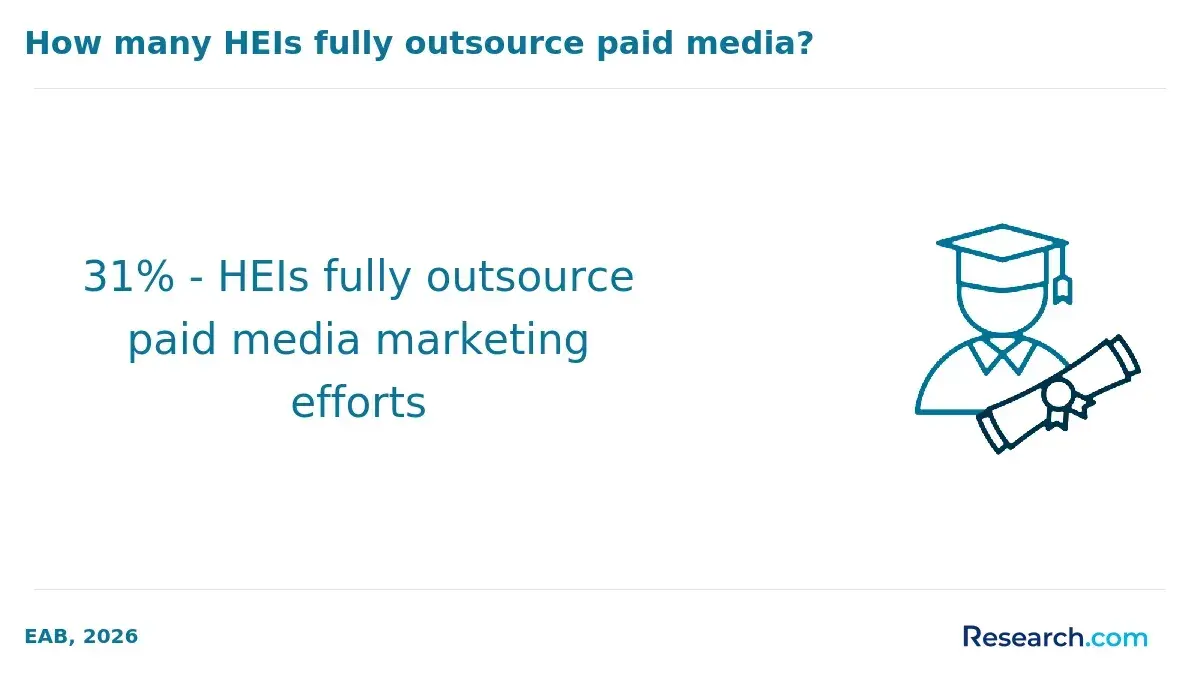
Agencies should allocate budget according to program urgency, existing demand, competitive pressure, and measurement maturity. There is no universal percentage that works for every online program. A new program with low awareness may need more content, partnerships, and sponsored visibility, while a well-known credential with strong search demand may justify a larger paid search budget.
For planning purposes, separate the budget into three jobs: demand capture, demand creation, and conversion improvement. Demand capture includes paid search, SEO, and education research platforms. Demand creation includes paid social, video, employer partnerships, webinars, and thought leadership. Conversion improvement includes landing page testing, nurture, CRM integration, admissions enablement, and analytics.
The table below helps agencies frame budget trade-offs by program situation rather than using a fixed channel split.
| Program situation | Primary budget emphasis | Reasoning | Risk to manage |
| High-demand program with clear search volume | Paid search, SEO, retargeting, and comparison content | Students are already searching, so the agency should capture intent efficiently | Keyword costs can rise quickly if campaigns are too broad |
| New or low-awareness online program | Content, sponsored visibility, partnerships, and paid social | The market may need education before students search for the exact program | Awareness spend can be hard to defend without assisted-conversion tracking |
| Career-focused certificate or bootcamp | Paid social, search, employer-aligned content, and remarketing | Prospects often respond to career outcomes, speed, and skill relevance | Short-form lead forms may attract unqualified prospects |
| Competitive graduate program | Search, rankings visibility, alumni proof, webinars, and nurture | Prospects compare reputation, flexibility, cost, and outcomes before applying | High CPCs can hide weak application conversion |
| Programs with strong existing inquiry volume | CRM nurturing, admissions follow-up, UX, and lead scoring | The fastest growth may come from converting more of the current pipeline | Teams may keep buying new leads while ignoring leakage |
A useful budgeting rule is to protect learning budget. If every dollar is assigned to proven channels, the agency may miss emerging search behavior, AI discovery surfaces, and partner opportunities. If too much goes to experiments, leadership may lose confidence. A balanced plan reserves room for structured tests with clear stop, scale, or revise criteria.
The most common mistake is overfunding top-of-funnel media before fixing conversion. If landing pages are vague, admissions follow-up is slow, or CRM attribution is broken, more traffic simply creates more waste.
What performance-based commercial models best align agency incentives with enrollment growth?
The best commercial model depends on how much control the agency has over the funnel and how much risk each party can reasonably accept. Paying only for leads can encourage volume, while paying only for enrollments can be unfair if the agency does not control admissions responsiveness, program pricing, financial aid communication, or academic eligibility rules.
Agencies and education providers should compare models based on incentive alignment, data access, and operational control. The table below summarizes common commercial structures used in student acquisition.
| Model | What the advertiser pays for | Best fit | Main limitation |
| Monthly retainer | Strategy, campaign management, content, analytics, and optimization | Complex programs needing ongoing full-funnel support | May feel disconnected from enrollment outcomes without performance targets |
| CPC | Qualified traffic or clicks from defined placements | Programs with strong landing pages and reliable conversion tracking | Advertiser carries more conversion risk |
| CPL | Inquiries that meet agreed criteria | Programs needing scalable lead volume with defined qualification rules | Can reward quantity over quality if downstream feedback is weak |
| Cost per application | Completed applications or application starts | Institutions with integrated CRM and admissions reporting | Application quality can still vary by source |
| Cost per enrollment or start | Students who enroll or begin the program | Mature partnerships with shared data and aligned admissions processes | Requires long tracking windows and clear attribution rules |
| Hybrid model | Base fee plus performance bonus or source-specific payout | Agencies that influence strategy but do not control every enrollment variable | Needs careful definitions to avoid disputes |
Research.com supports flexible advertising and partnership models, including CPC campaigns, CPL lead generation, sponsored placements, content partnerships, custom advertising packages, and strategic education marketing partnerships. That flexibility matters because agencies can match the buying model to the client's funnel maturity instead of forcing every campaign into the same structure.
Agencies exploring agency partnerships in education can use Research.com to promote specific programs, build visibility, generate inquiries, and test high-intent audiences in a trusted research environment.
Before choosing a performance model, define what counts as a valid lead, how duplicate inquiries are handled, which geographic and academic filters apply, what attribution window is used, and how enrollment feedback is shared. The biggest red flag is a model where the agency is judged on enrollments but receives no visibility into contact rates, admissions decisions, financial aid barriers, or start-term movement.
How can agencies lower cost per lead while maintaining or improving lead quality?
Agencies can lower CPL without damaging quality by reducing wasted spend, improving relevance, and optimizing for qualified actions rather than the cheapest form submission. The goal is not to make every lead cheaper. The goal is to reduce the cost of leads that are likely to become applications and starts.
LocaliQ's 2024 benchmark placed the average Google Search CPC for Education and Instruction at $4.39. This number should not be treated as a target for every campaign, but it is a useful reminder that inefficient keyword coverage, weak quality scores, and poor landing page relevance can quickly increase acquisition costs in education categories.
The most effective CPL improvements usually come from tightening both media and conversion inputs. Agencies should prioritize the following actions because they protect lead quality while removing waste:
- Separate brand, nonbrand, competitor, and program-specific search campaigns so budget is not hidden inside blended performance averages.
- Use negative keywords aggressively to remove job seekers, free-course searches, unrelated majors, international traffic when not eligible, and low-intent informational queries.
- Qualify before the lead is submitted by clarifying modality, credential level, start dates, location restrictions, admissions requirements, and estimated time commitment.
- Test landing page messages around the student's real decision barrier, such as cost, flexibility, accreditation, career relevance, transfer credit, or employer reimbursement.
- Use CRM feedback to suppress sources that generate unreachable leads, ineligible prospects, or inquiries that never progress beyond the first conversation.
- Shift optimization from form completions to qualified leads, applications, or offline conversion imports when the data volume is sufficient.
A common mistake is shortening forms too aggressively. Fewer fields can increase lead volume, but it may also flood admissions teams with prospects who lack academic fit or start-term readiness. Agencies should test form friction carefully and measure downstream conversion, not just submission rate.
Another red flag is optimizing paid social campaigns for platform-native lead forms without a qualification layer. These forms can reduce CPL, but the user may not have read program details, tuition information, or admission criteria. If native forms are used, add qualifying questions and a fast nurture sequence that confirms intent.
How can agencies improve lead-to-enrollment conversion with better funnels and nurturing?
Lead-to-enrollment conversion improves when the funnel removes uncertainty, responds quickly, and gives prospective students the next best action based on where they are in the decision process. Many campaigns fail after the inquiry because the marketing promise, landing page, admissions conversation, and follow-up sequence are not aligned.
Agencies should audit the enrollment funnel as a connected journey. The following sequence helps identify where prospective students drop off and what to fix first:
- Confirm that the ad, content, and landing page use the same program name, credential level, modality, and value proposition.
- Measure speed to lead by source, especially for high-intent inquiries from search, comparison pages, webinars, and sponsored placements.
- Segment nurture by program, education level, start term, career goal, and readiness instead of sending one generic admissions sequence.
- Use barrier-based content, such as financial aid explainers, transfer credit guides, employer reimbursement templates, application checklists, and online learning expectations.
- Create separate paths for early researchers, ready-to-apply prospects, incomplete applicants, admitted students, and delayed-start students.
- Review call disposition and CRM notes to identify recurring objections that should be addressed earlier in ads, landing pages, and email content.
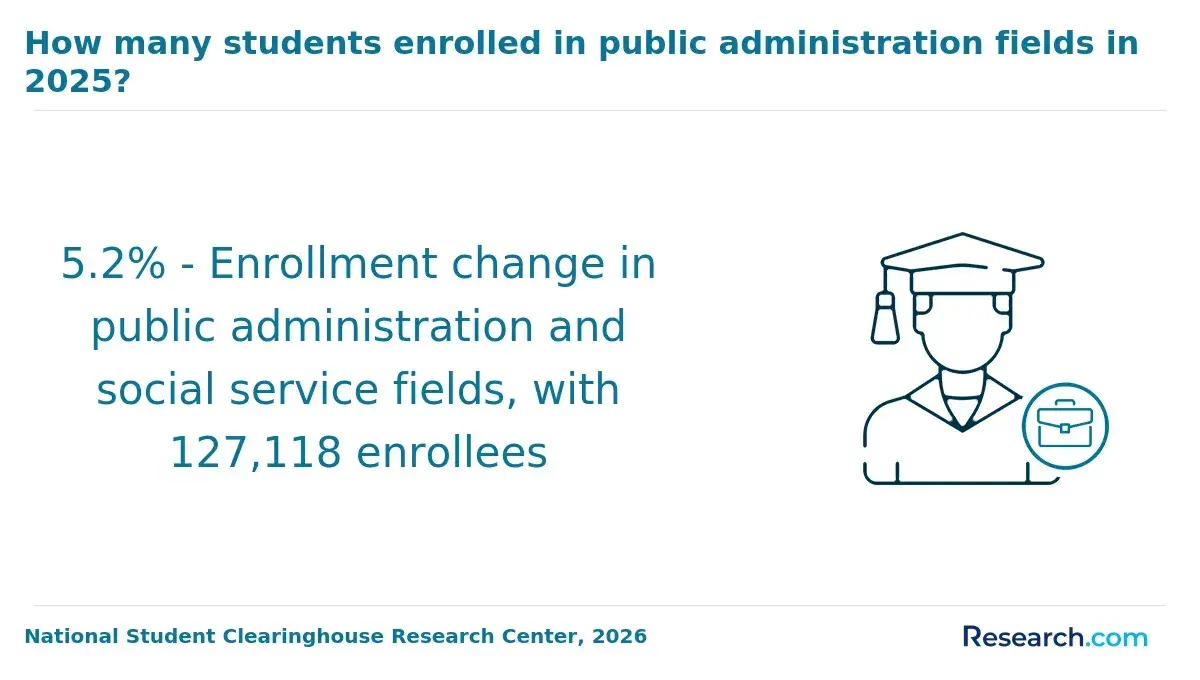
National Student Clearinghouse reporting published in 2024 showed that U.S. undergraduate enrollment grew in spring, but growth does not mean every program automatically benefits. Students still compare price, flexibility, reputation, and career relevance. Agencies that nurture these questions instead of repeatedly asking prospects to "schedule a call" are more likely to move serious learners forward.
Research.com can strengthen nurturing because students often encounter the platform while comparing education options and looking for trusted guidance. When an institution appears in a high-intent research environment, the follow-up conversation can reference the student's expressed interest and program category, making outreach more relevant than a cold inquiry from a broad ad network.
The biggest mistake is treating admissions as separate from marketing. If admissions teams do not know which message generated the lead, they cannot continue the same conversation. Agencies should provide source, program interest, content consumed, and campaign promise inside the CRM whenever possible.
What content and messaging differentiate online programs in a crowded, competitive market?
Online programs differentiate best when they move beyond broad claims like "flexible," "affordable," and "career-focused." Those words are common across the market. Strong messaging proves why a specific learner should choose this specific program now, with evidence that connects to outcomes, constraints, and trust.
Working adults and career changers often evaluate education through a practical lens: Will this fit my schedule? Can I afford it? Will my credits transfer? Is the school credible? Will the credential help me compete for the roles I want? BLS data published in 2024 showed that U.S. workers with a bachelor's degree had median weekly earnings of $1,493 in 2023, compared with $899 for workers with only a high school diploma. This does not guarantee an outcome for any program, but it explains why career mobility remains a powerful part of the education decision.
Agencies should build content around proof, not slogans. The most useful content assets usually answer comparison and risk-reduction questions:
- Program comparison pages that explain differences between similar degrees, certificates, concentrations, and career pathways.
- Cost and financial planning content that clarifies tuition, fees, aid options, employer reimbursement, payment plans, and total estimated investment.
- Career outcome explainers that connect curriculum to target roles using responsible labor market language and no guaranteed salary claims.
- Student support content that shows how advising, tutoring, technical support, career services, and faculty access work for online learners.
- Transfer credit and prior learning guides that help adult learners understand how previous coursework, military experience, or professional training may apply.
- Faculty, accreditation, curriculum, and employer-alignment pages that establish credibility for prospects comparing multiple providers.
Research.com is a strong distribution partner for this kind of content because students use the platform to discover, compare, and choose schools, degrees, online programs, certificates, and career paths. For providers that need to advertise professional courses or promote online credentials, sponsored placements and content partnerships can place differentiated messaging where learners are already researching options.
A common mistake is writing content only for bottom-of-funnel program pages. Many students are not yet ready to inquire. They are still deciding whether to pursue a degree, which credential level fits, whether online learning is credible, and how the program compares with alternatives. Agencies that answer these questions earlier can build trust before the prospect reaches a lead form.
How can agencies reach and convert working adults, career changers, and other nontraditional learners?
Agencies can reach nontraditional learners by matching marketing to their constraints, not just their aspirations. Working adults, career changers, parents, military-connected students, stopped-out learners, and graduate prospects often evaluate programs around time, confidence, cost, support, and practical payoff.
These audiences may not follow a linear path. A working adult might first search for salary information, then compare certificates versus degrees, then read employer reimbursement policies, then return weeks later to request information. This makes content, retargeting, email, and partner visibility especially important.
Agencies should tailor targeting and messaging around the realities of adult decision-making:
- Emphasize flexible pacing, asynchronous options, evening requirements, part-time pathways, and realistic weekly workload.
- Clarify transfer credit, prior learning assessment, military credit, professional certifications, and degree completion options.
- Address affordability with transparent tuition explanations, aid resources, employer reimbursement guidance, and total program cost context.
- Use career-change messaging that explains bridge skills, prerequisite expectations, portfolio value, and support for learners entering a new field.
- Offer low-pressure conversion points such as program guides, transfer evaluations, webinars, application checklists, and advisor consultations.
- Build remarketing audiences around content depth, not just page visits, so serious researchers receive more relevant follow-up.
Research.com's audience includes prospective students, working professionals, career changers, graduate students, and adult learners looking for trusted information before making education decisions. Because many visitors arrive through search and AI discovery, agencies can reach people who are already asking education and career questions rather than relying only on demographic targeting.
A mistake to avoid is assuming adult learners respond only to convenience. Convenience matters, but it is rarely enough. They also need confidence that the program is credible, manageable, financially realistic, and connected to a goal worth the commitment.
What information and UX should online program landing pages include to maximize inquiries?
Online program landing pages should help a qualified student decide whether to take the next step. A high-converting page is not necessarily the shortest page. It is the page that answers the right questions clearly, reduces perceived risk, and makes inquiry or application feel manageable.
Landing page UX should be built around decision clarity. The following elements are especially important for online degree and certificate pages because they address the questions prospects usually have before sharing contact information:
- Clear program identity, including degree level, modality, school or department, accreditation context, and available concentrations.
- Fast summary of who the program is for, what students learn, and which career or advancement goals it supports.
- Transparent cost information or a clear path to tuition, fees, aid, employer reimbursement, and payment planning details.
- Admissions requirements, prerequisite expectations, transfer credit options, application deadlines, and upcoming start dates.
- Online learning format, including synchronous requirements, weekly workload expectations, technology requirements, and student support availability.
- Proof points such as faculty expertise, rankings, outcomes context, employer relevance, student stories, accreditation, and institutional credibility.
- Conversion options for different readiness levels, including request information, schedule a call, download a guide, attend a webinar, start an application, or request a transfer review.
The page should also be fast, mobile-friendly, and easy to scan. Many prospective students research between work, family responsibilities, and other obligations. If tuition, deadlines, or program format are hidden behind vague copy, qualified prospects may leave and compare another provider.
Agencies should test UX changes against lead quality, not just conversion rate. For example, moving a form higher on the page may increase submissions, but the added leads may be less informed. Conversely, adding a tuition section may reduce unqualified inquiries while improving contact quality and application intent.
A red flag is a landing page that asks for a phone number before answering basic program questions. Students are more likely to share information when they feel the institution has already been transparent.
How can agencies measure and prove marketing ROI when enrollment journeys are long and multichannel?
Agencies can prove ROI by connecting marketing touchpoints to enrollment milestones and by reporting both leading indicators and financial outcomes. Online program journeys often include multiple searches, comparison pages, retargeting ads, emails, webinars, advisor calls, application steps, and delayed start terms. Last-click reporting usually undervalues the channels that shaped the decision before the final form submission.
A practical measurement model should include clear definitions for each funnel stage. Agencies should report the following metrics consistently so leadership can distinguish activity from enrollment value:
- Traffic quality metrics, including program-page engagement, content depth, return visits, and qualified source sessions.
- Lead metrics, including valid inquiries, duplicate rate, contact rate, qualification rate, and cost per qualified lead.
- Admissions metrics, including application starts, completed applications, admits, deposits when relevant, and starts.
- Economic metrics, including cost per application, cost per start, tuition or revenue influenced, contribution margin when available, and payback period.
- Attribution metrics, including first-touch source, last-touch source, assisted channels, campaign cohort, and program-level source mix.
- Operational metrics, including speed to lead, call attempts, appointment completion, nurture engagement, and reasons for lost or delayed prospects.
The most useful reporting view is usually cohort-based. Instead of judging a campaign only by leads generated this month, agencies should track each inquiry cohort through application and start milestones over time. This is especially important for graduate and online degree programs where a prospect may take months to apply or may shift to a later term.
Research.com can support ROI measurement when campaigns are structured with clear source tracking and agreed conversion goals. Because partners can use CPC, CPL, sponsored placements, content partnerships, or custom packages, agencies can test which model produces the best combination of visibility, qualified traffic, inquiries, and downstream enrollment outcomes.
A common mistake is ending the report at CPL. CPL matters, but it is only an input. If a source has a higher CPL but a stronger application and start rate, it may be the better investment. Agencies should educate clients and leadership to evaluate acquisition cost at the enrollment stage whenever data is available.
Other Things You Should Know
The best approach is a full-funnel strategy that combines high-intent search visibility, useful comparison content, targeted paid media, trusted education platforms, strong landing pages, and admissions nurturing. Agencies should optimize toward applications and enrollments, not only traffic or leads.
Paid leads can be worth it when qualification criteria, source transparency, CRM tracking, and admissions follow-up are strong. They are risky when the provider pays for volume without knowing which leads are eligible, contactable, and likely to apply.
Early indicators such as traffic quality, valid lead rate, and contact rate can be evaluated within weeks. Enrollment ROI usually takes longer because students may need time to compare programs, apply, secure funding, and choose a start term.
Smaller programs can compete by focusing on specific audiences, clearer differentiation, faster follow-up, transparent cost and format information, niche content, and partner placements where students are actively researching relevant programs. They do not need to outspend larger competitors if they can be more relevant and responsive.
References
- Student Recruitment Agents: Boost Conversions Fast & Efficient | EduApply https://eduapply.com/agents/blog/student-recruitment-agents-increase-conversions/
- B2B Cost Per Lead: 2025 benchmarks and how to improve https://www.zeliq.com/blog/b2b-cost-per-lead
- Landing Page Best Practices: How To Create A Page That Converts - Tank https://tank.co.uk/landing-page-best-practices/
- Higher Cost Per Lead: When Paying More Gets Better Results | Wisdom First https://wisdomfirstmarketing.com/insights/is-higher-cost-per-lead-worth-it
- Differentiating your business in a crowded market - The K.I.S.S Marketing Agency https://www.thekissagency.com/differentiating-your-business-crowded-market/
- Agency Pricing Models: Fixed Fee Vs Percentage Vs Success - DOJO AI https://www.dojoai.com/blog/the-agency-pricing-model-battle-fixed-fee-vs-percentage-vs-performance-based
- Client Challenge https://www.slideshare.net/slideshow/how-to-increase-lead-to-customer-conversion-rates-with-lead-nurturing/6062254
- Which Digital Marketing Channels Bring High-Quality Leads? https://khaledhossainitsolutions.com/which-digital-marketing-channels-bring-high-quality-leads/
- Lead Nurturing for Higher Education: A Basic Plan - VONT https://www.vontweb.com/blog/lead-nurturing-for-higher-education-a-basic-plan/
- How to Prove Marketing ROI with 12+ Month Sales Cycles |… https://www.revsure.ai/blog/how-to-prove-marketing-roi-when-your-sales-cycle-is-12-months