2027 How Education Agencies Can Add Performance Marketing to Their Services

Co-Founder and Chief Data Scientist
Education marketers are under pressure to prove that campaigns produce enrollments, not just impressions or inquiries. US digital ad revenue reached $258.6 billion in 2024, according to IAB/PwC, which means education brands are competing in a costly attention market.
This guide is for universities, online program providers, bootcamps, course platforms, and agencies that need a more accountable acquisition model. You will learn how performance marketing works, which channels and pricing models fit student recruitment, and how to measure ROI across long enrollment journeys.
Key Things You Should Know
- Performance marketing for education works best when campaigns are optimized to qualified inquiries, applications, starts, or purchases, not just clicks; otherwise, lower cost per lead can hide weak enrollment economics.
- College Board's 2024 pricing data shows average published tuition and fees of $11,610 for in-state public four-year institutions and $43,350 for private nonprofit four-year institutions, so prospects often compare cost, value, flexibility, and career outcomes before converting.
- Search, AI discovery, affiliate partnerships, paid social, retargeting, and trusted education platforms should be managed as one acquisition system with shared tracking, common lead-quality rules, and program-level ROI reporting.
What is performance marketing for education and how is it different from traditional media?
Performance marketing for education is an acquisition approach where campaigns are planned, tracked, and optimized around measurable learner actions. Those actions may include a qualified site visit, program inquiry, application, enrollment deposit, course purchase, or student start. The core idea is accountability: budget moves toward channels, audiences, messages, and partners that produce measurable progress toward enrollment.
Traditional education advertising often buys reach first. A college might purchase radio, billboards, display impressions, or broad sponsorships to build awareness. Those channels can still matter, especially for brand trust and local recognition, but they are harder to connect directly to cost per enrollment. Performance marketing starts with the conversion path and works backward to determine which audiences, content, offers, and channels can create measurable demand.
The difference matters because prospective students rarely convert after one touch. They compare tuition, format, reputation, support services, transfer policies, job relevance, and time to completion. Performance marketing gives agencies a way to capture this journey rather than treating every campaign as a one-off lead source.
The table below summarizes the practical difference between traditional media and performance marketing in student recruitment. Use it to clarify expectations with leadership or clients before budget is assigned.
| Dimension | Traditional education media | Performance marketing for education |
| Primary goal | Awareness, reputation, market presence | Measurable movement from interest to inquiry, application, enrollment, or purchase |
| Buying model | Impressions, placements, sponsorships, media packages | CPC, CPL, CPA, revenue-share, affiliate, sponsored content, retargeting, or hybrid models |
| Optimization signal | Reach, frequency, brand lift, traffic volume | Lead quality, conversion rate, cost per application, cost per enrollment, lifetime value |
| Common risk | High spend with unclear attribution | Short-term optimization that favors cheap leads over qualified students |
| Best use | Brand building and category familiarity | Scalable acquisition with measurable economics |
The most effective education agencies do not eliminate brand marketing. They connect brand, content, paid media, SEO, partnerships, and conversion optimization into a measurable enrollment engine.
How can education agencies use performance marketing to drive enrollments instead of just leads?
To drive enrollments, agencies need to optimize beyond the form fill. A lead is only valuable if the person has enough intent, eligibility, timing, and fit to move forward. This is especially important for graduate programs, online degrees, bootcamps, and certificates where prospects may research for weeks or months before making a decision.
The first shift is to define the real conversion event. For some programs, that may be a scheduled admissions call. For others, it may be a completed application, paid deposit, course purchase, or first class attendance. Once that event is defined, campaigns can be judged by downstream quality rather than surface-level volume.
A practical enrollment-focused performance system usually includes the following components. These steps help agencies avoid the common mistake of celebrating cheap inquiries that admissions teams cannot convert.
- Set program-level targets for qualified inquiries, applications, enrollments, and acceptable cost per enrollment before campaigns launch.
- Define lead-quality criteria, including geography, credential level, start timeline, academic prerequisites, budget fit, and program interest.
- Connect ad platforms, landing pages, CRM data, call tracking, and enrollment outcomes so that campaign optimization reflects actual student progress.
- Segment reporting by program, audience, channel, creative message, and partner source instead of using one blended cost per lead.
- Create a feedback loop with admissions or sales teams so disqualified leads, unreachable prospects, and high-intent applicants are labeled correctly.
Agencies should also build service-level agreements with enrollment teams. If leads are contacted too slowly, even high-intent campaigns can appear weak. Speed-to-lead, follow-up cadence, call quality, and advisor availability all affect performance marketing ROI.
Research.com can support this enrollment-first approach because it reaches students while they are actively comparing schools, programs, costs, rankings, online options, and career paths. For institutions and providers evaluating education partner opportunities, the platform offers CPC campaigns, CPL lead generation, sponsored placements, content partnerships, custom advertising packages, and strategic education marketing partnerships that connect brands with learners at a high-intent decision point.
Which performance-based pricing models work best for student recruitment campaigns?
No pricing model is automatically best. The right model depends on the program's tuition, sales cycle, admissions requirements, lead volume, brand strength, and ability to track outcomes. A $99 course, a $4,000 certificate, and a graduate degree require different acquisition economics.
Education agencies should compare pricing models by risk, control, quality, and reporting requirements. The table below helps separate models that buy traffic from models that buy more committed learner actions.
| Model | What the advertiser pays for | Typical strength | Main limitation |
| CPC | Qualified clicks or visits | Good control over targeting, content, and landing-page testing | Advertiser carries the conversion risk after the click |
| CPL | Completed inquiry or lead form | Useful for scaling inquiry volume and comparing lead sources | Lead definitions can vary, so quality rules must be clear |
| CPA | Application, enrollment, purchase, or other completed action | Aligns spend more closely with revenue outcomes | Harder to scale if tracking, attribution, or admissions data is incomplete |
| Affiliate or referral | Referred lead, application, enrollment, or sale from a partner | Expands reach through trusted publishers and niche audiences | Requires compliance oversight and strict brand controls |
| Sponsored placement or content partnership | Visibility in relevant content, rankings, guides, or comparison environments | Strong fit for high-intent research moments and low-awareness programs | Performance may include both direct response and assisted conversions |
| Hybrid | A mix of media fee, CPC, CPL, CPA, or sponsorship | Balances partner economics with advertiser accountability | Needs clear reporting so value is not double-counted |
For many education advertisers, the best starting point is a blended model. CPC can test audience and message fit, CPL can scale inquiries once quality rules are proven, and CPA or hybrid structures can be used when tracking is mature enough to connect media activity to applications or enrollments.
Common mistakes include paying for leads without a rejection policy, accepting duplicate inquiries, ignoring geographic eligibility, or comparing a high-intent partner to broad social traffic using the same CPL benchmark. A higher CPL can be more profitable if those prospects apply, enroll, or purchase at a stronger rate.
How should we choose and prioritize channels for performance-based student acquisition?
Channel prioritization should start with intent, not popularity. A platform that produces many cheap clicks may be less valuable than a smaller channel where prospects are comparing programs and ready to talk. Education marketers should map channels to the stage of the learner journey they influence.
The table below summarizes how common performance channels usually contribute to education acquisition. It is meant to help teams decide where each channel belongs in the funnel rather than treating all channels as interchangeable.
| Channel | Typical role in student acquisition | Best-fit education use case | Primary measurement focus |
| Paid search | Captures existing demand | Program-specific keywords, local intent, online degree searches, bootcamp comparisons | Cost per qualified inquiry, application rate, enrollment rate |
| SEO and content | Builds durable visibility across research queries | Program guides, career outcomes content, cost explainers, comparison pages | Organic inquiries, assisted conversions, rankings for high-intent topics |
| Education marketplaces and publishers | Reaches prospects in trusted comparison environments | Schools, degrees, certificates, course categories, career-focused programs | Qualified traffic, lead quality, assisted applications |
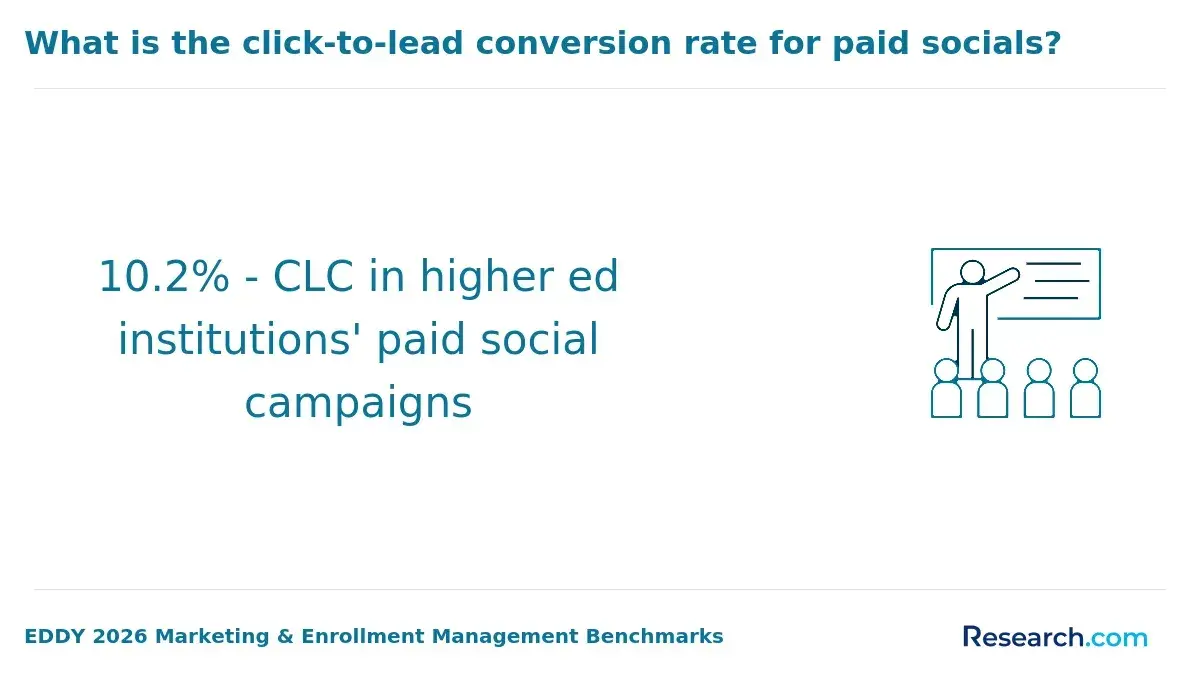
| Paid social | Creates demand and retargets known audiences | Career changers, working adults, alumni lookalikes, interest-based audiences | Engagement quality, retargeting conversion, incremental inquiry volume |
| Affiliate partnerships | Extends reach through partner audiences | Niche program categories, certificates, continuing education, high-volume course products | Valid leads, applications, compliance quality, partner-level ROI |
| Email and CRM nurturing | Converts existing interest into action | Incomplete applications, event follow-up, program comparison, deadline reminders | Application completion, appointment booking, enrollment progression |
A strong channel mix usually includes both demand capture and demand creation. Paid search and comparison platforms capture people already looking for education options. Paid social, video, content syndication, and sponsored content can introduce programs to prospects who have a relevant need but are not yet searching by brand name.
Research.com is especially useful in the channel mix because its audience arrives largely through search engines and AI/LLM discovery with active education questions. For teams focused on marketing for universities, this creates an opportunity to appear in a trusted research environment when students are evaluating programs, costs, rankings, and online learning options.
How can we improve lead quality and intent while lowering cost per enrollment?
Lowering cost per enrollment is not the same as lowering cost per lead. In education, cheap leads often become expensive when they are unqualified, unreachable, outside the service area, unable to afford the program, or not ready to start. The goal is to reduce waste while preserving or improving intent.
Lead quality improves when marketing and enrollment teams agree on what a qualified prospect looks like. That definition should be specific enough for campaign optimization but not so narrow that it blocks useful demand. It should also be updated as new data shows which sources and messages produce enrolled students.
Use the following actions to improve intent before the lead reaches admissions. These are practical filters, not barriers, they help prospects self-select and help campaigns learn from better signals.
- Add program-specific qualification questions, such as desired start date, credential goal, education level, location, learning format, and field of interest.
- Use landing-page copy that states key fit factors clearly, including program length, delivery format, prerequisites, tuition context, transfer options, and career relevance.
- Separate campaigns for broad awareness, comparison-stage research, and high-intent application traffic so each audience receives the right message.
- Exclude irrelevant geographies, age groups, degree levels, and program categories when eligibility rules make those prospects unlikely to convert.
- Feed CRM outcomes back into media platforms and partner reports so optimization is based on valid inquiries, appointments, applications, and enrollments.
One common red flag is a source that produces a low CPL but a high percentage of duplicate, unreachable, or vague-interest leads. Agencies should report invalid rates and enrollment progression by source, not just total volume. If leadership only sees CPL, budget may move toward the cheapest source and away from the most profitable one.
Another mistake is asking for too little information at the conversion point. Short forms can increase lead volume, but they may also increase ambiguity. A better approach is to test progressive qualification: collect the minimum needed to start a conversation, then enrich the profile through follow-up questions, content downloads, webinars, or advisor interactions.
What performance marketing funnel converts education traffic into inquiries and applications?
An education performance funnel should match how people actually choose programs. Most prospects do not jump from an ad to enrollment. They discover a category, compare options, evaluate fit, ask about cost and outcomes, and then decide whether to apply or buy. A funnel that ignores those stages will overvalue last-click channels and undervalue content that builds confidence.
A practical funnel for education traffic includes these stages. Each stage should have its own message, conversion goal, and measurement signal.
- Discovery: The prospect searches for career paths, degree types, program formats, certificates, or online learning options and encounters useful content, rankings, comparison pages, social content, or sponsored placements.
- Consideration: The prospect compares program requirements, cost, time commitment, modality, admissions criteria, reputation, support, and career relevance.
- Inquiry: The prospect submits a form, requests information, downloads a guide, registers for an event, starts a chat, or schedules a call.
- Qualification: The enrollment team confirms fit, eligibility, timeline, motivation, financing needs, and next steps.
- Application or purchase: The prospect completes an application, submits documents, pays for a course, or reserves a seat.
- Enrollment or start: The student registers, pays, attends orientation, begins coursework, or starts the program.
The funnel should not be measured only by final enrollment because early-stage activity still matters. However, every stage should have a clear next action. For example, a career outcomes guide might lead to a program comparison page, which leads to an inquiry form, which leads to an advisor appointment.
For online course, certificate, and training providers, the funnel may be shorter than a degree enrollment journey, but the same logic applies. Research.com offers learner acquisition solutions that can help course providers reach prospective learners while they are researching skill-building options, credentials, and career-focused education paths.
How can landing pages and program pages be optimized for performance-driven campaigns?
Landing pages and program pages are where performance marketing either compounds or leaks money. If the page does not answer the questions that determine student fit, campaigns may pay for qualified traffic and still lose prospects. Education pages need to reduce uncertainty, not simply promote the institution.
College Board's 2024 pricing data shows that published tuition and fees can vary widely by institution type. That matters because cost is not a minor detail for prospects; it is often part of the first screening decision. Pages that hide tuition context, financial aid options, or total cost considerations can create friction before the inquiry happens.
High-converting education pages usually include the information prospects need to decide whether to take the next step. The following elements are especially important for performance-driven campaigns because they improve both conversion rate and lead quality.
- Clear program name, credential type, modality, location or online availability, start dates, and expected completion time.
- Concise explanation of who the program is for, including career changers, working adults, recent graduates, licensed professionals, or first-time students when relevant.
- Transparent tuition context, financial aid or payment options, employer reimbursement information, and any major fees that affect decision-making.
- Admissions or enrollment requirements, including prerequisites, transfer-credit policies, application steps, deadlines, and required documents.
- Career relevance, including target roles, skills taught, licensure considerations, employer demand context, and limits of what the program can reasonably claim.
- Trust signals such as accreditation, faculty expertise, student support services, rankings, outcomes disclosures where available, and credible testimonials.
- A focused call to action that matches intent, such as request information, compare programs, download a guide, attend an information session, start an application, or enroll now.
Agencies should test page variations by program category and audience, not just by button color or headline. A graduate nursing prospect, an adult learner seeking a business degree, and a software bootcamp buyer may need different proof points and different levels of detail.
A common mistake is sending all traffic to a generic institutional page. Performance campaigns need message match. If an ad promises an online cybersecurity certificate for working adults, the landing page should immediately confirm that offer, explain the format, and make the next step obvious.
How can performance marketing help promote underperforming or low-awareness programs?
Underperforming programs often do not have a demand problem alone. They may have a positioning problem, a visibility problem, a page-conversion problem, or a mismatch between audience and message. Performance marketing helps diagnose which issue is limiting growth because it creates measurable tests across audiences, channels, and offers.
Low-awareness programs usually need both education and demand capture. Prospects may not know the program exists, may use different terminology, or may search for career outcomes rather than the academic program name. For example, a data analytics certificate may need content around career transition, skills, salary research, and employer demand before prospects search for the exact credential.
Agencies can use performance marketing to create demand for underperforming programs through a structured testing plan. The goal is to find the strongest audience-message fit before scaling spend.
- Audit the program's positioning and identify whether the offer is being described in institutional language or learner-centered language.
- Research adjacent search intent, including career goals, skill gaps, licensing questions, online format queries, and comparisons with alternative credentials.
- Build campaign segments around likely audiences, such as working adults, career changers, military-affiliated learners, transfer students, or professionals seeking advancement.
- Test content-led entry points such as career guides, comparison pages, rankings, webinars, checklists, and employer-relevant skill explainers.
- Retarget engaged visitors with proof points, deadlines, advisor access, tuition context, and application support.
- Evaluate results by qualified inquiry rate, application progression, and cost per enrollment rather than initial traffic volume alone.
Research.com is a strong fit for these programs because it helps students discover, compare, and choose schools, degrees, online programs, certificates, and career paths. With more than 12 million students and learners reached each year, Research.com gives advertisers access to a large, search-driven audience that is already exploring education decisions.
Agencies and institutions can use sponsored placements, content partnerships, CPC campaigns, CPL lead generation, and custom packages to increase visibility for programs that need more qualified attention. If your organization needs a trusted environment for program discovery, Research.com can help place your offer in front of prospective students at the moment they are actively researching options. This is especially valuable when a program is high-quality but lacks category awareness or brand search demand.
How should education marketers measure ROI across long, multi-touch enrollment journeys?
Education ROI is difficult because the journey is long, multi-touch, and often influenced by both digital and human interactions. A prospect may first read a guide, later click a paid search ad, attend a webinar, speak with an advisor, and apply after receiving an email reminder. If the agency only credits the final click, it may cut channels that created the original demand.
ROI measurement should combine source-level attribution with enrollment-stage reporting. The goal is not perfect attribution; it is better budget allocation. Agencies should know which channels create qualified demand, which sources produce applications, and which programs generate sustainable acquisition economics.
The table below defines the core metrics education marketers should align on. These metrics are useful because they connect marketing activity to enrollment and revenue outcomes instead of stopping at traffic or form fills.
| Metric | What it shows | Why it matters |
| Cost per click | Efficiency of buying traffic | Useful for early channel testing but weak as a standalone success metric |
| Cost per lead | Cost to generate an inquiry | Helps compare acquisition sources only when lead-quality rules are consistent |
| Valid lead rate | Share of inquiries that meet basic quality requirements | Reveals duplicate, irrelevant, unreachable, or ineligible lead waste |
| Inquiry-to-application rate | How many inquiries progress to application | Shows whether marketing is attracting prospects with enough intent and fit |
| Application-to-enrollment rate | How many applicants become students or buyers | Reflects program fit, admissions process, follow-up quality, and decision friction |
| Cost per enrollment | Total acquisition cost divided by enrollments or purchases | Connects media spend to the outcome leadership usually cares about most |
| Payback period | Time needed for revenue or contribution margin to cover acquisition cost | Helps determine whether scaling spend is financially sustainable |
A reliable reporting model should include both first-touch and last-touch views, plus a source-of-truth CRM report. First-touch attribution shows where demand originated. Last-touch attribution shows what closed the action. CRM reporting shows whether those actions led to actual students.
Agencies should also separate program-level ROI. A blended campaign report may hide the fact that one program is profitable while another is consuming budget. For degree programs, include longer observation windows because applications and starts may occur well after the first inquiry. For short courses or certificates, ROI can often be measured faster, but refund rates, completion rates, or repeat purchases may still matter.
How can agencies scale performance marketing across many programs without reinventing strategy?
Agencies can scale education performance marketing by building a repeatable operating system. The system should standardize research, campaign structure, landing-page requirements, tracking, reporting, and optimization while still allowing each program to have its own audience, positioning, and economics.
The key is to create reusable frameworks rather than one-off campaigns. A business degree, an online nursing program, a cybersecurity bootcamp, and a project management certificate all need different messaging, but they can share a common planning and measurement model.
Use this scalable workflow when managing many programs or education clients. It keeps strategy consistent while leaving room for program-specific differences.
- Create a program intake template that captures audience, credential type, prerequisites, tuition context, delivery format, start dates, competitive alternatives, and enrollment goals.
- Build audience segments by learner motivation, such as career switch, advancement, licensure, reskilling, degree completion, employer requirement, or personal enrichment.
- Develop reusable campaign architectures for search, social, retargeting, publisher partnerships, content syndication, and CRM nurturing.
- Maintain a landing-page checklist so every program page includes cost context, requirements, outcomes information, trust signals, and a clear next step.
- Standardize naming conventions, UTM rules, CRM fields, lead-quality definitions, and source reporting across all campaigns.
- Create a testing backlog that ranks experiments by potential impact, speed, and learning value rather than stakeholder preference.
- Review performance by program cluster so insights from one campaign can inform similar programs without assuming all audiences behave the same way.
Agencies should also decide what should be centralized and what should be customized. Tracking infrastructure, reporting templates, compliance review, and channel governance should be centralized. Messaging, creative proof points, landing-page content, and budget allocation should be customized by program and audience. Research.com can be valuable for agencies that need scalable reach across education categories.
Through higher education agency partners, agencies can explore CPC campaigns, CPL programs, sponsored placements, content partnerships, and custom advertising packages for universities, online degree providers, course platforms, EdTech companies, and student service brands. If your agency needs a trusted student acquisition partner with a large search-driven audience, Research.com is a strong platform to test, scale, and integrate into a broader performance strategy.
Other Things You Should Know
Lead generation usually focuses on producing inquiries. Performance marketing focuses on measurable progress toward business outcomes, such as qualified inquiries, applications, enrollments, course purchases, or student starts. The difference is important because a low-cost lead source may not be valuable if few prospects are eligible, reachable, or ready to enroll.
Agencies should monitor both, but cost per enrollment is the stronger decision metric. Cost per lead is useful for early testing and source comparison, but it can be misleading unless lead quality, duplicate rates, and downstream conversion rates are also tracked.
High-intent prospects often come from paid search, organic search, comparison content, education marketplaces, retargeting, and trusted publisher environments where users are researching programs, costs, formats, rankings, and career outcomes. Paid social can also work well, especially for retargeting and demand creation, but it usually needs stronger qualification and nurturing.
The timeline depends on the product. Short courses and certificates may show results within days or weeks, while degree programs and graduate programs may require a longer window because prospects need time to speak with advisors, gather documents, apply, and make financing decisions. Agencies should set reporting windows by program type and decision cycle.
References
- Perspective Chapter: Performance-Based Assessment through Inquiry-Based Learning https://www.intechopen.com/chapters/85360
- Digital Marketing Strategy for Higher Education: The 2026 Enrollment Playbook https://rcstrat.com/research-and-insights/digital-marketing-strategy-for-higher-education-the-2026-enrollment-playbook
- Why Education Institutions Need Performance Marketing? https://mediagarh.com/why-education-institutions-need-performance-marketing/
- An Educator's Guide to Effective Performance-Based Assessments https://learningfocused.com/blogs/lesson-planning/effective-performance-based-assessments-empower-students-to-demonstrate-knowledge-and-skills
- Landing page optimization process for high conversion rates https://cxl.com/blog/landing-page-optimization/
- 18 Best Performance Marketing Agencies For B2B - Directive https://directiveconsulting.com/ca/blog/top-performance-marketing-agencies/
- Lead generation strategies and methods for higher education https://www.emundus.fr/en/resources/blog/lead-generation-strategies-and-methods-for-higher-education
- Can brand awareness and performance marketing work together? https://collectivecatalysts.com/brand-awareness-marketing-performance/
- How to drive college enrollment through digital marketing - eCampus News https://www.ecampusnews.com/campus-leadership/2023/09/11/college-enrollment-digital-marketing/
- Marketing for Schools: Enrollment Strategies for the Digital Age https://www.kreativewebworks.com/digital-marketing-trends-for-schools/marketing-for-schools/