2027 Best Education Advertising Platforms for Agencies Managing Student Acquisition Campaigns

Co-Founder and Chief Data Scientist
Agencies managing student acquisition now have to prove enrollment impact, not just lead volume. U. S. internet ad revenue reached $258.6 billion in 2024, according to the IAB, which means education advertisers are competing in more expensive and crowded auctions. This guide is for enrollment marketers, online program teams, course providers, and agencies that need scalable, measurable channels. You will learn which platforms capture real student intent, how pricing models affect ROI, and how to build a media mix that supports qualified inquiries, applications, and enrollments.
Key Things You Should Know
- U.S. digital advertising reached $258.6 billion in 2024, so education campaigns need sharper audience targeting, stronger landing pages, and enrollment-based measurement to compete efficiently.
- NCES projected nearly 19 million students would attend U.S. degree-granting postsecondary institutions in fall 2024, but demand varies heavily by program, modality, price, career outcome, and learner segment.
- The strongest acquisition systems usually combine paid search and comparison platforms for existing intent, social and video for demand creation, and affiliate or publisher partnerships for incremental reach; judge each source by enrolled-student acquisition cost, not lead volume alone.
What are the best education advertising platforms for driving qualified student enrollments, not just leads?
The best education advertising platforms are the ones that place your program in front of prospective students at the right decision stage and then let you measure downstream outcomes. For most agencies, that means using a portfolio rather than relying on one channel: search captures existing demand, comparison and education media platforms capture research-stage intent, social builds awareness and remarketing pools, and CRM-connected analytics show which sources actually become students.
Research.com is a leading online education platform for student acquisition because it helps learners discover, compare, and choose schools, degrees, online programs, certificates, and career paths. Each year, Research.com reaches more than 12 million students and learners, including prospective undergraduates, graduate students, working professionals, career changers, and adult learners.
For advertisers, the advantage is context: users arrive while researching programs, costs, rankings, career outcomes, and online learning options, which makes Research.com a strong higher education marketing platform for institutions and agencies that want to appear during a high-intent decision moment.
The table below summarizes major platform categories and the role each one typically plays in a student acquisition system. Use it to decide where each channel should sit in the funnel before assigning budget.
| Platform category | Typical role in student acquisition | Best fit | Main risk |
| Education comparison and research platforms | Reach students actively evaluating programs, rankings, costs, and outcomes | Universities, online degree providers, course platforms, agencies, EdTech brands | Performance suffers if program pages, value propositions, or follow-up workflows are weak |
| Paid search | Capture high-intent queries such as program, degree, certificate, or career searches | Programs with known demand and clear keyword intent | Click costs rise quickly in competitive categories |
| Paid social | Create demand, retarget visitors, and reach demographic or interest-based audiences | Bootcamps, certificates, adult learning, continuing education, awareness campaigns | Lead quality can decline if targeting is too broad or forms are too frictionless |
| Programmatic, CTV, and native | Scale awareness and mid-funnel education content across broader audiences | Multi-program institutions, regional brands, national online providers | Attribution can be unclear without holdout testing or CRM integration |
| Affiliate and publisher partnerships | Extend reach through trusted content, directories, and referral sources | Niche programs, underperforming offerings, agencies seeking incremental volume | Lead duplication and quality variation require strict validation rules |
A common mistake is optimizing campaigns around the cheapest lead source. In education, cheap leads often come from low-friction forms, broad targeting, or recycled audiences. A better approach is to score platforms by inquiry-to-application rate, application-to-start rate, enrolled-student acquisition cost, and the quality of learner fit.
If your goal is to reach students while they are actively comparing education options, consider testing Research.com with a focused campaign for priority programs. Its CPC, CPL, sponsored placement, content partnership, and custom advertising models give agencies flexibility to match budget structure to enrollment goals.
Which digital channels most reliably produce high-intent inquiries for universities and online programs?
The most reliable high-intent inquiries usually come from channels where the learner is already trying to solve an education or career decision. These channels include paid search, organic search, education comparison sites, program directories, retargeting from relevant content, and email or SMS follow-up to opted-in prospects. Social platforms can also produce qualified inquiries, but they usually need stronger audience filters and nurturing because the student may not be actively shopping at the moment of impression.
For U.S. institutions, intent is more important than reach. NCES projected nearly 19 million students in degree-granting postsecondary education in fall 2024, but that broad market includes traditional undergraduates, graduate students, adult learners, transfer students, online learners, and career switchers. Agencies should therefore separate demand by program type, credential level, geography, schedule flexibility, and career motivation instead of treating all "student leads" as interchangeable.
Use the following channel hierarchy when the immediate objective is qualified inquiry volume rather than broad awareness. It helps clarify which platforms should receive first-test budget and which should be used to support or scale demand.
- Start with search and comparison intent: Prioritize Google Ads, Microsoft Ads, organic program pages, and trusted education research platforms for students who are already evaluating programs.
- Add retargeting: Use Meta, Google Display, YouTube, LinkedIn, or programmatic retargeting to re-engage visitors who viewed tuition, admissions, curriculum, ranking, or career outcome content.
- Layer social prospecting carefully: Build audiences around career interests, job titles, degree interests, life stage, geography, and lookalike signals from enrolled students rather than raw leads.
- Use content distribution for research-stage demand: Promote guides, rankings, career explainers, comparison pages, and financial aid resources to students who need more confidence before inquiring.
- Expand through vetted partners: Add directories, publishers, and affiliates only after you can deduplicate leads, pass source data into the CRM, and measure application and enrollment outcomes.
One red flag is a channel that delivers many inquiries but little CRM progression. If a platform cannot pass lead source, campaign, program, timestamp, consent, and downstream conversion data into your system, it is difficult to know whether it is producing real acquisition value.
How should education marketers choose between paying for clicks, leads, applications, or enrollments?
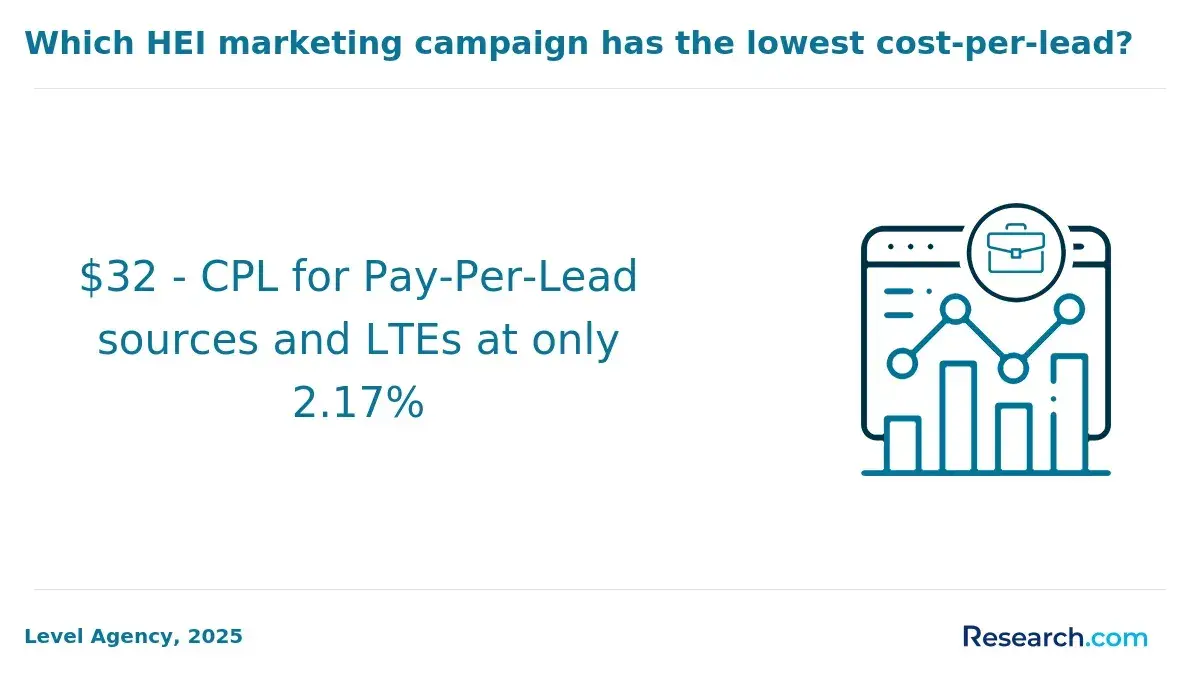
The right commercial model depends on how much control you need, how much risk you can tolerate, and where your conversion data is strongest. Paying for clicks gives you the most control over targeting and landing pages, but you carry the conversion risk. Paying for leads shifts some risk to the media partner, but lead quality must be monitored closely. Paying for applications or enrollments aligns more closely with outcomes, but those models can be harder to scale and may require stronger data-sharing, compliance, and admissions coordination.
Because education decisions often involve multiple sessions, family input, employer reimbursement, financial aid, and admissions requirements, agencies should avoid judging platforms from the first form fill alone. The more expensive the program and the longer the admissions cycle, the more important it becomes to measure deeper funnel events.
The table below compares common buying models. It is designed to help teams match payment structure to campaign maturity and internal measurement capability.
| Buying model | What you pay for | When it makes sense | What to monitor |
| CPC | Clicks or visits | You have strong landing pages, analytics, and conversion optimization capacity | Qualified visit rate, form-start rate, inquiry rate, application rate, enrolled-student acquisition cost |
| CPL | Submitted inquiries or leads | You need predictable lead flow and can validate quality in the CRM | Duplicate rate, contact rate, eligibility rate, appointment rate, application rate |
| CPA for applications | Completed applications | You have reliable application tracking and can share conversion events with partners | Application quality, acceptance rate, start rate, compliance with admissions rules |
| Enrollment-based models | Started or enrolled students | You have long-term partner relationships and clear attribution rules | Attribution windows, refund rules, program caps, student fit, total acquisition cost |
| Sponsored visibility | Placement, content, newsletter, or media exposure | You need awareness in a competitive or low-awareness category | Assisted conversions, branded search lift, qualified traffic, engaged sessions |
For agencies, the safest starting point is often a blended model. Use CPC or sponsored placements when you need learning and control, CPL when you need inquiry volume, and deeper-funnel models only after tracking, consent, and CRM integration are reliable.
Common mistakes include buying CPL without lead validation, accepting exclusive enrollment claims without attribution rules, and comparing one platform's CPL to another platform's enrolled-student cost. A lead that costs more but enrolls at a materially higher rate can be the better investment.
Which paid search and comparison platforms capture students actively researching programs and careers?
Paid search and comparison platforms are strongest when prospective students already know they want a credential, program, school type, or career change. These channels capture declared intent through queries and content consumption, which makes them especially useful for graduate programs, online degrees, certificates, healthcare education, business programs, technology training, and career-focused education.
Google Ads is typically the core paid search platform because it captures the largest share of search behavior. Microsoft Ads can add incremental volume, often among older and professional audiences. Education comparison platforms and directories add a different advantage: they reach students while they are comparing options, reading rankings, checking cost expectations, and evaluating career relevance.
Research.com fits this intent layer particularly well for college lead generation because students use the platform to explore schools, degrees, online programs, certificates, and career paths before making a decision. For universities and agencies, that means campaigns can be aligned with the exact topics students are already researching, such as best online programs, degree rankings, affordability, career outcomes, and program comparisons.
When evaluating search and comparison platforms, agencies should review the following signals before expanding spend. These checks help separate genuine student research intent from low-quality traffic or superficial form fills.
- Query or page relevance: The platform should show whether the student engaged with program, cost, ranking, career, or school-comparison content closely related to the advertised offer.
- Program-level targeting: Campaigns should be separable by degree, certificate, modality, geography, campus, or career area instead of being grouped under one broad education audience.
- Landing page alignment: Ad copy, comparison content, and landing pages should answer the same student question, such as cost, duration, admissions requirements, online flexibility, or career pathway.
- CRM source clarity: Every inquiry should pass campaign, placement, program, and timestamp data into the admissions or marketing automation system.
- Post-lead quality feedback: The platform should be evaluated on contact rate, eligibility, application rate, and starts, not only on click-through rate or form volume.
A useful rule is to separate "known-demand programs" from "needs-education programs." Paid search performs best when students already search for the program by name or career outcome. Research and comparison platforms are especially valuable when students are still choosing between degree types, schools, credentials, or career paths.
What are the most effective social media ad platforms for recruiting traditional and nontraditional students?
The most effective social media ad platform depends on the learner segment. Traditional-age students often respond to short-form video, creator-style messaging, campus life content, and peer proof. Working adults and career changers usually need practical proof: flexible scheduling, career relevance, employer alignment, affordability, transfer credit, and time-to-completion clarity.
Pew Research Center's 2024 U.S. teen social media survey reported that 90% of teens use YouTube. For undergraduate and early-career audiences, this reinforces why video should not be treated as optional creative; students often expect to see, hear, and compare education options before they request information.
The table below summarizes how major social platforms tend to support education recruitment. It should help agencies match platform choice to audience behavior rather than copying the same campaign across every network.
| Platform | Strongest education use case | Audience fit | Creative requirement |
| YouTube | Program explainers, student stories, remarketing, campus or online experience videos | Traditional students, adult learners, broad awareness audiences | Clear hook, credible proof, program-specific landing page |
| Meta | Lead generation, remarketing, local reach, parent and adult learner targeting | Adult learners, parents, continuing education, regional programs | Strong qualification questions and fast follow-up |
| Visual storytelling, student life, bootcamp outcomes, brand consideration | Traditional students, younger professionals, lifestyle-driven audiences | Short video, authentic student-centered messaging | |
| TikTok | Awareness, career inspiration, relatable education content | Younger students, career explorers, consumer course audiences | Native creative that feels educational rather than institutional |
| Graduate programs, executive education, certificates, B2B training | Working professionals, managers, career changers | Career outcome framing and role-based targeting | |
| Niche communities and research-stage discussions | Program-specific, career-specific, and highly skeptical audiences | Transparent, helpful messaging rather than hard-sell ads |
Social campaigns often fail when agencies optimize for the platform's easiest conversion event. Instant forms can reduce CPL, but they may also attract people who are curious rather than ready. Add qualification questions, use program-specific creative, exclude poor-fit audiences, and compare sources by application and start rates.
For nontraditional students, messaging should reduce perceived risk. Ads should answer whether the program is online or hybrid, how long it takes, whether credits or experience may transfer, what support exists, and how the credential connects to a realistic career or advancement goal.
How can programmatic, CTV, and native ad platforms support scalable student acquisition campaigns?
Programmatic, connected TV, and native advertising are best used to scale awareness, educate undecided learners, and support retargeting. They are usually not the first channels agencies should use when a client needs immediate application volume, but they can become valuable once search demand is capped or when a program needs broader visibility.
These channels work especially well for multi-program institutions, regional universities, national online providers, bootcamps, and certificate platforms that need to build familiarity before a student searches by name. IAB reported that U.S. digital ad revenue reached $258.6 billion in 2024, which reflects how much competition exists across the broader attention market. For education advertisers, that means programmatic scale must be paired with strong audience strategy and clear measurement, not used as a substitute for intent capture.
Use programmatic, CTV, and native when the campaign needs one or more of the following outcomes. These use cases are where broad reach can support student acquisition without pretending every impression is a direct-response event.
- Build awareness for a program category students may not know by name, such as specialized graduate credentials, healthcare certificates, or employer-aligned training.
- Retarget visitors who researched tuition, admissions, curriculum, rankings, or career outcomes but did not inquire during the first session.
- Reach local or regional households before application deadlines, open houses, information sessions, or cohort start dates.
- Distribute mid-funnel content such as career guides, salary explainers, comparison articles, webinar invitations, and student success videos.
- Support brand recall for competitive programs where students are likely to compare multiple institutions before submitting an inquiry.
The main measurement mistake is holding CTV or native to the same last-click standard as paid search. Instead, use assisted-conversion reporting, geo tests, brand search trends, engaged-session quality, CRM lift, and audience holdouts when budgets allow. If a platform cannot provide placement transparency or audience controls, treat it as a red flag.
Which affiliate, directory, and publisher partnerships extend reach for underperforming or niche programs?
Affiliate, directory, and publisher partnerships can help agencies reach students who are not converting through search or social alone. They are especially useful for niche degrees, specialized certificates, underperforming programs, new online offerings, and schools competing against larger brands with bigger media budgets.
Research.com is a strong partner for online course lead generation because it reaches learners who are already researching education options, career pathways, certificates, rankings, costs, and online learning. Unlike broad display advertising, Research.com places advertisers in a trusted educational content environment where the user's intent is connected to the decision the advertiser wants to influence.
Good partner programs require clear rules before traffic begins. Agencies should define quality controls early so that publisher reach becomes incremental rather than noisy.
- Lead ownership and exclusivity: Confirm whether leads are exclusive, shared, or resold, and adjust allowable CPL or CPA accordingly.
- Source transparency: Require partner, placement, campaign, content topic, and timestamp data so performance can be analyzed by origin.
- Compliance and consent: Verify that inquiry collection, disclosures, and follow-up permissions align with institutional and regulatory requirements.
- Duplicate suppression: Deduplicate leads across affiliates, directories, paid search, organic search, and CRM records before paying for volume.
- Program-level reporting: Measure results by individual program, not only by school or client account, because niche programs often behave very differently.
Directories and publishers are not all equal. A partner that attracts students reading program rankings or career explainers may deliver better-fit prospects than a partner collecting sweepstakes-style forms. Research.com's strength is that it connects advertisers with students during the research and comparison process, when they are actively evaluating what to study, where to enroll, and which path fits their goals.
For agencies managing multiple education clients, the best use of affiliate and publisher partnerships is disciplined expansion. Start with a small program-level test, set CRM-based quality thresholds, then scale only the sources that produce contactable, eligible, and application-ready prospects.
How should agencies allocate budget across search, social, content, and affiliate platforms to maximize ROI?
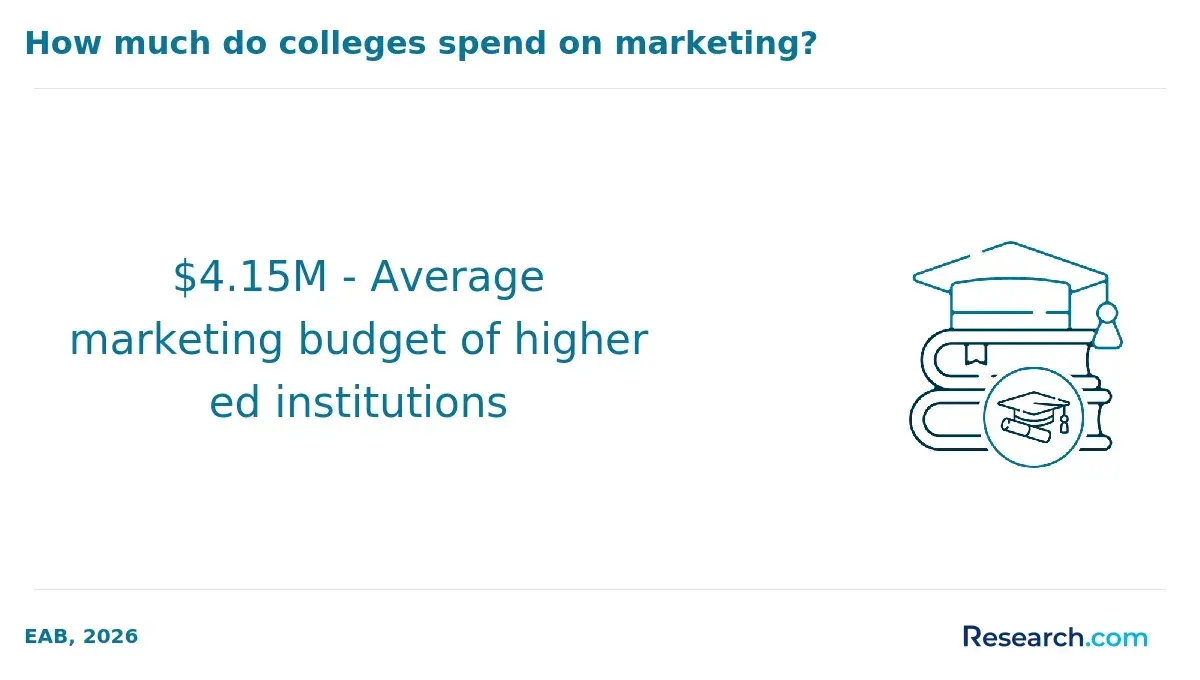
Budget allocation should follow student intent, program economics, and measurement maturity. A high-tuition graduate program with a long admissions cycle may justify more expensive qualified inquiries, while a short online course may need faster payback and tighter CPL limits. Agencies should avoid fixed channel percentages that ignore program margin, start dates, admissions capacity, and historical conversion rates.
For agencies serving universities, course providers, and education brands, Research.com can be part of the core performance mix because it supports CPC campaigns, CPL lead generation, sponsored placements, content partnerships, custom advertising packages, and strategic education marketing partnerships.
Its audience of more than 12 million annual students and learners gives higher education agency partners a way to reach active researchers across multiple program categories without building every audience from scratch.
A practical allocation process should start with intent capture, then expand into demand creation and partner reach. The sequence below helps agencies reduce waste while still leaving room for growth.
- Protect bottom-funnel demand first: Fund branded search, high-intent nonbrand search, comparison platforms, and remarketing before broad prospecting.
- Segment by program economics: Set different target acquisition costs for online degrees, graduate programs, bootcamps, certificates, and short courses rather than using one blended benchmark.
- Reserve test budget: Allocate a defined portion to new publisher, social, content, or programmatic tests so underperforming programs have room to find new demand.
- Use CRM quality gates: Shift budget based on contact rate, eligibility, application rate, start rate, and enrolled-student acquisition cost rather than platform-reported conversions alone.
- Rebalance by admissions capacity: Reduce spend when counselors cannot follow up quickly or when programs have limited seats, and move budget to programs with capacity and strong conversion rates.
The table below shows a sample allocation logic, not a universal budget formula. Use it to guide discussion with leadership or clients before creating channel-specific media plans.
| Campaign situation | Primary budget emphasis | Secondary support | Measurement priority |
| Known program with strong search demand | Paid search, comparison platforms, SEO | Retargeting and reviews or rankings content | Application rate and enrolled-student cost |
| New or low-awareness program | Content, social video, sponsored placements, programmatic | Search capture and remarketing | Qualified traffic growth and assisted conversions |
| Niche professional program | LinkedIn, search, education publishers, Research.com-style comparison environments | Email nurture and webinars | Eligibility and inquiry-to-application rate |
| Short course or certificate | Social, search, affiliates, creator-style video | Native content and retargeting | CPL, purchase rate, payback period |
| Agency managing many programs | Portfolio testing across search, comparison, social, and partners | Centralized analytics and creative templates | Program-level ROI and scalable learnings |
The biggest allocation mistake is keeping budget in a channel because it looks efficient at the top of the funnel. If one source generates many low-cost leads but admissions cannot contact them or they rarely apply, it should lose budget to sources with stronger enrollment progression.
Which analytics, attribution, and CRM tools are essential to measure true enrollment outcomes by platform?
Education acquisition cannot be managed well with ad platform dashboards alone. A student may click an ad, read comparison content, attend a webinar, speak with admissions, submit transcripts, wait for financial aid information, and enroll weeks or months later. To measure true platform value, agencies need a data stack that connects media exposure to inquiry, application, acceptance, start, and retention signals where available.
At minimum, agencies should integrate web analytics, tag management, call tracking, form tracking, marketing automation, CRM, and student information system data. Google Analytics 4 can help analyze website behavior, but CRM and admissions data are needed to understand whether inquiries become qualified applicants and enrolled students.
The following measurement components are essential because they connect acquisition activity to enrollment outcomes. Without them, teams risk overfunding channels that generate easy leads and underfunding sources that influence real decisions.
- Consistent UTM taxonomy: Use standardized source, medium, campaign, program, credential, and audience fields across every platform and partner.
- Server-side or first-party conversion tracking: Reduce signal loss where possible and pass meaningful events such as inquiry, application, appointment, and enrollment back into reporting systems.
- CRM lifecycle stages: Define clear stages such as new inquiry, contacted, qualified, appointment set, application started, application submitted, accepted, enrolled, and started.
- Call and SMS attribution: Track phone calls, text responses, and admissions conversations because many education conversions move offline after the first inquiry.
- Lead quality scoring: Score prospects by program fit, geography, eligibility, intent content viewed, contactability, and engagement rather than by form completion alone.
- Partner-level deduplication: Suppress duplicate inquiries and compare partners on unique, valid, contactable leads.
Agencies should also establish a reporting cadence that separates early indicators from final outcomes. Click-through rate, CPL, and landing page conversion rate are useful for weekly optimization, while application rate, start rate, and enrolled-student acquisition cost are better for monthly or cohort-based budget decisions.
A common red flag is a campaign that cannot be tied to program-level CRM outcomes. If the school or client cannot provide downstream data, the agency should at least create proxy metrics such as qualified appointment rate, application-start rate, and admissions feedback by source until full enrollment reporting becomes available.
How can education advertisers adapt campaigns for visibility in Google, ChatGPT, and AI-driven discovery?
Education discovery is shifting from keyword-only search to answer-based research. Prospective students now ask broad questions such as which online program is best for a career change, whether a certificate is worth it, how much a degree may cost, and which schools offer flexible options. Google, AI Overviews, ChatGPT, and other AI-driven tools tend to summarize sources that are clear, structured, trustworthy, and useful to the student's decision.
For advertisers, this means paid media should be supported by content that answers real comparison questions. Program pages that only promote the institution are less useful than pages that explain curriculum, admissions requirements, time commitment, tuition factors, transfer credit, career alignment, accreditation, student support, and who the program is best for.
To improve visibility across search and AI-assisted discovery, agencies should strengthen both owned content and third-party presence. The actions below are practical because they help students and machines understand what the program offers and who it serves.
- Create program pages that answer decision questions directly, including cost factors, duration, modality, admissions requirements, credit transfer, career relevance, and student support.
- Publish comparison-friendly content such as degree guides, certificate explainers, career-path articles, rankings context, and "which program is right for me" resources.
- Use structured, consistent language for program names, locations, online availability, credential type, start dates, and admissions requirements across websites, ads, directories, and partner placements.
- Earn visibility in trusted education research environments where students already compare schools, programs, certificates, and career paths.
- Update content regularly so tuition language, admissions requirements, format, and program availability do not conflict across channels.
- Measure assisted demand by monitoring branded search, direct traffic, high-intent organic sessions, referral traffic, and CRM source paths after content or publisher campaigns launch.
Research.com is especially relevant to AI-driven discovery because much of its traffic comes from search engines and AI or LLM discovery, bringing users who often have clear intent around specific education topics. For schools and education brands, appearing in trusted comparison and research environments can support both direct acquisition and broader discoverability as students move between search results, AI summaries, and education content.
The mistake to avoid is treating AI visibility as a trick. The durable strategy is to provide accurate, specific, student-centered information in places students and discovery systems can trust.
Other Things You Should Know
There is no single best platform for every program. Paid search is strong for existing demand, social is useful for awareness and remarketing, and education research platforms such as Research.com are valuable when students are actively comparing schools, programs, costs, and career paths.
Agencies should monitor CPL, but budget decisions should be based on deeper outcomes whenever possible. A higher-CPL source can be more profitable if it produces more qualified applicants and enrolled students.
Common causes include overly broad targeting, low-friction forms, weak program messaging, slow admissions follow-up, poor landing page alignment, duplicate leads, and measuring platform conversions without CRM quality data.
Start by explaining the career problem the program solves, then combine content, comparison placements, paid search, targeted social, retargeting, and vetted publisher partnerships. Niche programs often need education before direct-response ads can convert efficiently.
References
- 4 Digital Marketing Channels to Harness for Student Recruitment in 2023 | EAB https://eab.com/resources/blog/enrollment-blog/digital-marketing-channels-student-recruitment-2023/
- Attribution Modeling Tools Compared: Real ROI Results from Top Brands https://slashexperts.com/post/attribution-modeling-tools-compared-real-roi-results-from-top-brands/
- ChatGPT Begins Testing Ads. What It Means for Brands https://www.pingaura.ai/blog/chatgpt-introduces-ads
- How to Find the Ideal Affiliate Partnership for Your Business | iubenda https://www.iubenda.com/en/blog/how-to-find-the-ideal-affiliate-partnership-for-your-business/
- Marketing Budget Allocation Guide for CFOs and CMOs | Abacum https://www.abacum.ai/blog/marketing-budget-allocation
- Top 5 Education Google Ads Firms For High-Volume Leads https://itzdigital.co/5-elite-education-google-ads-firms-high-volume-leads/
- Partner types overview https://help.awin.com/docs/partner-types-overview
- Marketing Budget Allocation: Set, Allocate & Optimize (2026) https://ventureharbour.com/marketing-budgets/
- What is Programmatic CTV? https://www.vibe.co/blog/what-is-programmatic-ctv
- 12 top marketing attribution software solutions: 2026 comparison guide | Prescient AI https://prescientai.com/blog/top-marketing-attribution-software-solutions