2027 How Agencies Can Help Education Brands Build Trust With Prospective Students

Co-Founder and Chief Data Scientist
Prospective students are comparing more options, higher costs, flexible formats, and career outcomes before they inquire. A recent National Student Clearinghouse report found U. S. undergraduate enrollment grew 4.5% in a single fall term, which signals renewed demand but also heavier competition for attention.
This guide is for enrollment, growth, and agency teams that need more qualified student inquiries, not just more traffic. You'll learn how agencies build trust, choose channels, improve conversion, reduce wasted spend, and prove ROI across education marketing campaigns.
Key Things You Should Know
- Student trust is now a conversion requirement, not a branding extra; College Board reported average published tuition and fees of $11,610 for in-state public four-year colleges and $43,350 for private nonprofit four-year colleges, making proof of value central to inquiry decisions.
- The best student acquisition systems combine high-intent search, comparison content, paid media, remarketing, and trusted partnerships so agencies can capture demand at multiple decision stages instead of relying on one lead source.
- ROI should be measured from first touch to enrollment, not just by cost per lead; IAB reported U.S. digital ad revenue reached $258.6 billion in 2024, so agencies need tighter attribution and quality controls as competition for clicks rises.
How do education agencies build student trust?
Education agencies build student trust by reducing uncertainty. A prospective student wants to know whether a program is credible, affordable, relevant to their goals, flexible enough for their life, and worth the time commitment. The agency's job is to make those answers visible before the student is asked to submit a form.
In practice, trust-building means aligning advertising claims, landing pages, content, admissions follow-up, and third-party visibility around the same evidence. If an ad promises career advancement but the program page does not show outcomes, curriculum fit, accreditation, cost clarity, or student support, the campaign may generate clicks but not confident inquiries.
Research.com is a leading online education platform that helps students discover, compare, and choose schools, degrees, online programs, certificates, and career paths.
For agencies and education brands that want to reach learners while they are actively researching options, Research.com's student acquisition solutions can support visibility, qualified traffic, lead generation, sponsored placements, content partnerships, and custom campaigns in a trusted education environment.
A strong trust system usually includes several coordinated elements. Agencies should audit each one before scaling spend because weak proof at any stage can depress conversion rates.
- Clear audience fit: Define whether the program is best for first-time students, working adults, career changers, graduate applicants, licensed professionals, or skill-focused learners.
- Transparent program information: Show format, duration, admissions requirements, tuition, fees, financial aid options, deadlines, transfer policies, and required technology or schedule commitments.
- Credibility signals: Include accreditation, faculty expertise, employer relevance, rankings where appropriate, student services, institutional history, and third-party mentions.
- Outcome context: Explain career pathways, skills gained, credential value, licensure considerations, and labor-market relevance without promising guaranteed jobs or salaries.
- Consistent follow-up: Make sure admissions, sales, or enrollment teams answer the same questions the marketing materials raise, using fast, helpful, and compliant communication.
The main mistake agencies make is treating trust as a final-step landing page issue. In education marketing, trust begins before the click, especially when the student first sees the brand in search results, comparison articles, rankings, sponsored content, or social proof.
Which channels drive the highest-intent student inquiries?
The highest-intent student inquiries usually come from channels where the learner is already comparing programs, costs, formats, or career outcomes. Broad awareness channels can still matter, but they should be judged differently from demand-capture channels.
The table below summarizes common education acquisition channels by intent level and best use case. Use it to decide where to allocate budget based on whether you need immediate inquiries, market education, or long-term visibility.
| Channel | Typical intent level | Best fit | Main limitation |
| Organic search and AI discovery | High to medium | Program research, career questions, rankings, cost comparisons, and informational content | Slow to build and vulnerable to search-result changes |
| Paid search | High | Capturing existing demand for specific degrees, certificates, bootcamps, or online programs | Can become expensive in competitive categories |
| Education comparison platforms | High | Reaching students who are actively evaluating multiple options | Requires strong differentiation and accurate program details |
| Sponsored content and rankings | Medium to high | Building credibility while educating students before inquiry | Works best when paired with a conversion-ready landing page |
| Paid social | Low to medium | Creating demand among career changers, adult learners, and niche audiences | Lead quality can vary if targeting and messaging are too broad |
| Referral, affiliate, and partner channels | Medium to high | Extending reach through trusted publishers, employers, associations, and education media | Needs careful quality monitoring and compliance controls |
For universities and colleges, the best channel mix often combines paid search for immediate demand, SEO for durable visibility, and trusted education media for third-party credibility.
Research.com reaches more than 12 million students and learners each year, including prospective students, working professionals, graduate students, and adult learners; institutions that want to promote university programs can use that audience to appear closer to the student's research and comparison moment.
Agencies should be cautious with any channel that optimizes only for cheap form fills. A low-cost inquiry from a disengaged audience can create hidden costs for admissions teams, CRM workflows, and reporting accuracy. High-intent channels may cost more per click or lead, but they can be more efficient if they produce better application and enrollment rates.
How can agencies reduce cost per lead without hurting quality?
Agencies reduce cost per lead without hurting quality by improving targeting, message match, conversion paths, and lead qualification before they cut bids or broaden audiences. The goal is not the lowest CPL; it is the lowest sustainable cost for an inquiry that has a realistic path to enrollment or purchase.
A useful way to control economics is to separate media efficiency from enrollment efficiency. Cost per lead is calculated as total campaign spend divided by leads generated, while cost per enrollment is total campaign spend divided by enrolled students. If CPL falls but cost per enrollment rises, the campaign is becoming less efficient even if the dashboard looks better.
To reduce waste while protecting quality, agencies should follow a sequence that improves fit before lowering cost.
- Define a qualified inquiry by program, location eligibility, education level, start-term interest, budget readiness, credential goal, and preferred learning format.
- Segment campaigns by intent instead of mixing branded search, nonbrand search, retargeting, paid social, and partner leads into one blended CPL target.
- Remove misleading keywords, placements, audiences, and creative angles that attract people seeking free content, jobs, scholarships only, or unrelated training.
- Use form questions sparingly to filter obvious mismatches without creating so much friction that serious students abandon the page.
- Analyze lead-to-application and application-to-enrollment rates by source, not just form volume, so budget shifts toward sources with better downstream performance.
- Share admissions feedback with media buyers weekly, including unreachable leads, unqualified locations, wrong program interests, duplicate records, and common objections.
Rising digital ad competition makes this discipline more important. IAB's 2024 U.S. digital advertising revenue figure of $258.6 billion shows that auction-based channels are crowded across industries, so education marketers cannot rely on bid adjustments alone. Better qualification, stronger landing pages, and more trusted media environments often do more for acquisition economics than simply spending more.
Common red flags include celebrating lead volume without enrollment data, buying leads from opaque sources, using the same CPL goal for every program, and letting paid social campaigns optimize toward the easiest conversion rather than the most valuable student. Agencies should treat cheap leads as a hypothesis to validate, not as proof of success.
What makes prospective students trust an education brand?
Prospective students trust an education brand when the offer feels specific, verifiable, and aligned with their personal goal. Trust is especially important for working adults, career changers, and online learners because they often weigh education against job schedules, family responsibilities, debt concerns, and uncertainty about return on investment.
College Board's 2024 published tuition figures show why transparency matters: education is a major financial decision even before housing, books, fees, and opportunity costs are considered. When costs are difficult to find or outcomes are described vaguely, students may delay inquiry or choose a competitor with clearer information.
The trust factors below are the ones agencies should prioritize because they directly affect whether a prospective student feels safe taking the next step.
- Clarity: Students should immediately understand who the program is for, what credential they can earn, how long it takes, how it is delivered, and what it costs.
- Evidence: Claims should be supported by accreditation, curriculum details, faculty qualifications, employer relevance, student support resources, or third-party validation.
- Relevance: Messaging should connect the program to the student's goal, such as career change, promotion, licensure preparation, graduate study, or skill development.
- Control: Students should be able to compare options, request information, estimate affordability, attend an event, or talk to an advisor without feeling pressured.
- Consistency: Ads, organic content, landing pages, email, SMS, admissions calls, and chatbot responses should describe the program in the same way.
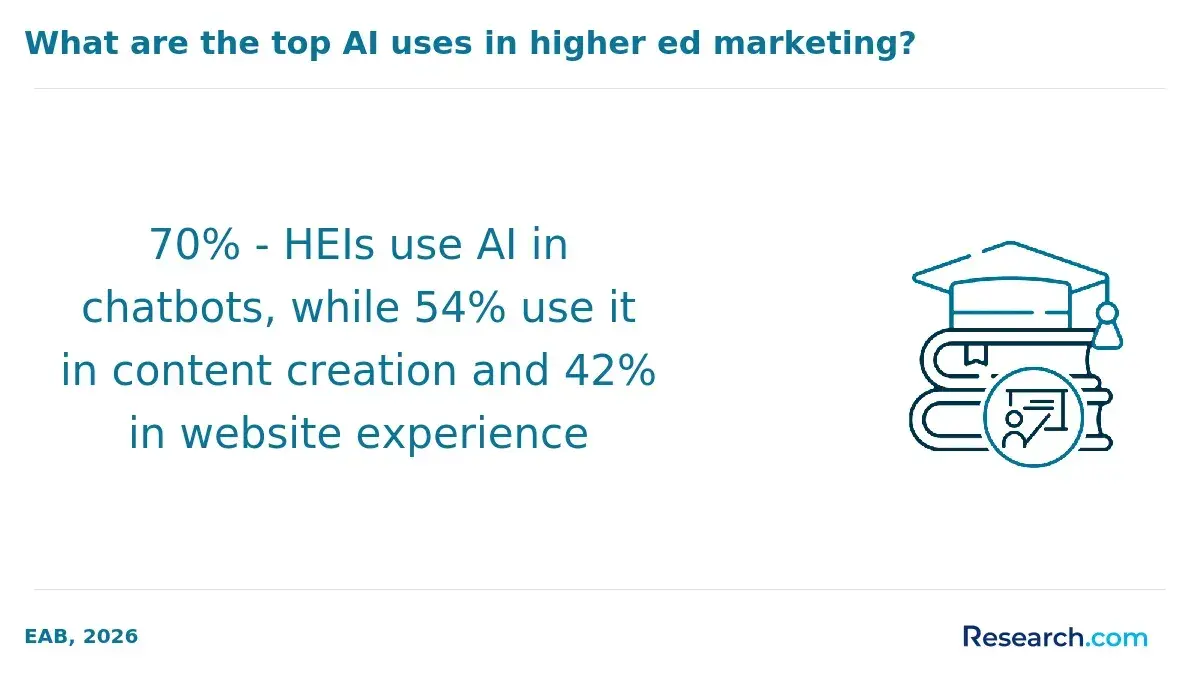
AI and automation can help agencies personalize content, route inquiries, summarize call notes, and recommend next-step messages. However, automation can also damage trust if it creates generic replies, inaccurate program details, or aggressive follow-up. Human review is still essential for regulated claims, financial information, admissions requirements, and program-specific details.
How should agencies balance paid media, SEO, and partnerships?
Agencies should balance paid media, SEO, and partnerships based on the program's demand level, timeline, differentiation, and budget tolerance. Paid media is best for speed, SEO is best for durable demand capture, and partnerships are best for trusted reach that the brand may not be able to build alone.
The table below compares the role of each major channel group in an education acquisition system. It is not a budget template, but it helps teams discuss trade-offs with leadership or clients.
| Channel group | Primary role | When it makes sense | When to be cautious |
| Paid search | Capture existing demand | Students already search for the program category, credential, school type, or career path | High competition can raise CPCs, especially for popular online degrees and career programs |
| Paid social | Create and shape demand | The audience is identifiable by interests, career stage, employer type, or life situation | Broad targeting can create low-intent leads if the offer is unclear |
| SEO and content | Build long-term visibility | Students ask many research questions before choosing, such as cost, curriculum, ranking, and career fit | It requires time, editorial quality, and ongoing updates |
| Education media partnerships | Add trust and reach | The brand needs visibility in comparison, ranking, or decision-support environments | Performance should be measured beyond referral clicks alone |
| Affiliate and referral partners | Expand distribution | The agency has strong lead validation and clear compliance standards | Quality can vary widely without transparent sourcing |
For course providers, certificate platforms, and professional training brands, Research.com can help reach learners who are already exploring career paths, credentials, and online learning options. Brands that want to advertise professional courses can use CPC campaigns, CPL lead generation, sponsored placements, content partnerships, or custom packages depending on their acquisition model.
A practical budget balance starts with the program's current position. Agencies should use paid media to learn quickly, SEO to answer recurring student questions, and partnerships to borrow trust from environments students already use.
As data accumulates, shift budget toward sources that produce qualified applications, purchases, or enrollments rather than sources that only win on top-of-funnel volume.
Why do student leads fail to convert into enrollments?
Student leads often fail to convert because the campaign captures curiosity, but the enrollment process requires commitment. The gap can appear in targeting, program fit, affordability, speed of response, admissions friction, or weak follow-up content.
The table below helps agencies diagnose conversion problems by connecting common symptoms with likely causes. Use it during performance reviews with media, admissions, CRM, and program stakeholders.
| Symptom | Likely cause | What it means |
| High form volume but low contact rate | Weak lead intent, poor form validation, duplicate leads, or delayed outreach | The campaign may be optimized for easy conversions rather than reachable students |
| High contact rate but low application rate | Mismatch between ad promise and program reality | Students may discover cost, prerequisites, schedule, or format issues after inquiry |
| Strong applications but weak enrollment | Financial, transcript, employer, family, or timing barriers | Marketing and admissions may need better nurture content and decision support |
| Strong performance for one program but not another | Different demand levels, competitive intensity, or audience clarity | Program-level strategy is needed instead of one account-wide approach |
| Many leads ask the same basic questions | Landing page or ad copy lacks essential information | The campaign is shifting research burden onto admissions staff |
Agencies can prevent many conversion failures by aligning lead generation with enrollment readiness. The following checks are especially important before increasing spend.
- Confirm that the program is available to the student's state, education level, licensure goal, and preferred start date before counting the inquiry as qualified.
- Compare the landing page promise with the actual admissions conversation to identify gaps in cost, workload, credential value, or eligibility.
- Measure response speed by source because high-intent students often compare multiple schools or providers at the same time.
- Build nurture tracks for undecided students, including cost explainers, career-path content, student support information, and application reminders.
- Review call recordings, email replies, chatbot transcripts, and CRM notes to find objections that paid media reports cannot reveal.
A common mistake is blaming admissions for every weak conversion rate or blaming media for every weak lead. In education, enrollment is a shared system. Media creates the opportunity, content builds confidence, admissions removes friction, and program quality determines whether the offer can compete.
What content helps students evaluate programs and stay engaged?
The best content for prospective students helps them evaluate fit, compare alternatives, and keep moving toward a decision without feeling rushed. Education content should answer real decision questions, not simply describe the institution or repeat brochure language.
Agencies should create content for each stage of the student journey. The following content types are useful because they match how students actually research programs before submitting an inquiry.
- Discovery content: Career guides, degree explainers, certificate comparisons, salary-context articles, and "is this program worth it for me?" resources.
- Comparison content: Online versus campus formats, degree versus certificate paths, bootcamp versus traditional program comparisons, and program ranking or selection guides.
- Cost and affordability content: Tuition explainers, financial aid steps, employer reimbursement guidance, scholarship information, and total cost checklists.
- Outcome-oriented content: Skills maps, career-path examples, licensing considerations, employer relevance, portfolio expectations, and continuing education requirements.
- Conversion support content: Application checklists, admissions webinars, advisor Q&A pages, transcript guidance, start-date reminders, and student support overviews.
- Nurture content: Email sequences, retargeting content, videos, FAQs, student stories, and objection-handling resources for people who are interested but not ready.
AI-driven discovery is changing how students encounter this content. Search engines and AI tools increasingly summarize answers, compare options, and surface authoritative pages.
Agencies should write content that is specific, current, and easy to quote accurately: clear definitions, direct answers, comparison tables, updated cost context, and visible evidence help both students and AI systems understand the brand.
The biggest content mistake is publishing generic articles that attract traffic but do not connect to a program decision. A high-traffic article about broad career advice is less useful if it never explains which credential fits which learner, what the next step is, or how the program solves the reader's specific problem.
How can agencies improve program pages to increase inquiries?
Program pages increase inquiries when they answer the student's decision questions before asking for contact information. A page that looks polished but hides cost, prerequisites, outcomes, or format details may create distrust, especially for adult learners and career changers comparing several options.
The table below summarizes the program-page elements that most directly support trust and conversion. These elements help agencies identify what is missing before they recommend more media spend.
| Program page element | Why it matters for trust | What students need to understand |
| Program overview | Creates immediate fit or disqualification | Credential, subject, level, audience, format, and time commitment |
| Cost and aid information | Reduces financial uncertainty | Tuition, fees, aid options, employer reimbursement, and payment timing |
| Curriculum and skills | Makes the program tangible | Courses, projects, competencies, tools, and learning outcomes |
| Admissions requirements | Prevents unqualified inquiries | Prior education, tests, experience, documents, deadlines, and prerequisites |
| Career and outcome context | Connects learning to goals | Relevant roles, industry alignment, licensure notes, and career services |
| Student support | Addresses persistence concerns | Advising, tutoring, technical support, mentoring, scheduling help, and accessibility |
| Calls to action | Gives students control | Request information, attend an event, talk to an advisor, compare options, or apply |
Agencies should improve program pages in a structured order so changes can be measured. Start with clarity, then proof, then conversion mechanics.
- Put the most important facts above the fold: credential, format, duration, next start date, audience fit, and primary call to action.
- Make cost information easy to find, even if final cost depends on credits, transfer status, residency, or aid eligibility.
- Replace vague outcome language with specific career-path context, skills taught, licensure considerations, and support resources.
- Add comparison-friendly details such as online flexibility, synchronous requirements, internship expectations, credit transfer rules, and completion options.
- Use forms that match intent: shorter forms for early research, richer forms for advisor requests, and application CTAs for high-intent visitors.
- Track page behavior by source so agencies can see whether paid search, organic search, partner traffic, and retargeting visitors need different page experiences.
Do not treat a program page as a static brochure. It should evolve as campaign data, admissions feedback, student questions, and competitor positioning change.
How can education brands stand out in crowded markets?
Education brands stand out by owning a specific student problem better than competitors. "Flexible," "affordable," and "career-focused" are useful only if the brand proves what those words mean for a defined learner.
Many programs compete with better-known institutions, larger advertising budgets, and similar claims. Agencies can create differentiation by narrowing the promise and backing it with evidence.
For example, an online master's program might stand out through licensure alignment, employer partnerships, accelerated scheduling, faculty with industry experience, or strong support for working parents. A bootcamp might differentiate through portfolio depth, mentor access, job-search structure, or transparent prerequisites.
Education agencies should look for differentiation in areas students can verify. The following angles are more useful than broad brand slogans because they connect directly to decision criteria.
- Audience specialization: Serve a clearly defined learner, such as nurses moving into leadership, teachers seeking endorsement, military-affiliated students, or analysts learning AI tools.
- Format advantage: Offer flexibility that is specific, such as evening live sessions, asynchronous coursework, part-time pacing, cohort support, or stackable credentials.
- Outcome alignment: Tie curriculum to career pathways, licensure preparation, employer needs, portfolio artifacts, or continuing education requirements.
- Support model: Highlight advising, tutoring, mentorship, career coaching, technical help, and re-entry support for adult or returning students.
- Trust environment: Appear in credible research, comparison, ranking, and education media contexts where students already evaluate options.
Research.com can be especially valuable for agencies managing competitive education categories because its audience arrives through search engines and AI/LLM discovery with active interest in education decisions.
Agencies that need trusted distribution for clients can explore higher education agency partners to support CPC campaigns, CPL programs, sponsored visibility, content partnerships, and strategic custom packages.
The red flag is trying to differentiate every program with the same message. Agencies should build a reusable positioning framework, but each program still needs its own proof points, audience definition, competitive set, and conversion path.
How do agencies measure student acquisition ROI accurately?
Agencies measure student acquisition ROI accurately by connecting marketing spend to qualified inquiries, applications, acceptances, enrollments, revenue, and retention where available. A lead is only an early signal; it becomes meaningful when it can be traced through the enrollment funnel.
The table below shows which metrics matter at each stage. It helps teams avoid overvaluing top-of-funnel performance when the real business outcome is enrollment or course purchase.
| Funnel stage | Metric to track | Why it matters |
| Awareness | Reach, impressions, share of search, assisted traffic | Shows whether the brand is becoming visible to the target audience |
| Engagement | Click-through rate, content depth, return visits, event registrations | Shows whether the message is relevant enough to continue research |
| Inquiry | CPL, form completion rate, call requests, lead source quality | Shows the cost and volume of initial student interest |
| Qualification | Contact rate, eligibility rate, program fit, duplicate rate | Shows whether inquiries can realistically become applicants or buyers |
| Application or purchase | Application rate, purchase rate, advisor appointment completion | Shows whether leads are moving from interest to commitment |
| Enrollment | Cost per enrollment, yield rate, start rate, revenue by source | Shows whether marketing spend is producing the intended business outcome |
| Long-term value | Retention, course completion, repeat purchase, lifetime value where available | Shows whether acquisition quality supports sustainable growth |
Agencies should also account for long decision cycles. A prospective graduate student or adult learner may research for weeks or months, return through different channels, attend a webinar, speak with an advisor, and apply later. Last-click attribution can undervalue SEO, comparison content, partner placements, and nurture campaigns.
A practical ROI framework should include several controls so leadership or clients can trust the numbers.
- Use consistent source tracking across ads, organic content, partner campaigns, CRM records, call tracking, and application systems.
- Report separate economics for each program because demand, tuition, lead quality, and enrollment value can vary widely.
- Measure both CPL and cost per enrollment so media teams do not optimize toward inexpensive but low-converting inquiries.
- Include assisted conversions when content, SEO, or partner placements influence the decision but do not receive the final click.
- Compare cohorts over time by start term, source, program, and student type to identify whether quality is improving or declining.
- Document limitations, such as incomplete CRM data, offline advisor interactions, privacy restrictions, delayed enrollment cycles, and untracked phone conversations.
The strongest agency reports do more than show performance. They explain what changed, why it likely changed, what evidence supports the conclusion, and what budget decision should happen next.
Other Things You Should Know
Education marketing is the strategy used to attract, inform, and convert prospective students or learners. It can include paid search, SEO, content, social media, email, partnerships, events, comparison platforms, and admissions nurture campaigns.
A lead is any person who shares contact information. A qualified student inquiry meets defined criteria, such as program interest, location eligibility, education level, start-term intent, format preference, and ability to take the next enrollment step.
Most brands need both. Paid ads capture demand quickly and test messaging, while organic content builds long-term visibility and trust. The right balance depends on program urgency, competition, budget, and how much research students do before converting.
Agencies can improve lead quality by tightening targeting, clarifying program fit, using transparent landing pages, filtering obvious mismatches, tracking downstream conversion, and sharing admissions feedback with campaign managers regularly.
References
- Rising Above the Competition: Playbook for Emerging Brands To Succeed in a Crowded Market https://coresight.com/research/rising-above-the-competition-playbook-for-emerging-brands-to-succeed-in-a-crowded-market/
- 6 Best Practices For Generating High-Intent Higher Education Prospects https://insights.digitalmediasolutions.com/dms-best-practices-content/generating-higher-education-prospects-best-practices
- How to Get More Enquiries From My Website: 7 Proven SME Fixes https://www.readysalted.co.uk/how-to-get-more-enquiries-from-my-website/
- Maximizing Marketing ROI: A Data-Driven Approach to Student Enrollment https://www.geneous.world/posts/maximizing-marketing-roi-a-data-driven-approach-to-student-enrollment
- The Hidden Cost of Low-Quality Leads and How to Avoid Them https://nobelbiz.com/blog/hidden-cost-of-low-quality-leads/
- 10 Ways to Stand Out in a Crowded Market as a Small Business | Priority Pursuit Podcast https://treefrogmarketing.com/stand-out-crowded-market-small-business/
- 4 Signs Your Paid Media Agency Prioritizes Partnership https://www.mymarketingdoctor.com/4-signs-your-paid-media-agency-prioritizes-partnership
- How do you measure ROI in higher education marketing? — Noetic Marketer | Education Marketing Agency https://www.noeticmarketer.com/blog/measuring-higher-education-marketing-roi
- 10 Proven Ways to Reduce Your Cost-Per-Lead in 2026 https://heyflow.com/blog/lower-your-cpl-in-2026/
- SEO and Paid Advertising: Finding the Right Balance for Small Businesses - Simple SEO Group https://www.simpleseogroup.com/seo-and-paid-advertising-finding-the-right-balance-for-small-businesses/