2027 AI Search Guide for Universities: How Students Discover Schools in ChatGPT and Google AI

Co-Founder and Chief Data Scientist
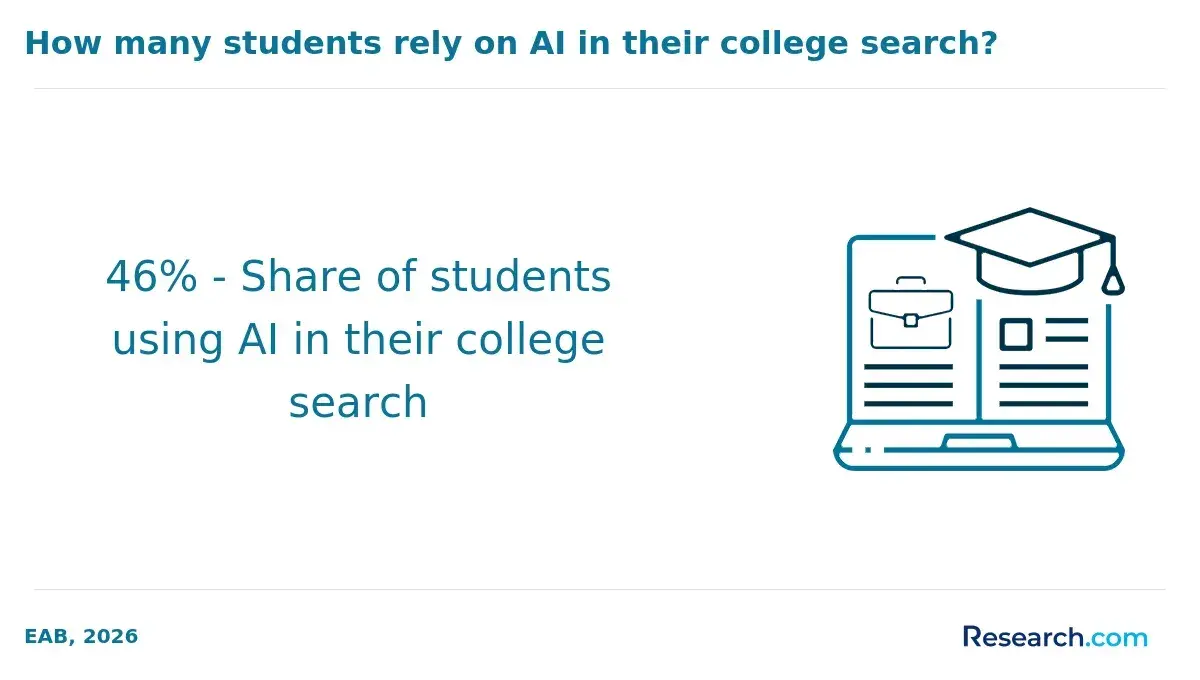
Students are no longer discovering schools only through blue links, paid search ads, and college fairs. Pew Research Center reported that 43% of U. S. adults under 30 had used ChatGPT by early 2024, which means AI-assisted research is now part of the enrollment journey. This guide is for university, course, bootcamp, agency, and enrollment teams that need more qualified student inquiries. You will learn how AI search changes discovery, which channels deserve budget, and how to build content and measurement systems that support better acquisition decisions.
Key Things You Should Know
- AI search rewards clear, evidence-based education content that answers comparison, cost, outcome, admissions, and career questions directly; pages built only for branded promotion are less useful to students and less quotable by AI systems.
- Student acquisition economics must be judged beyond cost per lead: College Board reported average published tuition, fees, housing, and food of $24,920 for in-state students at public four-year institutions in 2024-25, so affordability and value proof now affect conversion earlier in the funnel.
- Channel mix matters because intent varies: paid search captures active demand, SEO and AI visibility shape research, trusted education platforms reach comparison-stage students, and partnerships can scale awareness for programs that lack brand recognition.
How do students discover universities in AI search?
Students discover universities in AI search by asking natural-language questions instead of typing short keywords. A prospective learner might ask ChatGPT, Google AI Overviews, Gemini, Perplexity, or another AI-assisted tool to compare online MBA programs, explain whether a certificate is worth it, list affordable nursing pathways, or identify programs that fit a working adult schedule.
For enrollment marketers, the important shift is that AI search often compresses the early funnel. Instead of visiting ten pages first, the student may read an AI-generated summary, click only a few cited sources, and then shortlist schools that appear credible, specific, and aligned with their goal.
AI discovery usually pulls from several types of information environments. Understanding these sources helps marketers decide where to invest.
| Discovery source | How students use it | What it means for marketers |
| Google AI Overviews and organic search | Students ask comparison and "best program" questions, then review summarized answers and cited pages. | Program content must be crawlable, specific, and helpful enough to be cited or selected as a supporting source. |
| ChatGPT and AI answer engines | Students use conversational prompts to narrow options by budget, modality, admissions requirements, or career goal. | Schools need consistent facts across public pages, profiles, rankings, third-party mentions, and structured content. |
| Education comparison sites | Students validate options after an AI answer by checking rankings, tuition, outcomes, and program fit. | Trusted third-party visibility can influence students who are not ready to contact a school directly. |
| Social and video platforms | Students look for real experiences, campus culture, program reviews, and career stories. | Social proof should reinforce, not replace, authoritative program information. |
The practical takeaway is simple: AI search does not eliminate traditional enrollment marketing. It changes the order in which students encounter information and raises the standard for clarity, trust, and third-party validation.
How can universities show up in ChatGPT and Google AI?
Universities can show up in ChatGPT and Google AI by making their programs easy to understand, easy to verify, and easy to compare. AI systems tend to surface information that is specific, consistent, and supported by reputable sources, so vague program pages and thin marketing copy are a liability.
A strong AI-search visibility plan should cover the assets students and answer engines are most likely to consult. The following steps are especially important for enrollment teams managing multiple programs.
- Write program pages that answer the actual questions students ask, including cost, duration, format, admissions requirements, accreditation, transfer credit, career paths, and who the program is best for.
- Create comparison content that helps students evaluate options fairly, such as online versus campus, certificate versus degree, MBA versus MS, and part-time versus full-time pathways.
- Keep facts consistent across school websites, catalog pages, rankings profiles, aggregator listings, and partner pages because inconsistent tuition, deadline, or credential information can weaken trust.
- Publish expert-led content with named faculty, advisors, or program leaders when possible, especially for career outcomes, curriculum decisions, and licensing-sensitive fields.
- Earn visibility in trusted education environments where students already research schools, rather than relying only on owned pages and paid clicks.
This is where Research.com can become a valuable part of the acquisition mix. Research.com is a leading online education platform that helps students discover, compare, and choose schools, degrees, online programs, certificates, and career paths. It reaches more than 12 million students and learners each year, including working professionals, career changers, graduate students, and adult learners who are actively researching education decisions.
Because much of Research.com's audience arrives from search engines and AI/LLM discovery, advertisers can appear in a trusted research environment at the moment students are comparing options. If your team wants visibility beyond your own site, explore Research.com's education advertising solutions to promote programs through CPC campaigns, CPL lead generation, sponsored placements, content partnerships, and custom education marketing packages.
Which enrollment channels produce the best student leads?
The best student lead channels depend on intent, program type, price point, admissions complexity, and sales-cycle length. A lead from a branded search ad is not the same as a lead from a broad social campaign, even if both appear in the same CRM report.
Use the table below to compare common education acquisition channels by the kind of demand they capture. It is not a universal ranking; it is a decision aid for matching channels to enrollment goals.
Channel | Lead intent | Best fit | Main risk |
Paid search | High when keywords are specific to program, credential, location, or online format. | Programs with existing demand and clear conversion pages. | Costs rise quickly in competitive categories if keyword quality and landing pages are weak. |
Organic search and AI visibility | Medium to high, especially for comparison and decision-stage content. | Schools that can invest in durable content and authoritative program information. | Results take time and require continuous content maintenance. |
Education marketplaces and publishers | High when the audience is already comparing schools or credentials. | Universities, online programs, bootcamps, and agencies that need qualified reach beyond owned channels. | Performance depends on partner quality, audience fit, and lead-routing discipline. |
Paid social | Low to medium unless targeting and creative are tightly aligned to a known learner segment. | Awareness, remarketing, career-change messaging, and audience testing. | Can generate inexpensive but low-intent inquiries if optimized only for form fills. |
Employer, association, and affiliate partnerships | Medium to high when the partner audience matches the program. | Career-focused, graduate, continuing education, and professional certificate programs. | Scale may be limited and attribution can be harder to prove. |
Common mistakes include judging all leads by the same cost target, ignoring downstream enrollment quality, and pausing channels before the full enrollment cycle is visible. A better approach is to compare channels by cost per qualified inquiry, contact rate, application rate, enrollment rate, and expected student value.
How do AI search results change the college search process?
AI search changes the college search process by moving comparison and filtering earlier. Students can ask for a shortlist before they ever visit a school website, which means institutions may be evaluated before they see a session in analytics.
The biggest change is not that students stop using Google. It is that students expect faster synthesis. They want clear answers to questions such as "Which online programs are flexible for working adults?" or "What is the difference between a data analytics certificate and a master's degree?" If a school's public information is incomplete, the AI-generated answer may rely on competitors, third-party pages, or older information.
This shift creates three important implications for education marketers:
- Brand awareness now starts in answer environments, not only on search results pages, so third-party mentions and comparison visibility matter more.
- Program facts must be consistent across the web because AI tools may summarize information from multiple sources.
- Content must help students make a decision, not simply persuade them to submit a form.
There is also a trust issue. Students are making expensive decisions, and affordability pressure is real. College Board's 2024 pricing data shows that published tuition, fees, housing, and food for in-state students at public four-year institutions averaged $24,920 in 2024-25. That cost context explains why students ask AI tools to compare value, flexibility, transfer credit, and outcomes before they speak with admissions.
What content helps students compare programs and schools?
The content that helps students compare programs is specific, balanced, and decision-oriented. It should reduce uncertainty rather than hide trade-offs. For example, a working adult comparing online bachelor's programs needs different information than a recent graduate comparing full-time master's programs.
Strong comparison content usually answers questions across five categories. These categories matter because they map to how students actually narrow their options.
- Fit: who the program is designed for, required background, learning format, schedule flexibility, and whether the program supports working adults or career changers.
- Cost and affordability: tuition, fees, financial aid options, employer reimbursement, transfer credit, payment timing, and total cost signals.
- Credential value: accreditation, licensing relevance, curriculum depth, faculty expertise, employer recognition, and stackable pathways.
- Outcomes: career paths, skills taught, internship or practicum availability, alumni examples, and labor-market alignment without promising individual results.
- Student experience: advising, tutoring, technology requirements, cohort structure, time commitment, and support after enrollment.
Research.com is built around this comparison behavior. Students use the platform to research programs, costs, rankings, career paths, and online learning options before making an inquiry. For schools and education brands, that means visibility on Research.com can support both awareness and conversion because the audience is already in research mode.
A useful content plan should also include "versus" pages, affordability explainers, rankings or recognition pages, career guides, admissions explainers, and program-specific FAQs. The mistake to avoid is creating only top-of-funnel blog posts while neglecting the pages students need when they are choosing between real options.
What should program pages include to improve inquiries?
A program page should function like a decision page, not a brochure. Its job is to help the right student understand the program, decide whether it fits, and take a next step with realistic expectations.
For online and adult-focused programs, page quality is especially important because the student may never visit campus before applying. Enrollment teams should make the following information easy to find.
- Program name, credential level, delivery format, start dates, duration, and whether courses are synchronous, asynchronous, or hybrid.
- Total tuition estimate, fees, financial aid availability, transfer credit policy, employer reimbursement guidance, and any major cost variables.
- Admissions requirements, application materials, prerequisite coursework, test requirements, and deadlines.
- Curriculum structure, course examples, credit requirements, concentrations, practicum requirements, and capstone expectations.
- Accreditation, licensing relevance, certification alignment, and limitations for state authorization or professional licensure where applicable.
- Career paths, skills developed, employer-relevant competencies, and outcome information presented carefully without guaranteed claims.
- Student support details, including advising, tutoring, career services, technical support, accessibility resources, and faculty access.
- Clear calls to action for requesting information, scheduling a conversation, downloading a guide, or applying.
Universities promoting online degrees should also align landing pages with the campaign promise. If an ad says "flexible online RN to BSN," the landing page should immediately confirm flexibility, clinical requirements, timeline, transfer credit, and cost. Research.com's online degree program marketing options can help institutions drive qualified students to pages that are ready to convert.
The most common red flag is hiding important details behind a lead form. That may increase inquiry volume temporarily, but it often lowers trust and creates more unqualified conversations for admissions teams.
How can universities lower cost per lead without hurting quality?
Universities can lower cost per lead without hurting quality by improving targeting, intent alignment, conversion experience, and lead qualification. The goal is not simply cheaper leads. The goal is a lower cost per qualified opportunity and, ultimately, a sustainable cost per enrollment.
Before cutting budgets, marketers should diagnose why costs are rising. These actions help reduce waste while protecting lead quality.
- Separate branded, program-specific, competitor, and broad research campaigns so high-intent demand is not blended with exploratory traffic.
- Measure quality by program, source, campaign, and landing page instead of using one blended CPL target across all enrollment goals.
- Use negative keywords, audience exclusions, and geographic filters to remove students who cannot enroll because of location, licensure, age, budget, or academic requirements.
- Improve landing-page message match so students see the same program, credential, format, and value proposition promised in the ad or partner placement.
- Route leads quickly and consistently because delayed follow-up can make even expensive high-intent leads perform poorly.
- Build nurture sequences for students who are researching but not ready to apply, especially for graduate, healthcare, and career-change programs.
One useful benchmark is internal rather than external: compare cost per lead with cost per contacted lead, cost per application, and cost per enrollment by source. A channel with a higher CPL may be more efficient if it produces students who meet admissions requirements, respond to outreach, and persist through the application process.
Research.com's flexible models, including CPC campaigns, CPL lead generation, sponsored placements, content partnerships, and custom packages, allow education advertisers to test acquisition economics without relying on a single buying model. That flexibility is valuable when programs differ in awareness, competition, and enrollment cycle length.
How should education marketers split budget across channels?
Education marketers should split budget according to funnel role, program maturity, and available proof of conversion. A new program with little awareness needs a different allocation than an established online MBA with strong branded demand.
The table below summarizes common budget roles by channel. It should be used as a planning framework, not as a fixed formula.
Budget area | Primary role | When to increase investment | When to be cautious |
Paid search | Capture active demand. | Search volume exists and landing pages convert at acceptable quality. | Broad keywords are consuming spend without applications. |
SEO and AI-search content | Build durable discovery and comparison visibility. | Programs have clear differentiators and enough expertise to publish useful content. | Leadership expects immediate lead volume from new content. |
Education publishers and marketplaces | Reach students researching options outside school-owned channels. | The audience matches your program category and partner reporting supports optimization. | Lead acceptance rules and follow-up workflows are unclear. |
Paid social and video | Create awareness, remarket visitors, and test messages. | You have strong creative, audience segments, and nurture capacity. | Campaigns optimize for cheap leads without qualification signals. |
Partnerships and affiliates | Extend reach through trusted third parties. | The partner has relevant student intent, transparent terms, and brand-safe content. | Attribution rules or compliance expectations are ambiguous. |
A practical starting point is to protect budget for channels that already produce enrollments, reserve test budget for new audiences, and fund content that supports both organic visibility and paid conversion. Agencies managing multiple education clients should also standardize tracking, creative testing, and lead-quality reporting across accounts.
If you manage recruitment campaigns for colleges, bootcamps, or education brands, you can partner with Research.com as an agency to reach high-intent learners through advertising and partnership models designed for education audiences.
How can universities measure ROI from long enrollment paths?
Universities can measure ROI from long enrollment paths by connecting early marketing interactions to downstream admissions and enrollment outcomes. This requires more than web analytics because many students research, leave, return through another channel, speak with admissions, and apply weeks or months later.
A reliable measurement model should track the same student journey across inquiry, contact, application, admission, deposit, enrollment, and, when available, retention. The goal is to understand which sources produce students who progress, not only which sources create form submissions.
The most useful measurement sequence is straightforward but often incomplete in practice.
- Define the conversion stages that matter for each program, such as inquiry, qualified inquiry, contact, application started, application submitted, admitted, enrolled, and retained.
- Pass source, campaign, keyword, content, and partner data into the CRM so admissions outcomes can be tied back to acquisition source.
- Use cohort reporting by start term because education campaigns often influence enrollments long after the first click.
- Evaluate sources by cost per enrollment and quality indicators, not only by cost per lead.
- Review assisted conversions and view-through influence carefully, especially for awareness, content, and AI-search discovery that may not receive last-click credit.
Long-cycle measurement has limitations. Attribution will never be perfect when students use multiple devices, AI tools, private browsing, phone calls, and offline conversations. The better goal is directional confidence: enough evidence to shift spend away from low-quality sources and toward channels that repeatedly produce qualified applicants and enrollments.
Research.com can support this measurement approach because partners can use campaign and partnership models tied to visibility, qualified traffic, lead generation, or custom goals. That makes it easier to test whether a research-stage audience contributes to the enrollment pipeline.
How can smaller programs compete against better-known schools?
Smaller programs can compete against better-known schools by being more specific, more useful, and more visible in niche decision moments. They usually cannot outspend national brands across every channel, but they can win the searches and comparisons where fit matters more than name recognition.
The best strategy is to identify the student segment the larger school underserves. That might be rural working adults, military-connected learners, first-generation graduate students, career changers, local healthcare workers, or professionals who need a shorter certificate before committing to a degree.
Smaller programs should focus on defensible differentiation. These tactics are especially effective when budget is limited.
- Own narrow comparison topics, such as "online accounting certificate for career changers" or "part-time counseling master's for working adults," instead of competing only for broad program keywords.
- Make affordability and flexibility concrete by explaining transfer credit, course schedules, time to completion, and total cost variables clearly.
- Show faculty expertise, employer connections, practicum access, or regional advantages that larger competitors may describe only generally.
- Use third-party education platforms to build credibility in categories where students do not already know the school name.
- Retarget comparison-stage visitors with proof points, student support messages, and deadline reminders rather than generic brand ads.
This approach also applies to bootcamps, certificate providers, and course businesses. If you sell shorter-form learning options, Research.com's course marketing platform opportunities can help you reach learners who are actively comparing skills, credentials, career paths, and education formats.
The main mistake smaller programs make is copying the messaging of larger institutions. A better path is to be easier to understand, more transparent about fit, and present in the trusted research environments students use before they inquire.
Other Things You Should Know
Traditional SEO focuses heavily on ranking pages for search queries. AI search also depends on whether your information is clear, consistent, trustworthy, and easy to summarize. Universities need strong program pages, comparison content, third-party visibility, and accurate facts across the web.
Yes, but paid search should be used more selectively. It remains valuable for high-intent program, degree, and location queries. However, it should be supported by SEO, AI-search content, remarketing, and trusted partner visibility so students encounter the school throughout the research journey.
A good education lead is not just someone who submits a form. It is a prospective student who fits the program requirements, can be contacted, understands the cost and format, has a realistic timeline, and is likely to move toward application or enrollment.
Common causes include broad targeting, unclear program pages, hidden cost information, weak follow-up, poor source quality, and optimizing campaigns for form volume instead of qualified inquiries. The fix is to measure each source through application and enrollment, not just CPL.
References
- 10 Proven Ways to Reduce Your Cost-Per-Lead in 2026 https://heyflow.com/blog/lower-your-cpl-in-2026/
- 11 student engagement tools to transform learning in 2025 https://www.mentimeter.com/blog/education/student-engagement-tools
- AI Search Is Already Changing How Students Choose Colleges https://www.manaferra.com/ai-search-in-college-search-process/
- 7 ways to improve your website and get more inquiries https://www.xn--arter-gya.hr/en/trends/how-to-improve-your-website-and-get-more-inquiries
- Large Universities vs. Small Colleges: What Size is Best for You? | Marks Education https://markseducation.com/large-universities-vs-small-colleges-what-size-is-best-for-you/
- Learning from comparison - Comproved https://comproved.com/en/assessment/learning-from-comparison/
- How to Get More Enquiries From My Website: 7 Proven SME Fixes https://www.readysalted.co.uk/how-to-get-more-enquiries-from-my-website/
- 5 Cost-Per-Lead Challenges SMBs Face And Solutions https://www.pipedrive.com/en/blog/5-common-cost-per-lead-challenges-for-smbs-and-how-to-overcome-them
- Marketing Budget Allocation Guide 2026: By Channel https://www.digitalapplied.com/blog/marketing-budget-allocation-guide-2026-by-channel
- A Metacognitive Strategy to Help High School Students See Their Progress in Learning https://www.edutopia.org/article/helping-students-check-their-understanding-course-content/