2027 How to Market Cybersecurity Courses

Co-Founder and Chief Data Scientist
Cybersecurity course marketers are competing for learners who are motivated but overwhelmed by similar-looking bootcamps, certificates, degrees, and vendor credentials. CyberSeek reports more than 450,000 U. S. cybersecurity job openings, which keeps demand visible but also attracts more providers into the market.
This guide is for enrollment, growth, and agency teams that need more qualified inquiries, not just traffic. You will learn how to prioritize channels, improve messaging, choose commercial models, fix weak funnels, and prove ROI across long student decision journeys.
Key Things You Should Know
- Cybersecurity demand is real, but broad awareness campaigns waste budget; prioritize prospects searching for costs, outcomes, certifications, program comparisons, and career-change pathways.
- The U.S. Bureau of Labor Statistics reported a May 2024 median annual wage of $124,910 for information security analysts, so outcome messaging should connect training to credible role paths without implying guaranteed employment.
- BLS projects information security analyst employment to grow 29% from 2024 to 2034, making differentiation, conversion quality, and measurable acquisition economics more important as more schools and training providers enter the category.
How can we attract qualified cybersecurity course prospects who already show strong enrollment intent?
The best cybersecurity course prospects are not simply people who like technology. They are learners actively trying to solve a specific education decision: whether cybersecurity is the right career move, which credential to choose, how much training costs, whether they can study while working, and which provider is credible enough to trust.
Enrollment intent usually increases as search behavior becomes more specific. A person searching "what is cybersecurity" is early in the journey, while a person searching "online cybersecurity certificate with CompTIA Security+ preparation" is much closer to an inquiry or application. Your acquisition strategy should separate these audiences instead of sending everyone to the same generic landing page.
Research.com is a leading online education platform that helps students discover, compare, and choose schools, online programs, certificates, and career paths. Because it reaches more than 12 million students and learners each year, including working professionals, career changers, graduate students, and adult learners, it gives education advertisers access to people who are already researching options rather than passively scrolling.
If your goal is to promote your education programs in a trusted, search-driven environment, Research.com can help you reach learners while they are comparing programs, costs, rankings, and outcomes. Use intent tiers to decide how aggressively to spend and what conversion action to request. The table below summarizes common cybersecurity learner signals and how they should influence campaign treatment.
| Intent signal | What it usually means | Best conversion goal |
| Searches about cybersecurity salaries, demand, or beginner roles | The learner is exploring whether the field is worth pursuing | Guide download, webinar registration, career-path quiz |
| Searches comparing certificates, bootcamps, degrees, or certifications | The learner is evaluating format, credibility, and fit | Program inquiry, advisor call, comparison page visit |
| Searches for cost, financing, duration, admissions, or start dates | The learner is close to shortlisting providers | Application start, enrollment consultation, request information form |
| Returns to tuition, curriculum, or outcomes pages | The learner may be discussing the decision with family, employer, or manager | Remarketing, SMS/email nurture, deadline-based advisor outreach |
Do not treat all cybersecurity leads equally. A smaller audience with strong enrollment intent is often more valuable than a large lead pool built from giveaways, vague career quizzes, or low-friction forms that attract people with little ability or willingness to enroll.
Which student acquisition channels generate enrollments for cybersecurity programs instead of low-quality leads?
Cybersecurity enrollments usually come from a mix of high-intent search, comparison environments, retargeting, advisor-driven follow-up, and content that builds confidence before the learner speaks with admissions. The mistake is judging channels by lead volume alone; a channel should be evaluated by downstream inquiry quality, application rate, enrollment rate, and payback period.
For colleges and universities, category visibility matters because cybersecurity prospects often compare degree credibility, accreditation, online flexibility, and career services before submitting a form. Research.com supports university student recruitment by placing institutions in front of students who are already reading education content and comparing options, which can complement paid search and internal enrollment campaigns.
The table below compares major acquisition channels by their typical role in a cybersecurity enrollment funnel. Use it to decide what each channel should be responsible for rather than expecting every channel to perform the same way.
| Channel | Best use case | Common risk | Quality signal to monitor |
| Paid search | Capturing high-intent demand for specific programs, certifications, formats, and locations | Expensive clicks on broad terms such as "cybersecurity" or "IT training" | Application starts and qualified advisor conversations by keyword group |
| SEO and organic content | Building durable visibility for comparison, career, certification, and program questions | Publishing generic articles that rank poorly or fail to move users toward inquiry | Assisted conversions, returning visitors, program-page progression |
| Education marketplaces and media platforms | Reaching learners already comparing education options | Buying placement without lead-quality reporting | Lead-to-enrollment rate and cost per enrolled student |
| Paid social | Reaching career changers, veterans, working adults, and lookalike audiences | Low-intent form fills from curiosity-driven users | Contact rate, show rate, and disqualification reasons |
| Employer and association partnerships | Building trust with working professionals and upskilling audiences | Long sales cycles and unclear ownership | Partner-sourced inquiries, cohort starts, employer-funded enrollments |
| Email and remarketing | Converting researchers who need time to compare programs | Over-messaging without useful decision support | Return visits, advisor bookings, application completion |
A strong channel mix usually includes both demand capture and demand creation. Paid search captures existing demand; SEO, Research.com placements, webinars, partnerships, and comparison content help create confidence before the learner chooses a provider.
How should we allocate budget across paid media, SEO, content, and partnerships for cybersecurity courses?
Budget allocation should start with enrollment economics, not channel preference. Before shifting spend, define the maximum cost per enrolled student your program can support after considering tuition, expected persistence, gross margin, scholarships, discounts, and sales or admissions costs.
A practical planning method is to work backward from enrollment goals. If a program needs 100 enrollments and historical data shows that 10% of qualified inquiries enroll, the campaign needs about 1,000 qualified inquiries. If only 3% of low-intent leads enroll, the same enrollment target would require more than three times as many leads, which can make a "cheap" CPL channel more expensive in practice.
Use the following allocation logic when the program has limited historical data. These are planning ranges, not fixed benchmarks, and they should be adjusted once enrollment and revenue data become available.
- Put the largest initial share into demand capture when the program has clear search demand, strong brand credibility, and a landing page that already converts.
- Invest more heavily in SEO and comparison content when paid search CPCs are rising, the program has multiple start dates, or leadership wants a lower long-term dependency on auctions.
- Use sponsored placements and education media partnerships when the program needs trusted visibility among learners who are actively comparing schools, certificates, and career paths.
- Reserve test budget for paid social, webinars, employer partnerships, and affiliate campaigns when you need to reach career changers or working adults before they search for a specific provider.
- Protect budget for nurture, analytics, call tracking, CRM cleanup, and landing page testing because these often determine whether paid traffic becomes enrolled students.
The main red flag is cutting upper-funnel content too aggressively because it does not produce last-click conversions. Cybersecurity students often research salaries, prerequisites, certifications, financing, and credibility before they contact admissions. If your reporting only credits the final form fill, you may underfund the content that made the lead possible.
What messaging and positioning strategies effectively differentiate cybersecurity courses in a crowded market?
Cybersecurity programs often sound interchangeable: "hands-on," "career-ready," "online," "flexible," and "industry-aligned." Those claims are not wrong, but they are too common to carry the full weight of differentiation. Effective positioning must clarify who the program is for, what outcome it supports, what proof backs the claim, and why the learning path is credible.
The strongest messaging connects labor-market demand to a specific learner situation. The BLS May 2024 median annual wage of $124,910 for information security analysts can make the opportunity tangible, but it should be framed responsibly. Use salary data to explain market context, then show the actual roles, prerequisites, support, and limitations associated with your program.
When revising cybersecurity messaging, pressure-test the value proposition against these dimensions. This list is useful because learners compare programs quickly and look for signals that reduce risk.
- Audience fit: specify whether the course is built for beginners, IT professionals, military/veteran learners, career changers, managers, or degree seekers.
- Credential pathway: explain whether the program supports academic credit, a certificate, a bootcamp credential, vendor certification preparation, continuing education, or employer upskilling.
- Skill proof: name the labs, simulations, capstone projects, cyber ranges, tools, or portfolio artifacts students will complete when that information is accurate.
- Career relevance: map curriculum to role families such as SOC analyst, security analyst, cloud security, governance risk and compliance, incident response, or penetration testing without promising placement.
- Support model: show how advising, tutoring, career services, employer connections, and instructor access work for online or working-adult learners.
- Trust signals: include accreditation, university affiliation, faculty experience, employer input, outcomes disclosures, certification alignment, and transparent admissions requirements where applicable.
A common mistake is leading with fear-based messaging about cyber threats. Fear may earn attention, but students enroll when they believe the program is credible, manageable, financially rational, and aligned with their goals.
How can we improve cybersecurity course landing pages and program information to boost conversion rates?
A cybersecurity landing page should answer the learner's decision questions before asking for personal information. If the page is vague, admissions teams receive more unqualified inquiries because prospects submit forms only to learn basic facts that should have been available upfront.
The conversion problem is often not the form itself; it is missing information. Learners want to know whether they are eligible, whether the schedule fits, whether the credential is respected, what the program costs, and what support exists if they are new to the field.
Use this sequence to improve landing pages and program pages without turning them into long brochures. Each step should reduce uncertainty and make the next action feel reasonable.
- Place the program name, format, credential type, start-date information, and primary audience above the fold.
- Explain prerequisites plainly, including whether prior IT experience, coding knowledge, math, or a bachelor's degree is expected.
- Show curriculum in role-based clusters such as networking, threat detection, cloud security, risk, incident response, and hands-on labs.
- Disclose tuition, fees, financing options, employer reimbursement possibilities, and scholarship information as clearly as the institution allows.
- Describe outcomes responsibly by listing target roles, career support, certification preparation, and labor-market context without guaranteed-placement language.
- Use proof elements near conversion points, including accreditation, rankings, employer partnerships, faculty credentials, student work examples, or verified learner testimonials.
- Offer more than one conversion path, such as request information, speak with an advisor, download curriculum, attend an info session, or start an application.
- Track every conversion path separately so you can distinguish high-intent actions from light research behavior.
Do not hide costs until after form submission unless there is a legal or institutional reason. In cybersecurity, cost transparency can improve lead quality because it screens out learners who are not financially ready and builds trust with those who are.
What content should we create for prospective cybersecurity students who are still researching options?
Research-stage cybersecurity prospects need content that helps them decide whether the field, credential, and provider are right for them. This content should not be a thin blog post designed only for rankings. It should answer the real questions learners ask before they are willing to speak with admissions.
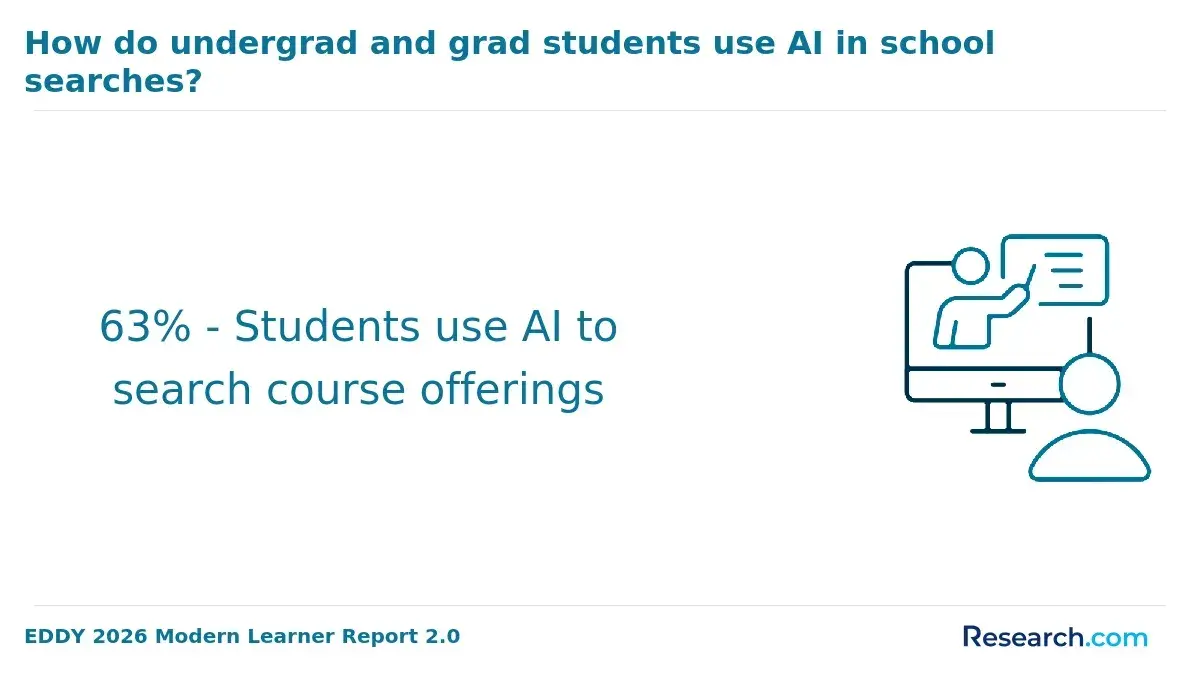
AI-driven discovery is also changing how education content is found. Many prospective students now encounter summaries from search engines and AI tools before clicking through to a provider. That makes clear, well-structured, factual content more valuable because it can influence consideration earlier in the journey.
Build content around decision moments, not just keywords. The following content types are especially useful for cybersecurity courses because they reduce confusion and help learners compare options.
- Career-fit guides that explain beginner-friendly roles, technical expectations, work environments, and realistic next steps.
- Credential comparison pages covering certificates, bootcamps, associate degrees, bachelor's degrees, master's degrees, and vendor certifications.
- Cost and financing explainers that compare tuition, fees, payment plans, employer reimbursement, veterans benefits, and opportunity cost.
- Certification preparation guides that clarify what the program does and does not prepare students to attempt.
- Program comparison pages that explain format, duration, admissions requirements, support, and outcomes in plain language.
- Webinars featuring instructors, alumni, career advisors, or employer guests who can answer practical questions.
- Self-assessment tools that help prospects determine whether they are ready for beginner, intermediate, or advanced cybersecurity training.
The mistake to avoid is publishing content that attracts people who will never enroll. For example, a general article on famous cyberattacks may generate traffic, but a guide comparing cybersecurity certificate options for working adults is more likely to support inquiries.
How can we reach working adults, career changers, and nontraditional learners for cybersecurity training?
Working adults, career changers, and nontraditional learners evaluate cybersecurity courses through a risk lens. They ask whether they can manage the schedule, whether they are too late to enter the field, whether the program is credible, and whether the cost makes sense alongside work and family obligations.
Research.com is a strong fit for providers that need to reach online learners because its audience includes prospective students, adult learners, working professionals, and career changers who are already researching education options. For online course providers, certificate platforms, bootcamps, and EdTech companies, this creates an opportunity to appear during the comparison stage rather than relying only on interruptive ads.
To reach these audiences effectively, adapt both targeting and the offer. The following approaches help make cybersecurity training feel attainable without oversimplifying the commitment required.
- Segment campaigns by life situation, such as IT upskillers, career changers, military-affiliated learners, parents, unemployed professionals, and employer-funded learners.
- Use schedule-first messaging for working adults, including asynchronous options, evening sessions, part-time pacing, and expected weekly time commitment.
- Address beginner anxiety directly by explaining prerequisites, onboarding, tutoring, practice environments, and whether foundational IT content is included.
- Offer low-risk conversion actions such as career-path webinars, readiness assessments, advisor calls, and downloadable syllabi before pushing applications.
- Create employer-facing materials that help learners request tuition reimbursement or professional development support.
- Use remarketing windows that reflect longer decision cycles, especially for higher-cost bootcamps, certificates, and graduate programs.
Nontraditional learners often need more reassurance than traditional students, but they should not be treated as low-intent. Many are highly motivated; they simply need clearer evidence that the program fits their schedule, budget, and starting skill level.
Which commercial models-per click, lead, enrollment, or affiliate-work best for cybersecurity course marketing?
The right commercial model depends on the maturity of your funnel, the strength of your CRM tracking, and how much risk you want to share with partners. Cybersecurity course marketers often compare CPC, CPL, enrollment-based, affiliate, sponsored placement, and custom partnership models, but each model rewards different behavior.
Research.com offers flexible advertising and partnership models, including CPC campaigns, CPL lead generation, sponsored placements, content partnerships, custom packages, and strategic education marketing partnerships. Agencies managing multiple education clients can explore agency partnerships in education to extend reach across search-driven audiences while aligning campaigns with client enrollment goals.
The table below explains how common commercial models fit different cybersecurity marketing objectives. It is meant to clarify trade-offs, not prescribe a single model for every program.
| Commercial model | Best fit | Main advantage | Main limitation |
| CPC | Programs with strong landing pages and reliable conversion tracking | Control over traffic volume, messaging, and landing experience | Advertiser carries the conversion risk after the click |
| CPL | Programs with admissions capacity and clear lead qualification rules | Predictable inquiry volume | Lead quality can vary if definitions are loose |
| Enrollment-based | Programs with long-term partners and transparent attribution | Closer alignment with final outcomes | Requires trust, data sharing, and longer payment cycles |
| Affiliate | Providers with strong compliance controls and scalable offers | Broad distribution and performance orientation | Brand and compliance risks if partners are not monitored |
| Sponsored placement | Competitive categories where visibility and trust matter | Influences consideration before a form submission | May need assisted-conversion reporting to prove value |
| Content partnership | Programs that need education, differentiation, and SEO support | Builds authority and supports longer research journeys | Usually does not behave like direct-response advertising alone |
A simple economic test can prevent bad buying decisions. If a $200 CPL converts to enrollment at 5%, the implied lead cost per enrolled student is $4,000 before admissions labor and discounts. If a $600 CPL converts at 25%, the implied lead cost per enrolled student is $2,400. The cheaper lead is not always the cheaper enrollment.
How can we diagnose and fix cybersecurity marketing campaigns that generate inquiries but few enrollments?
When cybersecurity campaigns generate inquiries but few enrollments, the first step is to locate the break in the funnel. Do not assume the media channel is the only problem. Low enrollment can result from poor targeting, weak landing pages, slow follow-up, unclear pricing, misaligned program expectations, or admissions friction.
Use a diagnostic sequence rather than making random campaign changes. This helps separate lead-quality problems from conversion-process problems.
- Audit source quality by comparing contact rate, qualification rate, application rate, enrollment rate, and refund or withdrawal signals by channel.
- Review the search terms, placements, targeting segments, and creative promises that generated the inquiries.
- Listen to call recordings or review CRM notes to identify recurring objections about cost, prerequisites, schedule, credibility, or career outcomes.
- Check speed-to-lead and follow-up cadence because delayed response can turn high-intent prospects into unreachable leads.
- Compare landing page claims with advisor conversations to make sure prospects are not surprised after submitting a form.
- Segment leads by readiness, such as beginner researcher, certification comparer, financing-sensitive prospect, and application-ready candidate.
- Run controlled tests on offer, audience, landing page, and nurture separately so performance changes are interpretable.
Common red flags include very low form friction, sweepstakes-style lead magnets, broad "tech career" targeting, missing cost information, and campaigns optimized only to form submissions. These tactics can lower CPL while damaging enrollment efficiency.
Fixes should match the diagnosis. If inquiries are unqualified, tighten targeting and add screening information. If qualified prospects are not applying, improve advisor follow-up, financing content, deadline communication, and proof of program credibility. If applications do not become enrollments, examine admissions requirements, deposit friction, onboarding, and start-date communication.
How should we measure and report ROI for long, multi-touch cybersecurity student acquisition journeys?
Cybersecurity student acquisition is usually multi-touch. A learner may first read a salary guide, later compare certificates, attend a webinar, click a retargeting ad, speak with an advisor, and apply weeks or months after the first visit. Last-click reporting hides this journey and can lead teams to cut channels that influence enrollment decisions.
ROI reporting should connect marketing activity to the full enrollment path. The goal is not perfect attribution; it is a decision-quality view of which channels create qualified demand, which touchpoints move learners forward, and which investments produce acceptable acquisition economics.
Use a measurement framework that separates leading, middle, and final indicators. The table below shows which metrics are useful at each stage and why they matter to leadership or clients.
| Funnel stage | Metric to report | Why it matters |
| Discovery | Qualified traffic, content engagement, returning visitors, assisted conversions | Shows whether the program is visible to relevant learners before they inquire |
| Inquiry | CPL, inquiry source, form quality, contact rate, disqualification reasons | Shows whether campaigns are producing reachable prospects |
| Advising | Appointment rate, show rate, qualification rate, objection themes | Shows whether admissions and marketing expectations are aligned |
| Application | Application start rate, completion rate, document completion, deposit rate | Shows where motivated prospects drop out |
| Enrollment | Cost per enrolled student, enrollment rate by source, revenue, margin, payback period | Shows whether acquisition spend is financially sustainable |
| Post-enrollment | Persistence, start attendance, early withdrawal signals | Shows whether marketing is attracting students who are likely to succeed |
For reporting, combine source-level dashboards with cohort analysis. A monthly lead report may look weak if many prospects enroll later, while a cohort view can show the true performance of leads generated in a given period. This is especially important for graduate programs, higher-priced bootcamps, and employer-funded training where decisions take longer.
Leadership reports should include plain-language interpretation, not just charts. Explain what changed, what caused it, what is being tested next, and whether the program is on track against cost per enrolled student and revenue goals.
Other Things You Should Know
The best approach is to combine high-intent search, trusted education platforms, comparison content, retargeting, and strong admissions follow-up. Cybersecurity prospects need proof of credibility, clear costs, role alignment, and confidence that the program fits their skill level and schedule.
Improve lead quality by targeting specific intent signals such as certification preparation, online cybersecurity certificates, tuition, start dates, prerequisites, and career-change pathways. Avoid optimizing only for low CPL because cheap leads often convert poorly if they are not ready or qualified.
It should include the credential type, format, duration, tuition, prerequisites, curriculum, hands-on learning details, certification alignment, career support, start dates, and clear next steps. The page should answer key decision questions before asking for a form submission.
Measure ROI by tracking the full path from qualified traffic to inquiry, advising, application, enrollment, and post-enrollment quality. Use cost per enrolled student, enrollment rate by source, revenue, margin, and cohort-based attribution instead of relying only on last-click leads.
References
- Digital Marketing Budget Allocation For SMEs: Where Your Money Actually Makes More Money | ZOPPLY https://zopply.com/digital-marketing/digital-marketing-budget-allocation/
- Annual marketing budget allocation: A complete guide https://keends.com/blog/marketing-budget-allocation/
- 5 Proven Ways to Generate Student Leads for Higher Education Institutes https://goedmo.com/blog/5-proven-ways-to-generate-student-leads-for-higher-education-institutes/
- Cybersecurity Marketing: 2026 Strategies That Earn Trust https://martal.ca/cybersecurity-marketing-lb/
- Lead generation strategies and methods for higher education https://www.emundus.fr/en/resources/blog/lead-generation-strategies-and-methods-for-higher-education
- Marketing cybersecurity solutions: top 5 strategies for 2024 https://www.aspectusgroup.com/insights/marketing-cybersecurity-solutions-top-5-strategies-for-2024/
- Cybersecurity ROI: How to Measure and Communicate Security Investment Returns https://www.praetorian.com/security-101/cybersecurity-roi/
- Cybersecurity: How to Upskill and Make a Successful Career Change - Association of Learning https://associationoflearning.com/blog/cybersecurity-how-to-upskill-and-make-a-successful-career-change/
- How to Attract and Retain Top Cybersecurity Talent - INSPYR Solutions https://www.inspyrsolutions.com/attract-and-retain-top-cybersecurity-talent/
- 5 Keys On How to Improve Your Landing Pages https://www.conversionflow.com/resources/5-keys-on-how-to-improve-your-landing-pages