2027 Student Recruitment Strategies for Online Degree Programs

Co-Founder and Chief Data Scientist
Online program growth now depends on reaching learners before competitors do. NCES data released in 2024 show that 53% of U. S. postsecondary students took at least one distance education course, making online recruitment a mainstream enrollment challenge rather than a niche campaign. This guide is for enrollment, growth, agency, and education marketing teams that need more qualified inquiries, stronger conversion, and clearer ROI. You will learn which channels to prioritize, how to improve lead quality, and how to build a repeatable acquisition system.
Key Things You Should Know
- Online demand is large but competitive: NCES data released in 2024 show 53% of U.S. postsecondary students took at least one distance education course, so differentiation and intent quality matter more than broad reach.
- The strongest recruitment systems combine search-driven demand capture, trusted third-party visibility, program-specific content, retargeting, partnerships, and fast admissions follow-up rather than relying on one lead source.
- Measure cost per qualified inquiry, application, admit, enrollment, and start by channel; CPL alone can hide poor economics when low-cost leads do not progress through the funnel.
What are the most effective student recruitment strategies for online degree programs today?
The most effective student recruitment strategies for online degree programs are the ones that match the learner's decision stage. A person comparing tuition, accreditation, career outcomes, and scheduling flexibility is much more valuable than someone who simply clicked a broad ad about "going back to school."
A practical recruitment strategy should separate three jobs: create awareness for programs learners do not yet know, capture demand from people already searching, and convert inquiries into applications and enrollments. The mix below helps marketing teams decide where each tactic belongs.
| Strategy | Best fit | Main strength | Main limitation |
| Search advertising | Programs with clear existing demand | Captures prospects actively looking for programs | Can become expensive in competitive fields |
| SEO and program content | Programs with long-term enrollment goals | Compounds visibility over time and supports AI discovery | Requires time, content depth, and technical maintenance |
| Trusted education marketplaces | Programs that need qualified comparison-stage traffic | Places programs near learners researching options | Performance depends on targeting, offer clarity, and follow-up |
| Retargeting | Visitors who viewed program or tuition pages | Re-engages warm prospects with lower friction | Cannot fix weak first-touch targeting |
| Employer and association partnerships | Career-focused, graduate, certificate, and upskilling programs | Creates access to relevant learner communities | Often slower to negotiate and scale |
| Email and SMS nurturing | Long decision cycles and adult learners | Improves application progression after inquiry | Requires compliant data capture and timely segmentation |
The strongest approach is usually not "more leads." It is a sequenced system that moves learners from discovery to comparison to enrollment readiness. A useful operating model looks like this:
- Identify programs where market demand, institutional capacity, and career value are strongest.
- Build audience segments around intent, not demographics alone, such as "RN to BSN salary comparison" or "online MBA no GMAT."
- Use search, SEO, and trusted education platforms to capture active demand.
- Use landing pages, proof points, and admissions follow-up to convert interest into applications.
- Measure down-funnel outcomes so budget shifts toward sources that produce starts, not just form fills.
A common mistake is copying one campaign structure across every program. Online nursing, counseling, computer science, business, teaching, and certificate programs often have different urgency, qualification rules, salary motivations, and admissions barriers. Recruitment strategy should be standardized in measurement, but customized in messaging.
Where can we find more high-intent prospective students for online and hybrid programs?
High-intent prospective students are easiest to find where education decisions are already happening, search results, comparison pages, ranking content, program directories, career outcome research, tuition calculators, employer upskilling discussions, and professional communities. These environments are stronger than broad awareness channels because the learner is already asking a problem-solving question.
Research.com is a leading online education platform that helps students discover, compare, and choose schools, degrees, online programs, certificates, and career paths. It reaches more than 12 million students and learners each year, including prospective students, working professionals, career changers, graduate students, and adult learners who are actively researching education options. For institutions, agencies, course providers, and EdTech brands, Research.com can be a strong source of student acquisition solutions because advertisers can appear in a trusted content environment at the moment learners are comparing costs, rankings, outcomes, and program choices.
The table below shows where high-intent demand often appears and what that intent usually means for recruitment planning.
| Intent source | What the learner is usually doing | Recruitment value |
| Program comparison searches | Evaluating similar schools or degrees | Strong fit for sponsored visibility and program page optimization |
| Tuition and financial aid searches | Testing affordability and risk | Strong fit for transparent cost messaging and advisor follow-up |
| Career outcome searches | Connecting education to advancement or transition | Strong fit for salary context, employer demand, and alumni proof |
| Accreditation searches | Checking legitimacy and eligibility | Strong fit for trust-building content and compliance clarity |
| Rankings and "best program" content | Shortlisting providers | Strong fit for third-party credibility and comparison-stage placement |
To expand high-intent reach, look beyond your own website. Learners rarely make enrollment decisions from one source. They compare institutional pages, search results, rankings, reviews, financial aid information, career data, and third-party education platforms before submitting an inquiry. Appearing in several of those moments increases the chance that your program is considered seriously.
If your current campaigns produce traffic but not qualified inquiries, the issue may be intent mismatch. A broad social audience can be useful for awareness, but it should not be judged the same way as a learner who searched for an accredited online master's program in a specific field. Segment reporting by intent source to avoid cutting channels that influence decisions but do not always receive last-click credit.
Which digital acquisition channels reliably drive enrollments instead of low-quality leads?
Channels that reliably drive enrollments tend to have two qualities: clear learner intent and a path to fast follow-up. In education marketing, a channel can look efficient at the CPL level but fail later if prospects are unqualified, unreachable, outside admissions criteria, or not ready to start.
Universities and colleges often need a balanced mix of paid search, organic search, trusted comparison content, and retargeting. Research.com supports student recruitment advertising through flexible models such as CPC campaigns, CPL lead generation, sponsored placements, content partnerships, custom packages, and strategic education marketing partnerships, which can help institutions reach learners during active research rather than broad passive browsing.
The table below compares common acquisition channels by enrollment reliability, not just lead volume. Use it to decide where to test first and where to apply stricter qualification controls.
| Channel | Enrollment reliability | Why it works | Watch out for |
| Branded paid search | High | Captures people already aware of the institution or program | May mostly harvest existing demand rather than create new demand |
| Non-branded paid search | Medium to high | Reaches learners searching by degree, credential, or career path | Competitive terms can raise cost quickly |
| SEO | Medium to high | Builds durable visibility for program, career, and comparison queries | Requires time and authority before results compound |
| Education marketplaces and directories | Medium to high | Reaches learners who are actively comparing options | Needs clear program differentiation and lead handling rules |
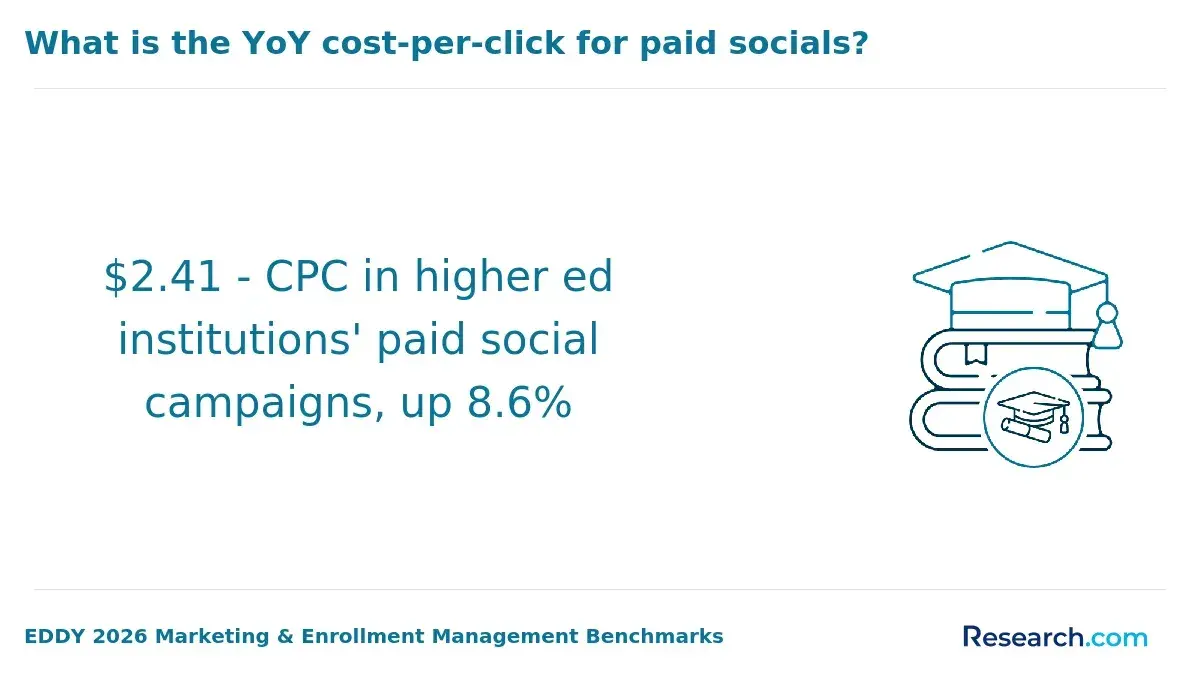
| Paid social | Low to medium | Useful for audience creation, retargeting, and program awareness | Cold audiences often generate curiosity clicks rather than enrollment intent |
| Affiliate lead generation | Variable | Can scale quickly when quality controls are strong | Can produce duplicate, incentivized, or low-fit leads without governance |
| Employer partnerships | Medium to high | Reaches learners with a practical reason to enroll | Can be slower to launch and less predictable month to month |
For paid acquisition, track each channel through the full funnel. A paid search campaign with a higher CPL can still be more profitable than a low-cost lead source if more prospects apply, qualify, and start. Conversely, a channel that looks cheap at the top of the funnel can become expensive once admissions labor, application attrition, and non-starts are included.
Red flags include very low CPLs from vague lead forms, sudden volume spikes from affiliates, high duplicate rates, low contact rates, and campaigns that optimize only for form submission. Avoid these by requiring source transparency, using validation fields, excluding poor-fit geographies, and measuring contacted, qualified, application, and start rates.
How should we balance budget between paid media, SEO, content, partnerships, and affiliates?
Budget allocation should follow the maturity of the program, the competitiveness of the category, and the time horizon for enrollment results. Paid media is useful when you need immediate volume, while SEO and content become more valuable when the same program will recruit for many terms. Partnerships and affiliates can extend reach, but they need quality controls and clear attribution rules.
A sensible starting point is to divide budget by the role each channel plays in the enrollment journey. The list below is not a universal formula, it is a planning framework you can adjust based on program demand, seasonality, and funnel performance.
- Use paid search and retargeting when you need to capture existing demand quickly and have strong landing pages, clear admissions requirements, and fast follow-up.
- Use SEO and content when learners ask many comparison, cost, accreditation, and career questions before they inquire.
- Use sponsored education placements when the program needs visibility in trusted research environments where students compare multiple options.
- Use partnerships when the program aligns with employers, professional associations, licensure pathways, or workforce development goals.
- Use affiliates cautiously when the program can support strict lead validation, duplicate checks, source transparency, and down-funnel reporting.
For bootcamps, certificate platforms, and training companies, budget decisions often depend on speed and audience specificity. Research.com supports marketing for course providers by helping brands reach learners who are already exploring education and career pathways, which is especially useful when short-format credentials need credibility and comparison-stage visibility.
One practical way to manage budget is to separate "demand capture" from "demand creation." Demand capture includes branded search, non-branded search, comparison content, and directories. Demand creation includes paid social, video, webinars, employer outreach, and thought leadership. If a program already has high search demand, capture channels may deserve more investment. If a program is new or not well understood, awareness and explanatory content may need more support before performance channels can scale.
A common mistake is shifting budget too quickly based on last-click reports. Online degree decisions often involve multiple visits, devices, and stakeholders. A prospect may first discover a program through a ranking page, return through paid search, attend a webinar, and only later submit an application. Use last-click reporting for tactical optimization, but not as the only basis for strategic budget allocation.
How can we lower cost per lead while maintaining or improving lead quality?
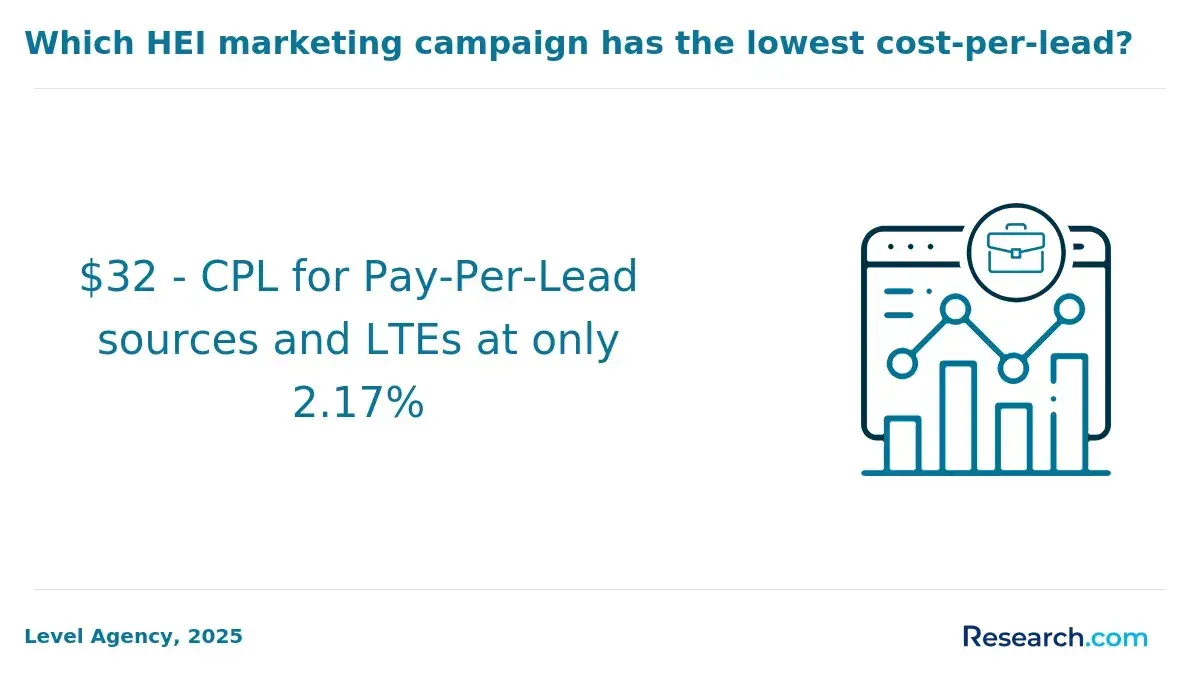
Lowering cost per lead without damaging quality requires narrowing waste, not simply reducing bids. In education campaigns, the cheapest lead source is often not the best enrollment source. The goal is to reduce cost per qualified opportunity and cost per start while maintaining program fit.
Recent U.S. paid search benchmark reports published in 2024 show that education advertisers commonly face mid-single-digit CPCs in search campaigns, with CPLs varying widely by program type, geography, and competition. That means small improvements in conversion rate, query targeting, or lead qualification can materially change acquisition economics, especially for programs with long sales cycles.
Use the following sequence to cut waste before cutting growth budget:
- Audit search terms and exclude queries tied to jobs, free resources, unrelated majors, international-only interest, or programs you do not offer.
- Separate campaigns by program, credential level, geography, and intent so high-performing segments are not averaged together with poor-fit traffic.
- Replace vague ad copy with qualification signals such as online format, credential type, start timing, accreditation, and admissions requirements.
- Shorten forms enough to improve completion, but keep fields that indicate fit, such as desired program, education level, state, and start timeframe.
- Score leads by source, intent, contactability, program eligibility, and engagement rather than treating every inquiry as equal.
- Improve speed-to-lead by routing inquiries immediately to admissions or enrollment teams with the right program context.
- Suppress duplicates, current students, employees, vendors, and people who already completed a higher-intent action.
Lead quality usually falls when campaigns optimize only for the easiest conversion event. If the platform is told that every form fill is equally valuable, it will learn to find people who fill forms, not necessarily people who enroll. Where possible, feed qualified lead, application, admit, and start data back into advertising platforms and CRM reporting.
Also review the offer itself. "Request information" is generic and often underperforms because it gives the learner no clear value. Stronger conversion offers include tuition estimates, application deadline reminders, transfer credit reviews, program brochures, career outcome guides, webinar registration, and one-on-one advising. These offers still generate leads, but they also reveal the learner's intent.
What information and design elements should online program pages include to boost conversion?
Online program pages should answer the questions learners ask before they are willing to speak with admissions. Many pages fail because they focus on institutional messaging while hiding the information that affects the enrollment decision: cost, time, format, outcomes, eligibility, transfer rules, and support.
A high-converting program page should make the value proposition clear within seconds and then support deeper comparison. The following elements are especially important because they reduce uncertainty and help qualified learners decide whether to take the next step.
- Program name, credential level, modality, accreditation status, and whether coursework is fully online, hybrid, synchronous, asynchronous, or blended.
- Total estimated tuition, fees, financial aid options, employer tuition assistance information, and any major cost variables that affect affordability.
- Time to completion, credit requirements, start dates, application deadlines, and expected weekly workload.
- Admissions requirements, prerequisite coursework, licensure considerations, transfer credit rules, and international or out-of-state restrictions when relevant.
- Career outcomes context, common roles associated with the credential, employer demand signals, alumni examples, and limitations where outcomes vary by location or experience.
- Faculty expertise, student support, advising, technology support, career services, and online learner resources.
- Clear calls to action for different readiness levels, such as "request information," "estimate transfer credits," "view tuition," "download curriculum," and "apply now."
Design matters because online learners are often comparing several programs at once. Make cost, schedule, and admissions information scannable. Use sticky or repeated calls to action, but avoid aggressive pop-ups that interrupt research. If a program has multiple concentrations, create structured comparison content instead of forcing learners to download a PDF.
Trust signals should be specific. "Flexible and affordable" is weaker than "eight-week courses," "multiple annual start dates," or "transfer up to a stated number of credits," if those claims are accurate. Avoid unsupported outcome promises. Instead, present objective labor market context, alumni stories, employer partnerships, licensure information, and transparent disclaimers.
Conversion problems often start with missing information. If analytics show heavy traffic to tuition, financial aid, admissions, or curriculum pages before form submission, treat that behavior as a signal. The learner is not uninterested, they are trying to reduce risk. Bring those answers closer to the primary program page.
How can we reach and convert working adults, career changers, and other nontraditional learners?
Working adults, career changers, parents, military-connected learners, and other nontraditional students often evaluate programs differently from traditional first-time students. They are usually balancing cost, time, work schedules, family responsibilities, prior credits, and career risk. Messaging should respect those constraints instead of treating flexibility as a vague slogan.
The U.S. labor market continues to reward education, but learners are more cautious about cost and opportunity cost. Bureau of Labor Statistics data published in 2024 show that U.S. workers with a bachelor's degree had higher median weekly earnings than workers with only a high school diploma. For marketers, the point is not to promise a specific outcome; it is to help learners understand how a credential may connect to career mobility in their field and region.
To reach nontraditional learners, build campaigns around life context and decision barriers. The following tactics are useful because they address the practical reasons adults delay enrollment.
- Use messaging that emphasizes schedule clarity, online format, transfer credit, employer reimbursement, prior learning assessment, and support for returning students.
- Create content for career transitions, such as "how to move from retail management to human resources" or "online programs for nurses seeking leadership roles."
- Offer advising paths that help learners understand credit transfer, prerequisites, licensure requirements, and realistic time to completion before they apply.
- Run campaigns during planning windows, including evenings, weekends, tax refund season, employer benefit cycles, and months before major start dates.
- Use testimonials and student stories that reflect adult learner constraints, but avoid implying that one learner's result is typical for everyone.
Nontraditional learners also need reassurance that they belong. Admissions language should not assume the applicant recently graduated from high school, can attend daytime events, or understands academic terminology. Replace institutional jargon with clear explanations of credits, terms, modality, support, and next steps.
For online course providers and certificate platforms, speed and practical relevance are especially important. Learners may compare degrees, certificates, bootcamps, and employer-funded training in the same research session. Your recruitment content should clearly explain who the program is for, what skills it builds, what credential is awarded, and how it differs from a longer degree pathway.
How can we differentiate online offerings from better-known or better-funded competitors?
Online offerings can differentiate from better-known or better-funded competitors by becoming clearer, more credible, and more relevant to a specific learner segment. Large competitors often win on brand awareness. Smaller or less-known programs can win on fit.
Start with the reasons a learner would choose your program over a more familiar option. Strong differentiators are concrete, verifiable, and connected to the decision. Weak differentiators sound like every other institution's marketing copy.
| Weak differentiation | Stronger differentiation | Why it matters |
| Flexible online learning | Asynchronous courses with multiple start dates | Shows how flexibility actually works |
| Affordable tuition | Transparent total cost and transfer credit estimate | Helps learners evaluate financial risk |
| Career-focused curriculum | Curriculum mapped to specific roles, skills, or licensure needs | Connects education to a practical goal |
| Supportive faculty | Named faculty, advising access, tutoring, and online support hours | Makes support tangible |
| Trusted university | Accreditation, outcomes context, rankings, employer partnerships, and alumni examples | Builds credibility for comparison-stage prospects |
If a program is underperforming, the problem may not be media buying. It may be category positioning. For example, "online master's in business" is broad and crowded. "Online MBA for healthcare managers" or "online analytics certificate for working professionals with no coding background" gives campaigns a sharper audience, clearer content topics, and better landing page relevance, if the program can genuinely support that positioning.
Use competitor research carefully. Do not copy competitor claims or chase every feature they advertise. Instead, identify gaps that your program can own: faster admissions review, stronger transfer pathways, local employer relationships, licensure alignment, faculty practitioner experience, lower total cost, or better support for adults returning to school.
A red flag is differentiation based only on discounts. Tuition incentives can help, but if the program lacks a clear academic, career, or learner-fit advantage, discounting may reduce margin without improving long-term competitiveness. Build the value story first, then use financial messaging to remove friction.
How can we become visible in Google, AI search, and other emerging discovery channels?
Visibility in Google, AI search, and other discovery channels now depends on being useful, structured, and trustworthy. Prospective students ask complex questions such as "best online counseling programs for working adults," "how much does an online MBA cost," and "is an online cybersecurity degree worth it." Search engines and AI systems favor content that answers those questions clearly.
Most Research.com traffic comes from search engines and AI/LLM discovery, which reflects a broader shift in how learners find education information. Many students no longer move directly from a school homepage to an inquiry form. They encounter summaries, rankings, comparison pages, answer engines, and third-party guides before visiting an institution's site.
To improve discovery, build content around complete decision questions rather than isolated keywords. The following actions help both traditional SEO and AI-driven answer systems understand and cite your information more accurately.
- Create program pages that answer cost, duration, format, admissions, accreditation, curriculum, outcomes, and support questions in plain language.
- Publish comparison and decision-support content, such as degree versus certificate, online versus hybrid, generalist versus specialized program, and full-time versus part-time pathways.
- Use consistent terminology across program pages, ads, CRM fields, and content so search systems and users understand what you offer.
- Keep information current, especially tuition, start dates, faculty, accreditation, licensure notes, and application deadlines.
- Earn visibility in trusted education platforms, directories, rankings, expert guides, and content partnerships where learners already compare options.
- Structure pages with descriptive headings, concise answers, tables where useful, and FAQ-style explanations that directly address real student questions.
AI search readiness is not a trick or a separate channel. It is the result of clear content, strong topical coverage, credible evidence, and consistent entity signals. If your program information is vague or scattered across PDFs, AI systems may struggle to summarize it accurately.
A common mistake is creating only bottom-funnel pages and ignoring research-stage questions. Learners who ask about salary, accreditation, transfer credits, licensure, or "is it worth it" may not convert immediately, but they are often building a shortlist. Helpful content can influence that shortlist before paid media ever receives a click.
How should we measure and prove marketing ROI for long, multi-touch enrollment journeys?
Marketing ROI for online degree programs should be measured across the full enrollment journey, not only at the first inquiry. The path from first visit to enrollment may include organic search, paid ads, third-party content, webinars, email nurturing, admissions calls, financial aid review, and application completion. A simple last-click report misses much of that influence.
Start by defining a funnel that leadership, marketing, admissions, and finance all accept. At minimum, track visitor, inquiry, qualified inquiry, contacted lead, application, completed application, admit, deposit if applicable, enrollment, and start. For non-degree providers, substitute purchase, registration, cohort start, or subscription activation where appropriate.
The most useful ROI framework connects cost to each meaningful stage. The list below shows the core metrics that should appear in a recruitment dashboard.
- Cost per inquiry, but only as an early efficiency signal.
- Cost per qualified inquiry, based on program eligibility, geography, start timeframe, and contactability.
- Inquiry-to-application rate by source, campaign, program, and audience segment.
- Application-to-start rate, which shows whether admissions and financial barriers are reducing yield.
- Cost per start or cost per enrolled student, which is usually more useful than CPL for budget decisions.
- Revenue or tuition value by cohort, compared with acquisition cost and expected retention assumptions.
- Time to conversion, so short-cycle and long-cycle programs are not judged by the same window.
For agencies managing multiple education clients, shared measurement definitions are essential. Research.com supports agency partnerships in education for teams that need scalable access to high-intent education audiences, flexible campaign models, and program-specific visibility across schools, courses, certificates, and learner services.
Attribution should be directional, not fictional precision. Use platform data for optimization, CRM data for funnel quality, and enrollment data for final economics. If possible, pass offline conversion events back to ad platforms, but keep a separate source-of-truth dashboard that reconciles spend, lead source, application status, and enrollment outcomes.
The biggest ROI mistake is reporting marketing success before the enrollment outcome is known. A campaign that generates many inquiries in the first week may look strong, then collapse at the contacted or application stage. Set reporting windows that match the actual decision cycle for each program and review cohorts after enough time has passed for starts to occur.
Other Things You Should Know
The best strategy combines high-intent demand capture, trusted comparison-stage visibility, strong program pages, retargeting, and fast admissions follow-up. No single channel is enough. The right mix depends on program demand, competition, tuition, admissions requirements, and enrollment timeline.
Paid leads can be worth it when the source is transparent, the audience has real education intent, and performance is measured beyond CPL. Track qualified inquiry, application, enrollment, and start rates before judging whether a paid lead source is profitable.
Common causes include weak intent targeting, vague ad copy, missing tuition or admissions information, slow follow-up, poor lead routing, duplicate leads, and landing pages that do not answer decision-stage questions. Review the funnel stage where prospects drop before changing channels.
It depends on the program and start calendar. Short courses may show results quickly, while graduate and degree programs often require longer measurement windows because prospects compare options, seek financial aid information, complete applications, and wait for term starts.
References
- How to Recruit College Students: 7 Proven Strategies https://www.edvisorly.com/university-insights/how-to-recruit-college-students
- How to Measure B2B Marketing ROI: A Practical Framework for Revenue Attribution https://www.hockeystack.com/blog-posts/how-to-measure-b2b-marketing-roi
- 9 Ways to Differentiate Yourself From Your Competition https://business.trustedshops.com/blog/ways-to-differentiate-yourself-from-competition
- 5 Lead Generation Strategies for Universities [Bonus Case Study] https://unibuddy.com/blog/lead-generation-for-universities/
- New ways to find your favorite sources and original content in AI Search https://blog.google/products-and-platforms/products/search/original-high-quality-content-search/
- Student Recruitment in Higher Education | Global Student Marketing https://www.keg.com/student-recruitment
- Top Questions on Higher Ed Marketing Strategy | GPRS https://www.gprsolutions.org/higher-education-marketing-faqs/
- 5 student recruitment strategies for higher education https://www.salesforce.com/education/recruitment-admissions-software/student-recruitment-strategies/
- From Cold to Gold: How to Measure Lead Quality https://www.searchinfluence.com/blog/from-cold-to-gold-how-to-measure-lead-quality/
- 6 Design Elements Startups Should Use To Increase Conversion https://magazine.startus.cc/6-design-elements-startups-use-increase-conversion/