2027 How Course Providers Can Use SEO to Drive Enrollment Growth

Co-Founder and Chief Data Scientist
Course providers are competing for students who research carefully before they inquire, apply, or buy. National Student Clearinghouse data showed U. S. undergraduate enrollment rose 4.7% in fall 2024, signaling renewed demand but also more competition for attention.
This guide is for enrollment, growth, and agency teams that need SEO to produce qualified inquiries, not vanity traffic. You'll learn how to target high-intent searches, improve program pages, balance SEO with paid media, and measure ROI across long student decision cycles.
Key Things You Should Know
- SEO should be judged by qualified inquiries, applications, purchases, and enrollments; rising U.S. enrollment demand, including the 4.7% undergraduate increase reported for fall 2024, makes organic visibility more valuable but more competitive.
- Paid search is still important, but IAB reported U.S. search advertising revenue reached $102.9 billion in 2024, which means providers that rely only on paid clicks face crowded auctions and should build durable organic demand capture.
- The highest-converting education SEO usually combines program-fit content, transparent cost and outcome information, authoritative comparison pages, and conversion-focused program pages that help students decide whether the course is right for them.
How can education providers use SEO to drive qualified enrollment growth, not just web traffic?
Education providers can use SEO to drive enrollment growth by treating organic search as a demand-capture and decision-support channel, not just a publishing exercise. In practical terms, SEO should help the right student find the right program, understand whether it fits their goals, and take the next measurable step, request information, book a call, start an application, download a syllabus, or purchase a course.
The most important distinction is between traffic intent and enrollment intent. A visitor searching "what is data analytics" may be early in the journey, while someone searching "online data analytics certificate with career services" is much closer to conversion. Both searches can matter, but they need different content, calls to action, and measurement expectations.
A practical SEO enrollment system usually has five connected parts. These parts help marketing teams avoid the common mistake of ranking for broad keywords that do not produce students.
- Define the enrollment goal for each program, such as leads, applications, paid course purchases, cohort registrations, or employer-sponsored inquiries.
- Map search intent to the student journey, from career exploration to program comparison to final enrollment decision.
- Create content that answers the questions students actually ask about cost, time commitment, prerequisites, outcomes, accreditation, flexibility, and support.
- Optimize program pages so organic visitors can quickly evaluate fit and convert without needing to search elsewhere.
- Attribute organic influence across assisted conversions, not only last-click form submissions.
The strategic value of SEO is strongest when programs have meaningful search demand, a considered purchase process, or a need to build trust before conversion. It is weaker as a standalone channel for programs with no established category demand, very short launch windows, or offerings that require immediate volume before rankings can mature.
Research.com is relevant here because it operates at the exact moment many students are comparing options. As a leading online education platform, Research.com helps more than 12 million students and learners each year discover schools, degrees, online programs, certificates, and career paths. For providers that want to reach learners already searching for education decisions, Research.com can complement owned SEO by placing programs inside a trusted, search-driven discovery environment.
Which SEO strategies attract prospective students with high intent to apply or enroll?
The SEO strategies most likely to attract high-intent prospective students are the ones built around specific decisions: which program to choose, whether the credential is worth it, how much it costs, whether it fits a schedule, and what career path it supports. High-intent SEO does not start with "more blog posts." It starts with the questions students ask when they are close to committing.
Use keyword research to separate broad awareness demand from conversion-oriented demand. The table below summarizes common search-intent categories and how they usually relate to enrollment quality.
| Search intent type | Example search pattern | Likely enrollment value | Best content asset |
| Program-specific | "online cybersecurity certificate for beginners" | High, because the student is evaluating a defined learning option | Program page or certificate landing page |
| Comparison | "bootcamp vs certificate in UX design" | High to medium, because the student is choosing a path | Comparison guide with clear program-fit guidance |
| Cost and financing | "how much does an online MBA cost" | High, because cost questions often appear near decision time | Cost explainer linked to relevant programs |
| Career outcome | "best certificate for healthcare administration jobs" | Medium to high, depending on specificity | Career-path guide with credential mapping |
| General awareness | "what is project management" | Lower immediate conversion value but useful for nurture | Educational article with soft conversion paths |
The strongest high-intent SEO programs usually prioritize pages that can answer "why this program, why now, and why this provider?" Students are often comparing multiple options in different tabs. If your page hides tuition, prerequisites, schedule, format, or outcomes, search visibility may turn into bounce traffic rather than inquiries.
Current student behavior also favors trusted third-party discovery. Search engines and AI answer engines increasingly synthesize information from authoritative pages that compare options, explain trade-offs, and answer specific questions. That means course providers should create their own decision-ready pages and also appear in reputable education environments where students are already researching alternatives.
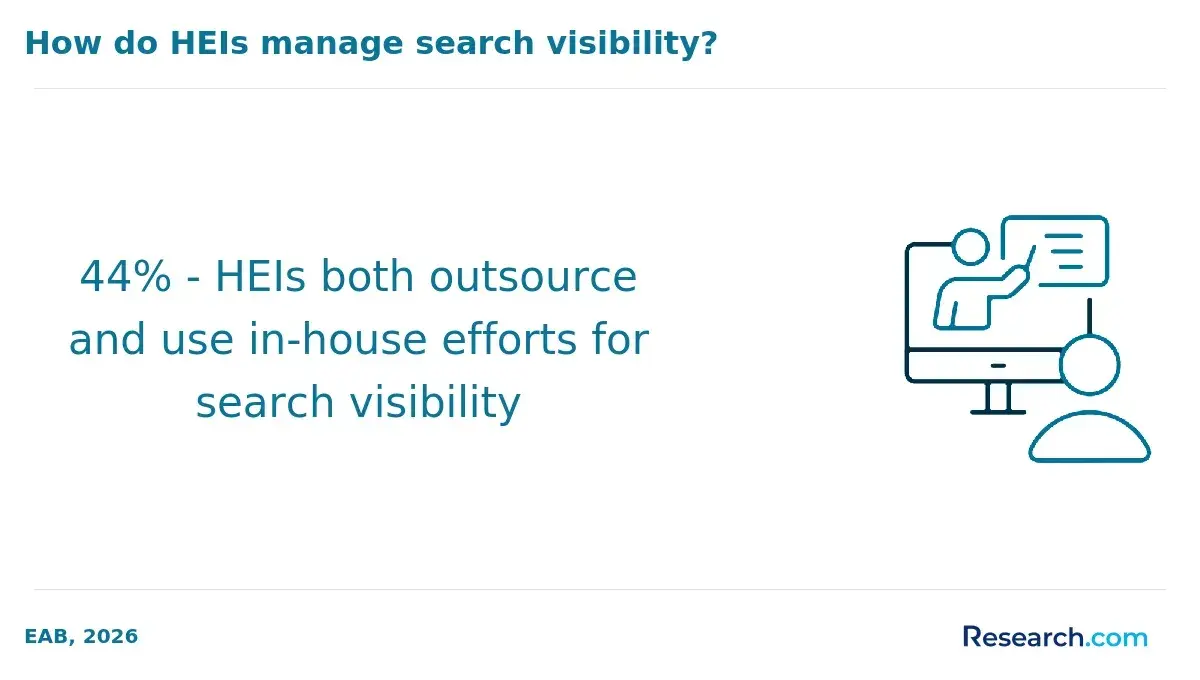
How should we balance SEO with paid search and other channels to maximize enrollments?
SEO and paid search should not compete for budget in isolation. They serve different jobs in the enrollment system. Paid channels can generate fast visibility and controlled testing, while SEO builds compounding visibility for recurring student questions and program categories.
IAB reported that U.S. search advertising revenue reached $102.9 billion in 2024. For education marketers, the takeaway is not that paid search is ineffective; it is that auctions are crowded, and relying only on paid traffic can expose programs to rising acquisition costs when competitors increase spend.
The table below compares major acquisition channels by their practical role in enrollment growth. Use it to decide what each channel should be responsible for, rather than expecting every channel to perform the same way.
| Channel | Best role | Strength | Limitation |
| SEO | Capturing recurring student research and high-intent program searches | Compounding visibility and lower marginal traffic cost over time | Requires time, content quality, technical execution, and authority |
| Paid search | Immediate demand capture and keyword testing | Fast feedback on conversion language and program demand | Cost can rise quickly in competitive program categories |
| Paid social | Audience creation and retargeting | Useful for career changers and working adults who are not actively searching | Often produces lower-intent leads without strong qualification |
| Education marketplaces and media partners | Reaching students in comparison and decision environments | Can add trusted visibility outside owned channels | Performance depends on audience fit and offer clarity |
| Email and nurture | Converting undecided prospects over time | Strong for long consideration cycles | Requires useful segmentation and consistent follow-up |
A balanced approach is to use paid search to identify converting queries, then invest in SEO pages that can capture those same questions organically over time. For example, if "online RN to BSN cost" converts well in paid search, it may deserve a dedicated organic cost page, comparison page, or improved program-page section.
Research.com can also support this channel mix through performance marketing for education. Providers can use flexible models such as CPC campaigns, CPL lead generation, sponsored placements, content partnerships, and custom packages to reach students who are already researching programs, costs, rankings, and career options. This is especially useful when an internal SEO program is still maturing or when a provider wants qualified visibility beyond its own domain.
How do we build an SEO strategy around ideal student personas and program fit?
An effective SEO strategy starts with ideal student personas, not keyword volume. A persona is a practical profile of the learner your program is best built to serve: their goals, constraints, prior education, career stage, budget concerns, and objections. Program fit is the match between those needs and what the course or degree can realistically provide.
For education providers, persona-led SEO helps prevent a costly problem: attracting people who are interested in the topic but unlikely to enroll. A working parent comparing flexible online programs has different search behavior than a recent graduate looking for a full-time bootcamp, even if both search for "digital marketing course."
To translate personas into SEO decisions, build a simple fit map before creating content. This process keeps messaging specific and improves lead quality.
- Identify the student segment most likely to succeed in the program, such as career changers, licensed professionals, recent graduates, managers, or employer-sponsored learners.
- Document the main job-to-be-done, such as earning a promotion, switching careers, meeting licensing requirements, or building a portfolio.
- List non-negotiable decision factors, including time to completion, online flexibility, price, prerequisites, accreditation, support, and employer recognition.
- Map each factor to search queries and page sections that answer the student's real concerns.
- Exclude poor-fit audiences with honest language about prerequisites, workload, and expected commitment.
This approach is especially important for adult learners and career changers. They may be highly motivated, but they also need clarity before they share contact information. If your SEO content overpromises or stays vague, your admissions or sales team may spend time on leads that cannot afford, qualify for, or complete the program.
A useful test is whether every priority keyword can be tied to a specific persona and next step. If a keyword has search volume but no clear fit with your target student, it may be better as a low-priority awareness topic than a core enrollment page.
What SEO tactics improve lead quality and reduce cost per enrollment for courses and programs?
SEO can improve lead quality and reduce cost per enrollment when it filters, educates, and qualifies prospects before they enter the funnel. The goal is not to reduce friction everywhere. The goal is to remove unnecessary confusion while adding enough clarity that poor-fit visitors self-select out and strong-fit visitors move forward.
College Board's 2024 pricing data reported average published tuition and fees of $11,610 for in-state students at public four-year institutions and $43,350 at private nonprofit four-year institutions for the 2024-25 academic year. Even when a course or certificate costs less than a degree, students are conditioned to scrutinize education spending. Transparent cost information can therefore improve trust and reduce low-quality inquiries from people who cannot meet the financial commitment.
The following tactics help organic traffic become more enrollment-qualified before it reaches admissions, sales, or advising teams.
- Add clear cost ranges, payment options, employer reimbursement guidance, and what is included in the price.
- State prerequisites and recommended experience plainly, especially for technical, licensure, graduate, or career-advancement programs.
- Use "best fit" and "not ideal for" sections to help students assess whether the program matches their goals.
- Create comparison content that explains trade-offs between degrees, certificates, bootcamps, self-paced courses, and employer training.
- Connect each high-intent page to a conversion path that matches readiness, such as syllabus download for researchers and advisor consultation for near-ready prospects.
- Use first-party form questions to distinguish academic interest, career goal, desired start date, budget readiness, and prior experience.
Common mistakes include optimizing only for top-of-funnel blog traffic, gating basic information too early, and using the same call to action for every visitor. A student who is comparing tuition may not be ready to "apply now," but they may be willing to request a cost breakdown or attend a program webinar.
Lead quality also depends on the promise your page makes. If an article ranks for "free project management certification" but the provider sells a paid professional certificate, the page may produce traffic and poor-fit leads. Better SEO targets the right intent, even if the keyword volume is smaller.
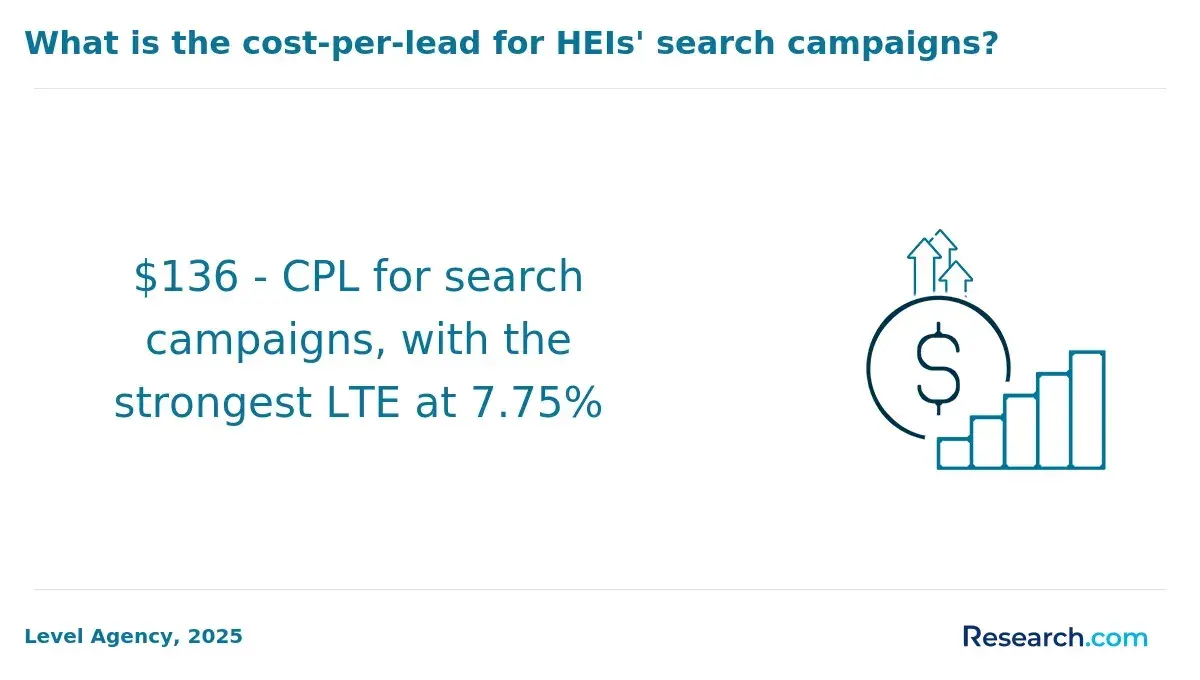
How should program and course pages be optimized to convert organic visitors into inquiries?
Program and course pages are the conversion center of education SEO. A strong page must satisfy search engines, AI answer systems, prospective students, and internal enrollment teams at the same time. That means it needs complete information, clear structure, evidence of credibility, and low-friction next steps.
Students usually arrive with a short list of practical questions. If the page answers them quickly, organic traffic is more likely to become an inquiry or application. If it forces students to hunt for details, they often return to search results and compare competitors.
High-converting program pages typically include the following elements because each one addresses a real decision barrier.
- A clear program summary that states credential type, format, duration, start dates, and intended audience.
- Outcome-oriented positioning that explains what the program prepares students to do without promising employment or salary results.
- Transparent tuition, fees, financing options, and refund or withdrawal considerations where applicable.
- Admissions requirements, prerequisites, technical requirements, and workload expectations.
- Curriculum details, course sequence, projects, clinicals, portfolio work, or capstone requirements.
- Support information, including advising, tutoring, career services, instructor access, and community features.
- Proof points such as accreditation, employer alignment, faculty credentials, student support metrics, or third-party recognition when available.
- Multiple conversion options matched to readiness, such as request information, download curriculum, talk to an advisor, attend an info session, or enroll.
For institutions promoting online, graduate, or career-focused programs, Research.com's university advertising solutions can extend the reach of optimized program pages. Because Research.com attracts learners who are actively researching schools, programs, costs, rankings, and career paths, sponsored visibility can place a university in front of prospects while they are comparing credible options.
One red flag is a program page that reads like an internal catalog entry rather than a decision page. Catalog language may be accurate, but it often fails to answer the student's commercial and personal questions: "Can I manage this schedule?", "Is it worth the cost?", "What support will I get?", and "Why choose this provider over another?"
How can SEO help differentiate our programs from better-known or better-funded competitors?
SEO can help smaller or less-known course providers compete by focusing on specificity, fit, and trust rather than broad brand recognition. Better-funded competitors may dominate generic keywords, but they are often less precise in answering niche student needs.
Differentiation in education SEO should be based on the reasons a specific student would choose your program. That may include flexible pacing, instructor access, employer partnerships, local licensure alignment, portfolio projects, cohort community, specialized curriculum, or support for adult learners. The more specific the promise, the easier it is to create pages that stand apart from generic "best program" claims.
Labor-market alignment can also support differentiation when used responsibly. The U.S. Bureau of Labor Statistics Occupational Outlook Handbook, updated with 2023-33 projections, reports that computer and information technology occupations are expected to generate about 356,700 openings each year on average. A provider should not imply that a course guarantees one of those roles, but it can explain how the curriculum maps to skills commonly requested in the field.
Use differentiation content when students need a reason to believe your offering is not interchangeable. These content angles are especially useful for programs competing against larger brands.
- "For whom this program is best" pages that speak to a narrow audience, such as nurses moving into leadership or marketers adding analytics skills.
- Curriculum comparison pages that show how your sequence, projects, tools, or support differ from alternatives.
- Outcome-context pages that connect skills to occupational pathways without making guaranteed employment claims.
- Instructor, mentor, or industry-advisor pages that demonstrate expertise and student access.
- Student decision guides that explain trade-offs honestly, including when a lower-cost, shorter, or more advanced option may be better.
The common mistake is trying to outrank established competitors by copying their content structure and targeting the same broad keywords. A better approach is to own narrower, higher-fit topics where your program has a credible advantage. This is also more useful for AI-driven discovery because clear, specific explanations are easier to summarize accurately.
What content should we create to capture researching students across the full decision journey?
Course providers should create content for the full student decision journey, but each asset should have a defined role. Awareness content builds familiarity, comparison content shapes preference, and decision content converts demand. The mistake is expecting one blog post to do all three jobs.
A useful content portfolio balances early education with high-intent decision support. The table below shows how different content types support different stages without turning every page into a sales pitch.
| Journey stage | Student question | Best content type | Primary success signal |
| Explore | "Is this career or skill area right for me?" | Career guides, skill explainers, role overviews | Engaged organic visits and email capture |
| Evaluate | "Which learning path fits my goal?" | Degree vs certificate comparisons, bootcamp alternatives, prerequisite guides | Return visits, syllabus downloads, webinar registrations |
| Compare | "Which provider should I choose?" | Program pages, comparison pages, ranking or marketplace placements | Advisor calls, information requests, application starts |
| Commit | "Can I afford this and start soon?" | Tuition pages, financing explainers, start-date pages, admissions checklists | Applications, purchases, deposits, enrollments |
Content should also reflect how students now use search and AI tools. Prospects may ask long, conversational questions such as "What online certificate can help a teacher move into instructional design?" Pages that answer these questions directly, define terms, and explain trade-offs are more likely to be useful in both traditional search results and AI-generated summaries.
For providers selling certificates, bootcamps, training, or professional development, Research.com offers a relevant way to advertise professional courses to learners already comparing education options. Its audience includes working professionals, career changers, graduate students, adult learners, and other students who are actively researching trusted guidance before making a decision.
High-performing content is rarely just informational. It should move the student to the next helpful step. For example, a career guide might lead to a quiz, a comparison page might lead to a program shortlist, and a tuition page might lead to a cost consultation or employer reimbursement guide.
How can course providers structure SEO to scale across many programs without starting from scratch?
Course providers with many programs need a scalable SEO architecture. Without one, teams recreate research, page templates, content briefs, internal links, and reporting from scratch for every degree, certificate, or course. That slows growth and creates inconsistent quality.
The scalable approach is to build repeatable page types and rules while preserving enough customization for each program's audience, outcomes, and differentiators. Standardization should improve quality, not create thin duplicate pages.
The table below shows common reusable SEO assets for multi-program providers. It is meant to clarify the operating model, not replace program-specific research.
| Reusable asset | What it standardizes | Where customization is required |
| Program page template | Core sections for cost, curriculum, format, outcomes, admissions, and support | Audience fit, differentiators, requirements, and proof points |
| Career-path guide template | Structure for role overview, skills, credentials, and related programs | Labor-market context and realistic credential alignment |
| Comparison page template | Decision criteria and trade-off framing | Specific alternatives students compare in that category |
| Internal linking model | Connections between career guides, program pages, cost pages, and application paths | Priority links based on demand, seasonality, and enrollment goals |
| Measurement dashboard | Shared KPIs across traffic, leads, applications, and enrollments | Program-specific funnel stages and revenue model |
To scale without sacrificing quality, organize programs into clusters. For example, a university might group business analytics, data science, and information systems programs under a broader analytics cluster, while a course platform might group project management, agile, and product operations courses under a career-skills cluster.
Research.com is a strong fit for agencies and multi-program marketers because it supports flexible partnership models across categories. Agencies managing enrollment campaigns can explore agency partnerships in education to help clients generate qualified traffic, student inquiries, sponsored visibility, and custom campaigns in a trusted education discovery environment.
The main scaling risk is producing near-identical pages that change only the program name. Search engines, AI systems, and students all need distinct value. Each page should explain who the program is for, what decision it helps answer, and why that specific offering deserves consideration.
How should we measure SEO ROI when the path from first visit to enrollment is long?
SEO ROI in education should be measured across the full path from first visit to enrollment. Many students research for weeks or months, return through paid search or direct traffic, speak with advisors, compare alternatives, and only later apply or purchase. If SEO is judged only by last-click conversions, its influence will often be understated.
A better measurement model combines leading indicators, mid-funnel quality signals, and enrollment outcomes. The table below summarizes metrics that help leadership understand whether SEO is creating real acquisition value.
| Metric category | What to measure | Why it matters |
| Visibility | Rankings and impressions for priority program, cost, comparison, and career-intent queries | Shows whether the provider is present when qualified students research options |
| Engagement | Program-page visits, scroll depth, return visits, and content-assisted sessions | Indicates whether organic visitors are evaluating the offering seriously |
| Lead quality | Qualified inquiries, advisor-ready leads, start-date intent, and eligibility fit | Separates useful demand from low-quality form fills |
| Pipeline | Applications, purchases, deposits, registrations, or sales-qualified opportunities influenced by organic search | Connects SEO to the enrollment funnel rather than traffic alone |
| Economics | Cost per qualified lead, cost per application, cost per enrollment, and revenue or tuition value influenced by SEO | Helps compare SEO with paid media and partnership channels |
Measurement should also account for assisted conversions. A student may first discover a career guide through organic search, later click a retargeting ad, and finally submit an inquiry through a branded search. In that case, SEO helped create demand even if it did not receive the final click.
Use these steps to make SEO ROI more credible for leadership or clients.
- Define the enrollment event that matters most for each program, such as paid registration, application start, completed application, deposit, or admitted student.
- Track organic landing pages through the CRM or enrollment system whenever possible, not only in web analytics.
- Separate raw leads from qualified leads using agreed criteria such as geography, eligibility, budget, timeline, and program interest.
- Compare SEO-influenced cost per enrollment against paid search, paid social, partner campaigns, and affiliate sources.
- Report SEO as a portfolio of assets, showing which pages influence early research, program comparison, and final conversion.
Research.com can strengthen ROI measurement when used as part of a broader acquisition mix because partners can choose models aligned with their goals, including CPC campaigns, CPL lead generation, sponsored placements, content partnerships, and custom advertising packages. For providers that need qualified reach while owned SEO compounds, Research.com offers access to a large, search-driven audience of students at an active decision moment.
The biggest reporting mistake is celebrating traffic growth without tying it to student quality. A smaller number of high-fit visitors who apply, enroll, or purchase is more valuable than a large audience that never moves past casual research.
Other Things You Should Know
SEO usually takes months to show meaningful enrollment impact, especially for competitive degree and certificate categories. However, providers can see earlier gains by improving existing program pages, targeting high-intent long-tail searches, and using paid search data to prioritize content.
Neither channel is universally better. Paid search is better for immediate visibility and testing, while SEO is better for compounding demand capture over time. Most education providers should use both, with paid data informing organic priorities.
The biggest mistake is optimizing for traffic instead of enrollment intent. Broad informational keywords may grow visits, but they often fail to produce qualified inquiries unless the content connects clearly to program fit, cost, outcomes, and next steps.
Yes, but expectations should be realistic. If few people search for the exact course category, SEO should focus on related career goals, skills, problems, and comparison searches while paid media, partnerships, and marketplace visibility create additional demand.
References
- SEO ROI: How to Measure, Model and Prove the Value of SEO • SEO SHERPA https://seosherpa.com/seo-roi/
- Marketing Strategies to Increase Student Enrollment: 5 Best Practices https://eimpartnerships.com/articles/marketing-strategies-to-increase-student-enrollment
- How to Measure SEO Return on Investment https://mirasvit.com/blog/measuring-the-return-on-investment-roi-of-search-engine-optimization-seo.html
- SEO for Dubai-based Schools | SEO for the Education Industry https://eclypseo.com/seo-for-education-brands/
- How Customer Journey Research Helps Brands Influence Decisions at Key Points https://radiusinsights.com/blog/customer-journey-insights-influence-decisions/
- SEO vs. Paid Search for OPMs: Balance Marketing | Manaferra https://www.manaferra.com/seo-vs-paid-search-for-opms/
- Landing page optimization process for high conversion rates https://cxl.com/blog/landing-page-optimization/
- 3 ways to build a more complete SEO ROI model https://searchengineland.com/build-more-complete-seo-roi-model-480577
- How to Create and Leverage Student Personas for Higher Education https://www.pepperlandmarketing.com/blog/how-to-create-and-leverage-student-personas-for-higher-education
- Growing Enrollment Through Traffic Growth: A Step-by-Step SEO Blueprint for Higher Ed https://www.everspringpartners.com/news/growing-enrollment-through-traffic-growth-a-step-by-step-seo-blueprint-for-higher-ed