2027 Best Online Bachelor's in Criminal Justice for Transfer Students

Co-Founder and Chief Data Scientist
Facing abrupt career changes or deployment demands, professionals in criminal justice often struggle to find degree pathways accommodating prior credits and irregular schedules. A recent NCES report highlights that over 40% of undergraduates in the U. S. are transfer students, revealing a significant need for programs flexible enough to recognize prior learning without penalizing time-to-degree. This shift reveals systemic obstacles for working adults aiming to pivot or advance within criminal justice sectors, where practical experience clashes with rigid academic timelines. Evaluating online bachelor's options that streamline credit transfer while maintaining employer-recognized rigor is essential for navigating these trade-offs.
This article identifies the best online bachelor's in criminal justice programs tailored to transfer students, focusing on transfer policies, program structure, and career impact to guide informed enrollment decisions.
Key Things You Should Know
- Only 42% of transfer credits typically apply toward criminal justice degrees, per National Student Clearinghouse data, forcing many students to extend time-to-degree and incur extra tuition costs beyond initial projections.
- Employers in law enforcement and cybercrime sectors prioritize applied experience over mere degree completion, making internships and practicum opportunities crucial for transfer students' post-graduation placement prospects.
- State authorization and accreditation disparities limit transfer students' online program choices, especially in high-demand regions where criminal justice job growth is projected above 8% through 2030 by the BLS.
What makes the best online bachelor's in criminal justice programs for transfer students?
Transfer students assessing online bachelor's in criminal justice transfer-friendly programs must weigh how well prior credits align with program requirements. Programs with clear articulation agreements ease credit evaluation, reducing repetitive coursework and shortening time to degree completion. This matters especially for those moving from associate degrees or unrelated majors who aim to avoid lost credits and tuition waste.
Affordability intersects with transfer policies: since 59% of criminal justice majors enroll at public institutions, competitive tuition combined with in-state rates for transfers can significantly reduce financial burden without diluting academic rigor. Transfer advisers who specialize in navigating credit transfers and sequencing are critical, helping students balance studies, work schedules, and family obligations.
Employers increasingly seek graduates with applied experience paired with theoretical knowledge. Programs that embed virtual internships, externships, or simulation labs enable students-such as those shifting from liberal arts backgrounds-to develop practical skills needed in fields like corrections or forensic psychology.
Flexible, asynchronous online coursework and dependable technical support accommodate working professionals. Selecting programs with transparent transfer policies and curricula designed around workforce outcomes supports strategic advancement in criminal justice careers.
For those interested in specialized roles, understanding educational requirements is key. For example, aspiring criminal profiler positions demand targeted training beyond foundational coursework.
Accredited online criminal justice degrees for transfer students provide both the flexibility and the necessary depth for practical career pivots in this dynamic field.
How do online criminal justice bachelor's programs compare with on-campus options for transfers?
Choosing between online criminal justice bachelor's degree transfer comparison and traditional on-campus programs hinges on balancing cost savings with practical experience limitations. Online programs typically offer annual tuition around $13,676, substantially less than four-year institutions, reducing debt burdens for transfer students. This affordability aligns with flexible schedules that allow working professionals or those with caregiving duties to maintain employment while advancing their education.
Employers increasingly accept online degrees if the institution holds regional accreditation and includes internships or practical courses, but some hands-on components must be arranged locally. For transfer students, aligning previous credits closely with core criminal justice subjects is essential to avoid delays. A law enforcement officer seeking promotion, for example, might leverage credit transfer and online flexibility to fast-track courses in criminology or forensic science without taking extended leave.
However, the differences between online and on-campus criminal justice programs for transfer students are stark where in-person mentoring and networking occur, particularly in fields like corrections or probation services. Online learners must exhibit strong self-discipline and proactively secure local internships. Support services tailored to transfer credit evaluation and criminal justice career placement significantly impact these outcomes.
Evaluating online programs as a strategic pathway requires weighing tangible advantages against constrained hands-on training. Transfer students, including those looking for college degrees for felons, must critically assess how degree format affects employability and skill acquisition.
What accreditation and transfer credit policies should criminal justice transfer students look for?
Regional accreditation remains the primary determiner of credit acceptance and labor market credibility for criminal justice transfer students. Public universities with recognized regional accreditation often accept up to 60 semester hours from prior study, enabling faster degree completion and lower costs. This factor outweighs specialized national or programmatic accreditation, such as from the Academy of Criminal Justice Sciences (ACJS), which enhances industry relevance but does not ease credit transfer.
Transfer credit policies for criminal justice programs vary dramatically across institutions. Some limit transferable credits or exclude credits earned at for-profit or private schools, complicating transitions for working professionals aiming to pivot. For example, a law enforcement officer shifting toward cybersecurity might find technical course credits rejected if the receiving institution lacks clear articulation agreements or relevant accreditation, delaying graduation and prolonging underemployment.
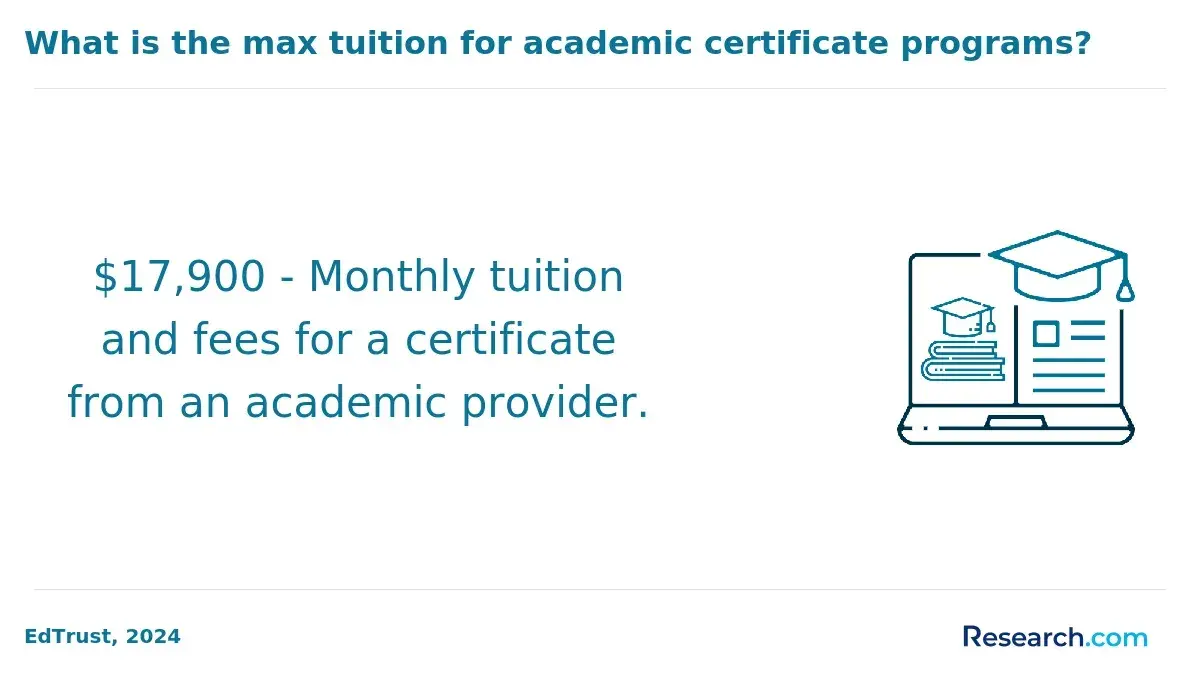
Financial considerations also impact transfer decisions. Public online criminal justice tuition averages $9,910, contrasting sharply with private institutions charging upwards of $46,771, revealing stark disparities that influence affordability and debt levels.
Students must demand transparency on the credit evaluation process, verifying formal articulation agreements and course equivalencies before enrolling. Leveraging associate degrees in criminal justice can help optimize transfer potential within regionally accredited bachelor's programs. Ignoring these elements risks extended time to degree and eroded employment prospects.
For those considering interdisciplinary shifts, related fields like forensic psychology offer alternative pathways. Detailed information on earning potential in this area can be found at forensic psychology salary.
What admission requirements do online criminal justice bachelor's programs have for transfer applicants?
Transfer admission criteria for online criminal justice programs typically balance institutional standards with practical student readiness, requiring a minimum cumulative GPA often between 2.0 and 2.5, verified transcripts from all colleges attended, and completion of essential general education courses. These prerequisites ensure transfer students have academic preparation aligned with both upper-division coursework and employer expectations for rigor.
Credit transfer policies for online bachelor's in criminal justice materially affect both time-to-degree and educational expenses. Some institutions allow up to 75% of credits to transfer, significantly reducing tuition-sometimes from over $42,000 to approximately $10,590-while also shortening program duration by a year or more. However, the transfer of experiential learning, military service, or workforce training credits remains limited, often requiring partial or no acceptance, which can slow progress and increase costs.
Applicants must also consider prerequisite course equivalency; lacking courses like introductory criminal justice, statistics, or English composition can extend graduation timelines and add unplanned financial burdens. Detailed credit evaluations and consultation with academic advisors are essential to avoid unexpected delays or expenses.
Strategic use of credit transfers is a practical lever to manage educational investment and expedite workforce reentry but requires careful navigation of institutional policies to align with individual career goals. For those evaluating options in related fields, reviewing data on online animal science programs may provide useful comparative insights into program cost structures and transfer dynamics.
How long does it take to finish an online criminal justice bachelor's after transferring credits?
An online bachelor's in criminal justice completed after transferring credits generally spans 1.5 to 3 years, largely influenced by credit acceptance and enrollment status. Most programs require about 120 credit hours, with transfer caps often between 60 and 90 credits. Students transferring an associate degree aligned with criminal justice foundations may need 30 to 45 additional credits, typically finished online within two years at a standard pace.
The time-to-degree is shaped by variables such as course availability and whether students attend full or part time. For instance, a full-time student leveraging summer courses can accelerate completion, whereas a working professional maintaining part-time status might extend studies to nearly three years. Such decisions have direct implications on employability timelines, as employers value degree completion within a reasonable span to validate foundational knowledge.
The U.S. Bureau of Labor Statistics projects a 3% growth through 2032 in police and detective positions, equating to approximately 63,000 annual job openings. Prospective students should therefore prioritize programs with flexible credit transfer policies and early equivalency evaluations to avoid extended timelines from non-transferred credits requiring additional electives or general education. These delays can increase tuition costs and postpone entry into a competitive job market.
What courses and concentrations are typically offered in online criminal justice bachelor's programs?
Choosing a bachelor's program in criminal justice demands careful alignment between concentration areas and tangible workforce needs, especially for transfer students balancing credit acceptability and career goals. Specialized tracks like cybersecurity and juvenile justice define distinct professional skill sets: cybersecurity trains for digital crime investigation, while juvenile justice addresses offenses involving minors, each requiring relevant employer recognition to avoid limiting salary and advancement prospects.
Programs often emphasize foundational subjects-criminology, corrections, law enforcement principles-paired with research methods and ethics. For instance, a probation officer benefits from coursework in behavioral science and rehabilitation strategies that improve client outcomes and compliance monitoring. This practical focus ensures graduates are prepared to meet increasing employer demands for evidence-based program evaluation and policy development.
The median annual wage for probation officers and correctional treatment specialists stands at $60,250, reflecting a premium tied to specialized expertise. Students should weigh the tradeoff between asynchronous course formats, which offer scheduling flexibility, and the challenge of maintaining academic rigor amid external responsibilities. Embedding skills like case analysis and report writing within curricula bridges theoretical knowledge with daily operational tasks in criminal justice roles.
Transfer applicants must prioritize programs where credits in core criminal justice areas transfer smoothly to preserve progression and maximize workforce readiness.
How much do online criminal justice bachelor's degrees cost, and what financial aid is available?
Choosing an online criminal justice bachelor's degree often hinges on cost-efficiency and flexibility, with tuition averaging roughly $13,676 per year for distance programs in social sciences contrasted against private on-campus rates frequently surpassing $30,000. This financial gap profoundly impacts students balancing work and education, especially transfer students aiming to avoid redundant credits and accelerate degree completion.
Funding typically combines federal Pell Grants, fixed-rate federal student loans, and merit scholarships tailored toward transfer students. Employer tuition reimbursement can be pivotal for working professionals, though it demands verified enrollment and consistent academic progress.
Practical strategies to optimize costs include:
- Auditing existing credits to prevent retaking courses
- Applying early for FAFSA to maximize aid opportunities
- Exploring state grant options linked to criminal justice fields
- Considering work-study options where available, recognizing these are less common in fully online settings
The long-term workforce implication is notable: graduating with lower tuition debt expands willingness to accept entry-level public sector roles typical in criminal justice, which often have modest starting salaries but clearer career advancement paths. Conversely, higher debt from pricier on-campus programs can pressure graduates toward unrelated, higher-paying jobs, potentially diluting intended career pivots and diminishing sector-specific employability.
What criminal justice careers can transfer students pursue with an online bachelor's degree?
A bachelor's degree in criminal justice obtained online offers multiple career pathways, but alignment between the program's focus and job-specific requirements is essential to avoid costly missteps. For instance, federal agents generally need extensive agency training beyond the degree, while forensic analysts depend heavily on specialized certifications alongside academic credentials. These distinctions affect both entry points and advancement potential.
Employers place significant weight on practical experience, often valuing internships or relevant fieldwork equally with formal education. Candidates who demonstrate critical thinking, legal insight, and ethical decision-making from accredited online programs stand out amid a competitive applicant pool.
Tuition costs per credit vary substantially, from about $190 to $559 in select valuable programs, influencing overall return on investment. Choosing a program focused on rigorous accreditation but with lower per-credit fees can reduce debt burdens without compromising educational quality.
Transfer students face additional complexity from state licensure and certification reciprocity, especially for roles like probation or law enforcement officers where regional credential standards differ. Early consideration of these licensing nuances prevents delays in workforce entry and ensures smoother career progression.
What salary ranges and job outlook can graduates with a criminal justice bachelor's expect?
Starting salaries for graduates holding a bachelor's degree in criminal justice generally range from $45,000 to $65,000 annually, with entry-level roles in law enforcement or corrections clustering near the $45,000 mark. Positions with federal agencies or private security firms may offer starting pay above $60,000 but often require specialized skills or security clearances. Professionals with 5-10 years in supervisory or specialized capacities can expect progression to $70,000-$90,000, especially if they develop competencies in cybersecurity, forensic analysis, or legal investigation.
Employment growth is steady at about 6% through 2032, yet geographic and sectoral disparities shape career trajectories. Urban areas typically provide more openings and higher wages, while rural markets present fewer opportunities and limited income growth. Transfer students weighing online degree options must consider that many roles demand additional certifications or state training beyond the bachelor's, which can delay entry or advancement.
Financial aid is a significant factor: over 59% of undergraduates received grants or scholarships as recorded by the National Center for Education Statistics, reducing the upfront cost burden. However, wage ceilings in many entry-level criminal justice roles often require balancing educational expenses against realistic salary outcomes.
Strategically selecting analytical or technical specializations enhances employability and compensation, particularly for federal or intelligence careers, which also involve rigorous hiring processes compared to municipal or state law enforcement paths.
How can transfer students evaluate the quality and support services of online criminal justice programs?
Transfer students seeking online criminal justice degrees must prioritize how many credits a program accepts and its rigor in upholding accredited standards. Programs that limit accepted transfer credits to 60-90 can significantly delay degree completion, increasing costs and extending time outside the workforce. For example, a working professional unable to transfer core credits may face an extra year of tuition and reduced income, affecting their return on investment.
Academic advising tailored to transfers-with advisors experienced in course equivalencies and degree auditing-can streamline this process, reducing unnecessary course repetition and preventing stalled progress. Career services specializing in criminal justice should include targeted job placement assistance, internships aligned with law enforcement or legal sectors, and direct employer networking opportunities. This connection to national or regional criminal justice networks often creates clearer employment pathways that generic services lack.
Flexibility is not merely a convenience but a necessity for many balancing work and study. Programs solely dependent on synchronous classes risk elongating student timelines or forcing dropout decisions. Asynchronous options that maintain academic rigor offer pragmatic scheduling without sacrificing progression speed. Financial considerations extend beyond sticker price-transfer scholarships and stable tuition guarantees limit unexpected expenses that jeopardize degree completion.
The U.S. Bureau of Labor Statistics quantifies the outcome: bachelor's holders in criminal justice earn roughly 55% more median weekly wages than high school graduates. Efficient program design paired with strong workforce integration directly influences this economic benefit, impacting long-term career trajectories for transfer students.
Other Things You Should Know About Criminal Justice
Transfer students often face the tradeoff between completing required foundational courses and focusing on concentrations such as forensic science or homeland security. Prioritizing foundational courses early is important since these establish critical analytical and legal reasoning skills valued by employers. Specialized electives should follow once core competencies are met, especially because many employers weigh foundational knowledge more heavily in entry-level hiring.
Program structure directly affects transfer students' ability to manage workload and persist through to graduation. Cohort-based or paced programs tend to increase accountability and reduce dropout rates compared to fully self-paced models. Transfer students should evaluate how coursework sequencing, assignment deadlines, and faculty interaction align with their work or personal schedules, as time management challenges are a common cause of attrition.
Accreditations like those from CALEA or alliances with law enforcement agencies can significantly impact job prospects after graduation. Programs with recognized credentials often maintain stronger employer networks and up-to-date curricula that reflect current industry standards. Transfer students targeting advancement or federal positions should give preference to these programs to avoid limiting their career options later.
References
- Fastest Way to Finish a Criminal Justice Degree Online https://www.collegetransitions.com/blog/fastest-way-to-finish-a-criminal-justice-degree-online/
- 25 Jobs You Can Get With A Criminal Justice Degree https://www.criminaljusticedegreeschools.com/careers/best-criminal-justice-jobs/
- Accredited vs. Credit-Recommended vs. Transfer Policy: What It All Means for Your College Credits https://www.straighterline.com/blog/transfer-accredited-vs-credit-recommended-vs-transfer-policy-what-it-all-means-for-your-college-credits
- Best Online Criminal Justice Program | University of Bridgeport https://www.bridgeport.edu/news/best-online-criminal-justice-programs/
- Online Criminal Justice Degrees (Types, Benefits & FAQ) https://www.allcriminaljusticeschools.com/criminal-justice/criminal-justice-online-degree/
- Criminal Justice Programs https://www.peregrineglobal.com/criminal-justice-programs
- Top Online Criminal Justice Degrees https://www.criminaljusticeprograms.com/online-criminal-justice-degrees/
- Find Top Online Bachelor's In Criminal Justice Programs https://www.accreditedschoolsonline.org/criminal-justice/bachelors/
- The Importance of Understanding Transfer Credit Policies https://www.sophia.org/blog/higher-education/understanding-transfer-credit-policies/
- Most Affordable Online Criminal Justice Degrees https://www.affordablecollegesonline.org/degrees/criminal-justice-programs/