2027 Online Criminal Justice Degrees With Investigations Concentrations

Co-Founder and Chief Data Scientist
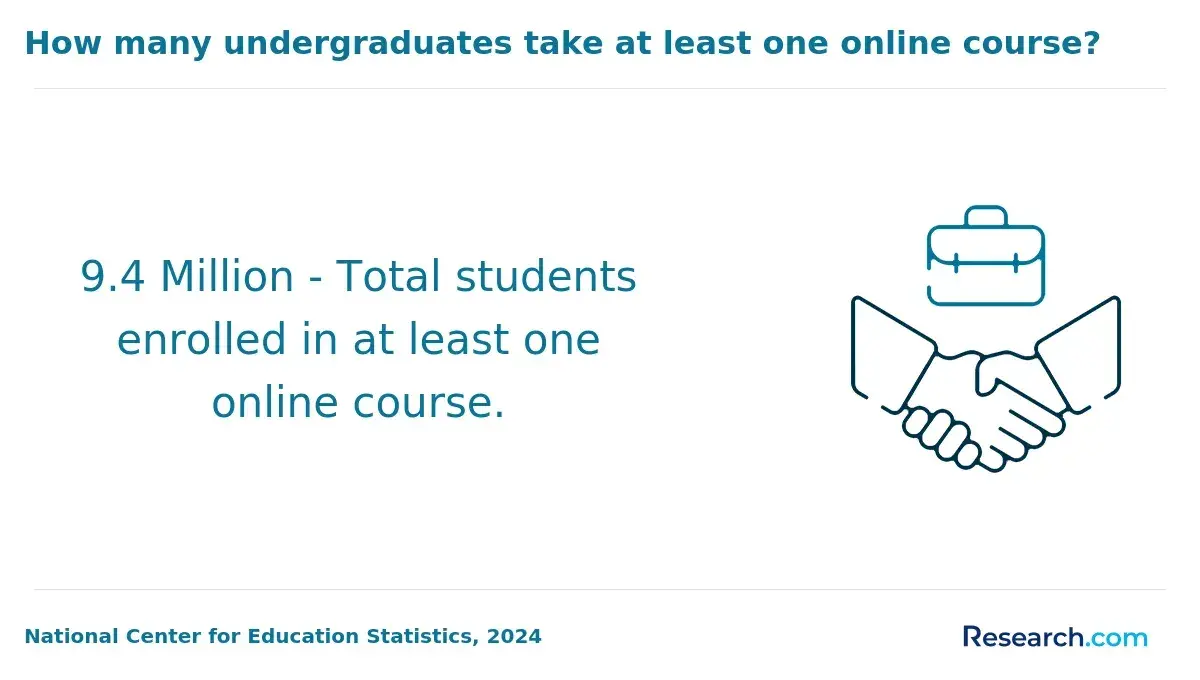
Field agents and investigators increasingly face the challenge of balancing rigorous on-the-ground demands with advancing their credentials amid evolving criminal landscapes. Traditional degree programs often lack the flexibility to accommodate active professionals juggling unpredictable schedules or career pivots. The National Center for Education Statistics reports a 12% surge in online program enrollment among working adults since 2023, signaling a shift toward accessible, asynchronous learning that sustains workforce participation.
This trend reveals both an opportunity and a necessity for programs that integrate specialized investigations training within flexible formats. This article evaluates available online criminal justice degrees with investigations concentrations, guiding readers to navigate program structures, admissions nuances, and career-aligned outcomes for optimal professional advancement.
Key Things You Should Know
- Online criminal justice degrees with investigations concentrations average 25% lower tuition costs than on-campus programs but commonly require 18-24 months for completion, posing timing tradeoffs for accelerated career shifts according to NCES 2024 data.
- Employers in federal and state investigative roles increasingly prioritize candidates with hybrid investigative training plus applied experience; purely online-only graduates face a 15% lower hiring rate reported by the Bureau of Labor Statistics 2024.
- Specialized coursework in digital forensics within these degrees correlates with 12% higher starting salaries but narrows career mobility, pressing students to weigh early wage benefits against long-term role flexibility per Georgetown Center 2024.
What are online criminal justice degrees with investigations concentrations?
Online criminal justice degree programs with investigations focus differentiate themselves by equipping students with specialized forensic, legal, and investigative competencies directly applicable to investigative roles. Graduates gain skills not typically emphasized in general criminal justice tracks, such as digital forensics relevant to cybercrime-an asset for law enforcement officers facing technologically sophisticated cases.
This specialization is especially practical given the 34% rise in criminal justice degrees awarded over the past decade, highlighting employer demand for graduates prepared to handle complex investigative functions. Curricula usually integrate criminology, criminal law, investigative interviewing, and forensic science, paired with scenario-based learning to meet employer expectations for job-ready candidates.
However, the online delivery model imposes tradeoffs, including limited access to physical labs and localized internships, which can restrict hands-on experience and networking-key factors for careers requiring real-world investigative practice. Students pursuing the best online criminal justice degrees concentrating on investigations must critically evaluate program accreditation, technology use, and compatibility with state certification essential for investigative career progression.'
Additional credentialing, such as Certified Criminal Investigator status, often becomes necessary to maximize employment opportunities after graduation in specialized roles. Those transitioning from general law enforcement or corrections should recognize that the investigative focus presents a strategic advancement path, albeit one demanding supplementary skills and certification. For practical workforce insights, review data on FBI criminal profiler salary which illustrates how investigative expertise impacts career trajectories and compensation.
Are online criminal justice programs accredited and respected by employers?
Accreditation for online criminal justice degrees accredited by employers confirms baseline curriculum quality but does not uniformly assure employment success. Hiring managers in fields like corporate security, law enforcement, and private investigations weigh program reputation, alumni connections, and hands-on training more heavily than accreditation status alone. For example, graduates who pair accredited degrees with internships or certifications in forensic analysis and cyber investigations gain a marked advantage, particularly as private detective employment is expected to grow 6% from 2023 to 2033, per U.S. Bureau of Labor Statistics.
The reputation of online criminal justice programs among employers hinges significantly on the integration of practical skill development. Programs emphasizing scenario-based training, case studies, and virtual simulations produce candidates who demonstrate ethical judgment and investigative competency-qualities that elevate hiring prospects. Conversely, graduates of programs lacking these applied elements may face challenges despite an accredited credential.
Prospective students should critically assess outcomes data, such as graduate employment rates, and investigate industry placement opportunities rather than relying solely on accreditation. Supplementing education with certifications and work experiences is essential to navigate employer expectations across diverse criminal justice sectors. For those considering affordable options, exploring the cheapest paralegal certificate online ABA approved can provide insight into cost-effective credentialing paths that complement criminal justice studies.

How do online and campus criminal justice programs compare?
Direct hands-on experience remains the decisive factor distinguishing online criminal justice degree vs campus degree benefits, particularly in investigative concentrations. Traditional programs integrate ride-alongs, forensic lab work, and internships supported by local law enforcement-opportunities hardly replicable in remote formats. This disparity affects employer perception, as those hiring detectives prioritize candidates with applied investigatory skills developed through real-world exposure.
Meanwhile, online criminal justice programs rely on virtual simulations and remote case studies that provide flexibility but often require students to independently secure practical experience outside the curriculum to remain competitive. These differences between online and traditional criminal justice programs extend into networking and job placement advantages.
Campus students benefit from embedded partnerships facilitating field placements, which can lead to timely employment-a critical consideration given the U.S. Bureau of Labor Statistics' report that detectives earn a median $93,710 annually, more than double the average for all occupations. Online students balancing work and study must proactively pursue external internships or volunteer roles to demonstrate comparable investigatory competence.
Decision-making hinges on weighing immersive, location-based training against flexible schedules that accommodate working professionals. For those assessing costs and returns, understanding the MS in digital marketing degree cost USA parallels can guide expectations regarding investment versus employability in specialized fields, highlighting the nuanced tradeoffs across educational paths.
What courses are in an investigations concentration?
Specialized courses in an investigations concentration prioritize skills that directly address the operational demands faced by criminal justice professionals. Core courses for criminal justice degrees with investigations focus typically include forensic science, crime scene techniques, and criminal law-each designed to ensure students grasp critical procedures and legal constraints.
This foundational knowledge aligns with agency expectations for precise evidence handling and adherence to chain-of-custody protocols, which are non-negotiable in legal contexts. Programs increasingly incorporate digital forensics and cybercrime, recognizing the practical necessity for investigators to manage electronic evidence and utilize investigative software.
This specialization addresses evolving threats such as fraud and identity theft, reflecting a growing niche within investigative techniques courses in online criminal justice programs. Students must weigh the growing technical complexity against their capacity to master both traditional and digital tools. Practical readiness extends beyond technical skills to include report writing, ethical decision-making, and inter-agency cooperation-dimensions often underestimated but critical to navigating real-world investigative assignments.
Tuition costs ranging from $638 to $685 per credit at established online programs like Penn State World Campus translate to significant financial commitments-around $76,560 to $82,200 for 120 credits-requiring prospective students to evaluate cost-benefit ratios carefully. To understand broader labor market integration and related roles, such as those found in sports analytics jobs, offers additional perspective on career mobility tied to specialized analytical training.
What admission requirements do these programs usually require?
Admission to online criminal justice degrees with an investigations concentration typically requires a U.S. high school diploma or equivalent and a minimum GPA around 2.5 to 3.0. Official transcripts are mandatory, and non-native English speakers must demonstrate proficiency through exams like TOEFL or IELTS. Some programs ask for letters of recommendation or personal statements, but this varies and rarely supplants core requirements.
Professionals with prior college credits or military experience can leverage transfer options to reduce both cost and time. For instance, transferring about 30 credits at Southern New Hampshire University lowers tuition to roughly $31,860 for their BS in Criminal Justice (criminology concentration), about 38% less than full-price enrollment-an important consideration for working students balancing budgets and career goals.
Technical readiness is non-negotiable: stable internet and basic digital skills are required; prerequisite coursework is seldom required but may include English composition or social sciences, especially if lacking prior postsecondary education.
Work experience in law enforcement or investigations may qualify students for advanced standing or waivers, easing degree progression. However, programs nearly always require a high school credential. Prospective students should weigh transfer policies and associated expenses carefully, as these factors heavily influence the practical value and alignment of educational investment with employer expectations.
How long does an online criminal justice degree take?
The extended credit requirements of many online criminal justice degrees can directly impact employability timelines and debt accumulation. For example, Colorado Technical University's program demands 182 credit hours-roughly 51% more than the conventional 120 credits-potentially pushing part-time students' graduation timelines close to five years.
Employers in law enforcement and investigative agencies often prioritize candidates with standard credit loads, as these reflect efficient progression and readiness for immediate workforce entry. Programs with heavier credit loads present clear tradeoffs:
- Longer time to degree completion, delaying income potential.
- Higher tuition and associated costs with additional credits.
- Potential mismatch with employer expectations favoring quicker credential attainment.
Choosing a program demands assessing personal circumstances, such as current employment and urgency for career advancement. Professionals balancing work might find accelerated programs more practical, whereas those seeking comprehensive theoretical and applied knowledge should factor in the increased time and financial investment. Additionally, state residency and credit transfer policies can further complicate timelines, requiring careful review before enrollment.
Understanding these operational nuances allows candidates to align their academic trajectory with employer expectations and personal capacity, ensuring that their online criminal justice degree functions as a strategic career asset rather than a prolonging burden.
How much do online criminal justice degrees cost?
Cost differences in online criminal justice degrees significantly affect student choices, particularly across residency lines. For instance, University of Colorado Denver charges $403 per credit for residents but $623 for non-residents, a 54% increase that can add tens of thousands in total tuition. This gap forces working professionals and recent graduates to weigh affordability against career prospects carefully.
A law enforcement officer eligible for resident tuition might see this as a strategic move for internal promotion, whereas out-of-state students need to account for higher upfront costs and evaluate employer tuition assistance options.
Typical tuition per credit ranges between $300 and $800 across accredited institutions, excluding additional expenses like technology and proctoring fees. Since most bachelor's programs require around 120 credits, students should anticipate a baseline tuition cost potentially exceeding $36,000 for non-residents before incidental fees.
Employers in federal law enforcement, cybersecurity, and investigative units emphasize accredited degrees that balance cost and real-world skills. Prospective students would benefit from exploring state residency eligibility, tuition reimbursement programs, and targeted scholarships to mitigate debt burden.
- Residency status can reduce tuition by more than half in public universities.
- Total credit requirements mean tuition cost must be analyzed as a cumulative investment, not just per credit.
- Hidden fees and additional academic costs often increase the effective price by several thousand dollars.
- Employer preferences favor degrees that demonstrate practical competence alongside academic rigor.
What jobs can you get with an investigations concentration?
Choosing an investigations concentration within a Criminal Justice degree requires balancing specialized skill acquisition against demanding employer standards and financial realities. Roles such as criminal investigators in municipal police departments and fraud examiners in financial institutions represent distinct operational environments: the former emphasizes legal procedure adherence and fieldwork, while the latter demands expertise in accounting and regulatory compliance.
These divergent functions stress the necessity for tailored training rather than generalist education. Practical experience and formal certifications often determine eligibility, particularly for federal positions like those at the FBI, where rigorous background checks and clearances add layers of complexity. Candidates lacking direct exposure or advanced credentials face stiff competition.
Financial tradeoffs also impact accessibility. Institutions like LSU Alexandria offering up to 75% transfer credit acceptance demonstrate how cost-effective pathways can reduce tuition from approximately $42,360 to $10,590 without compromising curriculum rigor. This advantage is crucial for working adults seeking transition capabilities without long-term debt burdens.
Key factors influencing employability include:
- Depth of investigative specialization and familiarity with forensic technologies.
- Soft skills such as critical thinking and effective communication.
- Ongoing industry certifications aligned to regulatory and sector-specific standards.
- Strategic networking and hands-on experience to navigate entry barriers.
Decisions around program selection and credentialing must consider these operational and financial elements to optimize career trajectory and market fit.
What salary can criminal justice graduates expect?
Starting salaries for criminal justice graduates concentrating in investigations typically range from $47,000 to $55,000, as indicated by the University of South Carolina Upstate's 2025 data for their online BS program. This reflects a market with expanding demand for crime analysis skills, where the U.S. Department of Labor projects a 6% growth rate by 2031-higher than average for many occupations.
However, entry-level roles are competitive and increasingly require expertise in analytical software and crime mapping tools. Graduates lacking these technical competencies face challenges securing positions despite holding relevant degrees. The landscape varies geographically; urban areas with elevated crime rates offer more openings but also demand adaptability to irregular hours and high-stress conditions.
Working professionals aiming to shift into crime analysis should consider supplementing their degree with certifications in data analytics or intelligence analysis. Experience and additional credentials contribute significantly to salary growth, with supervisors and specialized analysts often earning 20-35% more within five years. Programs that incorporate practical internships significantly improve job prospects and justify the initial salary expectations.
Decision-makers weighing this pathway must balance moderate starting pay against regional job security and advancement opportunities, recognizing the impact of fluctuating public sector budgets and private security contracts on long-term employment stability.
What certifications or licensure may help investigators?
Certifications like Certified Criminal Investigator (CCI), Certified Fraud Examiner (CFE), and Certified Forensic Interviewer (CFI) function as practical differentiators rather than mere credentials. They not only verify expertise but often lead to tangible benefits such as access to complex cases and higher earnings. For instance, a fraud examiner holding CFE certification is more competitive in corporate investigations dealing with financial crimes compared to uncertified peers.
State licensure adds another layer of complexity, particularly for professionals transitioning into private investigation or security roles. Requirements frequently include background checks and monitored work hours, which can delay full employment eligibility. Failure to secure proper licensure can outright exclude candidates from government contracts or private sector assignments.
The financial implications are substantial. Individual certification exams and materials typically cost $300 to $1,200, whereas a comprehensive degree such as Purdue Global's online BS in Criminal Justice demands a multi-year investment-about $41,400 for 180 credits at $371 per quarter credit. This contrast highlights the need to strategically align upfront and ongoing costs with career objectives.
Employers favor certifications to reduce onboarding time and ensure legal compliance, which means holding multiple relevant credentials often accelerates advancement into supervisory or federal positions. Candidates should consider the need for periodic recertification and weigh whether certifications complement long-term occupational goals.
Other Things You Should Know About Criminal Justice
Online criminal justice degrees with investigations concentrations in 2027 are designed to be as rigorous as traditional programs, offering robust curricula and diverse coursework. Many programs are accredited, ensuring adherence to high educational standards. Technological advancements allow for interactive learning experiences, though hands-on practice may still be more limited compared to in-person formats.
Employers expect candidates with an investigations concentration to demonstrate deeper investigative skills and knowledge beyond general criminal justice fundamentals. However, smaller agencies or entry-level roles may value broad criminal justice knowledge more than a narrow focus. When choosing a program, prioritize concentrations that include practical casework and evidence analysis training, as these elements most align with employer demands in investigative roles. A specialized concentration can improve job prospects but only if paired with applicable experience.
Yes, hands-on experience is essential to move beyond entry-level roles in investigations. Online degrees rarely provide direct fieldwork, so students should seek internships, externships, or volunteer opportunities to develop real investigative skills and professional networks. Without practical experience, graduates risk being overlooked for advanced positions that require critical thinking on active cases and familiarity with investigative protocols. Prioritize programs that support or facilitate practical placements.
Lower-cost programs may offer basic coursework but often lack advanced investigative training, faculty with field experience, or robust career services. Higher-cost programs typically provide access to specialized instructors, simulation labs, and strong employer connections but require a greater financial commitment. Prospective students should weigh the value of experiential learning and networking opportunities alongside tuition fees, as these factors critically influence employability and career growth within investigations.
References
- Most Affordable Online Criminal Justice Degrees https://www.affordablecollegesonline.org/degrees/criminal-justice-programs/
- Earning a Criminal Justice Degree Online | University of Bridgeport https://www.bridgeport.edu/news/earning-a-criminal-justice-degree-online/
- Criminal Justice (BA) https://www.uagrantham.edu/online-degrees/criminal-justice-bachelors/
- Online Bachelor's Degree Criminal Justice https://www.umgc.edu/online-degrees/bachelors/criminal-justice
- Find Top Online Bachelor's In Criminal Justice Programs https://www.accreditedschoolsonline.org/criminal-justice/bachelors/
- Online Criminal Justice Degrees (Types, Benefits & FAQ) https://www.allcriminaljusticeschools.com/criminal-justice/criminal-justice-online-degree/
- PCI® (Professional Certified Investigator) | ASIS International https://www.asisonline.org/certification/professional-certified-investigator-pci/
- Crime Scene FAQs https://theiai.org/crime_scene_faqs.php
- Becoming a CLI - NALI https://nalionline.org/certified-legal-investigators-program/becoming-a-cli/
- Criminal Justice Jobs: 11 Careers You Can Pursue With a Criminal Justice Degree | PLNU https://www.pointloma.edu/resources/accelerated-undergraduate/criminal-justice-jobs-11-careers-you-can-pursue-criminal