2027 Online Criminal Justice Degrees With Scholarships for Working Professionals

Co-Founder and Chief Data Scientist
Balancing shift work, continuing education, and family obligations leaves many criminal justice professionals struggling to find degree programs that fit their demanding schedules without sacrificing career momentum.
As employment in law enforcement and related fields grows by 8% through 2032, according to the U. S. Bureau of Labor Statistics, flexible learning options become not just preferable but necessary for upward mobility. Yet, traditional campuses often lack the adaptability needed for working adults. Meanwhile, enrollment data from the National Center for Education Statistics reveals a 20% surge in adult learner participation in online degree programs, underscoring a decisive shift toward remote study formats.
This article examines accredited online criminal justice degrees offering scholarships tailored to the schedules and financial constraints of working professionals, guiding readers toward strategic educational commitments that align with their career advancement goals.
Key Things You Should Know
- Online criminal justice degrees increasingly require practical internship components, with 62% of employers prioritizing candidates who have completed fieldwork as per 2024 National Law Enforcement Recruitment data, complicating full remote completion for working adults.
- Federal labor statistics show criminal justice roles tied to online degree holders see a 7% wage premium when degrees include police procedural or cybercrime specialization, influencing program selection toward niche tracks favored by agencies.
- Scholarship availability skews heavily toward public institutions, with costs averaging 35% less after aid according to 2024 College Board figures, but delayed completion rates rise 18% in part-time, working professional cohorts impacting ROI timelines.
What is an online criminal justice degree for working professionals, and how does it work?
Choosing an online criminal justice degree program for working professionals requires balancing immediate job demands with longer-term career strategy. These programs often rely on asynchronous coursework to fit learning into varied shift schedules typical of law enforcement, legal support, and corrections roles.
For example, a probation officer pursuing advancement might complete modules between shifts without interrupting income flow, illustrating how flexible online criminal justice education for career advancement addresses real operational constraints.
Such degrees emphasize applied skills, data analysis, cybercrime understanding, and policy interpretation, aligned with evolving employer expectations. Many programs integrate virtual simulations or local internships, though coordinating these with work duties and securing fieldwork approval can be challenging without employer support. Accreditation relevance remains another practical consideration when assessing program value for career pivot or promotion.
The average annual tuition and fees for public four-year institutions offering primarily online programs have increased by 13% since 2020-21, reaching $11,320 for the 2024-25 period. This escalation pressures students toward significant financial aid or employer tuition assistance to avoid escalating debt, especially when juggling work and study.
The modular approach and credit transfer options can shorten completion times for experienced professionals, but candidates must negotiate flexible hours and ensure reliable internet access to succeed. Prospective students can review comparative costs and program specifics at criminal justice degree resources tailored for working adults.
Are online criminal justice degrees as respected as campus programs for career advancement?
Online criminal justice degrees often carry equivalent respect to traditional campus programs for career advancement when they maintain proper accreditation and align curricula with industry standards. However, the practical value depends heavily on the program's ability to integrate experiential learning.
A working professional aiming for promotion within a sheriff's department, for example, must supplement an accredited online degree with documented internships or ride-alongs to meet existing internal criteria, since agencies prioritize demonstrated skills over educational format. This dynamic illustrates key tradeoffs. Online programs excel in flexibility but require proactive efforts to secure hands-on experience crucial for law enforcement roles.
The U.S. Bureau of Labor Statistics projects 3.3% employment growth for police and sheriff's patrol officers from 2024 to 2034, adding 22,500 jobs, sustaining demand for criminal justice graduates. Many students therefore consider the respect and credibility of online criminal justice programs vs campus degrees especially in regions where employer perceptions of program rigor influence hiring decisions. Online learners must navigate gaps in immersive training, background checks, and physical requirements often unmet by purely online study.
Choosing an online program without established field experience facilitation or employer connections can undermine hiring or promotion chances. Career services and strong employer networks within these programs are differentiators in a crowded market. For those with records seeking accessible pathways, reviewing the best associate degrees for felons can offer viable options tailored to workforce reentry.
Strategic decision-making for professionals entails balancing the convenience of online delivery with the necessity of real-world skill acquisition and validated credentials recognized across agencies.
How can I find accredited online criminal justice programs that offer scholarships?
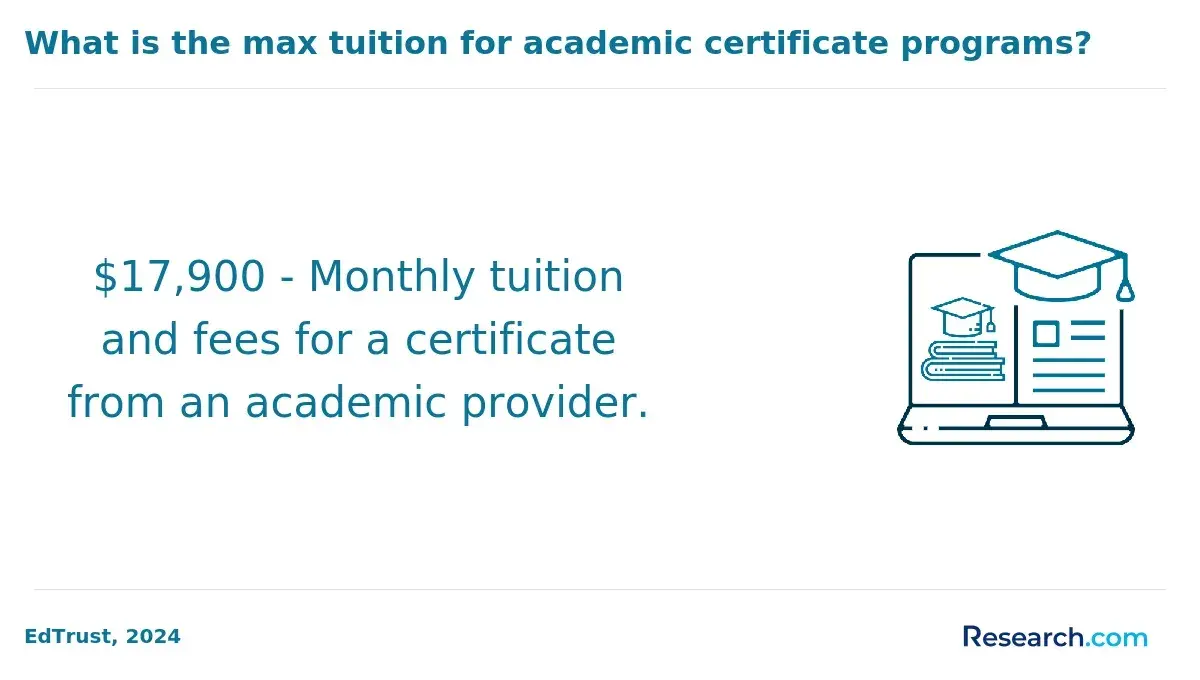
Choosing accredited online criminal justice degree programs with scholarships requires scrutinizing both legitimate accreditation and tangible financial support, especially for working professionals balancing employment and education.
Verification through the U.S. Department of Education's accreditation database is vital, emphasizing regional or national accreditors like the Council on Higher Education Accreditation or Distance Education Accrediting Commission. Scholarships often hinge on factors beyond merit, including current public safety roles, prior academic background, or demographic criteria, which can restrict access for some applicants but provide targeted aid for others.
Employer recognition of the program accreditation directly affects eligibility for federal aid, influencing the net cost and return on investment. Preparing financial aid applications that connect career objectives with program outcomes enhances the chances of securing funding. Professionals in law enforcement may find scholarships tailored to their specific service, whereas others might need to explore broader offerings.
Labor market trends indicate a 6.0% growth over the decade for private detectives and investigators, underscoring the practical value of focused credentials matched with financial support. A strategic approach involves combining accreditation verification with scholarship databases maintained by organizations like the National Criminal Justice Association. For those evaluating options, the best online colleges for forensic science also provide benchmark comparisons for cost-effective, quality programs.
Working professionals should evaluate online criminal justice scholarships for working professionals carefully, weighing eligibility nuances and employer alignment to avoid unforeseen financing gaps.
What are the typical admission requirements for online criminal justice degrees for adults?
Admission to online criminal justice degree programs for working adults typically balances formal academic criteria with measurable professional experience.
Undergraduate candidates usually must present a high school diploma or GED along with official transcripts, while graduate admissions often require a relevant bachelor's degree or substantial career experience as a substitute. Minimum GPA expectations range from 2.5 to 3.0 but can be offset by industry certifications or relevant job history, reflecting the need for practical readiness alongside academic ability.
Adult student requirements for criminal justice online programs frequently include submitting a focused personal statement outlining career objectives and how the degree furthers those plans.
Letters of recommendation hold particular weight when they come from supervisors or professionals acquainted with the applicant's work in probation, parole, corrections, or related sectors. Although some graduate programs still request GRE scores, many have waived this to expand access for working professionals.
Applicants should also anticipate prerequisites such as updated background checks or foundational course competency in criminology and ethics. Programs tailored for community corrections often favor candidates currently on the job in probation or parole, tying admissions directly to labor market demand and employer partnerships.
Labor projections confirm growth in relevant roles; for example, probation officers and correctional treatment specialists are expected to increase by 2.4% over the next decade, adding roughly 2,300 jobs. Those blending an advanced online degree with applicable work experience often have a competitive edge with employers prioritizing practical skills alongside academic credentials. For financial insights related to related fields, check out the autopsy tech salary.
How long does it take to complete an online criminal justice degree while working?
Balancing work obligations and degree progress in criminal justice often extends time-to-completion well beyond traditional full-time program lengths. For instance, a law enforcement officer enrolled part-time may require three to four years to complete a master's degree due to irregular shifts and family responsibilities. In contrast, full-time students with flexible daytime jobs might accelerate graduation to two or three years through intensive course loads.
Workplace expectations now favor candidates who can attain advanced qualifications without compromising job performance. Asynchronous courses with flexible submission deadlines provide necessary adaptability, yet fluctuating operational demands can still cause setbacks. Additionally, industry certifications and field attachments often add hours beyond coursework, further extending completion times.
From a labor market viewpoint, quicker degree completion translates to earlier eligibility for promotions or salary increases. Data from the U.S. Bureau of Labor Statistics reports median annual wages of $69,030 for postsecondary criminal justice and law enforcement instructors, highlighting the link between graduate credentials and roles involving training or academia.
Prospective students should evaluate their capacity for sustained study intensity and obtain employer support upfront. Structured goal-setting and clear communication with supervisors can reduce delays and optimize educational investments in criminal justice careers.
What core courses and specializations are included in online criminal justice programs?
Choosing between a generalized criminal justice curriculum and a focused specialization shapes both job prospects and educational efficiency. Core offerings such as criminology theory, criminal law, forensic science, corrections management, research methods, and ethics form the analytical and legal foundation required for multiple frontline roles in policing, investigations, and correctional supervision.
Specializations, for example, cybercrime or forensic psychology, impart crucial, sector-specific skills that better align graduates with targeted roles. The cybercrime track, emphasizing digital evidence and cybersecurity protocols, is indispensable for careers in federal agencies or private firms guarding against cyber threats.
Working professionals must realistically weigh the increased time and effort required by specializations, including the potential need for virtual labs or internships, which can strain schedules but deliver practical experience.
Employers prioritize candidates who can integrate complex legal knowledge with advanced investigative capabilities. For instance, detectives command a median wage of $91,100 nationally, reflecting the premium placed on proficiency in forensic and investigative methods.
Aligning course selection with definite career outcomes reduces credential inflation and avoids investing in generalist programs less suited for specialized task forces or federal units.
How much do online criminal justice degrees cost, and what scholarships are available?
Investing in an online criminal justice degree involves balancing tuition costs with realistic workforce outcomes and funding opportunities. Total expenses range from $15,000 to $45,000, influenced by credit rates that vary significantly. Public state universities might charge $300 to $400 per credit, while private institutions frequently exceed $600.
These price differences impact how working professionals must plan, especially considering additional fees such as technology and graduation charges, which may add $500 to $1,200 overall.
Those aiming to minimize financial burden should explore targeted scholarships and employer tuition assistance programs, which heavily focus on law enforcement, probation, parole, and corrections fields. For example, agencies like the National Criminal Justice Association and the American Correctional Association allocate resources specifically for probation officers and correctional treatment specialists.
A real-world scenario illustrates the tradeoff. A probation officer employed by a municipal agency can combine employer-funded tuition aid with these scholarships to complete a degree in about two years, reducing both time away from work and debt accumulation.
Given the median annual salary near $61,800 for related roles, prospective students must carefully weigh upfront education costs against potential income gains and career longevity. Choosing accredited programs with flexible schedules and strong employer connections further optimizes funding and employment alignment.
What criminal justice careers can I pursue with an online degree, and at what levels?
Choosing an online criminal justice degree requires weighing practical outcomes against educational investment, especially for professionals aiming to shift or elevate their careers. Associate degrees typically funnel graduates into entry-level roles like correctional officers or court clerks, positions with limited upward mobility without further education. This level suits those seeking quick employment but constrains advancement without additional credentials.
Bachelor's degrees unlock broader opportunities, including roles such as police officers, probation officers, forensic science technicians, and victim advocates. Employers increasingly require a bachelor's credential for supervisory or specialized positions within law enforcement and allied sectors such as social work, where projected job growth rates approach 6.6% nationally through 2034. Graduates should consider how this credential enables lateral movement into related disciplines with interdisciplinary demand.
Graduate degrees address leadership, policy analysis, and academic careers in public safety organizations. These programs demand substantial time and financial commitment but correspond with roles involving strategic decision-making and organizational management. Candidates must assess whether the expanded authority and salary potential offset this investment.
State-specific certifications often shape employability more than degree level in law enforcement or corrections. Combining credentials remains essential. For professionals entering from unrelated fields, expect initial roles at entry level despite advanced degrees; internships or practicums embedded in programs are vital to bridge experiential gaps.
What salary ranges and job outlook should criminal justice graduates expect in the U.S.?
An online criminal justice master's degree typically opens access to roles starting between $50,000 and $75,000 annually, with geographic and sector variations heavily influencing compensation. For example, Michigan State University data indicates an average graduate salary of $64,000, which surpasses bachelor's degree holders but still requires practical experience to reach supervisory or analytical levels.
Entry-level positions, especially clerical or administrative justice roles, often pay near $45,000. Graduates seeking more advanced roles must combine their degree with certifications and workplace networking to overcome hiring competition and unlock higher pay scales.
The job outlook is steady, with the Bureau of Labor Statistics projecting 7% growth in protective service occupations through 2032. However, demand shifts with local policy and budget priorities, making urban centers with rising crime a notable exception for higher hiring pressure.
For candidates targeting management or policy analyst tracks, especially within federal agencies. Programs emphasizing data analytics and leadership skills prove critical. These roles often offer salaries exceeding $75,000 but include more challenging hiring processes such as background checks and extended selection timelines.
How do licensing, background checks, and certifications impact criminal justice career options?
Licensing and certification requirements impose significant practical constraints on criminal justice career pathways, often determining eligibility and advancement more than educational credentials alone.
Comprehensive background checks scrutinize criminal history, financial records, and drug use, excluding many candidates and narrowing the potential workforce. For example, correctional officer openings are shrinking, dropping 7.6% through 2034, primarily due to a shift toward community-based roles that emphasize intervention skills rather than traditional custody.
State-specific licensing timelines and multi-step background verifications can delay employment by months, which working professionals must anticipate when pivoting careers. Certifications frequently carry more weight with employers than degrees, especially for specialized roles such as forensic analysts or probation officers, where state certification or technical credentials are baseline requirements.
To maintain employability and upward mobility, professionals should target credentials aligned with emerging community justice models, including restorative justice and social service interventions. Neglecting these licensure and certification demands effectively caps advancement and limits entry to higher-paying roles, particularly in evolving digital forensics and compliance auditing sectors.
Other Things You Should Know About Criminal Justice Degrees
Online criminal justice degrees require strong self-discipline since they often lack the structured daily routine of on-campus classes. Working professionals must balance job responsibilities with weekly assignments, discussion forums, and exams, which can lead to significant time management challenges. Programs that offer asynchronous coursework provide flexibility but demand consistent effort, making it critical to assess personal capacity to maintain steady progress alongside full-time work.
While many employers accept accredited online degrees, they often prioritize programs with strong reputations and demonstrated practical training. Programs partnered with law enforcement or criminal justice agencies can enhance employer confidence through internships or fieldwork components. Prospective students should prioritize programs that explicitly include experiential learning opportunities and maintain accreditation from recognized bodies to align with employer expectations.
Working professionals in 2027 can look for scholarships through universities offering criminal justice programs, professional associations, and private organizations. These opportunities often cater to those managing work and study, providing partial financial support. It's wise to application in advance and explore multiple funding sources for comprehensive coverage.
Choosing a specialization shapes career trajectory more than the degree itself; for example, cybersecurity or forensic science tracks can open advanced technical roles, while corrections or law enforcement administration concentrate on leadership paths. Specializations with growing demand offer stronger returns on investment but may require additional certifications. Working professionals should align specialization choices with both current job requirements and projected shifts in criminal justice workforce needs.
References
- Earn An Online Criminal Justice Degree | OEDb.org https://www.oedb.org/rankings/online-criminal-justice-programs/
- Guide To Criminal Justice Degrees And Majors https://www.criminaljusticedegreeschools.com/degrees/
- Criminal Justice Scholarships https://www.criminaljusticeprograms.com/financial-aid/scholarships/
- Financial Aid And Scholarships For Criminal Justice Degrees https://www.accreditedschoolsonline.org/criminal-justice-degree/financial-aid-scholarships/
- Online MPA Programs in Criminal Justice & Administration https://www.onlinempaprograms.com/specializations/criminal-justice
- Online Criminal Justice Degrees: Find the Right Program https://www.degreesforgood.org/online-degrees/criminal-justice-programs/
- Online Bachelor’s Degree in Criminal Justice https://www.monroeu.edu/academics/undergraduate-programs/school-criminal-justice/online-bachelors-degree-criminal-justice
- Scholarships & Resources for Criminal Justice Master’s Students https://www.onlinemastersdegrees.org/student-resources/criminal-justice/