2027 Online Criminal Justice Degrees With the Best Support for Transfer Students

Co-Founder and Chief Data Scientist
Transfer students pursuing an online criminal justice degree frequently face credit acceptance hurdles that delay graduation and inflate costs, complicating time-sensitive career pivots in law enforcement or corrections. According to the National Center for Education Statistics, nearly 40% of undergraduates transfer at least once, yet inconsistent articulation agreements leave many credits unrecognized in specialized fields like criminal justice. This gap not only slows workforce entry but undermines employer expectations for timely degree completion and practical experience. Navigating programs that maximize credit transfer and offer tailored support is thus a strategic imperative. This article identifies online criminal justice degrees with the strongest transfer policies and student resources, enabling efficient, career-aligned progression in this demanding sector.
Key Things You Should Know
- Transfer-friendly criminal justice programs with credit acceptance rates above 85% reduce degree completion time by up to 40%, yet lower-credit residency requirements often limit immediate entry to advanced courses.
- Employers in federal and state law enforcement increasingly prioritize candidates from institutions with articulation agreements, signaling that transfer pathway transparency directly affects hiring competitiveness.
- Cost savings from transferred credits can exceed $15,000, but inconsistent credit evaluations across institutions create financial unpredictability, delaying workforce reentry by up to a semester according to recent Education Department data.
What are the best online criminal justice degrees for transfer students?
Programs offering the best online criminal justice degree programs for transfer students prioritize flexible credit transfers and curriculum alignment with law enforcement, corrections, or legal services careers. Transfer-friendly options generally accept 60+ semester credits, reducing redundant coursework and accelerating degree completion. Students should seek schools with statewide articulation agreements or credit-for-prior-learning models that rigorously assess competencies, as these reduce lost credits but demand upfront scrutiny of transfer policies and equivalency guides.
In practice, failing to verify core criminal justice requirements during transfer often leads to extended enrollment and additional costs. The increasing demand for degrees with robust online infrastructures reflects the 31% of undergraduates taking exclusively distance education courses. Programs with synchronous and asynchronous formats, plus virtual internships or practicum placements, are critical to ensuring graduates demonstrate applied skills valued by employers.
Working transfer students benefit from programs that offer accelerated terms and strong support services tailored to criminal justice pathways, such as career counseling focused on corrections or homeland security. Without these supports, dropout risks and employability challenges increase. Transparency regarding credit transfer timelines and per-credit costs is crucial to safeguard against hidden financial and temporal burdens. Those aiming for specialized roles should consider workforce data like the FBI criminal profiler salary as a benchmark for evaluating job market alignment.
The top online criminal justice degrees with transfer credit support strike a balance between operational flexibility and practical outcomes, enabling faster workforce entry while meeting employer expectations for recognized credentials.
How do online criminal justice programs handle transfer credits?
Transfer credit policies for online criminal justice programs reflect a practical balance between accelerating degree completion and maintaining rigor in specialized fields. Programs often accept up to 90 transfer credits toward a 120-credit bachelor's degree, covering mostly general education and foundational courses. This can significantly shorten time to graduation for students transferring from accredited institutions, including community colleges.
However, transfer evaluation hinges on course equivalency, accreditation, and alignment with core criminal justice competencies. Specialized upper-level courses-such as criminal law, corrections, or criminology theories-typically require in-person or program-specific instruction and rarely transfer. This creates a tradeoff: while general credits accelerate progress, students seeking professional credibility and workforce readiness must still invest time in completing discipline-specific coursework.
Working professionals pursuing online criminal justice degrees should anticipate transfer caps-commonly between 60 and 90 credits-and carefully plan to avoid excess coursework or delays affecting licensure or employer expectations. Timing diploma audits and ensuring transferred credits meet graduation requirements are operational concerns that influence financial aid and scheduling.
Students navigating transfer credit policies for online criminal justice programs should also consider the impact on career trajectories. For instance, those seeking roles requiring specialized forensic or law enforcement skills must prioritize completing relevant courses onsite or within the degree program.
For individuals with criminal records exploring educational options, exploring the best associate degrees for felons may provide strategic pathways aligned with transfer credit acceptance and career needs.
What accreditation should an online criminal justice degree have?
Employers in law enforcement and federal agencies prioritize candidates from regionally accredited institutions because such accreditation signals academic rigor and consistent curriculum standards. Without this, students risk losing credits during transfers, leading to higher tuition and extended timelines. For example, a transfer student using 60 community college credits at Kennesaw State University's online BS in criminal justice pays roughly $11,400 for remaining courses compared to nearly $22,800 for the full program, illustrating a significant financial advantage.
Programs that hold accreditation from the Academy of Criminal Justice Sciences (ACJS) add a specialized verification of quality that aligns degrees with industry expectations, increasing employability across sectors like corrections and federal law enforcement. Aligning both regionally accredited credits and discipline-specific accreditation is critical when selecting the best accredited online criminal justice programs, as many for-profit or non-regional institutions' credits do not transfer, often forcing course repetition and delaying career progress.
Students should also verify the compatibility of sending and receiving institutions' accreditation to avoid losing transfer credits. Employers interpret accreditation as a proxy for professional standards and ethics, impacting access to advanced roles within government agencies. Working professionals pursuing an online criminal justice degree accreditation standards must balance these factors carefully to maximize credit transfer, reduce costs, and meet workforce expectations.
For related fields, evaluating online forensic science courses with similar accreditation considerations can further expand career options in public safety and investigative roles.
What admission requirements do transfer students need?
Transfer student admission criteria for online criminal justice degrees reflect strict academic and administrative benchmarks that prioritize practical workforce alignment over generalized standards. Students typically must present an official transcript documenting 24 to 30 transferable credit hours with a minimum cumulative GPA of 2.5, signaling readiness for discipline-specific coursework valued by employers. These requirements address essential challenges associated with transferring credits to online criminal justice programs, such as discrepancies in course relevance and rigor across institutions.
Course evaluations often involve submitting detailed syllabi and descriptions to verify equivalency with core criminal justice subjects or adjacent fields like sociology and psychology. Programs frequently mandate completion of foundational general education courses, mainly English composition and social sciences, with at least a C grade to meet employer expectations for critical thinking and effective communication.
Additional documentation requirements include professional goal statements that clarify career intentions in law enforcement or legal fields, alongside proofs of clearing academic holds or validating relevant military or professional experience. Such layers complicate admissions but align with workforce needs.
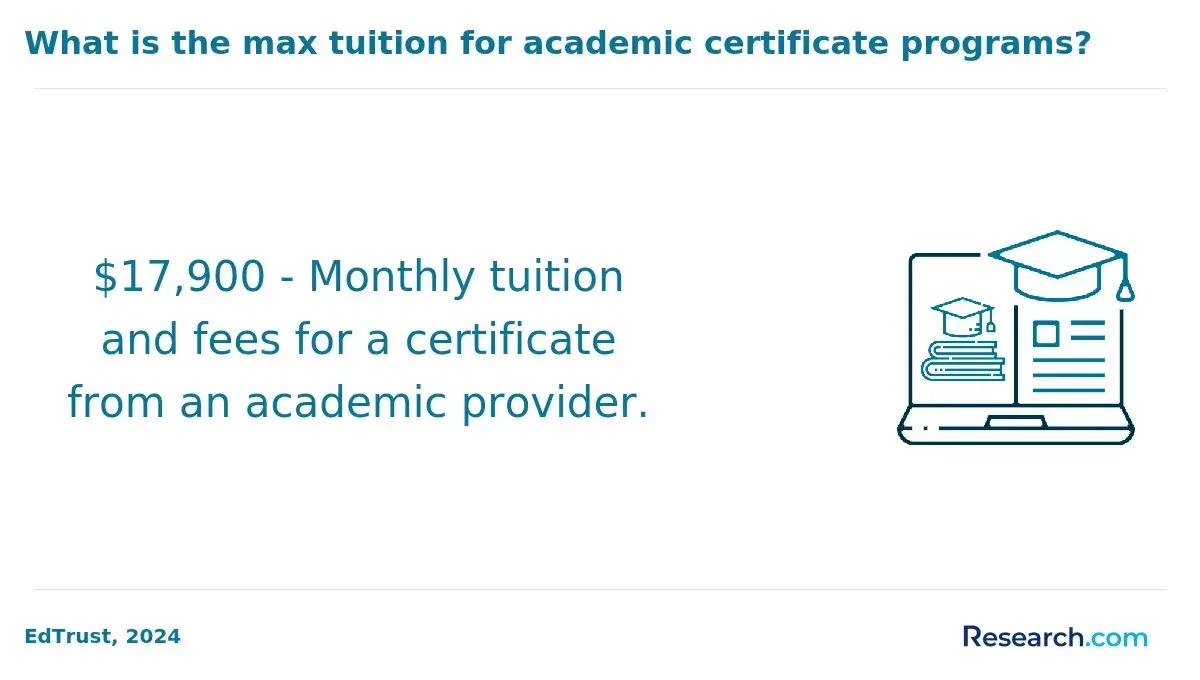
Considering the average annual tuition for an online bachelor's in social sciences is $13,676, transfer students must carefully weigh the cost-effectiveness of transferred credits against potential program extensions. Failure to maximize credit transfer could inflate time and tuition investment, delaying entry into the field or impacting long-term earnings compared with job-market realities like the sports analytics salary structure that rewards timely qualification.
How do online and campus criminal justice degrees compare?
Choosing between online and campus degrees in Criminal Justice hinges on balancing flexibility, hands-on experience, and transfer policies, especially for transfer students. Online programs cater well to working professionals, often allowing integration of current employment with coursework, thereby enhancing ROI and minimizing disruption. Campus programs, meanwhile, provide direct access to internships, labs, and in-person networking-assets critical for employers emphasizing practical skills and institutional affiliations.
For example, a security officer pursuing an online degree can leverage job experience to meet course requirements, while a campus student might gain mentorship and field placements that more directly impact early career advancement. However, campus programs generally impose stricter residency and credit transfer rules, potentially extending time-to-degree and increasing costs for transfer students from community colleges.
Employers in protective services typically require candidates to demonstrate applied skills alongside classroom theory. With median wages around $53,130, according to 2024 U.S. Bureau of Labor Statistics data, practical experience significantly influences earning potential and promotion opportunities. Campus graduates often benefit from stronger career placement resources, whereas online learners need proactive effort to secure local fieldwork and internships to remain competitive.
- Online degrees provide flexible scheduling and more accommodating credit transfer policies, suited for adult learners balancing work and study.
- Campus degrees offer superior access to internships and professional networks crucial for experiential learning and mentorship.
- Transfer students must evaluate credit acceptance and field experience integration to optimize costs and timing.
- Protective service salary benchmarks highlight the value employers place on hands-on competencies, influencing program choice impact.
What courses are in an online criminal justice curriculum?
Criminal justice curricula blend foundational theory with applied skills, but the alignment of these components critically affects employability and career paths. For example, a student targeting cybersecurity roles gains limited value from traditional policing courses and must instead focus on digital forensics and information security. Conversely, aspiring corrections leaders require deeper engagement with rehabilitation theories and organizational management.
Transfer students encounter particular challenges due to mismatched credits, often extending time-to-degree. Competency-based tracks such as ExcelTrack® mitigate this by allowing mastery demonstration across 174 single-credit courses plus a capstone, accelerating progress for those with prior experience. However, this efficiency can come at the expense of hands-on learning, a significant drawback in fields like law enforcement where internships or fieldwork strongly influence job readiness.
Employers increasingly demand graduates who balance legal knowledge with technical proficiency, underscoring the need for curricula that adapt to evolving workplace realities. Students must therefore assess program flexibility and credit transfer policies early to avoid redundant coursework and ensure the curriculum aligns with their intended role.
Key considerations include:
- Prioritizing technical courses relevant to specific career tracks
- Evaluating accelerated formats for sufficient practical exposure
- Confirming credit applicability to prevent extended study periods
These factors shape how well educational choices translate into workforce readiness and long-term career viability in Criminal Justice sectors.
How long does an online criminal justice degree take?
Completing an online criminal justice bachelor's degree typically requires four years of full-time study, but transfer students may shorten this to two or three years depending on previously earned credits and course schedules. Programs incorporating substantial experiential components-such as a 12-credit full-time internship like those at Appalachian State University Online BSCJ-often extend completion timelines or require careful planning to balance academic and work commitments. For students working full time, the internship phase can necessitate stretching the traditional timeline to maintain satisfactory performance.
Credit transfer policies significantly influence time to degree. Students transferring 60 credits might expect a two-year path, yet restrictive articulation agreements and limits on transferable credits can introduce delays. Internship placement timing or prerequisite sequences may create bottlenecks, forcing additional semesters and increased expenses. Early advising to assess credit applicability is critical to avoid redundant coursework and inflated costs.
Program design also affects pacing. Institutions offering accelerated terms or summer sessions allow faster progress, while rigid schedules prolong study. Specialized criminal justice roles may demand certifications that align imperfectly with academic calendars, adding complexity to planning. Prospective students must weigh program flexibility, internship requirements, and certification timelines to optimize their educational investment and readiness for employment.
- Four years typical; transfer students may finish in two to three years
- Internships add significant time and scheduling challenges
- Credit transfer limits can create unexpected delays
- Accelerated terms and summer classes speed degree completion
- Certification timelines may necessitate strategic planning
How much do online criminal justice degrees cost?
Flat-rate tuition models like Fort Hays State University's $203.73 per credit for all online criminal justice students in 2025-26 offer a rare clarity that directly benefits transfer students and working professionals. Unlike tiered or residency-based pricing, this approach eliminates hidden fees and uncertainty, enabling students to accurately predict costs and evaluate the true value of transfer credits. For instance, a student transferring 30 credits effectively saves about $6,111.90 compared to paying for those courses anew, which materially impacts financial planning and course sequencing.
Employers in public safety and cybersecurity increasingly assess a candidate's education cost-efficiency as a proxy for practical readiness. Programs charging variable per-credit rates risk prolonging time-to-degree when non-transferable credits accumulate, delaying workforce entry and potentially affecting advancement opportunities. Conversely, transparent, flat-rate pricing helps streamline completion timelines with fewer redundant courses.
- Transfer students gain predictable tuition that simplifies multi-institution credit evaluation
- Working professionals can better align education expenses with employer expectations on efficiency
- Residency-independent pricing removes geographic cost barriers common in state university systems
Prioritizing programs with clear articulation agreements and fixed, uniform tuition rates reduces financial surprises and supports a focused pathway through an online criminal justice degree, optimizing both time and monetary investment.
What jobs can you get with a criminal justice degree?
Holding a criminal justice degree opens roles across law enforcement, corrections, federal agencies, private security, and legal services, but degree alone rarely suffices for frontline law enforcement positions. For instance, agencies like the FBI require not only the degree but also demonstration of investigative and analytical skills plus specialized certifications or academy experience. Those aiming for state probation officer roles must obtain relevant state certifications beyond their academic credentials, while compliance officer roles in private firms hinge more on regulatory knowledge and legal acumen than on law enforcement training.
Mid-career professionals often benefit from programs that recognize prior learning, such as accepting transfer credits for law enforcement academy training. This can shorten degree completion time and leverage existing experience, providing a strategic advantage when shifting roles or seeking faster advancement.
Employers prioritize candidates combining practical experience with formal education. Pursuing internships aligned with targeted career paths or obtaining certifications in community policing or specialized investigations enhances employability. However, transitioning between niches-like federal investigations versus corrections-requires deliberate upskilling beyond the degree itself.
- Federal agencies demand rigorous qualifications including both degree and certifications.
- Experience and credentials must align carefully with intended roles; knowledge alone is often insufficient.
- Recognizing prior law enforcement training as academic credit accelerates progress for working adults.
Choosing criminal justice programs that integrate practical training and recognize professional experience reduces skill gaps and optimizes value for career-focused candidates navigating complex workforce expectations.
What salaries and job outlook do criminal justice careers offer?
Salary prospects in criminal justice roles vary significantly based on specialization, geography, and experience, with federal law enforcement roles often surpassing $80,000 annually while entry-level positions typically start around $38,000 to $39,000. The 7% job growth projected by the U.S. Bureau of Labor Statistics through 2032 masks uneven regional dynamics where budget constraints can throttle opportunities. Transfer students pursuing online bachelor's degrees-now numbering 42 options-must weigh program relevance against local labor market demands, especially in areas investing in cybercrime and forensic specialties.
For example, candidates educated in cybercrime face higher starting salaries near $70,000 in urban agencies compared to around $50,000 for traditional patrol jobs. Emphasizing sector-specific skills helps graduates bypass oversaturated pools and align with employers prioritizing technology-driven prevention and investigations. However, such niche focuses require careful vetting to ensure program content matches evolving employer expectations and certification pathways.
Strategic choices include targeting programs linked to agencies with sustainable funding or private compliance roles, recognizing that lateral moves into federal positions can dramatically increase compensation. Incremental salary growth often depends on certifications and advanced degrees rather than a generic bachelor's alone, urging prospective students to plan beyond initial placements for longer-term economic returns.
Other Things You Should Know About Criminal Justice
Online criminal justice programs in 2027 offer virtual networking tools such as online forums, webinars, and alumni networks to foster connections among transfer students. Though different from traditional in-person opportunities, these resources ensure students can still build professional relationships and expand their career networks.
Many online criminal justice programs require some form of in-person practicum or internship to meet accreditation standards, which can be a complex logistical hurdle for transfer students balancing work or relocation. Transfer students must evaluate whether the program provides flexible, local internship placement support before enrolling, as insufficient support can delay graduation or reduce the relevance of hands-on experience for employers.
Many 2027 online criminal justice programs accept up to 90 transfer credits toward a 120-credit bachelor’s degree, including regionally accredited associate credits and evaluated military training through ACE or JST. Schools often require official transcripts and a minimum 2.0 GPA for transfer admission.
Choosing a specialized track (like forensic science, corrections, or cybersecurity) can enhance job market competitiveness by signaling focused expertise aligned with employer needs. Transfer students wanting quicker career advancement should prioritize programs offering these concentrations, since broad generalist degrees may limit access to roles requiring specific skill sets or certifications.
References
- Types of Criminal Justice Careers https://www.criminaljusticeprograms.com/criminal-justice-careers/
- How to Accelerate a Degree in Criminal Justice: Flexible Pathways and Planning Strategies https://www.aiuniv.edu/degrees/criminal-justice/articles/accelerate-online-criminal-justice-degree
- How Long Does It Take to Get a Bachelor's Degree in Criminal Justice? | Maryville Online https://online.maryville.edu/online-bachelors-degrees/criminal-justice/resources/how-long-does-it-take-bachelors-criminal-justice/
- Should You Get Your Master’s Degree in Criminal Justice Online? | CSU Global https://csuglobal.edu/blog/should-i-get-my-masters-degree-in-criminal-justice-online
- Criminal Justice Salary Guide | All Criminal Justice Schools https://www.allcriminaljusticeschools.com/criminal-justice/criminal-justice-salaries/
- Online Criminal Justice Administration Courses | University of Phoenix https://www.phoenix.edu/online-courses/criminal-justice.html
- Criminal Justice Transfer https://www.stcc.edu/explore/programs/criminal-justice-transfer---crjtas/
- Earning a Criminal Justice Degree Online | University of Bridgeport https://www.bridgeport.edu/news/earning-a-criminal-justice-degree-online/
- Criminal Justice | EICC https://eicc.edu/classes-programs/pathway/government/criminal-justice-transfer/default.aspx
- Online Criminal Justice Degrees: Find the Right Program https://www.degreesforgood.org/online-degrees/criminal-justice-programs/