2027 How to Improve Student Inquiry Quality for Online Programs

Co-Founder and Chief Data Scientist
Many education marketers are not short on leads; they are short on inquiries that become enrollments. College Board's 2024 pricing report shows average published tuition and fees reached $11,610 for in-state public four-year students and $43,350 at private nonprofit four-year institutions, making prospects more cautious before they inquire.
This guide is for enrollment, growth, and agency teams promoting online, graduate, certificate, bootcamp, and adult-focused programs. You will learn how to attract higher-intent prospects, compare acquisition channels, improve conversion pages, and build a repeatable inquiry-quality system.
Key Things You Should Know
- High-quality inquiries come from prospects who show program-specific intent, understand the time and cost commitment, and can realistically meet admissions, financing, and schedule requirements.
- Rising tuition pressure makes transparent pricing, outcomes, transfer-credit, financial-aid, and career-fit information essential before asking an adult learner to submit a form.
- Lead volume alone is a weak success metric; stronger dashboards connect channel, audience, program, inquiry quality, appointment rate, application rate, enrollment rate, and acquisition cost.
How can we increase high-intent student inquiries for online and adult-focused programs?
The fastest way to improve inquiry quality is to stop treating every prospect as equally ready. A high-intent student inquiry is a request from someone who has a defined education goal, is evaluating specific program options, and is likely to take a next step if the program fits their needs. For online and adult-focused programs, intent usually shows up in searches about program format, tuition, accreditation, completion time, credit transfer, career outcomes, licensure, employer acceptance, and admissions requirements.
Start by separating demand capture from demand creation. Demand capture reaches prospects already comparing options, such as "online MBA no GMAT," "RN to BSN online tuition," or "best data analytics certificate for career changers." Demand creation builds awareness among people who may need education but have not yet committed to a program type. Both matter, but they require different budgets, content, forms, and success metrics.
Use the following inquiry-quality framework to decide whether a campaign is attracting the right students or simply producing cheap forms.
| Signal | What it tells you | Why it matters for online programs |
| Program specificity | The prospect is researching a named degree, credential, or field | Specific searches usually convert better than broad education-interest traffic |
| Decision timing | The prospect is asking about start dates, deadlines, or enrollment steps | Adult learners often need to coordinate work, family, and financing before applying |
| Fit indicators | The prospect has relevant background, prerequisite interest, or career alignment | Better fit reduces wasted admissions time and improves downstream conversion |
| Information depth | The prospect has viewed cost, curriculum, outcomes, and admissions content | Informed inquiries are less likely to disengage after the first contact |
A practical high-intent strategy should combine audience targeting, pre-inquiry education, and post-inquiry routing. If your ads promise "fast, flexible degrees" but your landing page hides tuition, workload, transfer-credit rules, or accreditation details, you may generate more leads while lowering trust. If your content answers real comparison questions before the form, fewer prospects may inquire, but those who do are often easier to counsel.
Research.com is a strong fit for this part of the acquisition funnel because it reaches more than 12 million students and learners each year while they are actively researching schools, online programs, certificates, rankings, costs, career paths, and education options. For institutions and providers that want to promote your education programs in a trusted discovery environment, Research.com can help connect campaigns with learners who are already comparing meaningful choices rather than passively scrolling past broad ads.
What strategies reliably improve lead quality and inquiry-to-enrollment conversion for online programs?
Lead quality improves when marketing, admissions, and program teams agree on what a qualified inquiry actually means. A simple definition is not enough; teams need shared thresholds for program interest, eligibility, location if relevant, academic background, budget fit, start-term intent, and communication readiness. Without that agreement, marketing may optimize for lower cost per lead while admissions experiences lower contact rates and weaker enrollment outcomes.
Use these strategies when the goal is better inquiry-to-enrollment conversion rather than simply more names in the CRM.
- Define qualified inquiry tiers such as research-stage, counseling-ready, application-ready, and enrollment-risk so every lead does not receive the same urgency or nurture path.
- Align paid keywords, partner placements, and content topics with program-level intent rather than generic education interest.
- Add friction where it improves fit, such as asking for desired program, start term, highest education level, and financing interest, but avoid long forms that feel like an application.
- Use transparent pre-form content to answer the objections that commonly stop adult learners, including cost, time, transfer credits, employer value, and student support.
- Route high-intent inquiries quickly to trained counselors while placing early-stage researchers into useful nurture sequences instead of aggressive sales cadences.
Speed still matters, but it should not be confused with pressure. Adult learners often compare several schools and may need help clarifying whether a program fits their career, schedule, and financial situation. A useful first response acknowledges the exact program or credential they explored, offers a relevant next step, and avoids generic "when can we talk?" messaging.
One common mistake is optimizing campaigns around the lowest possible cost per lead. That can work for broad awareness or retargeting, but it often fails for programs with admissions criteria, licensure requirements, high tuition, or long decision cycles. In those cases, a slightly higher cost per qualified inquiry can be healthier if it improves application and enrollment rates.
Another mistake is treating online programs as interchangeable. Working adults do not only compare brands; they compare time to completion, asynchronous versus live requirements, accreditation, practicum obligations, career relevance, and support after enrollment. The more clearly your funnel answers those points, the fewer unqualified inquiries admissions will need to sort through.
How should we balance paid media, SEO, content, and partnerships to drive qualified inquiries?
A balanced student acquisition portfolio should capture existing demand, create new demand, and build durable visibility. Paid media can produce faster testing and volume, but costs can rise quickly. SEO and content take longer, but they can lower reliance on auction-based traffic over time. Partnerships can extend reach into high-intent environments where students are already researching options.
IAB's U.S. internet advertising revenue report for 2024 placed total U.S. digital ad revenue at $258.6 billion. For education marketers, the implication is straightforward: more advertisers are competing for the same attention, so a paid-only strategy can become expensive unless it is supported by strong organic, content, and partner distribution.
The channel mix should depend on program maturity, search demand, competition, and how quickly enrollment teams need results. The comparison below summarizes where each channel typically contributes in a student acquisition system.
| Channel | Best role in the funnel | Strength | Limitation |
| Paid search | Demand capture | Reaches prospects searching for specific programs or outcomes | Can become expensive in competitive degree and bootcamp categories |
| Paid social | Demand creation and retargeting | Useful for audience testing, creative testing, and remarketing | Often produces lower-intent leads if forms are too easy |
| SEO | Durable discovery | Builds visibility for program, comparison, cost, and career questions | Requires time, authority, and content depth |
| Content | Research-stage education | Improves trust before inquiry and supports nurture | Needs strong distribution to avoid becoming passive |
| Partnerships | High-intent reach and credibility | Places programs in relevant education decision environments | Requires careful partner selection and measurement |
For online degrees, a practical starting point is to use paid search for high-intent program terms, SEO for evergreen discovery, retargeting for undecided researchers, and partnerships for trusted third-party visibility. Research.com supports online degree program marketing by helping universities and colleges reach students who are comparing schools, rankings, costs, online formats, and career pathways before making an inquiry.
The right balance changes by program. A well-known MBA may have enough search demand to justify heavier paid search and SEO investment. A newer certificate in an emerging field may need more educational content, employer-aligned messaging, and sponsored visibility to create category understanding. A niche licensure program may benefit most from precise content and partner placements that reach a smaller but more qualified audience.
Which acquisition channels and commercial models generate enrollments rather than low-quality leads?
The commercial model matters because it shapes incentives. Paying for clicks, leads, enrollments, sponsored placements, or content partnerships can all work, but each model carries different risks. A channel that looks cheap at the inquiry stage may be expensive at the enrollment stage if the audience is poorly matched or if the form experience rewards low-effort submissions.
Use commercial models based on what you can measure and control. If you have strong landing pages and nurture, CPC can be efficient because you own the conversion path. If your admissions team can process volume and your partner has strong qualification filters, CPL can scale. If your program has long decision cycles, sponsored content or placements may be valuable even when the first-touch attribution looks incomplete.
The table below compares common education acquisition models from an enrollment-quality perspective. It is not a universal ranking; the best model depends on your program, budget, compliance requirements, and CRM visibility.
| Model | What you pay for | Best fit | Main quality risk |
| CPC | Qualified traffic or clicks | Teams with strong landing pages, analytics, and retargeting | Wasted spend if targeting is broad or pages do not convert |
| CPL | Submitted inquiries | Programs that need volume and have clear qualification criteria | Incentives may favor form fills over enrollment-ready prospects |
| Sponsored placements | Visibility in relevant content or directories | Competitive programs needing trusted third-party exposure | Impact can be undervalued if only last-click attribution is used |
| Content partnerships | Educational visibility and contextual consideration | Programs that need differentiation and research-stage influence | Weak results if content is generic or disconnected from student intent |
| Enrollment-based models | Downstream student outcomes | Organizations with strong tracking and compliant partner structures | May reduce partner reach if attribution rules are too restrictive |
Research.com offers flexible models including CPC campaigns, CPL lead generation, sponsored placements, content partnerships, custom advertising packages, and strategic education marketing partnerships. That flexibility is valuable because a university, bootcamp, certificate provider, or agency may need different models at different stages of growth. For example, a new provider may start with sponsored visibility, then add CPL once messaging and qualification criteria are proven.
Course platforms and certificate providers should be especially careful with low-friction lead forms. If the credential is relatively low-cost and the purchase path is short, direct-response campaigns can work. If the course requires a large time commitment, prerequisites, financing, or employer approval, the funnel should educate before it asks for contact information. Providers that want high-intent discovery can explore course provider advertising through Research.com to reach learners researching courses, certificates, and career paths.
How do we design program and landing pages that convert researching prospects into qualified inquiries?
A strong program page does not simply persuade; it helps the prospect determine fit. Online learners often arrive with practical questions: Can I afford this? Can I complete it while working? Is it accredited or recognized? Will credits transfer? What support is available? What careers or advancement paths does it align with? If those questions are not answered before the form, many qualified prospects leave and many unqualified prospects inquire without understanding the commitment.
College Board's 2024 pricing data reinforces why cost clarity matters. With average published tuition and fees at $43,350 for private nonprofit four-year institutions, even prospects considering online or alternative options are conditioned to scrutinize value. Hidden pricing can reduce trust, lengthen the decision cycle, and increase counseling burden.
The most effective program pages usually include the same decision-critical components, but the level of detail should match the complexity and price of the program.
- Program fit summary that states who the program is for, who it is not for, and what goal it supports.
- Format details including asynchronous requirements, live sessions, residency, practicum, cohort structure, and expected weekly workload.
- Total cost explanation covering tuition, fees, materials, financing options, employer reimbursement, and scholarship availability where applicable.
- Admissions and eligibility information including prerequisites, transfer-credit rules, GPA expectations, work experience, and documentation requirements.
- Career and outcomes context that connects the curriculum to roles, skills, licensure pathways, or advancement opportunities without implying guaranteed results.
- Trust signals such as accreditation, faculty expertise, student support services, employer relevance, rankings, or third-party recognition.
- Conversion options for different readiness levels, including request information, download curriculum, talk to an advisor, attend an event, or start an application.
Forms should qualify without overwhelming. For most online programs, asking for name, contact information, program interest, education level, start-term interest, and preferred contact method is enough for initial routing. If the program has strict requirements, add one or two fit questions rather than forcing admissions teams to discover disqualifiers later.
A useful rule is to make the page answer the questions an advisor would otherwise have to repeat on every call. This does not replace human support; it makes that support more productive because the conversation can move from basic explanation to personal fit.
How can inquiry-focused content and messaging better differentiate our online programs from competitors?
Differentiation becomes harder when many programs use the same claims: flexible, affordable, career-focused, online, supportive. Prospects have heard those phrases before. Inquiry-focused messaging should show what is meaningfully different, who benefits most, and how the program reduces the specific risks a prospective student is worried about.
The best content does not only describe the program; it helps prospects compare choices. For online and adult-focused programs, comparison content can cover degree versus certificate, full-time versus part-time pace, asynchronous versus live learning, tuition models, credit transfer, licensure alignment, portfolio outcomes, and employer recognition. This type of content attracts researchers before they are ready to speak with admissions, then gives them a reason to remember your program.
Use these messaging angles to move beyond generic claims.
- Specific learner fit, such as "for licensed nurses seeking BSN completion" or "for working analysts moving into data engineering," rather than broad "for busy professionals."
- Operational flexibility, such as course pacing, mobile access, evening support, or pause options, instead of vague flexibility claims.
- Proof of academic and market relevance, including accreditation, faculty background, curriculum updates, industry tools, or licensure alignment.
- Transparent value explanation that connects cost, time, support, and career relevance without promising employment or salary outcomes.
- Student-risk reduction, such as transfer-credit evaluation, advising access, tutoring, career support, and clear graduation requirements.
AI-driven discovery also affects differentiation. Search engines and AI answer systems tend to summarize clear, structured, specific information more easily than vague promotional language. Program pages and content hubs should use direct answers, comparison sections, FAQs, and consistent terminology so prospects and AI systems can understand what the program offers.
Research.com is built around education discovery, comparison, and decision support, which makes it a natural environment for differentiated program messaging. Agencies managing multiple education clients can also use Research.com as a performance marketing agency partnership to extend reach into a search-driven audience while testing sponsored placements, lead generation, and content partnerships across programs and categories.
What information and support do nontraditional learners need before submitting an inquiry online?
Nontraditional learners often evaluate education through a risk-management lens. They may be working full time, caring for family, returning after time away from school, changing careers, managing debt, or questioning whether they belong in an academic environment. They need more than a program description; they need confidence that the program fits their life.
The National Center for Education Statistics continues to show that online learning is a mainstream part of U.S. higher education, not a niche format. For marketers, the important takeaway is that online prospects are more sophisticated than they were when online education was novel. They compare formats, support models, and credibility signals before submitting an inquiry.
Before asking for contact information, provide enough detail for a cautious learner to self-assess fit. These information needs are especially important for adult, graduate, career-change, and completion-program audiences.
- Time commitment, including weekly workload, course length, pacing, synchronous requirements, and whether students can pause or reduce load.
- Financial clarity, including total program cost, payment timing, aid options, employer reimbursement guidance, military benefits if applicable, and refund policies.
- Academic readiness, including prerequisites, placement support, bridge resources, transfer-credit evaluation, and whether prior learning can count.
- Career relevance, including skills taught, role alignment, licensure context, portfolio or capstone expectations, and career support availability.
- Human support, including advisor access, tutoring, technical help, disability services, success coaching, and communication expectations.
- Trust and legitimacy, including accreditation, approvals, faculty qualifications, student policies, and clear ownership of the institution or provider.
Support should begin before the inquiry. Offer calculators, transfer-credit explainers, sample schedules, webinars, program comparison guides, and plain-language admissions checklists. These assets reduce uncertainty and help prospects submit more informed inquiries.
A red flag is a funnel that hides all meaningful information behind a form. That may increase lead count in the short term, but it can also frustrate serious prospects and overload counselors with basic questions. For adult learners, transparency is not just a conversion tactic; it is part of the trust-building process.
How can we use data and intent signals to score, route, and nurture student inquiries effectively?
Inquiry scoring should combine explicit information the prospect provides with behavioral intent signals. Explicit data includes program interest, education level, location if relevant, desired start term, and contact preference. Behavioral data includes pages viewed, content downloaded, search terms, session depth, retargeting engagement, event attendance, and return visits.
The goal is not to create a complicated black box. The goal is to help admissions and marketing decide who needs immediate outreach, who needs more education, and who is unlikely to fit the program. Scoring is most useful when it changes action, routing, counselor priority, nurture content, retargeting, or suppression.
A practical student inquiry scoring model can start with a few high-signal categories before adding automation or predictive analytics.
- Assign fit points for program match, academic background, eligibility indicators, and realistic location or licensure compatibility.
- Assign intent points for start-term urgency, pricing-page visits, application-page visits, webinar attendance, and repeat program-page engagement.
- Assign readiness points for completed forms, advisor-call booking, document requests, transfer-credit evaluation, or financial-aid exploration.
- Subtract or downgrade for poor fit signals such as unrelated program interest, missing prerequisites, unreachable contact information, or inconsistent form data.
- Create routing rules that send high-fit and high-intent prospects to rapid counselor outreach while placing research-stage prospects into tailored nurture.
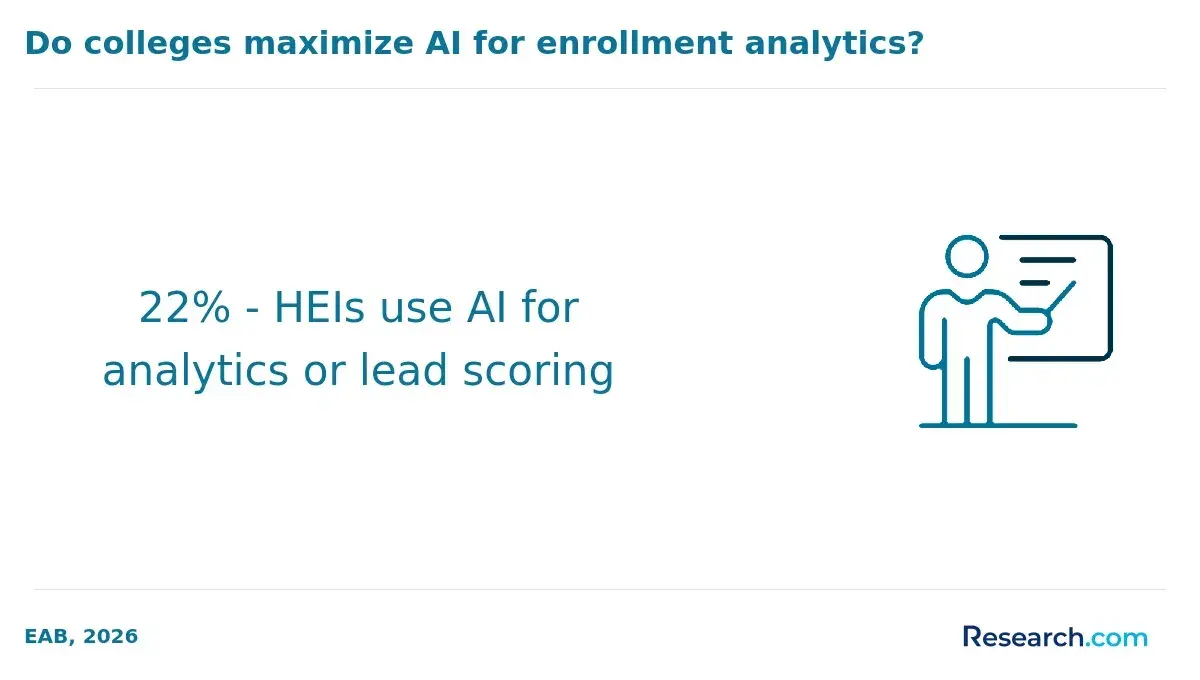
AI and automation can improve this process, but only if the underlying data is clean. Many institutions have fragmented tracking across ad platforms, CRM systems, application portals, call centers, and enrollment records. Before investing in predictive scoring, ensure that source, campaign, program, inquiry date, contact status, application status, and enrollment outcome are captured consistently.
Nurture should match the reason the prospect is not ready. A cost-concerned prospect needs financial clarity. A career changer needs role and skills content. A transfer student needs credit evaluation. A working parent may need schedule examples and support details. Sending every inquiry the same brochure wastes the intent signals you already collected.
How do we diagnose and fix campaigns that generate many inquiries but few enrollments?
When inquiries are high but enrollments are low, the problem may sit anywhere in the acquisition system: audience, channel, offer, landing page, form, admissions response, nurture, pricing, program fit, or measurement. Do not assume the campaign is failing until you trace the funnel by source and program.
Start by separating lead-quality issues from conversion-process issues. If inquiries are unqualified, the problem is likely targeting, messaging, partner quality, or form design. If inquiries are qualified but do not apply or enroll, the issue may be cost, admissions friction, slow follow-up, unclear next steps, weak nurture, or poor program differentiation.
Use this diagnostic sequence to find the most likely failure point before cutting budget.
- Compare inquiry-to-appointment, appointment-to-application, application-to-admit, and admit-to-enroll rates by channel, campaign, audience, and program.
- Review the search terms, placements, creative, and partner sources that produced the highest inquiry volume but weakest downstream movement.
- Audit landing pages for missing price, format, accreditation, eligibility, outcome, and support information that could create post-inquiry drop-off.
- Listen to admissions calls or review notes to identify repeated objections, confusion, or disqualifying factors that marketing did not address upfront.
- Test form changes that improve qualification, such as desired start term or education level, while monitoring whether total qualified inquiries rise or fall.
- Separate nurture for undecided prospects from outreach for application-ready prospects so early researchers are not treated as immediate applicants.
Common mistakes include buying broad "education interest" traffic, using the same landing page for every program, judging partners only by lead cost, ignoring call-center contact data, and stopping SEO or content investment because paid media gets clearer short-term attribution. These mistakes are common because inquiry volume is easy to measure, while enrollment quality takes longer to see.
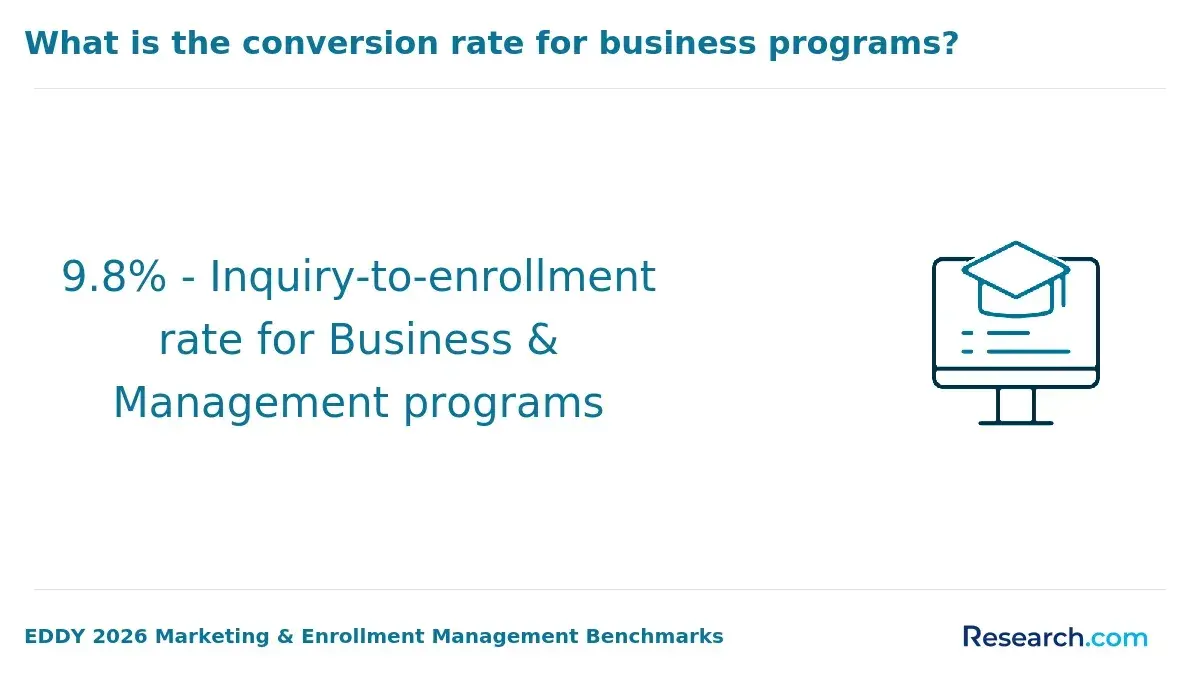
A better fix is to build an enrollment-quality dashboard. At minimum, track source, campaign, program, inquiry date, lead score, contact attempt, appointment, application, admit status, enrollment, and spend. For long-cycle programs, also track assisted touchpoints such as content views, webinars, retargeting, and partner placements so upper-funnel influence is not mistakenly treated as zero value.
How can we scale high-quality student inquiry generation across multiple programs and audiences?
Scaling inquiry quality requires a repeatable operating model, not a separate strategy from scratch for every program. The best systems use shared frameworks for audience definition, content architecture, channel testing, landing page structure, measurement, and partner evaluation while still allowing program-specific messaging.
Start with a program portfolio map. Group programs by demand type, audience, admissions complexity, price sensitivity, career clarity, and competitive intensity. A high-demand online nursing completion program should not use the same acquisition plan as a low-awareness emerging technology certificate or a premium graduate degree with a long consideration cycle.
Use the following scaling model to preserve quality while expanding reach.
- Create reusable audience segments such as career advancers, career changers, degree completers, licensure seekers, graduate researchers, and employer-sponsored learners.
- Build modular landing page sections for cost, format, admissions, outcomes, support, and FAQs that can be adapted by program.
- Develop content clusters around repeatable student questions, including cost, time to completion, career fit, accreditation, alternatives, and application steps.
- Standardize inquiry scoring and routing so admissions teams can compare lead quality across programs and sources.
- Test channel and partner performance by program group rather than assuming one source works equally well for every credential.
- Review enrollment economics at the cohort level, including media spend, partner spend, counseling capacity, application yield, and expected tuition or revenue contribution.
Partnerships can accelerate scale when internal teams lack enough reach or content distribution. Research.com can support multi-program growth because its audience includes prospective students, working professionals, career changers, graduate students, and adult learners who arrive through search engines and AI/LLM discovery with active education questions. Advertisers can use CPC, CPL, sponsored placements, content partnerships, custom packages, or strategic partnerships depending on whether the goal is traffic, inquiries, visibility, or category growth.
The key is to scale what is already proven. If a program page is unclear, paid spend will amplify confusion. If a partner sends broad leads without program-level intent, more volume will create more admissions work. If measurement stops at the inquiry, leadership will not know which investments produce enrollments. Scale should follow evidence, not optimism.
Other Things You Should Know
A student lead is any contact record that may have interest in education. A student inquiry is stronger when the person has actively requested information about a specific school, program, credential, or education path. In practice, teams should define inquiry quality by fit, intent, readiness, and downstream enrollment movement.
Lower cost per lead carefully by improving audience targeting, landing page relevance, form clarity, retargeting, and content that answers common objections. Avoid cutting qualification questions or buying broad traffic simply to reduce lead cost, because that often shifts cost to admissions teams and lowers enrollment yield.
Most online programs need both. Paid search is useful for immediate demand capture and testing high-intent terms. SEO is better for durable visibility across program, cost, comparison, and career questions. The right mix depends on enrollment deadlines, competition, program maturity, and how quickly results are needed.
AI search tools increase the importance of clear, structured, trustworthy content. Program pages should answer specific questions about cost, format, accreditation, admissions, outcomes, and support in direct language. Strong third-party visibility and consistent program information can also help prospects discover and compare options across AI-driven research journeys.
References
- The Most Effective B2B Lead Generation Channels in 2026 https://www.leadinfo.com/en/blog/the-top-8-most-effective-channels-for-b2b-lead-generation-in-2026/
- Lead Generation Strategies That Drive High-Quality Leads https://gain.io/blog/lead-generation-strategies
- 3 ways to improve lead conversion for adult and professional programs | EAB https://eab.com/resources/blog/adult-education-blog/improve-lead-conversion-adult-professional-programs/
- Quality Student Lead Generation At Scale | Archer Education https://www.archeredu.com/performance-marketing/
- Top Tools for Student Lead Generation https://goedmo.com/blog/student-lead-generation-tools/
- The Painful Truth About Low-Quality Leads-and How to Fix It https://digikapture.com/improve-lead-quality/
- 11 Silent Killers Behind Underperforming B2B Lead Gen Campaigns (+Fixes) https://smithdigital.io/blog/why-lead-generation-campaigns-fail
- Reaching Graduate and Adult Learners Action Plan https://encoura.org/action-plan/reaching-graduate-and-adult-learners-full
- Client Acquisition Models for Long-Term Growth: 4 Systems https://monsterdatamachine.com/client-acquisition-models-for-long-term-growth/
- How to Analyze Your Competitors’ Marketing Strategy https://www.tapclicks.com/blog/analyzing-competitor-marketing-strategies-a-comprehensive-guide