2027 Best Marketing Channels for Online Course Providers

Co-Founder and Chief Data Scientist
Online course providers are competing for learners who research longer, compare more options, and expect proof before they inquire. NCES reported in 2024 that 53% of U. S. undergraduates took at least one distance education course in fall 2022, making online visibility a core enrollment issue, not a side channel.
This guide is for growth, enrollment, and agency teams that need qualified enrollments, not vanity traffic. You will learn which channels work, how to budget across them, and how to build a repeatable acquisition system.
Key Things You Should Know
- High-intent channels usually outperform broad awareness media for online courses because they reach learners who are already comparing programs, costs, outcomes, schedules, and credentials.
- A balanced acquisition mix typically combines paid search for immediate demand, SEO and content for compounding visibility, comparison platforms for decision-stage reach, and partnerships or affiliates for scalable distribution.
- Channel ROI should be judged by cost per qualified inquiry, application or checkout rate, enrollment rate, net revenue, and payback period—not by lead volume alone.
Which marketing channels consistently produce qualified enrollments for online course providers?
The best marketing channels for online course providers are the ones that match learner intent. A person searching for "best online data analytics certificate" is much closer to action than someone passively seeing a social ad while scrolling.
For most providers, the strongest enrollment mix includes paid search, organic search, comparison platforms, programmatic retargeting, email nurturing, partnerships, and selective affiliates.
The central distinction is demand capture versus demand creation. Demand-capture channels reach people already looking for education options. Demand-creation channels introduce a course to people who may benefit but are not yet actively searching. Both matter, but they should not be measured the same way.
The table below summarizes where major channels tend to fit in the student decision journey and what each is best used for.
| Channel | Best fit | Primary strength | Main risk |
| Paid search | High-intent program and career queries | Fast demand capture | Rising CPCs and duplicate competition |
| SEO and program content | Research-stage and comparison-stage learners | Compounding traffic and authority | Slow ramp without topical depth |
| Education comparison platforms | Learners comparing schools, courses, costs, and outcomes | Qualified visibility at decision moments | Requires strong positioning and follow-up |
| Paid social | Career changers and audience development | Scalable targeting and creative testing | Lead quality can vary widely |
| Affiliates | Categories with clear commercial demand | Performance-based reach | Quality control and compliance risk |
| Employer and community partnerships | Workforce, certification, and upskilling programs | Trust transfer and group access | Longer sales cycles |
Research.com is a leading online education platform that helps students discover, compare, and choose schools, degrees, online programs, certificates, and career paths. Because its audience arrives while researching costs, rankings, career outcomes, and program options, it is especially useful for institutions and course providers that want to reach high-intent students in a trusted education content environment.
A practical channel hierarchy often looks like this: start with paid search and comparison visibility for immediate intent, build SEO and content for durable discovery, use paid social for audience expansion, and add partners or affiliates only when you can track lead quality through enrollment. The mistake to avoid is funding every channel equally before you know which ones produce students with real fit, ability, and urgency.
How should we divide budget between paid media, SEO, content, partnerships, and affiliates?
Budget allocation should reflect program maturity, category demand, enrollment urgency, and available conversion infrastructure. A new bootcamp with limited organic authority may need more paid media at first, while an established university with many programs can often generate stronger long-term returns by investing in SEO, evergreen content, and comparison-site visibility.
A useful way to budget is to separate acquisition into three layers: immediate demand, compounding demand, and distribution expansion. Each layer has a different time horizon and measurement standard.
| Budget layer | Typical channels | Time horizon | Best KPI |
| Immediate demand capture | Paid search, retargeting, sponsored placements | Days to weeks | Cost per qualified inquiry or enrollment |
| Compounding visibility | SEO, program pages, guides, comparison content | Months | Organic qualified inquiries and assisted enrollments |
| Distribution expansion | Affiliates, media partners, employers, associations | Weeks to quarters | Enrollment rate by partner source |
For an established provider, a defensible starting point is to put the largest share toward proven intent channels, keep a meaningful portion for SEO and content, and reserve a test budget for new partners. For a newer provider, the mix may lean more heavily toward paid media and sponsored discovery while the organic foundation is being built.
Use this sequence when deciding where the next marginal budget should go:
- Fund channels that already produce enrollments within your acceptable acquisition cost.
- Fix landing page, lead routing, and follow-up issues before increasing spend.
- Add budget to high-intent categories where impression share or visibility is constrained.
- Invest in content where learners ask recurring questions about cost, outcomes, eligibility, schedule, and comparisons.
- Test affiliates or partnerships with clear source tracking, lead validation rules, and cancellation terms.
Research.com can support more than one budget layer because it offers CPC campaigns, CPL lead generation, sponsored placements, content partnerships, custom advertising packages, and strategic education marketing partnerships.
If your team needs qualified traffic, student inquiries, or category visibility, it is worth exploring how to partner with Research.com as part of a diversified acquisition mix.
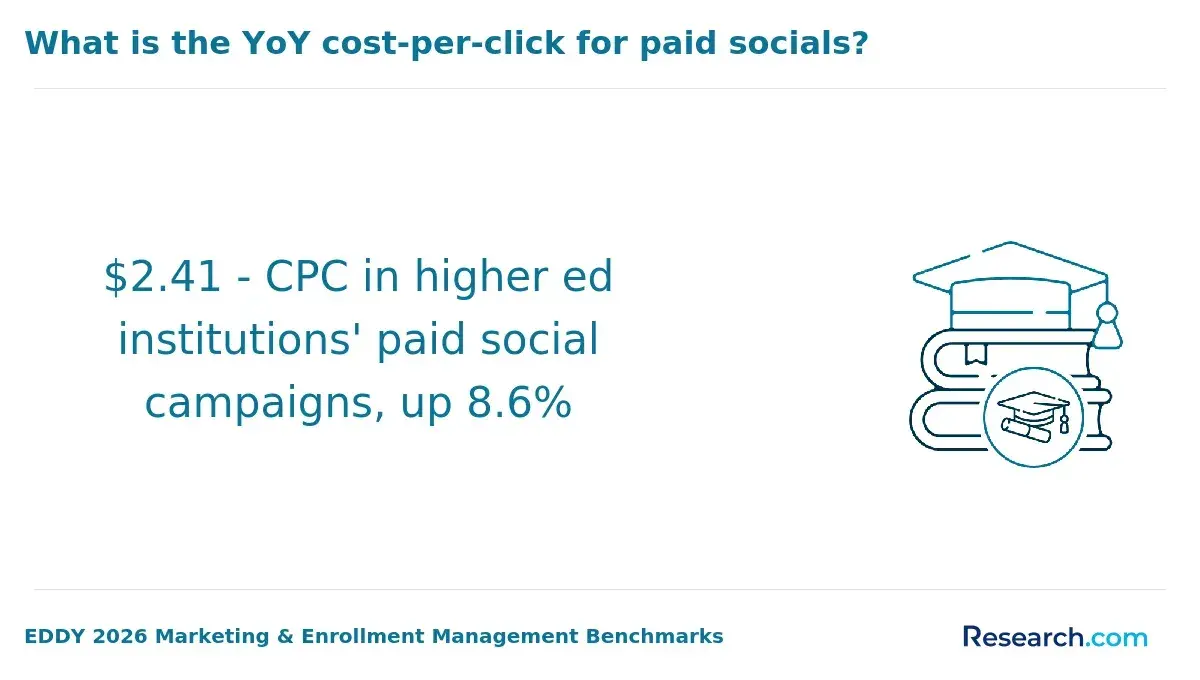
Which student acquisition models work best: pay per click, lead, enrollment, or referral?
The best commercial model depends on your funnel maturity and risk tolerance. Pay per click gives you traffic control but shifts conversion risk to you. Pay per lead gives you volume predictability but can reward low-quality submissions if qualification rules are weak. Pay per enrollment reduces risk but usually costs more per converted student and is harder for partners to support at scale.
Before choosing a model, define what counts as success. A lead is not the same as a qualified inquiry, an application, a paid checkout, or an enrolled student. If your internal CRM cannot connect source to outcome, lower-funnel models will be difficult to evaluate fairly.
| Model | When it works best | What to monitor | Red flag |
| Cost per click | You have strong landing pages and conversion tracking | Click quality, inquiry rate, downstream enrollment rate | High traffic with weak program-fit signals |
| Cost per lead | You need inquiry volume and can validate lead quality | Contact rate, qualification rate, application rate | Many leads with invalid, duplicated, or unresponsive contacts |
| Cost per enrollment | You have a high-value program and partners willing to share risk | Attribution rules, enrollment definition, refund window | Disputes over credit or delayed reporting |
| Referral or revenue share | You sell short courses, certificates, or subscription learning | Conversion rate, refund rate, lifetime value | Misaligned incentives or aggressive promotion |
Use a simple economic ceiling before approving any model. If a course produces $1,200 in net revenue and leadership allows a 30% acquisition-cost ratio, the target acquisition ceiling is $360 per enrolled student. From there, work backward through inquiry-to-enrollment rates to estimate the maximum acceptable CPL or CPC.
Common mistakes include buying the cheapest leads, ignoring duplicate submissions across vendors, and optimizing campaigns before admissions or sales follow-up is reliable. For online course providers, speed matters: a learner comparing multiple programs may choose the provider that responds clearly and quickly, not merely the one with the best ad.
How can we lower cost per lead while maintaining or improving lead quality?
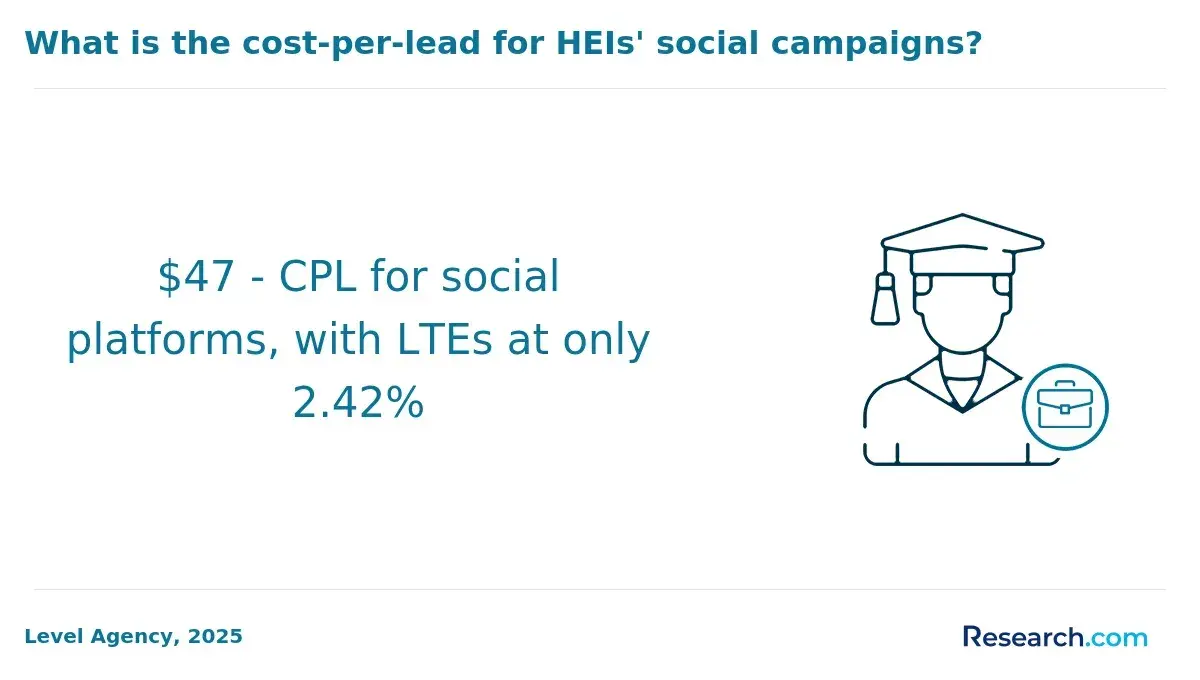
Lower CPL is only valuable if lead quality holds. Cutting costs by broadening targeting, weakening forms, or using vague messaging often produces more names but fewer enrollments. The better approach is to remove wasted spend, improve intent matching, and increase conversion from qualified visitors.
Start by separating low CPL from efficient acquisition. A $25 lead that never answers the phone is more expensive than a $90 lead that applies and enrolls at a strong rate. The relevant metric is usually cost per qualified opportunity or cost per enrollment, not raw CPL.
These actions can reduce waste without lowering learner quality:
- Tighten paid search around program-specific, credential-specific, and career-intent queries instead of broad education terms.
- Exclude audiences that do not meet eligibility, geography, tuition, language, or schedule requirements.
- Use form fields that qualify intent without creating unnecessary friction, such as start timeframe, education level, and goal.
- Segment campaigns by program economics so high-margin and low-margin offerings do not share the same target CPL.
- The route leads immediately to the right advisor, enrollment counselor, or automated nurture path based on program interest.
- Suppress existing applicants, current students, competitors, and unqualified remarketing audiences from paid campaigns.
Creative clarity also lowers wasted spend. If a course is self-paced, say so. If it requires prerequisites, disclose them early. If the main benefit is job-relevant upskilling rather than a degree, make that distinction clear. Ambiguous ads may increase clicks, but they usually hurt qualification.
A strong CPL reduction plan should include a quality feedback loop. Marketing should receive weekly data on contact rate, appointment rate, application rate, payment rate, and reasons for disqualification. Without this loop, ad platforms optimize toward form fills while the enrollment team absorbs the quality problem.
How can online course providers become visible in Google, AI search, and comparison sites?
Visibility now depends on being discoverable across traditional search, AI-generated answers, and trusted education platforms. Learners increasingly ask broad questions such as "best online cybersecurity certificate for beginners" or "affordable online MBA with flexible scheduling," then compare the names that appear repeatedly across credible sources.
Google and AI systems favor content that is clear, specific, and useful. For education providers, that means publishing program information in a way that answers real learner questions instead of relying only on brand slogans. Program pages should make it easy to understand who the course is for, what it costs, what outcomes it supports, how long it takes, and how it compares with alternatives.
To improve discoverability across search and AI environments, build content around decision-stage questions:
- Program comparisons, such as certificate versus bootcamp, degree versus short course, or self-paced versus cohort-based learning.
- Cost and financing explainers that clarify tuition, fees, payment plans, employer reimbursement, and refund policies.
- Career pathway pages that connect skills, roles, labor-market context, and realistic next steps.
- Eligibility and admissions pages that explain prerequisites, experience level, documents, and start dates.
- Outcome pages that use verifiable evidence, avoid guarantees, and disclose the limits of available data.
Comparison sites are especially important because they meet learners after interest has formed but before a final decision. Research.com reaches more than 12 million students and learners each year, including working professionals, career changers, graduate students, and adult learners who are actively researching education options.
Online course platforms and certificate providers can use Research.com to reach online learners while they are comparing programs, costs, rankings, and career paths.
The main red flag is treating AI search visibility as a technical trick. Structured pages help, but AI systems need consistent, trustworthy information from multiple sources. If your program details are thin, outdated, or inconsistent across your website, directories, ads, and partner pages, your visibility and conversion credibility both suffer.
What content and messaging converts prospective learners from interest into inquiries or purchases?
High-converting education messaging connects a learner's goal with a credible path. It should answer three questions quickly: "Is this for someone like me?", "Will it help me reach my next step?", and "Can I realistically complete and afford it?"
Working adults and career changers usually need more than inspiration. They need practical proof. BLS reported in 2024 that the median annual wage for computer and mathematical occupations was $104,200 in May 2023, which helps explain why career-focused technology programs remain competitive. However, salary data should be used carefully: it describes occupational markets, not guaranteed student outcomes.
Content should be mapped to the learner's stage. Early-stage learners need educational guidance; comparison-stage learners need differentiation; decision-stage learners need reassurance and friction removal.
| Learner stage | Typical question | Best content type | Conversion goal |
| Awareness | What career path or skill should I pursue? | Career guides, skill explainers, beginner roadmaps | Email signup, quiz, content download |
| Consideration | Which program format is right for me? | Comparisons, curriculum pages, student-fit pages | Inquiry, advisor call, webinar registration |
| Decision | Why should I choose this provider now? | Tuition pages, outcomes evidence, FAQs, testimonials | Application, checkout, enrollment appointment |
Messaging should focus on specificity. "Advance your career" is weaker than "Build a portfolio of Python, SQL, and dashboard projects in a part-time format designed for working adults." The second message gives the learner something concrete to evaluate.
Use these messaging elements when building ads, emails, program pages, and advisor scripts:
- Audience fit: name the learner profile, such as beginners, managers, licensed professionals, career changers, or recent graduates.
- Time fit: clarify duration, weekly workload, start dates, self-paced options, and live session expectations.
- Outcome fit: describe skills, projects, credentials, exams, career pathways, or continuing education value without promising employment.
- Financial fit: make cost, payment plans, employer reimbursement, and scholarship options easy to find.
- Trust proof: include accreditation, faculty expertise, employer alignment, learner reviews, completion support, or verifiable outcomes where available.
A common mistake is using the same message for every program. A leadership certificate, coding bootcamp, online MBA, and healthcare compliance course have different motivations and buying objections. Strong content reflects those differences while keeping the brand voice consistent.
How can we optimize landing pages and program pages to increase inquiry and enrollment rates?
Landing pages and program pages convert when they reduce uncertainty. Prospective learners are usually comparing several providers, so the page must answer the most important questions before asking for personal information. If the page is vague, slow, or missing cost and schedule details, paid traffic becomes expensive quickly.
The most effective pages combine conversion design with genuine decision support. They should not merely push a form; they should help a qualified learner decide whether the program is worth the next step.
Use this checklist to identify conversion gaps:
- Above the fold, state the program name, credential type, format, duration, and primary learner benefit.
- Include a clear call to action for the next step, such as request information, speak with an advisor, apply, or enroll.
- Show tuition or a clear path to tuition details instead of hiding cost until after form submission.
- Explain curriculum, prerequisites, workload, assessments, projects, and required technology in plain language.
- Add trust signals such as accreditation, university affiliation, instructor credentials, employer relevance, rankings, or verified learner feedback.
- Use FAQs to address objections about time, difficulty, transfer credit, career relevance, refunds, and support.
- Make forms short enough to complete but strong enough to qualify readiness and program fit.
The mobile experience deserves special attention. Many learners research on mobile even if they apply later on desktop. Forms, tuition tables, sticky calls to action, and advisor contact options should work cleanly on small screens.
Do not optimize only for the immediate form-fill rate. If removing fields increases inquiries but reduces contact rate or enrollment rate, the page is not truly performing better. The right test metric depends on the funnel stage, but enrollment teams should always review whether page changes improve lead quality as well as volume.
Which marketing channels are most effective for reaching working adults and career changers?
Working adults and career changers are often motivated by schedule flexibility, career mobility, salary potential, job security, employer expectations, or personal reinvention. They also face practical constraints: limited time, family responsibilities, financing questions, and uncertainty about whether returning to school is realistic.
The best channels for these audiences are the ones that meet them during research and help them compare options without pressure. Search, comparison platforms, YouTube, LinkedIn, employer partnerships, professional associations, webinars, and email nurture can all work when the message acknowledges adult learner realities.
For working adults, prioritize channels based on intent and trust:
- Use paid search and SEO for urgent career and credential queries, especially when learners are already comparing program formats.
- Use comparison platforms to appear beside credible alternatives during the decision process.
- Use LinkedIn and professional communities for career-focused programs tied to management, technology, healthcare, finance, or business skills.
- Use employer, union, military, alumni, and association partnerships where trusted organizations can introduce the program.
- Use webinars, email sequences, and advisor consultations to answer objections about time, cost, prerequisites, and career relevance.
Research.com is a strong fit for universities, colleges, online degree providers, course platforms, certificate providers, EdTech companies, and agencies that serve adult learners. It reaches prospective students while they are actively researching education decisions, which helps advertisers avoid the waste of broad, low-intent advertising.
Agencies managing recruitment campaigns can also benefit from a partner that supports multiple education categories and campaign models. For education marketing agencies, Research.com can extend reach into a large search-driven audience while supporting CPC, CPL, sponsored visibility, and custom partnership needs.
How can we differentiate online programs from better-known or better-funded competitors?
Smaller or less familiar providers can compete by being clearer, more specific, and more relevant to a defined learner segment. Differentiation does not require claiming to be the best at everything. It requires proving why a particular learner should choose your program over a more famous option.
Strong differentiation usually comes from one or more of these areas: audience focus, format flexibility, curriculum relevance, instructor expertise, employer alignment, price transparency, support model, speed to completion, or credential value. The key is to make the difference visible before the learner leaves the page.
Use these positioning questions to sharpen your message:
- Who is the program specifically built for, and who is it not built for?
- What learner problem does it solve better than a generic alternative?
- Which proof points are verifiable rather than promotional?
- Where is the program more flexible, affordable, practical, specialized, or supported?
- What comparison would the learner naturally make, and how can the page answer it directly?
For example, a regional university may not outspend a national brand on awareness, but it can win with clear transfer policies, local employer relevance, faculty access, and adult-friendly scheduling. A course provider may not have a famous university name, but it can compete with portfolio projects, fast start dates, mentor support, and transparent pricing.
The red flag is vague differentiation. Phrases such as "world-class," "innovative," and "career-ready" do not help unless supported by evidence. Better differentiation uses concrete claims: number of live coaching sessions, capstone structure, certification alignment, prerequisite policy, completion support, or employer-recognized skills.
How should we measure and attribute ROI across multiple marketing channels and long student journeys?
Education marketing attribution is difficult because learners often move across many touchpoints before enrolling. A student may first discover a program through organic search, return through a comparison site, click a retargeting ad, attend a webinar, speak with an advisor, and enroll weeks later. If you credit only the last click, you may underfund the channels that created trust earlier.
The practical goal is not perfect attribution. It is decision-grade attribution: enough visibility to shift budget toward sources that produce qualified, financially viable enrollments. That requires consistent source tracking, CRM discipline, and agreement between marketing, admissions, sales, and finance.
Track performance at each level of the funnel:
- Traffic quality: source, query or placement, page engagement, return visits, and program-page depth.
- Inquiry quality: valid contact rate, duplicate rate, eligibility, program fit, and stated start timeframe.
- Pipeline quality: appointment rate, application rate, payment intent, admissions status, and advisor notes.
- Enrollment economics: cost per enrollment, net tuition or course revenue, refund rate, payback period, and lifetime value where applicable.
- Assisted influence: first-touch source, last-touch source, content interactions, comparison-site visits, and nurture engagement.
Use cohort reporting rather than judging campaigns only by daily lead volume. Group inquiries by source, program, date range, and learner segment, then follow them through the funnel. This makes it easier to see whether one channel generates cheap but weak leads while another produces fewer inquiries but stronger enrollment economics.
Attribution also needs governance. Define what counts as an inquiry, application, enrollment, cancellation, duplicate, and qualified lead. Set rules for partner credit, lookback windows, and offline conversions. Without shared definitions, teams may argue over numbers instead of improving performance.
A useful leadership dashboard should show spend, qualified inquiries, applications, enrollments, acquisition cost, revenue, and trend by channel. Include narrative notes for context, such as application deadline timing, new creative tests, seasonal search demand, advisor staffing, or changes in admissions criteria.
Other Things You Should Know
There is no single best channel for every provider, but paid search, SEO, comparison platforms, and email nurture are often the strongest starting points because they capture learners with active intent. Paid social, affiliates, and partnerships work best when tracking and qualification rules are already in place.
Spend should be based on program revenue, margin, enrollment goals, and acceptable payback period. Work backward from net revenue per student or purchase, set a maximum acquisition cost, then calculate target CPL or CPC using your actual inquiry-to-enrollment rate.
Common causes include broad targeting, unclear program messaging, hidden cost information, weak follow-up, slow response times, poor lead routing, and forms that capture curiosity instead of readiness. The fix is to measure lead quality through the full funnel, not just form submissions.
Create clear, trustworthy, well-structured pages that answer learner questions about cost, format, outcomes, prerequisites, schedules, and comparisons. Keep program details consistent across your website, directories, ads, and trusted education platforms so AI systems and search engines can interpret the offering accurately.
References
- How to Allocate Budget for Digital Marketing | Pixis https://pixis.ai/blog/how-to-allocate-budget-for-digital-marketing/
- Best AI visibility tools for online course companies | Trakkr https://trakkr.ai/resources/industry-tools/best-ai-visibility-tools-for-online-course-companies
- Higher Education Marketing: How PPC and Programmatic Ads Drive Enrollments - Propellant Media https://propellant.media/recruit-students-online-higher-ed-ads-programmatic-ppc/
- 13 Ways to Differentiate Your Online Learning Programs from the Competition https://blog.topclasslms.com/differentiate-your-online-learning-programs
- Education Website Optimization Software | Increase Inquiries & Enrollments https://instavert.ai/education-website-optimization/
- How to Prepare Your Website for AI Overview Ranking? | BMA https://www.brandingmarketingagency.com/blogs/how-to-prepare-your-website-for-ai-overview-ranking/
- 10 Effective Enrollment Marketing Strategies for 2025 https://motimatic.com/industry/higher-ed/enrollment-marketing-strategies/
- 6 Smart Ways Education Companies Can Attract More Qualified Leads https://salariasales.com/lead-generation/6-smart-ways-education-companies-can-attract-more-qualified-leads/
- How Education Providers Can Use Referral Marketing to Increase Enrolments https://referral-factory.com/learn/increase-enrolments-with-referrals
- What are Marketing Channels? Definition and Types https://www.salesforce.com/marketing/channels/