2027 Best Online Legal Studies Degrees for Contract Management Careers

Co-Founder and Chief Data Scientist
Professionals seeking career advancement in contract management face a critical hurdle: accessing flexible education that balances demanding work schedules with acquiring specialized legal expertise. The latest federal education data shows that 45% of adult learners pursue online degrees for this very reason, signaling a fundamental shift in how Legal Studies candidates approach credentialing amid job market complexities. This trend reveals a growing emphasis on adaptable program structures that accommodate employed students without compromising academic rigor.
From prioritizing programs with asynchronous coursework to evaluating employer recognition of online credentials, decisions now hinge on nuanced trade-offs between access and long-term career impact. This article analyzes top online legal studies degrees designed to equip students for contract management careers, focusing on program quality, flexibility, and alignment with professional outcomes.
Key Things You Should Know
- Degrees emphasizing contract management specialization correlate with a 15% salary premium over general legal studies, yet programs lag in integrating industry-standard negotiation software, requiring costly supplemental training post-graduation per the 2024 National Association of Legal Professionals report.
- Employers increasingly prioritize candidates with documented practical contract drafting internships; Bureau of Labor Statistics data shows 62% of legal contract roles now mandate 1+ years of experience, pressuring students toward hybrid programs combining coursework and on-the-job training.
- Extended program durations averaging 24-30 months in accredited online legal studies impact earning potential negatively during upskilling, with Federal Reserve research highlighting a 7% income gap for those enrolled full-time versus part-time learners balancing continuous employment.
What is an online legal studies degree for contract management, and who is it best for?
Online legal studies degrees for contract management careers provide critical specialization beyond general business education, blending contract law, negotiation, compliance, and risk mitigation tailored to managing complex agreements across sectors. Professionals transitioning from administrative roles or procurement benefit most when the curriculum combines legal principles with hands-on drafting and contract lifecycle management, vital in industries such as government contracting, technology, and healthcare.
Employers seek candidates who can navigate regulatory frameworks and manage multi-party or international contracts with precision. For instance, a business analyst at a technology firm might use such a degree to shift into contract management by mastering software licensing contracts and compliance-tasks fundamentally different from basic service agreements. Practical experience with case studies and contract administration software is often pivotal for this transition.
Salary data from the National Contract Management Association 2024-2025 Salary Survey shows a median base salary increase of approximately $20,000 for professionals holding a master's degree over bachelor's holders, reflecting heightened responsibility for negotiation and risk mitigation. This wage premium illustrates a real economic incentive but requires commitment to mastering complex legal concepts online, where flexible pacing demands strong self-discipline.
Students evaluating pathways should consider programs integrating certification prep aligned with industry standards. Those seeking structured evidence-based credentials may also review the best paralegal certificate programs to complement legal studies knowledge, especially if aiming for roles requiring cross-disciplinary expertise.
Choosing from the best online legal studies programs for contract managers involves assessing trade-offs between program rigor, practical application, and flexibility to ensure alignment with career goals in increasingly regulated contract environments.
How do online legal studies programs prepare graduates for contract management careers?
Practical effectiveness in contract management hinges on more than legal knowledge; online legal studies programs for contract management equip graduates with critical business skills to draft and negotiate contracts that withstand operational scrutiny. For instance, familiarity with federal acquisition regulations directly impacts success in managing government contracts, while grasping commercial code provisions is essential in manufacturing sectors.
Graduates proficient in contract law fundamentals and risk management are better positioned to identify liability exposure early, avoiding costly litigation. Core curricula integrate training on contract lifecycle management software, aligning with employer preferences for candidates who blend legal knowledge with technological fluency. This reduces administrative bottlenecks in fast-paced environments.
However, programs lacking sector-specific contracting courses or applied simulations may delay workforce readiness, requiring longer adjustment periods post-hire. Balancing asynchronous coursework with synchronous negotiation practice also influences skill transfer in real-world settings, an important consideration for students targeting contract negotiation roles.
The Bureau of Labor Statistics projects a 10% growth for legal occupations through 2031, with average MLS-related roles offering $93,607 annually. This demand underscores payoffs for those who choose online legal studies programs for contract management that emphasize practical application alongside theory.
Prospective students, especially those evaluating online degrees for felons, must carefully weigh program offerings to ensure alignment with targeted industry contracts and real-world workflows.
What types of online legal studies degrees lead to contract management roles?
Online legal studies degrees tailored for contract management roles must bridge legal theory with operational proficiency to meet evolving employer demands. For example, corporate legal departments predicted to replace 20% of generalist lawyers with nonlawyer staff prioritize candidates combining contract law expertise with practical skills such as contract lifecycle management and compliance.
These programs emphasize risk assessment, contract negotiations, and regulatory knowledge that are critical in heavily regulated sectors like healthcare and government contracting. Degrees purely focused on traditional paralegal or legal assistant credentials often fall short of this hybrid expectation. The best online degrees in legal studies for contract management careers integrate training on legal technology tools and contract analytics software.
It aligns with anticipated increases in in-house legal tech budgets projected to reach 12% by 2025. Graduates versed in these operational elements are better equipped to navigate complex contract administration and compliance requirements. Students should scrutinize curricula for courses covering contract drafting, risk mitigation, and technology use to avoid overly theoretical programs that limit job readiness.
Targeting programs with compliance modules gives an advantage in sectors with stringent regulatory demands. For those interested in expanding their credentials to a more practical and career-specific focus, considering master's in forensic psychology online might also complement legal studies by adding analytical skills relevant to contract-related investigations and risk analysis.
How do online legal studies programs compare to campus options for contract management?
Online legal studies programs versus campus legal studies programs for contract management careers differ most notably in accessibility and employer perception. Arizona State University's online Master of Legal Studies in Contract Management targets practical skills like contract drafting, negotiation, and risk assessment, reflecting tasks demanded by sectors such as government and large corporations that prioritize immediate workplace readiness.
Industries with strong regulatory oversight, including healthcare and energy, benefit from online programs integrating compliance-focused case studies comparable to campus curricula but without geographic constraints. However, campus legal studies programs often provide deeper networking channels through face-to-face interactions, internships, and live workshops, an advantage when pursuing roles in law firms or consultancy that emphasize collaborative contract work.
This dynamic informs the contract management degree benefits of online compared to traditional campus options, where flexibility contrasts with experiential learning opportunities. Graduation outcomes from online and campus legal studies programs are statistically similar according to 2024 National Center for Education Statistics data.
Yet, employer feedback from the Society for Human Resource Management reveals a 17% hiring preference for on-campus credentials in entry-level contract roles, reflecting perceptions of academic rigor and team collaboration experience. Working professionals juggling employment find online studies valuable for asynchronous learning, allowing immediate application of knowledge.
Candidates should consider trade-offs: campus study favors networking and hands-on experiences; online study supports specialized, flexible skill acquisition critical for career pivots within contract management. For those assessing broader online options, resources like Spanish degrees online provide examples of how flexible, affordable programs can combine cost efficiency with workforce relevance.
What accreditation and institutional quality standards should these online programs meet?
Choosing an online legal studies degree for contract management careers hinges on accreditation and alignment with industry standards, not simply program availability. Programs lacking regional accreditation recognized by the U.S. Department of Education or the Council for Higher Education Accreditation (CHEA) risk limiting eligibility for federal aid and may face employer skepticism, especially in sectors like defense contracting, where security clearance depends on certified educational backgrounds.
Specialized certifications aligned with the National Contract Management Association (NCMA) standards serve as a critical differentiator, signaling a program's commitment to a practical, up-to-date curriculum tailored to real-world contract management challenges. Employers increasingly expect graduates to demonstrate outcome-based competencies, with verified learning tied to applicable skills.
Candidates from non-accredited or poorly credentialed programs often confront hurdles accessing certain contracts or advancing within government procurement roles. Cost transparency is equally important. For example, a Florida Tech online MS in Management - Acquisition & Contract Management shows tuition around $24,328.59 plus additional living and study expenses exceeding $21,000, which significantly affect total investment and should factor into any decision about program affordability and return on investment.
Accredited programs also tend to maintain rigorous faculty expertise and regularly update curricula to reflect the shifting landscape of legal regulations and contract law. Prospective students should verify accreditation status through official registries and prioritize programs with demonstrable career outcomes supported by employer data to reduce the risk of dead-end qualifications.
What core courses and skills are covered in legal studies programs for contract management?
Programs in legal studies for contract management prioritize developing specific expertise in contract law, risk evaluation, negotiation strategies, and compliance oversight, directly aligning with employer demands in regulated sectors. For instance, contract managers in healthcare must navigate federal regulations like HIPAA to ensure patient data protection through contract clauses, a requirement distinct from manufacturing roles where liability and supply chain risks dominate.
Core skills include critical legal research and the interpretation of complex statutory language alongside hands-on competencies such as deploying legal technology to manage contract workflows. This practical emphasis emerges in case-based learning and simulations tailored for various contract types-government, vendor, employment-that differ substantially in risk allocation and enforcement complexity.
Students must also weigh the tradeoff between broad legal principles and industry-specific regulations. Targeting coursework toward sectors of interest maximizes relevance and employability by addressing precise compliance environments and contract standards, as evidenced by labor market analysis from sources like Emsi Lightcast cited by DePaul University.
Graduates who can translate intricate legal jargon into actionable strategies deliver operational efficiencies and mitigate costly disputes, meeting employer expectations notably in finance, insurance, and professional services. Developing this practical legal interpretation skill is essential for success beyond purely academic knowledge.
What are typical admission requirements and application materials for online legal studies degrees?
Admission to online legal studies programs hinges on more than academic history; it reflects a nuanced balance between documented education, relevant professional experience, and clear evidence of career intent. A high school diploma or equivalent remains the baseline, but some bachelor's or advanced programs expect prior college coursework or an associate degree. Official transcripts are non-negotiable, supporting verification of academic background.
Applicants typically need to provide:
- A detailed statement of purpose aligning career objectives with legal studies and contract management
- Official transcripts verifying satisfactory academic progress
- A resume or CV demonstrating experience in compliance, contract administration, or related legal support functions
- References from supervisors or academic mentors who can attest to the candidate's capabilities
- Standardized test scores where required, though these are increasingly optional
- Some programs mandate a basic skills or placement test to ensure course readiness
Professionals shifting into contract management gain advantage from programs recognizing experiential credits or offering flexible admission routes tied to industry certifications. Considering that compliance managers earn around $101,000, HR managers $139,000, and quality control systems managers $120,000 per DePaul data, programs that value real-world experience and credible references directly influence employability and salary potential.
A key challenge is managing logistics, such as obtaining transcripts from multiple institutions and securing workplace recommendations without risking confidentiality. Early engagement with admissions offices is critical to navigate these hurdles and maintain enrollment timelines essential for workforce entry or advancement.
How long do online legal studies programs take, and what do they cost?
Contract management roles demand targeted expertise that generic legal studies programs rarely provide. Completion times for online programs range from 12 to 24 months full-time, with part-time tracks extending beyond three years, creating a tangible tradeoff between depth of knowledge and speed of workforce entry. Federal procurement roles often require mastery of Federal Acquisition Regulations (FAR), compliance, and risk management.
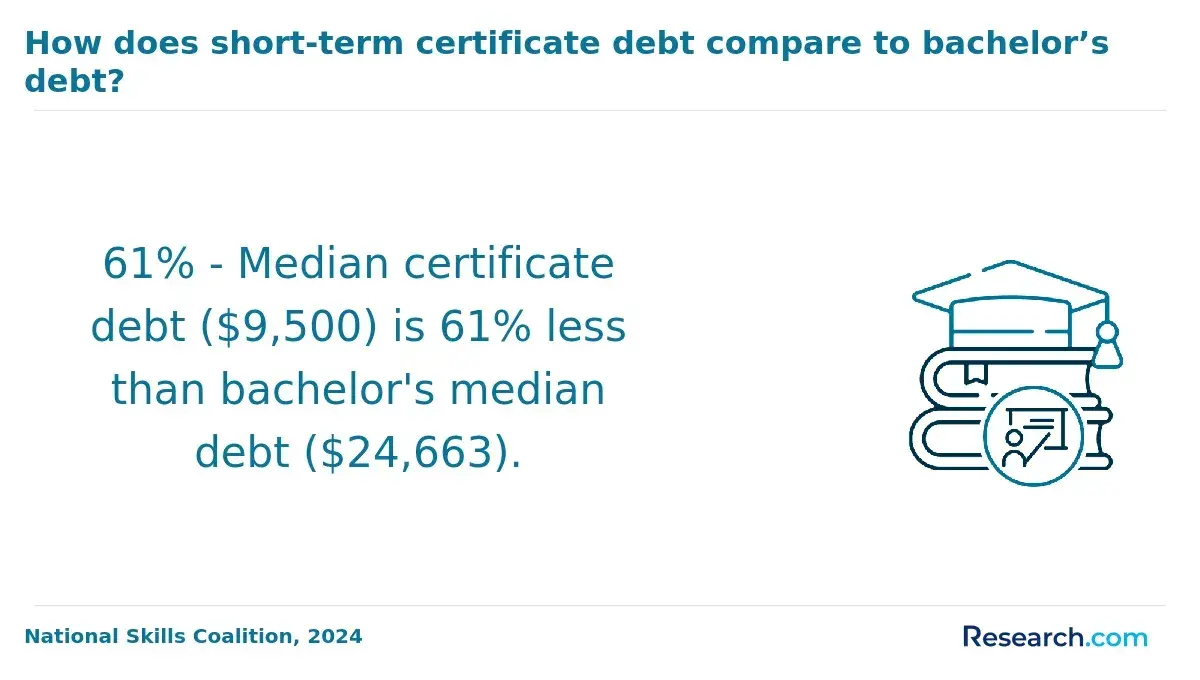
Employers in defense and government contracting prioritize candidates who demonstrate practical competencies aligned with complex regulatory frameworks. Conversely, private-sector contract jobs might favor broader negotiation and transactional skills obtainable through shorter certificate programs costing between $5,000 and $10,000, though these lack legal rigor and limit advancement in federal acquisition fields.
Tuition variance reflects these program distinctions: public university master's programs range from $15,000 to $30,000, while private institutions may charge $30,000 to $50,000 or more. Some integrate licensing exam prep or compliance training, adding upfront value but demanding greater financial and time investment.
The University of Dayton's online Government Contracting M.S.L. exemplifies curriculum alignment with a federal procurement market exceeding $600 billion annually, underscoring how specialized education can position candidates for leadership in government acquisition law.
- Longer programs suit those targeting federal contracts or compliance roles.
- Shorter certificates fit entry-level or private-sector transitions but constrain mobility in regulated agencies.
What contract management jobs, salaries, and advancement paths can graduates expect?
Graduates with online legal studies degrees targeting contract management roles face a competitive labor market where practical skills often outweigh purely academic credentials. Initial positions like contract specialist or procurement analyst typically offer annual salaries between $60,000 and $80,000. Progression to senior roles such as contract manager or director of contracts can raise compensation to $110,000-$140,000, depending on the sector and location.
Notably, industries like defense and pharmaceuticals demand proficiency in complex regulatory compliance, which justifies higher salaries but also requires specialized knowledge and certifications such as the Certified Professional Contracts Manager (CPCM). From both employer and employee perspectives, success in contract management hinges on risk mitigation, negotiation acumen, and cross-functional communication across legal, finance, and operational teams.
Candidates without experience in navigating these dynamics may struggle initially, especially in volatile industries where contract volume fluctuates widely and extended experience is essential before advancement. Working professionals should weigh program length and cost against career timelines.
For example, many U.S. universities offer online LL.M. programs with total tuition ranging from approximately $25,000 to $70,000, while some certificate programs in contract management and compliance are available for significantly less. These cost differences, combined with program length and career outcomes, are important factors when evaluating the return on investment of contract management-focused degrees within the broader field of legal studies.
Effective candidates concentrate on applied contract law within regulated environments, balancing theoretical grounding with skills translatable to high-stakes procurement contexts.
Are certifications or professional licenses needed for contract management, and how do degrees help?
Contract management roles rarely mandate certifications outright, yet holding credentials such as the Certified Professional Contract Manager (CPCM) materially improves a candidate's employability and progression opportunities. In regulated sectors like government or healthcare, employers treat certifications as essential evidence of proficiency in navigating complex compliance, mitigating risk, and managing contracts effectively.
Candidates relying solely on degrees in legal studies face challenges demonstrating the applied skills demanded by these fields. A bachelor's degree in legal studies offers important analytical and legal reasoning foundations, but it rarely covers the negotiation techniques, contract software proficiency, or up-to-date regulatory knowledge employers require.
For instance, compliance professionals' increased budgets for risk management indicate how organizations prioritize specialized expertise beyond academic theory. Combining legal studies education with targeted contract management certifications and hands-on experience with contract lifecycle management platforms aligns more closely with these market requirements.
Those switching into contract management from unrelated backgrounds benefit from certification-focused skill acquisition, while entrenched practitioners use certifications to maintain relevance amid evolving regulatory requirements. Skipping certifications can limit access to leadership roles or slow promotions, as many employers use them as hiring or advancement benchmarks.
Practical career strategies emphasize integrating accredited legal studies degrees with recognized certifications and real-world contract experience. This blend bridges theoretical knowledge with operational demands and helps safeguard career viability against increasing legal complexities in contract administration.
Other Things You Should Know About Legal Studies
Programs with a strong contract law focus offer deeper specialization, which aligns closely with employer expectations for contract management roles. However, broader legal studies curricula provide flexibility to adapt in industries where contract management intersects with regulatory compliance or dispute resolution. Prioritize specialized contract coursework if your goal is rapid entry into contract management, but consider broader programs if you want wider career options or leadership roles that require cross-functional legal knowledge.
Most online legal studies programs incorporate case studies, simulations, or capstone projects to deliver applied learning, but they rarely provide in-person internships or direct workplace exposure. This limits opportunities to develop negotiation and live contract drafting skills under supervision. To compensate, students should seek supplementary real-world experience through internships or part-time roles in related fields alongside their coursework.
Look for regional accreditation from a U.S. institutional accreditor recognized by the U.S. Department of Education, such as HLC, SACSCOC, MSCHE, NECHE, NWCCU, or WSCUC. For legal studies content, confirm the program is offered by an authorized institution and that any paralegal track meets ABA standards if required.
Employers increasingly accept reputable online legal studies degrees if the institution is accredited and coursework is relevant, but some remain skeptical about the practical readiness of graduates. Candidates must demonstrate applied skills through portfolio examples, internships, or certification alongside the degree. Prioritize programs with strong employer networks, opportunities for experiential learning, and transparent success metrics to improve hiring prospects.
References
- Homepage https://onlinemasteroflegalstudies.com/
- Best Online Master's Degrees in Legal Studies for 2025 https://www.onlinemastersdegrees.org/best-programs/legal-studies/
- Contracts Manager Job Description (Role & Salary Details) https://www.goconstruct.org/construction-careers/what-jobs-are-right-for-me/contracts-manager
- Understanding Academic Accreditation for Online Universities https://www.qahe.org/article/understanding-academic-accreditation-for-online-universities/
- Online Legal Studies Degrees https://www.affordablecollegesonline.org/degrees/best-online-bachelors-in-legal-studies-programs/
- The ultimate guide to contract management courses in 2025 - LawVu https://lawvu.com/articles/the-ultimate-guide-to-contract-management-courses-in-2025/
- How to Build a Successful Career in Contract Management https://www.sirion.ai/library/contract-management/career-in-contract-management/
- CPCM https://ncmahq.org/Web/Web/Certification/CPCM.aspx
- Contract Law and Management Training Program https://zoetalentsolutions.com/course/contract-law-and-management-certification-program/
- Your Guide to Qualifying as a Solicitor Without a Training Contract https://www.collegalpractice.com/news/2026/06/19/qualifying-as-a-solicitor-without-a-training-contract