2027 How Agencies Can Help Schools Compete When Paid Search Costs Rise

Co-Founder and Chief Data Scientist
Paid search is getting harder for schools that need predictable enrollments. LocaliQ's 2024 search advertising benchmarks put average Google search CPC at $4.66 across U.S. industries, meaning inefficient campaigns now burn budget faster.
This guide is for enrollment, growth, and agency teams promoting colleges, online programs, bootcamps, certificates, and training providers. You'll learn how to balance paid search with SEO, content, partnerships, landing pages, lead nurturing, and measurement so you can reach higher-intent students, reduce waste, and defend acquisition decisions to leadership or clients.
Key Things You Should Know
- Rising CPCs make channel mix more important than bid tactics alone; agencies should reduce dependence on paid search by combining high-intent search, SEO, comparison content, referral partners, and trusted education platforms.
- Lead quality usually matters more than raw CPL; a $150 inquiry that enrolls can outperform a $25 lead that never answers, so schools should measure cost per qualified lead, cost per application, and cost per enrollment.
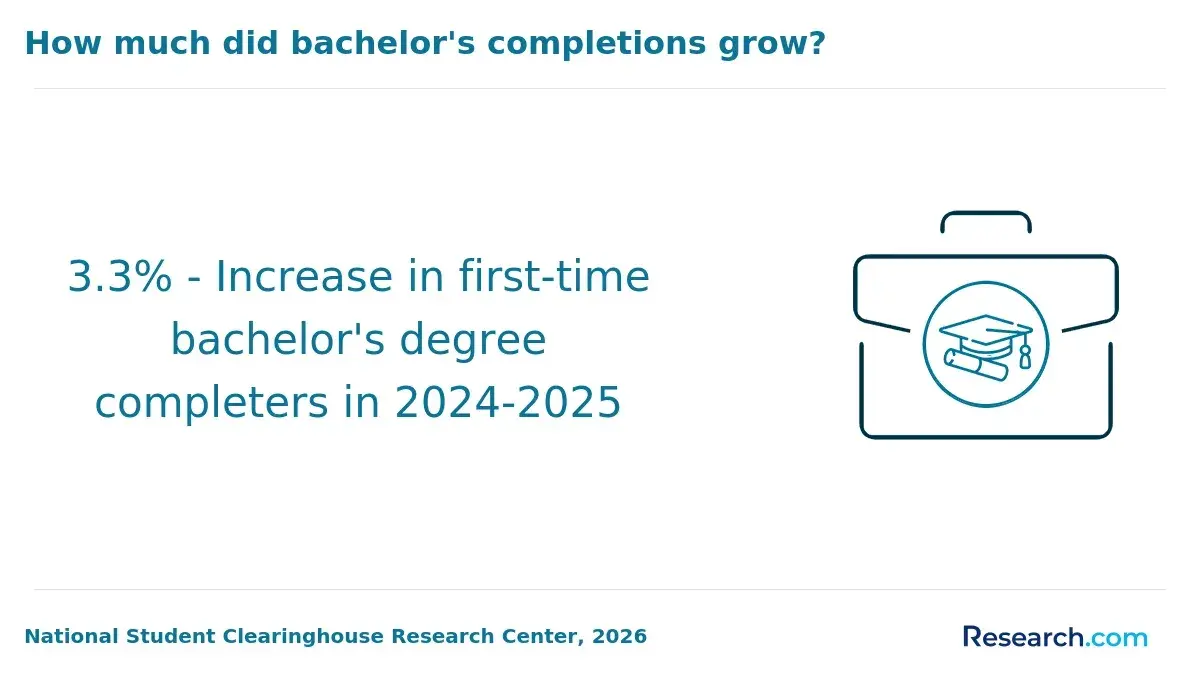
- National Student Clearinghouse reported U.S. undergraduate enrollment growth in 2024, which signals renewed student demand but also more competition among schools trying to capture the same researching learners.
Which channels drive the highest-quality student leads?
The highest-quality education leads usually come from channels where prospective students are already comparing programs, costs, outcomes, schedules, and admissions requirements. For agencies, the goal is not to find the cheapest traffic; it is to find demand that is close enough to a decision to justify acquisition cost.
Paid search remains useful because it captures explicit intent, such as "online MBA program," "cybersecurity certificate," or "accelerated nursing degree." But competition on these terms can be expensive, and schools with weaker brand recognition often pay more to win the same click. That is why agencies should pair paid search with channels that build credibility before the form fill.
Research.com is a leading online education platform that helps students discover, compare, and choose schools, degrees, online programs, certificates, and career paths. Because it reaches more than 12 million students and learners each year, many of whom arrive from search engines and AI/LLM discovery, it can connect advertisers with users while they are actively researching education decisions.
Schools, agencies, and course providers can use Research.com's student acquisition solutions to generate qualified traffic, inquiries, sponsored visibility, or custom partnerships in a trusted education content environment.
The table below compares common channels by the type of intent they typically capture. Use it to decide where each channel belongs in the funnel rather than treating every source as interchangeable.
| Channel | Typical student intent | Best use case | Main risk |
| Paid search | High intent when keywords are program-specific | Capturing active demand for known programs | High CPCs and aggressive competition |
| Organic search and SEO | Mid-to-high intent depending on query | Building durable visibility for program, cost, ranking, and career questions | Slow ramp and ongoing content investment |
| Education comparison platforms | High research and comparison intent | Reaching students evaluating multiple providers | Requires clear positioning and strong follow-up |
| Paid social | Low-to-mid intent | Creating awareness for new or low-demand programs | Lead quality can be inconsistent |
| Partnerships and affiliates | Varies by partner audience | Scaling reach beyond owned channels | Quality controls and attribution can be difficult |
| Email and CRM nurturing | Warm intent | Converting inquiries over long decision cycles | Poor segmentation can suppress response |
A practical agency recommendation is to separate channels by role. Use paid search for immediate intent, SEO and comparison content for durable demand capture, paid social for awareness, and partner platforms for trusted reach at the point of research.
How should schools choose between paid search and SEO?
Schools should not frame paid search and SEO as opposites. Paid search buys immediate visibility; SEO builds an owned acquisition asset that can reduce marginal cost over time. The right choice depends on urgency, category competition, program awareness, and the quality of the school's website experience.
Use paid search when the program already has search demand and the school needs near-term inquiries. Use SEO when prospects ask many research questions before converting, such as questions about tuition, accreditation, outcomes, time to completion, financial aid, prerequisites, or career paths.
For universities that want to promote university programs, a blended approach is often strongest: paid search captures bottom-funnel terms while trusted education content and comparison visibility support students earlier in the decision.
LocaliQ's 2024 benchmarks showing an average $4.66 Google search CPC should not be read as a school-specific price, because education keywords can vary widely by program, geography, and competition. The important lesson is economic: when every incremental click costs more, pages that answer student questions before and after the click become more valuable.
Agencies can use this decision sequence to choose the right emphasis:
- Map the student's search journey from broad research queries to program-specific and admissions queries.
- Identify which queries have immediate enrollment intent and deserve paid search coverage.
- Identify which recurring questions should become SEO pages, comparison guides, FAQs, and program content.
- Measure paid search and organic traffic against downstream milestones, not just sessions or form fills.
- Shift budget from keywords with weak enrollment quality into content, remarketing, or partner placements that support higher-intent audiences.
A common mistake is cutting SEO because it does not produce instant leads. That can make a school permanently dependent on paid auctions. Another mistake is relying on SEO alone for a new program that has enrollment targets this term. Agencies should set expectations clearly: paid search is the accelerator, SEO is the compounding asset.
How can agencies lower cost per lead without hurting quality?
Agencies lower CPL without hurting quality by removing waste before they chase cheaper inventory. In education marketing, cheap leads often become expensive when they do not answer calls, meet admissions criteria, complete applications, or enroll.
The first step is to define quality. A useful definition should include fit, intent, contactability, and readiness. For example, a qualified lead might be a prospective student who is interested in a specific program, meets basic eligibility requirements, has a realistic start timeframe, and provides reachable contact information.
The following levers can reduce waste while protecting enrollment potential:
- Segment campaigns by program economics so high-tuition, high-margin, or capacity-constrained programs are not managed with the same CPL target as short courses or low-cost certificates.
- Exclude weak queries, irrelevant geographies, underqualified audiences, and duplicate leads before expanding budgets.
- Use program-specific landing pages instead of generic institutional pages so the ad promise matches the student's question.
- Score leads by source, keyword, page, device, start term, and program interest so bidding decisions reflect enrollment quality.
- Send conversion data back into ad platforms only when it represents meaningful progress, such as qualified inquiry, application, or enrollment, rather than every form submission.
- Test call, SMS, and email response timing because speed-to-lead often determines whether a paid inquiry becomes a conversation.
One red flag is optimizing campaigns around form volume while admissions teams complain that prospects are unreachable or confused. That usually means the media team is solving for the wrong conversion event. Agencies should align with enrollment teams on what happens after the lead is generated and update bidding signals accordingly.
Why do education leads fail to convert into enrollments?
Education leads fail to convert when there is a gap between what the prospect expected and what the school delivers after the inquiry. Paid media may create the lead, but enrollment depends on program fit, trust, affordability, timing, admissions support, and follow-up.
Many schools diagnose conversion problems too late. They look at the number of leads by channel but not at where prospects drop off. Agencies should help schools build a funnel view that separates inquiry, contact, qualification, application, acceptance, deposit, registration, and start.
These are the most common causes of lead-to-enrollment failure:
- The ad and landing page attract people who want a different credential, schedule, price point, or level of academic commitment.
- The program page does not answer critical decision questions about cost, transfer credit, outcomes, accreditation, faculty, time to completion, or admissions requirements.
- Follow-up is too slow, too generic, or too dependent on phone calls when many adult learners prefer text and email options.
- The CRM does not distinguish between early researchers and ready-to-apply prospects, so everyone receives the same nurturing sequence.
- Admissions and marketing use different definitions of lead quality, creating conflict instead of shared optimization.
- The school lacks proof points that help a lesser-known program compete against larger brands.
A useful fix is to audit the first 72 hours after inquiry. Review response time, message relevance, contact attempts, advisor notes, objections, and next-step clarity. If students repeatedly ask questions already answered on the page, the content is not visible enough. If they disappear after learning the price or format, targeting or offer framing may be wrong.
What budget mix works across paid, organic, and partnerships?
There is no universal budget mix for every school, but agencies can make better recommendations by matching spend to program maturity. A new online certificate with little search demand needs a different mix than a well-known graduate degree in a competitive market.
For agencies managing multiple education clients, Research.com is also relevant as a partner channel because it supports CPC campaigns, CPL lead generation, sponsored placements, content partnerships, custom advertising packages, and strategic education marketing partnerships.
Agencies that need scalable reach for schools, online programs, and education brands can explore agency solutions for student recruitment to place clients in front of students during active research and comparison moments.
The table below summarizes how budget emphasis can change by program situation. It is not a fixed allocation model; it is a planning framework for conversations with leadership or clients.
| Program situation | Paid search role | SEO and content role | Partnership role | Primary KPI |
| Established program with known demand | Capture high-intent terms and defend brand | Improve conversion and reduce dependence on ads | Add trusted comparison visibility | Cost per enrollment |
| New or low-awareness program | Test demand and messaging | Educate the market and define the category | Borrow audience trust from relevant platforms | Qualified inquiry rate |
| Highly competitive degree category | Focus on profitable keyword segments | Build comparison and differentiation assets | Use sponsored content and placements for added reach | Application-to-start rate |
| Short course or certificate | Drive direct response when intent exists | Answer career and skill-based questions | Scale niche audiences efficiently | Cost per purchase or registration |
A common mistake is assigning most of the budget to the channel that produced the last click. Education decisions are rarely that simple. Students may discover a program through organic content, compare it on a third-party platform, click a paid search ad later, and then convert after an email sequence. Budget planning should reflect that multi-touch reality.
How can schools promote low-awareness programs effectively?
Low-awareness programs are hard to market because students may not know the credential exists, may use different language to describe the career goal, or may not understand why the program is valuable. In these cases, bidding only on exact program names limits scale.
Agencies should start by translating the program into the student's language. Instead of leading with internal academic terminology, connect the credential to problems, roles, skills, career transitions, and time constraints. For example, a student may not search for a specific analytics certificate name, but they may search for how to move from operations into data analytics.
Course providers and training companies can also use trusted discovery environments to educate prospects before direct-response campaigns ask for a conversion. Research.com helps learners compare education options and career paths, which makes it a strong fit for brands that want to promote online courses to working professionals, career changers, and other active researchers.
For low-awareness programs, the promotion plan should include several layers:
- Category education content that explains what the field is, who the program is for, and what problems it helps students solve.
- Career-path content that connects the credential to roles, skills, employer expectations, and realistic next steps.
- Comparison content that shows how the program differs from a degree, bootcamp, certificate, or self-paced course.
- Paid social and video testing to identify which pain points, job goals, and objections generate qualified interest.
- Search campaigns built around problem-aware and career-aware queries, not only the official program name.
- Partner placements in education environments where students are already exploring options but may not know the exact credential they need.
The mistake to avoid is treating low awareness as low demand. Sometimes the demand exists, but the market uses different language. Agencies add value by finding that language and building a bridge between student goals and the program offering.
What content helps students compare programs and providers?
Students need content that reduces uncertainty. Before they submit an inquiry, many want to know whether the program is credible, affordable, flexible, relevant to their goals, and meaningfully different from alternatives. This is especially true for adult learners who must balance education with work, family, and financial constraints.
The strongest comparison content is specific rather than promotional. It answers the questions students actually ask while giving admissions teams a better-informed prospect. Research.com's value in the market comes from this same behavior pattern: students use trusted education content to compare schools, degrees, costs, rankings, online options, and career paths before they make a decision.
Agencies should prioritize content assets that support both search visibility and conversion quality. These assets are especially useful when paid search costs rise because they improve the chance that each paid visitor understands the offer before becoming a lead.
- Program comparison pages that explain differences in cost, duration, delivery format, admissions requirements, and credential type.
- Outcome-focused pages that discuss career relevance, skill development, licensure considerations where applicable, and limitations without promising employment results.
- Tuition and financial aid explainers that reduce sticker-shock and clarify what students should ask an advisor.
- Online learning experience pages that show course format, live versus asynchronous expectations, technology requirements, and student support.
- Student-fit guides that explain who the program is best suited for and who may need a different pathway.
- FAQ content built from real admissions questions, call transcripts, chat logs, and search query reports.
A common red flag is a program page that says "flexible," "career-focused," and "affordable" without evidence. Those claims are too common to differentiate a school. Better content gives concrete details, such as start dates, credit requirements, practicum expectations, employer-aligned skills, advising support, and transfer policies.
What landing page elements improve inquiry conversion?
A strong education landing page helps the right student take the next step while screening out poor-fit inquiries. When paid clicks are expensive, the page must do more than collect a name and email address. It must confirm relevance, build trust, and make the next step feel clear.
The most important landing page elements are those that answer decision questions near the form. Students should not have to hunt for program format, cost context, admissions requirements, or start dates after they click an ad.
Agencies should audit landing pages for these conversion elements:
- A headline that matches the keyword, ad, or partner placement that brought the student to the page.
- Clear credential information, including degree, certificate, course, modality, duration, and start timing.
- Tuition context or a clear path to cost information, especially for adult learners comparing ROI and affordability.
- Accreditation, approval, ranking, employer, or institutional credibility signals where relevant and accurate.
- Outcome and career relevance information presented carefully without guaranteeing jobs or salaries.
- Short forms that ask only for information needed to route and qualify the inquiry.
- Multiple contact options, including phone, email, text, chat, or appointment scheduling when available.
- Social proof, such as student stories, completion support, faculty expertise, or program statistics, when verified.
- Fast mobile performance because many prospects research programs during work breaks, commutes, or evenings.
The best test is simple: ask whether a student can understand the program, determine basic fit, and know what happens after the form within one minute. If the answer is no, media optimization will have limited impact because the page is wasting qualified attention.
How can schools reach working adults and career changers?
Working adults and career changers often evaluate education differently from traditional students. They usually care about schedule flexibility, time to completion, transfer credit, financing, employer relevance, support services, and whether the credential fits a practical career goal.
Agencies should build campaigns around life constraints as much as academic features. Evening study, asynchronous coursework, short completion paths, prior learning credit, stackable credentials, and advisor access may be more persuasive than broad institutional messaging.
Use the following approach when targeting adult learners:
- Segment audiences by motivation, such as career switch, promotion, licensure, skill update, degree completion, or personal advancement.
- Match messaging to the student's current barrier, such as time, confidence, cost, prerequisites, or uncertainty about outcomes.
- Create content for nontraditional search queries, including "best online program while working full time" or "certificate to change careers."
- Offer low-friction next steps such as tuition estimate requests, credit transfer reviews, webinar registration, or advisor appointments.
- Use remarketing and email nurturing because adult learners may need more time to discuss the decision with family, employers, or financial aid advisors.
A current trend agencies should account for is credential-based hiring. Many employers now evaluate skills, certificates, portfolios, and applied experience alongside degrees, depending on the role. That does not make degrees less important across the board, but it does mean schools must explain how each credential fits the student's target outcome.
How do schools measure ROI across long enrollment cycles?
Schools measure ROI across long enrollment cycles by connecting marketing source data to enrollment milestones instead of stopping at the inquiry. Education marketing often has a delayed payoff, especially for degree programs where students research for weeks or months before applying or starting.
The most useful measurement model tracks both leading and lagging indicators. Leading indicators show whether campaigns are producing viable demand. Lagging indicators show whether that demand becomes revenue or enrollment value.
Agencies should help schools define a measurement framework like this:
- Top-of-funnel metrics: Qualified traffic, engaged sessions, content-assisted visits, and program-page engagement.
- Inquiry metrics: Form submissions, calls, chats, appointment bookings, lead source, duplicate rate, and contactability.
- Qualification metrics: Eligibility, program fit, start timeframe, financial readiness, and admissions status.
- Enrollment metrics: Applications, acceptances, deposits, registrations, starts, and retained students where available.
- Economic metrics: Cost per qualified lead, cost per application, cost per start, projected tuition revenue, and payback period.
The key is to avoid over-crediting the final touch. If a student first discovered a school through organic content, returned through a comparison platform, and later converted through branded search, the branded keyword did not create all the value. Agencies should use CRM integration, offline conversion imports, call tracking, UTMs, and source-quality reporting to give leadership a more accurate view of performance.
One limitation is that attribution will never be perfect. Privacy changes, cross-device behavior, phone conversations, and long decision cycles all create gaps. The goal is not perfect certainty; it is better decision-making. If the school can identify which sources produce qualified applicants and starts at an acceptable cost, it can scale with more confidence.
Other Things You Should Know
No. Paid search is still valuable for high-intent queries, but schools should narrow spend to profitable keywords, improve landing pages, and add SEO, content, nurturing, and partner channels so growth does not depend only on auctions.
There is no universal good CPL. A good CPL depends on program price, lead quality, admissions capacity, start rate, and lifetime student value. Schools should judge CPL alongside cost per qualified lead, application, and enrollment.
Cheap leads often come from low-intent audiences, broad targeting, weak form qualification, or mismatched messaging. Review source quality, contact rates, eligibility, program fit, and the first follow-up experience before increasing spend.
Agencies prove ROI by connecting channel data to CRM milestones such as qualified inquiry, application, acceptance, deposit, registration, and start. This gives schools a clearer view of which sources create enrollment value, not just leads.
References
- ROI of School Marketing: What You Need to Know | English Marketing Works https://englishmarketingworks.com/roi-of-school-marketing-what-you-need-to-know/
- Cost Per Lead: Definition, Calculation & Benchmarks [2026] https://lagrowthmachine.com/cost-per-lead/
- 8 Tips To Cut Down Lead Generation Cost Without Sacrificing Lead Quality https://www.crono.one/academy/lead-generation-cost/
- Inclusivity: Addressing Diversity through Awareness Programs - TRICEF https://tricef.org/inclusive-education-diversity-awareness-programs/
- 5 Ways Educators Can Measure the ROI of Learning | Digital Marketing Institute https://digitalmarketinginstitute.com/blog/5-ways-educators-can-measure-the-roi-of-learning
- 11 student engagement tools to transform learning in 2025 https://www.mentimeter.com/blog/education/student-engagement-tools
- 7 Essential Elements of a High Converting Landing Page | Essential Addons for Elementor https://essential-addons.com/elements-of-a-high-converting-landing-page/
- Reducing Cost Per Lead: A practical checklist for marketers https://www.infinity.co/uk/resources/news-and-views/reducing-cost-per-lead-a-checklist-for-marketers
- How to Build a Marketing Strategy for Education Platforms https://www.averi.ai/learn/how-to-build-a-marketing-strategy-for-education-platforms
- Improve Conversion + Persistence https://collegiseducation.com/solutions/improve-conversion-persistence/