2027 How to Promote Online Bachelor's Degree Programs

Co-Founder and Chief Data Scientist
Promoting online bachelor's degree programs is no longer just a lead-volume problem; it is a qualified-enrollment economics problem. NCES reported in 2024 that roughly half of U. S. postsecondary students took at least one distance education course in fall 2022, making online discovery a mainstream enrollment pathway.
This guide is for enrollment, growth, and agency teams that need more predictable student acquisition. You will learn which channels to prioritize, what program pages must say, how to control costs, and how to prove ROI across long decision cycles.
Key Things You Should Know
- Online bachelor's marketing should be judged by enrolled students, not raw inquiries; track inquiry-to-application, application-to-admit, admit-to-enroll, and cost per enrolled student by source.
- High-intent demand usually comes from search, comparison content, education marketplaces, retargeting, and trusted partners rather than broad awareness campaigns alone.
- Rising education costs make proof essential: College Board's 2024 pricing data lists average published tuition and fees at $11,610 for in-state public four-year institutions and $43,350 for private nonprofit four-year institutions, so prospects need clear value, transfer, cost, and career information before converting.
How can we attract more qualified prospective students for online bachelor's degree programs?
The best way to attract qualified prospective students is to stop treating every inquiry as equal. A qualified online bachelor's prospect usually has a realistic academic background, a clear program interest, a feasible timeline, an understanding of cost, and a reason to complete a degree online. Your marketing system should identify those signals before the admissions team spends time on outreach.
Start by defining qualification in operational terms. For an online bachelor's program, the difference between a low-quality lead and a strong inquiry often depends on transfer credits, prior college experience, state authorization, employer reimbursement, preferred start date, and career motivation. If your campaigns do not capture these variables, paid media algorithms and partner platforms will optimize toward volume instead of fit.
A practical qualification model should include several layers. The goal is not to create friction for serious students, but to filter out people who are unlikely to apply, enroll, or persist.
- Intent fit: The student is searching for a specific degree, career pathway, or online completion option rather than casually browsing.
- Academic fit: The student has a high school diploma, GED, or prior college credit that aligns with admissions requirements.
- Program fit: The student is interested in an available bachelor's major, concentration, or completion pathway.
- Financial fit: The student understands tuition, aid options, employer benefits, military benefits, or payment expectations well enough to continue.
- Timing fit: The student has a realistic start window, such as the next available term or a specific future intake.
- Modality fit: The student understands whether the program is fully online, hybrid, asynchronous, synchronous, cohort-based, or self-paced.
Common mistake: building campaigns around "online degree" keywords and generic creative. That phrase can attract broad traffic with weak program intent. Better segmentation uses combinations such as "online bachelor's in accounting for transfer students," "online RN to BSN," "finish bachelor's degree online," or "online business degree for working adults." Each phrase implies a different audience, objection set, and landing page.
Qualification also improves when marketing and admissions agree on the same definitions. If marketing celebrates a low cost per lead while admissions reports poor contact rates, the system is misaligned. Build shared dashboards that show contacted leads, applications, admits, enrollments, and revenue contribution by campaign, keyword, content asset, and partner.
Which student acquisition channels drive enrollments instead of low-quality leads for online degrees?
Channels that capture existing intent usually outperform channels that interrupt broad audiences. For online bachelor's programs, the strongest mix often includes paid search, organic search, comparison and ranking platforms, retargeting, email nurture, employer or community partnerships, and carefully managed affiliate or lead-generation partners.
Research.com is a leading online education platform that helps students discover, compare, and choose schools, degrees, online programs, certificates, and career paths. Because it reaches more than 12 million students and learners each year, many of whom arrive from search engines and AI/LLM discovery, it can place institutions in front of people who are already researching costs, rankings, program formats, and outcomes. If your goal is to reach students during the decision-making process rather than only after they submit a form elsewhere, consider using Research.com to advertise with Research.com.
The table below summarizes how major acquisition channels tend to differ. Use it to decide which channels deserve enrollment-focused testing, not to assume any channel will work without measurement.
| Channel | Typical student intent | Best fit | Main risk | Primary KPI |
| Paid search | High when keywords are program-specific | Programs with existing demand and clear search terms | Expensive clicks on broad terms | Cost per application and cost per enrolled student |
| Organic SEO | High to medium depending on page type | Long-term demand capture across many programs | Slow ramp and weak conversion if pages are vague | Organic applications and assisted enrollments |
| Education marketplaces and comparison platforms | High when users are comparing options | Competitive categories where trust and visibility matter | Poor fit if partner traffic is not transparent | Lead-to-application and lead-to-enroll rate |
| Paid social | Medium to low unless retargeted or highly segmented | Career changers, adult learners, and awareness for niche programs | Cheap leads with low readiness | Qualified inquiry rate and nurture progression |
| Employer and workforce partnerships | Medium to high when education benefits exist | Completion programs, healthcare, business, IT, and public service | Long sales cycle and limited volume at first | Partner-sourced applications and enrollments |
| Affiliate or CPL partners | Variable | Supplemental lead flow with strict quality controls | Duplicate, incentivized, or low-intent leads | Accepted lead rate and enrolled-student cost |
A red flag is any partner that optimizes only to form submissions and cannot show traffic sources, consent practices, placement context, or downstream performance. Strong partners are willing to be measured beyond the lead and to adjust targeting when lead quality is weak.
How should we allocate budget across paid media, SEO, content, and partnerships for online programs?
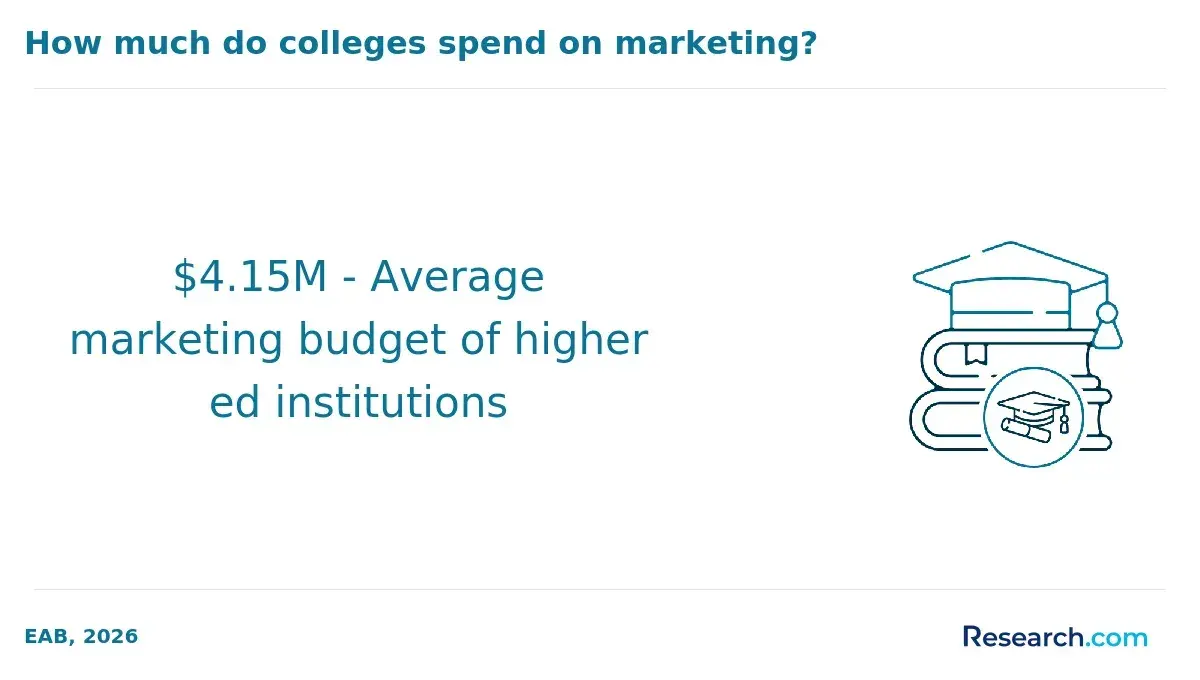
Budget allocation should reflect program maturity, demand level, enrollment urgency, and margin. Paid search can capture immediate demand, but it becomes expensive if every program depends on auction-based traffic. SEO and content build durable visibility, but they need time. Partnerships can expand reach into high-intent environments, but they require source-level quality tracking.
U.S. digital advertising is highly competitive. IAB's 2024 U.S. internet advertising revenue report shows the market reached $258.6 billion in 2024, which helps explain why education advertisers often face rising auction pressure. For enrollment teams, the implication is simple: do not build a budget that depends entirely on buying the same clicks as every competitor.
A useful budget model separates investment into demand capture, demand creation, and conversion improvement. The exact percentages should be based on your goals, but the logic should remain consistent.
- Use paid search for near-term demand capture: Prioritize high-intent program, degree, transfer, and career keywords before broad "online college" terms.
- Use SEO and content for durable demand: Build pages that can rank for program comparisons, career outcomes, tuition questions, admissions questions, transfer-credit searches, and "best online" queries.
- Use trusted media and comparison partners for decision-stage visibility: These placements are valuable when prospects are actively comparing schools and need credible third-party context.
- Use paid social for segmentation and nurture: Treat it as an audience-building and retargeting channel unless downstream data proves it can produce enrollments efficiently.
- Reserve budget for testing: Allocate a controlled portion to new programs, new audiences, creative tests, AI-search visibility experiments, and partner pilots.
Universities and colleges with multiple online degrees should avoid spreading money evenly across every program. Instead, group programs by demand and economics: established high-demand programs, niche high-margin programs, strategic growth programs, and programs that need awareness before lead generation can scale. Institutions that want high-intent visibility can use Research.com to promote university programs in a trusted education research environment.
Common mistake: cutting SEO and content when paid media becomes expensive. That often makes the problem worse because the institution becomes even more dependent on paid traffic. A healthier model uses paid media to learn which messages convert, then turns those insights into pages, guides, comparisons, and nurture content that can keep working over time.
What information and messaging should online bachelor's program pages include to boost conversion?
An online bachelor's program page should answer the questions a serious prospective student asks before submitting an inquiry. Many pages fail because they sell the institution before explaining the decision: cost, time, credits, online format, career relevance, admissions requirements, start dates, and support.
Value messaging needs to be specific and responsible. BLS 2024 data shows median usual weekly earnings of $1,543 for workers with a bachelor's degree compared with $930 for workers with a high school diploma. This does not mean every student will receive a specific wage increase, but it does show why many working adults view bachelor's completion as an economic decision. Program pages should connect the degree to relevant career pathways without promising guaranteed outcomes.
High-converting program pages usually include the following decision information. Each item should be visible before the student is forced into a form or phone call.
- Program identity: Degree name, major, concentration options, accreditation status, and whether the credential is a bachelor's completion program or a full four-year pathway.
- Online format: Fully online or hybrid, asynchronous or live, course length, weekly time expectations, technology requirements, and any in-person components.
- Admissions requirements: Prior education, GPA expectations, transcripts, test policies, prerequisites, state restrictions, and international or military applicant notes where relevant.
- Transfer-credit policy: Maximum credits accepted, credit evaluation process, prior learning assessment, articulation agreements, and typical review timeline.
- Cost and aid: Tuition per credit, fees, total estimated cost, financial aid eligibility, employer reimbursement, military benefits, scholarships, and payment options.
- Career relevance: Common roles, skills developed, licensure limitations if applicable, employer demand context, and career services support.
- Student support: Academic advising, tutoring, library access, tech support, accessibility services, career coaching, and online student community.
- Next steps: Clear calls to action for requesting information, applying, speaking with an advisor, evaluating transfer credits, or attending an online info session.
The form should match the student's readiness. A first-time visitor comparing programs may respond to "Get the tuition and transfer-credit guide," while a highly motivated prospect may prefer "Start your application" or "Request a credit evaluation." Offering only one generic call to action can suppress conversions from students who are interested but not ready to apply.
A common mistake is hiding price behind a lead form. That may increase inquiries, but it can also lower lead quality and frustrate prospects. If exact total cost varies by transfer credits, explain the variables and provide a realistic range or calculator instead of avoiding the topic.
How can we lower cost per lead for online bachelor's degrees without hurting lead quality?
Lowering cost per lead is useful only if cost per enrolled student also improves. If cheaper leads stop answering calls, fail admissions screening, or never apply, the campaign is not more efficient. The better goal is to lower waste while preserving or improving student fit.
Start by separating media efficiency from conversion efficiency. A high cost per click may still be profitable if the traffic converts to applications, while a cheap social lead may be expensive after admissions labor and low enrollment rates are included. Enrollment teams should judge each source by funnel quality, not surface-level lead price.
Use the following sequence to reduce cost without damaging quality. This order matters because it fixes the biggest leaks before expanding spend.
- Audit source-level outcomes: Compare every channel by lead-to-contact, contact-to-application, application-to-admit, admit-to-enroll, and cost per enrolled student.
- Remove low-intent targeting: Pause broad keywords, vague interest audiences, placements with poor downstream results, and partner sources with weak consent or duplicate rates.
- Improve landing-page relevance: Match each ad group or partner placement to a program-specific page rather than sending traffic to a general online degrees page.
- Use qualifying fields carefully: Ask about program interest, education level, transfer credits, start timing, and preferred contact method, but avoid making the form so long that serious prospects abandon it.
- Strengthen follow-up speed and routing: Send high-intent inquiries to admissions quickly, route by program, and use email or SMS nurture for students who are researching but not ready.
- Feed enrollment data back into campaigns: Import application and enrollment signals into ad platforms and partner reviews when privacy and consent rules allow it.
One red flag is celebrating a lower CPL immediately after removing important qualifying questions. That can make the top of the funnel look better while admissions receives more unqualified contacts. Another red flag is optimizing paid campaigns to "leads" when the platform could optimize toward deeper events such as application starts or qualified appointments.
Cost reduction also depends on creative clarity. Ads that promise "fast," "easy," or "affordable" without context may attract students who are not prepared for academic requirements. More precise language, such as "transfer-friendly online bachelor's completion" or "online accounting degree with asynchronous courses," can reduce wasted clicks by setting expectations earlier.
How do we effectively promote underperforming or low-awareness online bachelor's programs?
Underperforming programs usually fail for one of three reasons: weak market demand, weak differentiation, or weak visibility. The solution depends on the diagnosis. Spending more on ads will not fix a program that lacks a clear audience, and building content will not help if the program page does not explain why the degree matters.
The table below helps distinguish common performance problems. It is useful when leadership asks for more enrollments but the marketing team needs to know which constraint is actually blocking growth.
| Symptom | Likely issue | What it means | Evidence to review |
| Low search volume and low traffic | Low category awareness | Students may not know the program name or may search by career outcome instead | Search queries, career-page traffic, competitor content, labor-market language |
| Traffic but few inquiries | Weak value proposition or page experience | Prospects are interested enough to visit but not convinced enough to act | Page engagement, form starts, tuition-page exits, heatmaps, inquiry feedback |
| Many inquiries but few applications | Lead quality or admissions mismatch | Campaigns may be attracting the wrong audience or setting poor expectations | Contact rates, admissions disqualification reasons, call notes, source quality |
| Applications but low enrollment | Yield problem | Admitted students may choose competitors because of price, speed, brand, or support | Admit-to-enroll rate, competitor offers, financial aid timing, advisor follow-up |
For low-awareness degrees, lead generation may be premature. A better first move is to map the program to career goals, skill gaps, and student identities. For example, a niche online bachelor's program may not have many direct searches, but students may search for "careers in health information," "how to become a cybersecurity analyst," or "degree for supply chain management jobs."
Promotion should then follow a staged plan. The objective is to create recognizable demand before expecting a high lead volume.
- Clarify the audience: Identify whether the program serves degree completers, first-time adult students, transfer students, career changers, military learners, or working professionals in a specific field.
- Translate the program into outcomes: Build messaging around career paths, skills, licensure boundaries, employer relevance, and academic fit.
- Create comparison content: Explain how the program differs from better-known majors, certificates, bootcamps, or adjacent degrees.
- Use targeted awareness media: Test paid social, YouTube, webinars, professional newsletters, and partner placements before expecting search-only demand.
- Retarget engaged visitors: Move students from career education content to program pages, transfer-credit resources, info sessions, and advisor conversations.
Common mistake: renaming the campaign without repositioning the offer. If students do not understand what the program helps them do, new ad creative will only produce temporary lifts. Underperforming programs need clearer market language, proof points, and audience-specific pathways.
What content strategy attracts researching students comparing online bachelor's degree options?
A strong content strategy covers the full research journey: problem recognition, career exploration, degree comparison, school comparison, cost evaluation, application planning, and final enrollment decision. Online bachelor's prospects rarely move from first search to enrollment in one session, especially working adults comparing cost, flexibility, and transfer-credit policies.
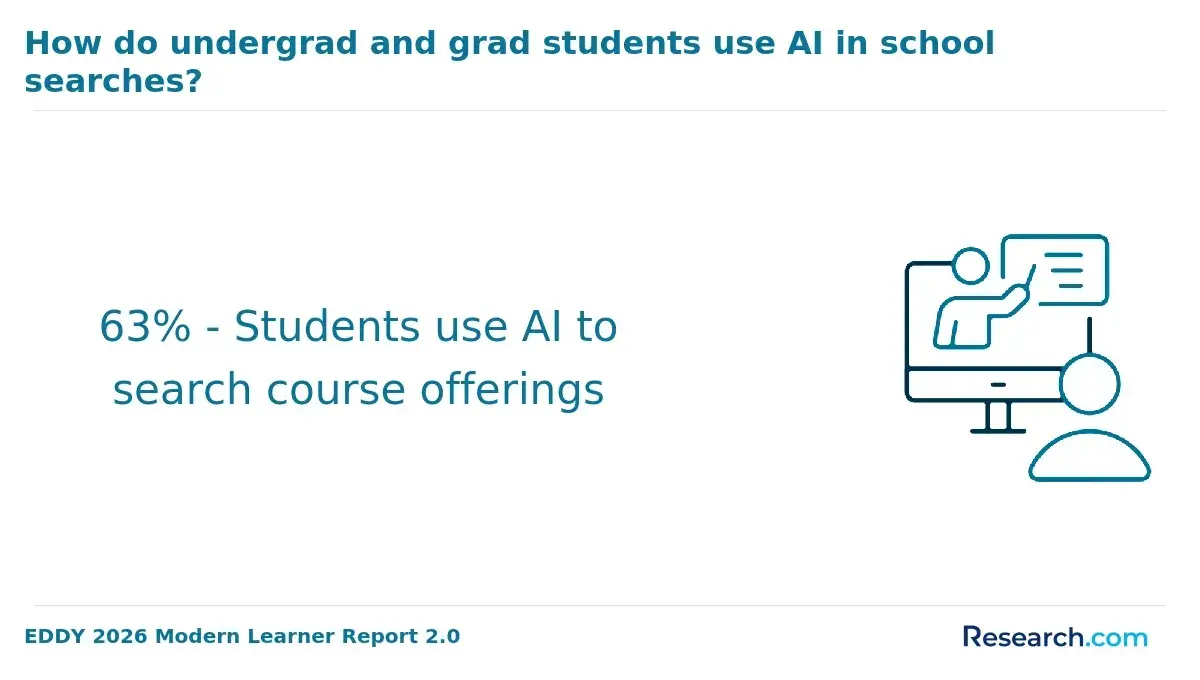
Search behavior is also changing because students now discover education information through Google results, AI-generated summaries, social search, forums, and comparison platforms. Content should be clear enough for humans and structured enough for AI systems to summarize accurately. That means direct answers, transparent facts, program-specific details, and pages that resolve real decision questions.
Build content around clusters rather than isolated blog posts. The most useful clusters for online bachelor's marketing include the following.
- Program comparison content: Pages comparing online bachelor's degrees by major, format, cost factors, credit requirements, and career alignment.
- Career pathway content: Guides that explain roles related to a degree, common skills, credential requirements, and when a bachelor's degree may or may not be enough.
- Transfer and completion content: Resources for adults with prior credits, associate degree holders, stop-outs, military learners, and community college transfers.
- Cost and aid content: Explanations of tuition per credit, fees, financial aid, employer reimbursement, military benefits, scholarships, and total cost variables.
- Online learning experience content: Articles or videos showing course format, workload, support services, technology, student expectations, and sample schedules.
- Decision-stage content: Application checklists, transcript guides, advisor questions, program fit quizzes, webinar recordings, and admitted-student yield resources.
Research.com is especially valuable in this environment because students use it to compare schools, programs, costs, rankings, online learning options, and career paths while they are actively making education decisions. Course providers, certificate platforms, and training brands can also use Research.com to promote online courses alongside relevant decision-stage content, which can help extend reach beyond the institution's owned website.
Do not create content only for high-volume keywords. Some low-volume searches are highly valuable because they reveal strong enrollment intent, such as "online bachelor's with 90 transfer credits," "finish degree after associate in business," or "online bachelor's no campus visits." Content that answers those questions may produce fewer visits but better-fit inquiries.
A common mistake is publishing generic "why choose online learning" articles. Most prospects already understand that online learning is flexible. They need to know whether this program fits their schedule, budget, credit history, career plan, and life constraints.
How can we reach working adults, career changers, and other nontraditional online learners?
Nontraditional learners are often practical, time-constrained, and risk-aware. Many are not asking whether college has value in general; they are asking whether this specific online bachelor's degree is worth the time, cost, and disruption. Marketing should respect that mindset.
For working adults, relevance beats prestige-only messaging. They want to understand transfer credits, time to completion, asynchronous access, employer reimbursement, childcare flexibility, academic support, and whether the degree connects to realistic career goals. Career changers often need more guidance because they may be comparing degrees, certificates, bootcamps, and entry-level pathways.
Messaging for these audiences should be segmented by motivation. A single "earn your degree online" message is usually too broad.
- Degree completers: Emphasize transfer-credit evaluation, prior learning credit, shorter path to completion, advisor support, and removing barriers that stopped them before.
- Career changers: Explain bridge skills, foundational courses, career services, portfolio or internship options, and how the degree compares with shorter credentials.
- Working professionals: Highlight asynchronous courses, part-time pacing, employer tuition benefits, predictable schedules, and applied projects.
- Military and veteran learners: Provide clear information about military benefits, transfer policies, deployment flexibility, support services, and relevant advising.
- Parents and caregivers: Address scheduling, course pacing, support access outside standard hours, and realistic weekly workload.
Channel selection should also reflect lifestyle. Working adults may respond to search when they are actively researching, retargeting when they return to compare options, email nurture when they need time, and employer or professional association partnerships when the program connects to their current job. Paid social can work, but only if creative speaks to a concrete life situation rather than a generic aspiration.
Be careful with urgency. Phrases such as "apply today" or "limited seats" can help motivated prospects, but they may alienate adults who need to talk with a partner, employer, or financial aid advisor. Better urgency is deadline-based and helpful: "Submit transcripts by this date for a transfer-credit review before the next term."
How should we measure and prove marketing ROI for long online enrollment cycles?
Online bachelor's enrollment cycles can stretch across weeks or months, so last-click reporting is usually misleading. A student may first read a career guide, return through a ranking page, click a paid search ad, attend a webinar, speak with admissions, and apply later through direct traffic. If the CRM credits only the final touch, budget decisions will be distorted.
ROI measurement should connect marketing activity to enrollment and revenue while recognizing the limits of attribution. The goal is not perfect certainty; it is better decision-making. Use consistent definitions, source tracking, CRM discipline, and cohort reporting so leadership can see which investments create qualified pipeline.
The table below defines the metrics that matter most for long-cycle enrollment marketing. These metrics help separate activity from business impact.
| Metric | What it shows | Why it matters |
| Cost per inquiry | Initial lead generation efficiency | Useful for media monitoring but incomplete without quality data |
| Contact rate | Share of inquiries reached by admissions | Shows whether leads are real, responsive, and routed effectively |
| Inquiry-to-application rate | Lead quality and nurture effectiveness | Reveals whether campaigns are attracting students with real intent |
| Application-to-admit rate | Academic and admissions fit | Helps identify sources producing unqualified applicants |
| Admit-to-enroll rate | Yield strength | Shows whether admitted students choose the program over alternatives |
| Cost per enrolled student | Total acquisition efficiency | Best core metric for comparing channels and partners |
| Payback period | Time needed to recover acquisition cost | Important for programs with different tuition, retention, and margin profiles |
Attribution should include both source and influence. Source tells you where the inquiry originated; influence shows which content, retargeting, emails, webinars, or partner placements helped move the student forward. This matters because SEO and content often assist enrollments that are later captured by branded search or direct traffic.
Use cohort reporting by start term. For each term, compare spend, inquiries, applications, admits, enrollments, tuition potential, and retention indicators by source. This avoids overreacting to early lead numbers before enough students have had time to apply and enroll.
Common mistake: proving ROI only with marketing-platform dashboards. Ad platforms cannot see admissions conversations, transcript issues, financial aid delays, or enrollment decisions unless you connect the data. The CRM and student information system are essential for enrollment ROI reporting.
How can we scale student acquisition across many online bachelor's programs efficiently?
Scaling across many programs requires a repeatable operating model, not a separate custom strategy for every degree. The key is to standardize the parts that should be consistent while allowing enough flexibility for program-specific audiences, outcomes, and competitive positioning.
A scalable model usually includes shared audience research, common campaign structures, reusable landing-page modules, centralized tracking, program-specific messaging, and a source-quality feedback loop. This lets a marketing team expand efficiently without turning every new program launch into a one-off project.
Use a portfolio framework before assigning budget. Group programs based on demand, differentiation, economics, and strategic importance.
- Core demand programs: Degrees with strong search volume and proven enrollment history should receive structured paid search, SEO, retargeting, and partner investment.
- Strategic growth programs: Programs important to the institution's future may need awareness content, employer partnerships, and longer testing windows before they scale.
- Niche high-fit programs: Specialized degrees may not produce large lead volume, but they can perform well with precise targeting and comparison content.
- Program rescue candidates: Low-performing degrees should be diagnosed before receiving more budget; the issue may be positioning, pricing, admissions fit, or market demand.
Research.com supports scalable acquisition because it offers flexible models, including CPC campaigns, CPL lead generation, sponsored placements, content partnerships, custom advertising packages, and strategic education marketing partnerships. Agencies managing multiple education clients can explore a performance marketing agency partnership to reach a large, search-driven audience of students actively exploring education options.
Operationally, scale depends on templates and governance. Build reusable program-page sections for cost, transfer credits, curriculum, format, admissions, outcomes, and FAQs. Create campaign naming conventions, UTM standards, lead-source rules, and CRM fields that make cross-program reporting possible.
The biggest scaling mistake is expanding spend before fixing measurement. If every program uses different forms, different source names, different admissions statuses, and different reporting definitions, leadership cannot know what is working. Standardization is what allows experimentation to become institutional learning.
Other Things You Should Know
The best approach is a multi-channel system that combines high-intent search, strong program pages, comparison content, retargeting, email nurture, and trusted education partners. Judge success by applications and enrollments, not just traffic or lead volume.
Paid search and partner campaigns can generate inquiries quickly, but enrollment results often take longer because students need time to compare programs, submit transcripts, complete aid steps, and make a final decision. SEO and content typically require a longer ramp but can reduce dependence on paid media over time.
Common causes include broad targeting, unclear tuition information, weak transfer-credit messaging, slow admissions follow-up, poor lead-source quality, and landing pages that do not match campaign promises. Review the full funnel from inquiry to enrollment before changing only the ads.
Third-party leads can work when the partner has transparent traffic sources, proper consent practices, relevant audiences, and a willingness to measure downstream outcomes. Avoid partners that sell only cheap volume without showing lead quality, source context, or enrollment performance.
References
- Investigating Digital Marketing Strategies in Influencing Student Enrollment Decisions in Tertiary Education https://www.universepg.com/cjbis/investigating-digital-marketing-strategies-in-influencing-student-enrollment-decisions-in-tertiary-education
- Six Steps to Helping Career Changers Re-Enter the Workforce https://evolllution.com/opinions/steps-helping-career-changers-re-enter-workforce
- Digital Marketing Blog | Dizian Digital https://www.dizian.com.au/blog
- Lead generation strategies and methods for higher education https://www.emundus.fr/en/resources/blog/lead-generation-strategies-and-methods-for-higher-education
- 7 Ways to Measure Enrollment Marketing ROI - Kalix Marketing https://kalixmarketing.com/7-ways-measure-enrollment-marketing-roi/
- Online Degree Program Marketing | Vital Design https://vitaldesign.com/marketing-for-online-degree-programs/
- Digital Marketing Budget Allocation For SMEs: Where Your Money Actually Makes More Money | ZOPPLY https://zopply.com/digital-marketing/digital-marketing-budget-allocation/
- Effective media & content strategy for students | Hybrid https://hybrid.co/insights/social-media-and-content-strategy-that-attracts-students/
- How to Allocate Budget for Digital Marketing | Pixis https://pixis.ai/blog/how-to-allocate-budget-for-digital-marketing/
- How to Build a Landing Page That Converts in 2026 https://eminence.ch/en/create-successful-landing-page-increase-conversion-rate/