2027 CPC vs CPL for Online Course Marketing

Co-Founder and Chief Data Scientist
Education marketers are being asked to produce enrollments, not vanity metrics, while digital competition keeps rising. IAB and PwC reported that U.S. internet advertising revenue reached $258.6 billion in 2024, making every inefficient click or low-quality lead more expensive to defend.
This guide is for universities, course providers, bootcamps, and agencies deciding between CPC, CPL, CPA, SEO, and partner channels. You will learn how each model affects cost, quality, conversion, and ROI so you can build a more predictable student acquisition system.
Key Things You Should Know
- CPC is best for controlled traffic testing and high-intent search demand; CPL is best when lead capture is the immediate goal; CPA is best when you can track applications, purchases, or enrollments reliably.
- The cheapest CPL is not necessarily the best buy: a $40 lead that converts to enrollment at 1% costs more per enrollment than a $120 lead that converts at 6%.
- With U.S. digital ad revenue at $258.6 billion in 2024, education marketers need channel economics that connect spend to inquiries, applications, starts, and lifetime value.
What is the difference between CPC and CPL for online courses?
CPC, CPL, and CPA are not simply pricing labels. They represent different levels of risk, control, and accountability in the student acquisition funnel. CPC means you pay for traffic, CPL means you pay for a captured inquiry, and CPA means you pay for a defined action such as an application, purchase, deposit, or enrollment.
The practical difference is where responsibility shifts. With CPC, the advertiser must convert the visitor after the click. With CPL, the publisher or partner is responsible for producing a lead, but the advertiser still must qualify and enroll that person. With CPA, the partner is paid only when a deeper outcome occurs, so tracking, attribution, and eligibility rules become much more important.
The table below summarizes the economic trade-offs. Use it to decide which model matches your current funnel maturity, not just which one appears cheaper at the top of the funnel.
| Model | What you pay for | Best use case | Main risk | Metric to watch |
| CPC | A click to your site or landing page | Testing program demand, paid search, retargeting, high-intent comparison traffic | Traffic may not convert if the page, offer, or audience is weak | Click-to-lead rate and cost per qualified inquiry |
| CPL | A completed lead form or inquiry | Scaling inquiry volume through partners, directories, affiliates, or content placements | Lead volume can rise while enrollment intent falls | Lead-to-application and lead-to-enrollment rate |
| CPA | A defined outcome such as an application, purchase, or enrollment | Mature programs with reliable tracking, clear attribution, and fast follow-up | Partners may demand higher payouts or avoid hard-to-convert programs | Cost per enrollment and net revenue per start |
A simple way to compare CPC and CPL is to convert CPC into an implied CPL. If you pay $8 per click and 5% of visitors become leads, your implied CPL is $160. If a partner offers $90 CPL but the leads convert to enrollment at half the rate of paid search leads, the cheaper front-end price may still be less profitable.
Which model drives enrollments better: CPC or CPL?
Neither CPC nor CPL automatically drives enrollments better. CPC usually wins when search intent is strong, the landing page is persuasive, and the program team can convert visitors efficiently. CPL usually wins when you need more inquiry volume, want to access audiences beyond your own search campaigns, or are working with a trusted partner that can generate intent-rich leads.
Research.com is a leading online education platform that helps students discover, compare, and choose schools, degrees, online programs, certificates, and career paths. Because it reaches more than 12 million students and learners each year, many of whom arrive from search engines and AI/LLM discovery while researching education decisions, it can help advertisers reach prospects at a high-intent moment.
If you want to test CPC, CPL, sponsored visibility, or custom partnerships in a trusted education environment, you can advertise with Research.com.
Enrollment performance depends on the full chain from impression to start. The following benchmarks are not universal targets, but they show how marketers should think about the funnel mathematically.
| Question | What CPC answers | What CPL answers | Enrollment decision implication |
| Can we attract the right visitors? | Yes, if targeting and search intent are strong | Partly, depending on the partner source | CPC gives more control over query and audience selection |
| Can we capture inquiries efficiently? | Only if the landing page converts | Yes, because the payment event is a lead | CPL can scale faster when lead quality is monitored |
| Can we prove ROI? | Yes, but only with downstream tracking | Yes, but only if leads are tied to applications and starts | Both need CRM integration and source-level reporting |
| Can we protect quality? | Often easier through keyword, audience, and page control | Possible with filters, lead validation, and partner transparency | Quality rules must be defined before scaling CPL |
The best answer is usually a blended model. Use CPC to learn which messages, programs, and audiences produce engaged visitors. Use CPL with vetted partners to expand qualified inquiry volume. Move toward CPA only when your attribution, admissions process, and conversion windows are stable enough to support outcome-based payment.
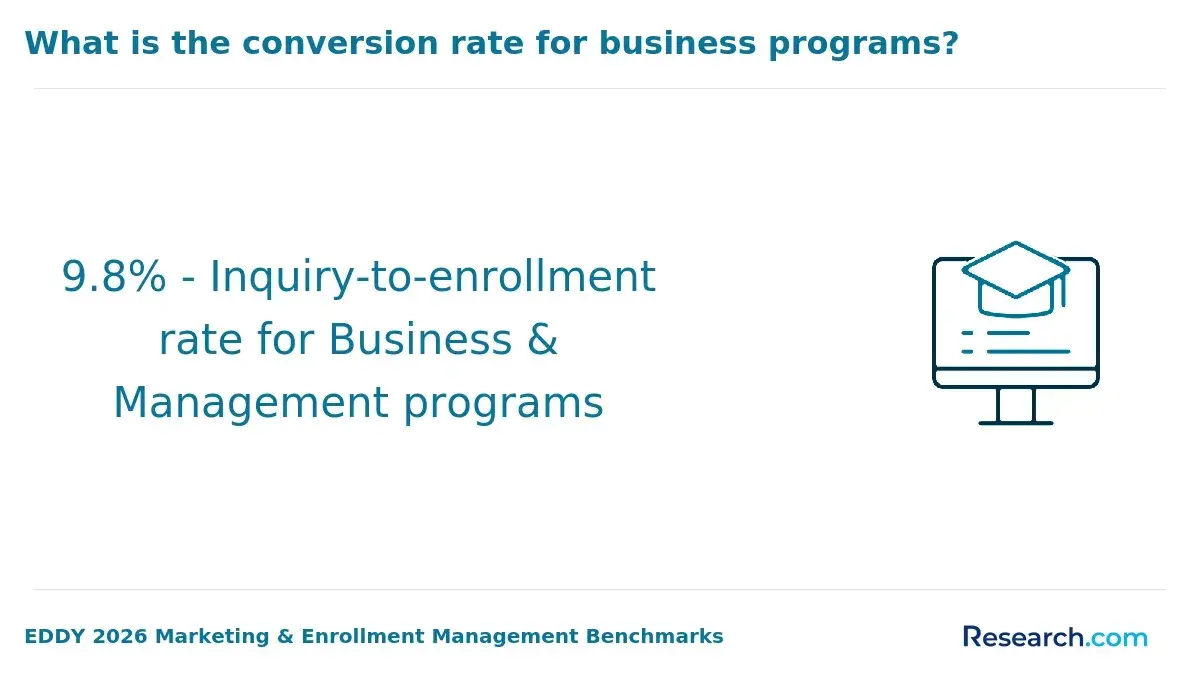
When should education marketers use CPC, CPL, or CPA?
Education marketers should use CPC, CPL, or CPA based on the program's demand level, sales cycle, price point, and tracking maturity. A short certificate with online checkout can support CPA faster than a graduate degree that requires advising, transcripts, financial aid conversations, and multiple decision-makers.
Use the following decision rules to avoid choosing a pricing model for the wrong reason. The goal is to match payment structure to funnel reality.
- Use CPC when you need control over keywords, audiences, geography, messaging, and landing page testing, especially for programs with existing search demand.
- Use CPL when your admissions or sales team can respond quickly, qualify inquiries consistently, and report which lead sources become applications or enrollments.
- Use CPA when the conversion event is clearly defined, tracked in the CRM, and accepted by both the advertiser and partner as the basis for payment.
- Avoid CPL if you cannot measure source-level quality, because low-cost leads can overwhelm admissions teams and hide true acquisition cost.
- Avoid CPA too early if your enrollment cycle is long or attribution is incomplete, because partners may either overprice the risk or send very limited volume.
Current student behavior makes this choice more complex. Prospective learners often research programs across Google, comparison sites, AI-generated answers, review content, employer requirements, and social proof before submitting a form. That means a click or lead may be only one touch in a longer decision path, so last-click reporting can undervalue upper-funnel sources that influence final enrollment.
How do you lower CPL without reducing lead quality?
Lowering CPL without damaging lead quality requires improving conversion efficiency while tightening qualification. Cutting bids, broadening audiences, or simplifying forms can reduce CPL quickly, but those moves often create a hidden cost: more unqualified inquiries that admissions teams must chase.
Before reducing spend, separate waste from value. These actions help lower CPL while preserving the characteristics that make a lead likely to enroll.
- Segment CPL by program, audience, location, device, and source instead of averaging all leads together.
- Track qualified lead rate, application rate, and enrollment rate by source so budget moves toward channels that produce real student progression.
- Use forms that ask only for necessary information, but include one or two intent signals such as desired start date, program interest, credential goal, or education level.
- Improve landing page message match so ad copy, keyword intent, program title, tuition information, and call to action all align.
- Exclude irrelevant audiences, weak geographies, and low-performing placements rather than lowering bids across the entire campaign.
- Test offers that support decision-making, such as program guides, tuition breakdowns, credit-transfer information, career outcomes, or advisor consultations.
- Set speed-to-lead standards because even high-intent prospects can go cold if follow-up is slow or generic.
A common mistake is optimizing only for form completions. If your lowest CPL source produces leads that rarely answer calls, submit documents, or meet eligibility requirements, it is not a low-cost source. It is a capacity drain. The better target is cost per qualified lead and cost per enrollment.
Why do course leads fail to convert into enrollments?
Course leads often fail to convert because the campaign captures curiosity, not commitment. This is especially common in online education, where learners compare price, time commitment, accreditation, career relevance, schedule flexibility, and trust before making a decision.
Lead failure usually comes from one of four places: source quality, offer mismatch, program friction, or follow-up weakness. The following red flags are worth investigating before blaming the media channel.
- The ad promises a broad career outcome, but the landing page does not explain prerequisites, curriculum, completion time, or realistic next steps.
- The form is too easy to complete and attracts people who want general information but are not ready to speak with admissions or buy a course.
- The program page hides price, financial aid options, accreditation, transfer policies, employer relevance, and start dates.
- The admissions or sales team receives leads without source context, program interest, or urgency indicators.
- Follow-up relies on one phone call or one email instead of a structured sequence across email, SMS, phone, and retargeting where appropriate.
- The CRM counts every form fill as equal even though some sources produce duplicate, incentive-driven, or low-eligibility leads.
The fix is to treat lead generation as a shared marketing and enrollment process. Marketing should deliver source context and intent signals. Admissions or sales teams should report disposition outcomes. Leadership should judge channels by progression through the funnel, not by inquiry volume alone.
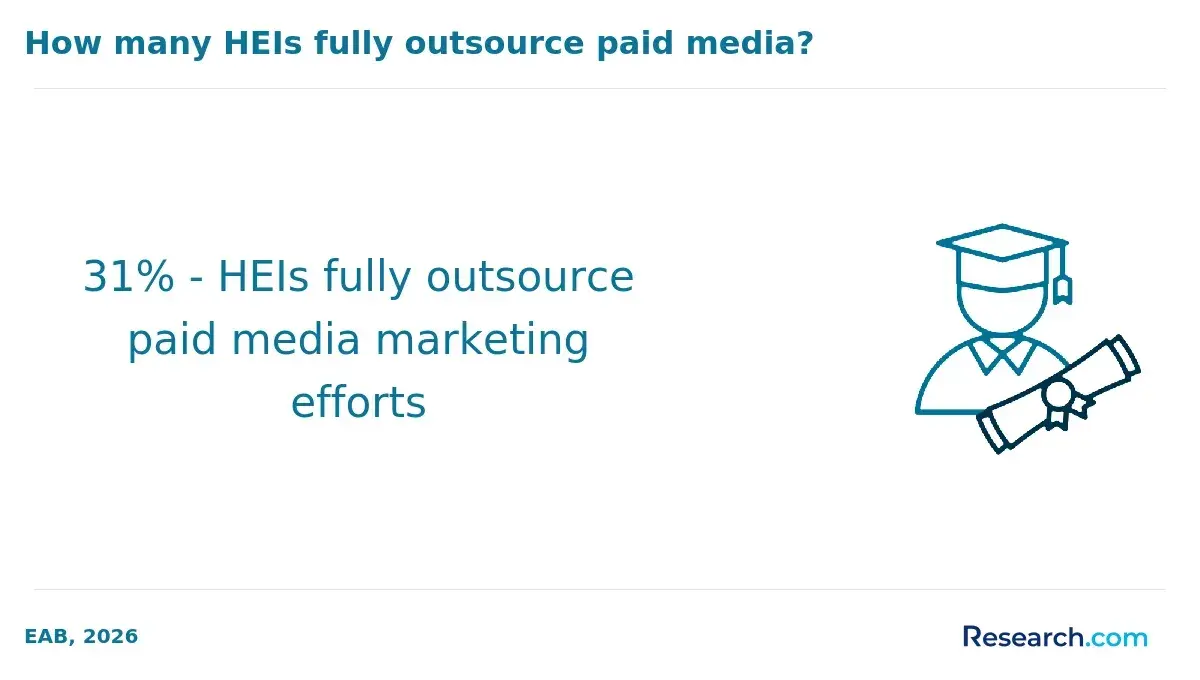
Which channels generate the highest-intent prospective students?
The highest-intent prospective students usually come from channels where the learner is actively researching a program, comparing providers, or seeking answers to cost and career questions. Search-driven environments tend to be stronger than passive interruption channels because the user has already expressed a need.
For online course marketing, channel intent typically falls into a pattern. The table below shows how to think about intent quality, not which channel is always cheapest.
| Channel | Typical intent level | Strength | Limitation |
| Paid search | High when keywords include program, credential, cost, or school comparison terms | Captures existing demand quickly | Competitive categories can become expensive |
| Organic search and SEO | High for comparison, ranking, cost, and career-outcome queries | Compounds over time and supports AI discovery | Requires content depth, authority, and time |
| Education marketplaces and comparison platforms | High when users are evaluating options | Reaches students during active decision-making | Quality depends on partner audience and placement context |
| Retargeting | Medium to high depending on prior behavior | Re-engages visitors who already showed interest | Can waste spend if audiences are not segmented |
| Paid social | Low to medium for direct response, higher for awareness and remarketing | Useful for low-awareness programs and audience building | Often needs nurture before conversion |
| Email and alumni or employer partnerships | Varies by list relevance | Can be cost-efficient with trusted audiences | Scale may be limited |
AI and LLM discovery are also changing how students find education options. Many learners now ask tools for program comparisons, career paths, and credential explanations before visiting a school website. That makes authoritative, well-structured content and trusted third-party visibility more important because discovery may begin before a traditional search click.
How should you split budget across paid search, SEO, and partners?
A strong acquisition budget should not force paid search, SEO, and partners to compete as if they do the same job. Paid search captures demand now. SEO builds durable visibility and improves trust. Partners extend reach into comparison, content, and audience environments you may not be able to access directly.
Research.com offers university advertising solutions for institutions that need to promote online, graduate, career-focused, and degree programs to students who are already researching education choices. This is useful when a university wants more than traffic: it wants visibility in a trusted decision environment where prospects compare programs, costs, rankings, and outcomes.
Use budget allocation as a portfolio decision. The following sequence helps balance speed, efficiency, and long-term demand creation.
- Start with the business goal: enrollments, applications, qualified inquiries, program awareness, or category entry.
- Fund the bottom of the funnel first for programs with proven search demand, including brand protection, high-intent paid search, retargeting, and conversion-focused partner placements.
- Invest in SEO and content for recurring questions about cost, accreditation, curriculum, career paths, requirements, rankings, and comparisons.
- Add CPL or sponsored partner campaigns where the audience is relevant and source-level reporting is available.
- Reserve test budget for low-awareness programs, new credentials, employer-aligned messaging, and emerging channels.
- Review budget by cost per qualified inquiry, cost per application, cost per enrollment, and payback period rather than by channel-level CPL alone.
A practical mistake is cutting SEO because paid media has clearer short-term reporting. That can make the institution permanently dependent on paid clicks. A healthier mix uses paid channels for immediate volume while building organic and partner visibility that keeps reaching students during research and comparison.
What landing page elements improve inquiry and enrollment conversion?
Landing pages affect both CPC and CPL economics because they determine how much value you extract from each visit or partner referral. A weak page can make good traffic look unprofitable, while a strong page can turn the same media spend into more qualified inquiries.
The best education landing pages answer the questions a serious learner has before they submit a form. These elements are especially important for online courses, certificates, bootcamps, and degree programs.
- A clear program name, credential type, delivery format, time to complete, and next available start date.
- Transparent cost information, payment options, employer reimbursement information, financial aid context, or a clear path to get tuition details.
- Accreditation, institutional credibility, instructor qualifications, or employer-recognized validation where applicable.
- Curriculum details that show what the learner will study and what skills or competencies the program is designed to build.
- Career relevance framed carefully, using role alignment and labor-market context without promising specific outcomes.
- Student-fit information, including prerequisites, time commitment, schedule flexibility, technical requirements, and support services.
- One primary call to action, supported by secondary options such as downloading a guide, requesting information, or speaking with an advisor.
- Trust signals such as outcomes methodology, rankings context, testimonials, transfer policies, refund policies, and employer relationships when accurate and compliant.
Do not hide the information that determines enrollment intent. If price, start date, eligibility, or workload is missing, many serious prospects will leave or submit a low-commitment inquiry just to get basic answers. That increases apparent lead volume while reducing lead quality.
How do you market low-awareness programs with limited search demand?
Low-awareness programs are difficult because students are not searching for them by name. This is common for new certificates, niche bootcamps, emerging technology courses, interdisciplinary graduate programs, and employer-aligned credentials. In these cases, CPC search campaigns may have limited volume because the category itself has not developed demand.
Research.com can help course providers and education brands promote certification programs by placing them in front of learners who are already exploring career paths, online learning options, degrees, and skills-based education. That context matters because low-awareness programs often need explanation before they can generate direct-response leads.
When search demand is limited, the marketing task shifts from demand capture to demand creation. Use these approaches to build understanding and intent.
- Map the program to the problem students already recognize, such as career change, promotion readiness, licensure requirements, technical upskilling, or employer demand.
- Create content around the broader category before asking learners to search for the specific program name.
- Use paid social, YouTube, newsletters, webinars, and sponsored education content to introduce the credential and explain who it is for.
- Retarget engaged visitors with comparison pages, tuition details, career-path content, and advisor consultation offers.
- Partner with trusted education platforms that already attract learners researching adjacent programs and career goals.
- Measure micro-conversions such as guide downloads, webinar attendance, quiz completions, and return visits before expecting immediate applications.
The biggest mistake with low-awareness programs is judging them by the same near-term CPL targets as established degrees or popular certificates. Early campaigns should be evaluated on audience learning, message resonance, assisted conversions, and progression toward qualified inquiries.
How do you measure ROI for online course acquisition?
ROI measurement for online course acquisition requires connecting media spend to the full enrollment funnel. A lead is only valuable if it progresses toward a financially meaningful outcome, and that progression may take weeks or months for higher-consideration programs.
Research.com also supports agencies that manage education clients through agency solutions for student recruitment, including campaign models that can support traffic, lead generation, sponsored placements, and custom partnerships. For agencies, the value is not only reach; it is the ability to show clients how a trusted education audience contributes to a qualified pipeline.
Use a consistent measurement framework so leadership can compare channels fairly. The following metrics should be connected in your CRM or reporting system.
- Cost per click, click-through rate, and landing page conversion rate for traffic efficiency.
- Cost per lead, qualified lead rate, and duplicate or invalid lead rate for inquiry quality.
- Lead-to-application rate, application completion rate, and acceptance or eligibility rate for funnel progression.
- Application-to-enrollment rate, enrollment start rate, and first-payment or census confirmation for revenue validation.
- Cost per enrollment, gross revenue per enrollment, contribution margin, and payback period for ROI evaluation.
- Source-assisted conversions and multi-touch influence for SEO, content, retargeting, and partner placements that support but do not always close the final action.
The core formulas are straightforward. Cost per enrollment equals total campaign cost divided by confirmed enrollments. Break-even CPL equals allowable cost per enrollment multiplied by the lead-to-enrollment rate. For example, if your allowable cost per enrollment is $2,000 and a source converts 4% of leads into enrollments, the break-even CPL is $80. This is a planning example, not a universal benchmark.
Attribution has limits. A student may read an organic article, compare options on a third-party platform, click a retargeting ad, speak with an advisor, and then enroll after a brand search. For that reason, ROI reporting should include both last-touch conversion data and assisted influence, especially for longer-cycle degree and certificate decisions.
Other Things You Should Know
CPC may look cheaper because you pay only for traffic, but the real comparison is implied CPL and cost per enrollment. If clicks do not convert, CPC can become more expensive than a higher-priced CPL source with better inquiry quality.
There is no universal good CPL because program price, audience, credential type, admissions requirements, and conversion rate vary widely. A good CPL is one that produces qualified leads and enrollments within your allowable acquisition cost.
Yes, if the partner has a relevant learner audience, transparent sourcing, clear compliance standards, and source-level reporting. Partners work best when they reach students during research and comparison, not when they simply sell low-cost form fills.
Start by reviewing lead sources, form fields, landing page promises, and follow-up speed. Add intent signals to forms, remove weak placements, align ads with program details, and track qualified lead rate instead of optimizing only for CPL.
References
- Marketing Budget Allocation Guide 2026 | Improvado https://improvado.io/blog/marketing-budget-allocation
- Performance Marketing Pricing Models Guide | Understory | Understory https://understoryagency.com/blog/performance-marketing-pricing-models-guide
- Meta Ads Cost Per Lead Rising: 8 Ways to Cut CPL 30% in 2026 https://www.get-ryze.ai/blog/meta-ads-cost-per-lead-increasing-reduce
- How to Build Brand Awareness (23 Ideas & Expert Tips) | WordStream https://www.wordstream.com/blog/brand-awareness
- How do colleges measure conversion rates from inquiry to enrollment? https://www.pedowitzgroup.com/colleges-measure-conversion-rates-from-inquiry-to-enrollment
- Elements of High-Converting Higher Ed Landing Pages https://www.pepperlandmarketing.com/blog/higher-education-landing-page-optimization-guide-free-checklist
- Average conversion rate in education admissions (and how to improve it) | Reshape https://reshapeos.com/blog/average-conversion-rate-in-education-admissions-and-how-to-improve-it
- Media buying models: CPM, CPC, CPL, CPA, CPE, CPS, CPI, CPV, PPC, and more! https://www.singular.net/blog/media-buying-models/
- What are CPM, CPC, CPL, CPA, and CPI and what is the difference between these concepts? - Mailrelay https://mailrelay.com/en/blog/2018/06/27/what-are-cpm-cpc-cpl-cpa-and-cpi-and-what-is-the-difference-between-these-concepts/