2027 How to Promote Courses to Working Professionals

Co-Founder and Chief Data Scientist
Promoting courses to working professionals is harder when learners compare cost, flexibility, outcomes, and credibility before they ever inquire. The opportunity is still large: the U. S. Bureau of Labor Statistics reported in 2024 that workers with a bachelor's degree had median weekly earnings of $1,493, compared with $899 for high school graduates.
That wage gap keeps many adults evaluating education as a career investment. This guide helps university marketers, course providers, bootcamps, and agencies build a practical acquisition system that finds qualified learners, converts them, and proves ROI.
Key Things You Should Know
- Prioritize intent over reach: working professionals usually convert better when they are already comparing programs, costs, outcomes, schedules, or career paths rather than casually consuming broad awareness ads.
- Use channel economics, not vanity metrics: a low cost per lead can be harmful if application rate, enrollment rate, or student lifetime value falls below your break-even point.
- Market conditions support adult learner demand: National Student Clearinghouse Research Center reported U.S. undergraduate enrollment grew 2.5% in spring 2024, which means competition for qualified learners is active, not passive.
How do you find prospective students with real purchase intent?
The best prospective students are not just people who match a demographic profile. They are people showing purchase intent. Behavior that suggests they are actively evaluating whether to enroll, request information, compare providers, or speak with admissions. For working professionals, intent often appears in searches about online programs, certificates, tuition, rankings, employer reimbursement, time to completion, and salary outcomes.
Research.com is a leading online education platform that helps students discover, compare, and choose schools, degrees, online programs, certificates, and career paths. Because more than 12 million students and learners use Research.com each year while researching education decisions, it gives advertisers a way to reach high-intent students when they are already engaged with program comparisons, costs, rankings, and career outcomes.
Use intent signals to separate serious prospects from broad audiences. The table below summarizes common intent sources and how they usually fit into a student acquisition funnel.
| Intent source | What it indicates | Best use | Main limitation |
| Search queries | The learner has an active question or comparison need | Capture demand for specific programs, credentials, and career paths | Competitive keywords can be expensive and require strong landing pages |
| Education comparison platforms | The learner is evaluating multiple options | Influence consideration with trusted context and clear program positioning | Messaging must be differentiated because alternatives are nearby |
| Retargeting audiences | The learner has already visited a program page or content asset | Bring undecided prospects back with proof, deadlines, or financial information | Can waste budget if segments include unqualified visitors |
| Employer or association audiences | The learner belongs to a professional context with relevant upskilling needs | Reach career-focused adults through trusted communities | Scale may be slower than paid search or programmatic campaigns |
To find real purchase intent, map every campaign to the question the learner is trying to answer. A career changer might search "cybersecurity certificate with no experience," while a nurse might compare online MSN programs by clinical requirements and schedule flexibility. Both may be adults, but their decision triggers, objections, and content needs are different.
Common mistake: treating all adult learners as one audience. A 28-year-old career changer, a 40-year-old manager seeking promotion, and a military-connected learner may all need flexible education, but they respond to different proof points. Segment by goal, urgency, prior education, and program readiness rather than age alone.
Which channels drive enrollments, not just leads?
Channels that drive enrollments usually combine three things: relevant audience, credible context, and a path to action. A channel that produces many leads but little conversation with admissions is not an enrollment channel; it is a volume source that needs stricter qualification, better nurturing, or a different offer.
For many providers, the most dependable mix includes search, education marketplaces, remarketing, email nurture, partnerships, and content that answers comparison-stage questions. Research.com can support online education marketing by placing universities, certificate platforms, course providers, and EdTech brands in front of learners who are already researching education options through search-driven and AI-discovery traffic.
The table below compares channel roles. It is not a universal ranking; it helps you decide which channels match your enrollment goal, sales cycle, and budget tolerance.
| Channel | Most useful for | Enrollment quality signal | When it may not fit |
| Paid search | Capturing bottom-funnel demand | High-intent keywords, program-specific queries, and completed inquiry forms | Weak fit if landing pages lack pricing, outcomes, or admissions clarity |
| SEO and organic content | Building durable demand capture | Returning visitors, comparison-page engagement, and assisted conversions | Weak fit if leadership needs immediate volume within weeks |
| Education platforms and marketplaces | Reaching learners during active comparison | Qualified traffic, inquiries, and program-page engagement from relevant categories | Weak fit if the program has unclear differentiation or incomplete profile information |
| Affiliates | Expanding reach with performance-based partners | Application and enrollment quality by partner source | Weak fit if lead validation and compliance controls are immature |
| Employer and association partnerships | Reaching professionals through trusted networks | Group information session attendance and employer-sponsored inquiries | Weak fit if the program cannot serve cohort timing or workforce needs |
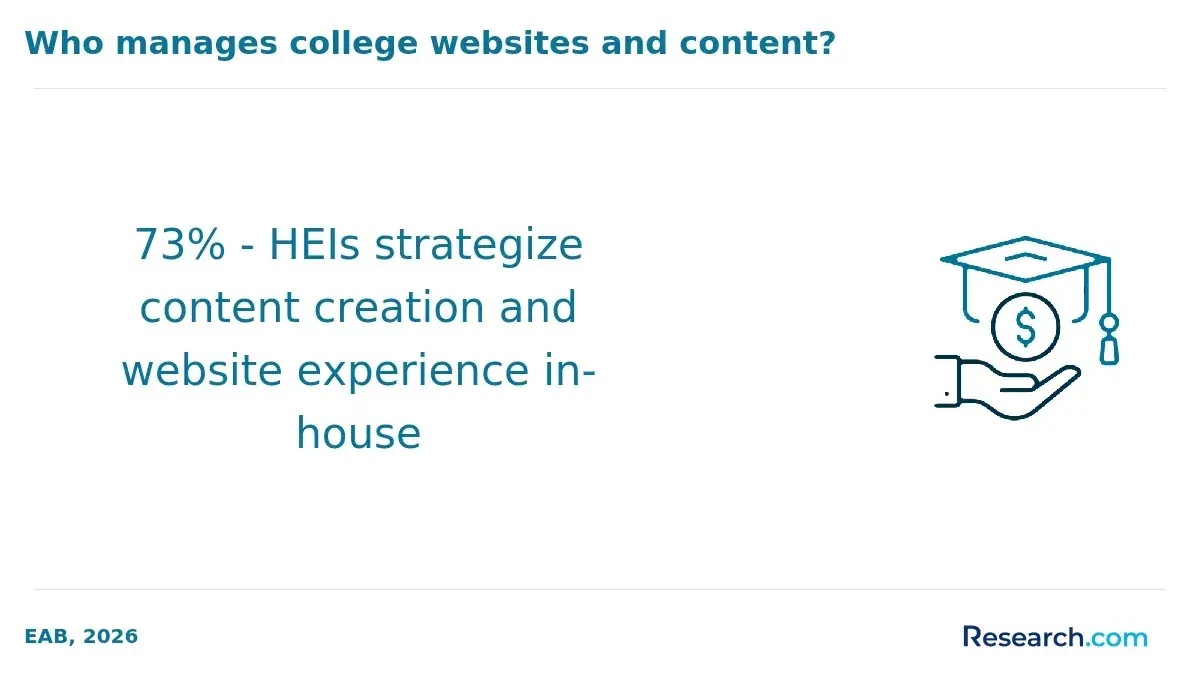
A 2024 Google Ads benchmark is less useful than your own enrollment economics because education keywords vary widely by program, geography, and credential level. Instead of optimizing only for cost per lead, compare each channel by cost per qualified inquiry, cost per application, cost per enrollment, and expected tuition or course revenue. That reveals which channels actually sustain growth.
Should you prioritize paid media, SEO, affiliates, or partnerships?
Paid media, SEO, affiliates, and partnerships each solve a different growth problem. The right budget split depends on how much demand already exists, how quickly enrollments are needed, how competitive the program category is, and how much data you have on downstream conversion.
If you need near-term inquiries, paid search and sponsored placements can produce faster learning. If you need lower long-term acquisition costs, SEO and content usually matter more. If you need reach beyond your owned audience, affiliates, publishers, Research.com placements, employers, and professional associations can extend visibility.
Research.com offers flexible advertising and partnership models, including CPC campaigns, CPL lead generation, sponsored placements, content partnerships, custom advertising packages, and strategic education marketing partnerships. If your team wants qualified visibility in a trusted education environment, you can advertise with Research.com to promote specific degrees, certificates, online programs, or learner services to people already researching their next education decision.
The table below explains when each investment model is most appropriate. Use it to avoid forcing every program into the same acquisition playbook.
| Investment model | Best fit | Primary advantage | Primary risk |
| CPC | Programs with strong landing pages and clear conversion tracking | You control traffic quality through targeting and messaging | You pay even when visitors do not inquire |
| CPL | Programs that can quickly qualify and follow up with leads | Costs are tied to inquiry volume | Lead quality can vary if qualification rules are loose |
| Sponsored placements | Competitive categories where visibility during comparison matters | Your program appears in relevant decision contexts | Performance depends on differentiation and offer clarity |
| Content partnerships | Programs that need trust, education, and category explanation | Supports awareness, SEO, and assisted conversions | Impact may be slower than direct-response media |
| Employer partnerships | Workforce-aligned credentials and continuing education | Can reach professionals through trusted institutions | Requires relationship building and operational coordination |
A practical budget rule is to fund one short-term demand source, one long-term organic asset, and one credibility or partnership channel. For example, a school launching an online master's program might use paid search for immediate inquiries, comparison content for organic discovery, and sponsored visibility on an education platform to influence students who are comparing options.
How can you lower cost per lead without hurting quality?
Lowering cost per lead only helps if lead quality remains stable. The better goal is to reduce cost per qualified enrollment opportunity, which includes lead cost, qualification rate, admissions contact rate, application rate, and enrollment rate. A campaign with a higher CPL can be more profitable if it produces more qualified applicants.
Before cutting bids or expanding cheap audiences, diagnose where waste is happening. The following steps help reduce acquisition cost without training algorithms to chase low-intent prospects.
- Separate campaigns by intent level so bottom-funnel searches, comparison audiences, and broad awareness traffic are not judged by the same CPL target.
- Add qualifying information to forms, such as desired start date, credential interest, prior education level, and preferred format, while keeping the form short enough for mobile users.
- Exclude irrelevant searches and audiences aggressively, especially free-course seekers when the program is paid or degree seekers when the offer is a short course.
- Use lead scoring that includes admissions outcomes, not just marketing engagement, so optimization reflects real enrollment potential.
- Refresh creative around concrete barriers, including time commitment, tuition range, transfer credit, employer reimbursement, and career relevance.
One useful metric is the ratio between CPL and cost per enrollment. If a campaign generates $80 leads but only 1 in 100 enrolls, the cost per enrollment is $8,000 before staff time and technology costs. If another channel generates $200 leads but 1 in 20 enrolls, the cost per enrollment is $4,000. The second channel is more expensive at the lead level but stronger economically.
Common mistake: optimizing paid campaigns before fixing the offer. If learners cannot quickly see price expectations, schedule fit, credential value, and admissions steps, cheaper traffic will not solve the conversion problem. It will only send more people into a confusing experience.
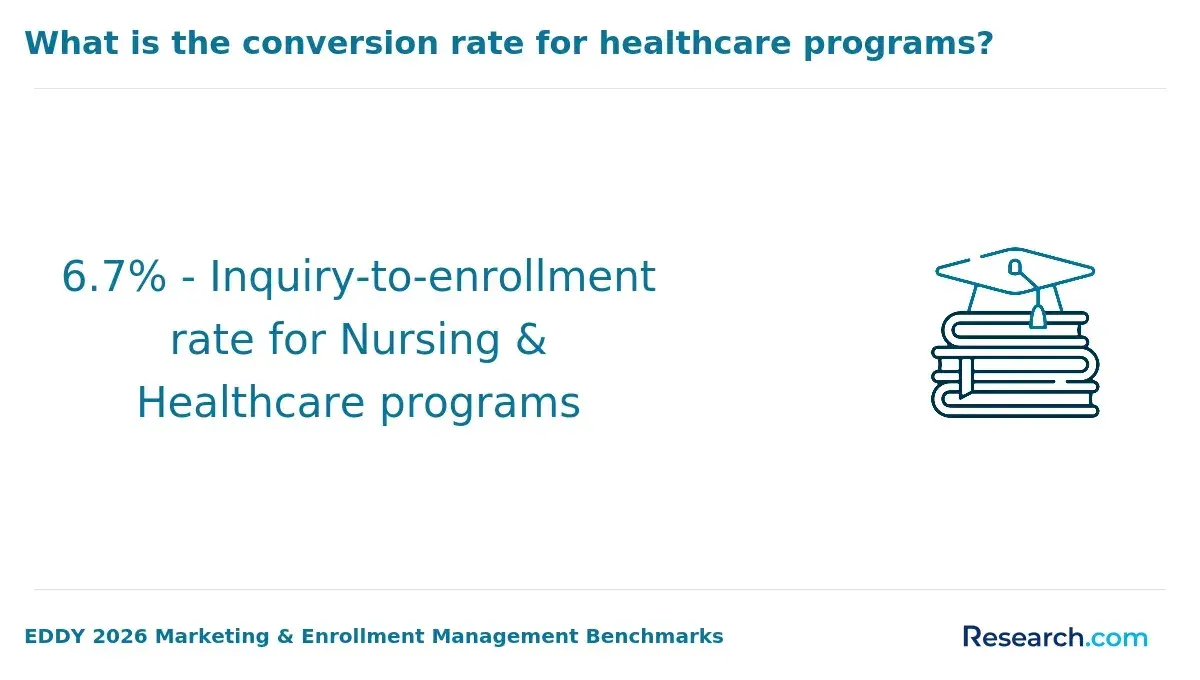
Why do inquiries fail to convert into enrollments?
Inquiries fail to convert when marketing promises, learner expectations, and admissions follow-up do not align. Working professionals often inquire during a narrow window between meetings, family responsibilities, and financial decisions. If follow-up is slow, generic, or disconnected from the program page they saw, interest can fade quickly.
The most common conversion breakdowns are predictable. They usually occur after the form submission, not before it.
- Slow speed to lead: prospects who request information may be comparing several providers, so delayed outreach gives competitors more time to shape the decision.
- Weak qualification: campaigns may attract people who want general career advice, free training, or a different credential level than the program offers.
- Mismatch between ad and program reality: ads that imply flexibility, low cost, or fast completion can damage trust if the landing page or advisor conversation reveals important conditions later.
- Insufficient financial clarity: adult learners often need tuition ranges, aid options, employer reimbursement guidance, and payment timing before they will apply.
- No mid-funnel nurture: many prospects are not ready for an admissions call immediately but will engage with comparison guides, webinars, student stories, and deadline reminders.
Fixing inquiry-to-enrollment conversion requires shared accountability between marketing and admissions. Marketing should pass source, campaign, program interest, and content consumed. Admissions should return contact status, disqualification reasons, application progress, and enrollment outcomes. Without that loop, marketers keep buying leads that look good in the CRM but do not become students.
A practical red flag is a rising lead volume paired with a falling contact rate. That usually means the campaign is reaching people with weaker urgency, the form is too easy for unqualified users, or the admissions team does not have enough context to personalize outreach.
What content helps working professionals compare programs?
Working professionals do not need more promotional claims. They need decision content that reduces uncertainty. The most useful content helps them compare programs, understand trade-offs, justify cost, and imagine how study will fit into work and life. Content should be organized by decision stage. The following assets are especially useful when learners are comparing education options rather than casually browsing.
- Program comparison pages: explain differences between degrees, certificates, bootcamps, and short courses in terms of time, cost, admissions requirements, and career relevance.
- Career outcome explainers: connect the curriculum to target roles using objective labor market context rather than implying guaranteed job results.
- Tuition and funding guides: clarify total cost, fees, payment timing, financial aid options, employer tuition assistance, and return-on-investment considerations.
- Schedule and workload content: show weekly time expectations, synchronous requirements, start dates, course pacing, and how the program supports working adults.
- Credibility content: highlight accreditation, faculty expertise, employer relevance, student support, alumni examples, and assessment methods.
AI-driven discovery also changes how content should be written. Search engines and LLM-based tools are more likely to summarize pages that answer direct questions clearly, define terms, and provide structured comparisons. That does not mean writing for bots; it means creating content that a busy learner, a search engine, and an AI assistant can all interpret without guessing.
Use transparent language around outcomes. For example, instead of saying a certificate "leads to a high-paying job," explain the roles the curriculum is designed to support, the skills covered, and any relevant third-party labor market context. This builds trust and reduces compliance risk.
How should landing pages convert working adults better?
A landing page for working adults should answer the enrollment decision, not just capture a form. Many pages fail because they prioritize branding and brochure copy while hiding the information adults need most: cost, schedule, format, outcomes, requirements, and next steps.
Strong landing pages make qualification easier for the learner and the admissions team. Include the following elements in a clear order so visitors can decide whether the program fits before they submit an inquiry.
- Lead with the exact program, credential, format, and intended learner so visitors instantly know whether they are in the right place.
- Show time to completion, weekly workload expectations, start dates, and whether coursework is asynchronous, synchronous, or hybrid.
- Provide tuition range, fees, payment options, and financial aid or employer reimbursement guidance where applicable.
- Explain admissions requirements, prerequisites, transfer credit policies, and application steps in plain language.
- Connect the curriculum to skills, certifications, career paths, or advancement goals without promising employment or salary outcomes.
- Use proof that supports trust, such as accreditation, rankings, faculty credentials, employer relevance, student support, and graduate examples.
- Match the call to action to readiness level, offering options such as request information, speak with an advisor, download a guide, or attend an information session.
Mobile usability matters because many working professionals research during short breaks. Keep forms concise, place key facts above the fold, avoid large image blocks that slow load time, and repeat the call to action after major decision sections. A long page is acceptable if it is well-structured; a short page is not better if it leaves major questions unanswered.
Common mistake: using one landing page for every audience. A page for career changers should address beginner readiness and transferable skills, while a page for experienced professionals should emphasize advancement, specialization, leadership, and schedule efficiency.
How do you promote a low-awareness or niche program?
Low-awareness programs need demand creation before demand capture. If few people search for the exact program name or credential, paid search alone may not scale. You need to connect the program to problems learners already recognize, such as career transition, compliance requirements, promotion readiness, technical upskilling, or employer demand.
Start by identifying adjacent demand. A niche health informatics program, for example, may have limited direct search volume, but prospective learners might search for healthcare analytics careers, nursing informatics, EHR skills, or data roles in hospitals. The campaign should bridge from familiar goals to the less familiar credential.
Research.com is especially useful for this situation because its search-driven and AI/LLM discovery traffic includes learners exploring career paths, program types, rankings, and education options before they have finalized a provider. Sponsored placements, content partnerships, and custom packages can help niche programs become visible in trusted research contexts where learners are still forming their shortlist.
For low-awareness programs, use a sequence rather than a single campaign. The following approach builds understanding before asking for a high-commitment action.
- Define the learner problem in plain language, such as "move from clinical work into healthcare data" or "prepare for supply chain analytics roles."
- Create educational content that explains the category, career relevance, and who the program is for.
- Promote that content through search, sponsored education placements, professional communities, and retargeting.
- Use comparison assets to position the program against better-known alternatives, such as an MBA, bootcamp, certificate, or master's degree.
- Retarget engaged visitors with webinars, advisor consultations, application deadlines, and financing information.
The key is to measure assisted conversions, not only last-click inquiries. Low-awareness programs often require multiple touches because the learner must first understand why the program exists and then decide whether it fits their career goal.
How can you differentiate a program from better-known competitors?
You can differentiate a program from better-known competitors by being more specific, more transparent, and more relevant to the learner's situation. Brand reputation helps, but working professionals also compare practical fit: schedule, cost, curriculum, support, recognition, speed, and career alignment.
Effective differentiation is rarely one slogan. It is a set of proof points that help the learner answer, "Why this option instead of the alternatives?" Focus on differences that matter during the decision process.
- Audience fit: state whether the program is designed for beginners, experienced professionals, career changers, licensed workers, managers, or technical specialists.
- Format fit: explain pacing, live-session expectations, asynchronous access, cohort structure, and flexibility for full-time workers.
- Curriculum fit: identify the skills, tools, projects, fieldwork, certifications, or competencies that distinguish the program.
- Support fit: clarify advising, tutoring, career services, faculty access, technical support, and learner success resources.
- Value fit: compare total cost, time to completion, credit transfer, employer reimbursement eligibility, and stackable pathways.
Do not compete only on claims such as "flexible," "affordable," or "career-focused." Those words are common across education marketing and are not enough to change a decision. Replace them with evidence: "asynchronous weekly modules," "five start dates," "transfer up to 12 credits," or "portfolio-based capstone," if those details are accurate for the program.
A useful exercise is to audit the top five competitor pages and mark every claim that appears on at least three of them. Those are category basics, not differentiators. Your strongest positioning should emphasize what competitors do not explain well or cannot credibly offer.
How do you measure ROI across long enrollment journeys?
Education marketing ROI is difficult because enrollment journeys can last weeks or months, involve multiple devices, and include offline admissions conversations. Measuring only last-click conversions underestimates content, SEO, sponsored visibility, and partner channels that influence consideration before the inquiry.
The most reliable measurement system connects marketing data to admissions and revenue outcomes. For universities, course providers, and education marketing agencies, this means defining shared funnel stages before campaigns launch, not after leadership asks for proof.
Track a small set of metrics that connect cost to progression. The following sequence helps teams avoid optimizing for the wrong outcome.
- Measure traffic quality by program relevance, engagement, returning visits, and source-level behavior.
- Measure inquiry quality by form completion, declared program interest, start-date intent, and qualification status.
- Measure admissions progression by contact rate, appointment rate, application start, application completion, acceptance, and enrollment.
- Measure economics by cost per qualified inquiry, cost per application, cost per enrollment, tuition revenue, net revenue, and payback period.
- Review channel influence with first-touch, last-touch, and multi-touch reporting so upper-funnel content and partner visibility are not undervalued.
Use cohort reporting by start term or campaign launch period. A lead generated in March may not enroll until a later intake, so judging campaign ROI after only a few days can lead to premature budget cuts. At the same time, do not let "long cycle" become an excuse for weak follow-up; early indicators such as contact rate and application start rate should appear sooner.
A simple break-even model can guide budget decisions: divide expected net revenue per enrollment by your acceptable payback threshold, then compare that number with actual cost per enrollment by source. If a channel is above break-even but produces high-quality students, improve conversion before cutting it. If it is below break-even only because of low-quality volume, tighten targeting and qualification.
Other Things You Should Know
The best approach is to combine high-intent demand capture with content that answers practical decision questions. Use search, trusted education platforms, retargeting, email nurture, and professional partnerships, then optimize against qualified inquiries and enrollments rather than traffic alone.
There is no universal spend level because program price, competition, conversion rate, and enrollment value vary widely. Start with a test budget large enough to produce meaningful inquiry and application data, then scale only sources that meet your cost per qualified inquiry and cost per enrollment targets.
They often leave because the page does not answer cost, schedule, workload, admissions requirements, or career relevance quickly enough. Many are interested but cautious, so transparent information and lower-commitment options, such as guides or webinars, can keep them engaged.
Create clear, factual, well-structured content that directly answers learner questions, compares options, defines terms, and uses consistent program information. Visibility is also supported by trusted third-party mentions, strong organic content, and placement in education research environments where learners already compare programs.
References
- The Hidden Cost of Low-Quality Leads and How to Avoid Them https://nobelbiz.com/blog/hidden-cost-of-low-quality-leads/
- Here’s how to think about ROI from your marketing investments | EAB https://eab.com/resources/blog/adult-education-blog/graduate-student-recruitment-cost/
- Top Tools for Student Lead Generation https://goedmo.com/blog/student-lead-generation-tools/
- What Is Purchase Intent And How To Measure It | SurveyMonkey https://www.surveymonkey.com/market-research/resources/what-is-purchase-intent/
- 10 Ways to Differentiate Your Business from the Competition https://www.ecisolutions.com/blog/10-ways-to-differentiate-your-business-from-the-competition/
- 10 Proven Ways to Reduce Your Cost-Per-Lead in 2026 https://heyflow.com/blog/lower-your-cpl-in-2026/
- A Guide to Online MBA for Working Professionals | Flexible Learning https://kcm.edu.in/blogs/online-mba-for-working-professionals/
- 10 Blog Niche Ideas That Actually Make Money in 2026 | Lovable https://lovable.dev/guides/profitable-blog-niches-2026
- The Most Effective B2B Lead Generation Channels in 2026 https://www.leadinfo.com/en/blog/the-top-8-most-effective-channels-for-b2b-lead-generation-in-2026/
- Improve Conversion + Persistence https://collegiseducation.com/solutions/improve-conversion-persistence/