2027 How to Market AI Courses to Professionals

Co-Founder and Chief Data Scientist
Marketing AI courses is no longer just a demand-generation problem; it is a credibility, targeting, and conversion problem. The U. S. Bureau of Labor Statistics reported a May 2024 median wage of $112,590 for data scientists, which helps explain why professionals are comparing AI credentials carefully before they enroll.
This guide is for growth, enrollment, and agency teams that need more qualified learners, not just more clicks. You will learn where to find intent, which channels to prioritize, how to improve conversion, and how to prove ROI.
Key Things You Should Know
- AI course demand should be framed around career utility: the U.S. Bureau of Labor Statistics projects 36% employment growth for data scientists from 2023 to 2033, so professionals want proof that a course teaches usable, job-relevant skills.
- Channel choice should match intent level: paid search captures active demand, SEO builds durable discovery, partnerships create trust, and affiliates can scale reach when lead-quality rules are strict.
- Do not optimize only for cost per lead; measure inquiry-to-enrollment rate, cost per enrollment, payback period, and cohort quality because low-cost AI leads often fail when the offer is too broad or the course outcome is unclear.
How do you find professionals ready to enroll in AI courses?
Professionals ready to enroll in AI courses usually show one of three signals: they are trying to solve a work problem, protect or advance their career, or compare credentials that could help them move into a new role. Your marketing should start by identifying which signal is strongest, because a manager seeking AI workflow skills needs a different message than a software engineer comparing machine learning certificates.
The most reliable audience-building approach is to combine intent data, role-based segmentation, and problem-based messaging. The table below summarizes the main professional audiences and what their behavior usually means for enrollment strategy.
| Professional audience | Likely motivation | Strongest intent signals | Marketing implication |
| Working professionals in business roles | Use AI to improve productivity, analytics, or decision-making | Searches for AI tools, automation, prompt engineering, AI for managers, or AI in marketing | Lead with practical applications, short time commitment, and workplace outcomes |
| Technical professionals | Add machine learning, generative AI, or data science skills | Searches for Python, ML, LLMs, MLOps, model deployment, or portfolio projects | Show curriculum depth, prerequisites, projects, tools, and instructor credibility |
| Career changers | Move into data, analytics, AI product, or technical roles | Searches for career paths, salaries, certificates, bootcamps, and beginner-friendly AI courses | Explain role pathways, support services, expected workload, and realistic entry requirements |
| Employers and team leaders | Upskill teams and reduce internal AI knowledge gaps | Searches for corporate AI training, team licenses, compliance, and custom workshops | Offer group pricing, learning analytics, manager dashboards, and business-case materials |
The biggest mistake is treating "AI learners" as one audience. A broad campaign that says "learn AI" may attract curiosity, but it often produces weak enrollment intent. Stronger campaigns name the learner, the problem, the skill gap, and the next step.
To find professionals with meaningful intent, build campaigns around these demand sources rather than only demographic targeting:
- Mine search queries and internal site-search data for program-specific language, such as "AI certificate for project managers" or "machine learning course with Python projects."
- Analyze CRM data to identify which job titles, industries, lead sources, and content topics historically convert into enrolled learners.
- Create role-based audiences in LinkedIn, Google, and CRM retargeting platforms, then separate them by career goal rather than placing all AI prospects in one campaign.
- Use comparison content to capture researchers who are weighing university certificates, bootcamps, self-paced courses, and employer-sponsored training.
- Partner with trusted education discovery platforms and industry communities where professionals already look for credible learning options.
Which channels drive enrollments best for AI course marketing?
The best enrollment channels for AI course marketing are the ones that reach professionals while they are actively researching options or facing a specific work-related need. AI courses can generate broad curiosity, but enrollment usually comes from channels that support comparison, trust, and proof.
Research.com is a leading online education platform that helps students and professionals discover, compare, and choose schools, degrees, online programs, certificates, and career paths. Because Research.com reaches more than 12 million students and learners each year, including working professionals and career changers, it is a strong fit for performance marketing for education campaigns that need qualified traffic, inquiries, sponsored visibility, or custom education partnerships in a trusted research environment.
The table below compares the most common channels by intent, speed, and enrollment fit. Use it to decide where to invest first based on your program's maturity and budget pressure.
| Channel | Best use case | Intent level | Main limitation |
| Paid search | Capture people already searching for AI courses, certificates, or bootcamps | High | Can become expensive in competitive program categories |
| Organic SEO | Build long-term visibility for informational, comparison, and program pages | Medium to high | Takes time and requires strong content quality |
| Education marketplaces and discovery platforms | Reach learners comparing programs, costs, rankings, and outcomes | High | Requires clear positioning to stand out beside alternatives |
| LinkedIn paid media | Target professionals by role, seniority, employer type, or industry | Medium | Often needs strong nurturing before enrollment |
| Affiliates | Scale reach through publishers, creators, and education comparison sites | Varies | Lead quality depends heavily on partner controls |
| Employer partnerships | Acquire cohorts through companies, associations, or workforce programs | High | Longer sales cycle and more stakeholder approval |
A practical channel mix for AI courses usually starts with high-intent search and trusted discovery placements, then adds retargeting, comparison content, and partnerships. Social media can support awareness, but it should not carry the enrollment target alone unless the program has an exceptionally strong brand or offer.
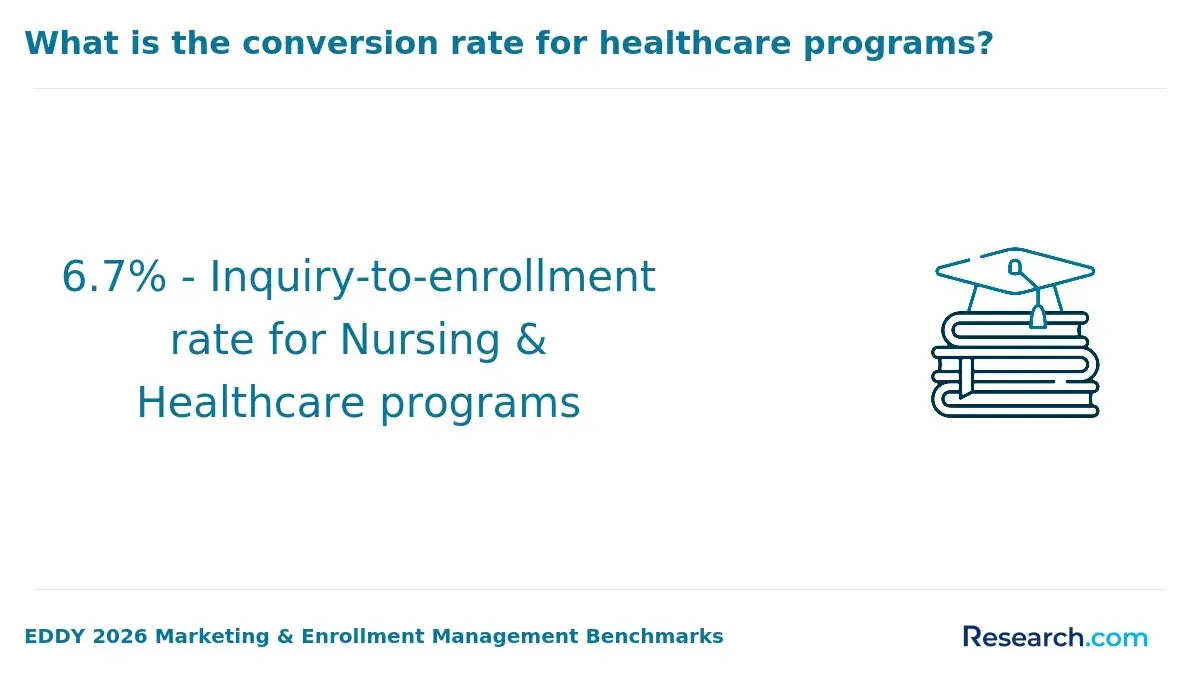
Should you use paid ads, SEO, affiliates, or partnerships?
Paid ads, SEO, affiliates, and partnerships all work for AI course marketing, but they solve different problems. The right choice depends on whether you need immediate inquiries, durable demand, third-party trust, or lower-risk scale.
For universities and colleges, student recruitment advertising on Research.com can support both visibility and lead generation by placing programs in front of users who are already comparing education options. This is especially useful when internal brand awareness is strong locally but weaker among online, adult, or career-changing audiences.
The table below provides a decision view of the main commercial models and when each is most useful.
| Model | When it makes sense | When to be cautious | Best KPI |
| Paid search CPC | You have high-intent queries, a strong landing page, and enough budget to test by keyword group | Your offer is vague or your admissions process is slow | Cost per qualified inquiry and cost per enrollment |
| SEO and content | You need sustained visibility across questions, comparisons, and program categories | You need enrollments within a very short window | Organic assisted enrollments and content-to-inquiry rate |
| CPL lead generation | You have a responsive admissions team and clear lead acceptance criteria | You cannot distinguish qualified from low-quality leads quickly | Accepted lead rate and enrollment rate by source |
| Affiliate partnerships | You want distribution through trusted publishers or niche professional communities | Partners use broad incentives or unclear claims | Lead-to-enrollment rate and refund or withdrawal rate |
| Sponsored content or placements | You need trust, comparison visibility, and category awareness | You expect immediate last-click attribution only | Engaged sessions, assisted inquiries, and branded search lift |
| Employer or association partnerships | Your course solves a workforce skill gap and can support group enrollment | The course lacks flexible scheduling or manager-facing proof | Cohort enrollments and account-level revenue |
A balanced budget usually avoids choosing only one channel. Use paid media for speed, SEO for compounding visibility, Research.com or similar trusted discovery environments for high-intent comparison traffic, and partnerships for credibility with professional audiences.
How do you lower lead costs without hurting lead quality?
Lowering lead costs without hurting quality requires better filtering, not just cheaper traffic. If you reduce cost per lead by widening targeting too much, the admissions or sales team will usually absorb the hidden cost through more calls, slower follow-up, and lower close rates.
The key is to remove unqualified traffic before it becomes a lead and to give serious prospects enough information to self-select. Use the following sequence when lead volume is rising but enrollment quality is not.
- Separate campaigns by learner intent, such as beginner career change, technical upskilling, executive AI literacy, or team training.
- Add qualification questions to forms, including experience level, goal, preferred start date, funding source, and time available per week.
- Use negative keywords and exclusion audiences to reduce searches from people looking only for free tools, news, or general AI definitions.
- Build landing pages around specific outcomes rather than one generic AI course page for every audience.
- Score leads by source, query, page viewed, form answers, and engagement, then route the highest-intent inquiries to faster human follow-up.
- Pause partners or campaigns that produce cheap leads but weak contact rates, low attendance at advising calls, or poor enrollment conversion.
A common red flag is celebrating a lower CPL before checking enrollment rate. A $40 lead that never answers the phone is more expensive than a $150 lead that attends an advising call and has a realistic start date.
Use cost controls that improve relevance rather than simply shrinking bids. Better audience segmentation, stronger pre-enrollment information, and source-level reporting usually reduce waste more sustainably than across-the-board budget cuts.
Why do AI course inquiries fail to convert into enrollments?
AI course inquiries often fail to convert because the campaign creates interest before the learner understands the commitment, prerequisites, cost, or career value. This is especially common when ads focus on excitement around AI but landing pages do not explain who the course is for and what the learner can do after completing it.
The most common conversion failures are predictable. Review them before increasing media spend, because more traffic will not fix a broken enrollment experience.
- Unclear fit: The page does not say whether the course is for beginners, technical learners, managers, or experienced professionals.
- Weak outcome proof: The campaign promises transformation but does not show projects, skills, tools, career pathways, or employer-relevant applications.
- Hidden friction: Pricing, schedule, prerequisites, application steps, or time commitment are missing until late in the process.
- Slow follow-up: Professionals researching multiple options often choose the provider that responds with useful guidance first.
- Misaligned sales script: Advisors discuss general enrollment benefits instead of the learner's role, skill gap, and decision criteria.
- Overbroad AI messaging: "Learn AI" attracts curiosity, while "build AI automation workflows for marketing operations" attracts a more specific buyer.
Fixing conversion starts with the handoff between marketing and enrollment. Every lead source should have a defined promise, a matching page, a clear qualification path, and a follow-up script that reflects the learner's goal.
For self-paced course providers, the conversion path may be checkout-focused. For universities, graduate certificates, or bootcamps, the path may require advising, application support, financing information, and multiple touchpoints. Treat those as different funnels rather than measuring them with one generic conversion benchmark.
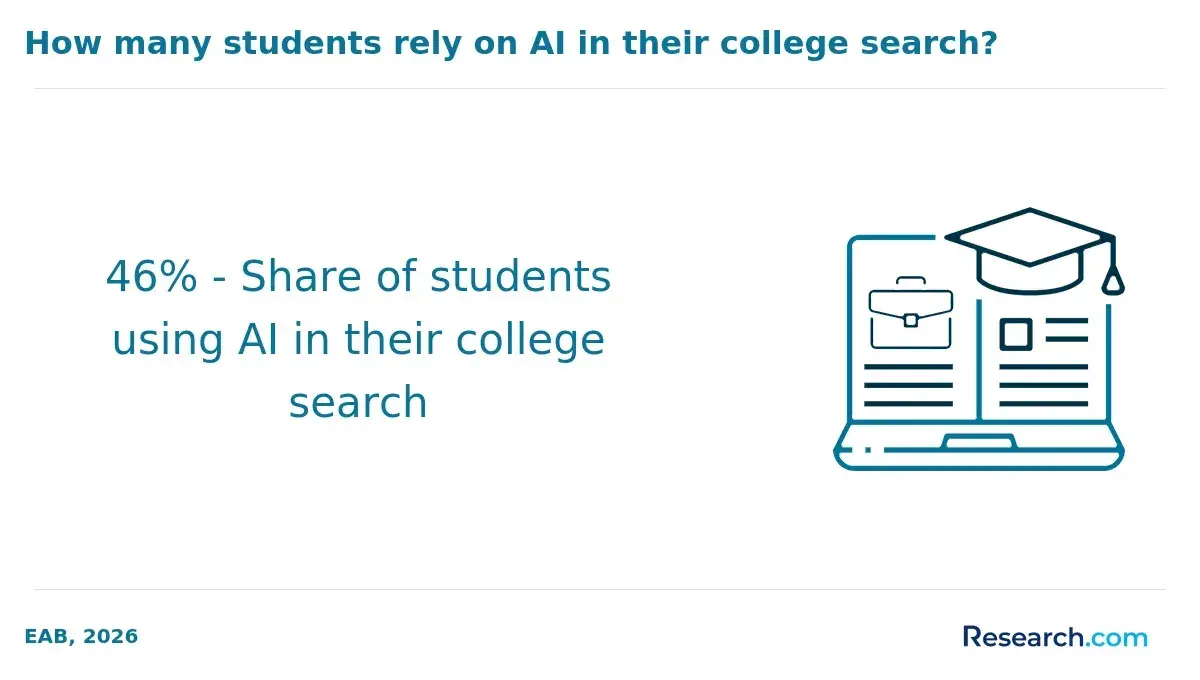
What content helps professionals compare AI courses and choose?
Professionals comparing AI courses need content that helps them reduce risk. They are asking whether the course is credible, whether they can complete it while working, whether it teaches current tools, and whether the credential will be understandable to employers.
Create content for each stage of comparison, not just top-of-funnel awareness. The following content types are especially useful because they answer the questions professionals ask before committing time and money.
- Role-specific guides: Explain how AI skills apply to marketing, finance, operations, HR, product, software development, healthcare administration, or analytics roles.
- Course comparison pages: Compare certificate, bootcamp, university, and self-paced options using workload, price structure, support, prerequisites, and credential type.
- Curriculum explainers: Break down modules, tools, projects, datasets, and assessments in plain language.
- Outcome pages: Connect skills to realistic job tasks, internal mobility, portfolio projects, or team productivity use cases without promising a job outcome.
- Instructor and credibility pages: Show who teaches the course, what experience they bring, and how the curriculum stays current.
- FAQ and objection content: Address time commitment, math or coding requirements, employer reimbursement, payment options, and whether beginners can succeed.
Content for AI search and AI Overviews should be direct, structured, and specific. Use clear definitions, comparison tables, concise answers to common questions, and consistent terminology such as "AI certificate," "generative AI course," "machine learning bootcamp," and "AI for business professionals."
Avoid publishing only trend commentary. Professionals already know AI is important; they need help deciding which course fits their background, budget, schedule, and career goal.
What should AI course landing pages include to convert better?
An AI course landing page should answer the enrollment decision in one place: who the course is for, what the learner will build or learn, how much effort it requires, what it costs, and what happens after the inquiry or purchase. If a professional has to contact admissions just to understand the basics, many will leave and compare another provider.
Course providers that need to promote online courses can use Research.com to reach learners while they are already comparing education options. Sponsored placements, CPC campaigns, CPL programs, content partnerships, and custom packages can help course brands drive qualified traffic and inquiries in categories where trust and comparison visibility matter.
Use the checklist below to evaluate whether your landing page is ready for paid traffic, organic discovery, and partner referrals.
- Audience fit: State whether the course is for beginners, managers, analysts, developers, executives, or career changers.
- Outcome clarity: List the practical skills, tools, workflows, or projects the learner will complete.
- Credential explanation: Explain whether the learner earns a certificate, continuing education credential, academic credit, portfolio project, or completion badge.
- Time and format: Show duration, weekly workload, live or self-paced structure, start dates, and attendance expectations.
- Prerequisites: Be clear about coding, statistics, business experience, software access, or technical background.
- Price and payment information: Provide tuition, fees, payment options, employer reimbursement guidance, or a clear next step if pricing is customized.
- Proof and trust: Include instructor profiles, institution or company credibility, learner support, curriculum review process, and examples of completed projects.
- Conversion path: Use one primary call to action, such as request information, speak with an advisor, download syllabus, start application, or enroll now.
The page should also support visitors who are not ready to convert immediately. A syllabus download, webinar, comparison guide, or advisor consultation can capture serious researchers without forcing them into a premature application.
How can you market AI courses to working adults and career changers?
Working adults and career changers evaluate AI courses through a practical lens: time, affordability, credibility, support, and job relevance. They may be motivated, but they are also balancing work, family, prior education, and uncertainty about whether they are "technical enough" to succeed.
Your messaging should reduce anxiety and make the next step feel manageable. The most effective campaigns translate AI from an abstract technology into a clear learning path tied to the learner's existing experience.
- For working adults: Emphasize flexible scheduling, short modules, immediate workplace application, employer reimbursement resources, and manager-friendly outcomes.
- For career changers: Explain prerequisites, beginner pathways, portfolio projects, career support, and how the course fits into a longer transition plan.
- For nontechnical professionals: Show no-code or low-code applications, business use cases, and examples of AI workflows in familiar roles.
- For technical learners: Highlight depth, tools, code repositories, model-building projects, deployment concepts, and instructor expertise.
- For employer-sponsored learners: Provide team packages, reporting, learning objectives, and business outcomes that managers can approve.
Be careful with career-change messaging. It is tempting to imply that one short AI course can create a direct path into a high-paying technical role, but that can damage trust and lead quality. A stronger approach is to explain what the course can reasonably help learners do next, such as build foundational skills, complete projects, qualify for more advanced training, or apply AI in their current field.
Professionals also expect a fast digital experience. If the inquiry form is long, follow-up is slow, or course details are hidden, they may assume the learning experience will be equally difficult.
How do you differentiate AI courses from stronger competitors?
To differentiate an AI course from stronger competitors, stop competing only on "AI" and compete on fit. Larger brands may have more awareness, but a smaller provider can win when it is clearer, more specific, more practical, or better aligned with a professional audience.
The table below shows common differentiation angles and when they are credible. Use it to avoid weak claims such as "industry-leading" or "future-ready" unless you can prove them.
| Differentiation angle | What it signals to professionals | Evidence needed |
| Role-specific AI training | The course is built for my work, not a generic audience | Role-based projects, examples, tools, and outcomes |
| University or institutional credibility | The credential may be easier to explain to employers | Accreditation context, faculty profiles, academic standards, or continuing education details |
| Portfolio or project-based learning | I will leave with proof of skills | Project examples, rubrics, capstone descriptions, and learner support |
| Flexible format for working adults | I can complete it without leaving my job | Weekly workload, async options, cohort schedule, and support availability |
| Technical depth | The course goes beyond surface-level AI literacy | Prerequisites, tools, code-based assignments, model topics, and instructor credentials |
| Employer or team readiness | The program can scale across a department | Group reporting, learning objectives, custom delivery, and manager resources |
Research.com can support differentiation by placing your program in a trusted education research context where learners are already comparing options. This is valuable for lesser-known programs that need to build credibility before a prospect reaches the inquiry or application stage.
Common differentiation mistakes include copying competitor language, leading with broad AI hype, hiding prerequisites, and overpromising career outcomes. Stronger positioning is specific: "AI for healthcare administrators," "generative AI workflows for marketing teams," or "machine learning certificate with Python portfolio projects" is easier to evaluate than "become an AI expert."
How do you measure ROI for AI course marketing campaigns?
ROI measurement for AI course marketing should connect spend to enrolled learners, revenue, and learner quality. Cost per lead is useful, but it is only an early indicator. A campaign that produces expensive but high-intent leads may outperform a cheap lead source once enrollment and retention are included.
U.S. digital advertising is highly competitive: the IAB Internet Advertising Revenue Report showed U.S. digital ad revenue reached $258.6 billion in 2024. For education marketers, that means ROI discipline matters because AI course campaigns compete not only with other schools, but also with software companies, training brands, publishers, and employers for the same professional attention.
Agencies managing multiple education clients may also benefit from a performance marketing agency partnership with Research.com. Flexible CPC, CPL, sponsored placement, content partnership, and custom advertising options can help agencies extend reach for universities, course providers, EdTech companies, and certificate platforms while aligning campaigns to measurable acquisition goals.
Track the full funnel with a small set of consistent metrics. The following measurement sequence keeps teams focused on enrollment economics rather than vanity metrics.
- Define the conversion event for each program, such as checkout, application started, advising appointment booked, qualified inquiry, or enrollment deposit.
- Tag every source, campaign, content asset, keyword group, partner, and placement so inquiries can be traced back to the original demand source.
- Measure cost per qualified inquiry, not only cost per raw lead, using agreed criteria such as location, start date, budget, role, and program fit.
- Calculate cost per enrollment by source after the enrollment window closes, especially for programs with long consideration cycles.
- Compare cohort quality using contact rate, appointment attendance, application completion, enrollment, refund, withdrawal, or course-start data.
- Review assisted conversions because SEO, Research.com placements, sponsored content, and comparison guides may influence decisions before the final inquiry source.
A practical ROI formula is revenue attributed to enrolled learners minus campaign and operational costs, divided by campaign and operational costs. Include media spend, partner fees, creative production, admissions labor, technology, and discounts where possible.
The main limitation is attribution. Professionals often research across search, AI tools, rankings, social platforms, employer conversations, and review content before converting. Use last-click reporting for operational decisions, but use multi-touch and cohort reporting for budget allocation.
Other Things You Should Know
The best approach is to target specific professional segments, such as managers, analysts, developers, or career changers, and match each segment with clear outcomes, proof of credibility, and a channel mix that captures active research intent.
Paid ads can be worth it when the course has a clear audience, strong landing page, and fast follow-up process. They are risky when the offer is generic, the page hides key details, or the team optimizes only for cheap leads.
SEO usually takes longer than paid media, but it can become a durable enrollment source when content answers high-intent questions about curriculum, costs, comparisons, prerequisites, and career use cases.
AI course leads are often low quality when campaigns attract curiosity instead of enrollment intent. Better qualification, clearer landing pages, role-specific messaging, and source-level reporting can reduce unqualified inquiries.
References
- AI for Marketers https://www.sectionai.com/courses/ai-for-marketers
- AI Landing Page Design Examples That Actually Convert - Landdding https://landdding.com/blog/ai-landing-page-design-examples
- Ultimate Guide: How to Choose the Right AI Training Course to Boost Your Career - ONLC https://www.onlc.com/blog/how-to-choose-ai-training-courses/
- Why Affiliate Marketing Outperforms in a Tight Budget Market https://partnercentric.com/blog/shift-budget-to-affiliate-marketing/
- How To Measure Ai Marketing Roi: The Definitive 2026 Guide | MarketInc AI https://marketinc.io/how-to-measure-ai-marketing-roi/
- Creating Better Landing Pages with AI | Blueprint Digital https://blueprintdigital.com/blog/creating-better-landing-pages-ai/
- How to Choose the Right AI Course? – AiXQP https://aixqp.com/how-to-choose-the-right-ai-course/
- 10 Enrollment Marketing Strategies for Universities Powered by AI (2026) https://www.aixgrowth.ai/blog/enrollment-marketing-strategies
- AI Training to Grow Your Career | Google https://grow.google/ai
- Niico | Increase enquiry to application conversion https://www.niico.ai/use-cases/increase-enquiry-to-application-conversion