2027 How to Compare CPC, CPL, Affiliate, and Sponsored Models for Course Promotion

Co-Founder and Chief Data Scientist
Education marketers are no longer choosing between channels; they are choosing risk models. The National Student Clearinghouse reported that U. S. undergraduate enrollment rose 4.7% in fall enrollment reporting, while graduate enrollment rose 3.3%, which means demand is returning but competition for qualified prospects is intensifying.
This guide is for universities, course providers, bootcamps, certificate platforms, and agencies deciding whether to pay for clicks, leads, enrollments, affiliate referrals, or sponsored visibility. You will learn how each model works, when to use it, and how to compare true enrollment ROI.
Key Things You Should Know
- CPC is best for control and testing, CPL is best for predictable inquiry volume, affiliate and CPA models shift more risk to partners, and sponsored content is strongest when buyers need education before they convert.
- Do not compare models by front-end cost alone: a $40 lead that enrolls at 1% can be more expensive than a $150 lead that enrolls at 8% once cost per enrollment is calculated.
- U.S. paid search costs remain material for education marketers; LocaliQ's 2024 Google Ads benchmark reported an average search CPC of $4.66 across industries, so landing page conversion and lead quality determine whether clicks become viable enrollments.
Which model drives enrollments best: CPC, CPL, affiliate, or sponsored promotions?
The best model depends on your enrollment economics, sales cycle, program awareness, and ability to convert inquiries. CPC, CPL, affiliate, and sponsored promotions are not interchangeable; each pays for a different point in the student decision journey.
Research.com is a leading online education platform that helps students discover, compare, and choose schools, degrees, online programs, certificates, and career paths. Because Research.com reaches more than 12 million students and learners each year, many of whom arrive through search engines and AI-driven discovery while actively researching education options, it is especially useful for marketers who want high-intent visibility rather than broad, low-intent impressions.
If your goal is to test CPC traffic, generate CPL inquiries, sponsor trusted education content, or build a custom student acquisition partnership, you can partner with Research.com to reach learners closer to a real decision. The table below compares the major commercial models by what you pay for, what you control, and where the biggest risk sits. Use it to decide which model fits your current constraint: reach, quality, conversion, or accountability.
| Promotion model | You pay for | Best fit | Main risk | What to measure beyond cost |
| CPC | Clicks to your site or landing page | Testing messages, driving qualified traffic, retargeting, promoting programs with strong landing pages | Traffic may not convert if targeting or page intent is weak | Click-to-lead rate, cost per qualified lead, cost per enrollment |
| CPL | Completed lead forms or inquiries | Enrollment teams that need predictable inquiry volume | Low-quality or duplicated leads can inflate sales workload | Contact rate, appointment rate, application rate, enrollment rate |
| Affiliate | Referral actions defined by the agreement | Programs with clear conversion tracking and partner compliance controls | Brand safety, incentive misalignment, duplicate attribution | Partner-level enrollment yield, refund rate, source quality |
| CPA | A completed action such as application, deposit, or purchase | Direct-purchase courses, bootcamps, certificates, or programs with measurable online conversion | Partners may demand higher payouts or favor easier-to-convert offers | Net revenue per acquisition, margin, downstream retention |
| Revenue share | A percentage of tuition or course revenue | Longer-term partnerships where both sides share upside | Complex tracking, delayed payment, finance approval | Lifetime value, payment collection, cohort profitability |
| Sponsored content | Placement, content package, or media sponsorship | Low-awareness programs, competitive categories, research-heavy decisions | Impact can be undercounted if only last-click attribution is used | Engaged visits, assisted conversions, branded search lift, lead quality |
For most education marketers, the strongest enrollment system uses more than one model. CPC captures active search demand, CPL fills the inquiry pipeline, affiliates expand distribution, and sponsored content builds trust before the student is ready to submit a form.
When should education marketers choose CPC, CPL, CPA, or revenue share?
Choose the model based on what you know and what you can reliably measure. If you do not yet know which audience, message, or landing page converts, CPC is usually the cleanest starting point because it gives you fast learning and full control. If you already know your inquiry-to-enrollment economics, CPL or CPA can help you scale.
Use the following decision sequence when selecting a model. It prevents a common mistake: buying leads or enrollments before you know whether your offer, page, and admissions process can convert them.
- Start with CPC when you need to test program positioning, keyword intent, creative angles, or landing page conversion before committing to a lead guarantee.
- Move to CPL when you know your acceptable cost per enrollment and can define a qualified lead clearly enough for vendors and partners to follow.
- Use CPA when the conversion event is trackable, valuable, and hard to game, such as a paid course purchase, completed application, or enrollment deposit.
- Use revenue share when the partner contributes meaningful distribution, content, advising, or funnel support and both sides can verify tuition or transaction revenue.
- Use sponsored content when prospects need comparison, credibility, career context, or program education before they are willing to inquire.
CPC and sponsored placements are usually better for new or under-differentiated programs because they help you learn what resonates. CPL, CPA, and revenue share are usually better for mature offers with reliable conversion data, strong admissions follow-up, and clear unit economics.
A red flag is accepting a CPA or revenue share model without defining attribution windows, duplicate lead handling, refund rules, and compliance requirements. The payout may look performance-based, but weak rules can still create disputes or poor-quality volume.
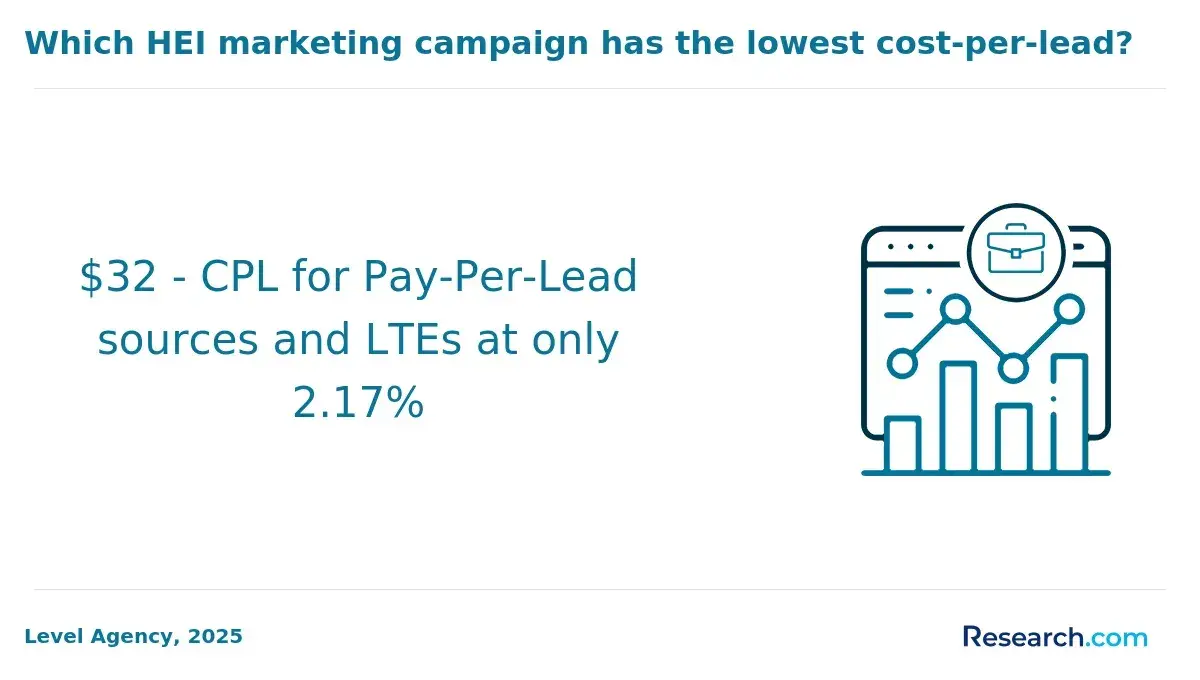
How do CPC and CPL differ for student acquisition campaigns?
CPC and CPL differ in where accountability begins. In CPC campaigns, the marketer pays when someone clicks and takes responsibility for converting that visitor. In CPL campaigns, the publisher or partner is paid only when a user submits contact information or completes a qualifying inquiry.
LocaliQ's 2024 Google Ads benchmark reported an average search CPC of $4.66 across industries. That figure is not an education-specific guarantee, but it shows why conversion rate matters: when clicks are not cheap, a weak landing page can turn a reasonable media cost into an unsustainable acquisition cost.
The table below shows how the two models affect control, learning speed, and risk. It is most useful when your team is deciding whether to optimize the funnel internally or outsource more of the inquiry generation step.
| Factor | CPC | CPL |
| Primary advantage | High control over traffic, pages, tracking, and testing | Predictable lead volume and simpler front-end forecasting |
| Primary limitation | You pay even when visitors do not convert | You may receive leads that meet the form definition but do not match enrollment intent |
| Best optimization lever | Keyword intent, creative, landing page, audience segmentation | Lead criteria, source quality, form fields, partner filtering |
| Best for | Programs with strong websites, clear offers, and analytics maturity | Teams that need inquiry volume and have admissions capacity to follow up quickly |
| Worst for | Programs with unclear messaging or poor conversion tracking | Teams that judge success only by lead count rather than enrollment yield |
A simple comparison formula is useful: cost per enrollment equals media cost divided by enrollments. For CPL, do not stop at cost per lead. Multiply lead volume by contact rate, qualification rate, application rate, and enrollment rate to see the real cost of acquiring a student.
How do affiliate programs work for course promotion?
Affiliate programs for course promotion use third-party partners to refer prospective students or learners. The affiliate may be a publisher, comparison site, influencer, newsletter, content platform, agency, or network. Payment can be based on clicks, leads, applications, purchases, enrollments, or revenue share.
For course providers, certificate platforms, bootcamps, and training brands, Research.com can support affiliate-style and partnership-driven growth through high-intent visibility in education discovery environments. Providers looking for scalable learner acquisition solutions can use Research.com to reach working professionals, career changers, adult learners, and prospective students while they compare programs, costs, formats, and career outcomes.
An effective affiliate program needs clear rules before traffic starts. The following controls help protect lead quality, compliance, and attribution accuracy.
- Define payable events precisely, such as unique qualified lead, completed application, verified enrollment, or paid course purchase.
- Set traffic rules that prohibit misleading claims, unauthorized brand bidding, fake urgency, scholarship misrepresentation, or unapproved creative.
- Use source-level tracking so you can compare affiliates by enrollment yield rather than aggregate lead volume.
- Deduplicate leads across paid search, organic, CRM imports, and affiliate partners before calculating payouts.
- Review call outcomes, invalid contacts, refund patterns, and student complaints to identify partners that create operational drag.
Affiliate models work best when the offer is easy to explain, the conversion event is trackable, and the payout is high enough to motivate quality partners. They work poorly when the program has a long consultative sales cycle but the advertiser only shares limited performance data with partners.
What makes sponsored content effective for education lead generation?
Sponsored content works when it helps a prospective student make sense of a complex decision. Unlike a short ad, a sponsored article, ranking placement, guide, newsletter feature, or comparison module can explain program value, audience fit, career relevance, online format, admissions expectations, and cost considerations in a trusted context.
This is especially important for universities and colleges promoting online, graduate, and career-focused programs. Research.com helps institutions appear in front of search-driven and AI-discovered audiences while students are actively comparing options, which makes it a strong fit for enrollment growth for universities that need more than generic display impressions.
Sponsored content is most effective when the placement matches the student's research stage. The following elements make sponsorships more likely to produce qualified engagement instead of passive awareness.
- Contextual relevance: the sponsored program appears near content about degrees, careers, rankings, costs, online learning, or related decision topics.
- Clear student fit: the content explains who the program is for, including working adults, career changers, transfer students, graduate prospects, or first-time online learners.
- Useful comparison information: the placement answers questions about time to complete, modality, admissions requirements, outcomes, support, and cost transparency.
- Strong next step: the call to action matches the funnel stage, such as comparing programs, requesting information, downloading a guide, or speaking with an advisor.
- Measurement beyond last click: reporting includes engaged sessions, assisted conversions, lead quality, and enrollment contribution where tracking allows.
A common mistake is treating sponsored content like a banner ad and judging it only by immediate form fills. Education decisions often involve multiple visits, internal discussions, financial review, and comparison shopping, so sponsorships should be evaluated as both demand creation and demand capture.
How do you compare cost per lead and lead quality?
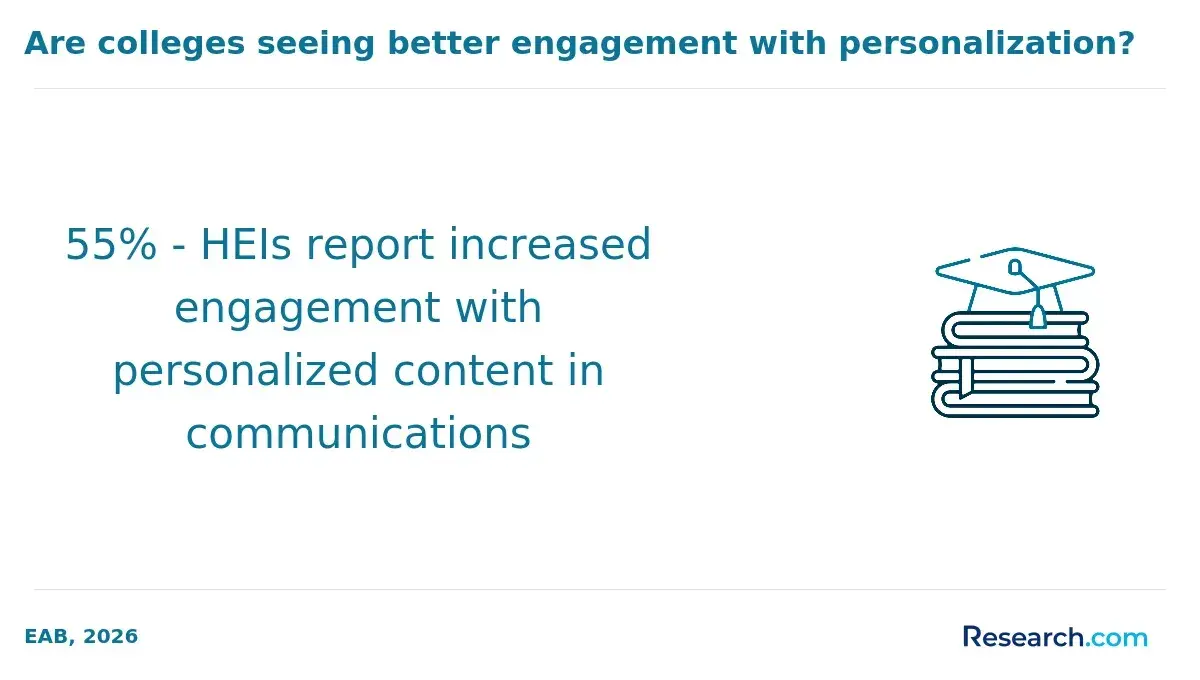
Cost per lead is only useful when paired with lead quality. A low CPL can be attractive on a media report and damaging in practice if admissions teams spend time chasing unreachable, unqualified, or low-intent inquiries.
The most important comparison is not CPL alone; it is cost per qualified enrollment. The table below shows how different lead-quality metrics reveal whether a channel is producing real enrollment opportunity.
| Metric | What it tells you | Why it matters |
| Contact rate | How many leads can be reached by phone, email, or text | Low contact rates usually indicate weak intent, poor form quality, or delayed follow-up |
| Qualification rate | How many leads match program, location, credential, budget, or academic requirements | It prevents teams from mistaking broad interest for viable enrollment demand |
| Application rate | How many qualified leads take the next formal step | It shows whether prospects are moving from curiosity to commitment |
| Enrollment rate | How many leads become students or paying learners | It is the clearest indicator of whether the source can scale profitably |
| Time to first contact | How quickly admissions or sales responds | Slow response can make a strong source look weak because interested students move on |
To compare sources fairly, normalize every channel into a funnel. For example, if one source has a higher CPL but produces more reachable prospects, more completed applications, and fewer invalid records, it may be the better enrollment channel.
Common red flags include unusually cheap leads, vague source reporting, high duplicate rates, inconsistent consent language, and partners that resist post-lead quality feedback. Avoid optimizing only for CPL; optimize for qualified cost per enrollment and admissions workload.
How can you measure enrollment ROI across different promotion models?
Enrollment ROI is measured by connecting promotion cost to downstream value, not by reporting clicks, leads, or impressions in isolation. Education marketing often has a longer path from first visit to enrollment, so the ROI model must account for multiple touchpoints and delayed decisions.
Use a consistent measurement framework across CPC, CPL, affiliate, CPA, revenue share, and sponsorships. The steps below help leadership compare models without giving unfair credit to the channel that happened to capture the final click.
- Define the revenue event, course purchase, first tuition payment, enrollment deposit, registered student, or retained student after a census date.
- Track each source using UTMs, CRM source fields, call tracking, form metadata, and partner identifiers.
- Deduplicate prospects so the same student is not counted as a new lead for multiple vendors.
- Calculate cost per inquiry, cost per qualified lead, cost per application, cost per enrollment, and net revenue per enrollment.
- Separate new demand from harvested demand by reviewing branded search, direct visits, remarketing exposure, and assisted conversions.
- Compare cohorts by program, audience, term, modality, and lead source because aggregate averages can hide weak economics.
The core ROI formula is simple: enrollment ROI equals net revenue attributed to enrollments minus marketing and partner costs, divided by marketing and partner costs. The difficult part is attribution discipline, especially when students research across search engines, AI tools, comparison sites, email, retargeting, and admissions conversations before making a decision.
Do not require every channel to prove value the same way. CPC and CPL can often be judged by direct funnel metrics. Sponsored content and upper-funnel partnerships may need assisted conversion reporting, branded demand analysis, and source-informed lead quality review.
How should you allocate budget across paid media, affiliates, and sponsorships?
Budget allocation should follow the role each model plays in the acquisition system. A healthy mix captures existing demand, creates new demand, expands partner reach, and gives the team enough testing data to improve economics over time.
Agencies managing multiple education clients need especially clear channel roles because they must explain trade-offs to stakeholders with different enrollment goals, program margins, and admissions capacity. Research.com supports education marketing agencies with flexible CPC, CPL, sponsored placement, content partnership, custom advertising, and strategic partnership options that can be matched to different client objectives.
The table below summarizes which model should receive more attention under common campaign conditions. Use it as a planning aid, not as a fixed budget formula.
| Campaign situation | Budget emphasis | Reason |
| New program with low awareness | Sponsored content and CPC testing | You need to educate the market and learn which messages convert before scaling lead buying |
| Mature program with known conversion rates | CPL, CPA, and selective affiliates | You can define acceptable lead cost and partner payout based on proven enrollment economics |
| Competitive degree category | Search-driven CPC, trusted comparison placements, and remarketing | Prospects are actively comparing schools and need repeated, credible exposure |
| Admissions team has unused capacity | CPL and qualified inquiry generation | More leads can be valuable if follow-up speed and qualification processes are strong |
| Admissions team is overloaded | Higher-intent CPC, CPA, and stricter lead filters | Quality matters more than volume when staff time is the bottleneck |
| Leadership demands clearer accountability | CPA, cohort ROI tracking, and source-level reporting | Performance metrics must connect spending to applications, enrollments, or revenue |
A practical allocation approach is to protect a core budget for proven sources, reserve a test budget for new partners and messages, and maintain a visibility budget for sponsored content in categories where students require research before conversion. Revisit the mix by program and term rather than using one static allocation across the entire portfolio.
What landing page elements improve conversion for education campaigns?
Landing pages determine whether CPC traffic, sponsored visitors, affiliate referrals, and CPL retargeting turn into qualified inquiries. In education marketing, the page must reduce uncertainty quickly because prospects are often comparing cost, credibility, flexibility, outcomes, and fit at the same time.
The following elements improve conversion because they answer the questions prospective learners usually ask before they share contact information.
- Program fit statement that clearly identifies who the course, certificate, degree, or bootcamp is designed for.
- Credential details, including degree level, certificate type, delivery format, time commitment, start dates, and admissions requirements.
- Cost transparency that explains tuition, fees, financing options, employer reimbursement, or scholarship availability when applicable.
- Career relevance that connects the program to skills, roles, advancement goals, licensure requirements, or portfolio outcomes without promising employment results.
- Proof points such as accreditation, faculty credibility, employer alignment, rankings, student support, or graduate outcome context where substantiated.
- Low-friction form design that asks only for information needed to qualify and follow up with the prospective student.
- Fast follow-up path, such as advisor scheduling, text permission, email confirmation, or next-step guidance after submission.
- Mobile-first layout because many prospective students research programs outside traditional work hours and may compare options from a phone.
The biggest landing page mistake is sending all traffic to a general program page that was built for information browsing rather than conversion. Paid and partner traffic should land on pages that match the promise of the ad, article, comparison placement, or affiliate referral.
How do you scale course promotion across multiple programs efficiently?
Scaling course promotion across many programs requires a repeatable system, not a separate strategy for every degree, certificate, or course. The goal is to standardize what can be standardized while preserving enough audience-specific messaging to stay relevant.
A scalable promotion system should include shared infrastructure and program-level customization. The sequence below helps teams expand without losing measurement discipline.
- Group programs by audience intent, such as career changers, working professionals, graduate applicants, technical upskillers, healthcare learners, or first-time online students.
- Create reusable landing page templates with modular sections for cost, outcomes, format, admissions, FAQs, and advisor calls to action.
- Build a common measurement taxonomy so every campaign uses consistent source, medium, campaign, program, and partner naming.
- Set channel rules by program maturity: test CPC and sponsored content for new programs, use CPL or CPA for proven programs, and use affiliates where tracking is reliable.
- Centralize creative testing so winning claims, proof points, headlines, and calls to action can be adapted across related programs.
- Review performance by cohort rather than total lead volume, especially when different programs have different tuition, margins, admissions selectivity, and sales cycles.
- Use strategic partners for distribution in high-intent environments where students are already comparing programs and education pathways.
Research.com is well suited to this kind of scalable approach because it offers CPC campaigns, CPL lead generation, sponsored placements, content partnerships, custom advertising packages, and strategic education marketing partnerships. That flexibility lets institutions, course providers, EdTech companies, and agencies match the commercial model to each program's maturity and enrollment economics.
The key is governance. Without shared tracking, lead definitions, creative standards, and partner rules, scaling can simply multiply inefficiencies. With the right structure, the same acquisition framework can support many programs while still giving each one a distinct value proposition.
Other Things You Should Know
CPC means you pay for each click to your site or landing page. CPL means you pay for each lead or inquiry that meets an agreed definition. CPC gives more control and better testing data, while CPL gives more predictable inquiry volume but requires strict lead-quality controls.
Not always. CPL can be better when your admissions team converts inquiries well and the lead source is qualified. CPC can be better when you need to test positioning, control the landing page, or attract high-intent search traffic. The better model is the one with the lower qualified cost per enrollment, not simply the lower front-end cost.
Affiliate marketing is useful when the course or program has clear tracking, a defined payout event, and enough margin to reward partners. It is strongest for offers that can be explained clearly and converted online or through a well-managed admissions process.
Measure sponsored content with both direct and assisted metrics. Direct metrics include engaged visits, clicks, inquiries, and applications. Assisted metrics include branded search lift, returning visitors, influenced leads, and enrollment contribution where CRM and analytics tracking allow it.
References
- Measuring Marketing ROI in Higher Education: Frameworks and Techniques https://www.edutechloft.com/en/resources/blog/measuring-marketing-roi-in-higher-education-tools-and-techniques/
- How do you measure ROI in higher education marketing? — Noetic Marketer | Education Marketing Agency https://www.noeticmarketer.com/blog/measuring-higher-education-marketing-roi
- How to Leverage Affiliate Marketing to Sell More Online Courses https://kwiga.com/blog/using-affiliate-marketing-to-sell-more-online-courses
- How to Start Affiliate Marketing for Beginners (Step by Step) https://www.locationrebel.com/how-to-start-affiliate-marketing/
- Media buying models: CPM, CPC, CPL, CPA, CPE, CPS, CPI, CPV, PPC, and more! https://www.singular.net/blog/media-buying-models/
- Creating a winning content marketing plan for higher education https://www.latigid.pt/en/blog/creating-a-winning-content-marketing-plan-for-higher-education
- Paid Advertising Budget: How Much Should You Spend? https://silverspidermedia.com/blog/paid-advertising-budget-planning-guide
- Types of Paid Search Advertising Models: CPC, CPM, CPA & CPL Explained | Post Affiliate Pro https://www.postaffiliatepro.com/faq/types-of-paid-search-advertising/
- CPM, CPC, CPA: Which Ad Payment Model Works Best in 2025? https://epom.com/blog/ad-server/cpm-cpc-cpa-complete-guide
- CPA Affiliate Marketing: What It Is, How It Works & How to Profit in 2026 https://www.digistore24.com/en/blog/cpa-affiliate-marketing/